ByteDance and Alibaba Both Step Back from the Gaming Arena
 06/26 2026
 567
567
In recent days, the news that Alibaba plans to sell Lingxi Interactive Entertainment has once again thrust the gaming ventures of major internet firms into the limelight.
Just three months prior, ByteDance had already sold Moonton Technology to Savvy Games Group, a subsidiary of Saudi Arabia's Public Investment Fund.
Neither of these moves came as a complete shock.
Rumors about ByteDance divesting Moonton had been circulating since 2023. In that year, ByteDance significantly restructured its gaming business, with Moonton being perceived by the market as one of the key assets likely to be offloaded.
As for Alibaba, although there were no similarly explicit rumors of a sale beforehand, Lingxi's situation is not difficult to fathom: After "Romance of the Three Kingdoms: Strategic Edition," it failed to produce another major success. Meanwhile, Alibaba has consistently emphasized its focus on e-commerce, cloud computing, and AI in recent years.
ByteDance's sale of Moonton and Alibaba's intention to sell Lingxi signal that for these two leading platforms, gaming is quietly transitioning from a strategic business to a tradable asset.
Both transactions can be openly seen as strategic decisions to streamline operations and concentrate on core businesses.
However, in terms of scale, the cash generated from Moonton's sale provides ByteDance with a substantial boost for its AI strategy, whereas Lingxi's sale holds more significance for Alibaba in terms of refining its operations and sharpening its strategic focus.
Reliance on a Single Blockbuster
Let's first examine Moonton.
According to public reports, ByteDance acquired Moonton for approximately $4 billion in 2021 and sold it a few years later for over $6 billion.
On paper, achieving a roughly 50% price premium over about five years translates to an annualized return of just 8%, which falls short of the price appreciation of ByteDance's employee stock buybacks in recent years.
Considering ByteDance's organizational investments, management costs, and opportunity costs in its gaming business, this cannot be deemed a failure, but it is certainly not a stellar transaction either.
A more precise description is that ByteDance did not demonstrate through Moonton that it could excel in gaming, but at least it achieved a graceful exit through Moonton.
Moonton's flagship product, Mobile Legends: Bang Bang, has long-standing influence in overseas markets like Southeast Asia, boasting a mature user base and an esports ecosystem.
The fact that Moonton could be sold in its entirety to a Saudi fund while maintaining its headquarters, management, and business continuity underscores that it remains a globally scarce gaming asset.
However, this exit also involved a significant element of luck. After ByteDance acquired Moonton, it did not truly elevate it to a stage of "multiple blockbuster titles."
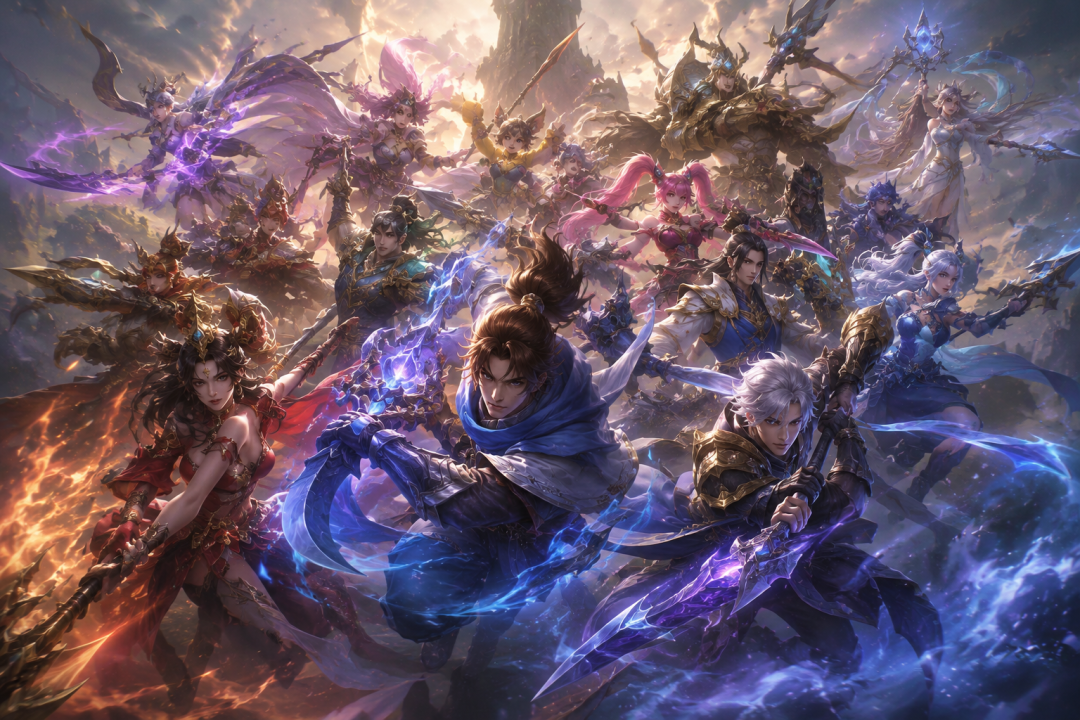
Subsequent titles like Watcher of Realms and Magic Chess: Go Go had fluctuating performance, but none altered the fact that Moonton's valuation still hinged on MLBB, which was already established before ByteDance's acquisition.
In other words, ByteDance's relatively successful sale was not because it created new value in gaming but because an already solid asset happened to find a buyer willing to pay for global mobile esports.
Lingxi Interactive Entertainment's story is slightly different.
Its self-developed Romance of the Three Kingdoms: Strategic Edition performed exceptionally well at one point. By 2020, its monthly revenue exceeded 600 million yuan, and over five years, it accumulated over 10 billion yuan in total revenue. At the time, it was the third-highest-grossing mobile game in China, trailing only Honor of Kings and Peacekeeper Elite.
Of course, Lingxi's issue is that it has largely failed to launch a new blockbuster since Romance of the Three Kingdoms: Strategic Edition.
Lingxi has continued to release products. Titles like Romance of the Three Kingdoms: Fantasy Land, Forest Kingdom, and Ruyan have all delivered chart performance or revenue growth at various stages.
However, these products either remain tied to the "Three Kingdoms" theme, lack long-term dominance after initial surges, or face commercial ceilings and team stability issues despite generating buzz in niche circles.
They prove that Lingxi can still produce mediocre products but fail to demonstrate that it has overcome its reliance on Romance of the Three Kingdoms: Strategic Edition.
This also makes the differences between the two transactions more nuanced.
Neither Moonton nor Lingxi truly overcame reliance on a single core product. ByteDance did not transform Moonton into a multi-hit company, and Alibaba did not enable Lingxi to deliver a second breakthrough after Romance of the Three Kingdoms: Strategic Edition.
The distinction lies in the fact that MLBB is a more international, long-term, and globally capital-market-friendly product. While Romance of the Three Kingdoms: Strategic Edition was once highly successful, it relies more on the domestic market, the "Three Kingdoms" theme, and SLG (strategy game) cycles.
The former can still be sold on the imagination of global assets, while the latter is more easily seen as a mature but growth-capped product line.
ByteDance Replenishes Cash, Alibaba Sheds Burdens
If we summarize the motives behind the two companies' sales in one sentence, it's easy to resort to a popular explanation: Big tech sells gaming assets to invest in AI.
This explanation holds merit but cannot be universally applied.
For ByteDance, the cash inflow from selling Moonton cannot be downplayed.
Several billion dollars is no small sum—equivalent to tens of billions of yuan. Especially in a period of soaring AI capital expenditures, such cash holds practical significance for any tech company.
AI is not like the asset-light expansion of the past mobile internet era; AI data center construction requires sustained, large-scale investment.
ByteDance has invested heavily in AI, developing models, building applications, and maintaining technological advantages in global content platforms and recommendation systems. Against this backdrop, selling non-core assets like Moonton represents not just a downgrade of its gaming business but also a significant asset realization.
However, this does not mean ByteDance sold Moonton solely to raise funds for AI.
If raising funds were the sole goal, ByteDance wouldn't necessarily have to sell gaming assets. If gaming remained a core strategic focus for the group, it wouldn't let go so easily, even if AI were burning cash. The fundamental reason Moonton was sold is that it no longer lies at the center of ByteDance's future growth narrative.
It just so happens that Moonton's sufficient scale and asset quality allow its exit to provide substantial cash for the AI cycle.
Alibaba's logic for selling Lingxi requires separate analysis.
If Lingxi is sold for the reported 7 to 9 billion yuan, the sum is meaningful for Alibaba but does not significantly alter its overall financial landscape.
Alibaba has already announced plans to invest at least 380 billion yuan in cloud and AI infrastructure over the next three years, in addition to ongoing investments in high-intensity competitive arenas like e-commerce, instant retail, and food delivery. Compared to these battlegrounds, Lingxi's sale amount does not change Alibaba's overall funding dynamics.
In other words, Alibaba's sale of Lingxi is less about raising cash and more about making room.
Gaming requires long-term R&D, producer-driven mechanisms, project-based management, product operations, community maintenance, and sustained user acquisition efforts. It is not a self-sustaining cash flow department. As long as it remains within the group, it consumes management attention, organizational resources, and strategic discussion space.
For Alibaba today, AI opportunities are abundant. Channeling Alibaba's talent into Alibaba Cloud, QianWen, and ATH is far more cost-effective than clinging to Lingxi.
Over the past two years, Alibaba has divested new retail assets like Intime and Sun Art Retail, even accepting significant book losses, to exit these businesses.
Alibaba once viewed them as key infrastructure for its "New Retail" strategy, but when selling controlling stakes, the market generally interpreted the moves as discounted liquidations.
For Alibaba today, even if these businesses still generate some revenue, they are no longer worth occupying group resources. The logic behind selling Lingxi is similar: Businesses unrelated to AI or core consumption sectors are not worth retaining.
Gaming Is Not a Natural Extension of Platform Capabilities
Why do companies like ByteDance and Alibaba ultimately reach the point of selling gaming assets?
They are not short on money, resources, or technology.
While Alibaba's traffic may lag behind Tencent's, it is no weaker than NetEase's. ByteDance even holds an edge over Tencent in terms of traffic. Yet the gaming industry has proven that platform capabilities do not equate to gaming capabilities.
Traffic can solve cold-start problems but cannot resolve content production challenges. Algorithms can improve distribution efficiency but cannot consistently create engaging mechanics, characters, or worlds. Capital can acquire teams but cannot necessarily internalize producer culture, development rhythms, and long-term operational capabilities as group-wide strengths.
Gaming differs from many internet businesses. E-commerce, advertising, short videos, and instant retail all rely heavily on efficiency systems: Precise traffic targeting, faster fulfillment, and more effective supply-demand matching lead to scale advantages.
But gaming is first and foremost a content product. While it requires commercialization and operational efficiency, its foundation lies in creativity, experience, and immersion.
Players will not stay in a boring game long-term just because a company has large traffic volumes. The true challenge in gaming is keeping users returning to the same world and continuously paying for the experience.
Fun is gaming's bottom line and lifeblood, but fun cannot yet be industrially produced solely through platform algorithms and technology.
ByteDance and Alibaba faced different issues, but they shared a common misconception: believing that platform capabilities could naturally spill over into the gaming industry.
When ByteDance acquired Moonton, it did secure a valuable asset and gained an important foothold in the global gaming market. However, acquiring an asset does not equate to turning gaming into a core capability.
The higher the quality of Moonton's assets, the more it highlights this point. After all, if an asset holds greater value in someone else's industrial layout, selling it becomes more reasonable than holding onto it.
Alibaba's Lingxi also developed successful self-developed products. However, one blockbuster does not equal a stable gaming system, and a mature product line does not equate to the ability to consistently produce hits.
When the group's core business contracts, long-cycle, content-heavy, and low-synergy businesses like gaming are the first to be reevaluated.
ByteDance and Alibaba's exits from gaming assets represent, in a sense, an acknowledgment of their limits.
Gaming remains a good business—just not necessarily one suited for every internet giant's main trajectory.
In the past, big tech treated gaming as a puzzle piece for ecological expansion. Now, they prefer to leave that piece to those who truly need it.
-
![]()
Profits Skyrocket! From Leasing to Construction: A Storage Enterprise with Hundred-Billion-Yuan Revenue Plans 1.175 Billion Yuan Investment in New Headquarters
-
![]()
Discounts Now on Offer: Is Xiaomi No Longer Grappling with Vehicle Shortages?
-
![]()
Samsung Doesn't Make Money the Hard Way
-
![]()
Japanese Media Acknowledges: China's Engine Technology Outstrips That of Japanese Firms
-
![]()
Japanese Media Concedes: China’s Engine Technology Outpaces Japanese Firms
-
![]()
Doubao Professional Version Unveiled! China Now Boasts Its Own National-Level Professional AI Agent
-
![]()
ByteDance and Alibaba Both Step Back from the Gaming Arena
-
Xiangeo International Clears BSE Review: Setting a Global Standard for the ‘Chinese Sound’ | A-Share Financing Brief