After Crossing the AI 'Tipping Point', Volcano Engine Plays Five Key Cards
 06/26 2026
 542
542

What are Volcano Engine's latest strategies and insights on commercial implementation?
At this year's Volcano Engine FORCE Conference, my immediate impression was two words: getting heavier.
Last winter's conference featured packed booths for video generation and AI short dramas, attracting a large number of developers and creators. This year, walking into the exhibition hall, 'AI + Industries' occupied more than half the space, with each industry showcasing major enterprise cases—top energy, manufacturing, automotive, and consumer companies, as well as prestigious universities.
I joined a financial sub-forum where speakers and panelists included the General Manager of a bank's intelligent operations center, the General Manager of a securities firm's digital office, and the Chief Engineer of an insurance company's technology department...
Volcano Engine is now more B2B-oriented, or more precisely, more focused on large enterprises (B2 Big B).

The conference theme was straightforward: In the past six months, AI has advanced rapidly, with token consumption surging exponentially. This is rooted in models crossing a tipping point—they can now genuinely perform tasks and impact productivity, enabling broader AI adoption across industries and enterprises.
01 Models Surpass Production 'Tipping Point'
'By 2026, tokens will undoubtedly be the hottest tech term,' said Shan Zhiguang, Director of the Information and Industrial Development Department at the State Information Center. From the second half of 2025 to now, token calls on OpenRouter have surged 'super-exponentially.'
Data from the National Data Bureau is even more striking: China's token calls have grown over 1,000-fold in the past two years. Tokens are no longer just a technical concept; they now carry computational and monetary value, giving rise to 'Tokenomics.'
The view of Zheng Weimin, an academician at the Chinese Academy of Engineering, is gaining wide recognition:
Tokens now serve a triple role: as the basic unit for models to process information, the metric for computational consumption, and the standard unit for industry billing. Industrial data, once tokenized, becomes a 'priced production factor.'
The latest data revealed by Volcano Engine CEO Tan Dai on stage is astonishing: As of June, the daily token calls for the Doubao large model exceeded 180 trillion. In December last year, 100 companies on Volcano Engine consumed over 1 trillion tokens annually, forming the 'Trillion Token Club.' Now, this number has doubled to 200.
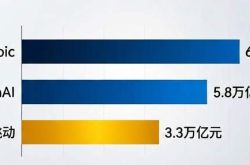
Why such explosive growth? Tan Dai highlighted the keyword 'tipping point.' In coding and agent domains, Anthropic's Opus 4.6 became the first global model to cross this threshold, immediately integrating into personal and enterprise production systems. Reports suggest Anthropic's Q2 revenue is projected at $10.9 billion, positioning it to become one of the world's highest-grossing tech companies next year.
This demonstrates that once a model surpasses the tipping point, paired with a hit product, its adoption and monetization speed can far exceed expectations—even without promotion, as users spontaneously spread it, achieving 10x, 100x, or even 1,000x growth in a short time.
For video generation, Tan Dai pointed to Seedance 2.0, the first global model to cross the tipping point. 'Many clients told me that before Seedance 2.0, video models felt like toys.' But once it surpassed the tipping point, with improved consistency, cinematic language, and realism, it unlocked advertising, film, television, and popular science markets.
However, Tan Dai believes this wave of growth extends far beyond short dramas; in the long run, 'this might just be a small scene.' He is more focused on Seedance's penetration into various industries.
For example, manufacturing and retail companies use it for product explanations, embodied AI companies for synthetic data generation, and autonomous driving companies for simulating extreme weather and other corner cases. Looking ahead, this year and next will be peak periods for world model training. Video generation, capable of extensive unsupervised learning on existing data, offers an effective path for training world models.

At the conference, the Doubao 2.1 Pro large model was released. Tan Dai stated that it outperforms Opus 4.6 in multiple coding and agent evaluations, also crossing the production-grade tipping point. It is now available via API on Volcano Engine and integrated into products like Doubao, TRAE, and Kouzi.
How to define the 'productivity tipping point'? When asked, Tan Dai replied that the boundary is determined by whether a model meets the specific requirements of each industry and process—data doesn't lie. For instance, before Seedance 2.0, weekend calls far exceeded weekdays; now, the opposite is true, indicating that people are genuinely using it for work.

At the conference, Tan Dai outlined four core capabilities required for LLMs to cross the tipping point: the ability to write 'production-grade' code and integrate into coding and R&D workflows; strong instruction following, hallucination control, and adaptation to various harnesses for complex, long-term agent tasks; leading multimodal understanding to better handle real-world problems and enable GUI interaction; and stable, efficient, and scalable operation in enterprise environments.
02 Business Opportunities Beyond the Tipping Point
With the tipping point reached, Volcano Engine aims to rapidly penetrate diverse industries.
The exhibition hall showcased a wide array of 'AI + Industries' applications, categorized into four dimensions:
Smart devices (e.g., automotive, mobile phones); Traditional pillar industries (e.g., manufacturing, finance); Content creation and creative expression; Cutting-edge research (e.g., chips, embodied AI).
Visually, creative expression is closest to Volcano Engine's core strengths, while traditional pillar industries seem the most distant and challenging. The question is: How can it extend from its home turf to the farthest regions?
Let's start with the closest: creative expression. Shortly after Seedance 2.0's pre-Spring Festival launch, the short drama market exploded, with AI-generated dramas reaching 1 billion views. A 200-300-minute film could be produced by AI in a week, compared to at least a month and 10-20 times the cost for human production. By May, e-commerce advertising surged, with advertising's share of token consumption visibly increasing.

How is it used? In Anmuhi's 'Whole Blueberry Yogurt' ad, a blueberry flies past landmarks, transforms into a football for a goal, and reverts to a blueberry falling into yogurt—maintaining consistent product packaging details across large-scale camera movements is its core strength.
The cost benefits are direct: Compared to traditional shooting and editing, Seedance generates a 30-second ad for 30-45 RMB per clip, stably producing hundreds of materials daily.
Ruichi Advertising takes it further by deconstructing hit ads for structured reuse, migrating content logic to new SKUs for viral production.
In this area, Volcano Engine is largely driven by market demand—once models are released, the market explodes independently, representing the lightest approach.
Moving further, we reach smart devices. In recent years, a new metric has emerged for automakers: 'AI intensity,' with 2026 dubbed the 'first year of intelligent agents in vehicles.'
Yang Liwei, Vice President of Volcano Engine, shared data: Doubao has been integrated into 50 automotive brands, 150 models, and over 7 million vehicles, with daily calls exceeding 30 million. Vehicle control accounts for 53% of scenarios, navigation 29%, and media 10%. The paradigm is shifting: Instead of relying on a 'classification hub' to assign tasks, a stronger model now handles end-to-end reasoning and dialogue.
What does this mean for in-car experiences? In the Mercedes-Benz all-electric GLC, Audi E7X, and Buick Zhijing E7, the system understands and executes complex, simultaneous requests from multiple passengers.
A deeper collaboration involves AIVA, a new brand co-founded by Seres, CATL, and other industrial capital. As a key technical partner, Volcano Engine joined from the definition stage—'AI first, then the car.' For example, when set to 22°C, the system considers season, clothing, and user state to understand true comfort, adapting more closely to user preferences over time.

At the automotive sub-forum, Chery's overseas expansion case left the deepest impression. As China's benchmark for automotive exports for 23 consecutive years, Chery has shipped over 6 million vehicles to 130+ countries. Now, partnering with Volcano Engine, it is expanding into ASEAN—where 60% of the population is under 35, making smart cockpits a core differentiator for brand premiumization. The hardest part is true localization, not just translating Chinese to foreign languages but an 'ecosystem-level' effort. Chery and Volcano Engine are integrating local ride-hailing and entertainment ecosystems while ensuring data compliance.
At this stage, the approach becomes heavier: from selling cockpit capabilities to AIVA's involvement from the definition stage and Chery's joint ecosystem localization, Volcano Engine starts using human resources and deep co-creation to build benchmarks.
Further still are the most Heavy barriers (formidable) pillar industries. In finance, securities firms lead the way, with six or seven of the top ten brokers developing AI investment advisory products with Volcano Engine.
Huatai Securities launched China's first AI-native trading app, 'AI Zhangle,' where users can directly ask, 'What are today's hot stocks?' The AI scans market news, sentiment, and announcements to identify trends and related sectors, even executing voice-ordered trades. More critically, it defines clear division of labor: Huatai's self-developed financial large model handles professional judgments, Doubao summarizes financial reports, sentiment, and policies, while Volcano Engine provides the infrastructure— Online Q&A Agent (connected Q&A agent), privatized computing power, and large model firewalls—to meet financial-grade security and compliance.
CICC Wealth goes even 'heavier,' embedding research from 300+ analysts and experience from thousands of advisors into a jointly customized financial large model, creating a new AI app set for beta testing.
In these formidable sectors, clients' professional expertise increasingly takes center stage.
In manufacturing, Feihe Dairy serves as a prime example of 'full organizational adoption.' In 2025, Feihe established a strategic partnership with Volcano Engine, first integrating data across R&D, production, marketing, and animal husbandry. It deployed Volcano's search and recommendation system on its private e-commerce platform, enabling intelligent shopping guides to help users find products through chat-like interactions, with over 90% accuracy in recommendations. In 2026, based on Volcano's HiAgent platform, Feihe built an intelligent decision-making hub internally, offering optimization suggestions at every stage. Employees have created over 4,000 self-built agents, with factory wastewater treatment specialists using it for monitoring and alerts, finance for invoice audits, and audit for gift reconciliations.
Finally, in cutting-edge research, the chip industry stands out. In chip RTL design testing, Doubao 2.1 Pro ran continuously for nearly 18 hours, completing six core modules, 1,303 lines of code, and nine iterative cycles, fully executing simulation, testing, and comprehensive checks—tasks that previously required three to five engineers over several weeks.

From advertising, where demand pulls growth, to automotive, where hundreds are invested in building benchmarks, to traditional pillar industries, where clients' expertise dominates, AI implementation follows an increasingly 'heavy' path. Currently, Volcano Engine aims to influence more industries through benchmarks and deeper AI integration.
03 Where Does Volcano Engine's Leverage Come From?
What are Volcano Engine's key leverage points in penetrating diverse industries? I summarize five takeaways from the conference:
First, models remain central. Tan Dai repeatedly emphasized that broader industry coverage relies on model enhancement: 'If the model is strong enough, many barriers become surmountable.' Nearly half of Seedance's users are now overseas, illustrating this point.
While ByteDance is known for strong video generation, building a robust video model requires equally strong video understanding, VLM, large language, and even coding capabilities. This comprehensive ability (comprehensive capability) allows it to break through more industry barriers, such as wastewater monitoring at Feihe Dairy and pipeline inspections at China National Pipeline Network—'If AI can understand, it knows what to do.'

I also noticed a trend among ByteDance's large model training team: increasing focus on end-to-end training. For example, Doubao Real-Time Voice 3.0 is no longer trained in three separate stages—'sound-to-text, large language processing, then synthesis'—but end-to-end, enhancing emotional understanding, naturalness, and human-like interaction. Future models and agents may similarly emphasize end-to-end training with minimal manual orchestration.
Second, harness. Tan Dai stated, 'Before models reach the tipping point, enhancing model capabilities is crucial. After crossing it, harness becomes equally important,' with rapid shifts in priority: 'This month, model upgrades matter; next month, it's harness.'
The priorities alternate: 'The goal isn't just a good model or API, but how this model and harness system land in enterprise environments to solve specific business problems.' This involves system integration, data connectivity, security, and agent authentication and compliance.
Third, diversified access points. This year, I've seen many firms emulate Anthropic by launching Coding tools like Claude Code and general-purpose assistants like Claude Cowork. Volcano Engine's approach differs with its '1+N+X' system.
Among them, "1" represents the AgentSphere digital employee dispatch station, which integrates all digital employees into a unified system for operation and measurement. "N" refers to multiple out-of-the-box intelligent applications that address general enterprise needs. "X" represents an infinite number of continuously evolving business intelligence applications, where enterprises can continuously create, run, observe, and optimize their exclusive digital employees (exclusive digital employees) based on TRAE, Kouzi, and HiAgent.
Tan Dai told Shuzhi Qianxian that solving all problems with a single product at present is "quite difficult," so a diversification approach (diversified approach) is needed. "There may be more in the future, or it may converge; we'll have to see as AI develops."

The fourth point is the new FDE team. This year, Volcano Engine has specially established an FDE (Frontline Deployment Engineer) team to deeply collaborate with leading customers in various industries.
Tan Dai said that the essence of collaboration is to "enable customers to better understand what AI can do, and for us to better understand what AI can do for them." FDEs are not sales or pre-sales personnel; they must truly possess "the ability to implement AI code" and have backgrounds in different industries. "Some people work in bioengineering, so they naturally have strong know-how in that industry." Tan Dai also mentioned an important strategy: identifying super individuals within customer organizations who are the first to adopt AI and working with them to achieve success.
This year, Volcano Engine also plans to co-host 500 "Volcano Cup" events with enterprises to further amplify the impact. Currently, the FDE team covers industries such as automotive, healthcare, education, finance, semiconductors, and other representative sectors.
The fifth point is the ecological boundary. In any sub-forum, customers, partners, and Volcano Engine cannot avoid this topic. At the automotive sub-forum, Yang Liwei admitted that platform companies must create real value in specific scenarios while also "finding ways to do less ourselves, combining partner capabilities to deliver better experiences and products at lower costs."
Zhang Yongwei, Chairman of the Che Baihui Research Institute, bluntly stated, "No one wants to lose the C-end market, but how can we capture it?" This is a core question AI poses for the entire automotive manufacturing industry. He believes that in the AI era, no single company will dominate everything; instead, there will be a greater emphasis on industrial division of labor and collaboration, as requirements for technical quality continue to rise across the board.
An on-site attendee summarized that AI has now penetrated various industries, moving from single points to multiple points, but has not yet truly permeated entire enterprise organizational systems. Currently, "it is mainly tool-based, efficiency-enhancing, or auxiliary in nature."
Tan Dai believes that we are still in the early stages of implementation. "Last year, we had run 500 meters; this year, we've run a little over a kilometer. But that kilometer has already crossed the qualitative transformation point in production." Volcano Engine ranks first in the Chinese public cloud large model invocation market in 2025, with a 49.5% market share. Tan Dai believes there is still 10x or even 1000x growth potential in this market, and short-term wins are not as important as "whether we can use better AI capabilities to serve better enterprises."
Meanwhile, ByteDance CEO Liang Rubo stated in a video at the conference that climbing the AI peak is ByteDance's most important task at present, and Volcano Engine's MaaS business is becoming a foundational business for ByteDance. "Our commitment will be long-term and resolute."
-
![]()
ByteDance, DJI, and Xiaohongshu Secure Top Three Positions Among China’s Fastest-Growing Unicorns
-
Tesla's in-car voice system in China is finally learning to 'understand human language'
-
![]()
Foreigners Are Amazed: Chinese Electric Vehicle Drive Systems Unveil Innovative 'Poses'
-
![]()
700,000 Brothers and the Future of Robots: Behind JD.com's 'Nirvana Plan'
-
![]()
Zhipu's Trillion-Dollar Valuation: A New Chapter for China's AI
-
![]()
Is Laifen, a 'Dyson Alternative' on the Rise, Now Ensnared by the 'Alternative Curse'?
-
![]()
Beyond Patents: Insta360 and DJI Compete in Retail
-
![]()
Piercing Through Industry Chaos: The Curtain Rises on Compliance for Autonomous Driving