Beyond Patents: Insta360 and DJI Compete in Retail
 06/26 2026
 727
727
Layout | Xiaoxi
In the consumer electronics industry, competition almost always boils down to a battle for physical store presence.
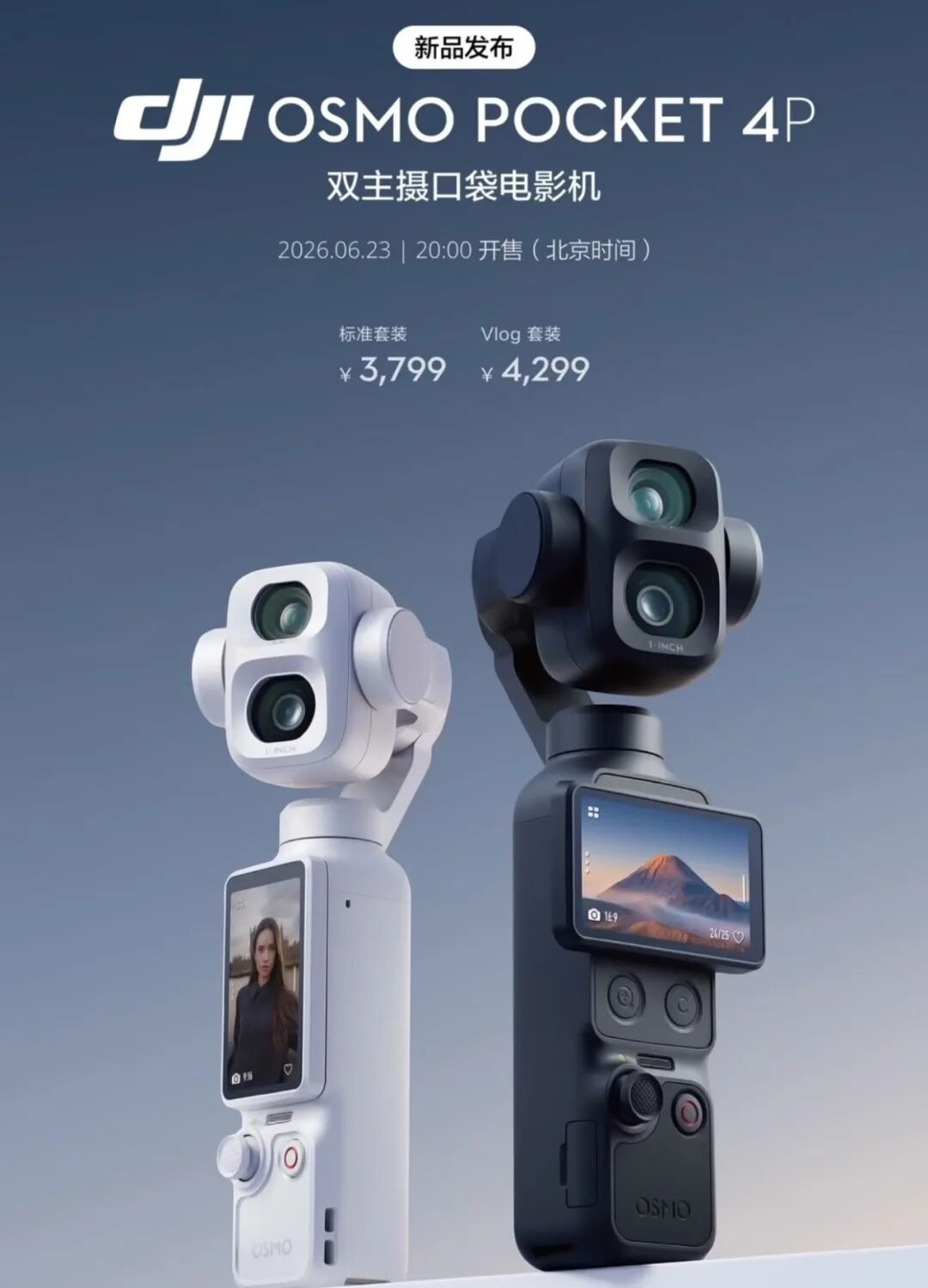
On the evening of June 23, DJI's Osmo Pocket 4P pocket cinema camera officially went on sale, priced starting at 3,799 yuan. However, multiple DJI stores in domestic cities had no stock available. Meanwhile, on June 22, Insta360 stated in response to investor inquiries on an interactive platform that its products are sold globally through a combination of online and offline channels.
Over the past year, the patent disputes between DJI and Insta360 have dominated tech headlines. From the Shenzhen Intermediate People's Court to the U.S. District Court for the Eastern District of Texas, the two sides have repeatedly clashed over technical patents related to drones and panoramic cameras. The outside world seems to take it for granted that products, technology, and patents have become the core battleground for these two Shenzhen-based tech giants.
Yet few have noticed that their retail battles over 'people, products, and places' have already begun in shopping malls and commercial districts across China and even globally. In other words, this rivalry has entered a phase of direct confrontation in terms of physical store positioning, distribution system competition, and capturing consumer mindshare.
For the consumer electronics industry, online channels often influence short-term sales, while offline presence determines long-term market structure. With a 50-fold increase in store count over three years, Insta360 is launching a comprehensive assault on DJI's decade-long offline dominance. The trajectory of this retail war could very well influence the growth ceilings of both companies.
| Insta360 Expands Stores to Address Shortcomings |
The industry characteristic of hundreds of thousands of offline terminals for smartphones demonstrates that physical channels are the inevitable path for smart hardware products to move from niche to mainstream markets. And Insta360 is indeed rapidly addressing this former weakness.
As is well known, DJI's offline layout (layout) has been refined over nearly a decade, establishing the most mature retail network for consumer imaging products in China. Public data shows that DJI has over 700 authorized retail stores and experience centers nationwide, covering core business districts in first-tier cities to digital markets in third- and fourth-tier cities, with channel penetration far exceeding the industry average.
In comparison, Insta360's offline journey started much later.
In early 2023, Insta360 had only five domestic stores, relying almost entirely on online channels and third-party retail points for sales. By 2024, the company's online-to-offline sales ratio approached 1:1, with online sales through its official website mall accounting for 18.81%, third-party e-commerce platforms at 24.39%, and offline sales primarily through distribution accounting for 44.37%.
By the end of 2025, the number of exclusive stores had grown to nearly 300, representing a 50-fold increase in three years and achieving full coverage of all first- and second-tier cities in China. Moreover, this store count is likely to continue growing this year.
Behind such aggressive expansion lies Insta360's crucial decision to gain more market initiative. When discussing why the company is doubling down on offline channels, Li Qingchi from Insta360's China sales team stated, "The primary reason for opening larger stores is to respond to user demand. Insta360's user base is expanding, and more users hope to experience products in their own cities and expect stores to offer a richer product selection and better after-sales service. This flagship store is precisely to meet those expectations."
Li Ming (pseudonym), a consumer electronics industry expert, told 「Yidu Pro」 that Insta360's approach clearly aims to establish brand mindshare through offline experiences, completing the transition from a niche hardware brand to a mainstream consumer brand. Moreover, considering that Insta360 has already formed a competitive offensive against DJI across multiple product lines, including action cameras, panoramic cameras, and consumer drones, once product line parity is achieved, store channel quantity becomes a critical area to fully catch up.
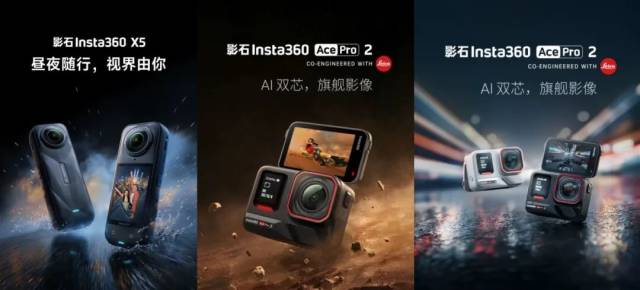
Following this logic, Insta360's revenue growth exceeded 80% in the first quarter. From a long-term perspective, Insta360's fastest-growing segment remains consumer panoramic cameras, with core contribution coming from last year's launches of the Insta360 X5, Insta360 X4 Air, and the drone product Yingling Antigravity A1.
Considering that Insta360's products, especially drones encroaching on DJI's core territory, are inherently strong experience-driven categories where stabilization effectiveness, grip feel, and operational logic all require user hands-on perception, expanding more offline stores is essentially addressing the 'last mile' touchpoint between the brand and mass consumers—a necessary support for sustaining high growth.
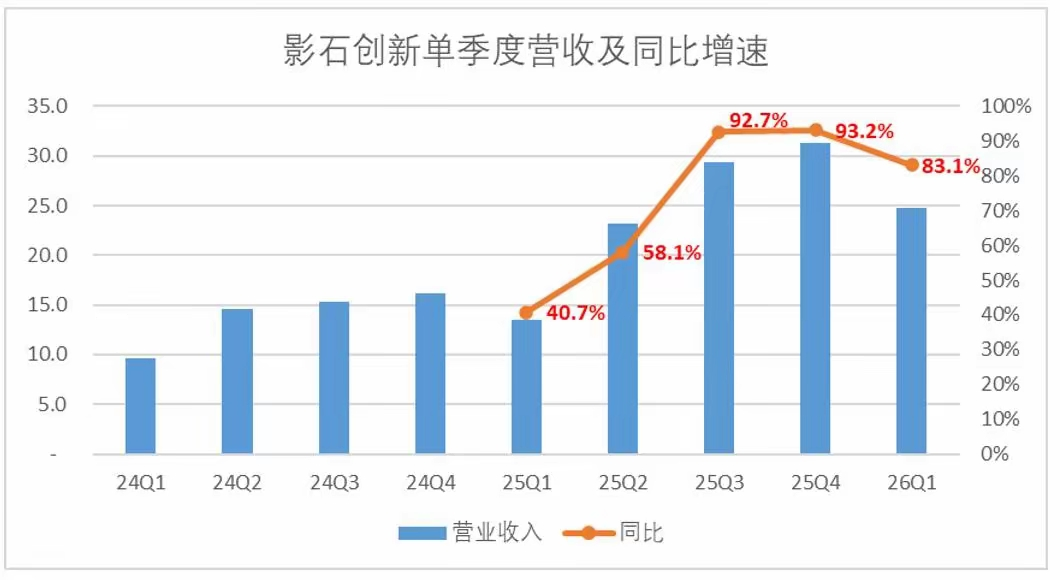
Financial reports indeed confirm this trend. Last year, Insta360 achieved total operating revenue of 9.858 billion yuan, a year-on-year increase of 76.85%. Such growth is closely tied to Insta360's series of specific measures to address retail shortcomings, particularly its talent and resource investments, even going as far as directly poaching personnel from DJI.
In the second half of 2025, Insta360 recruited Zhang Bo, former key sales executive for DJI China. Zhang had served under DJI's Sales Vice President Yuan Dong and had fully experienced DJI's Agent system (distributor system) reform, deeply understanding channel control and distributor operation logic.
Additionally, Insta360 continues to strengthen its in-store operational capabilities.
Based on publicly available talent recruitment information, 「Yidu Pro」 observed that Insta360 is hiring for positions such as Regional Retail BP, Flagship Store Manager, and Retail Trainer, with responsibilities covering the entire chain of distributor network expansion, store standardized operations, staff product training, and regional marketing activity execution. The goal is to establish a more complete offline retail management system.
Meanwhile, Insta360 is making substantial resource investments in retail. In the first quarter of this year, Insta360's sales expense ratio reached 18.1%, a 60% increase quarter-on-quarter. Full-year 2025 sales expenses totaled nearly 1.68 billion yuan, a net increase of 850 million yuan compared to the same period in 2024, having doubled.
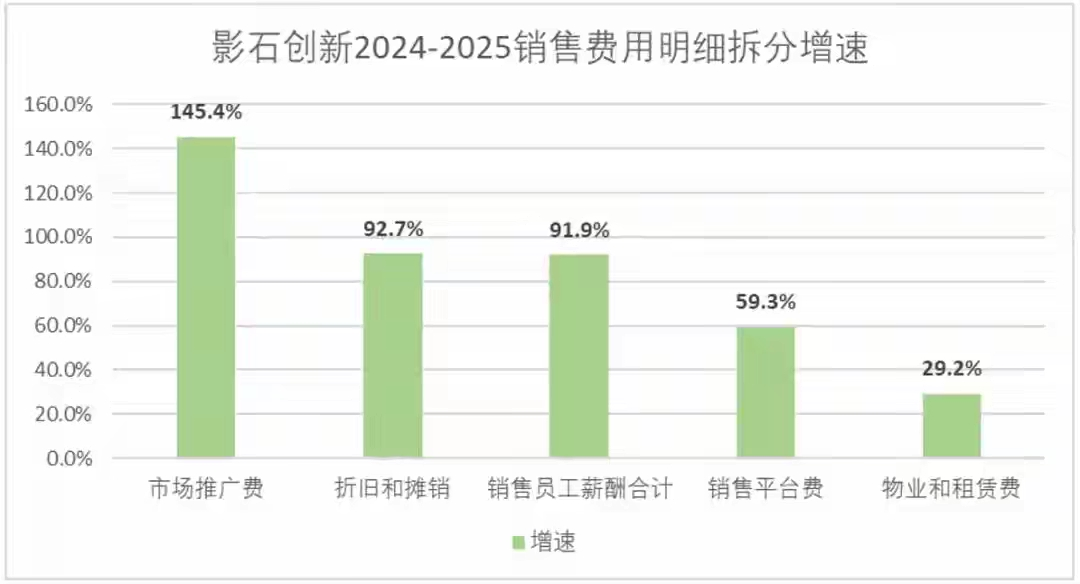
Taking 2025 as an example, from the sales expense breakdown, market promotion expenses increased by 145.5%, asset depreciation-related expenses (such as rent) grew by 92.7%, and sales staff salaries increased by 91.9%. Nearly all expense categories grew faster than revenue scale, indicating significant capital expenditure growth.
Although financial reports do not directly disclose sales expenditure on store expansion, from an industry perspective, industry insiders told 「Yidu Pro」 that store expansion involves complex distributor selection, site selection, store construction, supplier introduction, and hard terminal asset investments—all essential expenditures for brand manufacturers.
That said, numerical catch-up is merely the entry ticket for offline battles. Whether channel strategies are appropriate, store operations are efficient, and the distributor system is healthy matters even more.
| Can Store Supply Models Directly Replicate DJI's Approach? |
Frankly speaking, Insta360's store supply improvements have dual characteristics: on one hand, it needs to learn from DJI's channel experience; on the other, Insta360 must explore more flexible policies and precise channel strategies.
Both DJI and Insta360 largely follow provincial distribution and authorization models similar to the smartphone industry, even adhering to unified brand standards in store site selection, decoration, and display imagery.
Specifically in the competition between Insta360 and DJI, DJI's channel cultivation is more mature with a stronger foundation. Someone familiar with DJI's operations pointed out that in certain regions, those wanting to distribute DJI products can only source from existing distributors, with no new distributors being added currently. DJI previously had store expansion targets, but site selection required approval, and operationally, experience stores, flagship stores, and comprehensive stores all had performance assessment targets. If distributors failed to meet targets, replacement was not entirely out of the question.
Overall, DJI's channel and store system has several typical characteristics: coexistence of agency and direct operations, strong control and management over distributors and stores, high channel access requirements, and a current focus on stock operation (existing operations).
Insta360's current strategy is naturally offensive. After recruiting DJI's channel talent, it would not be surprising to see them borrow from proven systems, possibly even mirroring the smartphone industry where some distributors handle both DJI and Insta360.
However, in reality, top distributors may not necessarily choose to carry both brands, as circumstances vary by region. More pragmatically, while Insta360's recruited channel talent brings mature management methods, it does not equate to directly taking DJI's core distributor resources. Some channel partners may view Insta360 as a valuable incremental supplement (supplement), but for top-tier major distributors, DJI remains the unshakable foundation.
From distributors' perspectives, the respective strengths and weaknesses of both companies are clear. For example, DJI's advantages include high brand recognition, stable traffic, and strong user willingness to pay; Insta360's advantages lie in its rapid offensive expansion speed and increasingly diverse product categories.
On the retail store front, in some core business districts, the proximity between the two brands' stores has shrunk to direct competition. Take Chengdu's Chunxi Road business district as an example—the straight-line distance between Insta360 and DJI authorized stores is just 100-200 meters, allowing consumers to easily compare experiences between the two after visiting one. Similar scenarios have emerged in core districts like Shanghai's Huaihai Road and Shenzhen's One Avenue (One Avenue). The former market boundaries are being broken down by Insta360's rapid expansion.
Last year, an Insta360 store sign in Changsha was reportedly removed due to an "exclusivity agreement." Subsequently, Insta360 founder Liu Jingkang compared it to "just the tip of the iceberg of challenges we face at different levels," highlighting the intense competition between the two brands in the market.
To expand its offline advantages, Insta360 has begun taking differentiated routes at the store level.
Previously, Insta360 opened its largest global city flagship store at Shenzhen's One Avenue. The store features a completely new design, with the "Think Bold" brand philosophy run through (woven throughout). It includes China's first inverted mirror micro-model 360° panoramic restore (reproduction) of product usage scenarios like cycling and skiing, and for the first time, fully implements a "sales-service integration" model.
Consumers can receive after-sales inspections in-store and directly exchange devices for new ones within over ten minutes (a dozen minutes), achieving a complete closed loop (closed loop) from experience to purchase to after-sales. Insta360 revealed that the brand will further accelerate the rollout of similar stores, making after-sales service as convenient as purchasing products, with a target of expanding to 10 more city flagship stores this year.
Insta360 clearly attempts to build distinctiveness from DJI through unique urban flagship experiences. However, DJI currently maintains a significant advantage in total store count. Therefore, the next challenge is how Insta360 can catch up to DJI's terminal store quantity at the distributor authorization level. Moreover, this challenge extends beyond China to the global market.
| Global Retail Competition Ultimately Comes Down to Efficiency |
For DJI and Insta360, the domestic market represents their foundation, while the global market is the core growth territory going forward.
Currently, both companies are typical successful Chinese brands going global: In 2025, Insta360's overseas revenue reached 6.676 billion yuan, accounting for 69.03% of total revenue, with products sold in hundreds of countries and regions worldwide. DJI dominates the global consumer drone market with over 70% share. Although DJI has not disclosed detailed 2025 revenue scale or overseas market income, industry estimates generally place overseas revenue at around 80% of its total revenue.
Additionally, the Luna Ultra represents Insta360's flagship entry into the handheld gimbal camera market, long dominated by DJI's Pocket series with 10 million units shipped. In 2025, global shipments of handheld smart cameras reached 16.65 million units, a year-on-year increase of 83%, with DJI leading at 62.4% market share and Insta360 second at 20.4%. By directly targeting DJI's core profit zone with Luna, retail store competition and conflicts between the two are likely to intensify further.
Similar to the early logic of Chinese smartphone brands going overseas, online channels can rapidly open markets but only reach core tech users. To truly penetrate mass markets, establishing localized retail networks is essential.
Currently, Insta360's sales network covers over 10,000 retail stores globally, with deep cooperation with Apple Store retail locations, Best Buy, B&H, and Suning. DJI's global retail network deployment started earlier, covering more countries and regions, with mature agency systems and brand stores established in major Western markets. Its offline channel depth far exceeds Insta360's.
However, global offline competition ultimately comes down to operational efficiency. With a decade of channel development, DJI has formed a mature supply chain-channel collaboration system, with industry-leading per-store operational efficiency and inventory turnover speed. Insta360, meanwhile, is still in its expansion phase, with channel deployment investments remaining high, and economies of scale still needing observation.
In the coming global market competition, one core challenge for Insta360 is shifting from rapid store expansion to refined operations, establishing stable distributor systems in more mature markets, and converting store count into actual sales volume and brand mindshare. For DJI, the task is to maintain channel barriers in mature markets while continuing to lead in emerging markets, using efficiency advantages to offset competitors' speed advantages.
The channel and store competition between DJI and Insta360 will persist, but one thing is certain: the party that can convert technological advantages into retail supremacy and product strength into brand power will achieve lasting victory.
Meanwhile, their retail battles on street corners will only intensify.
Image sourced from the internet. Rights reserved for original creators.
-
![]()
Registered Capital Slashed to 372 Million Yuan! Yutong Optical Finalizes Industrial and Commercial Change Registration
-
![]()
Zhuque-3 Successfully Lands, and 'Time Traveler' Secures Another ¥100 Million in Funding: China's Commercial Space Industry Experiences a 'Dynamic August'
-
![]()
Autohome Faces a Shrinking Window of Opportunity
-
![]()
Even a Titan Like Musk Has Faced Setbacks in Fulfilling Promises
-
![]()
AI Office: The End of the Racing Era, Context Becomes the Key to Success
-
![]()
Domestic Vehicle Chassis Revolution ②: The Steering Wheel Remains, But Mechanical Connections in the Steering System Are Decreasing
-
![]()
Exploring MiniMax Design: Can Video Editing Be as Simple as Speaking?
-
![]()
Why Can SenseTime Achieve Profitability While CloudWalk Still Faces Challenges, Despite Both Adopting Large Models?