AI Competes for Electricity and Generates Power in the Gobi Desert
 06/28 2026
 508
508
Author | Chen Wen
Source | Insight New Research Society
Over the past three years, the global AI race has appeared to hinge on a single benchmark for success: chips. NVIDIA GPUs have become highly sought-after commodities among tech companies. With OpenAI, Google, Meta, xAI, and others launching large-scale models boasting hundreds of billions of parameters, the demand for computing power has surged continuously.
However, as we enter 2026, a more fundamental constraint has emerged: the ceiling for AI growth has shifted from chip production capacity to the need for a stable, low-cost, low-carbon, and sustainably expandable power supply.
This is the unfolding reality. Large AI data centers often require hundreds of megawatts or even gigawatt-level continuous power supply. The latest report from the United Nations University warns that global data center energy consumption will double in just four years, reaching 945 TWh by 2030—a figure comparable to the electricity consumption of the world's sixth-largest electricity-consuming nation. Meanwhile, residential living, industrial electrification, new energy vehicles, and urban public services are all driving up electricity demand.
Zhang Lei, founder and chairman of Envision Technology Group, recently stated in an exclusive interview with BloombergNEF: "AI is competing with the general public for energy resources." This remark underscores a core issue: What should be the future development model for AI?
If AI continues to rely on the expansion of urban power grids, growth in computing power will ultimately be constrained by the pace of grid construction. The prosperity of the AI industry would then come at the expense of higher energy costs for ordinary citizens, industries, and public services.
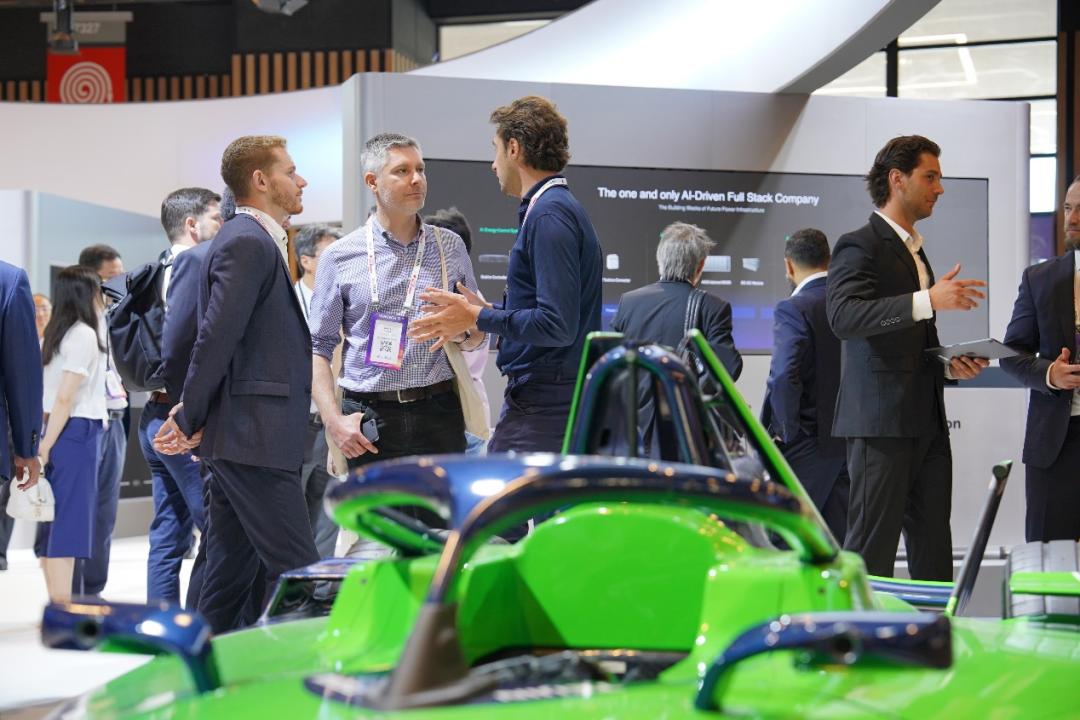
This is also a key signal from this year's VivaTech event. Europe's largest tech gathering no longer focuses solely on models and chips; the discussion has shifted entirely to AI infrastructure. The questions of where AI sources its energy, how to reduce costs, and how to break free from traditional grid constraints have become common challenges for the global tech industry.
It was at this event that Envision, a Chinese green energy technology company, announced its "Mission Gobi" plan, proposing to construct 5GW of green AI computing power infrastructure in global desert and Gobi regions by 2030.
Many liken it to Musk's SpaceX, dubbing it China's "GobiX." However, the core of this plan extends far beyond merely building new data centers. It seeks to address a more fundamental question: Can AI continue to expand without competing with ordinary people for energy and grid access? In other words, GobiX is attempting to reconstruct a new AI energy infrastructure.
If AI first transformed Silicon Valley, it is likely Europe that will first feel the energy pressure.
Over the past year, the EU has continuously ramped up its AI industry. The "AI Continental Action Plan" proposes to triple EU data center capacity within the next five to seven years; the subsequently announced "Cloud and AI Development Act" reaffirmed this goal.
Following these policy signals, capital quickly poured in. SoftBank announced plans to invest in a 5GW AI data center cluster in France, while French power company EDF began opening old power plant sites to host large-scale AI data center projects.
On the surface, these projects are data center investments, but in essence, they are competing for power access. AI data centers require long-term, stable, high-density power supplies that cannot frequently fluctuate due to weather, electricity prices, or grid congestion. France, with its nuclear power resources and stable low-carbon electricity system, has become a popular destination for Europe's AI infrastructure. However, power generation capacity and grid access capacity are two different things.
Computing power expansion cannot rely solely on the availability of servers; it also depends on sufficient grid carrying capacity.
Today, data center hubs in Dublin, Amsterdam, Frankfurt, and other European cities are experiencing grid congestion and access bottlenecks. As cloud computing and industrial electrification demands rise simultaneously, traditional grid spare capacity is being rapidly consumed. In some regions, grid access queues now span years, and AI data centers consume far more electricity than ordinary commercial projects.
The essence of the problem is that data centers, once merely supporting facilities for urban digital economies, have now become super-loads capable of altering regional energy structures. Their rapid growth, high density, and strict stability requirements mean that when large-scale data centers connect to existing grids, they inevitably compete with residents, industries, and transportation for limited grid capacity.
When grid connection approvals are delayed for years and multiple parties demand power from the same grid, the only way out for AI data centers is to reconstruct a new power supply system outside the traditional grid.
This is precisely the problem that "Mission Gobi" aims to solve.
While most data centers are still trying to secure capacity from traditional grids, "Mission Gobi" proposes a different approach: establishing a new energy system in the Gobi Desert—a region rich in wind and solar resources, sparsely populated, and with vast land—that directly supplies a high proportion of green electricity, backed by energy storage and hydrogen, and coordinated through AI scheduling. This not only reduces computing costs but also creates a new power infrastructure without competing for existing resources.
Traditionally, data centers followed a uniform construction logic: first locate in a city, then connect to the grid, and finally build server rooms, with energy serving merely as a supporting facility. Mission Gobi reverses this logic—instead of making energy chase computing power, it brings computing power to where energy is most abundant.
This is not just a change in location; it fundamentally represents a reconstruction of AI infrastructure.
Today, the key constraint for Europe's AI industry is limited grid capacity. Every new large-scale data center encroaches on electricity space for civilian and industrial use. Mission Gobi directly builds integrated wind, solar, storage, and computing power systems in wind- and solar-rich regions without occupying existing grid resources.
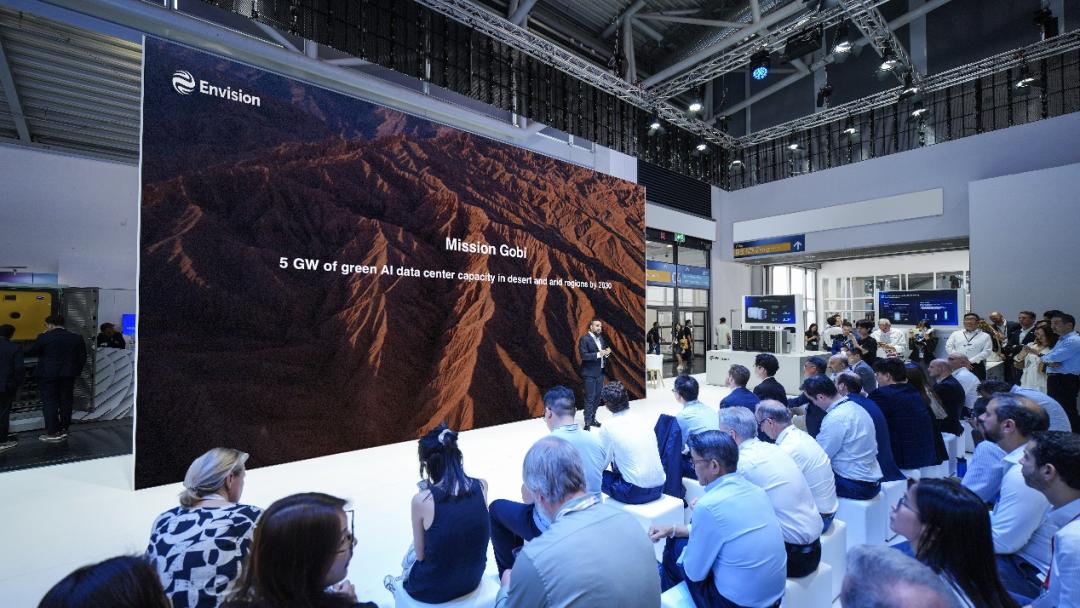
In other words, it is not redistributing the pie but making the pie bigger.
Second, computing power actively moves toward energy sources, avoiding competition with civilian loads. The core consideration for locating in the Gobi is not just cheap land and abundant wind and solar but also the near-absence of large-scale residential and industrial loads, which has led to significant underutilization of green energy. AI data centers, with their scalable deployment and digital operation, can proactively move toward energy sources.
Mission Gobi effectively changes a long-held default logic. For the future AI industry, the optimal computing power layout may not necessarily be closest to cities but must be closest to energy sources.
Third, computing power reverses and improves new energy utilization efficiency. Compared to traditional industrial loads, AI has stronger digital characteristics, with training tasks, inference tasks, and different business workloads offering scheduling flexibility. Paired with precise forecasting of new energy output by the energy system, computing power loads can actively adapt to unstable new energy generation rhythms, integrating into new energy consumption systems and reconstructing energy utilization logic.
What is truly being transformed is not just power generation but energy utilization.
More importantly, Mission Gobi's system is an open public energy foundation. Whether cloud service providers, model companies, or future enterprises requiring large-scale computing power, all can deploy their green computing power on this infrastructure.
In this sense, it delivers not just a data center but a new infrastructure capability. If traditional grids serve cities, Mission Gobi aims to serve the new industrial clusters of the AI era. If traditional energy systems address "whether there is electricity," Mission Gobi focuses on "how to ensure AI continuously accesses low-cost, low-carbon, and schedulable electricity."
Today, GPUs, wind turbines, solar panels, and energy storage are all mature industries. The challenge lies in making these inherently fluctuating systems output stable, reliable, and schedulable industrial-grade power.
GPU training requires continuous high-density power supply, while wind and solar power are inherently intermittent. Meanwhile, model training, parameter updates, and inference peaks cause rapid fluctuations in AI loads, which cannot be interrupted. Taming dual fluctuations on both the supply and demand sides to deliver stable industrial-grade power is the core technical challenge of Mission Gobi.
Envision's AI power system approach is to disassemble fluctuations across different time scales, addressing them layer by layer rather than relying on a single device to solve all problems:
First is the millisecond-level challenge.
The higher the proportion of new energy, the less natural inertia the traditional grid provides, so the system must first "stand firm." Grid-forming energy storage plays this role: in weak, off-grid, or high-proportion new energy environments, it quickly establishes voltage and frequency references, providing stable support for the entire AI power system. It does not solve simple electricity quantity issues but ensures the system can operate independently and stably.
Next is the second-to-minute level. The true protagonist here is sodium-ion batteries.
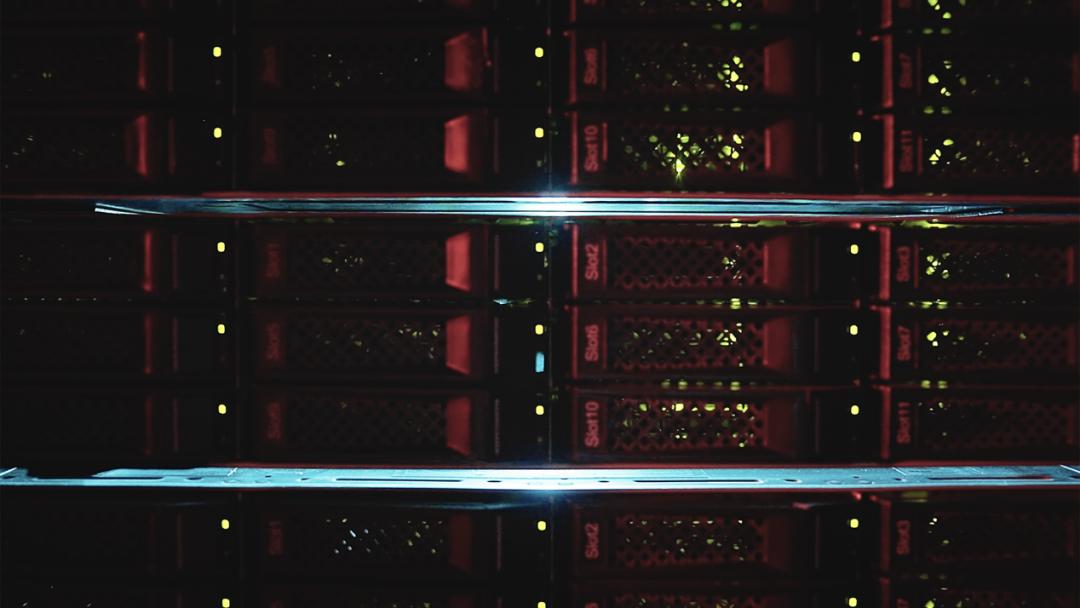
During AI training, GPU cluster loads fluctuate rapidly with task changes; simultaneously, wind speed variations and cloud cover cause continuous fluctuations in new energy output. Envision uses high-power sodium-ion storage to quickly absorb these high-frequency fluctuations. With high thermal stability and rapid charge-discharge capabilities, sodium batteries can handle instantaneous charge-discharge tasks over several minutes, smoothing new energy output and responding to AI load changes, enabling faster synchronization between generation and consumption sides.
Then comes the hour-level and intraday response.
Lithium-ion storage begins to handle peak shaving and valley filling. When solar power is abundant during the day, energy is stored; at night, it is released. When wind is available, wind power is prioritized; when wind is low or solar output is weak, storage supplements. Wind, solar, and storage operate synergistically under AI scheduling, flattening energy fluctuations between day and night as much as possible, bringing new energy closer to the stable supply capability of traditional grids.
The real difficulty lies in cross-day, cross-week, and even cross-season challenges.
Extreme weather such as prolonged low wind or continuous rain cannot be economically supported by batteries alone for long-duration power supply. This is why green hydrogen and ammonia become the final energy safeguard for AI power systems. When new energy is abundant, surplus green electricity is used for water electrolysis to produce hydrogen, which is further synthesized into green ammonia for long-term chemical energy storage. When prolonged low wind or weak solar conditions occur, it is converted back into electricity or other energy forms for release, providing cross-cycle energy security for the entire system.
In summary, sodium batteries handle rapid response, lithium batteries ensure intraday stability, and green hydrogen/ammonia provide long-duration security, with three layers covering fluctuations across all time scales.
The uniqueness of the AI power system lies in regulating not just the supply side but also optimizing the demand side. Traditionally, data centers consumed electricity passively, requiring grids to adapt to load curves. Now, computing tasks can be dynamically adjusted based on new energy output, storage status, and electricity costs, shifting loads from passive consumption to active response.
This is the core difference between this system and traditional "wind-solar-storage + data center" assembly models: both supply and demand sides connect to the same intelligent scheduling system, with energy and computing power no longer isolated but forming organic ends of the same system.
Beyond taming fluctuations, Envision is also reconstructing how electricity enters data centers. The power density of AI data centers is rapidly increasing, and traditional AC power supply requires multiple conversions, introducing losses and increasing system complexity. Envision adopts an 800V DC power supply architecture and solid-state transformers to more directly connect medium-voltage grids with data center sides, shortening the power supply path "from energy to chips," improving conversion efficiency, and better adapting to next-generation AI infrastructure's high-density power demands.
What truly transforms these devices into a system is the AI scheduling system.
Envision's self-developed EnOS intelligent IoT operating system serves as the "nerve center" of the entire AI power system. It connects wind, solar, storage, grids, hydrogen, and data center loads, enabling real-time coordination of energy flows, data flows, and computing power flows. Building on this, the "Envision Tianji" meteorological large model continuously predicts future weather changes, while the "Envision Tianshu" energy large model arranges generation, storage, supply, and computing tasks in advance based on new energy output, storage status, and computing demand, keeping the system operating optimally.
Traditionally, new energy was said to "depend on the weather"; the AI power system is making new energy "respond to the weather." What AI truly manages is not just power generation equipment but the relationship between entire energy supply and electricity load.
These are not just laboratory concepts.
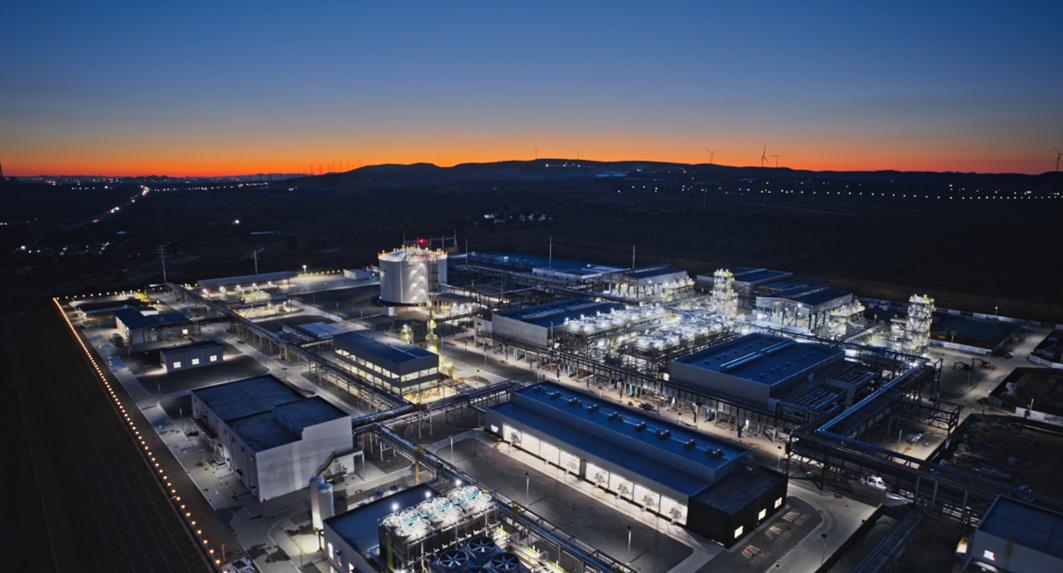
At the Chifeng Zero-Carbon Industrial Park in Inner Mongolia, Envision has constructed the world's inaugural 2GW-scale 100% new energy independent power system. In collaboration with Tencent, it has also jointly verified the world's first application scenario of "coordinated computing power and electricity," which has been operating stably for more than 30 months.
The capabilities of this AI-powered system have been thoroughly validated. It effectively manages fluctuations in both energy supply and electricity load, facilitating real-time coordination between inherently volatile components. Furthermore, it converts unstable green electricity into industrial-grade power that can be utilized by data centers.
Historically, humans have harnessed coal, oil, and natural gas. Today, AI is stepping in to harness wind, solar, and their inherent volatility.
The significance of the Chifeng project lies in its demonstration of a novel possibility: AI can be constructed atop a new energy infrastructure without the need for continued reliance on traditional grid expansion.
Traditionally, data centers have operated under the principle: "Locate where electricity is available; if insufficient, expand the grid." "Mission Gobi" seeks to revolutionize this approach. Rather than having AI wait for electricity, it encourages AI to seek out electricity sources. Instead of vying for resources in urban areas, it directs efforts towards regions with abundant resources to establish new supply systems.
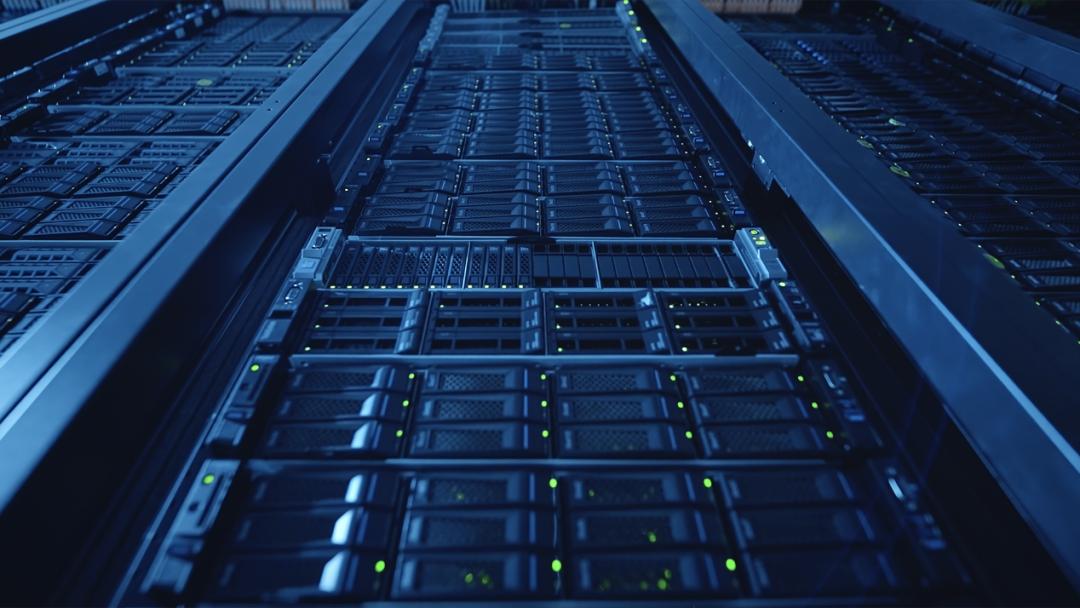
From wind-solar power generation to storage, hydrogen, and AI-driven energy scheduling, Mission Gobi is not merely creating a data center but also forging a sustainable green computing power energy infrastructure and a replicable development model.
Currently, Envision is constructing the larger-scale "Envision Galaxy Base" in Ulanqab to validate the integrated operation of GW-scale energy and computing power. From Chifeng to Ulanqab and ultimately extending to Mission Gobi across global deserts, the replicable aspect is the comprehensive capability of the entire AI power system.
It addresses a fundamental question: How can AI secure more energy without having to compete with the general public for the same power grid resources?
Since the beginning of this year, the world has been exploring the next trajectory for AI infrastructure.
SpaceX looks to the stars, aspiring to break free from the constraints of Earth's energy and land resources. Mission Gobi, on the other hand, takes root on Earth, reorganizing the interplay between energy, computing power, and the power grid. The former ventures into new physical realms, while the latter delves into novel energy landscapes. Both endeavors respond to the same query: In an era of exponential AI growth, how can humanity continue to provide the necessary energy support?
Over the past few decades, the internet has revolutionized the flow of information. Today, AI is redefining the flow of energy. What truly determines the competitiveness of the next generation of AI infrastructure may not solely be the number of GPUs one possesses or the scale of models one can train, but rather who can establish a more stable, cost-effective, and sustainable energy system.
Mission Gobi not only presents a Chinese solution but also pioneers a brand-new growth trajectory: The development of AI does not have to be predicated on competing with the general public for energy. Leveraging newly added green energy to support newly added intelligent capabilities—this may well be the most pivotal infrastructure innovation in the AI era.
-
![]()
Enflame Tech's IPO Journey: Navigating Over 5.9 Billion Yuan in Losses and Soaring Debt in Q1 This Year
-
![]()
Trillion-Yuan Giant Li Shufu 'Streamlines': Could Levc Be the Casualty?
-
![]()
AI Competes for Electricity and Generates Power in the Gobi Desert
-
![]()
The First Batch of Victims of the AI Bubble: Programmers
-
![]()
ByteDance, DJI, and Xiaohongshu Secure Top Three Positions Among China’s Fastest-Growing Unicorns
-
Tesla's in-car voice system in China is finally learning to 'understand human language'
-
![]()
Foreigners Are Amazed: Chinese Electric Vehicle Drive Systems Unveil Innovative 'Poses'
-
![]()
700,000 Brothers and the Future of Robots: Behind JD.com's 'Nirvana Plan'