Enflame Tech's IPO Journey: Navigating Over 5.9 Billion Yuan in Losses and Soaring Debt in Q1 This Year
 06/28 2026
 491
491
Produced by Leadar Finance | Written by Li Yihui | Edited by Shen Hai
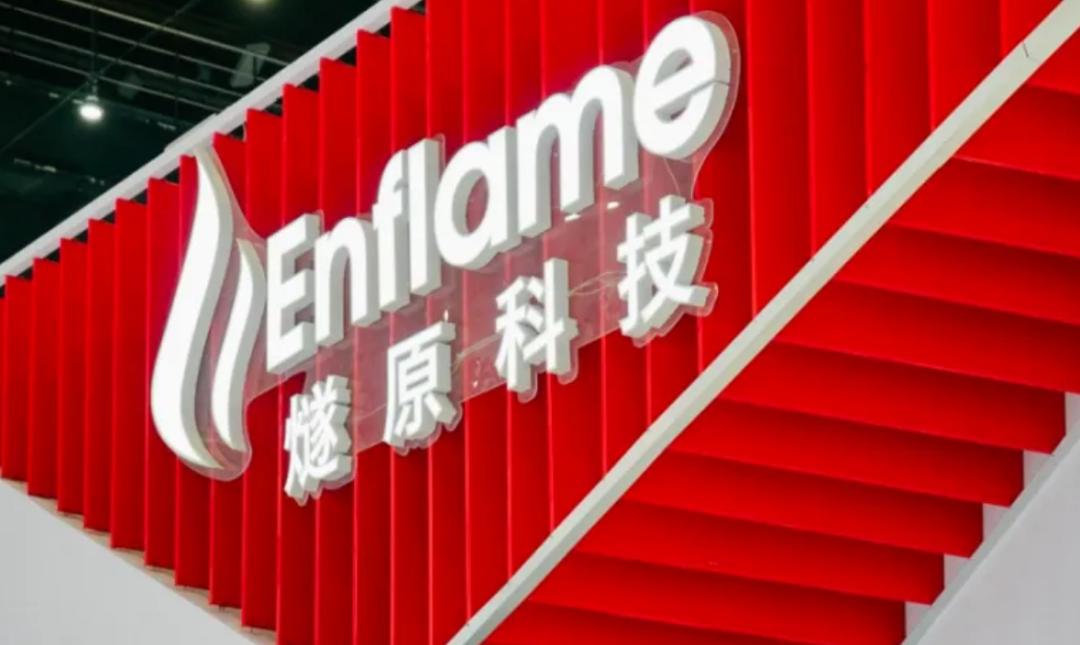
On June 15, Shanghai Enflame Technology Co., Ltd. (hereinafter referred to as "Enflame Tech") successfully cleared the review hurdle for its Initial Public Offering (IPO) on the STAR Market. This milestone positions Enflame Tech, the last among the "Four Little Dragons of Domestic GPUs" to remain unlisted, just a step away from realizing its listing ambitions.
According to the prospectus, Enflame Tech aims to raise 6 billion yuan to fuel the research and development (R&D) and industrialization of its fifth- and sixth-generation AI chip series, as well as to advance AI hardware-software collaborative innovation projects.
Since its inception in March 2018, Enflame Tech has independently developed and iterated five cloud-based AI chips across four architectural generations, establishing a comprehensive product ecosystem that includes AI chips, AI accelerator cards and modules, intelligent computing systems and clusters, and AI computing and programming software platforms.
Despite positioning itself as a leader in China's cloud-based AI chip sector, Enflame Tech has remained unprofitable from 2022 through the first quarter of this year, with cumulative losses nearing 6 billion yuan. Additionally, the company's debt burden surged significantly in the first quarter of this year.
On the revenue front, Enflame Tech faces significant risks associated with customer concentration and reliance on a single client.
Notably, akin to many tech startups, Enflame Tech's past financing rounds included hidden bet-on clauses. Although these were automatically terminated by signing supplementary agreements on the eve of the IPO, shareholders' special rights, such as repurchase rights, will be reinstated if the company fails to list successfully.
Multiple Financing Rounds Since Inception, with Hidden Risks
According to the prospectus, on March 1, 2018, co-founders ZHAO LIDONG and Zhang Yalin each invested 500,000 yuan to jointly establish Enflame Tech's predecessor, Enflame Ltd.
Both founders are seasoned veterans in the chip industry. Zhao Lidong, born in 1966, holds a Bachelor's degree in Electronic Engineering from Tsinghua University and a Master's degree in Electronics and Computer Science from Utah State University in the United States. After years of working in Silicon Valley, he held key positions at S3, Inc., Juniper Networks, and AMD, where he served as Senior Director of the Computing Business Unit and Senior Director of Product Engineering, and played a pivotal role in establishing AMD's China R&D Center.
In December 2014, Zhao joined Tsinghua Unigroup, serving successively as President of Raydiu Microelectronics, a subsidiary of Tsinghua Unigroup, and Vice President of Tsinghua Unigroup.
Zhang Yalin, the other co-founder, also started his career at chip design-related companies. During his tenure at AMD, he served as Senior Chip Manager and Technical Director of the China R&D Center.
Currently, Zhao Lidong serves as Chairman, CEO, and Board Secretary of Enflame Tech, while Zhang Yalin is a Director, COO, and General Manager.
Under the leadership of these two industry veterans, Enflame Tech secured substantial financing shortly after its establishment. According to Tianyancha data, Enflame Tech received 340 million yuan in Pre-A round financing in August 2018, led by Tencent, with Datai Capital and Yunhe Capital among the co-investors.
Tencent has continued to participate in subsequent financing rounds of Enflame Tech.
In the 300 million yuan Series A financing completed in June 2019, Redpoint China led the round, with co-investors including Highson Capital, Yunhe Capital, Tencent, Sunshine Insurance Group Capital, and ChinaEquity Group.
In September 2023, Enflame Tech announced the completion of a 2 billion yuan Series D financing round, jointly led by subsidiaries and industrial funds under Shanghai International Group, with co-investors including Tencent, Meitu, Wuyuefeng Capital, and Yuntai Capital, among other new and existing shareholders.
In June 2024, Enflame Tech conducted a D++ round of financing, securing a total of 753 million yuan from 12 investors, with Tencent contributing an additional 300 million yuan. In the Series E financing in December of the same year, 36 investors injected 2.72 billion yuan into Enflame Tech, with Tencent contributing 300 million yuan.
According to the prospectus, as of the equity transfer in August 2025, Enflame Tech was valued at approximately 18.2 billion yuan.
It should be noted that, as disclosed in the prospectus, Enflame Tech signed various financing transaction documents, such as Capital Increase Agreements, Joint Venture Contracts, and Shareholder Agreements, with relevant investors during multiple financing rounds (hereinafter referred to as "Historical Transaction Documents"). These documents included provisions for several shareholders' special rights.
These special rights encompass repurchase rights, preferential distribution rights for proceeds from company mergers and sales, as well as other shareholders' special rights clauses, such as pre-emption rights, subscription rights, co-sale rights, information rights, and anti-dilution provisions.
In December 2025, the company, Zhao Lidong, Zhang Yalin, and 98 shareholders signed a Supplementary Agreement to the Shareholder Agreement of Shanghai Enflame Technology Co., Ltd., clarifying the special rights of the 98 shareholders. These special rights were automatically terminated one day prior to the submission and acceptance of the company's listing application documents but could be restored under the following circumstances: the company suspends or abandons its listing or withdraws or revokes its listing application; the company's listing application is rejected, returned, denied, revoked, terminated from review, disapproved, or unregistered by the regulatory authority; the company fails to complete the listing within the validity period of the approval; the company fails to complete the listing by December 31, 2027.
This implies that Enflame Tech's IPO process is under strong time constraints and capital pressure. Failure to achieve the listing target on schedule will result in obligations related to share repurchases.
Nearly 6 Billion Yuan in Losses Over Four Years, with Debt Soaring in Q1 This Year
In terms of business operations, over the past eight years since its inception, Enflame Tech has independently developed and iterated five cloud-based AI chips across four architectural generations, establishing a comprehensive product ecosystem that includes AI chips, AI accelerator cards and modules, intelligent computing systems and clusters, and AI computing and programming software platforms.
The funds to be raised in this IPO will be allocated to the R&D and industrialization of fifth- and sixth-generation AI chip series products, as well as to advanced AI hardware-software collaborative innovation projects.
With the rise of the AI wave, demand for AI computing power has become a key growth driver in the tech industry. AI computing chips, as the hardware foundation of the AI industry, occupy a central position in the industrial chain.
However, the global cloud-based AI chip industry is still dominated by NVIDIA. According to the prospectus, based on forecasts by China Insights Consultancy and NVIDIA's annual reports, NVIDIA's market share for AI accelerator cards is expected to be around 70% in 2025.
In the domestic market, the cloud-based AI chip industry is in its early stages, with NVIDIA also holding a significant share. However, Chinese domestic companies are continuously breaking through technological barriers and capturing a certain market share. Domestic cloud-based AI chip manufacturers include non-GPGPU architecture firms such as Huawei HiSilicon, Cambricon, and Enflame Tech, as well as GPGPU architecture firms such as Moore Threads, MetaX, Iluvatar CoreX, and Biren Technology.
Enflame Tech's choice of a non-GPGPU architecture stems from its belief that as demand for AI large-scale model inference continues to rise, non-GPGPU architecture computing products with higher efficiency, greater data throughput, and lower power consumption will have a competitive advantage.
Despite this technological route, the company has remained unprofitable in recent years.
Financial data shows that from 2022 to 2025, Enflame Tech achieved revenues of approximately 90.1038 million yuan, 301 million yuan, 722 million yuan, and 990 million yuan, respectively, with corresponding net losses attributable to the parent company of approximately 1.116 billion yuan, 1.665 billion yuan, 1.51 billion yuan, and 1.164 billion yuan, respectively.
In the first quarter of this year, the company incurred another loss of 444 million yuan. Based on this, Enflame Tech has accumulated losses of 5.899 billion yuan over more than four years.
The company's persistent losses are related to its high R&D investment. Financial reports show that from 2022 to 2025, the company's R&D expenses were 988 million yuan, 1.229 billion yuan, 1.312 billion yuan, and 1.135 billion yuan, respectively, all exceeding its revenue for the same periods.
Enflame Tech acknowledges that its revenue scale has not yet fully materialized during the reporting period, failing to cover rigid R&D investments and constraining its short-term profitability.
Notably, in the first quarter of this year, the company's total liabilities surged from 1.375 billion yuan at the end of 2025 to 9 billion yuan at the end of the first quarter of this year. During the same period, the company's asset-liability ratio also jumped from 30.4% to 76.49%. Additionally, shareholders' equity decreased from 3.147 billion yuan to 2.766 billion yuan.
In response, Enflame Tech explained that at the end of March 2026, based on downstream customer order demands, the company secured customer orders by pre-receiving customer payments and obtaining bank loans to prepay upstream suppliers for production capacity. This led to a significant year-on-year increase in the company's total assets and liabilities compared to the end of 2025. Meanwhile, as the company remained unprofitable in the first quarter of 2026, its accumulated losses further increased, resulting in a year-on-year decline in shareholders' equity compared to the end of 2025.
High Customer Concentration and Heavy Reliance on a Single Client
Leadar Finance notes that among Enflame Tech's clients, Tencent is not only its core capital supporter but also its largest client at the current stage.
According to the prospectus, from 2022 to 2025, the sales volume from Tencent (including direct sales and AVAP model sales) accounted for 8.53%, 33.34%, 37.77%, and 83.79% of the company's total revenue, respectively. The company expects that its high sales dependence on Tencent will continue for a certain period in the future.
The AVAP model is primarily applicable to scenarios where end customers are internet clients. Under this model, the company sells AI accelerator cards or modules to designated server manufacturers at prices negotiated with internet clients.
In addition to its reliance on Tencent, Enflame Tech also faces the challenge of high customer concentration. During the reporting period, sales to the top five clients accounted for 94.97%, 96.50%, 92.60%, and 96.89% of the company's total revenue for the respective periods.
The company attributes this primarily to the large contract amounts in its intelligent computing systems and clusters business, as well as the large-scale deployment of its products in AI application scenarios for internet clients.
Industry insiders analyze that high customer concentration essentially means "having one's lifeline in someone else's hands." Losing a major order could lead to a sharp decline in performance and a collapse in valuation. Additionally, as a company planning to go public, related-party transactions are a key focus for exchanges, including issues such as whether they involve related-party interests or fair pricing.
For Enflame Tech, in addition to strengthening independent technological R&D and ecosystem development, it also needs to make greater efforts in diversifying its customer base and achieving scalable profitability to transition into a truly independent, market-oriented AI chip company.
-
![]()
Enflame Tech's IPO Journey: Navigating Over 5.9 Billion Yuan in Losses and Soaring Debt in Q1 This Year
-
![]()
Trillion-Yuan Giant Li Shufu 'Streamlines': Could Levc Be the Casualty?
-
![]()
AI Competes for Electricity and Generates Power in the Gobi Desert
-
![]()
The First Batch of Victims of the AI Bubble: Programmers
-
![]()
ByteDance, DJI, and Xiaohongshu Secure Top Three Positions Among China’s Fastest-Growing Unicorns
-
Tesla's in-car voice system in China is finally learning to 'understand human language'
-
![]()
Foreigners Are Amazed: Chinese Electric Vehicle Drive Systems Unveil Innovative 'Poses'
-
![]()
700,000 Brothers and the Future of Robots: Behind JD.com's 'Nirvana Plan'