Why Are Celebrities So Keen on Diving into the AI Realm?
 06/30 2026
 371
371
Have you observed that the side ventures of celebrities have recently taken an unexpected twist?
Previously, entertainment news often highlighted stories of celebrities venturing into businesses like opening hotpot restaurants or launching streetwear brands. However, in recent months, the news dominating your feeds looks quite different:
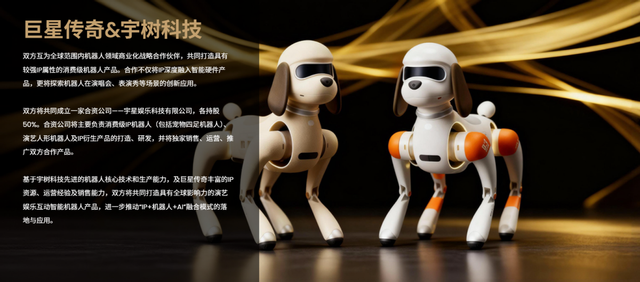
Singer Hu Yanbin has personally developed an app utilizing AI; football icon Cristiano Ronaldo has invested in a $20 billion AI enterprise; Wang Jiaer has introduced a pair of AI glasses, accessible only with a concert ticket purchase; and the company partly owned by Jay Chou’s mother has collaborated with Unitree Robotics, a leading robot dog manufacturer, to create a 'Superstar Dog.'
Individually, these stories might seem like light-hearted entertainment tidbits. Yet, when they begin to accumulate—spanning from domestic artists to international superstars, and covering fields from music to sports—all pointing in the same direction, it sparks curiosity.
Celebrities venturing into side businesses is not a novelty. What's new is their simultaneous rush into the same arena: AI.
This prompts the question: Why are celebrities collectively shifting towards this sector, which appears so distant from the entertainment industry? Is AI really that accessible?
On June 1, 2026, if you were browsing Weibo like me, you might have been captivated by a particular headline.
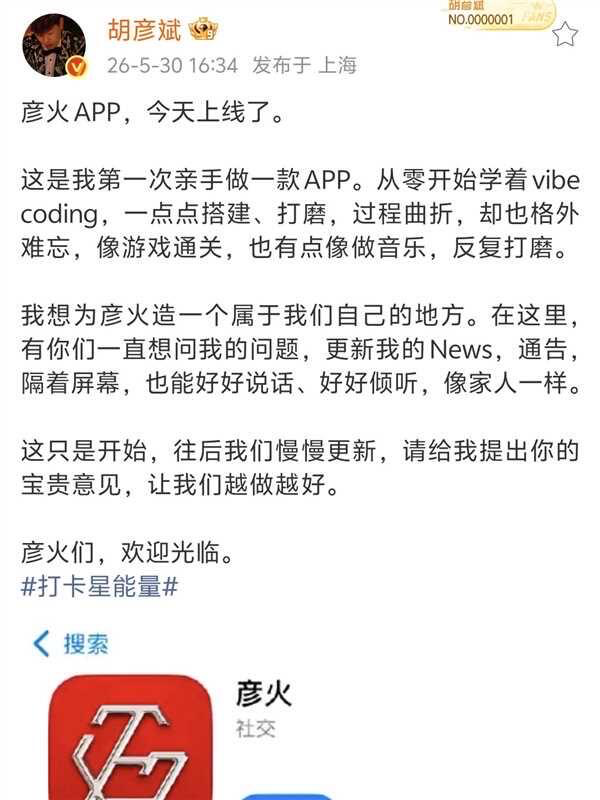
Hu Yanbin, the R&B singer behind 'Beauty,' shared a lengthy Weibo post showcasing his self-developed app, 'Yan Huo.' The accompanying image displayed a screen brimming with code, and he proclaimed, 'I’m a Vibe Coder.'
A singer renowned for his melodies and lyrics had transformed into a developer, crafting code and building products—all with the aid of AI tools. The onlookers were taken aback.
Not long ago, it was revealed that Cristiano Ronaldo had invested in Perplexity AI, a U.S.-based company valued at over $20 billion, specializing in intelligent search engines. In his statement, the Portuguese football star expressed his hope to 'inspire people to keep asking ambitious questions.'
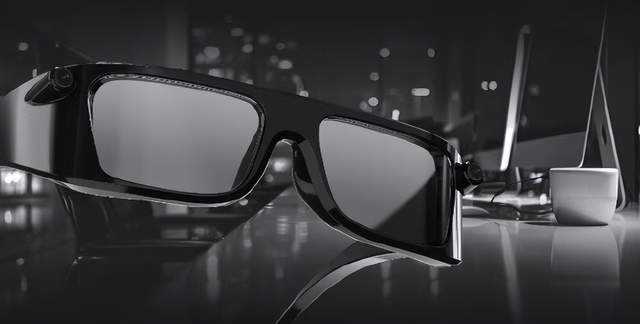
Meanwhile, Wang Jiaer bet on AI hardware. His Magic AI Glasses retail for around 1,000 RMB, but purchasing them typically requires proof of a Wang Jiaer concert ticket. Offstage, few discuss the glasses' chip specifications or computational power; the main talking point is simply: 'These are Wang Jiaer’s glasses.'
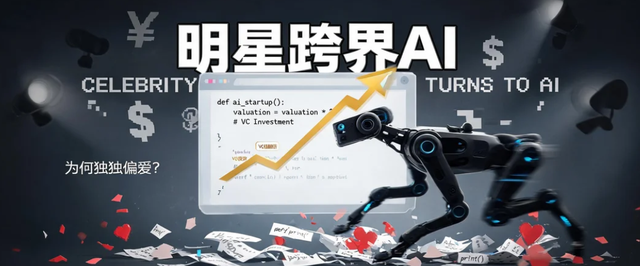
Perhaps the most surprising move came from Jay Chou. The company partially owned by his mother, Ye Huimei, partnered with Unitree Robotics to create a robotic dog named 'Superstar Dog.'
Four individuals from vastly different fields—an R&B singer, a football superstar, an idol, and a music icon—were drawn like magnets to the same intersection: AI.
If you believe these are isolated incidents, think again. The list continues. G.E.M. revealed in an interview that she invested in an AI company in 2019 and reaped a 10-fold return. K-pop idol groups are introducing AI virtual members who perform alongside their human counterparts.
Celebrity side ventures are nothing new. We've witnessed too many celebrities opening hotpot restaurants, launching streetwear brands, selling wine, or dabbling in real estate. However, for decades, celebrity side businesses have clustered in a few fixed domains: dining, fashion, real estate, and entertainment peripherals.
These ventures typically have relatively low barriers to entry, strong cash flow, and natural synergy with personal IP. A celebrity opens a hotpot restaurant, fans flock in, and returns are visible shortly. A celebrity launches a streetwear brand, slaps their logo on it, and sells at a premium.
Yet, the tech sector has rarely seen celebrity involvement. Semiconductors, biotechnology, and aerospace are domains dominated by professional investors or large corporations. Even when celebrities did invest, it was usually in consumer-facing apps or late-stage ventures—rarely in tech infrastructure. The tech industry demands specialized knowledge, industry connections, and long-term R&D investment, making it unsuitable for outsiders.
However, in the realm of AI, celebrities are far more enthusiastic than in any other hard-tech field, forming a collective phenomenon.
Why is AI the exception? What sets it apart?
To answer this, we must first recognize a truth: celebrities are human too. Their investment logic isn't shrouded in mystery. They're drawn to visible, tangible opportunities—and AI fits the bill.
Let's rewind to late 2022. After ChatGPT's release, the world's perception of AI fundamentally shifted. Before then, AI felt like an abstract concept confined to labs and sci-fi films, far removed from daily life. But generative AI's mainstream breakthrough slashed technical barriers: anyone could sign up, type a few words, and get instant feedback—answers, writing, creation.
This hands-on, experiential nature set AI apart from other hard tech, paving the way for celebrity influx.
Consider a simple comparison. Imagine you're a celebrity with idle cash to invest, facing two options: a biotech firm and an AI app company. The biotech company's materials are filled with jargon like 'pipeline,' 'Phase III clinical trials,' 'targets,' and 'double-blind studies.' Judging its prospects requires hiring investment advisors and becoming a passive financial follower.
AI apps, however, allow celebrities to engage meaningfully. They can offer opinions, provide feedback, and even leverage their influence to improve the product. This sense of participation boosts their confidence to invest—a prerequisite for taking the leap.
Beyond low barriers, AI thrives on high topic spread degree (trendiness) and social media virality.
For celebrities, whose livelihoods depend on public attention, investment returns extend beyond finances—they shape personal brand narratives. A successful project isn't just a number on a balance sheet; it's a public statement of identity.
AI is the hottest topic today. 'Investing in AI' is inherently newsworthy, reshared by tech media, dissected by financial influencers, and even trending on hot search lists. When Ronaldo announced his Perplexity AI investment, global media covered it. The 'Ronaldo + AI' combo is inherently viral. For celebrities, this social currency sometimes outweighs financial returns. Investing in AI is both a future-proofing strategy and a low-cost, high-exposure brand upgrade.
Commercially, AI is also an irresistibly lucrative field.
In recent years, AI companies' valuations have skyrocketed. OpenAI transformed from a niche research lab into a nearly $100 billion giant in under two years. Anthropic, Mistral, Perplexity, and others dominate financing headlines, with each funding round triggering valuation leaps.
This rapid growth offers investors clear exit paths: no need to wait for an IPO; they can sell stakes in later funding rounds or to strategic investors. G.E.M.'s 10-fold return story spread quickly in entertainment circles because she didn't wait a decade—timely entry could yield outsized returns.
This contrasts sharply with semiconductors or biotech, where R&D cycles span decades, failure rates are high, and returns uncertain. Most celebrities lack the expertise to track these sectors long-term or the patience to wait. AI's high-profile funding rounds and valuation jumps offer visible, achievable returns.
Low barriers, high trendiness, quick returns—these traits make AI irresistible to celebrities.
It's tangible enough for personal judgment, viral enough to turn investment into PR, and liquid enough to offer clear exit strategies. Together, these factors have created today's landscape.
So, what's next? Is this a prelude to genuine industrial transformation, or just another bubble?
Let's zoom out. How many celebrity AI ventures succeed, and how many fail?
It's too early for precise statistics. Many investments are private, but two lenses offer clarity.
First, celebrities likely won't invest deeply in AI.
The reason is simple: securing meaningful stakes in AI firms demands enormous capital. Take Perplexity AI—valued at $20 billion, Ronaldo's investment is probably symbolic. It's less about finance than endorsement. Celebrities trade influence for an 'AI investor' label, while AI firms gain a global brand ambassador for a fraction of equity. It's a win-win: even if the investment flops, Ronaldo faces minimal risk; if it succeeds, it's a repeatable legend.
Second, step back to view the broader AI startup ecosystem. The reality is far more complex than entertainment headlines suggest. Research shows that globally, few AI startups achieve scaling profitability. Many have users but no revenue, or revenue but no profits.
Thus, celebrity AI fervor needn't be overhyped. It's neither a sign of AI's imminent takeoff nor a bubble warning.
This cross-industry spectacle is merely a prominent wave in AI's current tide. Celebrities bring capital and attention, adding hype but not necessarily altering technology's pace. It simply shows: AI has become accessible enough for even non-tech players to believe they can ride the wave.
As the tide surges, some ride it, others fade away. AI will mature at its own pace, through trial and error.
-
![]()
5G Standalone Private Network Policy Breaks the Ice, Creating an Exclusive 'Nervous System' for Physical AI in Industrial Scenarios
-
![]()
Two Investments Totaling 700 Million Yuan! Sunny Optical Sets Its Sights Beyond Lens Supply, Launching a Strategic Move in the XR Optics Arena
-
![]()
Xianyu Initiates Internal Testing of 'Yu Maimai' and 'Yu Maimai': Can AI Revolutionize Secondhand Transactions?
-
![]()
The Dullest 618 in History, with AI Being the Busiest
-
![]()
Shenzhen’s Most Mysterious Robot Startup Secures 1 Billion Yuan in Funding, Targeting a 150 Billion Yuan Market
-
![]()
Why Are Celebrities So Keen on Diving into the AI Realm?
-
Can WeChat AI Sidestep the Quandary Faced by Doubao Phone?
-
![]()
Luxury Lineup, Highly Anticipated! The Pioneer of Physical AI Gears Up for Hong Kong Stock Exchange Debut!