990,000 Yuan for Emotional Value? UBTECH Debuts Bionic Robots in Consumer Market, Accelerating Divergence in Embodied AI Race
 07/05 2026
 384
384
"If there's an emotional connection, there's infinite imagination. One-time revenue and long-term, sustainable fees from a future ecosystem could yield higher profits than industrial humanoid robots. My goal is to dominate this ecosystem."
On June 30, UBTECH, known as the 'first humanoid robot stock,' held its 2026 global product launch in Shenzhen.
At the event, dozens of UBTECH World U1 Series full-size hyper-bionic humanoid robots took center stage, boasting lifelike proportions and skin textures. They strutted down the runway and danced the waltz. The launch appeared tech-savvy, romantic, and trendy, but the most striking aspect was the price tag, reaching up to 990,000 yuan. After all, just two days later, Chunsuitang released a similarly positioned product with a starting price of merely 15,000 yuan.
UBTECH founder Zhou Jian announced at the launch that U1 orders had surpassed 13,361 units across all channels, more than ten times the 1,079 units of UBTECH's B2B Walker series sold throughout 2025.
On June 30, UBTECH's stock price surged 18.7% intraday, peaking at 113.6 HKD, but closed at 102.8 HKD, narrowing the daily gain to 7.48%. Despite impressive order numbers, capital market enthusiasm fell short of expectations, creating a stark contrast with sales feedback.
"Those who can afford it don't need it; those who need it can't afford it" became a mainstream (zhǔliú, mainstream) sentiment after the launch. Objectively, the U1 Series falls short of its promotional renderings. More critically, issues like mechanical facial expressions, stuttering dialogue, and unnatural gait exposed during the launch indicate lower product maturity than anticipated.
The true highlight of the launch wasn't UBTECH's narrative but the gap between that story and reality.
Misalignment Between Product Maturity and Commercial Narrative
The full-size hyper-bionic UBTECH World U1 Series comprises three models: the 119,800-yuan half-body U1 Lite (lightweight half-body version), the 169,800-yuan high-spec full-body U1 Pro (with limbs), and the 990,000-yuan male U1 Ultra (high-dynamic full-body version) or 880,000-yuan female version, featuring autonomous mobility and enhanced computing power.
Specifications show the U1 Series equipped with 88 high-degree-of-freedom motion joints, capable of human-like micro-movements like blinking and head-turning. During the launch, the robots interacted via voice but suffered from delayed responses, mechanical emotional expressions, and unnatural facial movements. In the finale runway show, their mechanical gait was glaring, prompting online jokes about "looking like they had a stroke."
Commercially, the U1 Series emphasizes emotional companionship. UBTECH promotes its "nurturing" emotional AI model, enabling long-term memory and personality evolution. It continuously records and learns user preferences and emotional patterns via local encrypted storage, forming a personalized "personality profile" that evolves over time.
The issue lies in the scarcity of dynamic and deep emotional interaction demos during the three-hour launch. Flashy fashion shows and waltz performances offered little insight into the U1 Series' emotional companionship capabilities.
In short, it's unclear whether the U1 Series is just a high-end electronic gadget with a large language model, akin to giving Doubao or DeepSeek a refined, personalized physical form.
The U1 Series supports multi-dimensional customization: male models wear tailored suits and gold-rimmed glasses, while female models allow user-defined makeup (eyeshadow, blush, highlighter, lipstick). This resembles high-end BJD (Ball-Jointed Doll) customization. While personalized customization is valid, the "adults-only" restriction raises eyebrows.
Like the unverified emotional companionship claims, whether the U1 Series is "suggestive" remains unprovable.
Beyond these deeper issues, UBTECH's product demo revealed cracks between current technological maturity and commercial promises. The intended narrative was "your exclusive emotional companion is here," but audiences saw a stiff, stuttering, functionally limited prototype.
This gap underscores UBTECH's current predicament. It attempted a three-hour launch to prove bionic humanoid robots could enter consumer life, using a B2C narrative to sustain valuation and imagination. Yet, the product isn't ready to carry this story.
The stock performance reflects this reality-ideal divide. UBTECH surged over 18% intraday but closed up just 7.48%, dropping nearly 11 HKD from its 113.6 HKD peak to 102.8 HKD. The next day,
Fenglong shares, controlled by UBTECH, fell over 8% intraday.
Capital markets sent a clear signal: stories are welcome, but voting with wallets is premature.
A Forced Leap from Industrial to Consumer Scenarios
UBTECH's prior commercialization focused on B2B markets. Launching the "UBTECH World" brand and the emotion-focused, human-like U1 Series marks a shift from B2B industrial manufacturing to B2C consumer scenarios.
In 2025, UBTECH's revenue reached 2.001 billion yuan, up 53.29% YoY, with 821 million yuan from full-size embodied AI humanoid robot products and solutions, soaring 2203.7% YoY on 1,079 units sold. By year-end, annualized production capacity for full-size embodied AI humanoid robots exceeded 6,000 units, primarily Walker S series, used in automotive manufacturing and smart logistics, with orders nearing 1.4 billion yuan.
However, net losses hit 790 million yuan in 2025, narrowing by 32.1% but still indicating an unviable business model. Meanwhile, B2B competition intensified.
In 2025, UBTECH ranked third in China's humanoid robot shipments, far behind leader Zhiyuan Robotics (5,168 units) and runner-up Unitree Technology (4,200 units, though Unitree reported 5,511 units in its prospectus).
UBTECH's shipments lagged fivefold behind the top two. Critically, as humanoid robot G1's price plummeted from 590,000 yuan in 2023 to 167,000 yuan in 2025, Unitree's revenue surged to 1.708 billion yuan (+335.36% YoY) with 600 million yuan net profit (+674.29% YoY) in 2025. Competitors leveraged scale and cost control to achieve profitability, squeezing UBTECH's B2B market share and profit margins.
Despite being the "first humanoid robot stock," UBTECH, founded in 2012, lags in this "production capacity war" against hyper-competitive rivals.
Zhiyuan Robotics, founded in February 2023, had just six prototypes that year, began mass production in August 2024, surpassed 1,000 units in January 2025, crossed 10,000 units in March 2026, and rolled off its 15,000th general-purpose embodied robot on June 28, 2026—less than three months after hitting 10,000 units. UBTECH's dilemma: it can't match Unitree's profitability or Zhiyuan's industrialization speed.
In H1 2026, China's embodied AI sector raised over 46 billion yuan, nearing 2025's full-year total, accelerating industry tier differentiation.
Unitree and Zhiyuan lead the first tier. While UBTECH outpaces Leju Robotics, Zhongqing Robotics, and Fourier Intelligence in shipments, the gap is narrow. With Tesla, XPeng, and BYD entering the fray, the embodied AI sector's heat continues to rise.
Against this backdrop, UBTECH's B2C pivot is partly strategic and partly reactive. Its current business scope and financials can't justify a hundred-billion-yuan valuation. After listing, UBTECH's market cap peaked at 130 billion HKD but has since shrunk to around one-third.
Buoyed by the U1 Series' JD.com pre-sale on June 2 and its partnership with Moore Threads (one of China's "Four Little Dragons" in GPUs) on June 11, UBTECH's market cap reached 54.5 billion HKD around June 22 but fell to 46.6 billion HKD by July 2.
The Gap Between Ideal and Reality
The B2C path is fraught with challenges. UBTECH's launch coincided with a critical industry shift from tech demos to mass delivery and cost optimization.
UBTECH executives stated at the launch that U1 Series' first batch of orders would begin delivery in mid-September 2026, aiming to deliver over 10,000 units by year-end. Given UBTECH's 2025 annualized production capacity of over 6,000 full-size embodied AI humanoid robots, achieving this target remains uncertain.
UBTECH VP Jiao Jichao admitted that the U1 Series' head alone requires 2,000–3,000 components, and its elastic silicone material poses mass-production challenges. To achieve high simulation (fǎngzhēn, simulation), features like eyebrows, eyelashes, and hair require manual implantation, but mass production demands automated assembly lines. UBTECH must develop proprietary automation equipment for pipeline (liúshuǐxiàn, assembly line) production.
UBTECH faces not just linear production scaling but entire manufacturing system reengineering. Lab prototypes and factory mass production test entirely different capabilities, involving supply chain management, yield control, cost optimization, and consistency—a common pitfall in past industry cases.
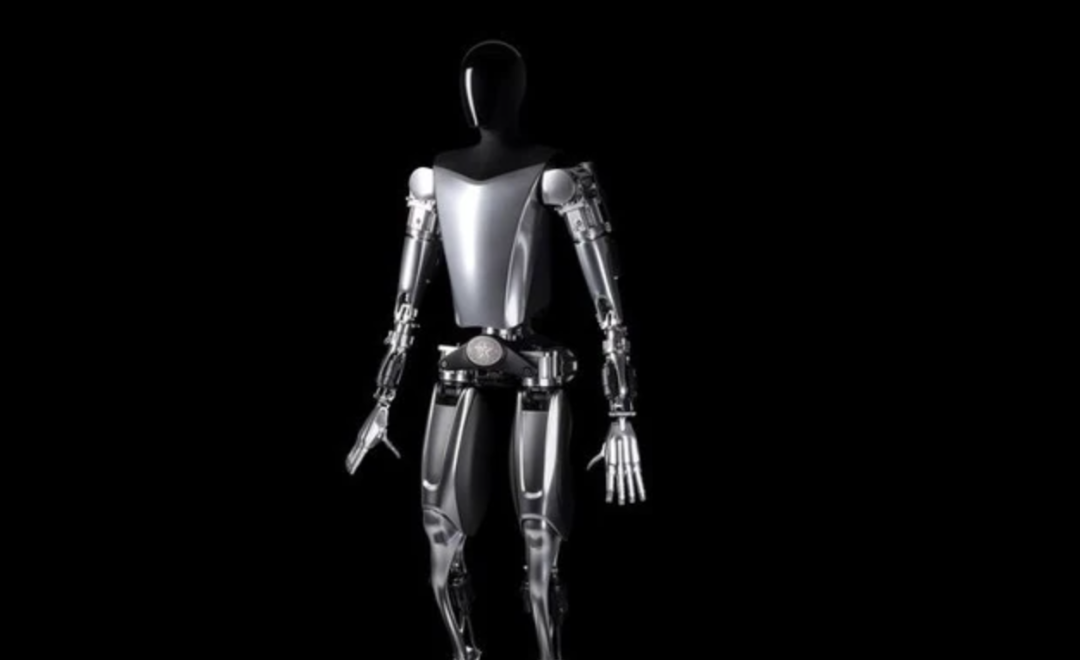
Years ago, Tesla Optimus's first upright walking video went viral, but its "first batch shipment" target delayed from 2024 to 2025 due to unmet motion control algorithms. By July 2025, Tesla had produced only hundreds of Optimus units, far below Musk's 5,000-unit claim.
Second, the order conversion rate is questionable. UBTECH founder Zhou Jian proposed a "human-machine symbiosis strategy," defining three stages: replacing high-risk repetitive labor, providing companionship in daily life, and achieving deep human-machine integration. The U1 Series targets the second stage, offering emotional value despite limited battery life and no household chores.
However, before U1's emotional value is validated, a price war has emerged. On July 2, Chunsuitang, a veteran in China's adult products industry, released a simulation (fǎngzhēn, bionic) humanoid companion robot starting at 15,000 yuan. It features a bionic body, 16 active degrees of freedom in the head, 81 passive degrees in the body, a multimodal emotional AI model, and short/long-term memory systems.
At 15,000 yuan, Chunsuitang's offering starkly contrasts UBTECH's 119,800–990,000 yuan pricing, appearing as a bargain. While not directly comparable in positioning or technology, Chunsuitang's entry signals price declines in companion humanoid robots. If competition intensifies, UBTECH—with 790 million yuan in annual losses—could face a "damned if you do, damned if you don't" scenario: not selling without price cuts, but losing more with cuts.
Humanoid robots, especially B2C bionic models, are undoubtedly the future from a long-term tech perspective. But "long-term trends" and "immediate profits" differ.
Current B2C bionic humanoid robots lag in technological maturity, cost structure, and user experience for household adoption. The U1 Series essentially uses today's tech and pricing to probe tomorrow's market. The direction is likely correct, but the path is arduous.
The 13,000 orders grant UBTECH a valuable head start, but this window won't stay open forever. Real user feedback post-September delivery, order conversion rates, and mass production progress will determine UBTECH's survival.
In the embattled embodied AI sector, the promote (jìnjí, promotion) and eliminate (táotài, elimination) logic is clear: deliverers stay, storytellers exit.
-
![]()
Has UBTECH Embarked on a Path of 'Harsh Delight'?
-
Three Parts Storytelling, Seven Parts Strategy: Trillion-Yuan Zhipu and Its Strategic Gambit
-
![]()
990,000 Yuan for Emotional Value? UBTECH Debuts Bionic Robots in Consumer Market, Accelerating Divergence in Embodied AI Race
-
![]()
Hardware is the skeleton, AI is the soul, and data integrates the two
-
![]()
China’s AI Industry: A Unified Pivot Towards Monetization?
-
![]()
New Progress! Infineon Completes Acquisition of ams OSRAM's Non-Optical Sensor Business
-
![]()
35 Million Bet on an Optical Future! Tengjing Technology Makes a Move in AR
-
![]()
Why World Models Get Stuck on Construction Roads in Autonomous Driving Applications