Has UBTECH Embarked on a Path of 'Harsh Delight'?
 07/05 2026
 363
363
A Booming Industry with Lingering Questions
Written by | BlueHole Business Zhao Weiwei
First, a 7.48% surge, followed by an 11% plunge—these were the two-day stock market fluctuations for UBTECH on the Hong Kong Stock Exchange after the unveiling of its latest hyper-bionic humanoid robot.
The surge signaled euphoria. UBTECH stands as the first in the robotics sector to bring bionic robots to the mass consumer market, focusing on emotional companionship, psychological care, and emotional value. The U1 series, priced between RMB 119,800 and RMB 990,000, witnessed explosive initial orders, with over 13,000 units sold online and offline—surpassing UBTECH's total full-size robot sales from the previous year by more than tenfold.

The plunge, however, revealed harsh realities.
Criticism arose over the robot's cost-to-performance ratio. Despite its high price tag, the robot offers a mere 2-4 hours of battery life on a single charge, exhibits rigid facial expressions, lags in dialogue, and has a delayed mass production start scheduled for September. Incapable of performing household tasks and aimed solely at adults, it was dismissed as a "silicone doll with an AI shell."
Overseas tech forums buzzed with skepticism: "Firmly stuck in the 'uncanny valley'," "a perfect blend of cool and creepy," "will we really witness 'Westworld' in real life?" One comparison likened it to "introducing millions of sterile mosquitoes to eradicate mosquito populations"—a nod to unintended consequences.
These doubts echo the warnings from TV series like Black Mirror and Westworld: pleasures born of harsh realities often end violently.
The trajectory of autonomous driving serves as a cautionary tale for UBTECH: capital frenzy, exaggerated marketing, frequent user accidents, regulatory intervention, and eventual industry maturation. This path mirrors the future challenges for bionic robots.
Bionic robots face significant shortcomings in real-world applications, battery life, safety, and ethics. With immature supporting systems, a large-scale consumer rollout will inevitably trigger problems. The market will respond when UBTECH commences deliveries on September 16.
The Criticism Is Loud Outside
On the day UBTECH launched its U1 bionic robot, both excitement and skepticism emerged.
Overseas tech media focused on ethics and data privacy. UK-based TechRadar described the U1 as "a perfect blend of cool and creepy." UBTECH plans to donate 100 custom hyper-bionic humanoid robots by 2026, using 3D facial modeling and voice cloning to replicate specific individuals, combined with emotional AI and long-term memory banks for professional psychological companionship.
TechRadar criticized this as a deceptive ploy: "UBTECH tries to dazzle us in demos, but in the real world, cold silicon, eerie gaits, and unsettling interactions can't replace a lost partner."
Similarly, Digital Trends argued that humanoid robots mimicking deceased loved ones resemble "something straight out of a disturbing Black Mirror episode" rather than consumer electronics.
Black Mirror’s Season 2 episode Be Right Back depicts a woman ordering a bionic replica of her deceased boyfriend, only to spiral into unresolved grief.
AFP quoted analysts acknowledging the value of companion robots in niche markets like elderly care or mental health, but only if they pass the "uncanny valley" test—avoiding revulsion through lifelike design. Current models, however, may be "too offensive to sell." The "uncanny valley" refers to the discomfort caused by human-like artificial entities.
Domestic criticism, in contrast, centered on practical issues like pricing and battery life.
UBTECH claims the U1 offers up to 4 hours of battery life, but netizens calculated that a RMB 990,000 robot would spend most of its day charging. Clunky movements and rigid facial expressions in real-world demos contrasted sharply with promotional videos, drawing ridicule: "walks like a robot," "expressions still feel mechanical." Many likened it to a "silicone doll," with social media users dubbing the venture "silicone doll + AI."
This disconnect is the real danger.
The Chinese market evaluates bionic robots as consumer electronics, judging them on specs, price, battery life, and demos. Overseas media, however, skip practicality to ask, "Can we? Should we?"—particularly regarding the ethics of commercializing replicas of the deceased.
Yet UBTECH positions the U1 series as an emotional companion first.
Revolution in AI pointed out that a robot with 2-4 hours of battery life demands users schedule their lives around it, rather than the advertised seamless integration.
Bionic excess and practical shortcomings are UBTECH’s Achilles’ heel.
Overhyped marketing paired with underdelivery risks repeating the smart driving industry’s mistakes: when users overtrust autonomous systems, leading to accidents and regulatory crackdowns. As an industry pioneer, UBTECH must heed this lesson.
Domestic Competition Intensifies
UBTECH is not alone in this race. The bionic robot competition heated up last year, with Chinese firms like Songyan Dynamics and Shouxing Tech following similar paths but yet to launch consumer-scale products.
In Beijing, Songyan Dynamics unveiled X-Head1, a hyper-bionic head competing with UBTECH’s U1 Lite, priced similarly in the RMB 100,000 range for emotional companionship, reception, or IP customization.
BlueHole Business obtained product details showing Songyan’s entry-level model costs approximately 34% less than the U1 Lite. Even in a craftsmanship-driven market, Songyan offers better affordability.
UBTECH’s U1 Lite retains a torso above the shoulders, while Songyan’s X-Head1 focuses solely on a realistic head, potentially integrating with existing wheeled (W1) or bipedal platforms. For the industry, smaller form factors reduce battery issues, making "bionic head + modular body" a lower-risk approach.
Finally, customization potential divides market applications.
Except for the high-end U1 Ultra, UBTECH’s U1 series lacks customization, relying on one-time hardware sales and potential future subscriptions. Songyan’s X-Head1 supports customization, allowing enterprises to integrate their own content and services, earning revenue from hardware and platform ecosystems.
The ToB (Business-to-Business) route disperses risk and controls scenarios (e.g., museums, corporate lobbies), while ToC (Business-to-Consumer) raises prices and brand awareness but shifts emotional dependency, data privacy, and ethical risks to families.
In Shanghai, firms like Shouxing Tech and Zhuoyide Robotics are also entering the bionic robot space but haven’t pushed as aggressively to consumers as UBTECH.
"Robots entering households will take 2-3 more years," Zhuoyide stated recently, citing unmet standards: cost-wise, tendon-driven designs halve BOM costs versus traditional servomotors but need scaling; scenario-wise, household needs emerge from real-user collaboration, not labs.
Shouxing Tech, backed by investors like Lei Jun, 5Y Capital, and Zhiyuan Robotics, hasn’t entered home scenarios yet. Its most notable project partnered with NetEase’s Justice Online to create a bionic replica of the character "Fang Chengyi," blending "IP + bionics" for fandom economics. Another route is leasing: its desktop F1 Lite rents for RMB 1,200/day on platforms like "Qingtianzu."
Leasing vs. one-time sales dominates robot markets. Leasing offers evolving content and emotional services for immature products; one-time sales promise hardware stability but at higher risk and cost.
Notably, Shouxing Tech and Shuzixia focus on bionic facial development, empowered by Zhiyuan Robotics, a leading humanoid robot manufacturer. A "facial module + humanoid body" supply chain model is nearing launch, accelerating full humanoid robot releases.
With UBTECH starting mass production, will its rivals follow suit?
Why Is the Overseas Market Cautious?
While China’s bionic robot sector charges ahead, overseas players remain prudent.
Take UK-based Engineered Arts’ Ameca, once globally recognized as one of the most realistic bionic robots: 61 degrees of freedom, including 27 for facial expressions, enabling blinking, yawning, and smiling. Its 2025 third-gen model switches personalities and languages in seconds.
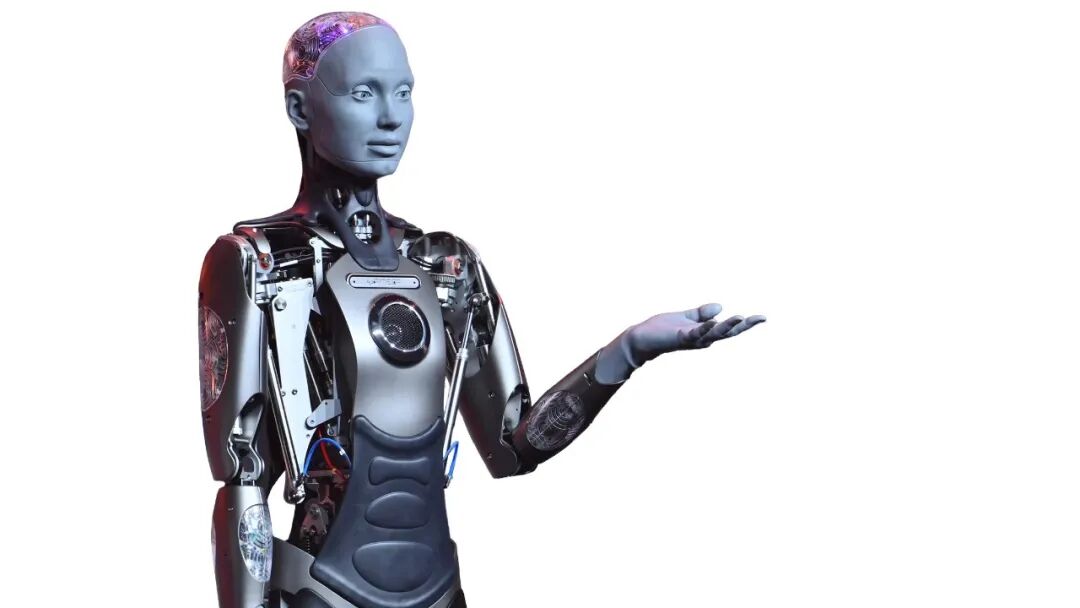
Ameca costs far more than Chinese models, ranging from approximately USD 100,000 for a torso version to over USD 500,000 for fully custom enterprise editions—pricier than the U1.
Critically, Ameca avoids the home market. Its website states: "Can I buy an Ameca home robot? No, Ameca is for commercial, industrial, and research use only, not residential."
Over 20 years, Engineered Arts deployed 200+ units globally to clients like the Computer History Museum (US), Las Vegas Sphere, Dubai Future Museum, and Edinburgh’s National Robotarium, following a customized, small-scale, and heavily supervised approach rather than targeting living rooms.
This restraint stems from deliberate strategy, not capability, with at least three real-world considerations:
1. **Regulatory Red Lines**: The EU’s AI Act (Article 5) bans AI systems inferring emotions in workplaces or schools via biometric data, except for medical or safety purposes, with fines up to €35M or 7% of global revenue. Emotion recognition and granular emotional interactions—bionic robots’ pride—could violate EU laws in many commercial settings. Launching such products prematurely risks non-compliance.
2. **Unclear Liability**: Robots sold to museums or events operate in controlled environments with dedicated supervisors, making issues traceable. In households, long-term emotional attachment, data storage, and accidental harm lack clear legal frameworks, shifting risks to consumers and manufacturers.
3. **Ethical Consensus Absence**: Academia warns that companion robots may objectify intimacy or create one-sided emotional bonds in elderly care, weakening real social connections. These debates remain in papers and policy drafts, far from industry consensus. Rushing to market risks turning millions of families into ethical test subjects.
This explains why overseas firms avoid large-scale home deployment. Public trust risks are high; they fear "harsh delight"—if bionic companionship gains a reputation for "emotional manipulation" or "privacy violations," the costs of early mistakes far outweigh delayed launches.
Overseas peers demonstrate that bionic robots can thrive in controlled settings without rushing into homes. UBTECH’s aggressiveness poses a question: will the industry mature sustainably, or will haste erode domestic consumer trust prematurely?
-
![]()
Has UBTECH Embarked on a Path of 'Harsh Delight'?
-
Three Parts Storytelling, Seven Parts Strategy: Trillion-Yuan Zhipu and Its Strategic Gambit
-
![]()
990,000 Yuan for Emotional Value? UBTECH Debuts Bionic Robots in Consumer Market, Accelerating Divergence in Embodied AI Race
-
![]()
Hardware is the skeleton, AI is the soul, and data integrates the two
-
![]()
China’s AI Industry: A Unified Pivot Towards Monetization?
-
![]()
New Progress! Infineon Completes Acquisition of ams OSRAM's Non-Optical Sensor Business
-
![]()
35 Million Bet on an Optical Future! Tengjing Technology Makes a Move in AR
-
![]()
Why World Models Get Stuck on Construction Roads in Autonomous Driving Applications