Half-Year, 1 Billion Yuan Financing, 7 Billion Yuan Valuation: A New Dark Horse Emerges in the Embodied AI Sector
 07/09 2026
 344
344
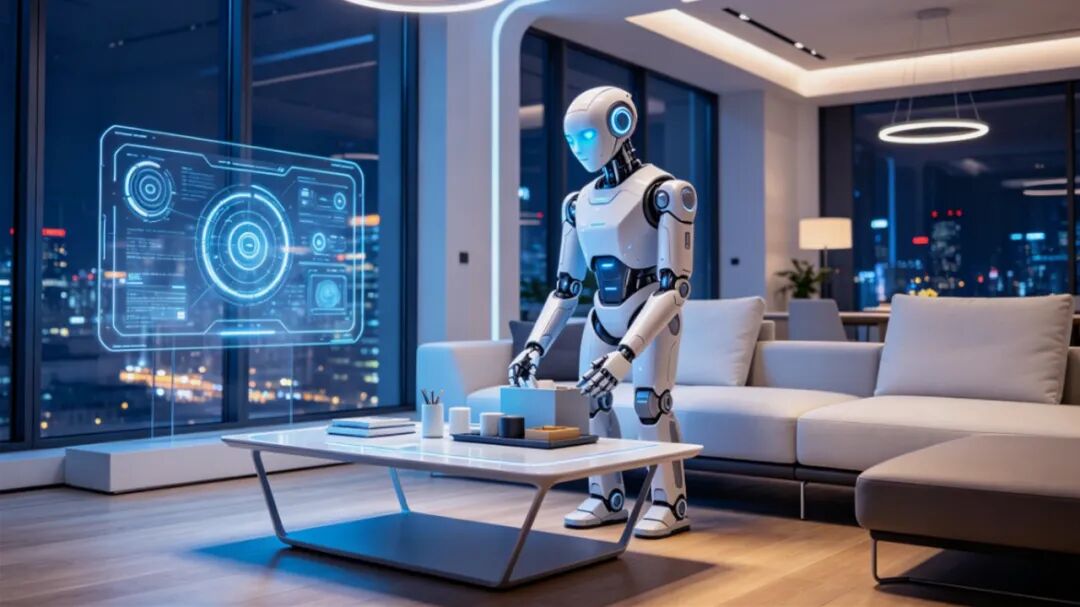
A six-month-old startup provides insights into the current landscape of embodied AI.
Last week, Moki AI, a mere six-month-old embodied AI company, suddenly became the center of attention in the industry. The company secured over 1 billion yuan in angel-round series financing within half a year, with its valuation soaring past 7 billion yuan. The investor list boasts over a dozen names, including Alibaba, Tencent, Lanchi Ventures, and Legend Capital.
When the news broke, professionals in the autonomous driving and robotics sectors took notice. Some were amazed by how unexpectedly vibrant the sector had become, noting that a half-year-old company achieving such a valuation would have been nearly unthinkable three years ago. Others debated what unique contributions a young technical leader from Huawei's autonomous driving division could bring to the embodied AI field.
Over the past six months, the buzz around embodied AI has been undeniable. According to IT Juzi's statistics, total domestic sector financing in the first half of 2026 exceeded 90 billion yuan, marking a fivefold increase year-on-year, with more than one financing deal closing daily on average. Billion-dollar unicorns are emerging rapidly: Unitree Technology's approval for listing on the Science and Technology Innovation Board corresponds to a 42 billion yuan valuation, Zhiyuan Robotics has produced 15,000 units cumulatively, and Tesla officially announced that Optimus will commence mass production by the end of this year.
Amidst the excitement, doubts linger. With hundreds of billions of yuan being invested in this sector, what truly constitutes the core barrier to entry? Behind the flurry of demos and product launches, how much tangible progress remains before embodied AI truly integrates into our daily lives? Huang Qingqiu and his Moki AI offer a fresh perspective for observing the industry.
01
Autonomous Driving: The Training Ground for Embodied AI
Huang Qingqiu is a well-known figure in the autonomous driving circle. With a bachelor's degree in automation from Tsinghua University and a Ph.D. from the MMLab at the Chinese University of Hong Kong under Lin Dahua, he joined Huawei's Intelligent Automotive Solutions Business Group in 2020 as a 'genius young talent.' He later became the head of the autonomous driving AI department, leading algorithm breakthroughs and mass production rollouts for Huawei ADS from version 1.0 to 4.0. He was the first in the industry to achieve mass production of a one-stage end-to-end architecture at a scale of millions of units.
As a core player deeply involved in the entire lifecycle of autonomous driving mass production, his pivot to embodied AI might seem like a dramatic shift to outsiders. However, from a technical standpoint, it feels like a natural progression. Huang himself has a clear judgment: autonomous driving is a subset of embodied intelligence.
In public perception, autonomous vehicles operate on roads, while robots inhabit everyday physical spaces, belonging to two entirely different sectors. However, when dissecting the underlying technologies, their commonalities are far deeper than imagined.
All human operations in the physical world ultimately boil down to two things: movement and contact. Autonomous driving addresses movement in a two-dimensional plane: vehicles perceive, decide, and control motion within relatively structured road environments. In contrast, embodied AI tackles movement plus contact in a three-dimensional world: robots must not only navigate complex spaces smoothly but also interact with various objects—grasping, placing, and operating tools.
Moving from two to three dimensions adds just one dimension, but the complexity of the solution space explodes exponentially. Driving doesn't require understanding the physical properties of a glass of water, but for a robot to carry a paper cup filled with water without spilling, it must continuously perceive the cup's weight, water surface sloshing, and friction between fingers and cup walls, adjusting its grip every millisecond. This is the core reason why embodied AI is more challenging than autonomous driving.
Yet despite the difficulties, the underlying engineering methodologies are entirely transferable.
When Tesla developed Optimus, it directly reused the entire neural network technology stack from FSD, empowering robots with visual perception and decision-making capabilities accumulated through autonomous driving. This approach has become a recognized industry path. Huang Qingqiu, with his five years of experience at Huawei, understands the transferable value of this methodology best.
End-to-end training frameworks, data-closed-loop iteration systems, real-time optimization of edge-side models, multi-sensor fusion engineering solutions, and even quality control processes for million-unit-scale mass production—these are mature experiences that the autonomous driving industry has accumulated after spending hundreds of billions and navigating countless pitfalls. Transplanting them to the embodied AI sector can directly shorten the cycle from demo to mass production.
In the past, many traditional robotics companies came from automation or mechanical engineering backgrounds, excelling at building robot bodies and motion control but lacking intuition for data-driven iteration logic and end-to-end mass production of large models. The influx of professionals with autonomous driving backgrounds effectively raises the overall engineering standard of embodied AI.
Of course, while experiences can be reused, challenges don't disappear. No matter how complex autonomous driving scenarios are, they're ultimately constrained by traffic rules and road boundaries, with abnormal scenarios remaining rare. However, the real physical world is entirely unstructured—socks on the floor, tilted cups, changing lighting. These edge cases in autonomous driving become everyday occurrences in embodied scenarios.
Precisely for this reason, Huang Qingqiu argues that we're at the intersection of two technological singularities: large language models have solved high-level semantic understanding and task decomposition, while autonomous driving's end-to-end systems have validated the feasibility of neural networks driving physical entities. Only now, with these two technological lines converging, has embodied AI truly reached the eve of practical implementation.
02 System Engineering Capability Matters More Than Model Architecture
When discussing embodied AI today, the industry's focus often centers on technical routes: VLA versus world models, end-to-end versus hierarchical architectures, autoregressive versus diffusion models—each faction has its advocates. However, in Huang Qingqiu's view, these aren't the most core issues.
He firmly believes: while model architecture in labs determines theoretical limits, in the real physical world at a scale of millions of units, systems determine survival.
This statement warrants reflection. The industry today abounds with impressive demos—backflips, bottle cap twisting, clothes folding—showcasing seemingly limitless fine motor capabilities. Yet when the same robot moves from a carefully designed demo stage to a real office or ordinary household, its performance often degrades significantly, struggling even with simple item deliveries.
The root of this discrepancy lies in the fact that demos occur in idealized environments where lighting, angles, and object positions are meticulously adjusted, requiring models to handle only specific scenarios. However, the real world is full of disturbances and surprises—a slight sensor inaccuracy or actuator delay gets amplified continuously within closed-loop systems, ultimately leading to task failure.
Embodied AI is never a singular algorithmic or hardware challenge; fundamentally, it's a real-time, closed-loop systems engineering problem integrating software and hardware. For such a system to function, hardware boundaries must be clearly defined, data must flow efficiently, models must iterate continuously, and a complete evaluation closed-loop mechanism must exist—ultimately fusing all components into a self-evolving whole.
This sounds simple in theory, but implementation difficulty far exceeds imagination.
Take real-time performance: an embodied robot's 'brain' must operate at a minimum of 10Hz, while its 'cerebellum' (motion control) needs to reach 100Hz—meaning action adjustments every ten milliseconds. This frequency threshold directly confines models to edge devices, unable to rely on unlimited cloud computing power. Power consumption and heat dissipation become physical constraints, preventing arbitrary model parameter expansion.
The data challenge is equally daunting. While everyone in the industry emphasizes data importance and stockpiles it, data quality varies dramatically. In Huang's view, authentic data comes from real operators performing genuine tasks in real scenarios—not staged standardized movements in labs or synthetic data generated in simulated environments, but natural human operational trajectories in everyday life.
Moreover, data quality far outweighs quantity. Sub-millisecond multi-sensor time synchronization and motion trajectory accuracy in low-texture environments—without mastering these foundational details, accumulating terabytes of data won't yield effective models.
Within the current industry landscape, different players' routes are clearly differentiated. Companies like Unitree focus on hardware ontology, pushing motion control and dynamic performance to extremes, consistently ranking among global leaders in quadruped robot shipments. Firms like Zhiyuan prioritize engineering and mass production delivery, rapidly driving robot adoption in industrial scenarios. Many others concentrate on embodied large models, emphasizing general-purpose 'brain' capabilities.
However, players pursuing a fully integrated software-hardware approach from day one remain rare. This path is exceptionally heavy—requiring self-development of hardware, models, systems, and data closed loops—demanding massive investment and long cycles while making it difficult to produce attention-grabbing demo products in the short term.
Moki chose this direction due to its founders' backgrounds: Huang Qingqiu understands algorithms and system architecture, while CEO Gao Wenli brings Huawei overseas market experience and global operational capabilities in cross-border logistics.
Naturally, this route presents obvious challenges. A team established for just six months must simultaneously tackle hardware, modeling, and systems while validating commercial scenarios—testing both execution power and resource integration capabilities.
Conversely, once this closed-loop system truly functions, forming a positive iteration cycle between data and products, the barriers constructed will far exceed those of single-track players.
03 What Kind of Household Robots Do We Truly Need?
Moki's direction is clear: general-purpose household robots. According to plans, they'll release their first service-scenario robot in July, initially targeting commercial environments for refinement before gradually penetrating household settings.
When discussing household robots, many raise the same question: with robotic vacuum cleaners, dishwashers, and floor scrubbers already present, why do we need a general-purpose robot?
This question precisely highlights current smart home devices' common pain point. While these products address fragmented point needs, they often create new burdens in the process.
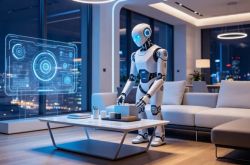
General-purpose household robots aim to change this status quo. Rather than requiring users to adapt their habits, robots should proactively align with human living patterns—recognizing all household items, knowing each object's designated location, autonomously completing cleaning, organizing, delivery, and other daily tasks without repeated rule settings or dedicated maintenance.
This vision is appealing, but the entire industry acknowledges the long road ahead. IDC predicts that humanoid robots won't significantly penetrate household scenarios until after 2030, with current mainstream deployments concentrated in relatively structured environments like industry, logistics, and commercial services. Tesla's Optimus will also initially deploy within its factories, with a home version planned only for 2027.
This market space is undeniably attractive. Smartphones serve as super terminals for the digital world, hosting nearly all modern digital life. General-purpose household robots, however, will become super terminals for the physical world—directly interacting with reality to handle various physical tasks for humans, representing a trillion-dollar global blue ocean market.
Many compare embodied AI to the next smartphone sector, anticipating trillion-dollar market cap giants. However, smartphones' explosion relied on mature supply chains and complete application ecosystems. Embodied AI remains in an extremely early stage, with numerous foundational issues to resolve across hardware, software, data, and scenarios.
Yet precisely because it's early, possibilities abound.
— END —
-
![]()
Model Giant Jieyue Xingchen Steps into Smartphone Arena: A Strategic Alliance with Huaqin Technology
-
![]()
Big Model Firm Dives into Phone Market: StepFun and Wingtech Forge a ‘Dynamic Duo’
-
![]()
Zhongrun Optics Makes a Bold Move with 1 Billion Yuan Investment: Is a Turning Point on the Horizon for the Precision Optics Industry?
-
![]()
Deploy CLBO Crystals and YIG Single Crystals! Erythritol Leader Invests 30 Million in Youwei Optoelectronics
-
CXMT’s July 16 Subscription: Leading Domestic Memory Manufacturer—What’s the Earning Potential per Lot?
-
![]()
Rhythm Discrepancy and Premium Value Erosion: Foreign Luxury Brands Must Re-evaluate Their China Strategy
-
![]()
Half-Year, 1 Billion Yuan Financing, 7 Billion Yuan Valuation: A New Dark Horse Emerges in the Embodied AI Sector
-
![]()
Strong Rebound for Tech Stocks in Hong Kong Stock Market: Is It Time to Bottom-Fish?