Strong Rebound for Tech Stocks in Hong Kong Stock Market: Is It Time to Bottom-Fish?
 07/09 2026
 489
489
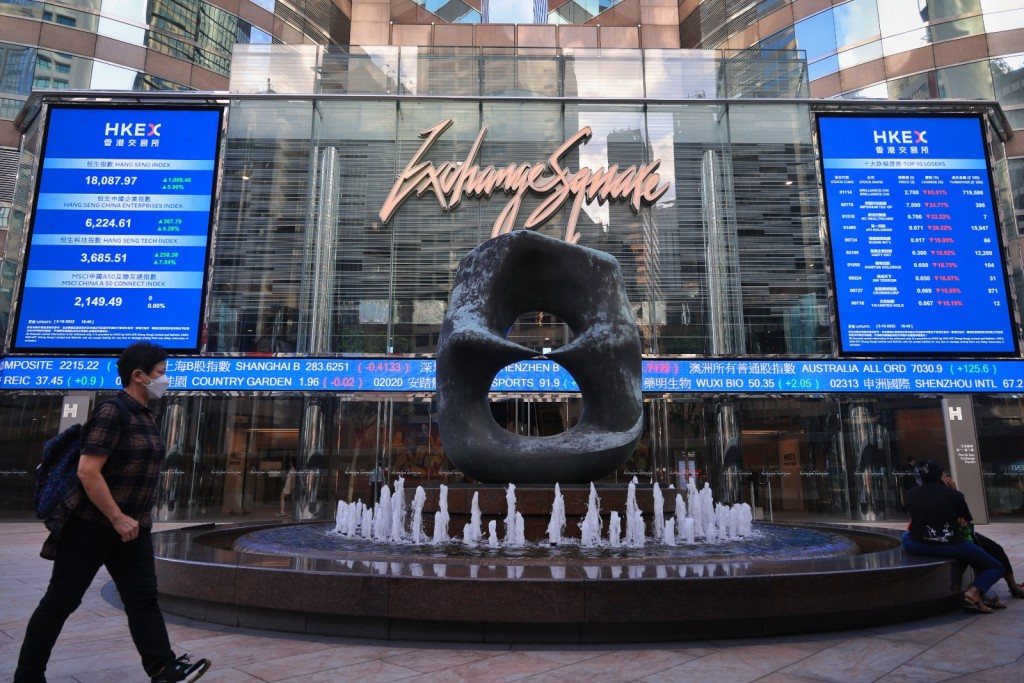
Alibaba's Stock Price Soars 12%, Pre-Market Surge Hits 13% in U.S.
Alibaba's rally stems primarily from Q1 FY2027 earnings preview far exceeding expectations: Today's 12% gain isn't a fleeting emotional spike—it reflects the market correcting a mispricing. Over the past six months, Alibaba was valued as an "e-commerce stock burning cash for growth," ignoring a key fact: Alibaba Cloud is proving AI commercialization has crossed an inflection point, with 45% revenue growth and low double-digit profit margins.
Three key drivers stand out. First, Alibaba Cloud's AI-related revenue has achieved triple-digit growth for 11 consecutive quarters, reaching RMB 8.971 billion quarterly (annualized over RMB 35.8 billion). This is no longer a "proof-of-concept" story—with AI accounting for >30% of cloud revenue, it's driving overall cloud growth and margins. Second, Taobao Deals reduced losses faster than expected, narrowing the UE gap with competitors. While subsidies fell, average order value rose quarter-on-quarter, and non-food growth outpaced the industry—proving it's not "burning cash for scale" but "defending market share while cutting losses." The marginal cost of cash burning is shrinking, a critical pillar for valuation repair. Third, Alibaba repurchases ~$50 million daily, with annual buybacks topping $10 billion—effectively doubling down on its valuation after a 25% stock decline.
Image Source: Internet
Alibaba is in a critical reinvestment phase akin to a "second startup."
Short-term (6-12 months): Stock price may remain volatile, depending on whether Q1 FY27 (June 2026 quarter) results validate previewed improvements, especially cloud margins and instant retail UE.
Medium-term (1-2 years): If cloud margins rise to teens (11-12%→higher) as management guides and instant retail UE turns positive, valuation repair is likely.
Long-term (3-5 years): AI+cloud revenue targets $100 billion in 5 years—if achieved, today's $96 stock price will seem deeply undervalued.
Risk-reward at current levels leans optimistic—even conservatively, analyst models suggest >50% upside. However, investors must tolerate short-term volatility and closely monitor cloud margins, instant retail UE, and free cash flow.
Tencent's AI Awaits Its Turning Point
Tencent's stock has rebounded in recent sessions but remains ~30% below its 52-week high.
The market is discounting certainty: Q1 capex hit RMB 31.9 billion, with AI products (Hunyuan, Yuanbao, CodeBuddy, etc.)' revenues, costs, and expenses disclosed separately—highlighting how AI investments are significantly dragging down current profits. Tencent invested RMB 10 billion in DeepSeek's new funding round, led Kling AI's financing, and cashed out ~RMB 10 billion by reducing Kuaishou stakes—capital flows all point one way. Over 33 consecutive days of buybacks, it spent HKD 15.4 billion (HKD 25.6 billion annualized), aggressively repurchasing as the stock hit 411—a silent pricing of its floor value.
Image Source: Internet
Alibaba's AI returns are already visible in financials (cloud growth + margin expansion), while Tencent's AI payoffs remain hidden in game revenue sharing, ad recommendation algorithms, and Yuanbao's user growth. The market rewards the former for visible profits and discounts the latter while awaiting its inflection point.
Kuaishou: A Tale of Two Halves
Kuaishou's story is now split in two—one half is a cash cow with 400 million DAUs and RMB 100 billion in revenue, trading at near-zero valuation; the other is Kling AI, generating $500 million annualized revenue (4x YoY), driving the most active market expectations. Recent events pushed this divergence to extremes.
From its year-to-date high of HKD 85.2, the stock has halved. Tencent's stake reduction was the direct trigger, but Tencent merely amplified what the market had already been pricing in—its selling prices ranged from HKD 43.15-44.53, a band the market had traded repeatedly for three months. No one was forced to sell; sellers simply acknowledged more honestly than the market: Kuaishou's valuation anchor is sinking.
Q1 total revenue grew just 3.4%—for a super-app with 413 million DAUs, this signals exhausted user growth dividends. Live-streaming revenue fell 13.5% YoY, a structural decline as tipping economics shrink amid weak consumption and tighter regulations—a trend that won't reverse. Ad revenue growth of 9.3% is steady but pales next to Tencent's 20%, highlighting algorithmic efficiency gaps. Other services (e-commerce-driven) grew 15.9%, but this was largely pulled by Kling AI's RMB 650 million revenue. Core business profitability stings worse—adjusted net profit fell 26% YoY to RMB 3.374 billion, with gross margins down 3.4 percentage points. With both revenue and profits declining, this isn't a "short-term pressure" story but a "moderation in business model" narrative.
Image Source: Internet
At HKD 40, Kling's value dominates the stock price, with safety margins tied to its sustained hypergrowth. For investors bullish on video generation and Kling's first-mover status, Kuaishou now offers a discounted AI ticket. But for those focused on the core business—shrinking live-streaming, ad market squeezed by Douyin and Tencent, and slowing e-commerce—the discount may not be deep enough. Tencent has already made its choice.
This article is for informational and opinion-sharing purposes only and does not constitute investment advice.
- END -
-
![]()
Model Giant Jieyue Xingchen Steps into Smartphone Arena: A Strategic Alliance with Huaqin Technology
-
![]()
Big Model Firm Dives into Phone Market: StepFun and Wingtech Forge a ‘Dynamic Duo’
-
![]()
Zhongrun Optics Makes a Bold Move with 1 Billion Yuan Investment: Is a Turning Point on the Horizon for the Precision Optics Industry?
-
![]()
Deploy CLBO Crystals and YIG Single Crystals! Erythritol Leader Invests 30 Million in Youwei Optoelectronics
-
CXMT’s July 16 Subscription: Leading Domestic Memory Manufacturer—What’s the Earning Potential per Lot?
-
![]()
Rhythm Discrepancy and Premium Value Erosion: Foreign Luxury Brands Must Re-evaluate Their China Strategy
-
![]()
Half-Year, 1 Billion Yuan Financing, 7 Billion Yuan Valuation: A New Dark Horse Emerges in the Embodied AI Sector
-
![]()
Strong Rebound for Tech Stocks in Hong Kong Stock Market: Is It Time to Bottom-Fish?