Anthropic Engages with Samsung for Self-Developed AI Chips, Trend of Large Model Companies Collectively 'Building Chips' Emerges
 07/13 2026
 514
514
"The Battle for Computing Power Decoupling Begins"
Produced by Jixin
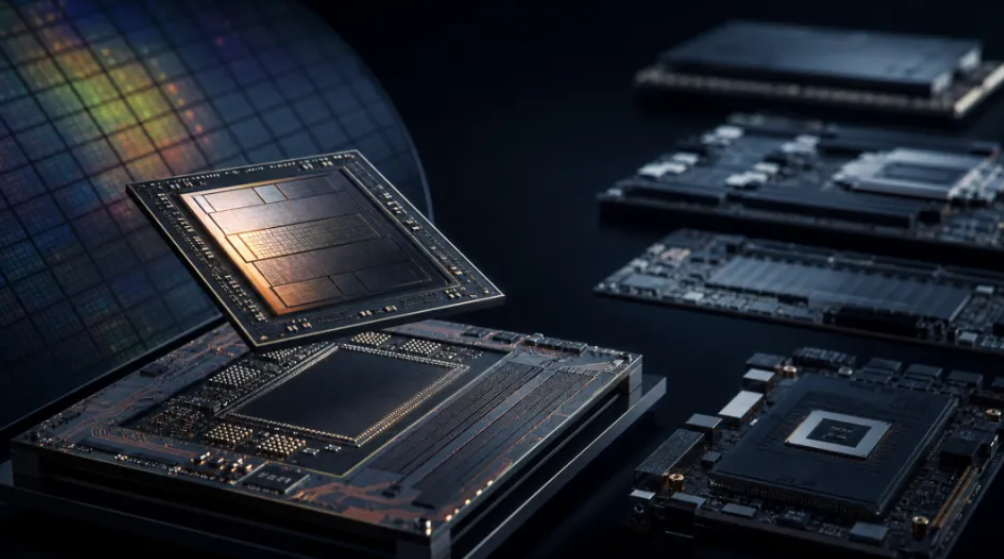
When Claude demonstrated astonishing long-text understanding capabilities, the computing power consumption behind it was equally staggering. It is estimated that to maintain inference for Claude and other cutting-edge models with tens of millions of daily active users, the daily chip depreciation cost alone could reach hundreds of thousands of dollars. This rate of burning money has forced Anthropic, a star company founded by former OpenAI core employees with a mission of AI safety, to seek a more fundamental solution beyond financing. The answer points to self-developed AI chips, and its chosen ally is Samsung, eager to overtake in the AI foundry sector. This collaboration sounds the charge for large model companies to collectively move from the cloud to the silicon-based realm.
01 Anthropic's Chip Ambitions
According to foreign media reports, Anthropic has engaged in in-depth negotiations with Samsung Electronics, with the core topic being the development of an AI inference chip designed specifically for its large models. This is not a simple commercial procurement but a comprehensive technical collaboration covering architecture definition, manufacturing processes, and high-bandwidth memory integration. The news shook the industry, as it signifies that large model companies' anxiety over computing power has extended from software-level "prompt optimization" and "model distillation" to the physical level of transistor circuit design. The most direct driver for Anthropic to bypass off-the-shelf solutions from traditional chip vendors and pursue self-development is the structural pain point of inference costs. General-purpose GPUs, when handling massive matrix operations, contain numerous circuits and functions unnecessary for AI tasks, resulting in far-from-optimal energy efficiency. A source close to the deal revealed that Anthropic envisions stripping away all unnecessary graphics rendering modules and building a dedicated ASIC chip that enhances efficiency severalfold for specific model inferences by focusing on its self-developed Claude model's sparse activation mechanism. This would not only significantly reduce the cost per API call but also free it from reliance on NVIDIA's CUDA ecosystem, truly putting hardware in its own hands.
Choosing Samsung, meanwhile, is a shrewd mutual pursuit. Samsung possesses integrated manufacturing capabilities spanning chip design, wafer foundry, and HBM high-bandwidth memory—an irresistible attraction for AI inference chips that desperately crave memory bandwidth. For Samsung, winning Anthropic as a client means its advanced processes below 3nm and HBM memory have found an ideal partner capable of continuously proposing extreme demands and jointly defining next-generation products. This represents a crucial opportunity for Samsung to rise in the foundry sector under TSMC's shadow.
02 A Reverse Definition of the Industrial Chain
Viewing Anthropic's actions within a broader context reveals that this is no isolated case but a collective awakening sweeping through the entire head (top-tier) large model circle. 
OpenAI has taken the most aggressive stance. Its CEO, Sam Altman, has been reported to be raising substantial funds globally for a chip project codenamed "Tigris," aiming to build a dedicated chip manufacturing network capable of supporting superintelligence. Simultaneously, OpenAI has collaborated with chip design giants like Broadcom to develop customized AI inference chips and frequently engaged with TSMC.
If OpenAI's aggressiveness is understandable—after all, it stands at the forefront of the large model race, feeling the most acute pain over computing power costs and supply security—the expanding list of companies pursuing self-developed chips changes the nature of the situation. Google's TPU has long been a textbook case of custom chips, now iterated to its fifth generation, providing a powerful dedicated computing base for its Gemini model. Microsoft's Maia 100 chip, released late last year, directly targets cloud AI workloads, aiming to break NVIDIA's GPU procurement dominance. Meta's journey in self-developed chips has been turbulent but unrelenting, continuously developing more energy-efficient MTIA series chips for recommendation systems and generative AI. Even Amazon, once rumored to have abandoned self-development, has already deployed its Trainium and Inferentia chips at scale. From startups to cloud giants, from search dominators to social empires, nearly every heavyweight in the AI arena has carved out its territory in the silicon world.
Why are these companies, with vastly different business models and complex competitive relationships, converging on the same path? The answer may not lie in each company's individual strategy but in the shared computing power dilemma they face—a dilemma with three layers, each pushing all players toward the narrow gate of self-developed chips.
The most superficial layer is the cost equation. A cutting-edge large model, during the inference phase, can burn hundreds of thousands of dollars daily just in chip depreciation. When daily active users surpass ten million, using general-purpose GPUs means paying for numerous circuits and functions entirely unused in AI tasks. Self-developed chips eliminate all this redundancy. Even a 20-30% efficiency gain translates into annual figures significant enough to alter financial reports. Based on current price curves, the unit inference cost of a self-developed ASIC could reach one-fourth to one-third of that of a contemporary GPU. This is not incremental optimization but a matter of survival for whether model services can achieve a viable business closed loop (closed loop).
A deeper layer is supply anxiety. NVIDIA's GPU delivery cycles often stretch beyond six months, with product rhythms entirely beyond downstream customers' control. All large model companies recognize a stark reality: entrusting their technological lifeblood to a single supplier that also serves all their competitors is strategically unacceptable. Self-developed chips may not surpass NVIDIA in performance, but they at least provide a trump card—when external supplies falter, your own production lines can step in. In a sense, the insurance value of self-developed chips outweighs their technical merit.
The most fundamental and decisive driver is the deep integration of algorithms and hardware. In the past, model developers could only passively adapt to existing chip architecture constraints; now, top players are reversing the dynamic, tailoring chips to their models. Designing models with chip thinking in mind and defining chips with model requirements—this soft-hardware integration capability is becoming AI competition's new moat. Google's TPU success has already proven this path's power: the inference efficiency of the Gemini model on TPUs far surpasses that when transplanted to general-purpose GPUs. When every matrix operation in the algorithm finds a precisely matching transistor circuit, performance gains are not linear but leapfrogging. All large model companies aspire to replicate such leaps.
These three pressures compound, transforming self-developed chips from an option into a necessity for top players. Not every company will succeed, but the cost of not trying has become unbearably high.
03 Who Can Capture This Chip-Building Dividend?
The collective chip-building by large model companies is triggering a power restructuring in chip manufacturing. Traditional chip design giants like NVIDIA and AMD must reassess that their former clients are becoming potential competitors.
However, for wafer foundries and design service providers, a feast has just begun. TSMC is undoubtedly the biggest winner. Its advanced processes and CoWoS packaging have become the inevitable choice for nearly all AI self-developed chips, with orders booked years in advance. Samsung, meanwhile, attempts to seize market share from TSMC with its memory-foundry-packaging integrated bundle, and Anthropic's engagement represents a potential breakthrough for this strategy.
Intel has rolled out its foundry service IFS and open chip interconnect standards, trying to attract players seeking to avoid TSMC's dominance. Meanwhile, valuation (valuation) of custom chip design service providers like Broadcom and Marvell has soared as they develop multiple AI ASICs simultaneously for various giants, enjoying dual dividends of "selling shovels to shovel makers." This "chip-building" movement is not without challenges.
Designing a chip that can rival NVIDIA's software ecosystem requires hundreds of millions of dollars in investment, spans two to three years, and is fraught with failure risks. NVIDIA has erected a formidable barrier composed of hardware iteration speed, CUDA ecosystem, and NVLink interconnect technology. Jensen Huang recently stated publicly that even if competitors' chips were free, they might not match NVIDIA's comprehensive cost advantage.
His confidence stems from NVIDIA's ability to double performance every two years, a brutal evolution pace that renders any self-developed chip potentially obsolete upon landing. Self-developed chips resemble a high-stakes gamble, using today's uncertainties to hedge against tomorrow's greater risk of dependency. 
Anthropic's partnership with Samsung marks a milestone in large model competition extending from parameter scale and multimodal capabilities to computing power sovereignty. When even the purest model companies begin defining chips themselves, vertical integration in the AI industry has become irreversible. This wave is not exclusive to Silicon Valley. Across the ocean, Chinese AI enterprises are equally accelerating their chip self-development paths.
Baidu has pursued a full-stack self-development approach. Its Kunlunxin series AI chips have iterated to the third generation, featuring 7nm process technology and tens of thousands of units in mass production. These chips not only serve ERNIE's training and inference but also see scaling (scaled) deployment in smart transportation, industrial internet, and other scenarios.
ByteDance's moves are more covert but equally determined, having assembled a chip team of hundreds focusing on self-developed AI inference chips and server-specific chips, targeting cost optimization for its Douyin recommendation system and Doubao large model inferences. Huawei's Ascend series, under external sanction pressures, has shouldered the burden of domestic AI computing power. According to public information, the Ascend 910C demonstrates competitive performance against international mainstream products in multiple large model inference benchmark tests. Alibaba's Pingtouge Semiconductor's Hanguang series chips and Tencent-invested Suiyuan Technology are also making sustained investments along their respective paths.
These Chinese players' chip-building practices share the same underlying logic as OpenAI, Anthropic, and Google—all seeking to get rid of (break free from) reliance on single suppliers, all employing a reverse integration logic of defining hardware with algorithms, and all stockpiling computing power sovereignty for the next phase of model competition. The difference lies only in approach: U.S. enterprises often take routes of joint customization with mature partners like Broadcom and TSMC, while Chinese companies, under technological blockades, are forced into a more full-stack, autonomous breakthrough path.
In the future, winners in the large model era may no longer emerge solely through elegant algorithms but must also become hardware definers well-versed in transistor physics and foundry negotiations. Chip-building has become not an option but a necessary path to independence and long-term survival for leading AI enterprises in both China and the U.S. When the boundaries between algorithms and silicon disappear entirely, this "soft-hardware integration" war has only just begun.
-
![]()
Is AI Still the Main Theme of the Market After the Decline of Memory Stocks?
-
![]()
An Evening in Changchun’s Outskirts: Unveiling the Legacy of the ‘Jiefang’
-
![]()
Apple's Lawsuit Could Set Back OpenAI's Hardware Ambitions by Years
-
![]()
Domestic EVs Lead, Overseas PHEVs Flourish
-
![]()
Anthropic Engages with Samsung for Self-Developed AI Chips, Trend of Large Model Companies Collectively 'Building Chips' Emerges
-
![]()
Why Has Continental Evolved into a Pure Tire Company Post-'Downsizing'?
-
![]()
Zhipu’s Valuation Soars, MiniMax Faces Challenges
-
![]()
Weekly Stock Review | Who Dominates the Market: Hedge Funds, Quant Traders, Institutions, or Hot Money?