Why Has Continental Evolved into a Pure Tire Company Post-'Downsizing'?
 07/13 2026
 438
438
Lead | Introduction
Faced with the transformative impact of electrification, global automotive parts giants are streamlining their operations and honing in on their core businesses. Continental AG's divestiture of ContiTech and its complete exit from non-tire assets across the supply chain, transforming it into a pure tire manufacturer, epitomizes the industry's trend of concentrating resources in high-margin sectors.
Produced by | This article is produced by: Heyan Yueche Studio
Written by | Article written by: Zhang Chi
Edited by | Editing by: He Zi
Full text: 2,590 characters
Reading time: 4 minutes
Global automotive parts giants are progressively 'downsizing,' with Germany's Continental AG leading the charge.
In early July, Continental AG officially announced the closure of its strategic restructuring: It plans to sell its ContiTech industrial rubber division to private equity firm Lone Star Funds. The base consideration for the transaction stands at €4 billion, with an additional performance-based earnout of up to €250 million. Subject to global antitrust approvals, the transaction is expected to conclude by the end of 2026.
After deducting transfer net liabilities, such as pensions and lease commitments, Continental anticipates recovering approximately €3.1 billion in cash. Of this, €2.5 billion will be allocated for a one-time special dividend payment and share buybacks, with the remaining funds earmarked for debt optimization and increased investment in tire business R&D. This sale marks the final step in Continental's divestiture of its diversified businesses. Previously, the group had spun off its automotive parts division for independent listing and divested its automotive rubber components business. Upon completion of the ContiTech transaction, Continental will completely exit the automotive parts and industrial rubber sectors, transforming into a company exclusively focused on the tire business.
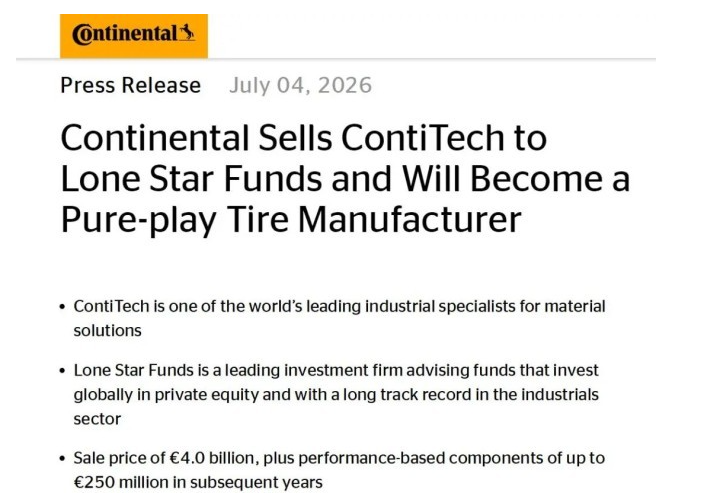
△ Germany's Continental AG plans to sell its ContiTech industrial rubber division to private equity firm Lone Star Funds.
Continental's Gradual Divestiture of Certain Businesses
Continental's divestiture of automotive-related parts businesses is unfolding in three phases. The first phase concluded in September 2025 with the spin-off of the entire automotive parts division, independently listing chassis braking, in-vehicle electronics, autonomous driving, and other complete vehicle support businesses as Aumovio on the Frankfurt Stock Exchange.
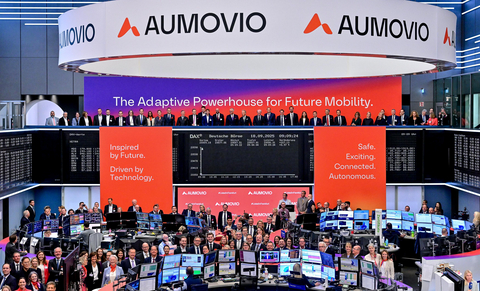
△ Continental's automotive parts division has been spun off and listed on the Frankfurt Stock Exchange.
The second phase centers on the automotive support assets of the ContiTech division. In February 2026, the sale of its OESL automotive rubber components business was finalized, with air springs, drive belts, and other rubber and plastic components for OEMs fully divested. At this juncture, all of the group's parts assets directly supporting complete vehicles had been divested.
The third phase represents the final step in this strategic transformation. In July 2026, Continental AG announced the sale of its remaining ContiTech industrial rubber business in its entirety to a private equity firm, with the transaction expected to close by the end of 2026. Only non-automotive rubber businesses, such as conveyor belts and industrial shock absorption, will be retained. Post-sale, Continental AG will no longer possess any automotive parts or industrial rubber component assets, operating solely in the tire business.
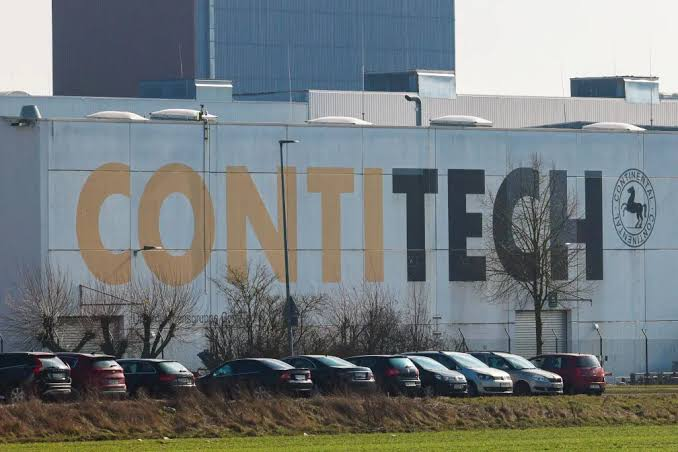
△ The sale of the ContiTech division signifies Continental's exclusive focus on the tire business.
Continental's decision to gradually divest its automotive parts and ContiTech industrial rubber businesses stems from significant profitability disparities between segments and the sustained capital consumption associated with electrification transformation. In this context, Continental's strategy of leveraging restructuring to recover funds and concentrate on the high-margin tire business has emerged as the most viable commercial approach. In 2025, the tire business achieved a 13.6% EBIT margin, serving as the group's core cash flow source. In contrast, the former automotive parts division generated €19.4 billion in revenue in 2024 with a margin of just 2.3%. Moreover, the automotive parts division incurred losses for four consecutive years from 2019 to 2022, while also bearing over €550 million in annual R&D investments for intelligent electrification. ContiTech, with €6 billion in revenue and a mere 5.3% margin in 2025, witnessed its automotive rubber components business struggle with growth, with diversified operations dragging down the group's overall profitability.
Benefits vs. Drawbacks
Continental CEO Christian Kotz stated that the sale of ContiTech not only represents the culmination of the group's strategic restructuring but also heralds the company's entry into a new development stage as a pure tire specialist. Post-restructuring, the company will leverage its 19 tire factories worldwide and 55,000 tire business employees to focus on high-end passenger tires, commercial vehicle tires, and specialty tires, solidifying its core markets in Europe and Africa while vigorously expanding into incremental markets in Asia and North America. Notably, with the divestiture completed, the group will no longer bear over €550 million in annual R&D expenditures for parts electrification, elevating its overall profitability to 13%-14.5%. Combined with the dual rigid demand attributes of tire matching (OEM) and replacement markets, Continental's premium large-size tire segment enjoys stable OEM resources, significantly enhancing cash flow stability and markedly boosting the company's appeal to value investors.

△ Continental enjoys stable OEM resources in the premium large-size tire segment.
However, this decision entails both advantages and disadvantages. Upon fully focusing on the tire sector, Continental will encounter multiple constraints. A single-business model forfeits the cyclical hedging buffer provided by parts and industrial rubber businesses, rendering the company directly susceptible to impacts on overall profits from global automotive market weakness or raw material price hikes for rubber. Industry competition continues to intensify, with upstream players like Michelin and Bridgestone leading in scale, domestic tire makers seizing mid-to-low-end markets through cost advantages, and Pirelli diverting premium OEM orders. This creates long-term price competition pressures. Coupled with external uncertainties such as sluggish European demand, international trade tariffs, and exchange rate fluctuations, there is a discernible ceiling on business growth potential, with overall risk resistance notably weaker compared to the diversified period.
For the acquirer, Lone Star Funds, this acquisition holds long-term strategic synergistic value. ContiTech employs 22,000 people globally and generated approximately €4.4 billion in revenue in 2025, with 80% of its income derived from high-growth industrial sectors such as mining, energy, infrastructure, and construction machinery. Specializing in conveyor systems, fluid management, and shock-absorbing rubber-plastic materials, it is a global leader in industrial material solutions. This marks the private equity firm's third major acquisition in industrial polymer materials in 2026, following its purchases of RadiciGroup's high-performance polymers and specialty chemicals businesses in April, as well as signing to acquire DOMO's engineering plastics division. By successively entering the rubber, modified plastics, and specialty chemicals sectors, this acquisition of ContiTech further completes its industrial rubber business portfolio. The firm plans to optimize internal operations, deepen its presence in energy and industrial growth sectors, establish a full range of industrial material product matrices, and continuously unlock the overall growth potential of its material assets.

△ Acquirer Lone Star Funds aims to build a highly competitive industrial rubber business portfolio.
Global Auto Parts Giants Are Downsizing En Masse
In recent years, leading automotive parts companies in Europe, the U.S., and North America have initiated large-scale asset downsizing, focusing on divesting mature businesses with low margins, labor intensity, or sluggish growth.
△ Forvia opted to sell its core interior division.
German companies, in particular, have been highly active. In 2025, Bosch set aside €3.1 billion in restructuring provisions, contracting non-automotive diversified segments and planning to cut 13,000 jobs by 2030. ZF sold its passenger car ADAS business for €1.5 billion and shut down loss-making electric drive projects to reduce debt. Schaeffler divested fuel-related assets such as turbochargers to focus on electric drives and high-end bearings. Forvia sold its interior division for €1.82 billion. North American companies are also advancing structural optimizations: Aptiv completed the spin-off of its wire harness electrical distribution system (EDS) in April 2026, independently listing its low- and high-voltage wire harness businesses as Versigent to fully exit low-value-added manufacturing. Magna is selling its lighting and roof systems businesses through three transactions, with combined revenue of $1.1 billion for these assets in 2025. The deals are expected to close in the second half of 2026.

△ ZF sold its ADAS business to Harman International, a Samsung subsidiary.
This round of industry-wide downsizing shares a unified underlying logic: Electrification and intelligence have necessitated sustained high R&D expenditures, while traditional businesses such as wire harnesses, interiors, lighting, and roof systems face continuous margin pressures. Coupled with price pressures from OEMs and profit squeezes from local supply chain competition, large and diversified corporate structures continue to drag down overall group profitability. By selling or spinning off non-core assets, companies recover substantial cash flows to reduce high debt levels, repair balance sheets, and concentrate funds on high-value sectors such as intelligent driving, in-vehicle software, and electric drives. Divested assets can also independently align with their industry development rhythms and unlock operational value, forming a unified global trend in the auto parts industry to 'eliminate redundancies and focus on high-margin sectors.'
Commentary
Under the dual pressures of high R&D investments for electrification and continuous price reductions from OEMs, companies are recovering cash flows by selling or spinning off inefficient assets. This approach not only alleviates financial pressures and improves overall profitability but also concentrates resources on high-value-added sectors such as electric drives, intelligent chassis systems, and premium tires. This wave of industry downsizing not only reshapes the global auto parts competitive landscape but also releases significant market share, creating a rare development window for domestic auto parts companies to accelerate import substitution and overseas expansion.
(This article is original to Heyan Yueche and may not be reproduced without authorization.)
-
![]()
Is AI Still the Main Theme of the Market After the Decline of Memory Stocks?
-
![]()
An Evening in Changchun’s Outskirts: Unveiling the Legacy of the ‘Jiefang’
-
![]()
Apple's Lawsuit Could Set Back OpenAI's Hardware Ambitions by Years
-
![]()
Domestic EVs Lead, Overseas PHEVs Flourish
-
![]()
Anthropic Engages with Samsung for Self-Developed AI Chips, Trend of Large Model Companies Collectively 'Building Chips' Emerges
-
![]()
Why Has Continental Evolved into a Pure Tire Company Post-'Downsizing'?
-
![]()
Zhipu’s Valuation Soars, MiniMax Faces Challenges
-
![]()
Weekly Stock Review | Who Dominates the Market: Hedge Funds, Quant Traders, Institutions, or Hot Money?