The Arrival of AIDC: Can Traditional IDCs Still Profit by 'Selling Racks'? | Xinliu AIDC Column
 07/13 2026
 412
412
[Abstract] The growth in computing power demand driven by generative AI is propelling the data center industry into a new cycle of transformation. Discussions around concepts such as intelligent computing centers and AIDC continue to intensify, with companies like 21Vianet, GDS, and Range Technology ramping up their related deployments.
However, beyond the market's focus on new demand, a more worthy question is: What exactly has AIDC changed? For traditional IDC enterprises long reliant on rack leasing and resource operations, this transition signifies a restructuring of capabilities, competitive logic, and business models.
Meanwhile, many questions behind the AIDC boom remain to be validated. While the construction of intelligent computing centers can be planned in advance, industry growth ultimately depends on whether AI applications can continuously create value. As market attention shifts from 'how much to build' to 'how well it's used,' whether AIDC can become the second growth curve for the IDC industry will face its true test.
The following is the main text:
01
The Rise of AIDC: AI is Redefining Data Centers
For more than a decade, the growth logic of the data center industry has been relatively clear. The continuous expansion of applications such as mobile internet, cloud computing, e-commerce, and online video has driven growing demand among enterprises for server hosting, cloud resources, and network connectivity. As a result, IDCs have gradually developed into a critical infrastructure for the digital economy.
At this stage, for most clients, data centers were more akin to a standardized infrastructure service. Industry competition primarily revolved around rack scale, utilization rates, PUE levels, and resource acquisition capabilities, with stable power supply, network access, and facility operations as the core value propositions.
However, the rapid development of generative AI is changing this operational logic.
Since 2023, the surge in demand for computing power driven by large language models has begun to alter the role of data centers. Shifting from traditional 'server hosts,' they are gradually transforming into intelligent computing infrastructures that support large-scale GPU cluster operations to address the systemic pressures of higher-density computing and low-latency collaboration.
The first aspect to be elevated is power density. McKinsey data shows that the global average rack power density in data centers has risen from approximately 8kW to 17kW within two years and is expected to reach around 30kW by 2027. In AI training scenarios, high-density racks exceeding 40kW have gradually become the mainstream configuration, with some next-generation GPU clusters even surpassing 100kW.
The rapid rise in thermal density has directly altered the operational methods of infrastructure. Traditional air-cooling-based thermal management systems are approaching their limits, with liquid cooling solutions accelerating from optional to more universal baseline configurations. Simultaneously, to support high-density computing clusters, upgrades in high-speed networking, cluster scheduling, and power supply systems have also commenced.
At the same time, AI training tasks have placed higher demands on network bandwidth and cluster collaboration efficiency. Numerous GPUs need to frequently exchange parameters during training, making network performance a critical factor influencing computing power utilization.
While AIDC has not altered the fundamental attributes of data centers, its construction logic and capability requirements now differ significantly from traditional IDCs.
Server rooms, racks, power supply, and networking still exist, but the evaluation criteria are changing. Compared to rack quantity, the market now places greater emphasis on power density per rack, liquid cooling deployment capabilities, network architecture, and the scalable GPU cluster size; compared to land and facility resources, the importance of power metrics and energy acquisition capabilities continues to rise.
From a longer industry cycle perspective, this trend represents more than just a technological upgrade. The new requirements imposed by AI on data centers are driving the industry's competitive focus from resource operation capabilities toward comprehensive infrastructure capabilities. The objects hosted by data centers have evolved from internet services to intelligent computing tasks, with their role gradually extending from traditional server hosting platforms to computing power infrastructure platforms.
Thus, the AIDC boom has emerged. For the entire IDC industry, this signifies both new market opportunities and a shift in existing competitive rules. For traditional IDC enterprises like 21Vianet and GDS, the more pressing question is no longer whether to enter AIDC but how to adapt to this AI-driven infrastructure restructuring.
02
Transformation Insights from 21Vianet: Why Must Traditional IDCs Start Over?
For traditional IDC enterprises, the changes brought by AIDC extend beyond liquid cooling retrofits or rack power upgrades—they represent a systemic rewrite from foundational capabilities to organizational approaches.
In recent years, 21Vianet has continuously advanced the construction of intelligent computing centers, upgrading capabilities around high-power racks, liquid cooling infrastructure, and AI customer requirements; GDS has implemented high-density deployment solutions for AI scenarios across multiple parks; Range Technology leverages its large-scale park resources to continuously improve (continuously enhance) its intelligent computing business capacity. While paths vary among enterprises, investment priorities are converging: reconstructing data center capabilities around AI scenarios.
As computing power shifts from 'server hosting' to GPU cluster-level collaborative computing, customer focus has simultaneously shifted: from whether racks are available and networks are connected to whether the entire infrastructure can support sustained, stable high-intensity operations. Liquid cooling, high-speed networking, power distribution, and cluster scheduling are no longer independent modules but compressed into a unified computing system, where shortcomings in any area amplify overall efficiency losses.
This also means the evaluation system for data centers is changing. Rack quantity is no longer the core metric, replaced by power density per rack, liquid cooling coverage, network architecture, and scalable GPU cluster size; at a more fundamental level, what is truly being revalued is power resources and their acquisition and scheduling capabilities.
Under this logic, 21Vianet's transformation path exhibits stronger characteristics of 'organizational-level restructuring.'
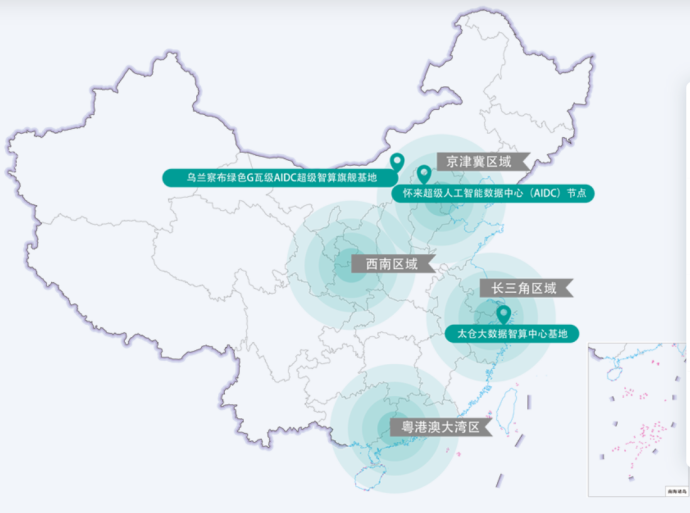
21Vianet has established its energy-related business as a standalone primary business unit reporting directly to the company's top management, operating in parallel with traditional IDC operations. This adjustment is not merely a business expansion but elevates 'power system capabilities' from a supporting role to a core strategic module.
Concurrent with organizational restructuring is a reorganize (restructuring) of the talent pool. The company is supplementing its technical teams with a core focus on power engineering backgrounds and has explicitly launched a large-scale recruitment plan for talent in high-voltage electrical directions to strengthen capabilities in power distribution systems, energy scheduling, and power market mechanisms.
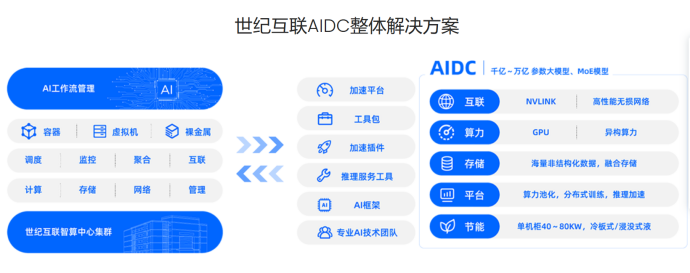
Technologically, its focus has shifted from traditional data center engineering to collaborative computing-power architecture design capabilities. For example, pilot projects around 800V high-voltage DC power supply systems have been advanced in multiple data centers, adopting solid-state transformer solutions jointly developed with Eaton, while domestic alternatives remain in early validation stages.
More critical changes occur at the integration level of energy systems and market mechanisms. In regions like East China, 21Vianet has participated in power market trading and virtual power plant pilots, adhering to grid-friendliness, active balancing, end-side intelligence, and green DC principles to engage in novel power system construction. However, in specific engineering practices, whether energy storage should be deployed on the generation or load side—or whether it should become a standard AIDC configuration—remains unresolved, with the overall approach still in exploratory engineering stages.
At the mega-base project level, 21Vianet has also begun shifting its role upstream, evolving from an execution builder to participating in the early design of integrated computing-power solutions, covering critical aspects such as site selection, power access, and power distribution planning. However, in ultra-large-scale customer scenarios, design authority remains stratified: leading cloud and internet clients retain strong dominance, with the industry more characterized by joint design and collaborative decision-making models.
Source: 21Vianet Official Website
From a broader industry perspective, this shift marks a clear divergence from other IDC vendors. Traditional IDCs still primarily compete around resource acquisition and delivery efficiency, while the AIDC system is pushing the competitive focus toward 'power + computing power' system design capabilities.
However, 21Vianet's path also reveals a more pragmatic boundary: IDC vendors are strengthening energy capabilities but, at this stage, remain closer to co-builders of energy engineering and industries.
Thus, the so-called AIDC transformation is not merely a technological upgrade but a shift from operational capability competition to systems engineering capability competition. 21Vianet's choice essentially attempts to redefine itself from an IDC operator to an infrastructure system provider centered on collaborative energy and computing power operations.
Source: 21Vianet Official Website
03
Can AIDC Become the Second Growth Curve for IDC Enterprises?
From the demand side, AIDC is undoubtedly one of the most closely watched directions in the current data center industry. However, for enterprises like 21Vianet, a more pragmatic question is: Can growth in AIDC demand necessarily translate into sustainable commercial returns?
The answer to this question may not lie solely within the IDC industry.
From a industrial chain (supply chain) position, AIDC represents a typical infrastructure segment, with its value ultimately depending on the commercial value created by upstream applications. In other words, whether IDC enterprises can share in the AI dividend largely depends on whether AI customers can genuinely generate profits.
Currently, the primary demand sources for AIDC can be roughly divided into three categories.
The first category is cloud service providers. In recent years, Alibaba Cloud, Tencent Cloud, Huawei Cloud, and others have continuously increased investments in AI infrastructure, expanding commercialization scenarios through model services and AI cloud offerings. For these enterprises, computing power investments can synergize with cloud businesses, with relatively clear business models.
The second category is general-purpose large model enterprises. Whether for foundational model training or subsequent inference services, substantial computing power resources are required. Meanwhile, the cost pressures from model R&D, talent investment, and computing power procurement cannot be overlooked. Over the past two years, the large model industry has shifted from 'parameter competition' to 'application landing,' with commercialization capabilities becoming a key factor determining enterprise survival and development.
The third category comprises vertical industry clients, including enterprises in smart manufacturing, autonomous driving, and fintech. This demand stems more from AI's value creation capabilities in specific scenarios, with growth rhythms often closely tied to industry digitalization progress.
From this perspective, AIDC development depends not merely on data center construction speed but on whether the AI industry can form a stable value creation mechanism.
This is also a question relatively underexplored in current market discussions.
In recent years, around intelligent computing center construction, various regions have one after another rolled out related plans, with leading enterprises continuously expanding investment scales. The landing of numerous projects reflects market optimism about the AI industry's prospects, but the industry has also begun focusing on the alignment between computing power supply and actual demand.
On one hand, AI training and inference demand continues to grow, with high-performance computing resources remaining generally tight, though regional supply-demand mismatches have also drawn attention.
On the other hand, continuously improve (continuously improving) model efficiency, rapid development of open-source ecosystems, and declining inference costs are altering how the industry utilizes computing resources. Whether the AI industry will continue expanding or gradually shift toward efficiency-driven growth remains uncertain.
For IDC enterprises, AIDC represents both new growth opportunities and longer-cycle, higher-uncertainty investments.
Compared to traditional IDCs, AIDC imposes systemic upgrade requirements on power, cooling, networking, and overall operational capabilities, entailing higher construction investments and longer payback periods. Against a backdrop of industry expansion and demand volatility, investment certainty declines. Simultaneously, customer concentration toward top players intensifies industry pricing power shifts, placing higher pressure on profit stability.
For enterprises like 21Vianet, building intelligent computing centers is not difficult; the challenge lies in finding customers capable of continuously creating value. Securing AI orders is not difficult; the challenge lies in sustaining stable demand growth for these orders over the coming years.
From a longer-term perspective, AIDC's prospects remain promising. However, whether it can ultimately become the IDC industry's second growth curve depends not entirely on data center enterprises but is closely tied to the commercialization progress of the entire AI industry.
04
Epilogue
From the internet era to the AI era, the objects hosted by data centers are changing, and the focal points of industry competition are being redefined. For enterprises like 21Vianet, AIDC represents not merely a simple data center upgrade but a shift from resource operations to systems capability competition. Those better able to integrate power, networking, cooling, computing power, and industrial ecosystem resources will have a greater chance of seizing the initiative in this new infrastructure construction cycle.
Ultimately, however, AIDC's future cannot divorce itself from the AI industry itself. Data center construction can be planned in advance, and computing power resources can continuously expand, but industrial value must ultimately be created by applications. For IDC enterprises, the truly noteworthy aspect may not be how many intelligent computing centers they can build but whether the clients served by these centers can continuously create new commercial value in the AI era.
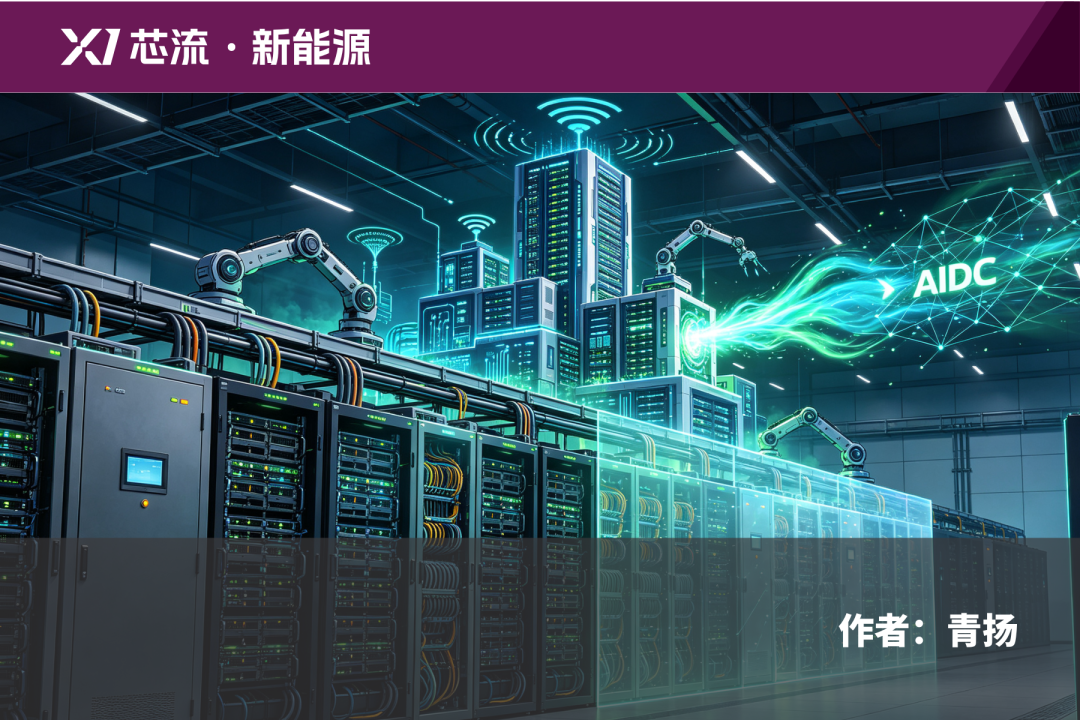
*Header image generated by AI
- XINLIU -
-
![]()
Why Hasn’t AI-Driven Payment Flourished Despite Tech Giants’ Push?
-
![]()
Intensify Efforts in the High-End Optoelectronic Semiconductor Sector! Aipu Dingchun and Jiangsu Meidong Forge a New Joint Venture
-
![]()
From Endoscopes to Optical Interconnects for AI Computing Power: A Veteran Optical Company's Strategic Shift
-
![]()
Behind the Scenes of Token Factories' Rise as a Capital Market Sensation
-
![]()
What Does MaaS Ultimately Bring to Chinese Cloud Providers? | In-Depth Industry Analysis
-
![]()
China’s Auto Resale Value Report Unveiled: AITO M9 Electric and Hybrid Variants Dominate Rankings
-
![]()
Dialogue with Huang Yangming: On the Eve of the Physical AI Boom, the Value of Data Infrastructure Begins to Materialize
-
![]()
The Experience is a Bit Unusual! Logitech G Cloud Review: Great Feel, but Not Ideal for Cloud Gaming