Robot Brain: A Lucrative Business or a Challenging Pursuit?
 07/14 2026
 336
336
Produced by | RoboIsland
The embodied AI industry is currently experiencing a significant transformation.
In the first half of 2026, total financing in China's embodied AI sector reached approximately 43.8 billion yuan. Among this, companies focusing on robot brains secured 22.253 billion yuan, accounting for a substantial 50.8%, while financing for companies specializing in robot bodies stood at only 5.6 billion yuan, representing 12.8%.
Over half of the capital has surged into the robot brain sector. This is not just a slight shift but a dramatic transformation in the industry's focal point. Capital is flowing into robot brains at an unprecedented pace and scale, signaling with tangible investment a clear judgment: in the latter half of the robot era, intelligence will dominate.
2026 is widely recognized as the inaugural year of mass robot production. From complete vehicle manufacturers to component suppliers, early strategic layouts, combined with the paradigm shift brought about by successful large models, have collectively propelled valuations in the brain sector to new heights.
SEER Robotics, the first listed company focused on robot brains, marks a symbolic transition in the embodied AI industry from a focus on physical form to intelligence.
However, SEER Robotics still depends on body-related businesses to sustain its revenue and growth. A structural mismatch exists between the high-margin brain narrative and the low-margin body reality, precisely highlighting the transformation as embodied AI shifts from hardware-driven to software-defined.
After experiencing explosive growth in the previous two years, hardware bodies are no longer rare, and technological barriers for robot bodies have significantly decreased, prompting capital to shift towards brains based on industrial logic.
A deeper issue arises from the fact that while capital has priced brains based on their ultimate potential, the industry has yet to reach a consensus on what exactly constitutes a brain.
Debates persist over whether Visual-Language-Action (VLA) models or world models are the correct approach. Shen Yujun, Chief Scientist at Ants Lingbo, has stated that there's no need to overanalyze technological routes, as the entire embodied brain field is still in its infancy with numerous challenges to overcome.
1. The Paradox of the First Robot Brain Stock
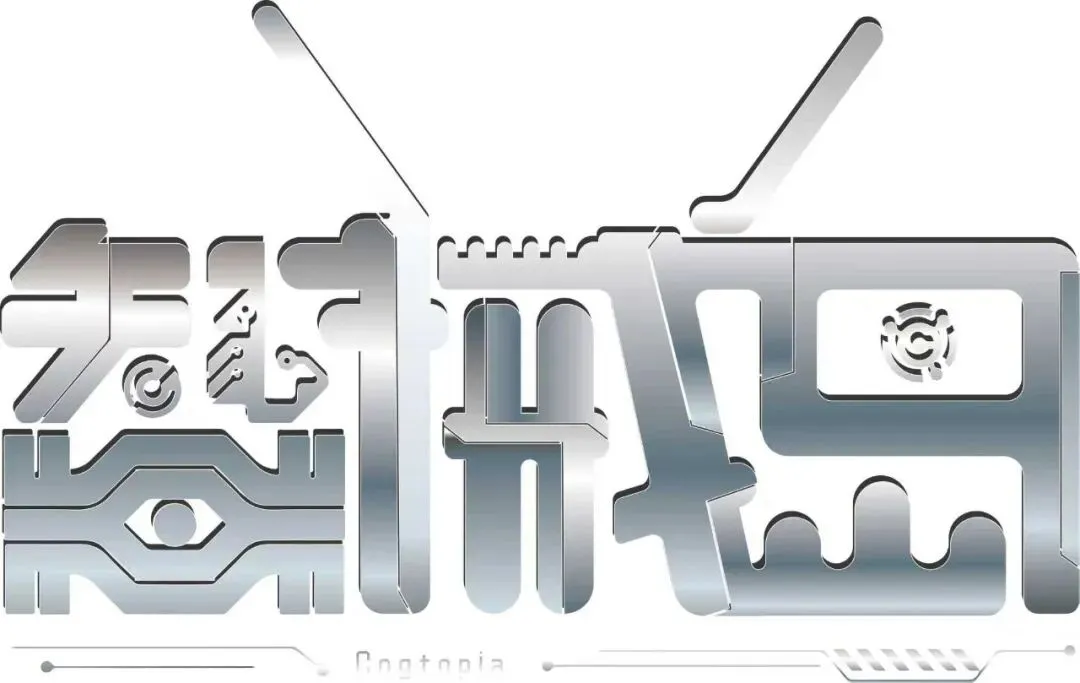
On June 24, SEER Robotics went public on the Hong Kong Stock Exchange, claiming the title of the first robot brain stock. The market responded enthusiastically, with public subscriptions exceeding 5,934 times and eight institutions securing 462 million HKD in shares.
Investors are willing to invest heavily because they believe in the robot brain narrative.
But a closer examination of the prospectus reveals a different story.
In 2025, SEER Robotics' controller business had a gross margin of 79.8%, while its software business reached 89.3%—profit levels typical of pure software companies. However, these two high-margin businesses combined accounted for only 24.6% of total revenue.
The primary revenue driver was the robot body business, with a much lower gross margin of 38.4%, accounting for 67.9% of revenue.
Controller sales data also warrant attention. From 2,553 units in 2023 to 7,924 units in 2025—a 210% increase over three years—controller revenue rose only from 66.06 million yuan to 85.17 million yuan, with its revenue share dropping from 26.5% to 19.3%. The average unit price fell from 25,900 yuan to 10,700 yuan, a nearly 60% decline.
Sales volume is increasing while unit prices are decreasing—two contradictory trends. Controllers are transitioning from the company's profit center to a common volume-driven component.
This phenomenon is not unique to SEER Robotics. The entire robot brain sector faces the same structural contradiction in 2026: capital markets assign high valuations to brains, demanding high margins and premiums, but scaling the business in reality requires relying on bodies for volume.
How can this gap be bridged?
SEER Robotics' core product is the SRC series robot controller, integrating three modules: perception and localization, intelligent decision-making, and motion control.
Based on 2025 controller sales, SEER Robotics holds a 24.8% global market share and a 45.2% Chinese market share, both ranking first worldwide. By the end of 2025, the SRC series had adapted to over 400 component types and deployed across more than 2,000 robot models.
However, a neglected detail lies behind these sales figures: when ranked by revenue, SEER Robotics placed only seventh globally and third in China in the industrial intelligent robot market, with market shares of just 1.1% and 2.5%, respectively. While controller sales lead, market penetration in complete robots remains minimal.
This pattern of strong core components but weak complete systems is reflected in SEER Robotics' revenue structure, showcasing a typical inversion: complete robots generate most revenue but thin profits, while controllers and software contribute most profits but on a smaller revenue scale.
This trend persists, with the controller's revenue share declining from 25.5% in 2022 to 19.3% in 2025, as the high-margin brain is gradually overshadowed by the low-margin body.
Financial pressures are also mounting. From 2023 to 2025, SEER Robotics' revenue grew from 249 million yuan to 442 million yuan, a compound annual growth rate of 33.2%—not slow by any means. Yet, cumulative net losses reached 137 million yuan during the same period, with the company expecting continued losses in 2026.
Cash flow turned negative in 2024 and 2025 after a 10 million-plus inflow in 2023, with over 50 million yuan flowing out over two years. Accounts receivable surged from over 53 million yuan to 170 million yuan, while collection periods lengthened from 61 to 111 days—the more products sold, the harder it became to collect payments.

Zhao Yue, Image source: SEER Robotics official WeChat public account
Why has it come to this? The answer lies in founder Zhao Yue's vision. He believed industrial scenarios were too fragmented for any single company to build all robot types. Instead of complete vehicles, focus on engines; instead of engines, focus on control units.
Thus, SEER Robotics' strategy is to establish a technological stronghold with globally leading controller sales, draw clients into its ecosystem, and then scale revenue through complete robot sales.
This approach has benefits: strong customer loyalty. Repeat customers rose from 32.3% to 44.9%, with 60% of revenue coming from returning clients. Once accustomed to SEER Robotics' control systems, customers continue using them for new robots and production lines.
But the trade-off is clear: the larger the complete robot shipments, the heavier the drag from low-margin businesses on overall profitability—typical revenue growth without profit growth.
SEER Robotics' situation points to the core challenge for the robot brain industry in its early commercialization phase.
From a technological perspective, the controller's nearly 80% gross margin proves the value of brain-level products, with high barriers and thick profits that the market is willing to pay a premium for.
From a commercial perspective, selling brains alone is difficult to scale; customers prefer paying for complete hardware solutions, requiring controllers to attach to some physical form for transactions.
From a capital perspective, the market assigns SEER Robotics a high valuation of about 24 times price-to-sales, far exceeding traditional industrial robot companies. However, persistent losses, cash outflows, and declining core product prices lack sufficient performance support for this high valuation.
The brain's value is recognized by the market, but it must currently rely on the body to monetize. SEER Robotics' dilemma reflects the hurdle the entire industry must overcome as it moves from concept to scale. Rather than a strategic misstep, this path is dictated by the industry's development stage.
Controller average prices will likely continue declining, and complete robot business shares may keep rising, suggesting continued short-term financial pressure for SEER Robotics. However, these observations don't negate its long-term value.
The real determinants lie in another set of questions: Has the data flywheel started spinning? Is real data accumulation across scenarios and models nearing a tipping point? Can this data support training for next-generation embodied models?
If the data flywheel gains traction, the scenarios and data SEER Robotics acquires through body sales today will become tomorrow's brain moat. If not, the 24x PS valuation will lack a solid foundation.
2. Why Must the Brain Rely on the Body?
To understand this contradiction, we must first answer a more fundamental question: Why doesn't SEER Robotics sell controllers directly instead of complete robots?
The answer lies in its customer base. In 2025, 82.9% of SEER Robotics' revenue came from integrator clients. These integrators serve end-user scenarios like factories and logistics warehouses, where complete, plug-and-play solutions are needed, not controller motherboards requiring custom development.
Xu Zhaoyun, Partner at Lihan Capital, points out that domestic humanoid robot manufacturers are generally in the early stages of mass production scaling, with a core focus on controlling hardware BOM costs. Third-party controller vendors can only bind clients through low-price, high-volume strategies, with software value bundled and discounted within hardware carriers.
This isn't SEER Robotics' choice but a constraint imposed by the industry's development stage. As previously analyzed, the robot brain is defined as a high-margin software business, but real-world customers only pay for tangible hardware. Business models like algorithm subscriptions, SDK licensing, and secondary development services haven't become widespread.
Thus, a company valued as a brain-centric entity must rely on the body to sustain itself.
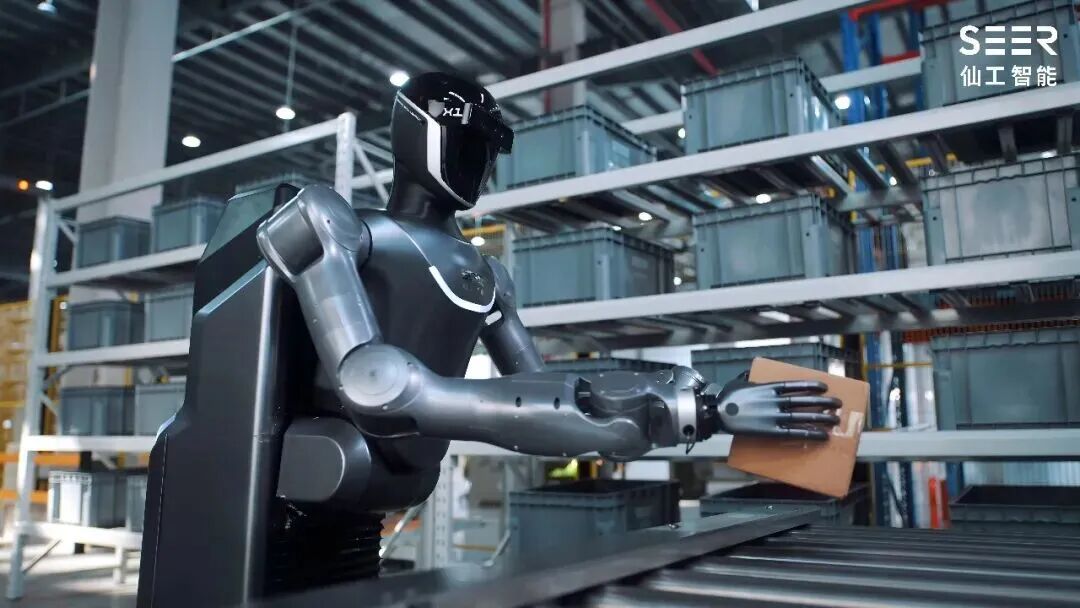
Robot, Image source: SEER Robotics official WeChat public account
SEER Robotics' contradiction is worth examining because it sits precisely on the fault line of industrial value migration.
In 2024, humanoid robot body companies dominated financing in the embodied AI sector, with those whose robots walked more stably and moved more flexibly securing funds.
By 2026, the wind had shifted. Hardware body technological barriers were rapidly declining. Unitree's bipedal humanoid robot price dropped from 39,900 yuan to 29,900 yuan, supply chains matured, and mass production began. When bodies were no longer scarce, the brain's value emerged.
The same robot hardware, equipped with different brains, could perform vastly different tasks. Low-end controllers enabled preset route transportation, while high-end intelligent controllers allowed robots to perceive environments, plan autonomously, and coordinate multi-machine operations—selling hardware versus selling capabilities.
Capital chases brain companies because controllers and intelligent systems have lower marginal costs and stronger scaling effects. Once an ecological barrier is established, profit margins far exceed those of hardware bodies. SEER Robotics' 24x PS valuation reflects the market's premium for the scarce attribute of platform-based intelligent robots.
But the issue remains: while valuation anchors have changed, profit methods haven't. The mismatch between brain valuations and body-driven earnings persists across the industry.
Zibian Robotics' valuation surpassed 20 billion yuan, centered on its embodied large model capabilities; Tashi Zhihang completed a 455 million USD financing round, setting a domestic record for embodied AI; Ants Lingbo launched six models in a week, betting on embodied-native routes. The entire sector uses brain stories to secure financing, yet all must ultimately rely on bodies for implementation.
This leads to the next question: When the entire industry tells brain stories, no one can clearly define what a "brain" is or what it should look like.
3. What Does a Brain Look Like? The Industry Has No Answer Yet
Currently, mainstream technological routes fall into three categories.
The first is the VLA model—Visual-Language-Action.
This route unifies visual recognition, language understanding, and motion control within a single end-to-end large model. Robots receive images and instructions, then directly output action sequences.
VLA is the hottest route today, accounting for 42% of brain sector financing, with representative companies like Qianxun Intelligence. Its main advantage lies in strong "alignment" capabilities, enabling robots to better understand human language intentions with relatively controllable reasoning costs and easier implementation.
The second route is world models, emphasizing predictive capabilities for future states and action outcomes. NVIDIA Cosmos, Ants Lingbo's LingBot-World, and Wujie Power's MWA all align with this direction, accounting for 27% of brain sector financing.
The third route is brain-inspired architectures, a newer direction. Zhipingfang unveiled the world's first brain-inspired VLA embodied large model, NeuroVLA, at the 2026 Zhiyuan Conference, designing a three-layer "cortex-cerebellum-spinal cord" system mimicking human brain structure. Junao Panshi pursues a cognitive world model driven by brain-inspired intelligence.
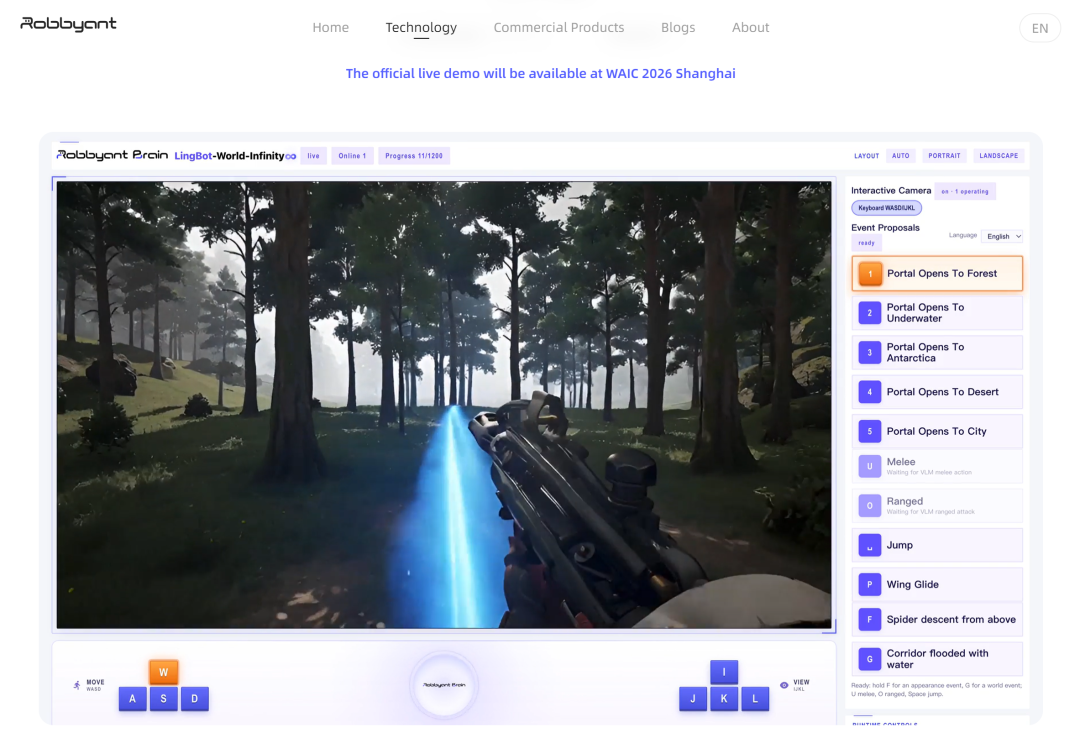
LingBot-World 2.0, Image source: Ants Lingbo official website
Each route has supporters, but boundaries between them remain blurred. This debate ultimately stems from the industry's lack of clarity on what a brain should do.
Currently, three common barriers face all brain companies.
The first barrier is a severe shortage of data foundations.
The consensus within the industry is that attaining general autonomous capabilities for embodied large models necessitates a minimum of 10 million hours of real-world interaction data. However, as of early 2026, the combined total of globally compliant real-machine data and body-less effective data stood at only 500,000 hours—a shortfall exceeding 99%.
This deficit cannot be swiftly remedied by merely deploying additional data collectors. The acquisition of real-world physical data presents immense challenges, encompassing sensor calibration, genuine interactions, and other foundational tasks that demand extensive long-term accumulation. An algorithm expert interviewed by RoboIsland disclosed that collecting 100,000 hours of data, at a cost of tens of millions of yuan, resulted in only a 5% enhancement in model capabilities.
The second hurdle is that deployment remains mired in the "cottage industry" phase.
While hardware costs are indeed plummeting rapidly—SemiAnalysis estimates that Unitree G1 can sustain a gross profit margin of approximately 67%—the savings accrued from hardware price reductions are swiftly eroded by the exorbitant costs associated with non-standard software engineering.
The underlying cause is that VLA models cannot yet be trained once and deployed universally. Each new robot configuration, application scenario, or task requirement typically necessitates fresh data collection, model retraining, and on-site re-debugging and alignment.
The implementation of AI has not evolved into a simple copy-and-paste procedure within the software industry; rather, it has transformed into a bespoke project heavily reliant on on-site engineering services.
The third challenge is the lack of convergence in the technological pathway.
In the realm of robot brains, there exist at least three parallel technological trajectories, ranging from VLA to world models to brain-like architectures. Each path boasts its own proponents and preliminary accomplishments, yet none has been definitively proven to be the correct one.
When a company valued at over 20 billion yuan is still engaged in debates over the merits of VLA versus world models, one must question how long the market's patience will endure.
The confluence of these three barriers—data, deployment, and technological path—constitutes the three major impediments that must be surmounted for robot brains to transition from conceptualization to reality. While capital can assign a price to imagination, only those who genuinely surpass these barriers can transform valuations into tangible value.
4. Conclusion
What will be the ultimate destiny of robot brains? Will controller manufacturers expand their reach upwards, will large model companies infiltrate downwards, or will robot body manufacturers chart their own course?
The answer remains elusive. However, one fact is clear: when hardware becomes commoditized, intelligent systems will emerge as the true profit centers and ecological gateways.

Slime, Image Source: SEER Official WeChat Public Account
The mascot of SEER is a slime, the feeblest and most inconspicuous monster in gaming lore. Slimes lack a fixed form and can morph into myriad shapes. Zhao Yue selected it as the mascot, perhaps precisely due to its amorphous nature.
In just six years, SEER has ascended from obscurity to become the world's foremost seller of robot controllers and has successfully listed on the Hong Kong Stock Exchange. SEER's future significance in the industry will not be solely defined by its distinction as the inaugural robot brain stock.
The narrative of the dragon-slaying youth transforming into a dragon is a mere fable, but a slime can perpetually remain a slime. From the era of controllers to the era of open platforms, and then to the era of embodied AI infrastructure, the crux lies in whether SEER can empower robots of diverse forms to continuously collaborate and evolve in the real world.
The ultimate destiny of robot brains remains undefined. Capital surges toward the future while the existing infrastructure sustains the present. Today's chasm is merely a requisite phase in a swiftly evolving industry.
What merits attention is not the breadth of the chasm itself, but who can stand resolutely on both sides: rendering the brain sufficiently intelligent while ensuring the body remains sufficiently profitable; earning the vote of confidence from capital while securing repeat orders from customers. 
Cover Source: Inside Out
Header Image Source: SEER Official WeChat Public Account
Disclaimer: The content of this article is provided for reference purposes only and does not constitute investment advice. Investors proceed at their own risk.
Copyright of RoboIsland. Unauthorized reproduction is strictly prohibited.
-
![]()
The Stock Competition Era Unveils the True Nature of All Brands
-
![]()
India's New Energy Vehicle Dream: From Tata Leak to Tesla's Exit - A Closing Argument
-
![]()
The 'Last Millimeter' of Interaction Between Robots and the Physical World
-
![]()
Every AITO Sold Contributes 136,000 Yuan to Huawei: Seres Faces Its Compaq Moment
-
![]()
Huang Renxun's Gambling
-
![]()
Is Seres Truly Being 'Bled Dry' by Huawei?
-
![]()
Robot Brain: A Lucrative Business or a Challenging Pursuit?
-
It's Official! Shanghai's July AI Extravaganza: A Gateway to Future Industry Trends and Global Consensus