Valued at 480 Billion, DeepSeek's Revenue Revealed for the First Time: IPO Expected as Early as Next Year
 07/16 2026
 475
475
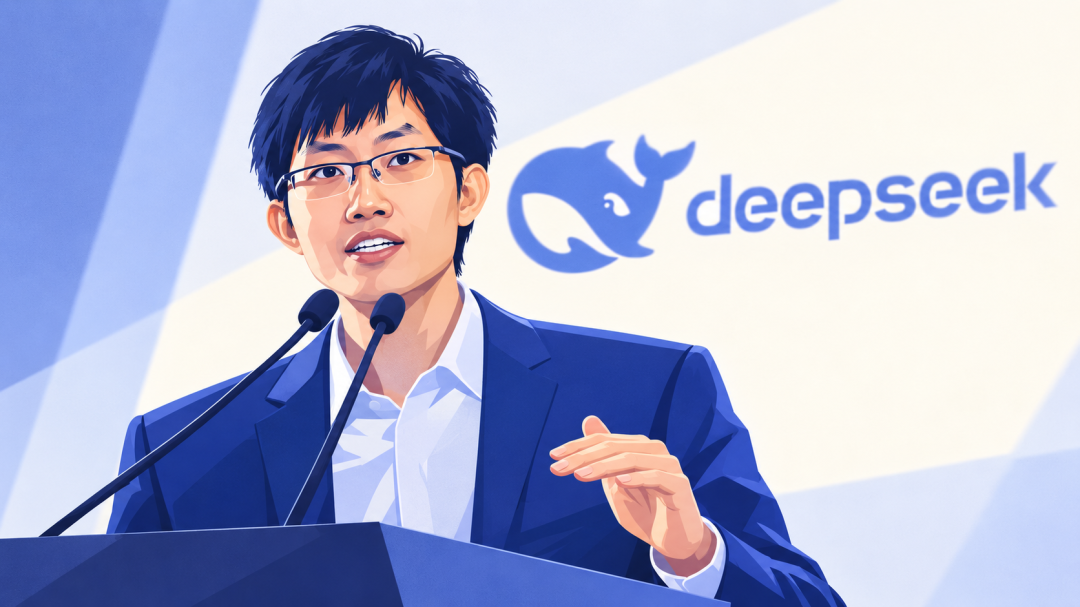
Cover Image 丨 Produced by Pencil News
DeepSeek has finally reached the stage of going public. According to relevant media reports, DeepSeek has initiated preliminary preparations for an IPO and plans to list on mainland China's capital market. The company is engaging with accounting firms, investment banks, and other institutions to prepare audit reports, corporate governance documents, and filing materials. It may submit its application before the end of 2026 and aims to be officially listed in 2027.
Sources familiar with the matter said that DeepSeek is discussing listing in Shanghai, with the possibility of going public as early as the second quarter of 2027. Additionally, it is reported that DeepSeek's annual recurring revenue from API Token usage has reached $400 million to $500 million, with a gross margin exceeding 50%. What opportunities will arise from DeepSeek's IPO? Click the mini-program below to access Pencil News' opportunity intelligence and learn about the money-making opportunities behind the news.
- 01 - Series A Financing Just Completed, Series B is Coming
From late May to early June this year, DeepSeek completed its first external financing round since its inception, raising approximately $7 billion to $7.4 billion, with a post-money valuation exceeding $50 billion.
Just over a month later, DeepSeek began engaging with potential investors again. The pre-money valuation discussed for the new financing round is approximately $71 billion (about RMB 480 billion), representing a roughly 37% increase from the previous round's post-money valuation of about $52 billion. According to current discussions, the company may raise several billion dollars more.
A key use of DeepSeek's new financing will be to build its own data centers, procure more AI chips, and stockpile supply chain resources in advance. First, DeepSeek hopes to develop autonomously operating AI Agents, which significantly increase demand for computing resources. Training a model involves relatively concentrated capital expenditures.
Once model training is complete, it can be used repeatedly. However, when DeepSeek begins serving tens of millions of users, enterprise clients, and Agent applications, computing expenses will become a daily cost. Second, compared to relying entirely on third-party cloud providers, building its own infrastructure allows DeepSeek to better manage chips, networking, storage, and inference workloads, as well as avoid being constrained by external computing supply during peak business periods.
However, this is a capital-intensive business. Servers, chips, data centers, electricity, liquid cooling, and networking equipment all require upfront investment. It is reported that DeepSeek is developing its own AI chips to reduce reliance on NVIDIA and Huawei. The value of investors in the recently completed financing round, such as Tencent, CATL, and the National Artificial Intelligence Industry Investment Fund, extends beyond just capital. Tencent offers cloud computing, traffic, and application scenarios; CATL provides energy, battery, and industrial resources; while the national fund may help DeepSeek access a broader range of domestic computing power and policy support systems.
Third, a perpetual reason for DeepSeek's financing is talent retention. In April 2026, DeepSeek sought external capital for the first time to establish a credible valuation for employee stock options, preventing core researchers from being poached by other companies. At the time, some employees had already left for companies with stronger financial positions, such as ByteDance and Xiaomi.
After the financing, DeepSeek achieved a market valuation exceeding $50 billion. Employee stock options transformed from vague promises into calculable wealth. DeepSeek also established an employee stock ownership plan, allocating shares based on actual valuation. However, stabilizing the original team is not enough. DeepSeek plans to expand its product, data, computing clusters, and commercialization teams, as well as double the size of some core teams.
- 02 - Crushing the Market with Low Prices
A backdrop that cannot be ignored for DeepSeek's decision to prepare for an IPO at this time is the remarkable performance of Zhipu in the capital markets. Zhipu went public on the Hong Kong Stock Exchange on January 8, 2026, with an issue price of HK$116.2 per share. On its debut, the company raised approximately HK$4.35 billion, with a market capitalization of over HK$50 billion. Over the next six months, Zhipu became one of the hottest AI stocks in Hong Kong.
On June 22, Zhipu's stock price reached a high of HK$2,980 during trading, approximately 25 times the issue price, with a market capitalization briefly exceeding HK$1 trillion. The company surpassed several large tech companies with far greater revenue and profit scales, becoming one of the highest-valued companies in the Hang Seng Tech Index. Subsequently, Zhipu's stock price experienced a noticeable decline.
On July 15, its stock price fluctuated sharply between HK$1,535 and HK$1,867, still about 14 times the issue price, with a total market capitalization of approximately HK$770 billion. After the explosion of Agent products like OpenClaw earlier this year, China's daily Token consumption grew from about 100 trillion at the end of 2025 to 140 trillion in March 2026. Zhipu perfectly timed this trend.
The company disclosed that as of March 2026, its MaaS platform had registered over 4 million users. Even though API call prices increased by 83% from the end of 2025, market demand still outstripped supply. API call volume in the first quarter of this year increased by approximately 400% year-on-year. This was not merely "revenue from price hikes" but a simultaneous increase in both price and call volume.
Zhipu proved that Tokens could be sold, and DeepSeek aims to sell them like "tap water." In May 2026, DeepSeek V4 Flash's monthly Token usage reached 18.4 trillion, surpassing GPT-4o to become the world's most widely used large model. DeepSeek's main selling point is affordability. For example, in terms of output Tokens, GPT-4o is priced at $2.5 per million Tokens, Claude 3.5 Sonnet at $3, while DeepSeek V4 Flash costs only $0.07—35 times cheaper. Even compared to OpenAI's GPT-4o mini ($0.15 per million Tokens), DeepSeek's price is less than half.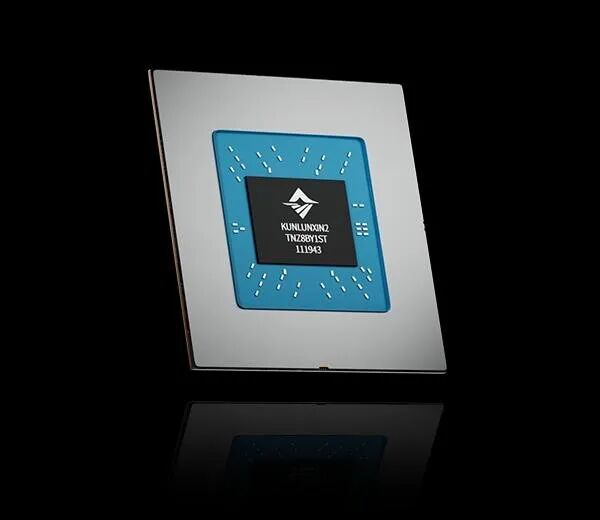
This low-price strategy for domestic AI chips is not a promotional activity but a core strategy for DeepSeek. Liang Wenfeng believes that large models are essentially infrastructure, and the core of infrastructure is affordability. He argues that when prices are low enough, demand will grow exponentially, and this increased demand will dilute fixed costs, creating a virtuous cycle.
DeepSeek's strategy of exchanging price for market share is not just theoretical. Data released by U.S. AI cloud platform company Vercel shows that in April 2026, DeepSeek accounted for less than 1% of Token usage on the platform; after the V4 series release in May, this proportion quickly rose to 17%, ranking third among all model providers on the platform, even surpassing OpenAI. Nearly all the new usage came from V4-Flash and V4-Pro.
The increase from less than 1% to 17% in one month indicates that developers are indeed switching models based on performance and price. Media reports reveal that as of April this year, DeepSeek's latest annual recurring revenue is approximately $400 million to $500 million, primarily from API Token usage. With the release of the V4 series in May, this revenue is set to surge further.
- 03 - The CATL of the AI Track
If DeepSeek successfully lists on the STAR Market, it is likely to become the most important company in the AI sector. It would simultaneously address three key issues in AI: revenue (annualized $400-500 million), growth (global leader in usage), and imagination space (infrastructure-level platform).
Once DeepSeek proves that a Chinese company can achieve global leadership in a global tech sector, capital will systematically reevaluate the entire industry chain, just as it did when CATL went public.
In 2018, CATL went public and saw its market capitalization surge from RMB 78.6 billion to a peak of RMB 1.5 trillion in three years, nearly 20-fold.
More importantly, it was not alone—upstream lithium mines, cathode materials, anode materials, separators, electrolytes, midstream battery equipment, structural components, downstream charging piles, and energy storage saw their companies' values increase several-fold or even tens of fold. Companies like Ronbay Materials (cathode), Putailai (anode), Enjie (separator), and Tinci Materials (electrolyte) all experienced multiple-fold increases. DeepSeek's potential listing on the STAR Market could play a similar role. The logic behind DeepSeek's industry chain is the same.
For every RMB 10 billion it raises, approximately RMB 7 billion will be spent on computing power—buying chips, building data centers, leasing bandwidth, and implementing liquid cooling. This money does not disappear but becomes income and profits for upstream companies. Specifically, several directions in the industry chain are certain:
AI Chips: DeepSeek extensively uses domestic chips, and its success serves as the strongest endorsement for domestic chips—previously, it was said that "domestic chips can be used," but now it is "domestic chips can support the world's most widely used large model." This endorsement is more valuable than any advertisement.
Optical Modules: AI training and inference require large quantities of high-speed optical modules. In 2026, the global optical module market grew by over 75%, with domestic manufacturers accounting for more than 70% of the global share. DeepSeek's data center construction directly drives demand for optical modules.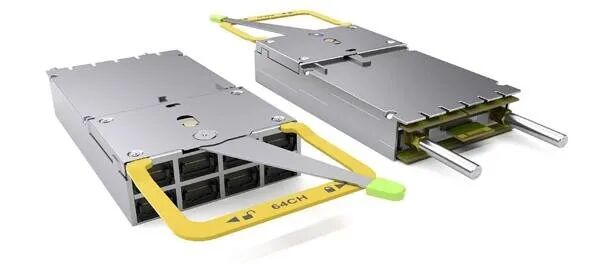
Optical Module Products
Liquid Cooling and IDCs: AI server power consumption is 5 to 10 times that of ordinary servers, making liquid cooling a necessity rather than an option. In 2026, the liquid cooling market grew by over 150%. IDC cabinet rents in first-tier cities have already increased by 20%-30% in the first half of the year and continue to rise.
Advanced Packaging: AI chips have increasingly high requirements for packaging, with the value share of advanced packaging rising from 10% in traditional chips to 20%-30%.
However, DeepSeek still needs to prove whether it can continuously reduce the cost of intelligence production, just as CATL reduced battery costs; whether it can consistently generate orders for chip, server, data center, and Agent companies, as CATL did for materials and equipment industries; and whether it can retain the massive Token usage in its revenue and profit statements while lowering prices. If these three things can be achieved, DeepSeek may become China's "CATL" in the AI sector. The content of this article is for reference only and does not constitute investment advice.
-
![]()
Breaking Through the US Blockade! Huawei Mobile Phones Now Support 5G Overseas
-
Help! The Price Has Crashed So Badly That I Just Want to Close My Account!
-
Investing in 'old established players' rather than 'new upstarts' is more reliable in the current NEV market
-
![]()
StepFun: A Smartphone You Can't Buy Yet, and a Story That Must Be Told
-
![]()
Mid-Game Battle of Chinese Automakers: Collective Overseas Expansion for Growth? | Halftime Whistle ②
-
![]()
VOYAH CBO Declares: To Ascend to TOP 3 in Luxury BEV Market Within Two Years, Launch 4 New Models Across All BEV Segments | Mingjing Pro
-
![]()
Rising Against the Tide on Lock-Up Expiry Day: Zhipu's Crucial Leap Forward
-
![]()
Fast Charging vs. Slow Charging for Electric Vehicles: Which is Better for Battery Health?