Fast Charging vs. Slow Charging for Electric Vehicles: Which is Better for Battery Health?
 07/16 2026
 450
450
As the electric vehicle (EV) market becomes increasingly competitive, terms such as 'fast charging,' 'super fast charging,' and 'flash charging' have emerged as popular marketing phrases. But how does frequent fast charging impact the lifespan, safety, and performance of EV battery packs? Is slow charging truly better for battery health?

01 Differences Between Fast and Slow Charging Interfaces
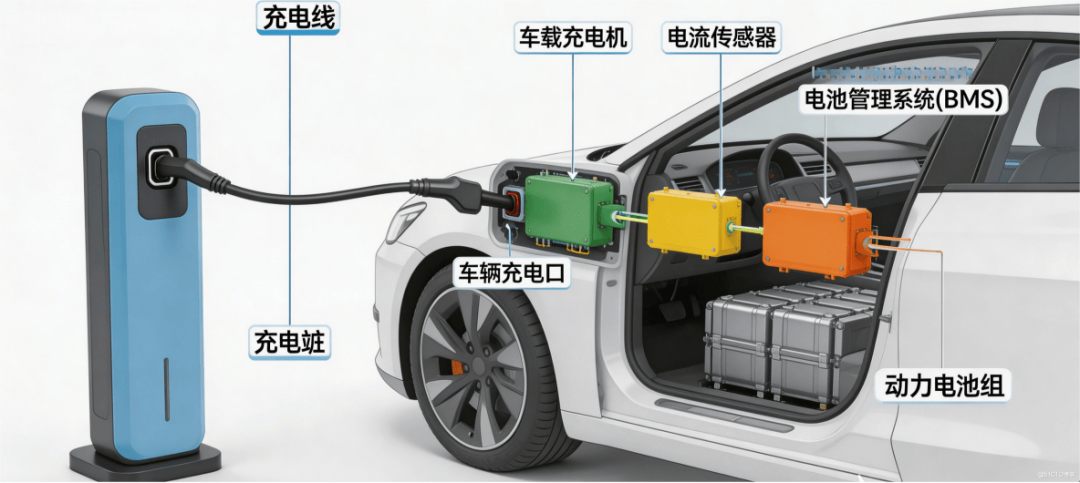
The battery charging system in electric vehicles serves as their power replenishment mechanism, divided primarily into slow and fast charging methods. The charging system comprises components such as slow and fast charging interfaces, onboard chargers, high-voltage boxes, charging cables, and related control units.
1.1 Physical Structure Differences
Charging interfaces for electric vehicles vary significantly across countries in terms of physical shape and size, voltage levels, communication protocols, and power ratings.
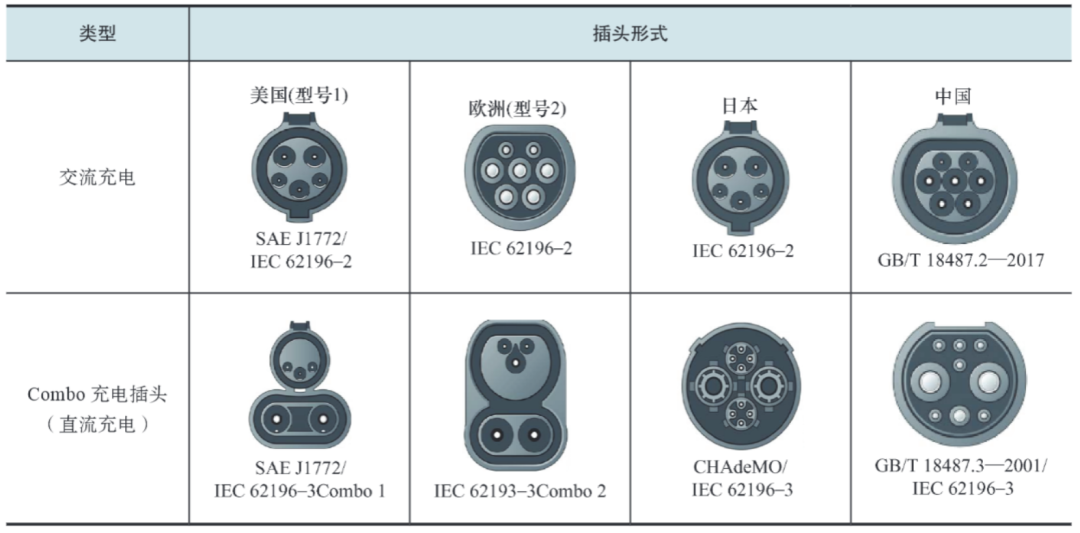
The fast and slow charging interfaces for electric vehicles in China are illustrated below.
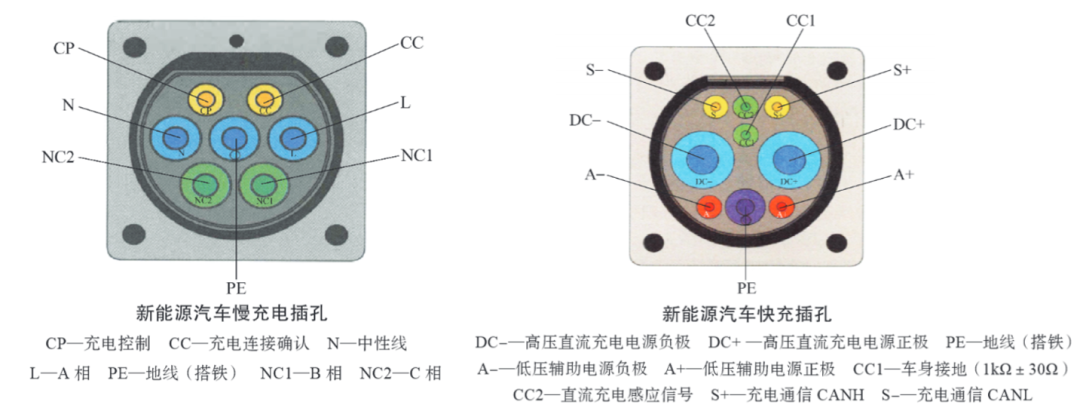
The fast charging interface employs a 9-pin design, while the slow charging interface features a 7-pin structure. The fast charging interface incorporates two additional pairs of pins—DC+/DC- (high-voltage DC positive and negative) and A+/A- (low-voltage auxiliary power positive and negative)—compared to the slow charging interface. This structural difference enables the fast charging interface to directly transmit high-voltage DC power, while the slow charging interface is limited to AC power transmission.
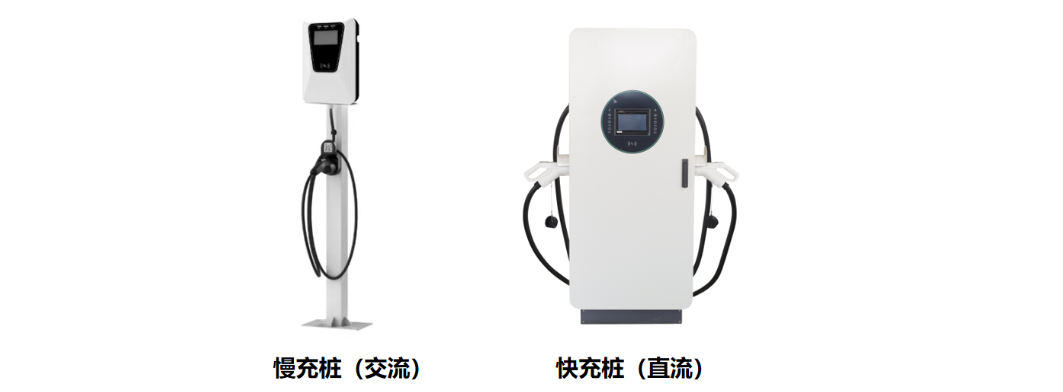
Common charging stations are primarily categorized into DC charging stations and AC charging stations.
1) DC Charging Stations: These stations utilize DC charging mode to recharge the power battery of electric vehicles, with the charger's controllable DC power output directly charging the battery.
2) AC Charging Stations: These stations employ AC charging mode to recharge the power battery of electric vehicles, providing charging power through three-phase or single-phase AC sources.
1.2 Electrical Parameter Differences
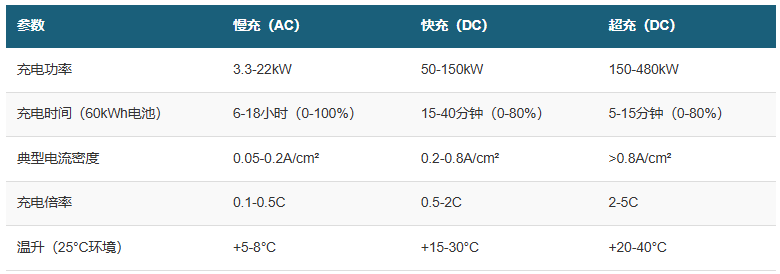
The slow charging interface supports a rated voltage of 250V/440V AC, with a maximum current not exceeding 63A, corresponding to a power typically below 22kW (up to 27.7kW in three-phase mode).
The fast charging interface boasts a rated voltage of up to 1500V DC and a maximum continuous current of 500A, with a theoretical peak power of up to 1200kW. This high-voltage, high-current design facilitates 'flash charging' technology.
For instance, BYD's second-generation blade battery can achieve '5 minutes to charge from 10% to 70%, 9 minutes to charge from 10% to 97%.'
1.3 Safety Design Aspects
The fast charging interface is relatively more complex, incorporating dual insulation protection, high-voltage interlock (HVIL), temperature monitoring systems, and stricter protection class requirements. The mating protection class for fast charging interfaces is typically no less than IP55, compared to IP54 for slow charging interfaces.
Additionally, the fast charging interface features a more comprehensive dual anti-disconnection mechanism with mechanical and electronic locks to prevent accidental disconnection during high-voltage charging.
02 Charging Circuit Differences Between Fast and Slow Charging
Fast and slow charging differ not only in interfaces but also in charging circuit architecture, energy conversion processes, and current paths. These differences directly determine the efficiency, safety, and applicable scenarios of the two charging methods.
2.1 Charging Circuit Architecture Differences
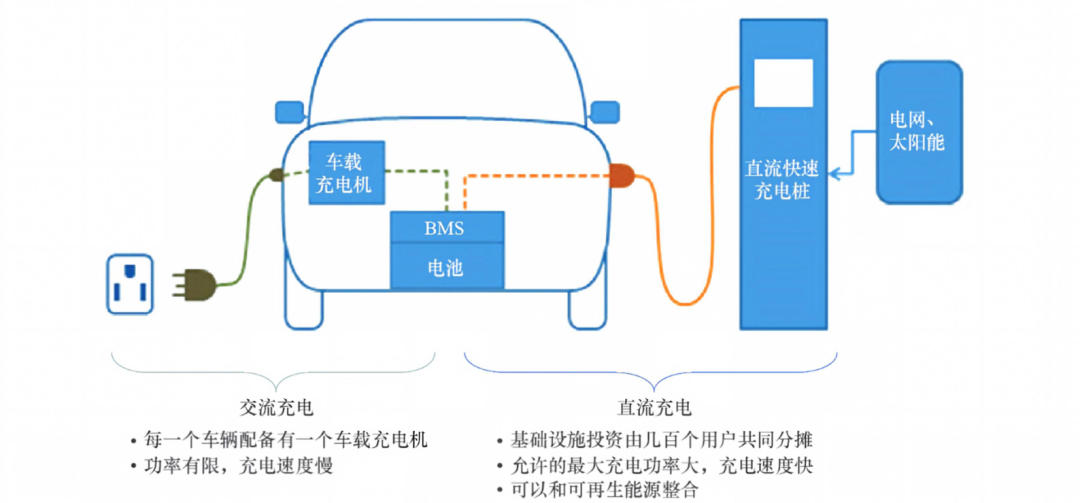
The slow charging system employs an 'onboard charger (OBC)-dominated' architecture, with the circuit consisting of the grid → AC charging station/home socket → onboard charger → power battery. The OBC converts external AC power to DC power suitable for the battery while controlling charging current and voltage. Due to OBC power limitations, slow charging typically takes 6-10 hours to charge the battery from 20% to 100%.
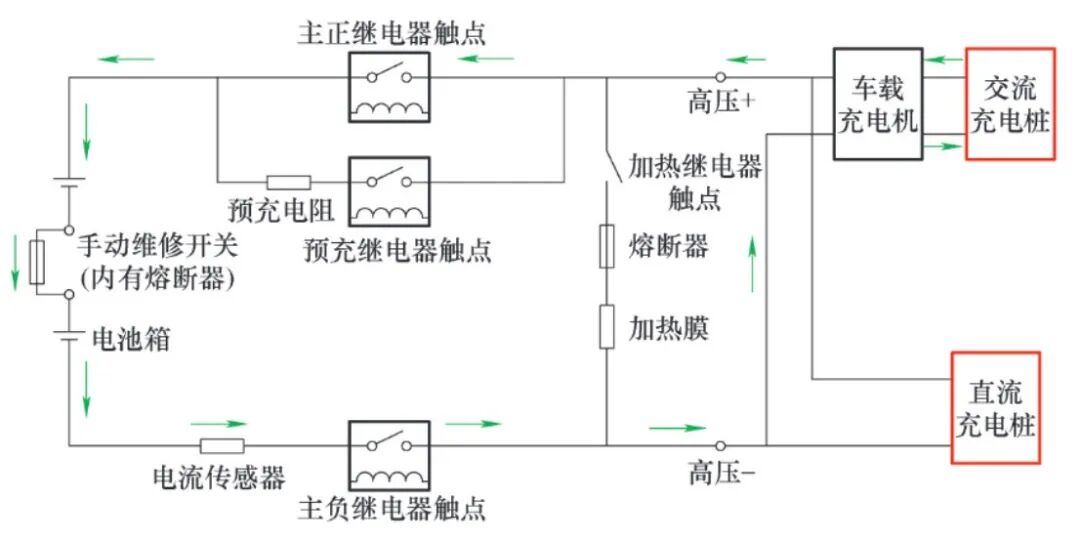
Slow Charging Circuit
In contrast, the fast charging system utilizes a 'charging station-dominated' architecture, with the circuit consisting of the grid → DC charging station → high-voltage DC cable → power battery. The charging station, equipped with an AC-DC converter, directly outputs high-voltage DC power, bypassing the OBC to achieve higher charging power. In typical configurations, fast charging stations provide 50-350kW of power, enabling the battery to charge from 20% to 80% in 30 minutes.
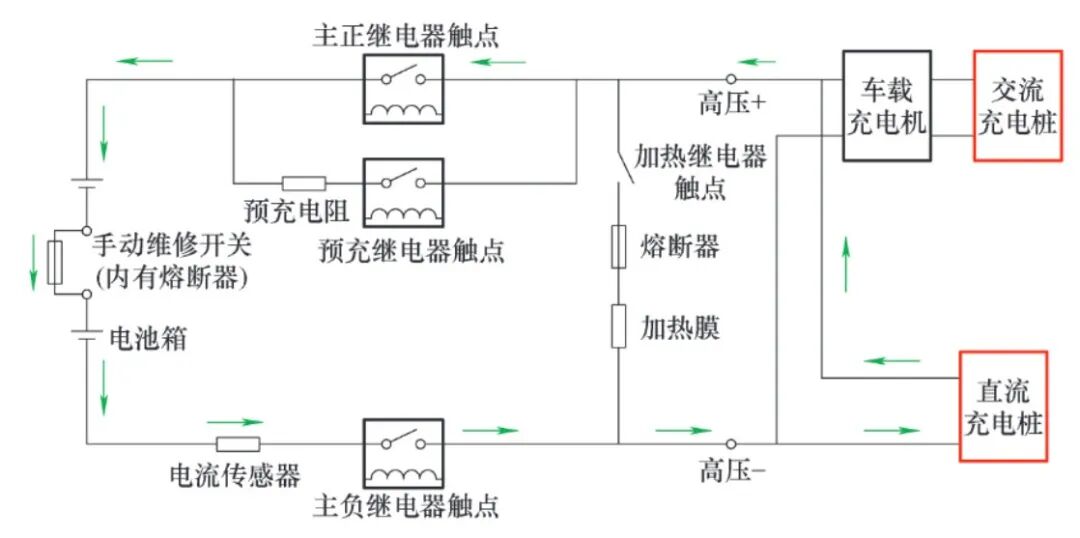
Fast Charging Circuit
2.2 Energy Conversion Differences
Energy conversion in slow charging occurs at the vehicle end. When the slow charging gun is plugged in, the onboard charger first rectifies the external 220V or 380V AC power to DC, then boosts it to the battery's required voltage (typically 400V or 800V) via a DC-DC converter, and finally charges the battery through the charging management circuit. Due to multiple power conversions, the efficiency is relatively low (typically 85%-90%), but the structure is simple and cost-effective.
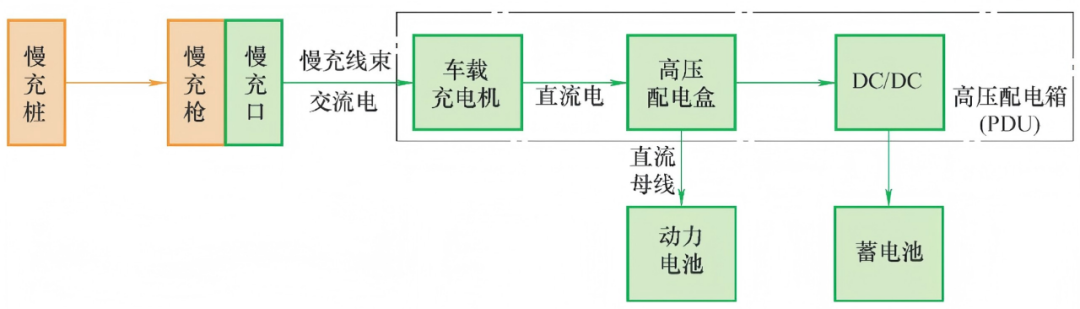 Slow Charging System
Energy conversion in fast charging primarily occurs at the charging station end. The charging station converts the three-phase AC power from the grid directly into high-voltage DC power (up to 1500V) and transmits it directly to the power battery via high-voltage cables. This reduces energy conversion steps, improving overall efficiency (up to 95% or more), but requires more complex power electronics and stricter thermal management.
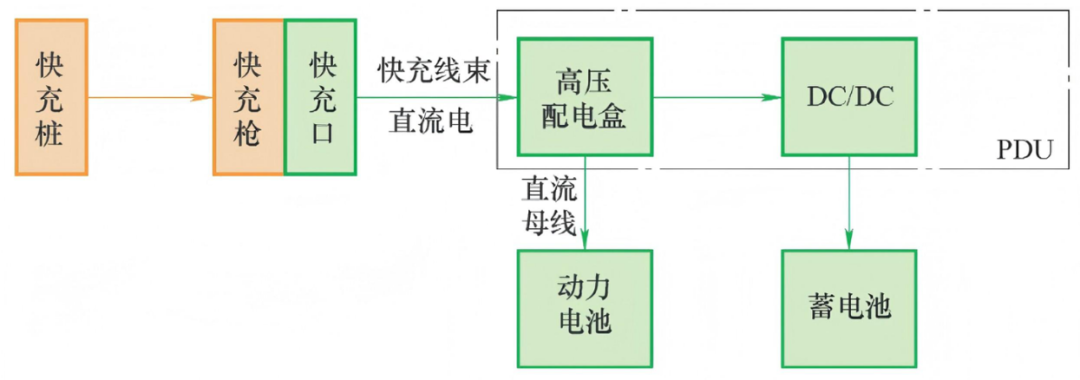 Fast Charging System
Analogy: Fast charging is akin to pouring water rapidly into a glass bottle filled with fine sand—the water flows too swiftly to evenly penetrate between the sand grains, accumulating only at the top and even overflowing from the mouth. While it may seem 'full,' the sand at the bottom remains dry.
Applied to batteries, fast charging causes lithium ions to rapidly accumulate on the electrode surface without fully and uniformly embedding into the active material, leading to inflated charge readings (i.e., 'false charge') and reduced usable energy. Meanwhile, individual cells charge at different speeds due to internal resistance and temperature variations, causing voltage imbalances within the pack and weakening overall activity and consistency over time. Thus, while convenient, fast charging struggles to achieve truly 'solid' energy replenishment.
03 Lifespan Differences Between Fast and Slow Charging for Power Battery Packs
3.1 Impact of Fast Charging on Battery Life
Fast charging is undoubtedly more convenient, but users are more concerned about its impact on battery pack lifespan. From a battery life perspective, fast charging damages the battery primarily through three mechanisms:
Lithium Dendrite Formation: High current in fast charging causes rapid deposition of lithium ions on the negative electrode surface, forming needle-like lithium dendrites. These dendrites may puncture the battery separator, posing safety risks. Studies show that after 500 fast charging cycles at a 3C rate (about 1 hour to full charge), the thickness of lithium dendrites on the negative electrode surface can reach micrometer levels, significantly affecting battery life.

Thermal Stress Accumulation: High current density during fast charging generates significant Joule heat. Prolonged high-temperature environments (>40℃) accelerate electrolyte decomposition, positive electrode material phase transitions, and negative electrode SEI film growth, all leading to battery capacity degradation. Experiments show that when battery temperatures exceed 50℃, the capacity degradation rate during fast charging is 3-5 times higher than during slow charging.
SOC (State of Charge) Range Impact: Fast charging typically employs a 'high-rate + trickle' segmented charging strategy, but fast charging at high SOC levels still causes significant damage. Studies indicate that charging the battery in the SOC 80%-100% range increases resistance to lithium ion intercalation into the positive electrode, raising local overpotential and accelerating positive electrode material structural degradation.
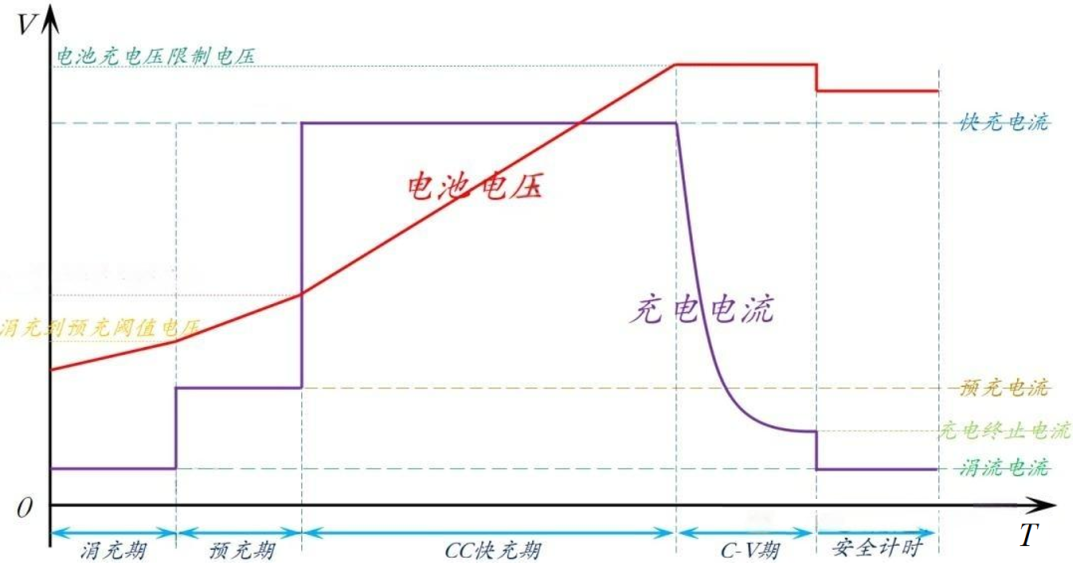
The damage mechanism for slow charging is relatively simpler. Slow charging uses low current (typically 0.3-0.5C), resulting in a gentler charging process with ordered lithium ion migration, reducing dendrite formation risk. Slow charging typically charges the battery to 100%, which may increase side reactions at high SOC levels, but the low current significantly reduces their severity compared to fast charging.
According to a May 2026 test report by the China Automotive Engineering Research Institute:
Lithium Iron Phosphate (LFP) Batteries: Due to better thermal stability, LFP batteries tolerate fast charging better. After 500 fast charging cycles (120kW), BYD's second-generation blade battery retained 89.2% of its capacity. In contrast, after 300 slow charging cycles (7kW), LFP batteries retained about 93.1% of their capacity, a difference of about 4% between fast and slow charging.
NMC Batteries: Due to poorer thermal stability, fast charging has a greater impact on NMC battery lifespan. Tests show that Tesla's 4680 NMC battery retained 82% of its capacity after 500 fast charging cycles, compared to 85% after the same number of slow charging cycles. Additionally, fast charging may cause structural degradation of the NMC positive electrode material, further accelerating capacity loss.
04 Power Battery Charging Recommendations
Fast charging is not a 'monster,' but scientific usage is key. Simply put, fast charging can be used but should not be abused. Forming good charging habits can effectively reduce fast charging-induced battery damage.
For Electric Vehicle Users:
Daily Commuting: Prioritize slow charging (home charging station) to extend battery life; avoid maintaining battery levels below 10% or above 90% for extended periods, and promptly move the vehicle after fast charging.
Long-Distance Travel: Fast charging is acceptable, but avoid multiple consecutive fast charges (average ≤3 times per month); ensure charging station compatibility during fast charging.
Extreme Environments: Avoid fast charging in high-temperature environments (>40℃) to prevent accelerated material aging; prioritize slow charging or choose models with battery self-heating functions in low-temperature environments (<-10℃).
Remember These 4 Principles:
Avoid High-Temperature Fast Charging: When battery temperature exceeds 40℃, opt for slow charging or wait for the battery to cool before fast charging.
Maintain Reasonable SOC Range: Keep SOC between 20%-80% during fast charging; avoid charging from 0% or below 20%, and avoid fast charging to 100%.
Control Fast Charging Frequency: For daily commuters, limit fast charging to 3-5 times per month to reduce battery aging.
Periodic Slow Charging Calibration: Perform a complete slow charging cycle to 100% every 3 months to calibrate the BMS and improve battery health.

I am Qing Geng Yu Du, both an engineer and a sharer;
Thank you for your support. I look forward to growing together with you!
Disclaimer: Due to my limited personal ability, if there are any errors, please feel free to point them out. This article is for learning purposes only. Some of the images and text used are sourced from the internet. If there are any copyright issues related to the works, please inform me promptly, and they will be deleted immediately. There is no commercial use intended!
-
![]()
Breaking Through the US Blockade! Huawei Mobile Phones Now Support 5G Overseas
-
Help! The Price Has Crashed So Badly That I Just Want to Close My Account!
-
Investing in 'old established players' rather than 'new upstarts' is more reliable in the current NEV market
-
![]()
StepFun: A Smartphone You Can't Buy Yet, and a Story That Must Be Told
-
![]()
Mid-Game Battle of Chinese Automakers: Collective Overseas Expansion for Growth? | Halftime Whistle ②
-
![]()
VOYAH CBO Declares: To Ascend to TOP 3 in Luxury BEV Market Within Two Years, Launch 4 New Models Across All BEV Segments | Mingjing Pro
-
![]()
Rising Against the Tide on Lock-Up Expiry Day: Zhipu's Crucial Leap Forward
-
![]()
Fast Charging vs. Slow Charging for Electric Vehicles: Which is Better for Battery Health?