StepFun: A Smartphone You Can't Buy Yet, and a Story That Must Be Told
 07/16 2026
 424
424
This article is the 1057th original work by DeepDive Atom.
"
The Second Half Will Be Revealed in 100 Days
Yang Xiaoxian | Author
DeepDive Atom Studio | Editor
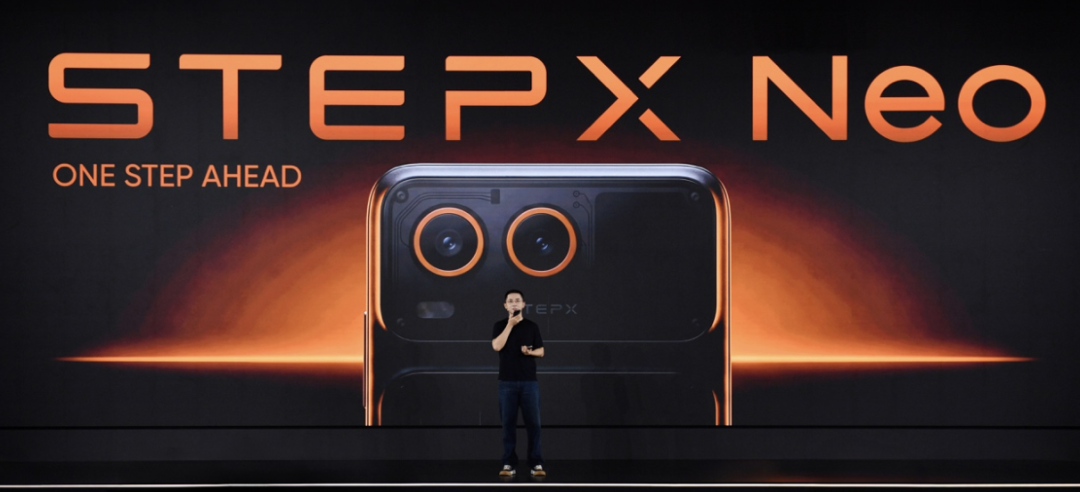
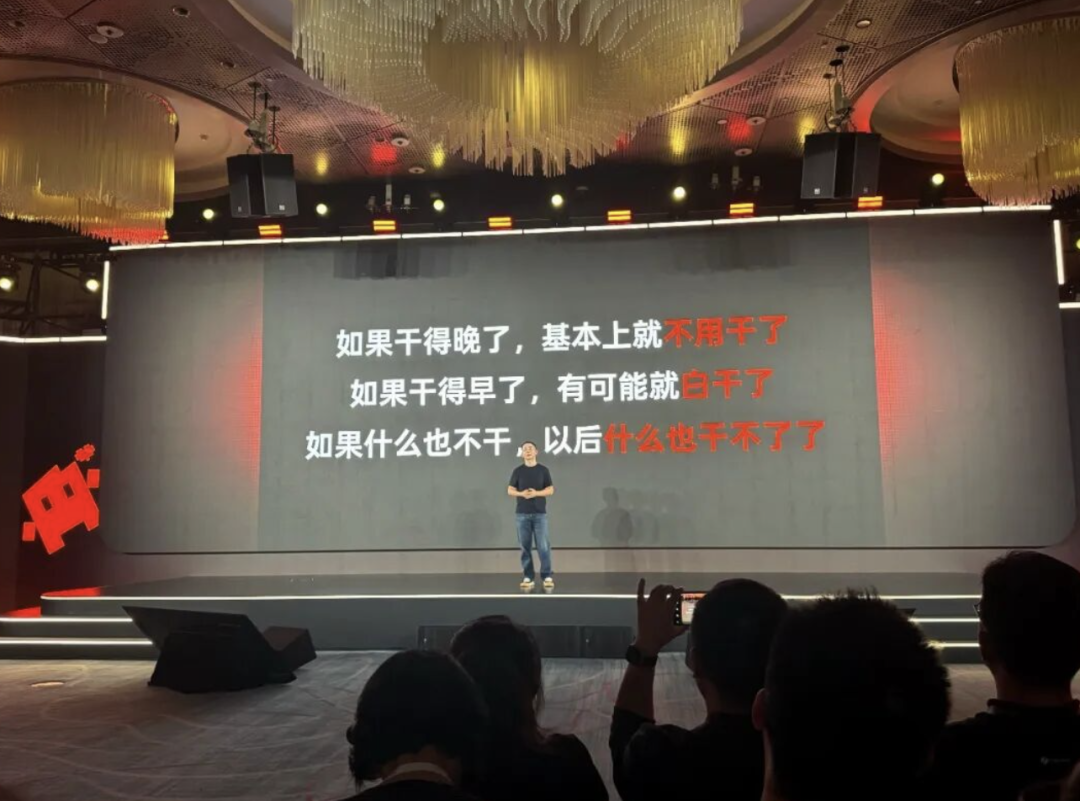
'If we act too late, there’s basically no point; if we act too early, we might waste our efforts; if we do nothing, we’ll never accomplish anything.' On the evening of July 13, at the launch event in Shanghai, StepFun Chairman Yin Qi displayed these three lines on a giant screen.
Four days later, ByteDance was set to unveil its second-generation Doubao smartphone at WAIC in the same city.
StepFun isn’t racing against four days—it’s competing for the narrative of an entire category.
Beating Doubao to the Punch: The Audience Isn’t Consumers
Half a year ago, the first-generation Doubao smartphone failed spectacularly, in what was nothing short of a disaster. The day after users bought it, WeChat displayed a message saying, 'Login environment abnormal,' forcing accounts offline. Meituan and Taobao also jointly blocked simulated clicks. An AI smartphone that claimed to control everything for you ended up only usable for local photo editing and basic voice functions.
StepFun’s launch event was almost a point-by-point rebuttal to Doubao’s list of issues.
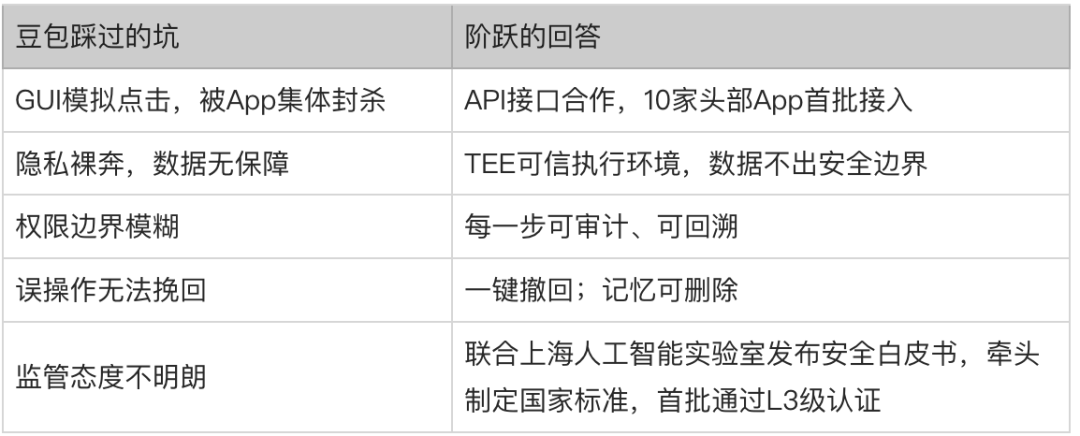
Yin Qi stated bluntly in a group interview—this batch of integrations all use API interfaces, not GUI simulated clicks. The subtext was clear: We’re taking a different path from Doubao.
But the real audience for the launch event wasn’t consumers. Twelve hours after the event, not a single hands-on photo of the actual device could be found online. There were no specs, no pricing, and no release date. According to a report by *Caijing* citing a StepFun terminal supplier, the phone on stage 'was not planned for mass production and needs to be redesigned.'
If they’re not even selling the product, why hold a launch event?
Yin Qi needs to convince three groups. The app ecosystem—10 top apps like Ctrip, Alipay, Didi, and Meituan are willing to integrate proactively in the form of skills, whereas Doubao’s first generation failed to persuade any in half a year. Regulators—StepFun’s joint lab released a security white paper and cybersecurity guidelines, becoming the first to pass L3 certification, setting standards before regulatory frameworks even exist. Capital markets—StepFun is rushing for a Hong Kong IPO, with its Pre-IPO valuation rising from $4 billion to $6 billion, aiming for a market valuation exceeding $10 billion. Relying solely on $500 million in annual API revenue can’t justify a $10 billion valuation. It must prove: I’m not just another model seller—I’m a terminal platform.
The product may not be in mass production, but the story must be told first.
WeChat’s Absence Isn’t What You Think
The most questioned aspect after the launch was that the first batch of ecosystem partners included 10 top apps but excluded Tencent and WeChat. In China, who would buy an AI smartphone that can’t system-level integrate WeChat?
But this question (questioning) overlooks a key fact: WeChat didn’t block 'AI smartphones'—it blocked 'simulated clicks.'
When Doubao’s first generation was blocked by WeChat, Tencent President Martin Lau stated bluntly at the Q1 2026 earnings call: 'No app will allow itself to be infiltrated by another.' Yet in June of the same year, WeChat opened messaging, voice calls, and video calls to Honor via the A2A protocol—Honor YOYO could directly invoke WeChat. What’s the difference? A2A lets WeChat execute operations itself and return results to the system AI. This isn’t 'infiltration'—it’s a 'call.'
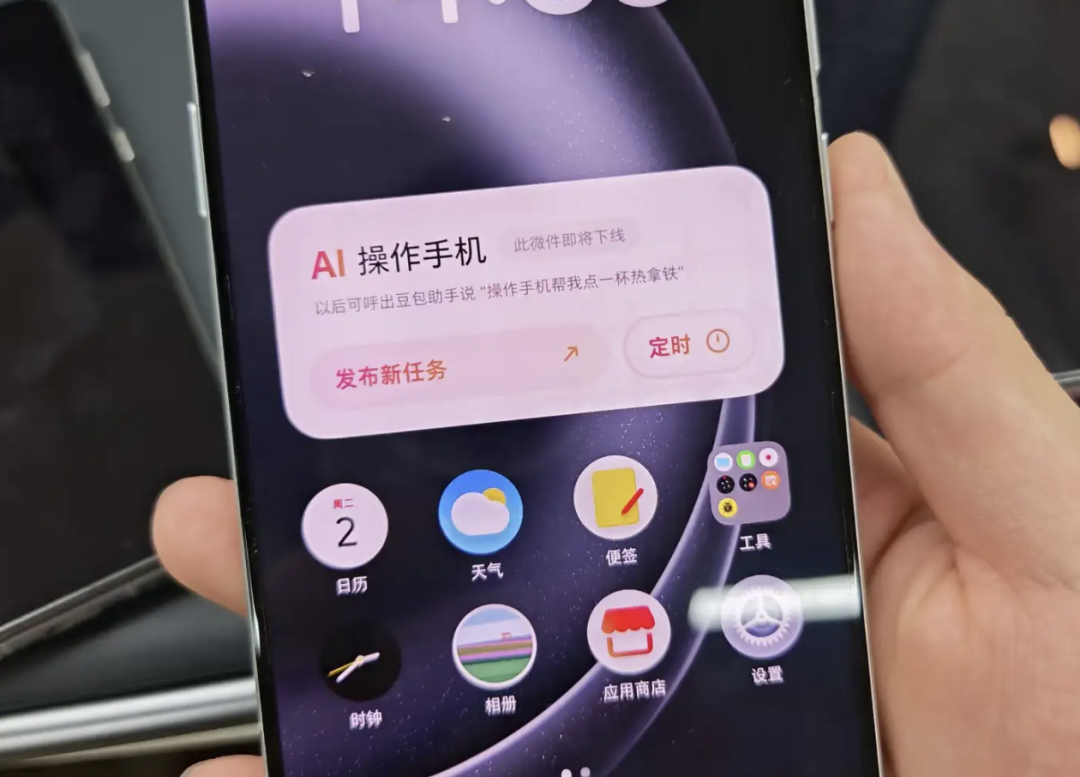
StepFun chose API integration from the start, aligning its technical approach with WeChat’s later-supported A2A concept. Yin Qi responded in a group interview: 'We’ve had very in-depth discussions with Tencent and look forward to future collaboration.' He didn’t make promises, but the route’s compatibility is clear.
Dismissing StepFun due to WeChat’s absence misreads a technical route issue as an attitude problem.
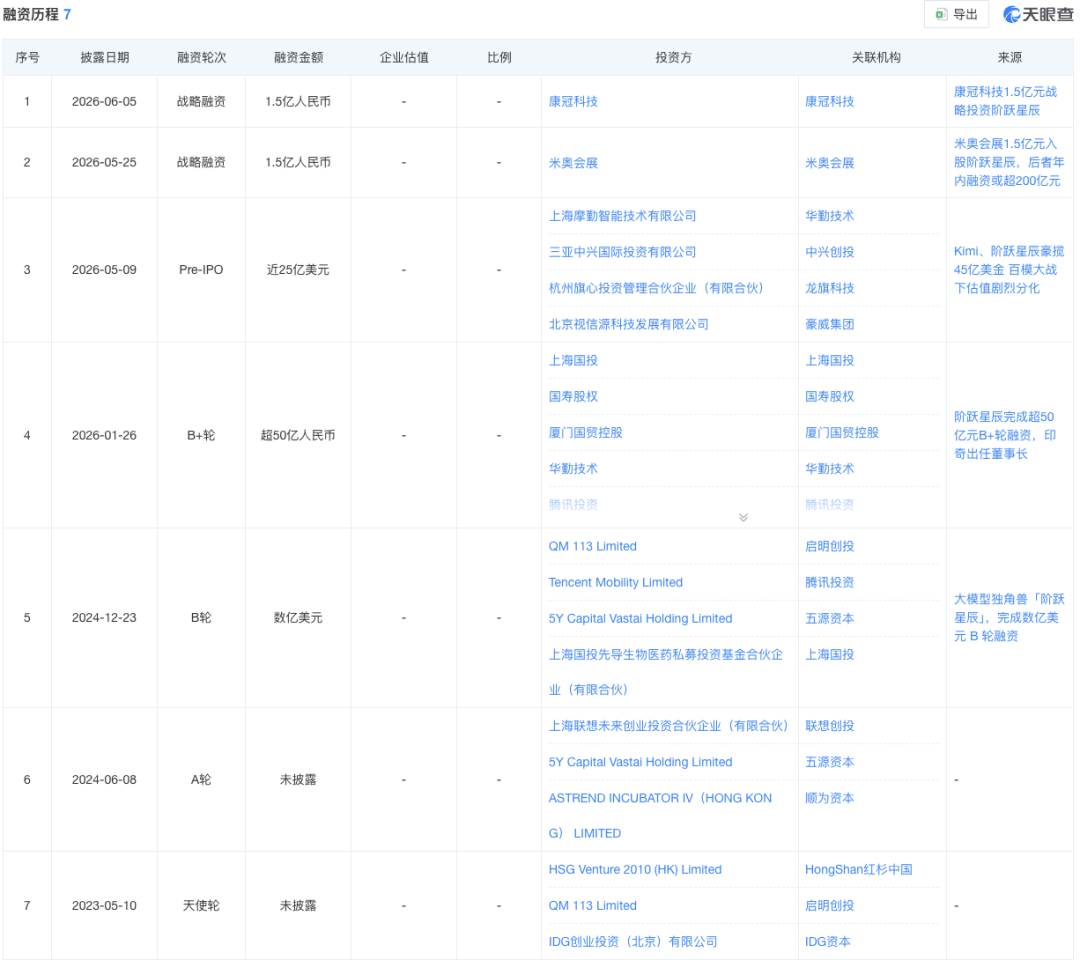
Tianyancha data shows StepFun has completed 7 rounds of financing, totaling over ¥22 billion, with ample financial reserves. *Caijing* previously reported StepFun’s 2025 revenue approached ¥500 million, with 2026 estimates around ¥1.2 billion. Financially, the company faces no risk of collapse.
However, the company’s real anxiety isn’t financial—it’s time.
Its core revenue comes from providing AI solutions to smartphone makers—OPPO, Honor, ZTE, and over 60% of domestic brands use StepFun’s models, with cumulative shipments reaching 42 million units. This path works short-term but hangs by a thread long-term: Huawei has Pangu, Xiaomi has MiLM, OPPO has AndesGPT—all are ramping up in-house models. As clients’ self-developed models mature, reliance on external suppliers will dwindle, shrinking StepFun’s pricing power and business scope.
Meanwhile, API prices keep falling, C-end users refuse to pay, and B-end projects are all customized. Yin Qi admitted post-event: 'For independent foundation model startups, neither pure ToC nor pure ToB routes are financially viable.' His solution: Use terminals to drive commercialization—without hardware, the OS lacks a carrier; without a carrier, user data can’t be acquired; without user data, agents can’t learn continuously.
The Hong Kong IPO window is closing. After Zhipu and MiniMax went public, their stock prices struggled, cooling market enthusiasm for 'model companies.' StepFun must complete its narrative shift from 'model supplier' to 'terminal platform' before filing its IPO.
Some compare this to Jobs. When the original iPhone launched in 2007, only 100 prototypes existed worldwide, with no rehearsal lasting five days without crashing. The signal bars were even hardcoded to full. The product officially launched six months later. Yin Qi himself said: 'The first iPhone wasn’t that impressive either. We have patience.'
But here’s the key difference: At Jobs’ event, everyone could touch the real device. At StepFun Neo’s launch, the real phone only existed on stage. And according to suppliers, that device needs a redesign—StepFun faces a dual battle of hardware overhaul, not just Jobs’ 'six-month software refinement' challenge.
PC Paved the Way—The Second Half Begins in 100 Days
Earlier this year, the open-source AI agent OpenClaw became the most-starred GitHub project ever with 375,000 stars. In Chinese communities, running it was nicknamed 'raising shrimp.'
Initially, few dared grant 'lobster' permissions. But months later, attitudes shifted. According to Anthropic’s data, Claude Code users approved 93% of permission prompts—most trusted the AI after seeing it work. Anthropic even introduced auto-mode, no longer asking individually.
The PC-side trust curve—'from fearing delegation to trusting freely'—has completed its first half. This bodes well for AI smartphones: users won’t need re-education.
But trust is harder to build on mobile. A mistaken Git branch deletion on PC can be reverted with *git revert*; a mobile error—whether to WeChat chats, banking apps, photos, or payment passwords—carries far greater costs. PC’s 'lobster' reduced market education costs but didn’t lower product safety thresholds. This is why StepFun dedicated the most event time to security.
Revisiting Yin Qi’s three lines.
Some call this 'drawing cakes'—launching before the product exists, defining national standards when the OS needs 100 more days, claiming 'world’s first' while the phone’s being redesigned. Others say it’s the only posture for startups in a brutal culling race—capital no longer backs models; it backs future platforms. You must plant the flag first, even if the land isn’t secured.
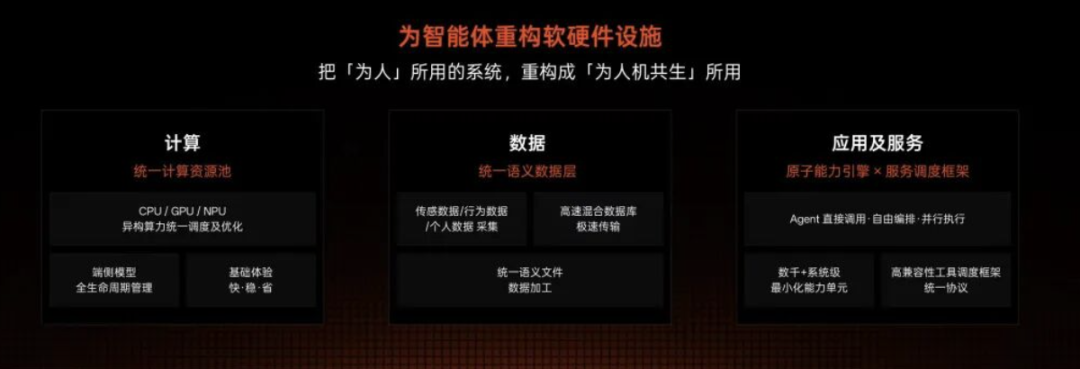
But one judgment holds: This isn’t a company to dismiss lightly. Its team is nearly unmatched among the 'Six Little Tigers'—Yin Qi’s industry judgment, Jiang Daxin’s technical reserves, Zhang Xiangyu’s algorithmic expertise, Zhu Yibo’s system capabilities, and Ni Jiayue’s terminal experience. Its financing scale allows one or two rounds of trial and error. Its technical route aligns with a direction more likely accepted by app ecosystems and regulators.
Challenges remain real. Hardware is being redesigned, WeChat hasn’t budged, and the 100-day countdown has started. Jobs’ iPhone had Apple’s supply chain empire and AT&T exclusivity; StepFun relies on Huaqin production lines and ¥22 billion in financing. Whether it can deliver a shippable phone in 100 days remains unknown.
Yin Qi said he hopes 'China truly defines the next-gen product experience in the agent smartphone era.' This ambition deserves respect, but it’s a gamble—on time, on ecosystems, on capital market patience.
The second half begins in 100 days.
-
![]()
Breaking Through the US Blockade! Huawei Mobile Phones Now Support 5G Overseas
-
Help! The Price Has Crashed So Badly That I Just Want to Close My Account!
-
Investing in 'old established players' rather than 'new upstarts' is more reliable in the current NEV market
-
![]()
StepFun: A Smartphone You Can't Buy Yet, and a Story That Must Be Told
-
![]()
Mid-Game Battle of Chinese Automakers: Collective Overseas Expansion for Growth? | Halftime Whistle ②
-
![]()
VOYAH CBO Declares: To Ascend to TOP 3 in Luxury BEV Market Within Two Years, Launch 4 New Models Across All BEV Segments | Mingjing Pro
-
![]()
Rising Against the Tide on Lock-Up Expiry Day: Zhipu's Crucial Leap Forward
-
![]()
Fast Charging vs. Slow Charging for Electric Vehicles: Which is Better for Battery Health?