The Real-World 'Real Steel' Has Arrived! Zhongqing's Humanoid Robots Step into Freestyle Battle
 07/17 2026
 406
406
Five months prior, Zhongqing's announcement of the URKL launch prompted Xiaolei to ponder in an article: With standardized robot models, would the competition hinge on algorithmic prowess and strategic acumen, or devolve into a clumsy clash of metal titans until one exhausted its power?
On the evening of July 16th, this query finally got a live response.
Invited by the organizer, Zhongqing Robotics, Leitech attended the URKL opening night at the Nanshan Culture and Sports Center in Shenzhen, where we collectively witnessed a new era in robot combat.
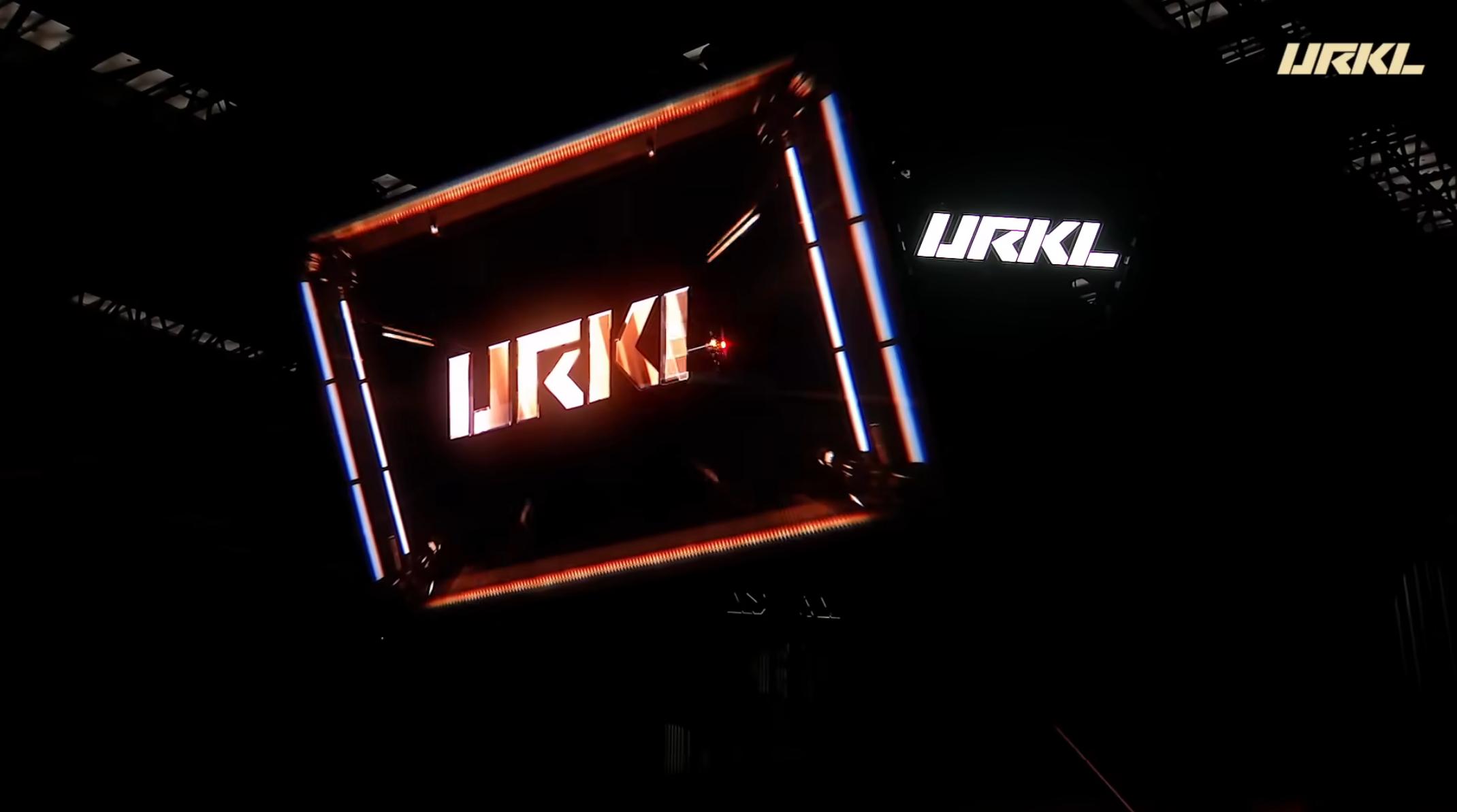
(Image credit: Leitech)
The night commenced with a dynamic performance of 'Dragon Fist' by the 'Imperfect Dance Crew,' followed by the appearance of Zhongqing's founder Zhao Tongyang, alongside martial arts icon Donnie Yen, and the top 32 teams, setting the stage for the upcoming season.
However, the highlight of the evening was undoubtedly Donnie Yen.
Witnessing a martial arts legend, renowned for decades of action-packed films, standing beside two full-sized robots was truly cinematic. Donnie Yen remarked on-site, "I've always seen robot combat in movies; this is my first time witnessing it up close. I'm truly thrilled." 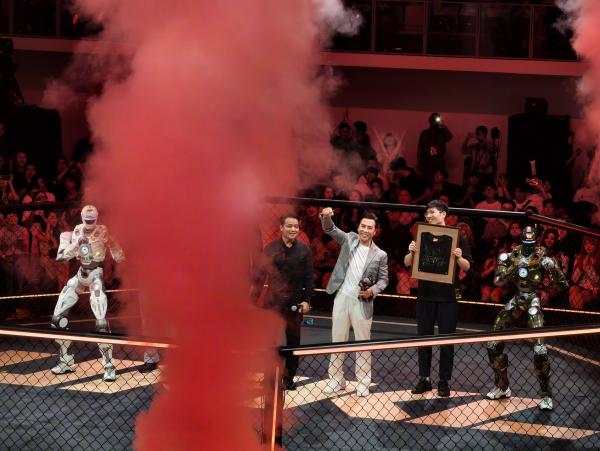
(Image credit: Zhongqing)
And indeed, the exhibition match did not disappoint.
Let's briefly outline the competition format. URKL matches feature a 1V1 format, spanning five rounds, each lasting five minutes. Teams are allowed three tactical timeouts per match, with each timeout not exceeding two minutes and limited to once per round.
The winner is determined using an approach similar to UFC mixed martial arts. After each round, scores are tallied, with the higher scorer winning that round. Ties are added to the total, and the final winner is determined by the number of rounds won.
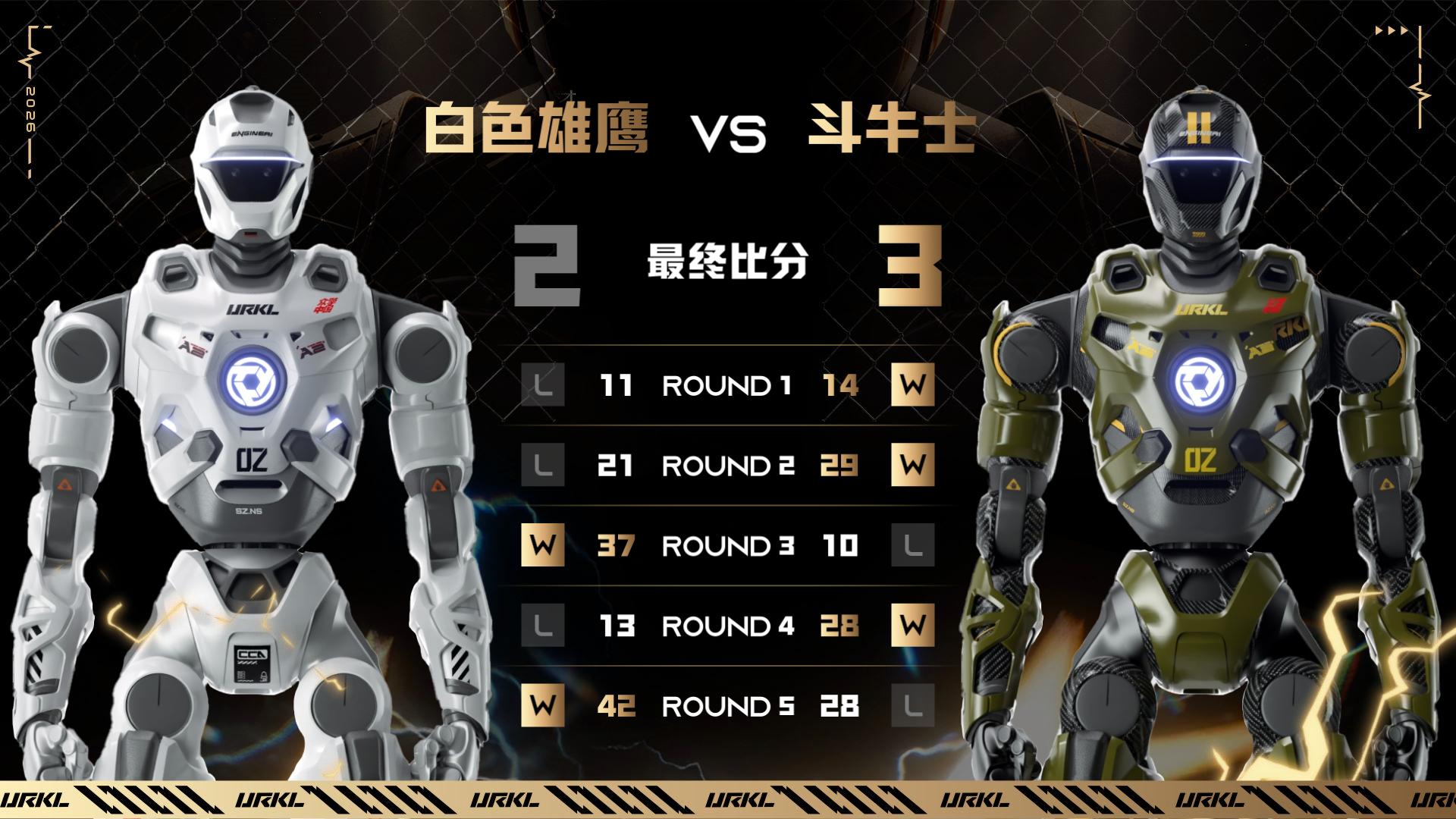
In this exhibition match, 'White Eagle' and 'Matador' took center stage.
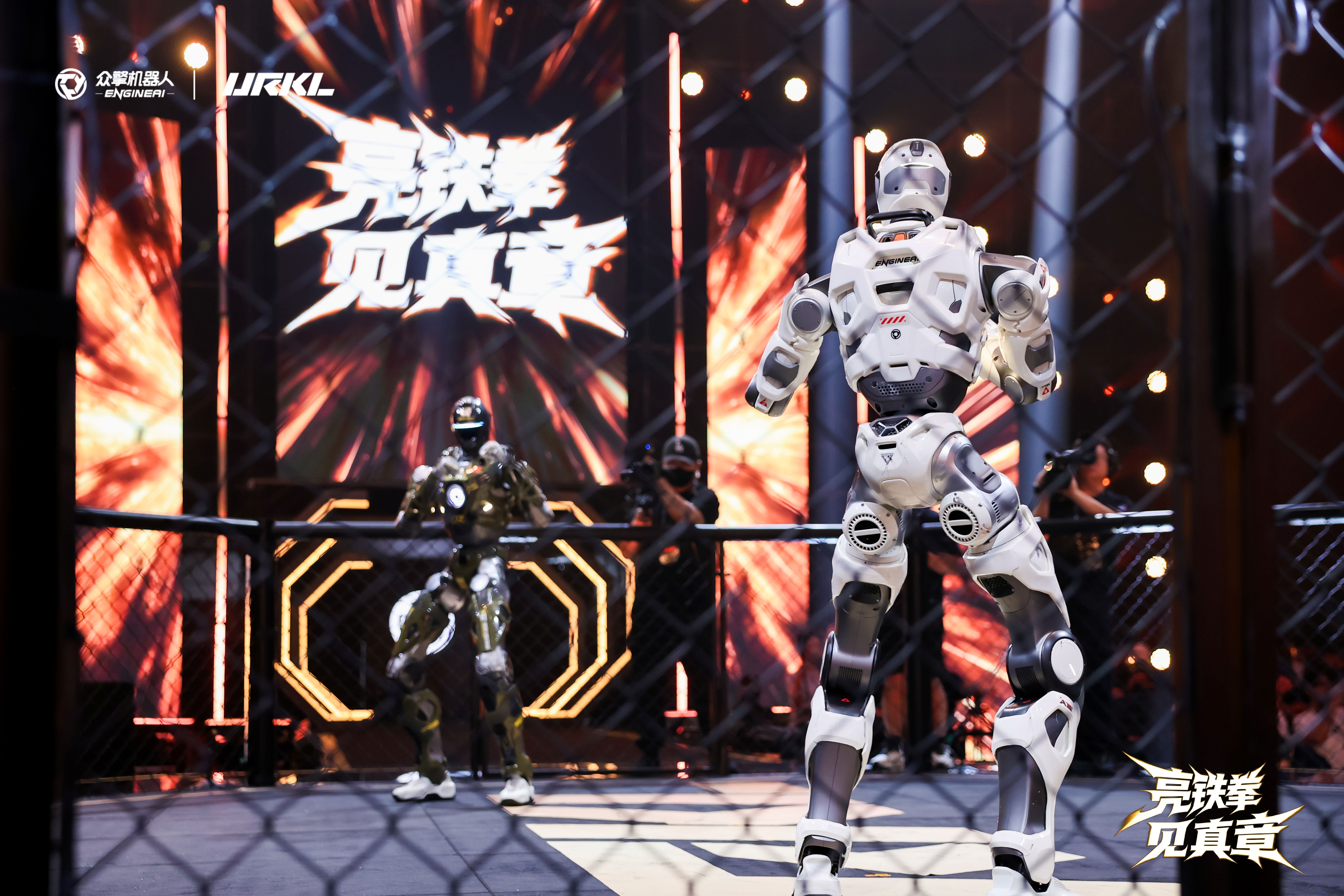
(Image credit: Zhongqing)
Both teams deployed T800 robots, standing approximately 1.73 meters tall and weighing around 75 kilograms, nearly identical except for their paint schemes. From afar, they resembled brothers vying for the championship.
At the outset, the robots assumed their fighting stances, creating an intimidating atmosphere.
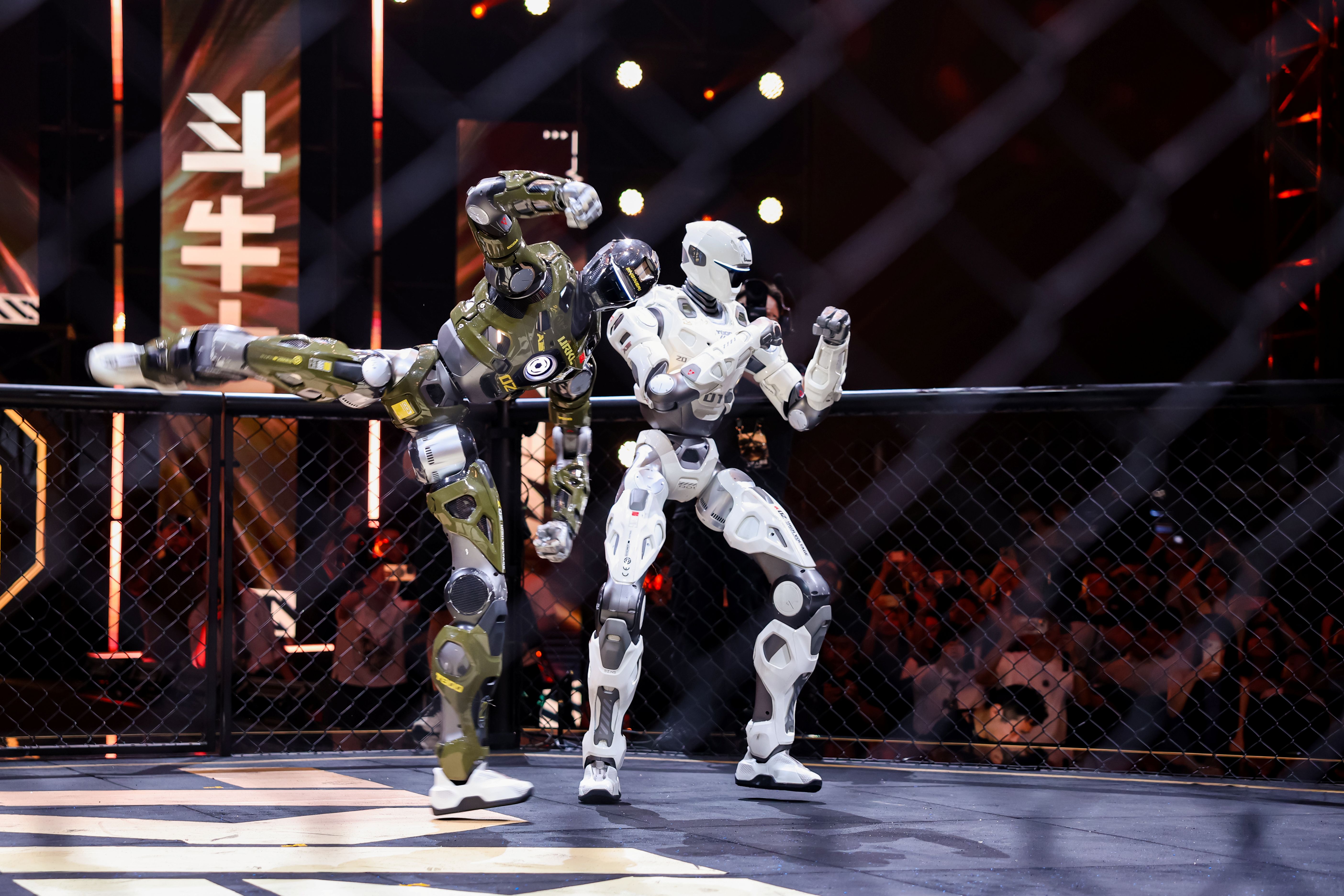
They inched closer, probing with their hands, attempting jabs, hooks, and kicks. Once in motion, these adult-sized robots carried a weightier presence than their smaller counterparts. Face-to-face, they somewhat resembled genuine robot combat.
But the spectacle lasted only briefly.
One robot executed a textbook-perfect kick, only for its opponent to stand clearly out of reach. The kick swept through the air, and upon landing, the robot showed no sign of 'missing,' continuing as if nothing happened.
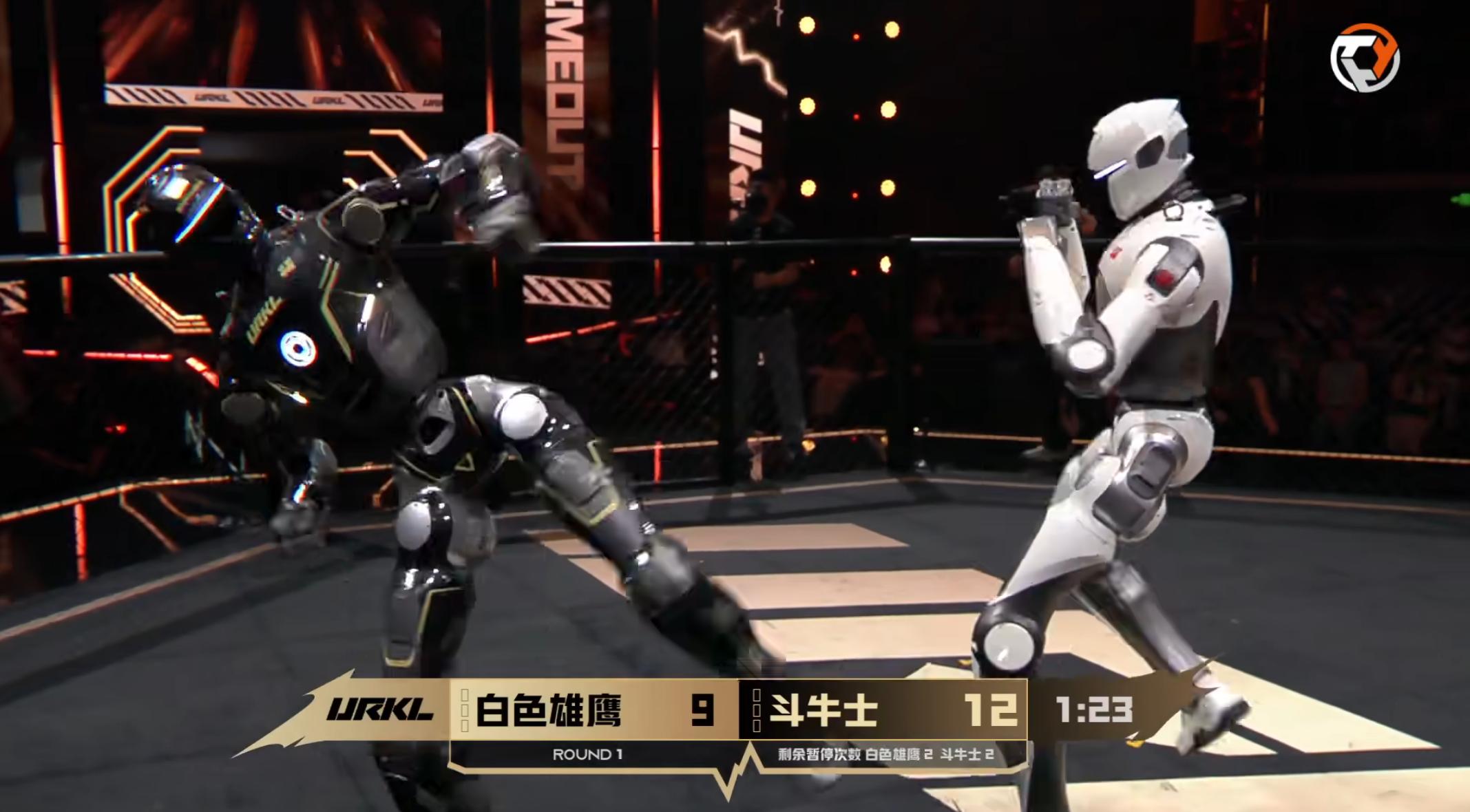
(Image credit: Leitech)
More often, the robots would reach striking distance, only for their opponent to casually sidestep as they prepared to punch, leaving their fists swinging at empty air.
The number of times they flipped themselves over with extreme moves was countless.
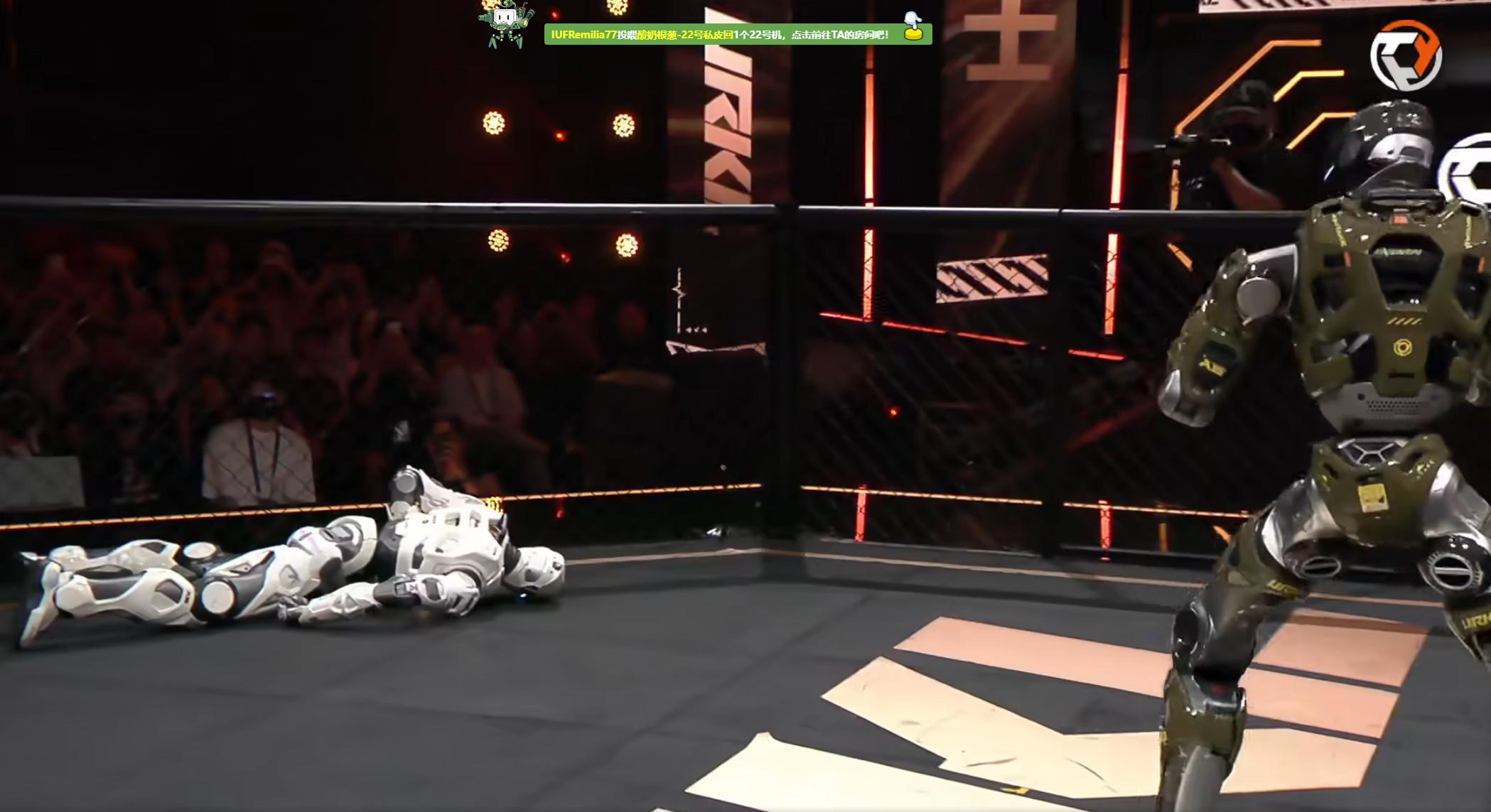
(Image credit: Leitech)
Most notably, their errors weren't occasional but frequent enough to become part of the show.
Over-rotating, misjudging attack directions, losing balance after kicks, and persisting with full sets of moves despite being out of range—these situations occurred repeatedly.
However, one cannot deny the astonishing agility of Zhongqing's T800. Matador, in particular, showcased rapid rises, quick turns, and other maneuvers to adjust its position. The entire robot could suddenly bounce up, spin mid-air, and regain stability. Combined with its near-adult proportions, it exuded a somewhat intimidating presence.
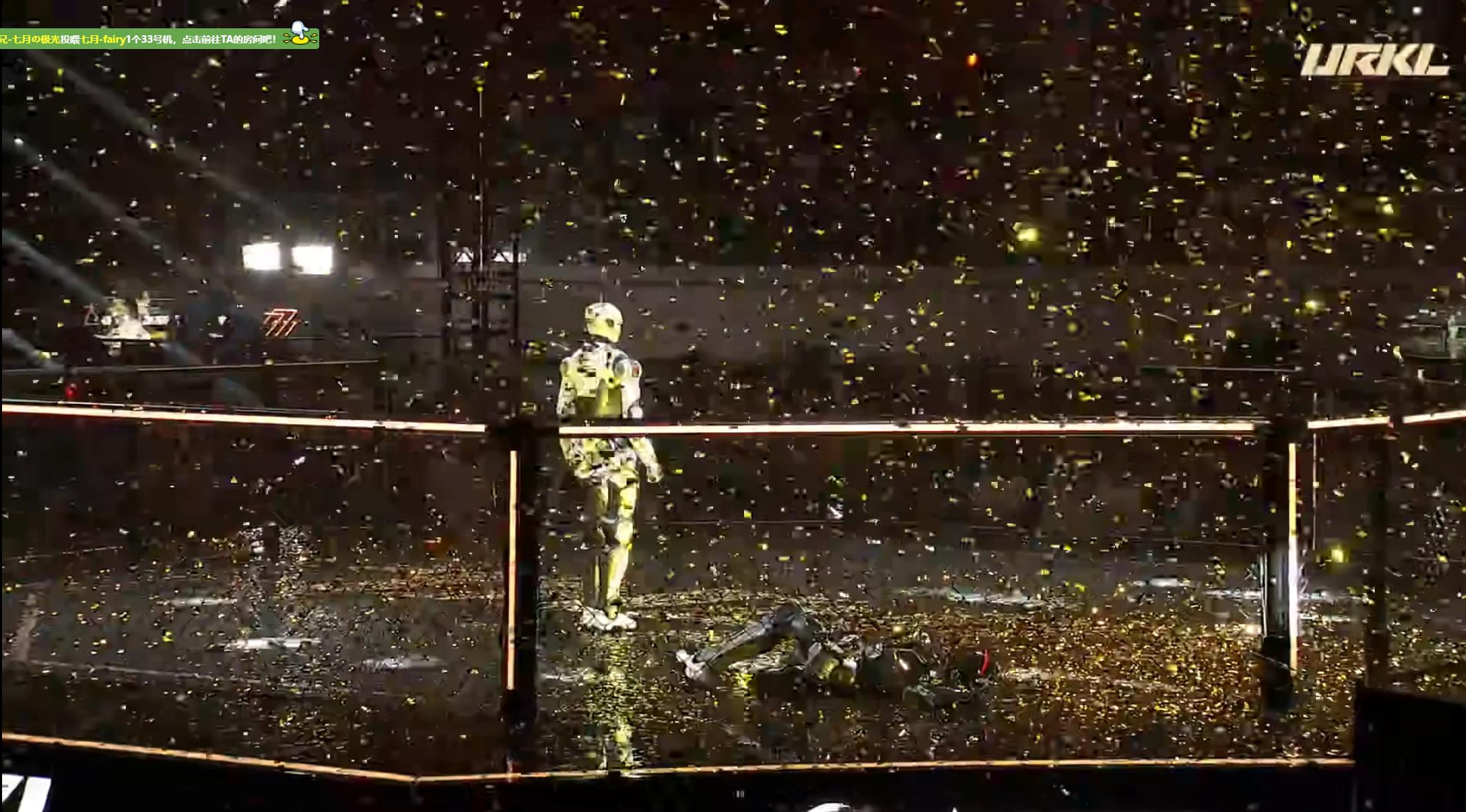
Ironically, the dark green 'Matador,' which dominated the entire match, lost mobility and had to be carried off the ring by multiple staff members. Does that mean the corresponding white 'Eagle' claimed victory in this opening bout...?
(Image credit: Zhongqing)
The answer is no because URKL employs a point-based system, and ultimately, the Matador, already lying on the ground, won the match.
Watching the post-match summary with the winner lying down was genuinely amusing.
(Image credit: Leitech)
It's important to note that this was merely the opening night bout, not the season championship.
To be honest, URKL's greatest achievement this time wasn't in the flashiness of the fights but in the fact that humanoid robots of near-human size finally dared to engage in a public match with real collisions.
Previously, robots on stage were limited to dancing and backflips; now, they're learning to take punches, lose balance, and recover. These less-than-glamorous moments hold more technical value than pre-choreographed routines.
Of course, there are still shortcomings. The robots' continuous offense and defense lack fluidity, and accurately gauging distance, rapid turning, and self-righting after falls remain challenges. Most importantly, organizers need to more clearly define the boundary between remote control and autonomous decision-making.
(Image credit: Zhongqing)
Since the future goal is fully autonomous combat, human intervention must have clearly defined limits.
Next, URKL will select 16 teams from the top 32 to continue with group stages and knockout rounds. The season is expected to last until the end of the year, with the champion receiving a 10-kilogram solid gold belt.
More than the belt, I look forward to the next match where robots punch the air less, rise on their own after falls, and gradually develop distinct fighting styles and 'personalities' for different teams.
The 'Real Steel' we were obsessed with in our childhood has finally stumbled its way onto the real-life ring.
-
![]()
Ali Secures Apple! Qwen Achieves Major Breakthrough!
-
![]()
Shocking! Anthropic Discovers Unknown Subconscious Space J-space in Large Models
-
![]()
From 54GB to a Mere 4GB! Apple Collaborates with PrismML—Is Model Compression Tech on the Verge of a Breakthrough?
-
Silicon Flow Sprints Towards Hong Kong Stock Exchange Listing: Behind Its RMB 7.7 Billion Valuation, the 'First Token Factory Stock' Struggles with Negative Gross Margins
-
![]()
The Real-World 'Real Steel' Has Arrived! Zhongqing's Humanoid Robots Step into Freestyle Battle
-
![]()
Storage Price Hike Drags Down Smartphone Sales, Yet Huawei and iPhone Defy Trend with Remarkable Growth
-
![]()
After Kuaishou's Kling Secures $20 Billion in Funding, Cheng Yixiao 'Yields Seat' to Gai Kun
-
![]()
OnePlus Stays in China, realme Goes Global: OPPO Group Ends Internal Competition