Yin Qi’s Mobile Phone Venture and StepFun’s Strategic Gamble
 07/20 2026
 516
516
Source | Bohu Finance (bohuFN)
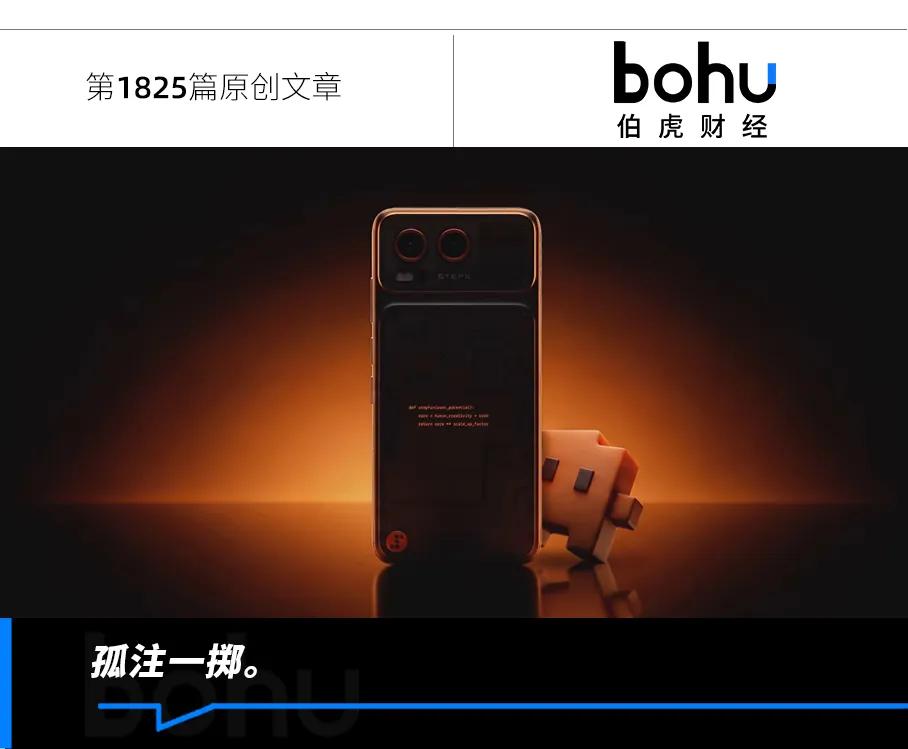
On July 13, StepFun held a press conference in Shanghai, revealing several groundbreaking innovations. These included the launch of STEPX, a large model-native AI terminal brand; Step AOS, an intelligent agent-native operating system; Amoo, a personal intelligent agent; and StepX Neo, a large model-native intelligent agent mobile phone.
Yin Qi, chairman of StepFun, stated, “We sought advice from many industry experts in the terminal sector, and they all cautioned against venturing into hardware. We genuinely considered their advice, but ultimately decided to proceed.”
This decision was undoubtedly challenging. Firstly, the Doubao phone faced immediate pushback from app developers just a week after its release. Then, OpenAI and Apple became embroiled in a legal dispute over phone manufacturing. For large model companies entering the hardware arena, the path forward is inherently difficult.
Yet Yin Qi pressed on. To understand this move, three key factors are worth noting:
On July 15, the Cyberspace Administration released the latest batch of deep synthesis service algorithm registrations, listing seven mobile phone manufacturers—including Apple, Huawei, and Xiaomi—alongside the highly anticipated Apple Intelligence.
On July 16, rumors surfaced that DeepSeek was preparing for an IPO, with a new pre-investment valuation reaching $71 billion (approximately RMB 481.39 billion). On July 17, ZTE Nubia launched its Doubao-powered AI agent phone at the 2026 WAIC.
When viewed together, these events highlight Yin Qi’s sense of urgency: in the AI end-side domain, large model companies and mobile phone manufacturers are mounting simultaneous offensives; in the large model arena, StepFun is gradually falling behind among the “AI Six Little Dragons.”
Blocked from advancing and pursued from behind, as Yin Qi himself put it: “If we do nothing, we won’t be able to achieve anything in the future.”
01 A Strategic Leap Forced by Circumstances
StepFun did not initially plan to “build its own mobile phones.”
Founded in April 2023, StepFun did not stand out during that year’s “Hundred-Model Battle.”
It wasn’t until March 2024, when StepFun released its first trillion-parameter model, that it joined Zhipu, MiniMax, Moonshot AI, Baichuan Intelligence, and 01.AI in the first tier, collectively known as the “AI Six Little Dragons.”
However, the “Six Little Dragons” title merely signifies survival. Whether a company can “thrive” depends on its strategic layout and model capabilities. While focusing on AGI model development, StepFun began shifting its attention beyond models.
It ventured into the consumer market, launching two AI applications—“Yuewen” and “Maopao Ya”—but failed to create a hit amid competition from major players and peers. It also partnered with Xinhua Media to enter financial scenarios but could not develop a sufficiently compelling commercial case.
What truly provided certainty was terminal hardware.
By the end of 2024, StepFun founder and CEO Jiang Daxin clearly defined a terminal scenario strategy centered on “automobiles, mobile phones, embodied AI, and IoT,” shifting the strategic focus to B2B operations.
Jiang Daxin stated, “Intelligent terminals will become the key carriers for large-scale Agent technology applications. We predict that every terminal device will have an Agent to help us complete complex tasks.”
Subsequently, StepFun began collaborating with automotive and mobile phone brands to embed its models into hardware, positioning itself as a large model supplier.
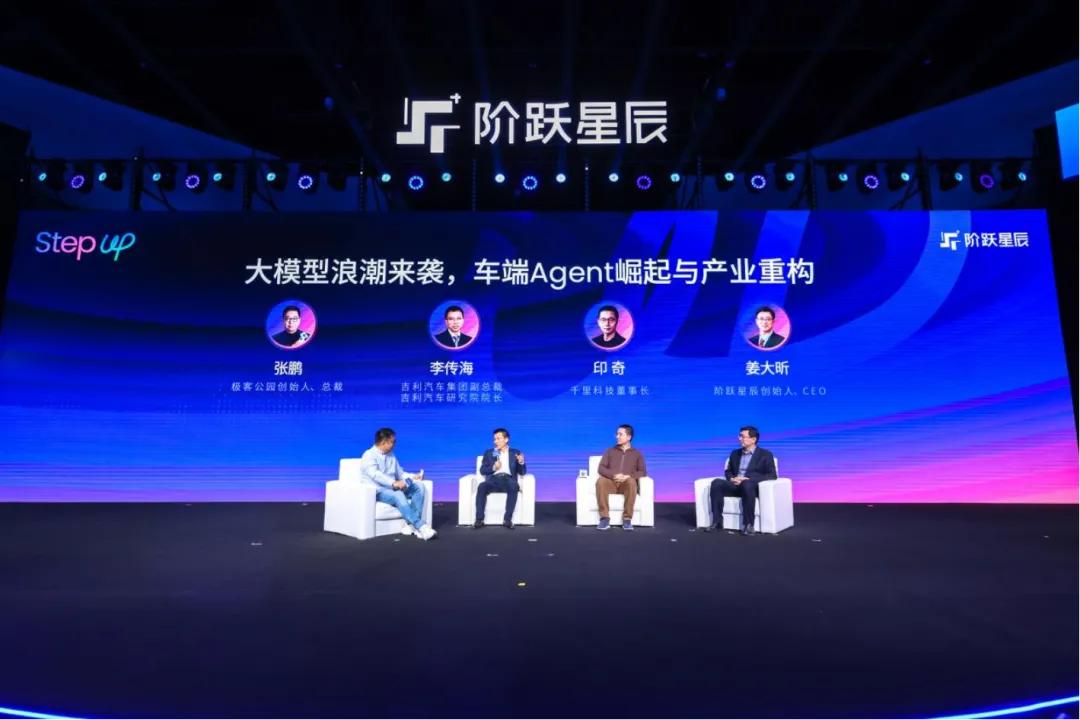
According to official data, it has established partnerships with over 60% of domestic mobile phone manufacturers, with installations exceeding 42 million units. In the automotive sector, its intelligent cockpit solution, developed in collaboration with Geely, has entered mass production models.
Everything seemed on track, but the pace of commercialization remained too slow.
Peers like Zhipu, Minimax, and Moonshot AI had already pioneered API revenue models amid the global Token frenzy, with Zhipu’s valuation once surpassing RMB 1 trillion.
While StepFun had explored commercialization paths, the challenges faced by large model companies were evident—high R&D costs, long B2B implementation cycles, and, crucially, StepFun was not yet publicly listed.
In January, StepFun announced Yin Qi’s appointment as chairman, responsible for overall strategic rhythm and technical direction, seen as a “firefighting” move to steer the company.
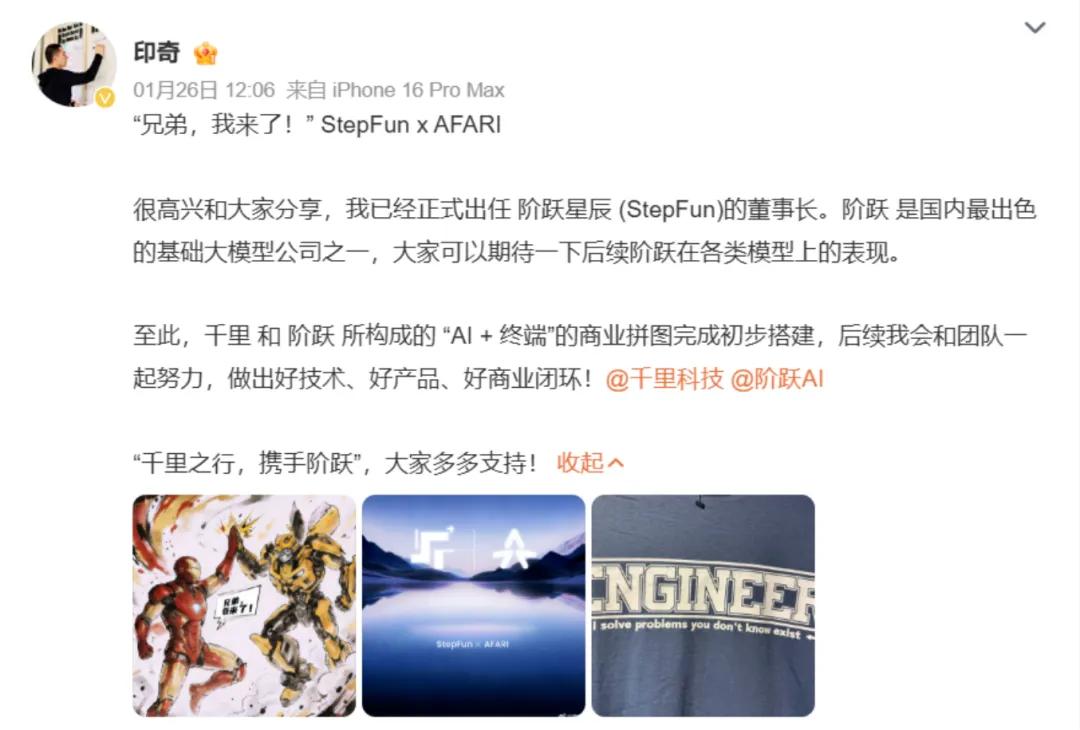
Yin Qi, founder of Megvii Technology, had been deeply involved in StepFun’s early strategic planning and currently serves as chairman of Qianli Technology. His addition closed the loop of StepFun’s “AI + terminal” strategy, spanning technology, products, and scenarios.
In Yin Qi’s view, integrating AI with the physical world is essential for achieving AGI. He believes China’s large models must forge their own commercialization path, which may not necessarily involve coding but rather software-hardware integration.
Notably, on the same day Yin Qi joined StepFun, the company announced the completion of a B+ round financing exceeding RMB 5 billion, setting a new record for single-round funding in China’s large model sector.
Capital markets seemed to favor this niche path—with model capabilities converging, whoever seizes the AI terminal entry point gains control over user data, scenarios, and interactions.
The issue, however, was that StepFun lacked hardware.
As a large model supplier, no matter how strong StepFun’s model capabilities were, it had to first navigate hardware manufacturers’ “gatekeeping.” Data and transactions remained trapped in others’ systems, limiting StepFun’s autonomy.
Yin Qi wanted StepFun to advance further.
02 Yin Qi Had No Other Choice
Thus, StepFun unveiled its own mobile phone.
At the July 13 press conference, StepFun released the terminal brand STEPX, operating system Step AOS, personal intelligent agent Amoo, and the large model-native intelligent agent phone STEPX Neo.
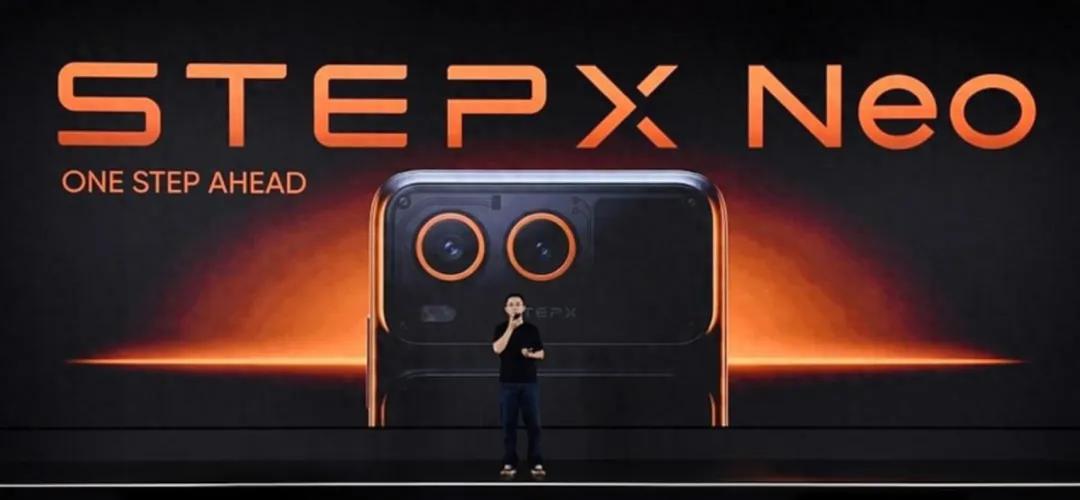
After Doubao and OpenAI, StepFun’s move into mobile phones was not entirely surprising.
However, at this price- and release date-free press conference, StepFun was less about launching a “phone” and more about telling a “story”—one centered on an operating system.
Yin Qi admitted in interviews that while StepFun’s team had over a decade of hardware supply chain experience, they approached hardware with reverence, recognizing its difficulty yet necessity.
Yin Qi explained that StepFun had tried collaborating with various terminals but failed to find the perfect fit. Without creating innovative terminals first, it could not form a “model-software-hardware” closed loop or truly reach consumers.
Thus, StepFun decided to lead by example, becoming the definer of the “large model-native terminal” category.
Three years ago, StepFun began laying the groundwork for this “trinity” architecture.
First was the large model, the brain of intelligent terminals. To date, StepFun has built the Step series “1+N” model matrix, covering foundational and multimodal models with comprehensive capabilities in speech recognition, generation, and multimodal understanding. Its Step Edge end-side model suite ranks first among end-side models in 29 core evaluation metrics.

Second was software, the highlight of this press conference: Step AOS.
Yin Qi clarified that Step AOS differs from the industry’s common approach of adding large model plugins to existing operating systems. Instead, it reconstructs the underlying framework from scratch to natively adapt to intelligent agent operations.
This system is not an Android rewrite but adds a dedicated execution layer above hardware and Android, transforming hardware capabilities and system resources into interfaces callable by intelligent agents, optimizing task execution pathways.
This model differs from last year’s Doubao AI phone, which used AI to simulate human visual recognition and touch to operate apps. While Doubao’s approach offered broad applicability, it carried security risks.
Step AOS avoids Doubao’s GUI route. Instead, it collaborates with app developers like Alipay, Meituan, Ctrip, Gaode, JD.com, and Didi to jointly agree on open interfaces, enabling intelligent agents to directly schedule system capabilities for task execution.
Finally was hardware. To convince investors and partners of its “story,” StepFun needed a physical carrier. No intelligent terminal was better than building its own phone.
From this perspective, whether StepFun’s phone enters mass production or competes with mobile phone manufacturers mattered less. The key was whether capital markets believed the story.
03 The IPO Window Is Narrowing
Currently, StepFun’s greatest challenge is not convincing investors but first persuading partners.
Building its own phone grants StepFun full permissions for its intelligent agent. However, other mobile phone manufacturers may hesitate to relinquish system-level permissions, allowing StepFun to collect user data, control app distribution, or even cede partial data control.
The same logic applies to StepFun’s partnerships with app developers. While StepFun secures interfaces from partner apps, the depth of access remains the hardest point to negotiate.
Too shallow an access limits intelligent agents to simple queries; too deep an access causes app developers to lose traffic control.
Notably, Tencent, a StepFun shareholder, did not appear on the initial list of app partners. An AI phone unable to integrate WeChat hardly achieves a true service closed loop.
Nevertheless, StepFun served this “just-cooked” “dish” promptly, as time was running out.
In the hardware race, OpenAI phones’ mass production timeline advanced from 2028 to the first half of 2027; Doubao Phone 2.0 debuted at WAIC with around 200,000 units prepped, both vying to define “AI phones” in users’ minds.
The operating system arena was even more crowded.
Alibaba partnered with Honor to potentially launch the next-generation terminal operating system Agentic OS. Huawei Xiaoyi, Xiaomi HyperOS AI, and Apple Apple Intelligence had also prepared their native AI capabilities.
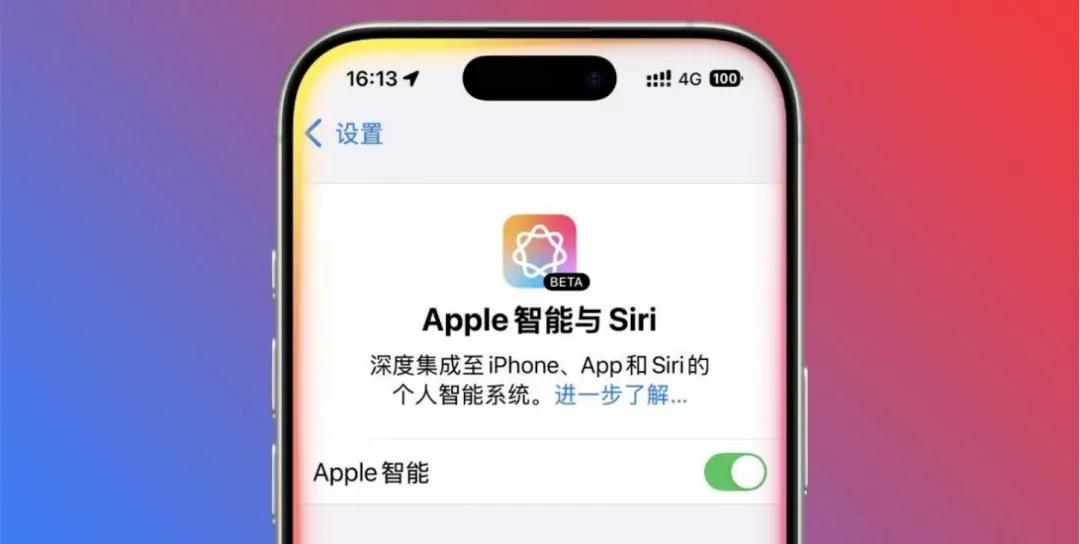
However, competition in the large model sector caused StepFun the most anxiety.
Beyond Zhipu and MiniMax, StepFun was seen as the strongest contender for the “third large model IPO.” In April, it completed shareholding reform; in May, multiple media outlets reported its dismantling of the red chip structure to prepare for a Hong Kong IPO.
Suddenly, DeepSeek was reported to be planning a 2027 IPO. While not direct competitors, as fellow top-tier large model companies, DeepSeek’s stronger commercial performance would raise capital market expectations for StepFun. The later StepFun delivers results and stories, the weaker its pricing power becomes.
Earlier, media reports claimed StepFun aimed to complete its IPO by the end of 2026.
Yet at this critical juncture, StepFun’s rivals in hardware, software, and large models were simultaneously accelerating their positions, visibly narrowing its IPO window.
Thus, StepFun presented its utmost sincerity.
But market acceptance hinges not on a single press conference but on whether StepFun can validate its business model—not just as a model supplier but as an intelligent terminal brand profiting from Agent services and Token consumption.
In May, StepFun reportedly secured nearly $2.5 billion in financing from investors including Huaqin, Longcheer, OmniVision, ZTE, and other mobile phone and consumer electronics supply chain companies.
StepFun may also have a backup plan: collaborating with consumer electronics supply chains to create a neutral Agent system layer. Partners could invoke other models or allocate data independently.
However, this would return StepFun to a supplier role, albeit shifting from product-based to Token-based revenue sharing.
In that case, why not go all in?
For StepFun, keeping the story alive matters more than its perfection.
The cover image and illustrations belong to their respective copyright owners. If copyright holders deem their works unsuitable for public browsing or free use, please contact us promptly, and our platform will immediately correct the issue.
-
![]()
Final Verdict: The Strategic Importance of GAC Honda’s Early Joint Venture Renewal
-
![]()
SpaceX's Stock Price Falls 30% from Peak! Musk Warns Short Sellers: Your Survival Probability is Extremely Low
-
![]()
100,000 Steps at WAIC! 10 Questions to Understand the Next Phase of the AI Industry: From Chatting to 'Embodied' Work
-
Image Stabilization Motor Leader’s Second Attempt at Hong Kong IPO: Shinco Motor’s Rise, Challenges, and Ties to O-film Tech
-
![]()
Personnel Shuffle: Independent Director Mi Xuming Steps Down from OFILM
-
![]()
Net Profit Anticipated to Skyrocket by 103%: What Gives This Optical Company a Competitive Edge?
-
In Just One Year, China Unveils Unicorns Valued at 10 Trillion Yuan!
-
![]()
6 Park Companies Shine at WAIC: How Hong Kong Science Park Bridges AI from Research to Industry