100,000 Steps at WAIC! 10 Questions to Understand the Next Phase of the AI Industry: From Chatting to 'Embodied' Work
 07/22 2026
 361
361
AI Embodies and Works.
From July 17 to 20, the main forum of the 2026 World Artificial Intelligence Conference & High-Level Conference on Global AI Governance (WAIC 2026) was officially held. As an annual AI industry event, this year's conference once again gathered major large model companies, AI application and hardware vendors from home and abroad. Leitech's (ID: leitech) AI new media outlet, Leitech AGI (leikejiagi), also sent a reporting team to Shanghai for on-site coverage.
The most eye-catching exhibits at this year's WAIC were, of course, the robots. A mere couple of movements in the exhibition hall could draw a crowd three layers deep. However, what truly stuck in our minds were several less lively scenes: the Leju Robot continuously moving boxes on a simulated production line, the Qianjue Robot slowly folding a paper box, the Zhiyuan Robot guiding visitors around the venue in a yellow vest, and the camera on the back of a Honor phone extending out and actively turning to look at people.
According to official conference data, this year's WAIC spanned three locations and four halls, featuring over 100,000 square meters of exhibition space, more than 1,100 enterprises, 3,000 exhibits, and 300 global premieres. However, the true significance of this year's WAIC lay not in its scale but in its 'hardness.'
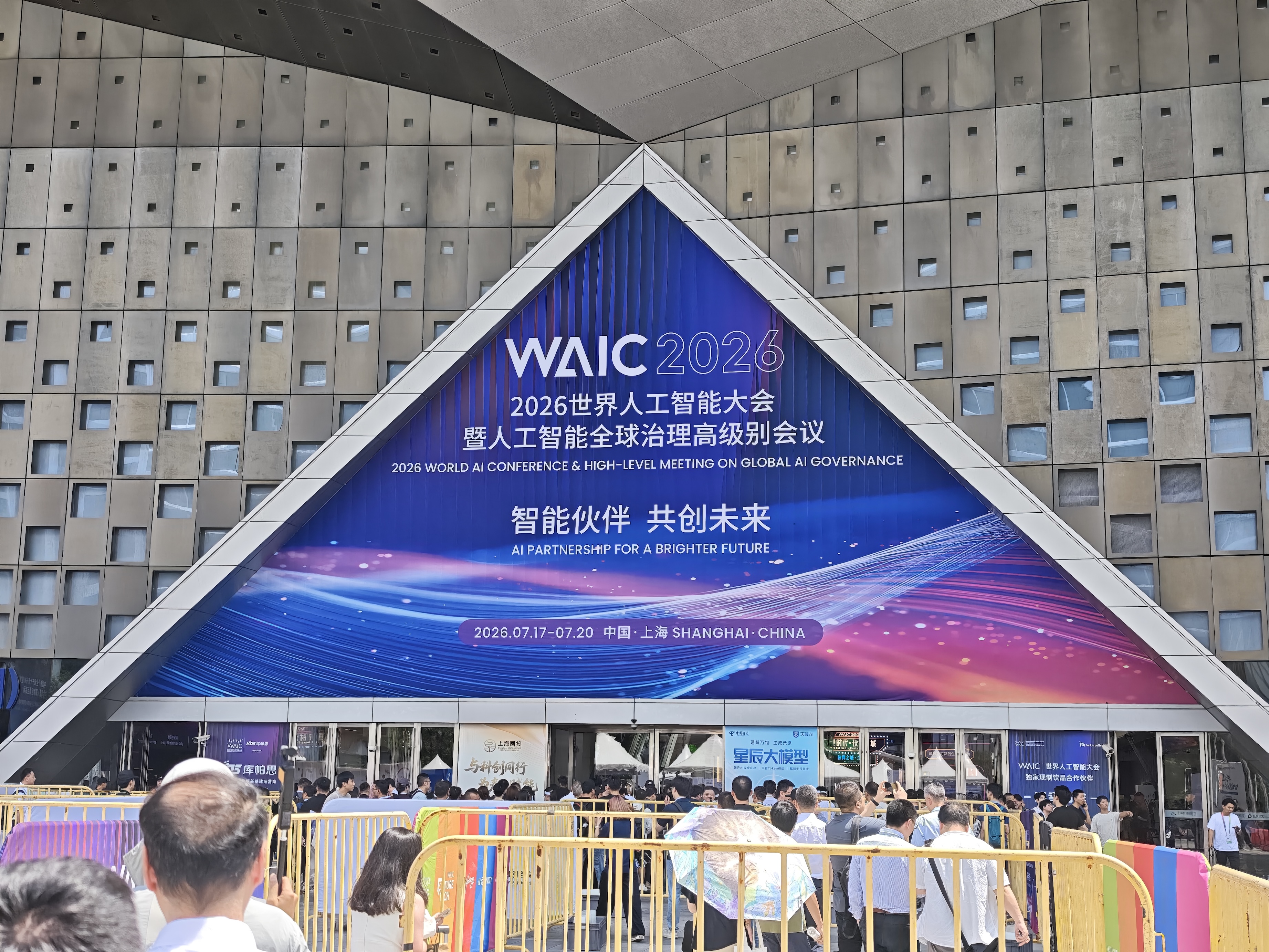
Image Source: Leitech
Models are still here, and chatbots have not disappeared. However, AI is no longer satisfied with answering questions on screens. It is now entering smartphones, glasses, computers, cars, and robots, taking over sensors, invoking applications, controlling mechanical structures, and finally reaching out to touch the real world.
This is the 'hardest' WAIC in nine years, and it is also the first time AI has so concentrate ly (concentratedly) moved into the real world through humanoid robots, agent phones, AI glasses, agent computers (Agent Computer), and other hardware carriers.
'Hardness' is first visible to the naked eye.
Smartphones are beginning to incorporate mechanical structures, glasses are vying for operating system dominance, robots are moving from display stands into factories, and cars are arriving at the AI conference with world models and intelligent agents. Furthermore, domestic AI chips are no longer just displayed as cards but have brought super nodes, 100,000-card clusters, near-memory computing, and robot development boards into the exhibition hall.
AI is searching for different 'bodies.' Smartphones, with their mature computing power, screens, applications, and payment systems, are the easiest vessels for personal agents at this stage. Glasses, close to the eyes and ears, are the most natural first-person perspective entry points. Robots and cars possess actuators that can directly alter the physical world.
Even computers are changing. Traditional AI PCs primarily emphasize NPU computing power and local models. In contrast, the Agent Computer (AC) and Agent PC showcased at WAIC further focus on 'execution.' Products like the Agentic Computer and Agentic Box displayed by Cexin Technology attempt to enable end-side devices to simultaneously handle model inference, task orchestration, permission management, and data auditing.
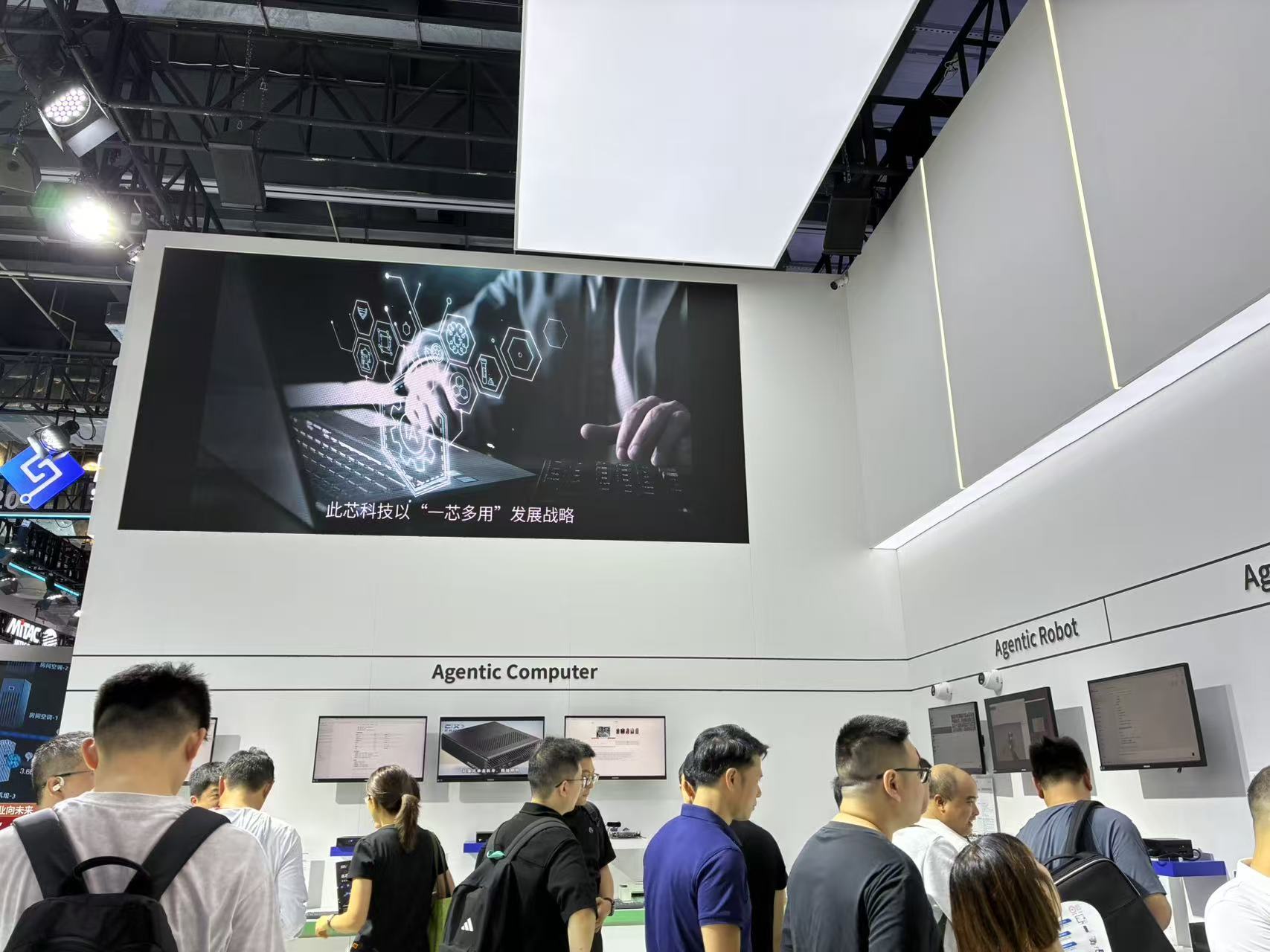
Image Source: Leitech
Similarly, LiuLian Intelligence's Agent PC solution integrates CPUs, GPUs, NPUs, local models, and enterprise management systems into a single delivery chain.
This means that the 'integration of AI and hardware' is no longer just about adding a dialog box to a device. Models must understand the environment seen by the camera, mobilize local computing power and cloud services, complete operations across applications, and allow user confirmation at critical steps. On robots and cars, it even requires responsibility for every brake, grasp, and movement.
However, the more hardware involved, the harder it becomes to hide AI errors. Therefore, the 'hardness' of this year's WAIC comes not only from hardware, chips, and robotic arms but also from a complete system that includes latency, reliability, permissions, security, cost, and delivery, which are beginning to replace mere benchmark scores as essential considerations for AI products.
At this year's WAIC, the two clearest trends in consumer electronics were agent phones and AI glasses.
The Nubia NaviX Ultra, also known as the Doubao Phone 2, to some extent continues the GUI Agent route, which involves understanding the screen and then simulating human clicks, swipes, and inputs to perform operations such as price comparisons, ticket bookings, and food ordering across different apps. In theory, AI can attempt any operation that a human can perform on an interface.
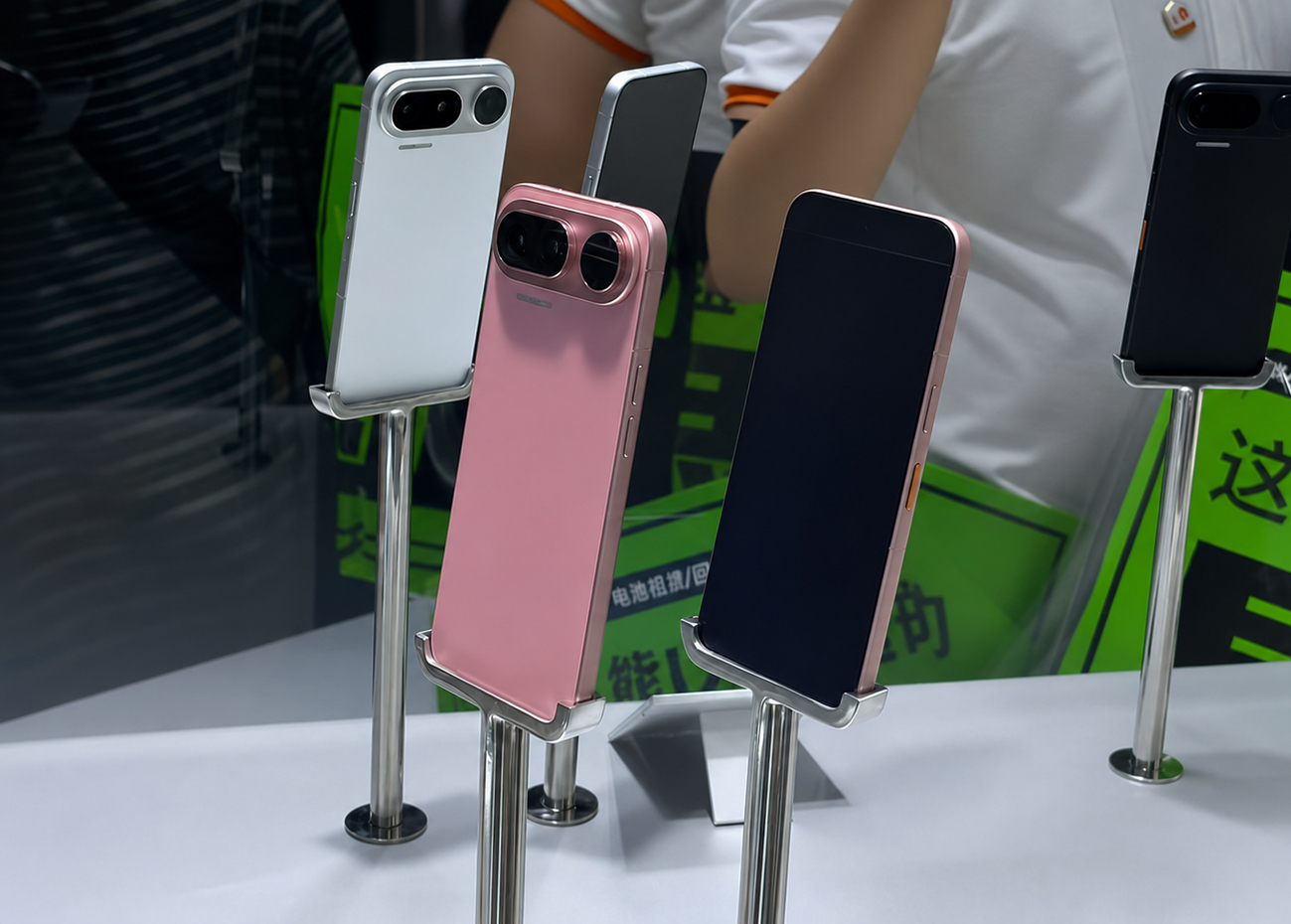
Image Source: Leitech
However, the NaviX Ultra not only adopts the design of a mass-produced flagship phone and features a new independent AI button but also goes beyond GUI operations. As Leitech previously discussed in an article, it connects to some large platform applications through standard interfaces like A2A and MCP, allowing the applications' own agents to perform further operations or processing.
In contrast, the Jieyue Star STEPX Neo chooses to redesign the phone, placing the personal agent Amoo at the main interaction entry point. Users do not need to decide whether to open Maps, Meituan, Ctrip, or Alipay; they simply state their purpose and preferences, and Amoo plans tasks and coordinates services. The underlying Step AOS uniformly manages end-side and cloud models, CPU/GPU/NPU computing power, cross-application semantic memory, and system permissions, while breaking down communication, file, and other capabilities into atomic services that agents can invoke.
As for the more unique Honor Robot Phone, it also possesses certain agent capabilities but focuses more on proactive perception. It uses a mechanical pan-tilt unit that can extend from the body and rotate freely, allowing the camera to actively track people and observe the environment, adding a touch of 'embodiment' to follow shots, video calls, and situational judgments. This form factor is the most eye-catching but also faces issues such as mechanical durability, power consumption, and privacy boundaries for continuous observation.
While the NaviX Ultra and STEPX Neo are already discussing how to handle cross-application tasks, the Robot Phone seems more focused on exploring what new senses agent phones can acquire.
Not only agent phones but also AI glasses have evolved at this year's WAIC. Qianwen announced at WAIC that its AI glasses will upgrade their Skill and Agent capabilities, allowing them not only to provide answers after hearing questions but also to invoke third-party services based on user intent.
Glasses, with their first-person perspective, voice, and environmental information, are naturally suited for translation, navigation, recording, and object recognition. Once they integrate payment, travel, and lifestyle services, they could become the closest entry point to Alibaba's intelligent agent ecosystem for users.
Rokid takes it a step further by focusing on the platform. The new generation of Rokid AR supports 6DoF spatial positioning, gesture recognition, spatial audio, and dual-camera perception, incorporating independent spatial computing capabilities. YodaOS aims to organize models, cameras, displays, spatial coordinates, and third-party services into a unified glasses system.
This path is not easy. Every glasses company aspires to be the 'Android of the glasses era,' but the real question is whether developers will come, whether applications will stay, and whether weight, battery life, and privacy can withstand daily use.
When viewed together, these products are all vying for the same position: who can perceive user needs earliest and deliver results through the shortest path.
In terms of quantity, robots are undoubtedly the absolute protagonists at WAIC. However, the most valuable change this year is that manufacturers are finally less obsessed with dancing, fighting, and backflips.
Zhiyuan is the most representative example. Sixty Zhiyuan robots were directly integrated into conference operations, providing services such as guiding, patrolling, interacting, and unmanned retailing. They were no longer just exhibits but became part of the conference infrastructure. Zhiyuan also set up a 3C production line close to a real manufacturing environment at its booth, showcasing the Spirit G2 series performing loading, unloading, inspection, and boxing tasks.
A set of data provided by Zhiyuan effectively illustrates the industry's focus: Eight robots once operated continuously for 105 days on a tablet quality inspection line, achieving a task success rate of 99.99% and efficiency approximately 80%-90% of human levels. The first deployment took about four months, while the second was shortened to one week.
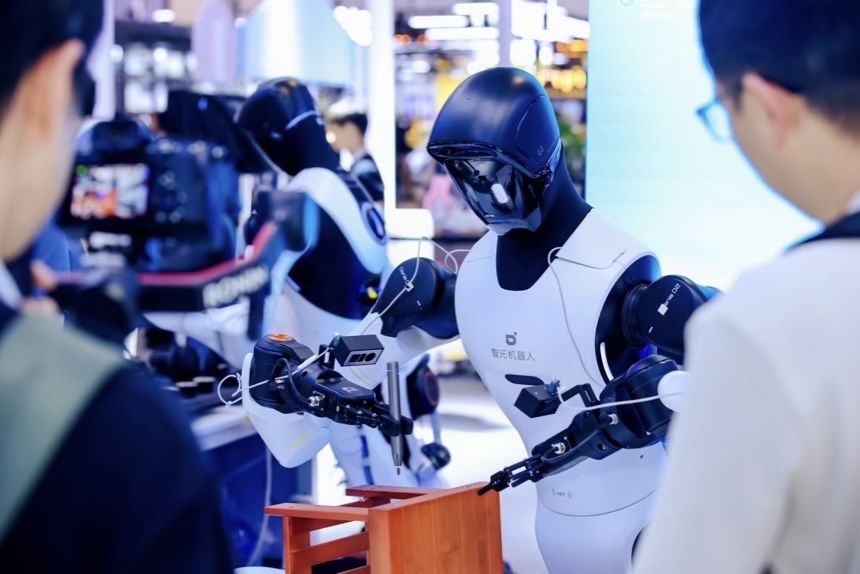
Image Source: Zhiyuan
Another aspect that left a strong impression on us was 'tactile perception.' At the WAIC venue, Qianjue Technology demonstrated a robot slowly folding a paper box and continuing the action after external interference. While vision can tell the robot where the paper box is, it is difficult to judge whether the fingers are holding it steadily or whether the paper has been folded correctly. For tasks like assembling earphones, plugging in connectors, and organizing flexible objects—the 'last few centimeters' of operation—tactile perception often determines whether the task can be truly completed.
Leju replicated a production line on-site, having its robots continuously handle and de-stack boxes for hours. Mifeng did not bring more eye-catching humanoid robots but showcased grippers and vision devices used to collect real operational data. The former answers 'whether it can work,' while the latter addresses 'where robots learn to work.'
From observations at the WAIC venue, embodied AI is collectively breaking through some real bottlenecks that previously plagued the industry: stability, high-quality data, and return on investment. While language models can obtain vast amounts of text from the internet, robots struggle to acquire physical interaction data of the same scale and quality. Even if the technology is viable, companies will still inquire about equipment depreciation, maintenance, production line modifications, and labor cost savings.
Therefore, the success of the robotics industry will not be decided in exhibition halls. The true test lies in whether a robot can continuously operate for months in a factory after leaving the spotlight and whether customers are willing to purchase a second batch.
In early 2026, OpenClaw quickly gained popularity. It allowed ordinary people to see for the first time that AI could not only chat but also read files, invoke tools, operate computers, and continuously perform tasks. By the time of WAIC, agents were no longer a standalone track but had infiltrated nearly every exhibition area.
Agents in smartphones invoke applications, agents in glasses invoke skills, agents in computers process local files, agents in cars coordinate vehicle control and services, and robots can be seen as agents in the physical world.
Moreover, Tencent introduced the AI Buddy matrix covering office work, programming, going global, and content creation. Baidu showcased the 'Partner' intelligent agent, while Alibaba displayed both the Qianwen glasses and intelligent agent platforms like Alibaba Cloud Bailian.
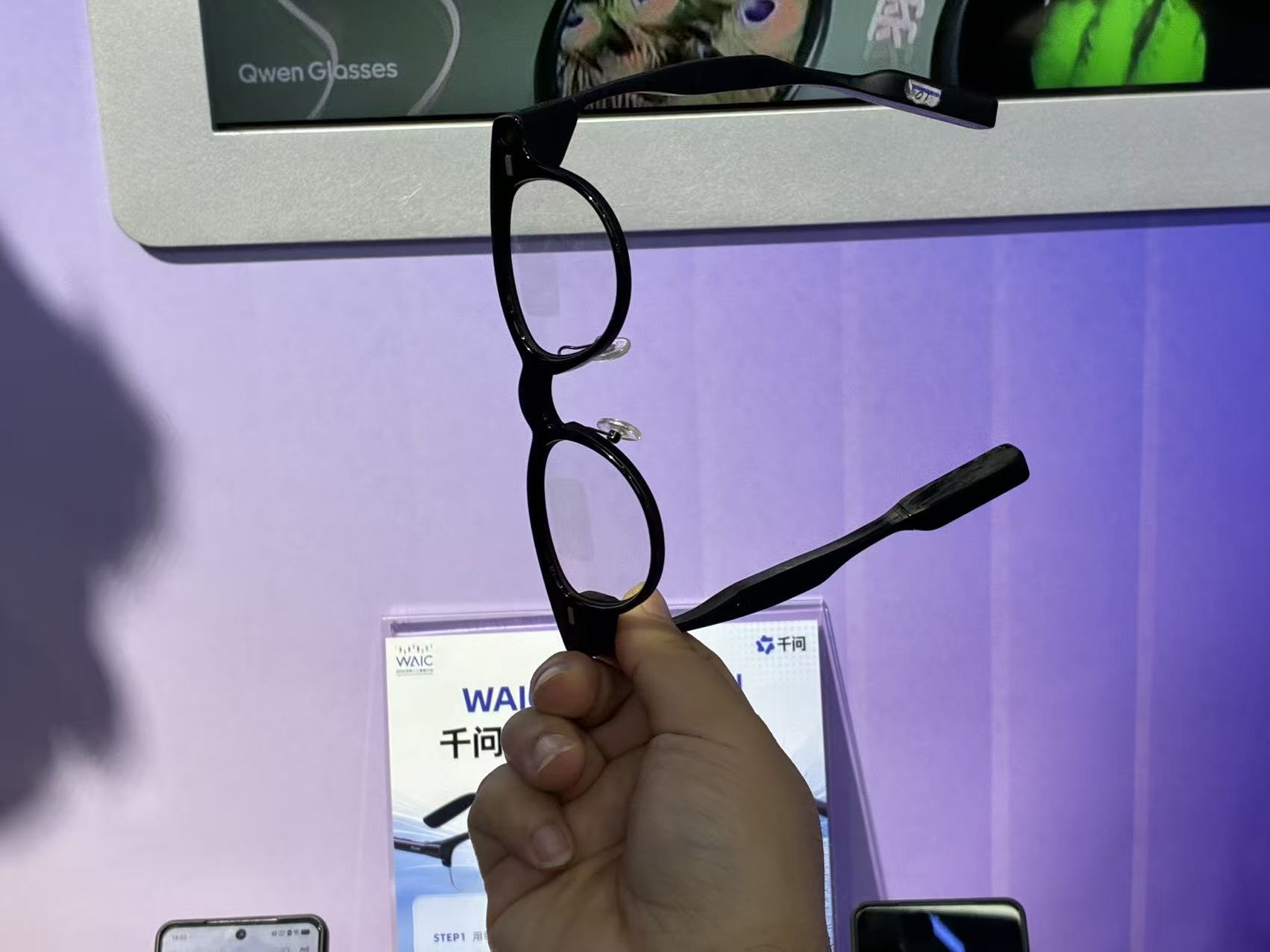
Image Source: Leitech
WPS Lingxi Professional Edition also introduced agents into daily office scenarios. At WAIC, WPS Lingxi Professional Edition could manage context and user preferences by 'project,' invoke document, spreadsheet, browser, and coding capabilities, and ultimately deliver editable and traceable native Office files. WPS Comate for organizations further handled enterprise knowledge, collaboration, and permissions.
The competition among office agents has advanced from 'help me write a paragraph' to 'deliver a result that I can continue to modify.'
However, agents possess high-level permissions such as file read/write, system commands, and API invocations. The greater their capabilities, the higher the risks of data leaks, misoperations, and prompt injection. After agents take over endpoints, model intelligence is just the starting point. Permission grading (tiering), critical operation confirmation, runtime isolation, log auditing, and accountability boundaries are the foundations for product adoption.
Therefore, while agents had a strong presence at this year's WAIC, they no longer stood at the center of booths like last year's large models. Instead, they resembled a new operating system, quietly hidden beneath every device and service.
Enterprise clients rarely pay for a single brilliant answer. What they truly purchase is a system that can integrate into their business, manage permissions, retain data, operate stably, and be maintained.
LiuLian Intelligence's full-stack AI terminal solution showcased at WAIC precisely addressed this dividing line. At the venue, it integrated mobile AI PCs, workstations, servers, local models, agent execution, computing power scheduling, and enterprise management into a single system, attempting to bridge gaps between computing power selection, hardware-software adaptation, and industry applications.
LiuLian Intelligence's SIXCLAW AI OS handles model management, agent execution, and computing power scheduling while discussing computing power adaptation and ISV ecosystems with partners such as AMD, the China Academy of Information and Communications Technology, and Foxit Software through industry linkages.
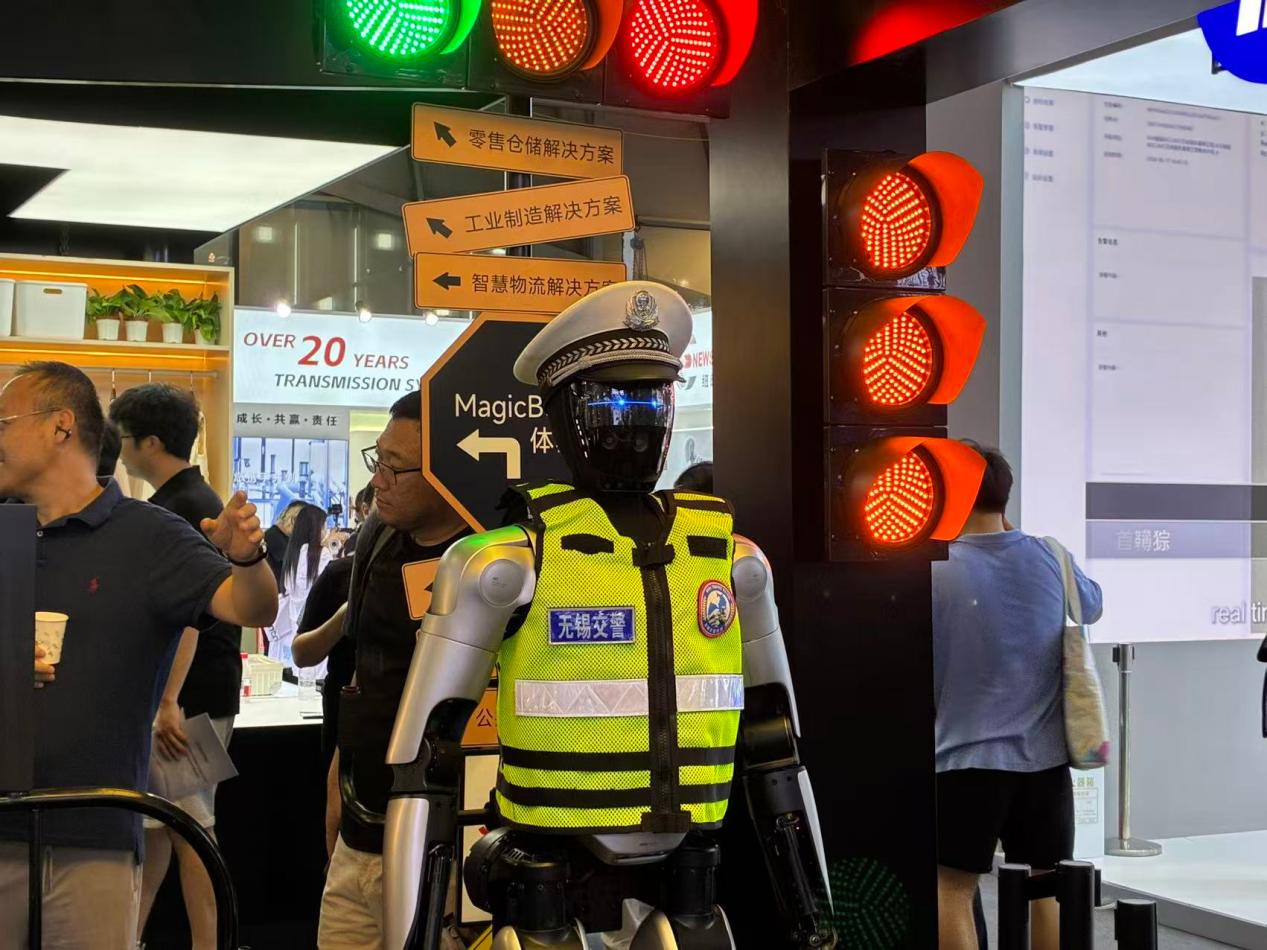
Image Source: Leitech
The core issue is that enterprises do not need a pile of components but a complete solution that can be deployed, managed, and delivered. The Agentic Computer and Agentic Box showcased by Cexin Technology also placed local inference and data auditing in sensitive scenarios such as finance and government affairs. Tianwu Technology's protein design agent linked models, automated experiments, and feedback data for scientific problems like plastic-degrading enzymes.
Meanwhile, companies like Zhiyuan and Leju continuously emphasized real production lines and continuous operations, essentially answering whether AI can integrate into existing processes.",
The shortage of computing power did not disappear at WAIC; it just manifested in different forms.
Previously, everyone was most concerned about the peak performance of a single card. This year, the most eye-catching exhibits in the intelligent computing exhibition area were super nodes. Companies like Huawei, Alibaba, Baidu, as well as domestic manufacturers such as MetaX, Iluvatar CoreX, and Moore Threads, are all showcasing how to organize dozens, hundreds, or even thousands of accelerator cards into a larger computer.
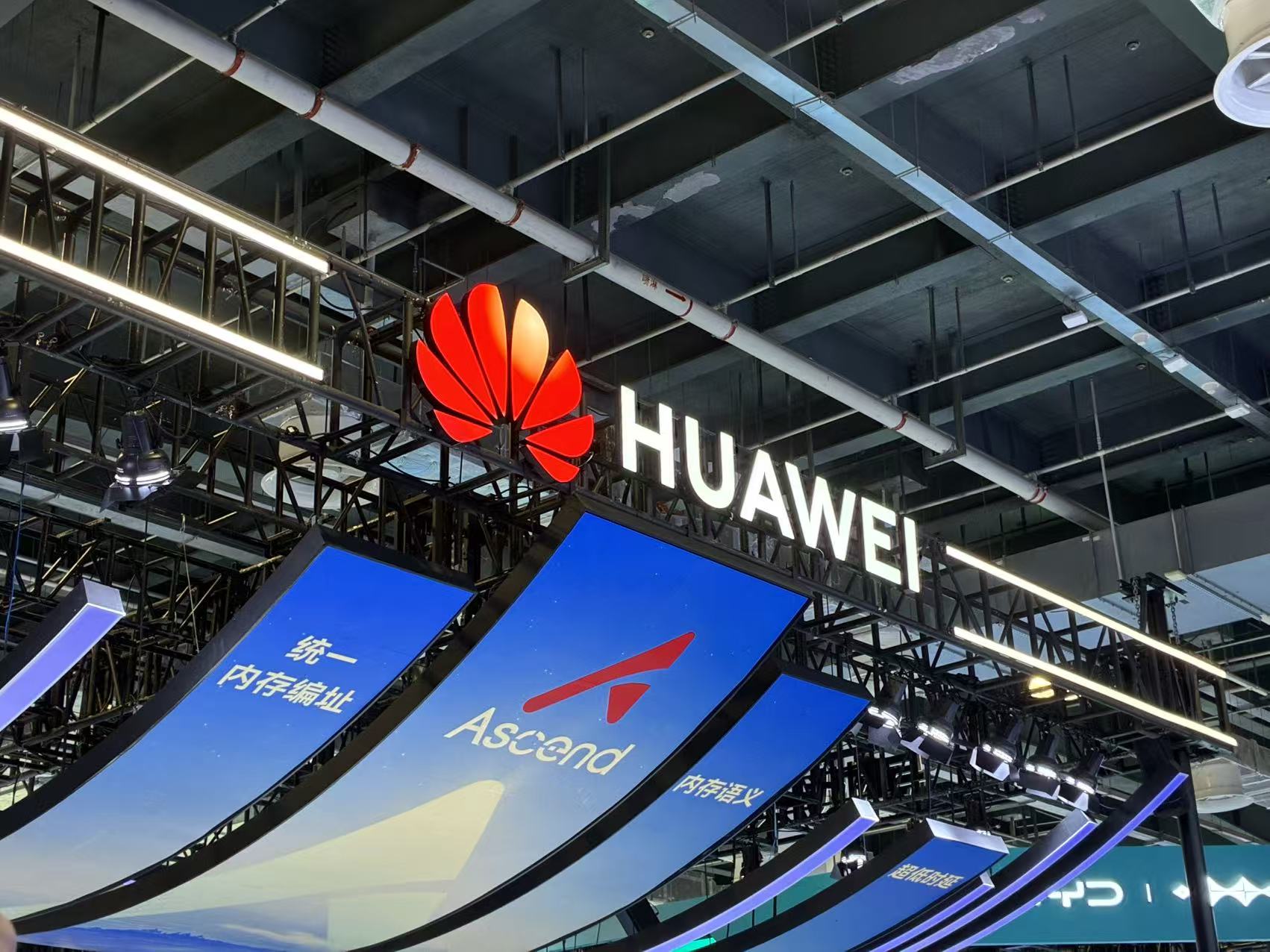
Image Source: Leikeji
Core metrics have also shifted from how fast a single card is to chip utilization, interconnect bandwidth, unified memory, system stability, and cost per token.
Moore Threads' display is highly representative. It summarizes training, token generation, and agent operation into three categories of 'AI factories' and uses the MUSA software and hardware stack to demonstrate large model training and world models. This proves that domestic GPUs can also operate seamlessly from cluster scheduling and model training to inference services.
On the other hand, cloud providers like Alibaba are developing their own AI acceleration chips because large-scale, stable inference tasks can amortize chip R&D costs. Specialized chips can optimize performance and power consumption for specific workloads, but they will not completely replace GPUs: training tasks and rapidly evolving models still require versatility, while mature, ultra-large-scale inference focuses more on unit cost. For a long time to come, GPUs, NPUs, and various ASICs will coexist.
Meanwhile, the Diguabot RDK S600 uses an 18-core Arm Cortex-A78AE processor and its self-developed rising sun S600 chip to provide up to 560 TOPS of edge inference computing power, aiming to handle perception, large model inference, and real-time motion control on the same platform. Its significance lies not just in being a more powerful development board but in enabling robots to perform more tasks locally, reducing latency, bandwidth usage, and cloud computing costs.
Storage is also stepping into the spotlight. Model parameters, long contexts, concurrent agent operations, and multimodal data generated by robots continue to increase pressure on HBM, DRAM, NVMe storage, and data transfer. No matter how fast the computing chips are, if data cannot reach the computing units, they will still encounter the 'memory wall.' Therefore, near-memory computing, high-bandwidth memory, CXL expansion, and hierarchical storage will become essential components of next-stage computing systems.
So, will the shortage of computing power ease? Judging from WAIC, local efficiencies may improve, but overall demand will continue to expand.
Super nodes, ASICs, Arm-based edge devices, and new storage technologies can all reduce the cost per task, but once agents start running 24/7 and robots and vehicles continuously generate video and sensor data, new demand will likely outpace the computing power saved.
The shortage of computing power is spreading from a lack of 'a good card' to systemic issues involving chips, memory, interconnects, power, and software efficiency. The industry's response can only be a holistic system.
Describing the participation of internet giants at WAIC simply as 'old timers seeking AI tickets' is only half right.
Anxiety certainly exists. The growth dividends of the mobile internet are gradually peaking, and agents have the potential to become a new super-entry point. If users stop opening a dozen apps and instead directly entrust their goals to a single intelligent agent, then who first understands user needs, who allocates traffic, and who controls payments and transactions will all be reshuffled. No company among Tencent, Alibaba, Baidu, or ByteDance is willing to cede this entry point to others.
But focusing solely on anxiety underestimates their leverage.
Alibaba possesses cloud services, chips, models, e-commerce, payments, and lifestyle services, enabling it to cover everything from underlying computing power to QianWen smart glasses. Tencent has WeChat, social networks, content ecosystems, and mini-programs, making it better suited to embed agents into services users are already familiar with. Baidu has search, maps, autonomous driving, and large models; JD.com controls commodities, transactions, logistics, hardware channels, and after-sales services.
The JD.com JoyInside and Cami solutions Leikeji saw in the automotive exhibition area were particularly interesting. Instead of building a new car, they enable older vehicles to gain in-car agents through aftermarket devices, connecting them to JD.com's service ecosystem. For JD.com, the value of AI ultimately translates into a product purchase, a service transaction, and a fulfilled delivery. This is precisely what internet companies excel at:
Turning technology into a closed-loop business chain.
Zhihu's strengths lie elsewhere. Its core assets remain professional creators, authentic questions, and human discussions. As models become easier to obtain, trustworthy content, experienced judgment, and community relationships may become even scarcer. Zhihu doesn't necessarily need to become the strongest model company but can continue serving as the infrastructure for AI to acquire knowledge, correct answers, and connect with professional users.
When major companies participate in WAIC, they are both defending the next generation of entry points and repackaging the cloud services, accounts, payments, content, supply chains, and service networks they have accumulated over the past two decades to offer to the AI industry.
Seeking a 'ticket' often doesn't mean boarding a strange new ship but rather retrofitting one's old vessel into a new AI-era ship.
Foundation models remain the cornerstone of WAIC, but the spotlight has shifted from 'who has the most parameters' to four directions: long-duration tasks, edge deployment, multimodal actions, and physical world understanding.
Kimi K3 entered the 3T-scale open model arena with approximately 2.8 trillion parameters, focusing on long-duration programming, knowledge work, and complex agent tasks. Parameter scale remains important as it determines the upper limit of capability, but vendors are more eager to prove that models can work continuously for hours, truly completing a project rather than just answering a single question correctly.
Minicpm5-1B from Minicpm takes the opposite approach, using smaller parameter scales to enter phones, cars, and robots. Its collaboration with Legu on a guidance solution enables edge-side operation in network-free environments, completing environmental understanding, route planning, and obstacle avoidance.
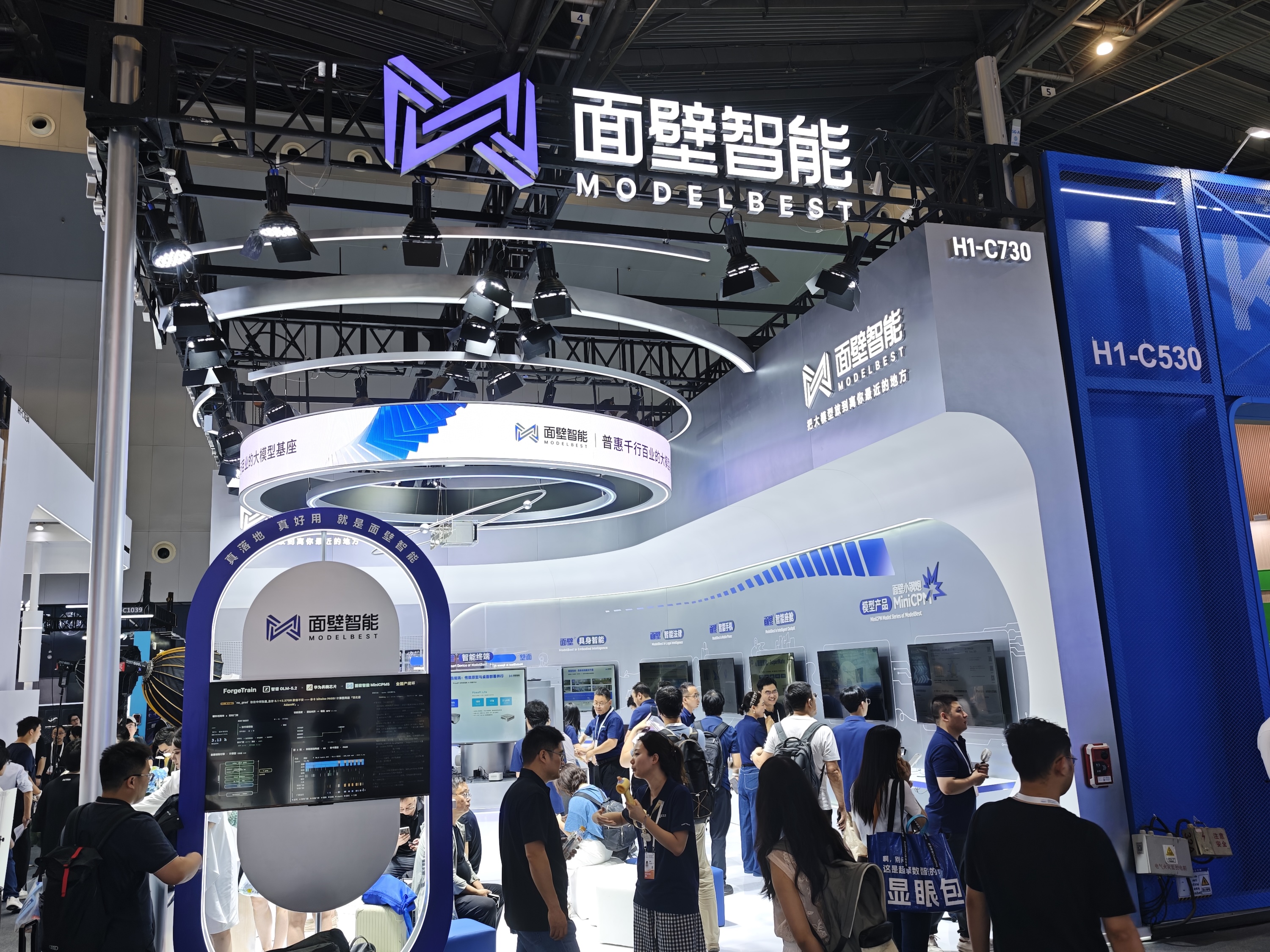
Image Source: Leikeji
Edge models don't need to outperform cloud models in all capabilities; they just need to be irreplaceable in terms of latency, privacy, cost, and offline availability to secure their position.
Stepfun is pushing models directly into systems. Behind STEPX Neo are Step AOS and the personal intelligent agent Amoo, which handle edge-cloud models, cross-application memory, system permissions, and third-party services in a unified manner. In automotive applications, Stepfun's models integrate into Geely's Super EVA, linking cabin dialogue, vehicle control, and travel services into task chains. For Stepfun, the value of models lies not in standalone demonstrations but in becoming part of phone and car operating systems.
Moving further into the physical world, VLA and world models represent two popular approaches to embodied intelligence. VLA excels at connecting language, vision, and actions, while world models attempt to learn the rules of object motion and environmental changes. Currently, both have shortcomings and are more likely to coexist and gradually merge over the long term rather than quickly converge on a single solution.
WeRide WITT, unveiled by WeRide on the first day of WAIC, also belongs to this wave of physical AI competition. It introduces 'minimal physical fact units,' extracting, reasoning, verifying, and orchestrating facts from real-world road videos, then transforming these facts into training and evaluation signals. This approach can improve data processing efficiency by up to 200 times and reduce token costs by about 98%.
Model competition hasn't abandoned parameters but has added more challenging criteria. Future evaluations of a model will consider whether it can complete long tasks, run on the edge, invoke tools, understand physical laws, and how much it costs to complete each task.
Automotive brands and autonomous driving companies aren't participating in WAIC because AI conferences are increasingly resembling auto shows. On the contrary, Leikeji/Dianchetong's on-site observations indicate that the number of complete vehicle brands hasn't spiraled out of control, but solution providers for world models, intelligent cockpits, autonomous driving, and aftermarket services have noticeably increased.
The reason is simple: Cars are today's largest-scale, most commercialized physical AI endpoints.
Modern smart cars are equipped with cameras, radars, in-vehicle computing platforms, actuators, batteries, and stable user payment capabilities, generating vast amounts of real-world data daily. Many robotics companies are still seeking their first major clients, while cars already have mature production lines and millions of mass production devices.
The most significant change in automotive AI this year is the convergence of cockpit and driving functions. Geely's Super EVA doesn't just answer questions; it attempts to break down user intentions into navigation, vehicle control, content, and lifestyle service tasks. World models are used to understand and generate complex traffic scenarios, supplementing long-tail data that's difficult to repeatedly collect on real roads. JD.com's Cami demonstrates another possibility:
Even without replacing a car, aftermarket hardware can grant fuel-powered and older models agent capabilities.
The combination of WeRide WITT and GENESIS further illustrates this trend. WITT extracts and verifies facts from real-world operational data, while GENESIS generates high-fidelity simulations and long-tail scenarios. Together, they support vehicle-end model training, advancing automotive AI from mere 'cockpit AI assistants' to continuous understanding and learning of the real world.
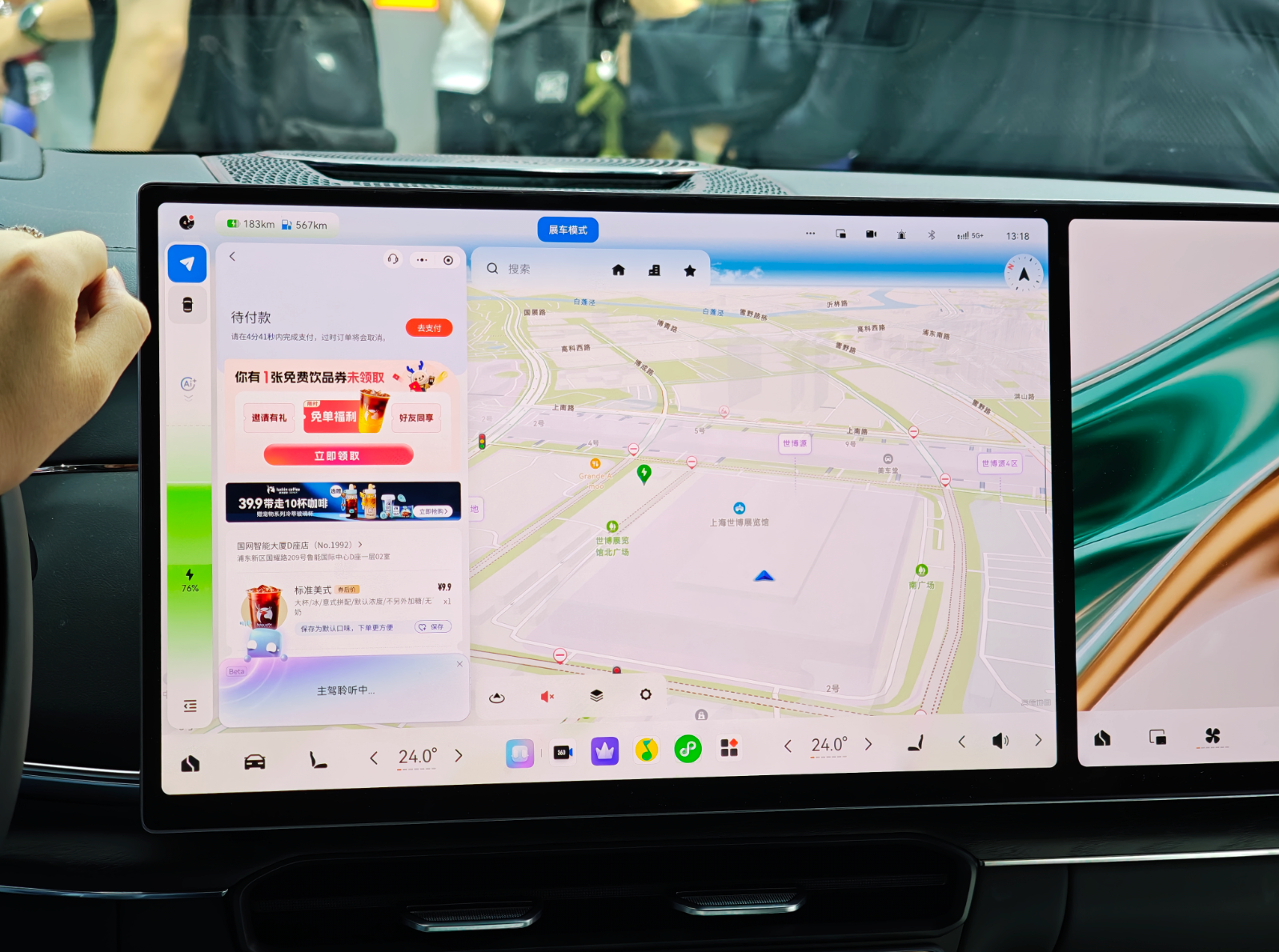
Image Source: Dianchetong/Leikeji
However, cars are also the AI endpoints least tolerant of hallucinations. A smartphone agent misclicking a button can be undone, but a vehicle's erroneous judgments about pedestrians, traffic lights, and road relationships carry entirely different consequences. Every advancement in world models, end-to-end systems, and in-vehicle agents must simultaneously pass functional safety, liability attribution, and long-term operational data validation.
Cars have come to WAIC because they already stand at the intersection of models, chips, sensors, and physical actions. In a sense, they are wheeled robots that have been mass-produced for years.
If we had to summarize WAIC 2026 in one sentence, we would say: AI is finally starting to take responsibility for results.
In previous years, models answering faster, longer, or more human-like were newsworthy. This year, walking into the exhibition halls, the questions companies face have shifted to: Can agents complete tasks across applications? Can robots work continuously? Can edge models operate offline? Can domestic chips stably support clusters? Who will maintain systems after deployment?
This doesn't mean AI has fully industrialized. On the contrary, WAIC has exposed many unfinished aspects, including the lack of unified rules for agent permissions, the long road to general-purpose robots, unresolved battery life and ecosystem issues for AI glasses, the need for real-world load validation of super nodes, and the fact that automotive world models cannot equate demonstration effects with safety capabilities.
But the industry's direction has changed. The most competitive companies in the next stage may not necessarily have the largest single model or the most sensational demo. Instead, they are more likely to master a complete chain: models understand goals, chips provide computing power, operating systems manage permissions, sensors read the world, hardware executes actions, and industry data feeds results back into the models.
AI has grown a body, and this is the true signal left by the 'hardest WAIC yet.' Next, the industry must prove that this body can not only move but also work stably, cost-effectively, and responsibly.
WAIC 2026, themed 'Intelligent Partners · Creating the Future Together,' has concluded.
The AI narrative has shifted from stacking model parameters to implementing agent productivity. Heterogeneous collaboration and photonic computing continue to push computational limits. Embodied intelligence accelerates applications, with robots entering homes and factories, making physical AI a reality.
The Leikeji WAIC exploration team has returned to Guangzhou and is conducting a tense summary and review. Stay tuned!
WAIC2026 Intelligent Agents AI Hardware Embodied Intelligence Robots
Source: Leikeji
All images in this article are from the 123RF licensed image library. Source: Leikeji
-
![]()
Final Verdict: The Strategic Importance of GAC Honda’s Early Joint Venture Renewal
-
![]()
SpaceX's Stock Price Falls 30% from Peak! Musk Warns Short Sellers: Your Survival Probability is Extremely Low
-
![]()
100,000 Steps at WAIC! 10 Questions to Understand the Next Phase of the AI Industry: From Chatting to 'Embodied' Work
-
Image Stabilization Motor Leader’s Second Attempt at Hong Kong IPO: Shinco Motor’s Rise, Challenges, and Ties to O-film Tech
-
![]()
Personnel Shuffle: Independent Director Mi Xuming Steps Down from OFILM
-
![]()
Net Profit Anticipated to Skyrocket by 103%: What Gives This Optical Company a Competitive Edge?
-
In Just One Year, China Unveils Unicorns Valued at 10 Trillion Yuan!
-
![]()
6 Park Companies Shine at WAIC: How Hong Kong Science Park Bridges AI from Research to Industry