6 Park Companies Shine at WAIC: How Hong Kong Science Park Bridges AI from Research to Industry
 07/21 2026
 497
497
When 18 Hong Kong AI innovation companies collectively debuted at WAIC 2026, robotics, AI agents, climate tech, and smart city solutions were showcased under one roof. Through these exhibits, the path of Hong Kong AI—from research to products, into industries, and onto larger markets—became tangible.
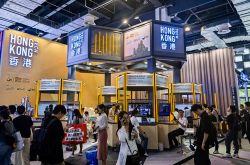
At this year's WAIC, the Hong Kong Trade Development Council, in collaboration with Hong Kong Science Park, Cyberport, and Hong Kong-Shenzhen Innovation and Technology Park, organized 18 Hong Kong AI innovation companies to establish the Hong Kong Pavilion.
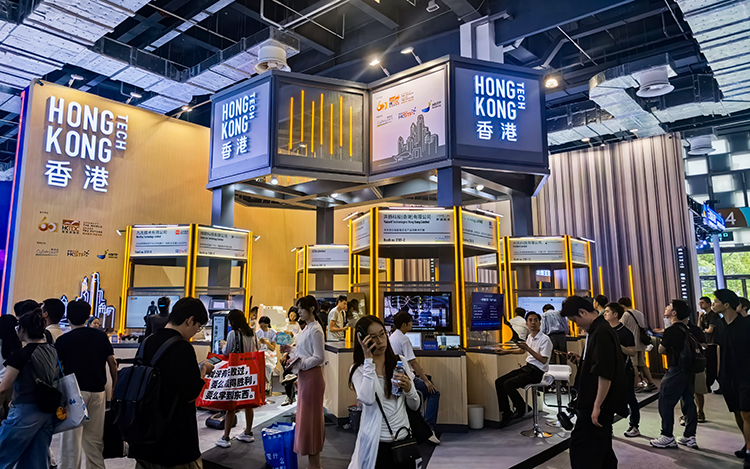
Among them, Hong Kong Science Park, as a strategic partner, brought six park companies covering fields such as artificial intelligence and robotics, software development, and smart cities. Despite Hong Kong's relatively small local market and manufacturing scale, AI companies continue to emerge from universities and research institutions. How does it transform research outcomes into products and assist companies in finding applications, funding, and clients?
To answer these questions, one must look beyond the technologies in the pavilion and examine the industrialization system behind it.
Hong Kong Science Park sits at the heart of this system, connecting universities and laboratories on one end with enterprises, industrial resources, and the market on the other. The six park companies visiting Shanghai this time offer concrete examples of how this mechanism operates.
Hong Kong Science Park: Addressing the Challenges Beyond Papers
When discussing Hong Kong's technological strengths, universities often come to mind first. Institutions like the University of Hong Kong, The Chinese University of Hong Kong, the Hong Kong University of Science and Technology, and the Hong Kong Polytechnic University have deep expertise in computer vision, robotics, medical technology, and climate research. Companies like SenseTime and Insight Robotics trace their roots to university research.
However, the journey from a research paper to a company involves a long road. Algorithms must be integrated into products, products must withstand repeated use, and companies must secure clients, funding, and supply chains. Many research outcomes fail not because the technology is inadequate but because they do not survive this process.
This is where Hong Kong Science Park steps in.
According to Hong Kong Science Park data, its ecosystem now gathers over 2,400 technology companies and 17,000 R&D personnel, having supported over 1,400 startups. The park also hosts over 500 AI companies with more than 5,000 related talents.
The significance of these numbers lies not in the park's size but in the fact that companies can find technicians, experimental facilities, investment institutions, and potential clients here.
For startups emerging from university research teams, the first challenge is transforming technology into products. Once prototypes exist, the next hurdles are scenario validation, financing, and market expansion. Hong Kong Science Park's role evolves accordingly—from incubating companies to acting as an "organizer" in technology transfer, linking resources from universities, enterprises, capital, and industrial scenarios onto a single pathway.
Six Companies Demonstrate AI's Transformation into Industry Tools
The six park companies participating in WAIC this time are Gitex Technology, Qiji Technology, Jiuguang Technology, Boge Technology, Insight Robotics, and Shenchengjiao Digital Technology.
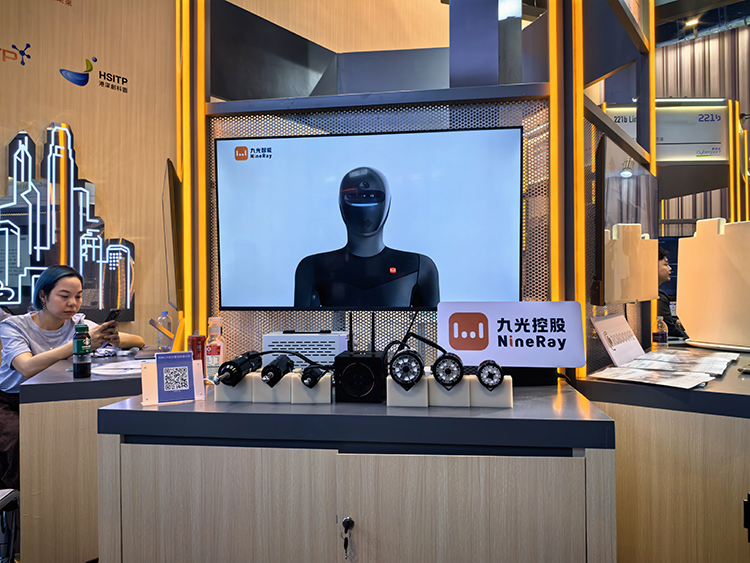
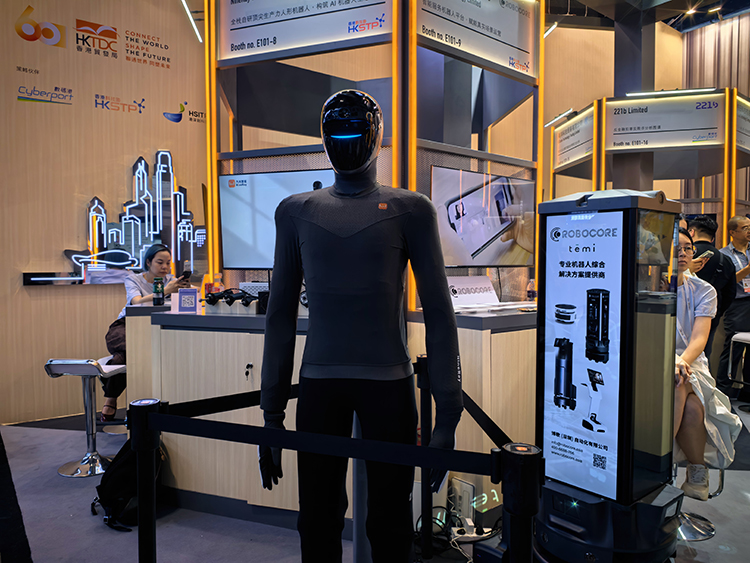
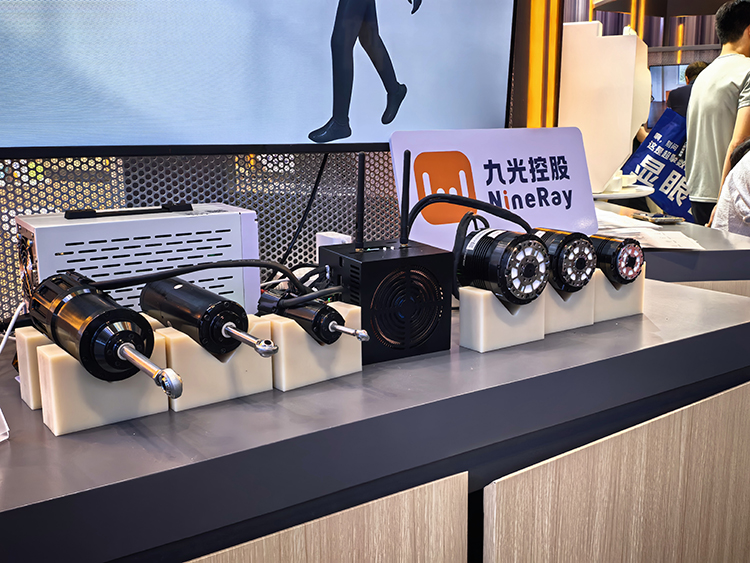
Jiuguang Technology focuses on embodied AI.
Unlike model-based products, embodied AI requires AI to control a physical body. It must understand instructions, recognize surroundings, maintain balance, identify objects, and complete designated actions. This means higher demands for stability and safety.
Thus, a humanoid robot performing a graceful move is just the first step. It must also address more practical questions: Can it work continuously? What is its failure rate? Can costs be reduced? Are clients willing to redesign workflows for it?
Jiuguang's full-size humanoid robot, showcased this time, aims to enter productivity scenarios with high load capacity, precise motion control, and an end-to-end AI architecture. It represents a direction Hong Kong Science Park is pursuing while exposing the toughest aspect of robot industrialization—the extensive engineering work between technology demonstration and mass delivery.
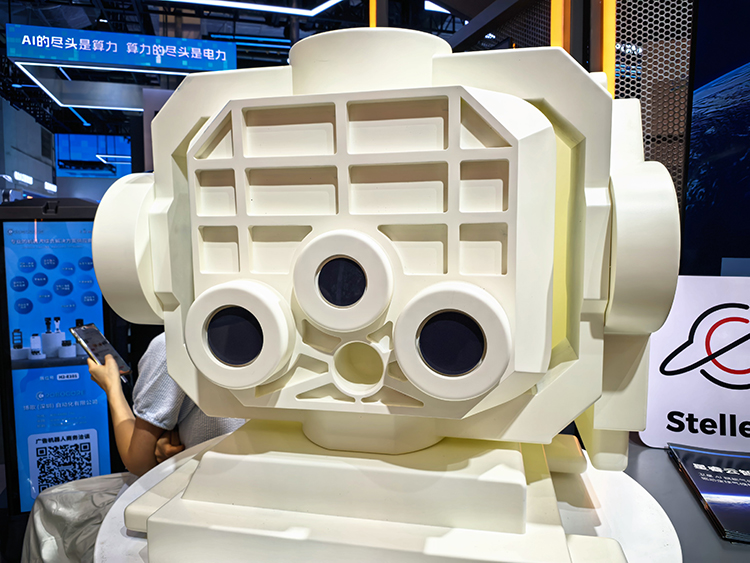
Insight Robotics takes a different path.
Incubated by the Hong Kong University of Science and Technology, this company combines satellite remote sensing, ground-based sensing networks, and physics-guided AI models for weather forecasting, climate risk, and carbon emission monitoring. According to conference materials, its team's carbon emission monitoring payload has been deployed to the China Space Station.
While this product may not be the most eye-catching at WAIC, it aligns well with Hong Kong's strength in professional services.
As a global financial hub, financial institutions need to assess extreme weather's impact on assets; urban management requires more precise weather forecasts; and companies face increasingly detailed carbon management demands. Climate tech thus moves from labs to become a deliverable professional service.
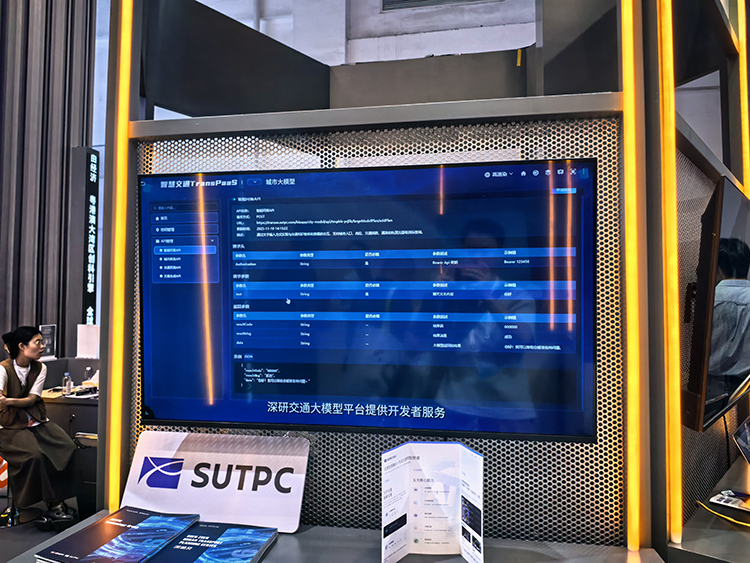
The other companies also focus on specific industries: Gitex Technology on software R&D and delivery efficiency, Qiji Technology on multimodal AI for sports content and data analysis, Boge Technology on service robots for healthcare, eldercare, and commercial scenarios, and Shenchengjiao Digital Technology on AI for traffic decision-making and urban governance.
Together, they signal that Hong Kong AI's opportunities may not lie in creating another larger general-purpose model but rather in markets with high professional barriers, such as finance, transportation, climate, and robotics.
From SenseTime to Science Park: Computing Power Returns
To understand Hong Kong Science Park's position in this chain, SenseTime serves as an illustrative case.
SenseTime's founding team came from the Multimedia Laboratory at The Chinese University of Hong Kong. After establishing its global headquarters at Hong Kong Science Park in 2014, the company grew into Hong Kong's first AI unicorn and listed on the Hong Kong Stock Exchange in 2021.
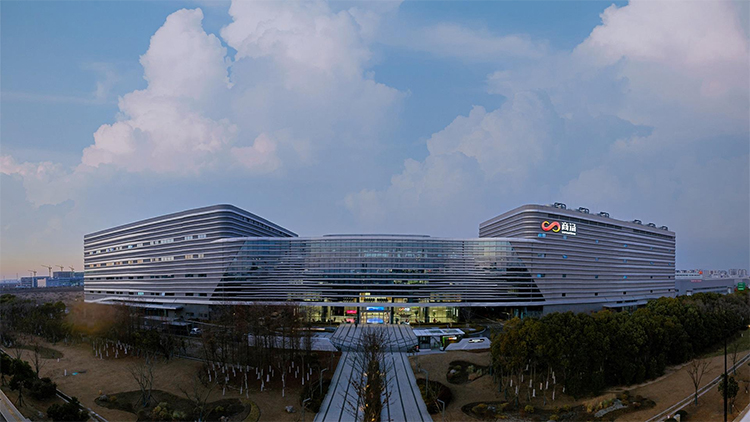
This path is typical: technology emerges from university labs, companies form in the park, scale through financing and market validation, and eventually enter capital markets.
Over a decade later, SenseTime's collaboration with Hong Kong Science Park has entered a new phase.
In June this year, the two sides signed a memorandum of understanding to jointly build Hong Kong's largest domestic AI data center. According to plans, its computing power will exceed 40,000 P by 2030.
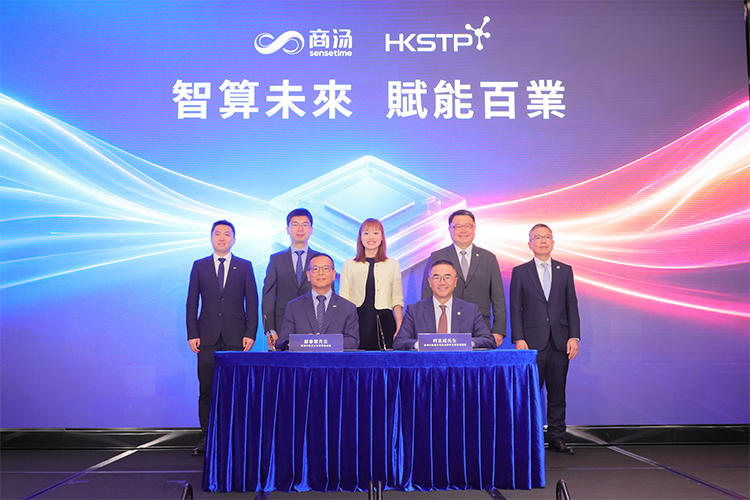
SenseTime, once incubated by the park, now contributes to its infrastructure development. This is more meaningful than simply adding another unicorn: as companies grow, technology, talent, and infrastructure return to the ecosystem for the next batch of companies to use.
Computing power is precisely what Hong Kong's AI industry needs to strengthen.
According to Hong Kong SAR government data, the city's current total computing power is about 5,000 PFLOPS, with Cyberport's AI Supercomputing Center providing 3,000 PFLOPS. Construction has begun at the Sha Ling Data Park, scheduled to operate by 2029 and provide 180,000 PFLOPS by 2032—36 times Hong Kong's current total.
Increased computing power does not automatically grow the AI industry. Electricity costs, equipment utilization, and stable model demand must all be considered. However, without sufficient computing power, park companies struggle to complete large-scale model training, product testing, and deployment. Hong Kong Science Park's collaboration with SenseTime addresses this increasingly expensive infrastructure gap between research and products.
Hong Kong's Path Relies on Cross-Border Collaboration
Hong Kong faces a stark reality in developing AI: it has universities, capital, and professional services but lacks a sufficiently large local market and complete manufacturing chain. Shenzhen and the Greater Bay Area provide the missing pieces.
From prototype refinement to mass production, hardware products undergo multiple adjustments, with robotics involving components like motors, reducers, sensors, and processing steps. During mass production, cost control and timely delivery become new challenges. Fortunately, Shenzhen and surrounding cities' industrial chains offer the necessary support.
The Hong Kong Science Park Shenzhen Branch is already operational. The Hong Kong-Shenzhen Innovation and Technology Park, located in the Lok Ma Chau Loop Hong Kong Park and a wholly-owned subsidiary of Hong Kong Science Park, facilitates cross-border research collaboration and technology transfer. As the future Xinnong Technology City and INNOPOLE develop, this cross-border corridor will only grow.
A more pragmatic division of labor is emerging.
Hong Kong handles research, intellectual property, financing, and international market connections. Shenzhen and the Greater Bay Area provide engineering, supply chains, and manufacturing capabilities. The broader mainland market offers product validation and scaling (scaled) application opportunities.
This division does not happen automatically. Cross-border movement of personnel, equipment, and data involves differing regulations, while hardware companies must address transportation, certification, and after-sales issues. Hong Kong Science Park's role is to transform these steps into services companies can actually use, rather than leaving them as concepts.
WAIC represents one such initiative. The Hong Kong Trade Development Council organizes the Hong Kong Pavilion and connects commercial resources, while Hong Kong Science Park leads park companies to exhibit and engage with mainland enterprises, investors, and industry partners through the Global Mixer program. Companies visiting Shanghai do not merely display products for a few days—some seek clients, others supply chain partners, and still others aim to identify suitable markets for their products.
From WAIC to Broader Markets: Hong Kong AI's Expansion
WAIC brings 18 Hong Kong companies to Shanghai, offering a glimpse into another side of Hong Kong's AI industry.
Here, technology emerges from university labs, robots seek application scenarios, and solutions target climate, transportation, and enterprise services. The six companies brought by Hong Kong Science Park vary in scale and direction but share the same industrialization pathway.
This pathway has already produced success stories like SenseTime. In 2014, SenseTime started as a research team at The Chinese University of Hong Kong and founded its company at Hong Kong Science Park; over a decade later, it collaborates with the park to build AI data centers, supporting a new generation of AI companies with infrastructure.
Companies gain resources from the park and, upon growth, return technology, talent, and industrial capabilities to it. This cycle transforms individual success into reusable experiences and conditions for more companies.
Participating in WAIC is also part of Hong Kong Science Park's efforts to propel companies into the market. Park companies can connect with mainland clients, investment institutions, and industry partners here, then leverage Hong Kong's university research, professional services, and international networks to bring their technology to broader markets.
From SenseTime to the six companies debuting at WAIC, Hong Kong AI's narrative is no longer written by a single star company. Humanoid robots, climate tech, smart transportation, and software tools now coexist in the same ecosystem, each finding its market niche.
As the exhibition concludes, R&D, validation, and collaboration within the park continue. The next batch of AI companies venturing from Hong Kong to larger markets will likely emerge from these daily, concrete efforts.
-
![]()
Personnel Shuffle: Independent Director Mi Xuming Steps Down from OFILM
-
![]()
Net Profit Anticipated to Skyrocket by 103%: What Gives This Optical Company a Competitive Edge?
-
In Just One Year, China Unveils Unicorns Valued at 10 Trillion Yuan!
-
![]()
6 Park Companies Shine at WAIC: How Hong Kong Science Park Bridges AI from Research to Industry
-
![]()
Wang Wenjing’s Third Act: Can Yonyou Reinvent Itself in the AI Era?
-
![]()
Performance Coupe Entry Threshold Reduced to 170,000 Yuan: Assessing the 2027 Exeed ES's Prospects
-
![]()
Battery "Crisis" for 4 Million New Energy Commercial Vehicles
-
【Focus】Fluorinated Photosensitive Polyimide (FPSPI): A High-End Subdivision of PSPI with Great Potential in High-Tech Industries