The Computational Power Fantasy of the MSG Monarch
 07/20 2026
 384
384
Source | Benyuan Finance
Author | Li Youshan
TOTO, renowned for its toilets; Caterpillar, synonymous with excavators; Sakura, a beloved stationery brand; and Jinyi Ham, a producer of fine meats—all have been propelled to new heights by the AI revolution. Even "Lianhua Monosodium Glutamate," a household name in our childhood kitchens, has found itself intertwined with the AI narrative.
Venturing into computational power leasing, launching AI terminals, and acquiring semiconductor material companies, Lianhua Holdings (600186) has made strategic moves. This year, riding the AI wave, it reached an all-time stock price high on June 26, surging over 160% from the beginning of the year, with its market capitalization increasing by nearly 15 billion yuan.
Traditional companies are eagerly embracing AI narratives—is this a conceptual frenzy or a transformative breakthrough? How formidable is the technological prowess of Lianhua Holdings, which has boldly ventured into new territories?
1. Same Starting Point, Two Different Paths
There is a precedent for monosodium glutamate companies dominating the AI sector: Japan's Ajinomoto has monopolized over 95% of the global market share with its "ABF film."
ABF film, or Ajinomoto Build-up Film, can be likened to the high-strength insulating framework between floors of a computational power skyscraper, if AI chips are compared to such a structure. ABF film addresses insulation and interlayer connection challenges in high-end chip packaging. Whether it's Intel's CPUs or NVIDIA's accelerators, the more complex the chip structure, the more indispensable ABF film becomes.
Surprisingly, this scarce material, based on amino acid technology and possessing high insulation properties, originates from a byproduct of monosodium glutamate production.
In the 1970s, faced with the challenge of handling this byproduct, Ajinomoto and Lianhua Monosodium Glutamate, both starting in the monosodium glutamate fermentation industry, took vastly different technological paths.
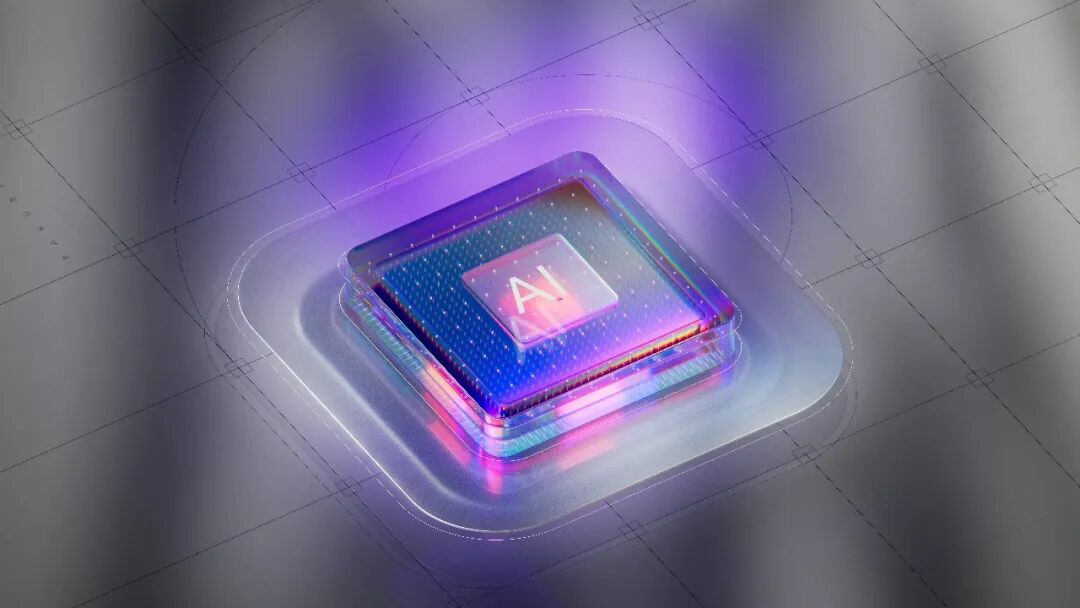
Ajinomoto did not view it as a burden. Instead, it dedicated two decades to laboratory research, refining performance, applying for patents, and exploring high-value applications such as resin-modified materials, flame retardants, and insulating resin formulations, securing over 200 key intellectual property rights.
Lianhua Monosodium Glutamate focused solely on selling monosodium glutamate worldwide, aggressively expanding production. By the 1990s, it had become the world's largest monosodium glutamate producer but lagged in industrial depth.
These are the path choices of two companies and typical observation samples of two countries at different stages of economic development.
In 1999, Ajinomoto's ABF film officially entered commercial mass production, with chip giant Intel becoming its first major customer. By continuously deepening its focus on "amino acids," from monosodium glutamate and ABF film to medical businesses, Ajinomoto built a deep moat. Even facing market rumors like "monosodium glutamate causes cancer," it steadily navigated through cycles.
Meanwhile, Lianhua Monosodium Glutamate struggled after going public, with its cross-border ventures in apparel and mineral water performing poorly. The company once faced the risk of a capital chain rupture, barely maintaining its listed status through asset disposals and government subsidies.
During this period, the company renamed itself "Lianhua Health," attempting to transition into the health industry but failing to reverse its decline, accumulating losses exceeding 600 million yuan from 2015 to 2017. In 2019, the brand teetered on the brink of delisting and liquidation before undergoing judicial restructuring to successfully preserve its listing.
By 2023, the traditional monosodium glutamate business regained vitality, with the company's operating revenue hitting a decade-high for the same period. During this phase, the company attempted cross-border moves in the consumer sector, planning to acquire stakes in the parent company of the self-heating food brand "Zihaiguo," ultimately terminating the deal due to valuation disputes. This became the catalyst for the company's shift toward the tech sector.
2. Following Ajinomoto's Footsteps
With stabilized performance, Lianhua embarked on an aggressive technological transformation, embarking on a journey to catch up with Japan's Ajinomoto.
In June 2023, Lianhua Health established a wholly-owned subsidiary, Lianhua Tech Innovation, planning to invest 693 million yuan in purchasing large-scale computational power equipment from New H3C Group. In 2024, the company renamed itself Lianhua Holdings. By 2025, it launched the "Lianhua Intelligent All-in-One Machine" and multiple AI hardware products for end-user devices.
In 2026, the company spent 103 million yuan to acquire a 51% stake in Shenzhen Newphase, officially entering the high-end ABF film sector and tapping into the lifeblood of the AI industry, seeking a "consumer + tech" dual-wheel drive.
The AI era demands higher chip performance, leading to exponential growth in ABF demand and fueling Lianhua Holdings' stock price, which surged over 160% year-to-date at its peak.
The semiconductor industry hinges on industrial fundamentals and accumulation. As market enthusiasm for conceptual themes wanes, Lianhua Holdings, arriving 30 years late, faces a stark reality amid its stock price rollercoaster.
Recently, Lianhua Holdings disclosed its 2026 first-half performance forecast, projecting a 48.75%–61.14% year-on-year increase in net profit attributable to shareholders. Despite positive performance, its stock price plummeted to its limit. On the same day, Lianhua Holdings formally responded to the Shanghai Stock Exchange's inquiry letter regarding its 2025 annual report, stating no core risks such as performance fraud, operational deterioration, or channel explosions existed.
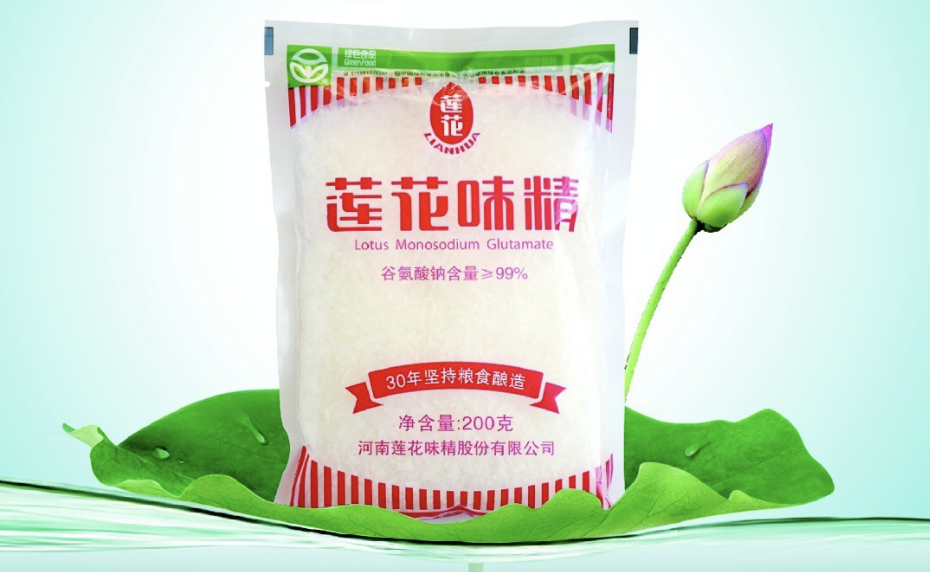
In 2025, Lianhua Holdings' food business accounted for 95.8% of revenue, with a gross margin of 26.47%. Its monosodium glutamate business generated 2.292 billion yuan in revenue, up 18.79% year-on-year. This was driven by declining raw material costs across the industry, recovering sales volumes, and Lianhua Holdings' suspected "price-for-volume" strategy and heavy marketing investments.
In 2025, its selling expenses reached 289 million yuan, up 52.75% year-on-year, significantly outpacing revenue growth. Regarding the over-10-fold increase in advertising spending, staff stated, "As the company's performance grows, business operations inevitably incur expenses."
In contrast, Lianhua Holdings' cross-border tech business performed dismally.
In 2025, its semiconductor business (ABF/NBF film, equipment investment) primarily involved equity participation and technological input, remaining in its early stages without generating substantial revenue or profit.
Computational power services generated 122 million yuan in revenue, up 51.13% year-on-year, accounting for about 3.5% of total revenue (3.452 billion yuan). However, net profit losses widened to 29 million yuan.
The Shanghai Stock Exchange repeatedly questioned the authenticity of its business, inquiring about "whether sustained orders truly exist and whether large advance payments for procurement are reasonable." In its response, Lianhua Holdings admitted that its computational power business severely underperformed expectations, revealing that the business also incurred minor losses in the first half of 2026.
Notably, Lianhua Holdings currently faces two major potential risks: first, computational power leasing contracts generally have short durations and are prone to early termination; second, asset impairment risks.
Last year, Lianhua Holdings prematurely terminated contracts worth 1.228 billion yuan. Due to a supplier's failure to deliver all servers on time for a 555 million yuan computational power service contract signed with a Shanghai state-owned enterprise, Lianhua Holdings paid 2 million yuan in compensation.
Affected by storage chip price fluctuations, the company already accounted for 12 million yuan in impairment losses for computational power-related fixed assets last year. Now, 4,000 accelerator cards purchased for 200 million yuan remain unassembled, having arrived three months ago without any sales or computational power service agreements signed with downstream clients. If future downstream computational power market demand changes or business operations fall short of expectations, the company's existing computational power fixed assets may face further impairment.
Regarding market concerns about customer concentration, Lianhua Holdings explained that most of its top ten clients are long-standing partners, with only one new client, Henan Zhengyuan, added. All clients operate under a prepayment-before-delivery settlement model, with no credit sales.
3. Betting on Stepfun Starry
Peter Drucker mentioned in Innovation and Entrepreneurship that innovation is a specific tool for entrepreneurs, who leverage changes to create opportunities for different businesses or services.
In Peter Lynch's Successful Investing, a dedicated chapter discusses the concept of "diversification deterioration." He argues that companies abandoning their core competencies to blindly acquire unfamiliar businesses will ultimately use profits from quality operations to fill the voids left by new ventures.
With Ajinomoto setting a precedent and the surge in domestic substitution, Lianhua Holdings remains highly focused on new tech sectors despite its current lackluster cross-border performance.
In May this year, Lianhua Holdings announced plans to invest up to 300 million yuan in cash to increase its stake in the large model company Stepfun Starry, sourced entirely from internal funds.
Stepfun Starry, alongside models like Zhipu, MiniMax, and Moonshot AI, is known as one of China's "Six Little Tigers" in large models. According to Tianyancha data, the company was founded in April 2023 and is currently in the final stages of its Hong Kong IPO.
Based on Lianhua Holdings' investment timeline, Stepfun Starry's estimated valuation was around $2.5 billion. Market expectations place its pre-IPO valuation near $10 billion. If it successfully lists on the Hong Kong Stock Exchange, floating profits may further expand.
Investing in Stepfun Starry completes the algorithmic component of Lianhua Holdings' AI dream. The company also highlighted related risks: the target company is currently in a state of significant losses, potentially leading to investment losses. Meanwhile, it set downside protection for this investment, attaching an IPO gamble repurchase clause with an 8% annualized interest rate.
The optimal timing for cross-border transformation is when the core business remains profitable. Whether this represents a second growth curve reshaping the industry or another round of speculative market cap games remains inconclusive.
Operations / Yu Shuya Design / Yanweier *All rights reserved. No reproduction without authorization.
End
Thank you for subscribing.
Please contact us first if you have any suggestions.
-
![]()
Final Verdict: The Strategic Importance of GAC Honda’s Early Joint Venture Renewal
-
![]()
SpaceX's Stock Price Falls 30% from Peak! Musk Warns Short Sellers: Your Survival Probability is Extremely Low
-
![]()
100,000 Steps at WAIC! 10 Questions to Understand the Next Phase of the AI Industry: From Chatting to 'Embodied' Work
-
Image Stabilization Motor Leader’s Second Attempt at Hong Kong IPO: Shinco Motor’s Rise, Challenges, and Ties to O-film Tech
-
![]()
Personnel Shuffle: Independent Director Mi Xuming Steps Down from OFILM
-
![]()
Net Profit Anticipated to Skyrocket by 103%: What Gives This Optical Company a Competitive Edge?
-
In Just One Year, China Unveils Unicorns Valued at 10 Trillion Yuan!
-
![]()
6 Park Companies Shine at WAIC: How Hong Kong Science Park Bridges AI from Research to Industry