Latest Insights from YC's Leader: In the AI Era, Never Do One-Off Work
 07/20 2026
 575
575
Author|Lin Yi
Editor|Key Points Team
In 2026, as generative AI enters the deep waters of application, the global startup ecosystem is undergoing reconstruction. The traditional logic of stacking manpower for output is failing, replaced by a new tech-native paradigm.
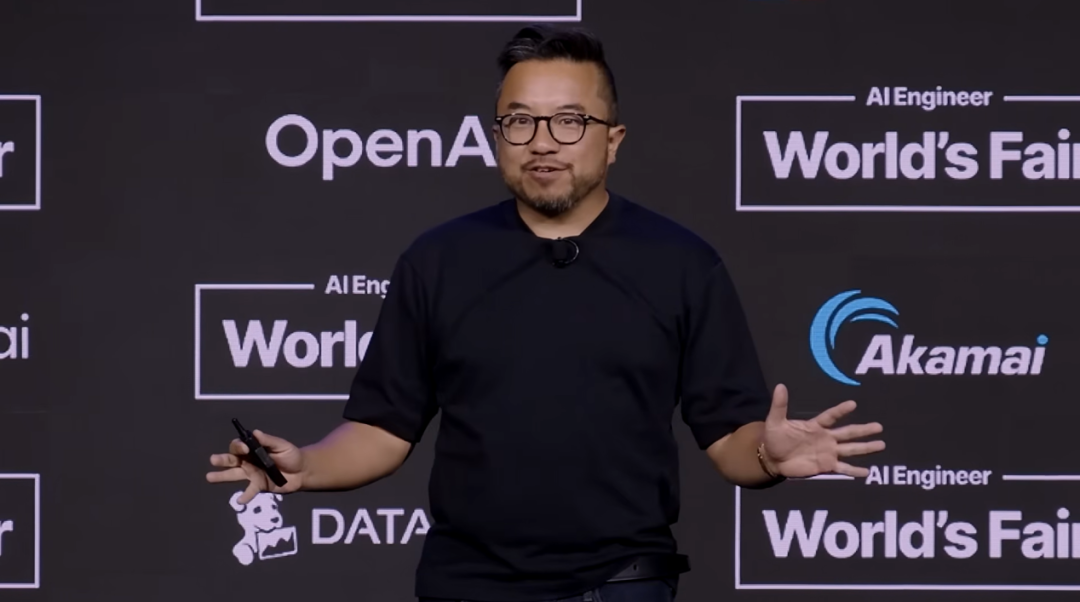
In his latest speech, Y Combinator leader Garry Tan stated that the true dividends of the AI era do not lie in fine-tuning model weights but in restructuring workflows. By fully encoding employees, processes, and performance in traditional organizational structures into 'skill manuals' and 'corporate brains,' Silicon Valley has seen the birth of the first AI-native enterprises leveraging ultra-lean teams of 15 or 40 people to drive tens of millions to hundreds of millions in ARR (Annual Recurring Revenue), completely disrupting the traditional per-capita output rules since the Industrial Revolution.
'If you still treat AI as code autocompletion and prompts as one-off tools, you will lose your competitive edge in the next phase,' Garry Tan said.
Some core insights:
The upper limit of productivity in the AI era is not determined by the weights of large models themselves. The real efficiency lever (with up to 400x improvements) lies in how workflows are reconnected and rewoven.
The traditional manpower-stacking business logic is failing. Future organizational forms will be fully codified, where a 'skill manual' functions as a virtual employee, and a 'parser table' serves as the organizational chart.
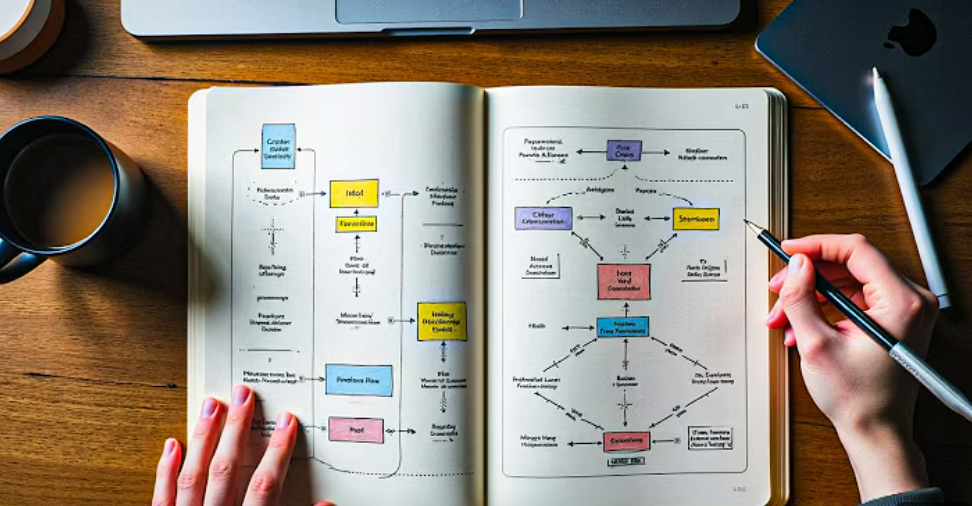
In system development, it is crucial to clearly define computational boundaries: non-deterministic tasks like intuitive judgments should be delegated to the 'latent space' of large models, while specific rules and code should reside in the 'deterministic space' to avoid misalignment.
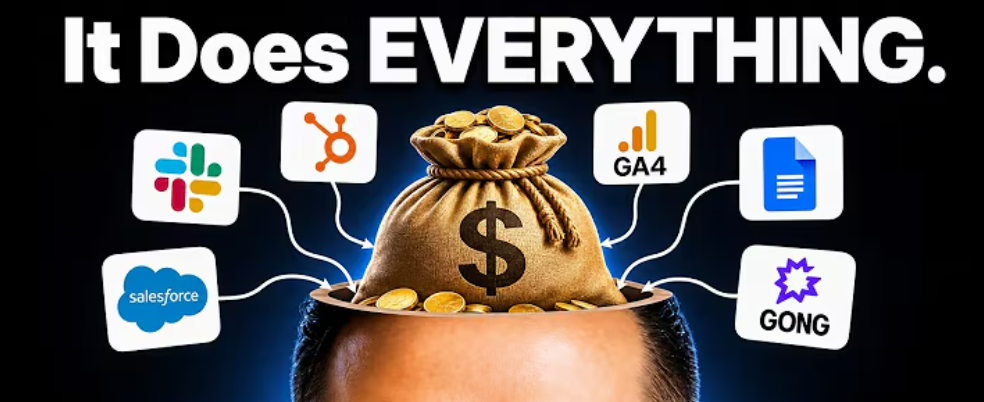
The limitations of human 'working memory' must be overcome by building a 'corporate brain' through context engineering, precipitate (translates to 'precipitating') historical corporate knowledge into a precisely searchable 'knowledge library' that generates compounding value.
Never do one-off work. Once satisfied with AI outputs, they must be 'skillified' into reusable processes; otherwise, companies will fall into 'technical amnesia' daily.
We've compiled key highlights from the speech. Here's the original transcript:
1. 400x Efficiency Leap: From Individual Productivity to Workflow Reconstruction
Garry Tan: Good afternoon, everyone. How's it going? Ready to embrace this transformation? Theo just asked a critical question: What should we build now? As a founder, investor, and leader of a 20-year-old institution transitioning to AI-native, I'll answer from an investor's perspective. Transforming a 20-year-old institution into an AI-native one is both strange and wonderful. I'll spend about 20 minutes discussing what YC is attempting. We aim to cultivate enterprises where one person can accomplish what previously required two or even a thousand people. I'm not speaking metaphorically—operationally, many of you can achieve this this year. In about an hour, some of you will embark on entrepreneurial journeys. I hope you do so with a clear understanding of today's technological possibilities, which are far greater than imagined.
Let me start with a number. Though I've been criticized online for this view, I'll reiterate it here today. This room is the best place to pressure-test it, and I'd rather validate it with you directly. In 2013, as a YC partner, I primarily built YC's internal social network. While I also invested, I was essentially a full-time engineer. Back then, I wrote about 14 lines of truly useful logical code daily, excluding comments and blank lines. If you check historical documentation, this was normal—some wrote 15 lines, others 50, but nothing like the thousands of lines many young developers produce today. Those 15 lines represented my full-throttle daily median output. This year, as full-time YC manager with similar time investment (even less due to picking up my kids at 5 PM), I recalculated my output and found a roughly 400x efficiency gain.
Before skeptics challenge this figure, let me dissect it myself. If you doubt pure code volume metrics, fine. Apply the harshest verbosity penalties: assume AI-generated code is bloated, half is scaffolding, or even that I'm self-aggrandizing. At minimum, it's still an 8x improvement, with a median of 80x. No matter how you dissect it, the number is enormous. Here's the crux: I wish I could brand (translates to 'brand') this onto everyone's eyelids: The gap isn't in the models themselves. Those achieving 2x vs. 100x efficiency use identical Claude models, weights, context windows, and APIs. The leverage point lies in how you orchestrate workflows.
This isn't unique to me. At YC, we frequently see this. In the Winter 2025 batch, a quarter of companies had 95% of their codebases AI-generated—and that was last year. This cohort became YC's fastest-growing, most profitable ever. Historically, 94 YC companies have broken $100M in revenue from a single seed round. While I can't prove AI-generated code directly caused this growth, I can tell you that the fastest-growing founders we fund don't treat AI as mere autocompletion but as productive labor. Companies that reweave workflows are the true overachievers.
2. New Physical Laws of Labor: Encoding Organizations into 'Skill Manuals'
What does rebuilding workflows entail? This is the speech's core and what I hope you adopt. Everything we've learned building AI Agents maps directly to real organizational structures.
In the AI era, a skill manual equals an employee. It embodies a capability, handles a task, and is documented so clearly that any entity can execute it. The parser table functions as the organizational chart, deciding task allocation when requests arrive. Archiving rules serve as internal processes, ensuring compliance. Trigger evaluations act as performance reviews. Organizations that once needed thousands to operate now reduce each function to code and descriptive files. We've always built organizations—we just lacked management layers until now. When collaborating with Claude, Coder, or Codex, you're not just writing software; you're hiring, training, and managing a code-and-document workforce.
Countless companies exemplify this. Take Emergence, an AI app builder from the Summer 2024 batch, which reached nine-figure ARR in eight months post-launch. With $15M ARR, their team had just 15 people. By Winter 2024, retail sales hit $60M with ~40 employees. Such per-capita productivity was unimaginable in software, oil, or rail industries. They're not outliers but pioneers built on new physical laws. How do they operate? They don't hire hundreds for sales, support, operations, or finance. AI-native YC companies I've seen encode all these functions into skills and written processes, hiring engineers solely to maintain skills and tackle tasks AI can't yet handle. These are true AI-native firms—not thought experiments. With proper skill manuals, they'll even file your taxes.
Now picture YC's program—similar to this setting. With 400 companies or founders at long tables, each busy with laptops, you'll accomplish in a day what once took a person a year. This isn't distant future—it's today's industry baseline. If you don't adapt, competitors will elegantly displace you, even thanking you politely. Most engineering stacks overlook this extension: it impacts more than engineers. During YC's digital transition, our media, events, and finance teams participated. Employees who'd never opened a terminal now built skill manuals and scheduled tasks. A finance colleague integrated ~100 complex Excel workbooks into a self-built app using our internal open-source system and corporate brain. Not a programmer, she now manages AI Agents—as does everyone at YC.
This is why YC operates at scale with minimal staff, negligible by industry standards. Not from harder work but from a fundamentally different organizational form. That's the winning edge. It's not just 400x more efficient engineers but a 400x more efficient company.
3. Engineering Duality: Clarifying Computational Boundaries Between Latent and Deterministic Spaces
If you remember one thing, let it be this: During development, you must meticulously clarify where computation occurs. It nearly always happens in two distinct spaces. Most AI engineering flaws arise when content meant for one space erroneously appears in the other. The first space I call the 'latent space'—the actual large language model. What do you use it for? Aesthetic judgments, intuitive reasoning, understanding true intent behind ambiguous human statements—non-deterministic calls reside here, guided by descriptive files. The 'deterministic space' is familiar to engineers: your code Agent writes TypeScript automatically, or Erlang if using Elixir. This is the second computational realm.
Consider a real pain point for our upcoming Founder Institute: Can we seat 800 participants simultaneously with perfect clustering? That is, ensuring those sitting beside you are your ideal networking matches. Achieving this requires combining deterministic and latent spaces. Computations and data storage—like each person's position in the 800-seat multidimensional array—must never cram into context windows. The language model handles the emotional (translates to 'sensory') part: arranging seating. This mirrors human logic: printing 800 pages, laying them out, and deciding placements. Now, computers handle it all. What took a month now costs ~$100 in tokens and 10 minutes. This is remarkable—unthinkable even six months ago.
4. Defining the Corporate Brain: Breaking the 7-Digit Limit with 'Libraries and Librarians'
This introduces the concept of working memory, my favorite mental model. Humans process ~7 items at once (the famous 7±2 rule), one of cognitive psychology's most renowned findings. Hence 7-digit phone numbers and forgotten grocery list items. This defines our individual working memory. Every institution, checklist, org chart, and file cabinet in history was invented to compensate for this limitation—a wildly illogical approach upon reflection. Yet an AI Agent holds 1M tokens (~1,000 pages). I recently explained corporate brains to my 10-year-old: AI can 'open' three Harry Potter books simultaneously, cross-reference details, and synthesize analyses in seconds. Three books vs. human 7-digit capacity—staggering. Is this AGI? Maybe not, but it demonstrates radically different operational and governance mechanisms. Yet nearly all Earth's companies still operate with 7-digit-brain organizational structures.
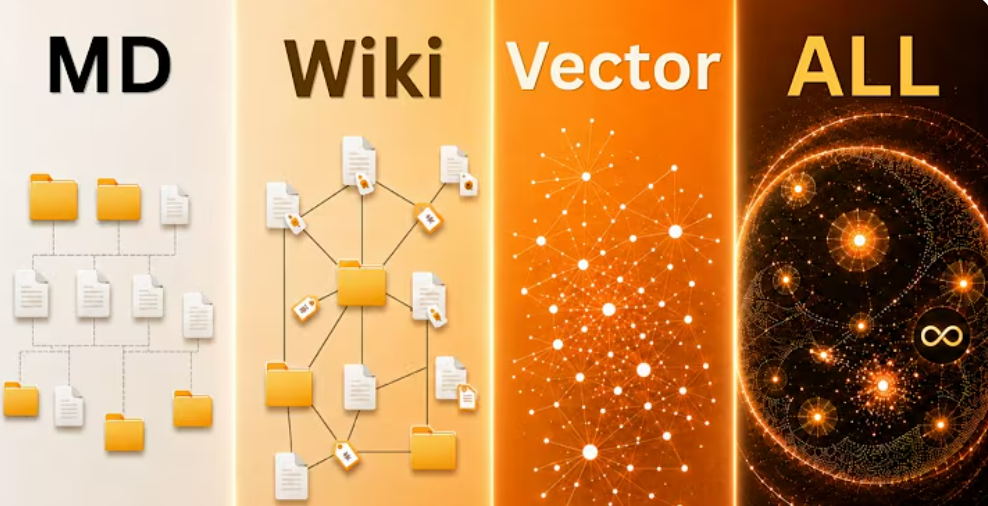
But this reveals a truth: Three books, while substantial, are insufficient. Your company isn't three books—it's a library. Every email, meeting, decision, client conversation, and debrief report resides there. Whether your Agent is a genius or a 7-second goldfish depends on who decides which three books to open. This is context engineering—the 'Company Brain': both library and librarian. Some may think, 'Isn't this retrieval-augmented generation?' You're right—retrieval is foundational, like B-trees underpinning Postgres. The hard part is everything around it: what content initially precipitate (translates to 'precipitates') into the wiki, how it's enriched and linked, what rises to hot memory vs. cold storage, and who arbitrates conflicting facts. Retrieval is easy; becoming a truly retrievable product is hard.
I have been publicly building my own system, called G-Brain. It works with any development framework, but it works best with Open Claw and Hermes Agent. It's essentially Postgres for Agents—a specialized retrieval layer whose job is to calculate, for any given task, which three books should be stuffed into the Agent's brain. My personal system started with the equivalent of a few rooms of books. Now it's grown into a warehouse with about 220,000 pages of content. This content is primarily written automatically by my Agent based on my emails, meeting notes, two decades of notes, and my lived experiences. That's the point—it becomes my second brain. When a founder emails me in crisis, before I've even finished reading the email, my Agent has already pulled up every previous conversation with that founder, three other portfolio companies that faced the same predicament (I'll keep the Chinese character here as it's part of the original context, but the proper term would be 'predicament'), and what actually worked to help them survive. When my Agent does any task, it does so standing on the shoulders of my accumulated knowledge. That's the fundamental difference between an assistant and a colleague.
5. Reject One-Off Work: Skillify Success to Compound Value
Let me pressure-test my own point because you'll question it sooner or later. Corporate brains do have failure modes. An unmaintained brain eventually becomes a garbage dump with powerful search—the retrieval system will confidently serve you stale facts. A bad skill manual will permanently entrench the wrong business process, which is terrible. So the foundational bedrock isn't memory itself, but memory plus hygiene—ensuring every fact has provenance, contradiction checks when old meets new, and pruning by human-Agent librarians. If you treat your brain as production infrastructure, its value compounds daily. If you treat it as a garbage dump, you end up with an Agent that's wildly confident and irreversibly wrong, with no audit trail of how it got there.
In my view, there's one habit that compounds value in our corporate brains and personal AIs—this is my signature move, what I tell every YC founder and every internal team at YC—never do one-off work. You can fire up Open Claw or your dev tools to do something, but when you're satisfied with the result—even if it's imperfect at first, like a clumsy intern, but the beauty is you can just say, 'Hey, I don't like this, fix it,' which I assume all of you are doing—but don't stop there. At the end of the task, you actually need to skillify it. I posted a blog about this on social media—you can search 'skillify it' to get that skill manual and load it into your own dev environment. It will turn what you just did into a reusable skill. Because if you have to explain the same thing twice, you've failed as a manager.
So if you remember one thing, it's this: when you use an AI Agent and are satisfied with the output, take two extra minutes to skillify it. It makes an enormous difference. Organizations that capture learning this way get smarter every day. Those that don't wake up every morning with amnesia, no matter how good the underlying model is. Model quality can be rented, but if you build your corporate brain, you own the core asset.
6. Ignite Software Abundance for the New Era: Build Truly AI-Native Companies
Now to answer Theo's question directly: What should we build now? Build AI-native companies, not just companies that use AI. From day one, the company should look like what I described: a lean team, all functions precipitate (Chinese term retained for context; proper translation: 'codified') as skill manuals, founders still deeply involved in code, owning your library, having a corporate brain and personal AI. If you want, use G-Brain—it's open-source and free, but you don't have to; there are many excellent alternatives. This library starts compounding from week one, and your entire organization's operational efficiency will jump to about 400x. If you're looking for virgin territory—what I would build if I were 25 and in your seats today—it's that every company on Earth soon needs a brain. A memory layer that never asks you known questions again. A personal AI that truly understands you. We're building G-Brain openly under the MIT license—I'm not trying to make money here; I think this infrastructure should be open-source like Linux. But the category itself—corporate brains, personal context, the librarian picking those three books—is wide open. I hope someone builds the defining company here. If so, I'd love to fund you at YC.
Finally, let me be honest in a way that undermines my own pitch: You don't actually need my tools to start. Open Claw is the Ferrari, and I'll always recommend it, but Codex is a perfectly fine Honda that will get you 90% of the way.
It won't blow your mind with extreme experiences, but it will absolutely get the job done. The tools don't matter. The philosophy matters, not my personal GitHub repo. It matters where computation happens, treating skill manuals as your workforce, having librarian mechanisms, and never doing one-off work. These ideas work across any tech stack.
Let me close with this. There are many people in the world right now terrified about which jobs will remain. I understand that fear. But I'll tell you frankly: It's a failure of imagination, and you're the answer. You'll bring this architecture I described into your startups. You'll multiply your own effectiveness, and everyone in your companies will unlock their potential. The companies you build will become beacons for how this revolution actually works. Abundance isn't written in policy papers—it's software shipped.
I have a friend whose child has a rare form of epilepsy. He built a codebase of 80,000 Markdown files—a corporate brain for one little boy at the edge of human knowledge about his specific condition. No lab, no grant, no mandate. Just a father, a laptop, and a library. This isn't a digression—it's exactly the system architecture I've been describing for 20 minutes. A library plus a librarian, opening the three right books at the right moment, all focused on what this man loves most in the world. Now you can do that too.
Every problem you ever thought, 'I wish I had an expert for this but can't afford one'—now you can be that expert. Every codebase you thought was too leaky to fix—now you can fix it all. Every archive too large to read, every dataset too messy to clean, every grand challenge you were told not to bother with—we can now do the impossible.
Every one of you can fly now. Not metaphorically—technologically. You have to, to survive, to thrive, to win. Theo asked what we should build. This is it: Build an AI-native company, and build its foundation—that brain, that memory layer, that compounding library. It will make every company that comes after yours easier to build. Do the impossible. Write that test. Ship that skill. Some of the companies you'll see in this batch are already doing it. Build the one that does it best. Thank you.
-
![]()
Final Verdict: The Strategic Importance of GAC Honda’s Early Joint Venture Renewal
-
![]()
SpaceX's Stock Price Falls 30% from Peak! Musk Warns Short Sellers: Your Survival Probability is Extremely Low
-
![]()
100,000 Steps at WAIC! 10 Questions to Understand the Next Phase of the AI Industry: From Chatting to 'Embodied' Work
-
Image Stabilization Motor Leader’s Second Attempt at Hong Kong IPO: Shinco Motor’s Rise, Challenges, and Ties to O-film Tech
-
![]()
Personnel Shuffle: Independent Director Mi Xuming Steps Down from OFILM
-
![]()
Net Profit Anticipated to Skyrocket by 103%: What Gives This Optical Company a Competitive Edge?
-
In Just One Year, China Unveils Unicorns Valued at 10 Trillion Yuan!
-
![]()
6 Park Companies Shine at WAIC: How Hong Kong Science Park Bridges AI from Research to Industry