Apple, Google & NVIDIA: Tech Titans Unite to Empower XR with Unprecedented Computing Might & Robust Privacy Safeguards, Unveiling AFM Cloud Pro!
 06/23 2026
 486
486
In a groundbreaking move, three American tech behemoths—Apple, Google, and NVIDIA—have joined forces to propel AI and XR development to new heights.
As per a recent CNBC report, Apple made an official announcement at the WWDC 2026 Developer Conference, revealing a deep-seated collaboration with Google and NVIDIA to co-develop the next-gen artificial intelligence model, AFM Cloud Pro. This marks Apple's first foray into extending its core Private Cloud Compute (PCC) system to third-party infrastructure.
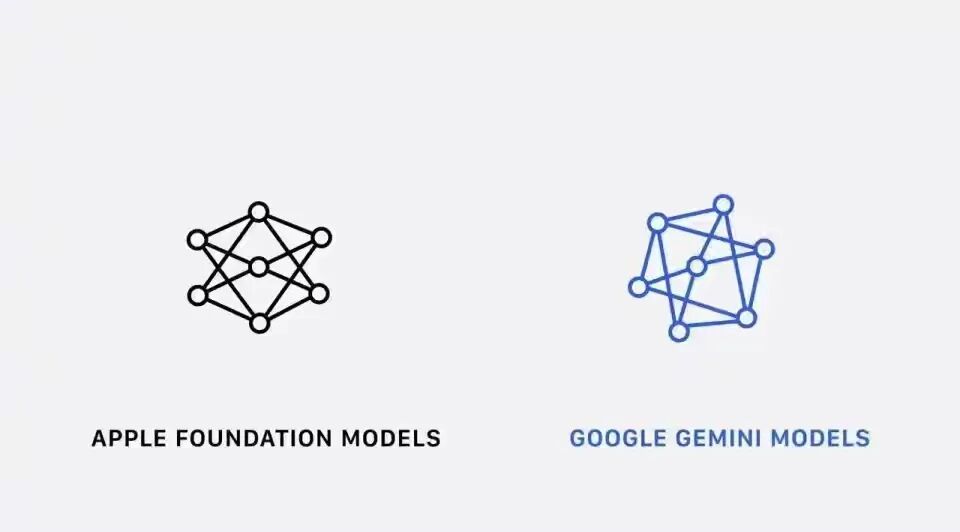
This partnership signifies a notable shift from Apple's long-held stance on in-house AI development, striking a fresh balance between high performance and privacy preservation. It heralds a revolutionary breakthrough for the spatial computing industry, which has been hindered by computing power constraints.
The crux of this tripartite collaboration's technological breakthrough lies in achieving seamless compatibility between privacy protection and high-performance computing. Sebastian Marino-Mess, Apple's VP of Software Engineering, highlighted that the company has mandated the use of NVIDIA's cutting-edge Blackwell B200 GPU, configured in a secure mode that "renders server content unreadable."
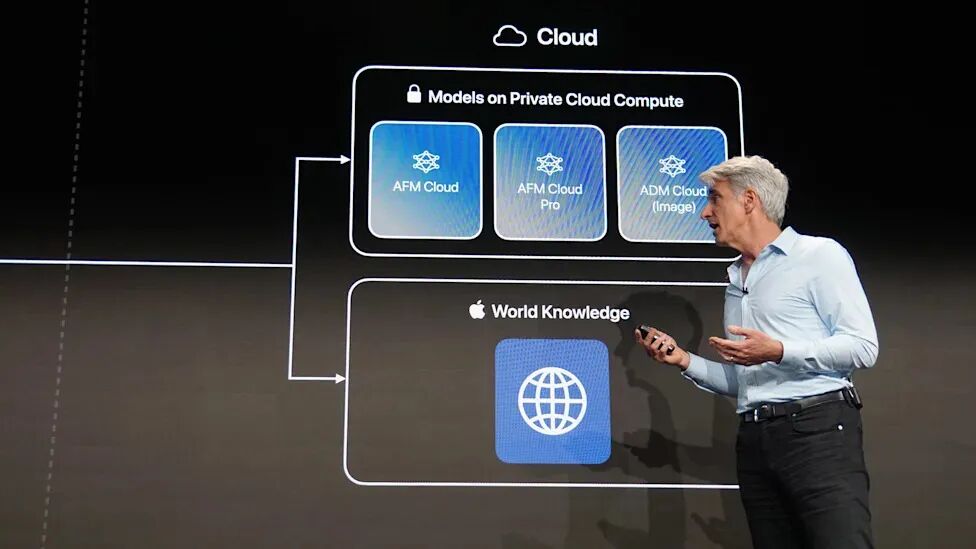
Previously, Apple's security research team confirmed on their official blog that this solution integrates NVIDIA's confidential computing technology, Intel TDX, and Google Titan chips, while fully upholding the five core security tenets of PCC: stateless computing, enforceable security guarantees, no privileged runtime access, resistance to targeted attacks, and verifiable transparency.
This ensures that even when operating on the Google Cloud Platform, Apple, Google, and NVIDIA are barred from accessing users' raw data.
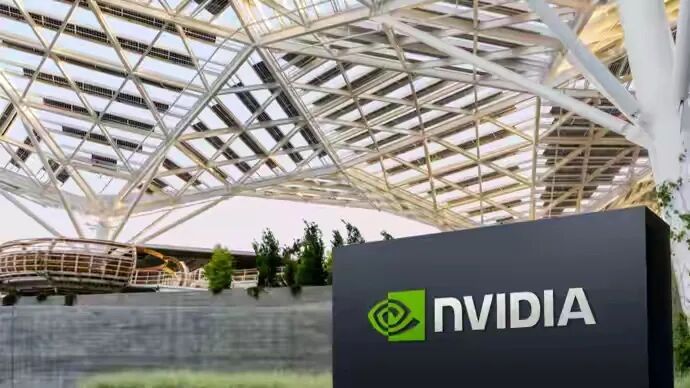
Focusing on Apple's heavily invested XR business, the significance of this collaboration transcends that in the smartphone and computer sectors.
Although the M5 chip-equipped Vision Pro, launched in October 2025, enhances AI functionality speed by 50% and third-party application AI performance by twofold, independent analyst Ryan McGuire noted in a July 2025 study that even under optimal conditions, the Vision Pro's M5 chip delivers sustained AI computing power of merely around 3.5 TFLOPS, falling short of meeting the demands of complex spatial AI tasks.
However, the advent of AFM Cloud Pro is set to revolutionize this scenario. By offloading complex spatial AI computing tasks to NVIDIA's Blackwell GPU clusters, Vision Pro users are poised to experience an unprecedented level of spatial intelligence.
Apple's official demonstration showcases that the new-generation Siri can now comprehend users' gestures and gaze directions in spatial environments. Coupled with the reasoning capabilities of cloud-based models, it enables natural interactions such as "pointing to an item to inquire about its price" and "automatically generating 3D notes based on the current scene." Significantly, all these interactions unfold within Apple's stringent privacy protection framework, addressing security concerns stemming from XR devices collecting vast amounts of sensitive spatial and biometric data.

Undoubtedly, this collaboration sets new technological benchmarks for the entire XR industry.
For instance, NVIDIA had previously launched the CloudXR 6.0 platform, achieving low-latency connectivity between RTX GPUs and Vision Pro, but had been unable to resolve data privacy issues. The fusion of Apple's PCC architecture and NVIDIA's confidential computing technology has, for the first time in large-scale commercial scenarios, demonstrated the feasibility of the "third-party computing power + local privacy" model.
Assuming this model gains widespread adoption in XR fields with stringent data security requirements, such as healthcare, education, and industry, it will expedite the popularization of spatial computing.
Unlike models from OpenAI and Anthropic, which rely heavily on web-based data, Apple insists on leveraging users' local data for personalized services, with a more constrained data collection scope. This differentiated approach of "small data + strong privacy" holds a unique competitive edge in today's climate, where users are increasingly vigilant about data security.
The collaboration among Apple, Google, and NVIDIA heralds a new era in the AI race. For the XR industry, it signifies not just a computing power upgrade but also a trust upgrade, laying another stepping stone for spatial computing to seamlessly integrate into daily life.
By R Star
(All images not specifically credited are sourced from the internet)
-
![]()
Over 50% of Revenue Hinges on Yutong Optics! This Optical Equipment Manufacturer is Charging Towards an IPO
-
![]()
YOCO Optics Finalizes Industrial and Commercial Registration Update Post 160 Million Yuan Investment in Jiangfeng Biology, Securing 20% Stake to Emerge as Second-Largest Shareholder!
-
![]()
Google Market Value Plummets by $1.5 Trillion Overnight Following the Loss of Two Key Figures
-
![]()
Put an End to the EV 'Weight Gain Race'! Can Your Car Still Be Driven Under the New National Standards?
-
![]()
In 2026, 'AI Upstarts' Collectively Bet on World Models
-
![]()
【OFweek Weike Cup】Phoenix Optics Officially Participates in the 2026 Optical Industry Annual Innovation Product Award
-
![]()
Ford Ditches Mach-E: Will Its Billion-Dollar Electrification Drive Have to Start All Over Again?
-
![]()
【OFweek Weike Cup】Shuangli Hepu Officially Participates in the 2026 High-Growth Enterprise Award in the Optical Industry