Baidu Becomes "Younger"
 07/23 2026
 417
417
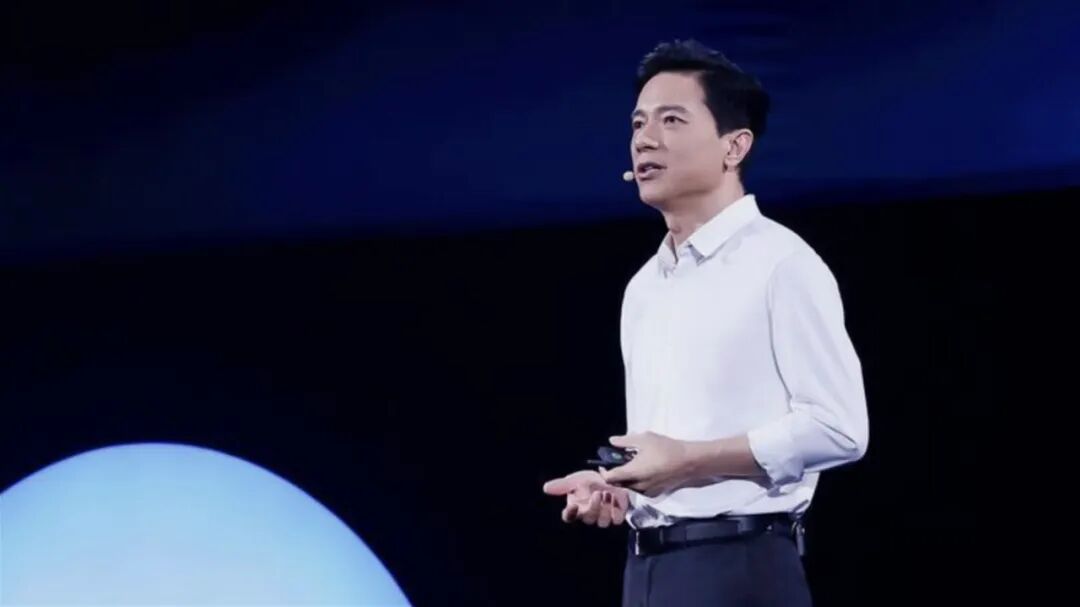
There is no standard playbook for tech giants' transformations, but Baidu has found its own rhythm.
In July this year, Sun Tianxiang, born in 1997, officially took over as head of Baidu's Foundational Model R&D Department while joining the Model Committee. The industry's reaction was calmer than expected when the news broke.
Over the past year, similar personnel adjustments have become so frequent at Baidu that people have grown accustomed to the changes happening at this veteran internet company.
The transformation spans systematically from grassroots teams to core decision-making layers. Younger faces are stepping into the spotlight, ranging from frontline technical leaders to business group managers, and from finance to human resources.
Outsiders often summarize this shift with "Baidu is getting younger," but youth involves more than just personnel changes. It signifies a reconstruction of decision-making logic, reallocation of resources, and even a deliberate departure from the company's past success formulas.
The significance of this shift is underestimated in China's internet context.
Most industry giants that thrived during the PC era now carry legacy baggage: rigid hierarchical reporting systems, path dependence on mature businesses, and cautious (almost sluggish) responses to new trends.
The "old-school vibe" mocked in industry circles essentially reflects organizational inertia formed after prolonged stays in comfort zones.
Baidu is attempting to break this inertia. However, the costs of doing so and the ultimate destination remain open questions without standard answers.
Like Microsoft's cloud pivot or Google's All-in AI gamble, all tech giants initially grope their way through transformations.
01
Empowering Young Leaders
Sun Tianxiang's appointment as head of Baidu's Foundational Model R&D Department was a noteworthy personnel move in the industry this year.
Insiders are familiar with Sun, who led the complete development of the MOSS large model during his PhD at Fudan University, establishing himself as a young technical backbone in large model engineering.
Nevertheless, directly heading a core model R&D department of a trillion-dollar company exceeded many expectations.
Large models represent the technological lifeblood of all tech firms today, typically overseen by seasoned technical executives. Yet Baidu entrusted this responsibility to someone under 30.
This move isn't isolated within Baidu.
By late 2025, Baidu restructured into two model R&D lines—Foundational Model R&D and Applied Model R&D—led by Wu Tian and Jia Lei respectively, both reporting directly to Robin Li.
Wu Tian, a homegrown technical leader, and Jia Lei, a voice technology veteran, set the precedent. By mid-2026, Sun Tianxiang succeeded Wu Tian in foundational models while Wu shifted focus to broader technological strategy.
Business lines are also rejuvenating.
Ping Xiaoli, born in 1985, now oversees monetization across Baidu's entire mobile ecosystem, including the merged E-commerce and Commercial Business Division.
Having risen from intern to general, this female executive has witnessed Baidu's evolution from search to AI eras and now serves as Robin Li's core implementer for AI commercialization.
Even backend support systems are adjusting.
Former Kingsoft Cloud CFO He Haijian became group CFO, bringing cloud industry financial expertise; former acting CFO He Junjie rotated to HR, aligning organizational management with business needs; Cuishanshan, a 20-year Baidu veteran, stepped back from operations to focus on cultural development.
Through these transitions, Baidu achieved stable management succession.
Many dismiss these changes as mere "blood refresh," but the reality runs deeper.
The core isn't age demographics but shifts in decision-making logic.
Robin Li frequently mentions internally that creative peaks occur around age 30 and admits his own era has passed. While such statements might seem formulaic from other executives, Baidu genuinely implements this philosophy.
When technical Divergent routes s arise, frontline young researchers' ideas often take precedence—tested through iteration rather than top-down decrees.
This is easier said than done. Most mature companies base management on seniority and hierarchy.
Young employees' ideas must navigate multiple reporting layers, often missing optimal timing windows by the time they reach decision-makers.
The issue isn't a lack of young talent but blocked communication channels and unimplemented ideas.
Baidu retains many early internet company traits: informal internal addressing, flexible work hours without superficial attendance checks, and Robin Li's casual presence (employees call him "Robin" without formality).
After two decades, "Simple and Reliable" remains more than wall decorations—Baidu still practices this culture.
Of course, youth brings energy and tech sensitivity but also lacks industry and management experience, leading to occasional decision reversals.
Over the past year, Baidu's consumer-facing large model products have seen fluctuating visibility, partly reflecting adjustment-phase growing pains.
Blood refresh isn't the goal; the true test lies in forming more efficient decision mechanisms and innovative business strategies afterward.
02
Full-Stack "Slow Work" Begins Paying Off
If organizational rejuvenation represents Baidu's external image, full-stack technological capabilities form its internal foundation.
Most perceptions of Baidu's technology still center on search or earlier platforms like Tieba. However, Baidu may have been China's earliest systematic AI investor when Robin Li declared in 2016 that Baidu would fully transform into an AI company.
For years, Li submitted AI-related proposals during China's Two Sessions while most companies focused on consumer traffic during mobile internet's rise. AI remained a distant frontier concept then.
Few anticipated the 2023 large model revolution, yet Baidu committed fully.
Over seven years, Baidu built nearly every technology layer in-house: from Kunlunxin chips to PaddlePaddle deep learning framework, to ERNIE large models, extending through Baidu Smart Cloud to autonomous driving and AI-native applications.
This approach demanded heavy investment, long cycles, and slow returns—seeming anachronistic in fast-iterating internet circles.
Many questioned the necessity when leveraging existing computing power and frameworks could yield quicker, easier innovations.
By 2026, this "slow work" began delivering value.
Q1 financials revealed a critical milestone: AI-driven new business revenue exceeded 50% of Baidu's core income for the first time. Baidu Smart Cloud infrastructure revenue surged nearly 80% YoY, with GPU cloud revenue jumping 184%.
These numbers reflect real industrial orders.
AI Cloud industry tracker IntelliHyperparameter reported that among China's top five AI cloud providers, Baidu Smart Cloud secured over 60% of disclosed large model-related bid awards in H1 2026—leading the sector for multiple consecutive periods.
Order structures reveal key insights.
While including multi-billion-yuan regional AI infrastructure projects, most orders comprise vertical implementations across finance, energy, and manufacturing. These cases demonstrate AI's true implementation logic: the highest cost isn't deployment but ongoing operations.
Many vendors offer demonstration-level solutions but struggle with high maintenance costs, slow iteration, and rapid performance decay in production environments.
Baidu's recurring orders stem from long-term client collaboration in scenario refinement rather than one-time project delivery.
Shen Dao revealed an internal Baidu practice in an interview: each employee receives RMB 1,000 monthly to freely experiment with mainstream large models, with no performance metrics—just organic AI value exploration.
"Forcing AI adoption rarely works; we prioritize positive guidance and incentives," he explained.
This detail epitomizes Baidu's technical culture.
The company trusts technical judgment, encouraging frontline personnel to understand, use, and innovate with AI before natural business integration.
This represents an extension of engineer-driven culture shared by tech giants like Google and Microsoft.
03
No Perfect Transformation Script Exists Against Path Dependence
No discussion of Baidu avoids its "early bird, late finisher" reputation.
This label clings stubbornly to the company.
Tieba emerged early but declined; Waimai launched early but was divested; AI adoption started even earlier, yet consumer-facing large model visibility lagged behind startups.
Many conclude: Baidu excels technically but struggles product-wise.
Robin Li addressed this directly at the 2025 Baidu World Conference.
Without rebutting, he admitted contemplating the issue repeatedly, explaining that Baidu pursues a "slow variable" path following technological evolution rather than chasing window of opportunity (market trends), ultimately seeking "effect emergence" over "model emergence."
This could be dismissed as PR rhetoric, but a longer perspective reveals nuances.
All corporate giants face path dependence challenges.
Microsoft clung to Windows/Office cash cows while Google and Apple rose during internet and mobile eras; Google grew complacent on search advertising, stumbling in social and cloud services; Baidu similarly missed mobile super-app opportunities due to search advertising dependency.
These aren't individual failures but organizational structural dilemmas.
When a business generates billions annually in profit, any potentially disruptive innovation gets marginalized during resource allocation.
It's not about missing trends but rational calculations favoring conservative choices, as trend-driven increments pale compared to potential losses from existing businesses.
Microsoft's transformation offers a classic case study. After Satya Nadella's 2014 appointment, his "mobile-first, cloud-first" strategy famously launched Office for iPad.
This seemingly obvious move then acknowledged Office's value exceeded Windows—shaking Microsoft's decades-old foundation.
The initial years brought layoffs and asset write-downs as Windows contracted and licensing models dissolved, hurting short-term financials. Only four-five years later did Azure and Office 365 growth justify Microsoft's revaluation.
Google provides a cautionary tale.
As AI's birthplace (Transformer originated there), Google employed top talent but reacted slower than startups during the large model era. DeepMind and Google Brain operated independently, duplicating efforts until ChatGPT's emergence forced hasty mergers. Internal silos, computing power disputes, fragmented product lines, and talent exodus revealed AI implementation challenges for large corporations: not lacking (no shortage of) technology, capital, or talent—but lacking organizational cohesion and self-revolutionary resolve.
Baidu faces identical contradictions: search advertising remains its most stable cash cow while AI new businesses require sustained investment. Sacrificing short-term profits for AI investment or slowing AI for profit maintenance tests not just judgment but resolve.
Baidu's chosen path leads deep into technology and industry.
Its consumer products may lack startup buzz, but industrial-end Smart Cloud orders grow tangibly. Few startups match its chip-to-framework full-stack capabilities.
This choice carries costs. Full-stack investments are heavy, cyclical, and slow to bear fruit—testing capital market and public patience.
Society measures AI success through consumer MAU/DAU metrics, yet much of Baidu's progress occurs behind the scenes. These unsexy, hard-to-communicate efforts form AI's true implementation foundation.
In this sense, Baidu resembles Microsoft's early cloud days—initially underestimated with long (prolonged) investment phases and constant external doubts. However, once crossing critical thresholds, full-stack capabilities create formidable barriers.
Microsoft's transformation took five-six years; Baidu's AI journey began in 2016 and only saw AI revenue exceed 50% in 2026.
Is this fast? By internet standards, no. But in technological revolution terms, a decade remains brief.
— END —For more, click below to follow
-
![]()
Gemini Slips From Global Top 10: What Lies Ahead for Google's AI Dominion?
-
![]()
Exclusive | Interview with Wu Yongjian, Vice President of Tencent Cloud: The Intelligent Agent Market Has Yet to Enter a Bubble Phase, Though Some Sectors Are Becoming Saturated
-
![]()
Profits Plunge by 57%: China’s Auto Price War Takes a Toll on Tesla
-
![]()
Google: Is AI Going to Collapse? A Savior Has Arrived
-
![]()
The Proxy War Between Uber and Meituan
-
![]()
30 Acres! Another Aerospace Unicorn Secures Land in Yizhuang to Establish a 'Satellite Factory'
-
![]()
A Rocket Soars from the East China Sea: Orient Space Embarks on Dual Solid-Liquid Long-Haul Journey
-
![]()
Baidu Becomes "Younger"