A Rocket Soars from the East China Sea: Orient Space Embarks on Dual Solid-Liquid Long-Haul Journey
 07/23 2026
 524
524
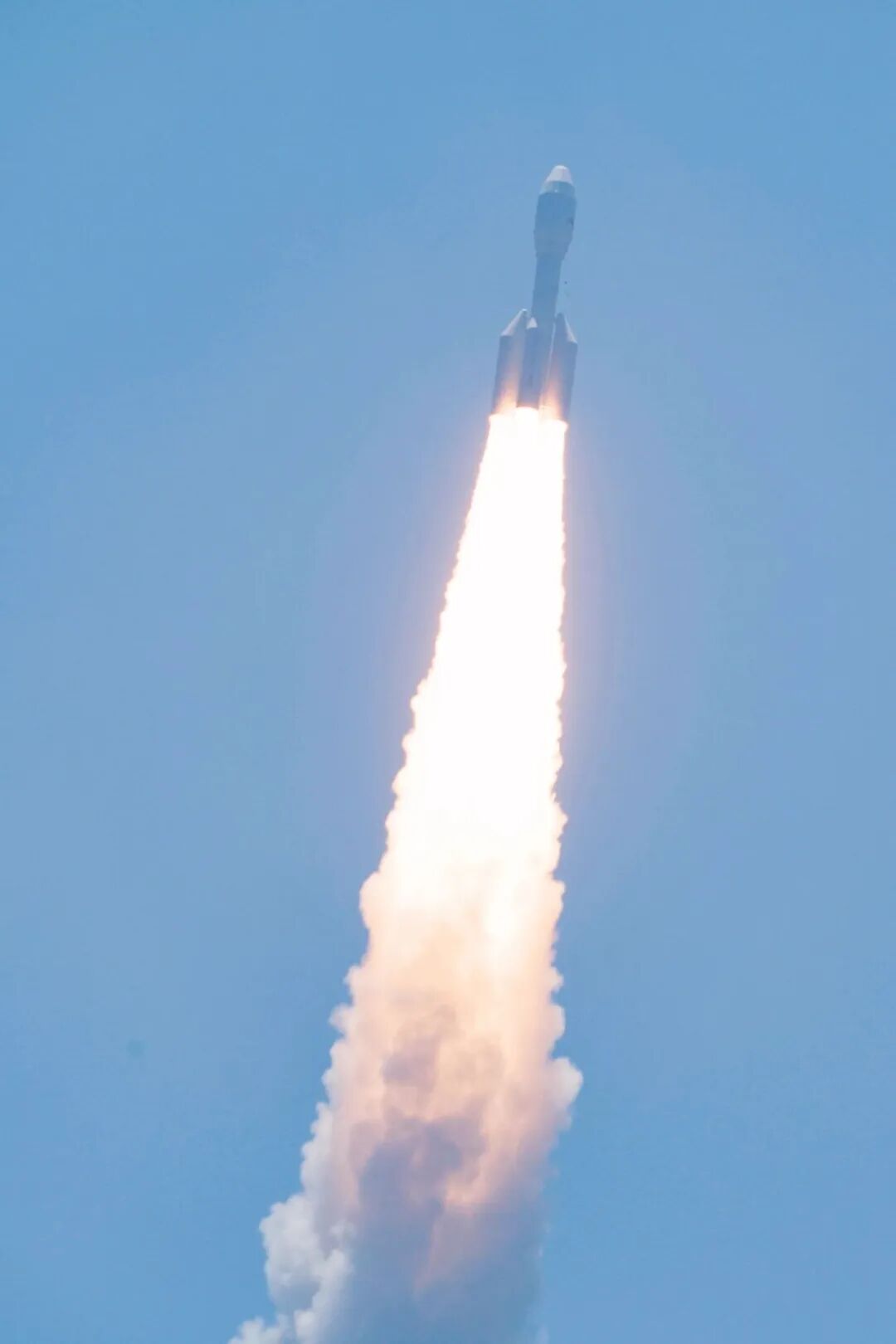
At 10:54 AM on July 22, Orient Space's Gravity-1 (Yaosi) · Xingliantihao carrier rocket, assembled at the Dongfang Aerospace Port in Haiyang, Yantai, roared to life and ascended from China's East China Sea. It successfully deployed nine satellites into their designated orbits and concurrently executed one payload experiment, marking a resounding success for the mission.
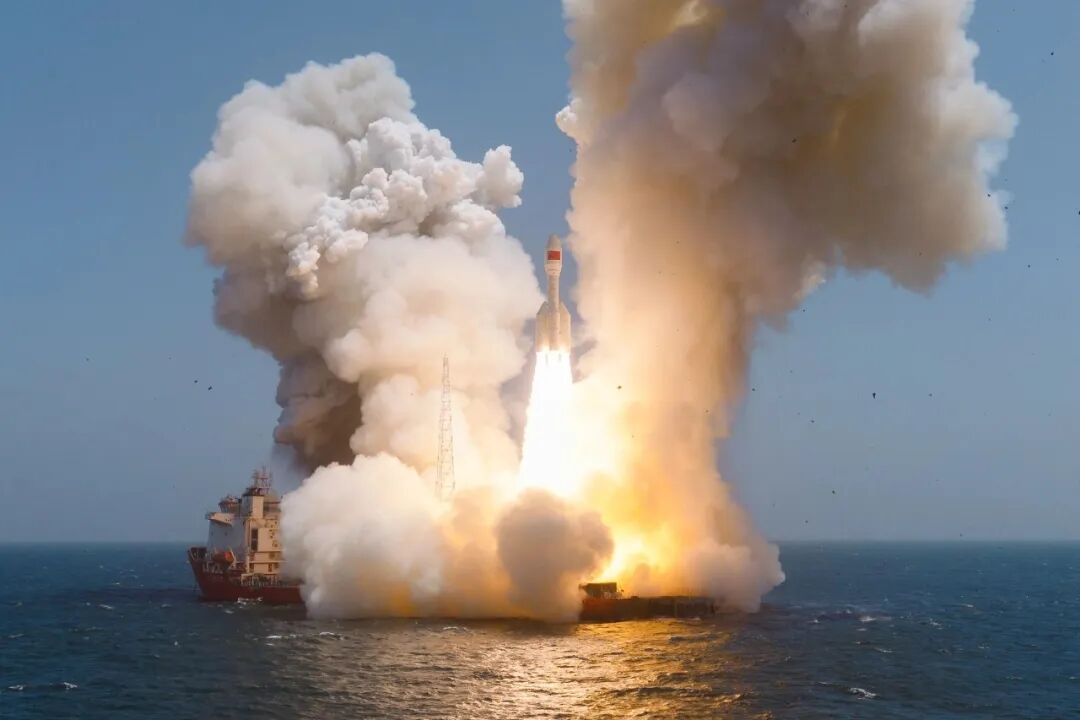
This marked the inaugural deep-sea launch mission for Orient Space and its Gravity-1 rocket, as well as China's first privately operated commercial rocket sea launch conducted in the East China Sea near the Yangtze River Delta.
This launch represents the closest commercial sea launch to Shanghai in recent memory, with the launch site situated just over a hundred kilometers from the metropolis. Beyond the spectacle of the rocket's ascent, three pivotal industry questions warrant closer scrutiny: Why, with vast tracts of land available, do rockets insist on launching from the sea? Has the industry's conundrum of more satellites than available rockets been alleviated?
Rockets Take to the Seas to Overcome Launch Site Limitations

With China's vast expanse, why opt for sea launches? The answer lies in the scarcity of onshore launch sites.
In recent years, as commercial space exploration has surged, the demand for low-Earth orbit satellite networking has skyrocketed, leading to a dramatic increase in launch frequencies. However, China's qualified onshore launch sites are limited in number, and their capacity is nearly maxed out.
"Our satellites were ready long ago, but we had to wait for the rockets. And even after the rockets were ready, we still had to wait for launch site scheduling," lamented the founder of a commercial satellite company. The industry norm has become one of waiting: waiting for rockets, rockets waiting for launch sites, and launch sites waiting for optimal launch windows.
"Thousands of Satellites Await Launch: How to Solve the 'Rocket Crunch'"
Despite China's expansive territory, suitable onshore launch sites for rockets remain scarce, and expanding them is neither simple nor boundless.

In contrast, sea launches offer distinct advantages: controlled impact points, with launch and debris fall zones located in international waters, eliminating the need for resident evacuations or flight path adjustments to avoid populated areas, thereby enhancing both safety and efficiency.
Sea launches also provide flexibility, with launch platforms movable to meet mission requirements and capable of matching different orbital inclinations. Launching near the equator can harness Earth's rotation to save fuel, directly boosting payload capacity.
Most importantly, sea launches are more efficient. Rockets transported by sea are not constrained by land transportation dimensions, making logistics and resupply more streamlined. Nearshore launches can now achieve a frequency of two launches per week.
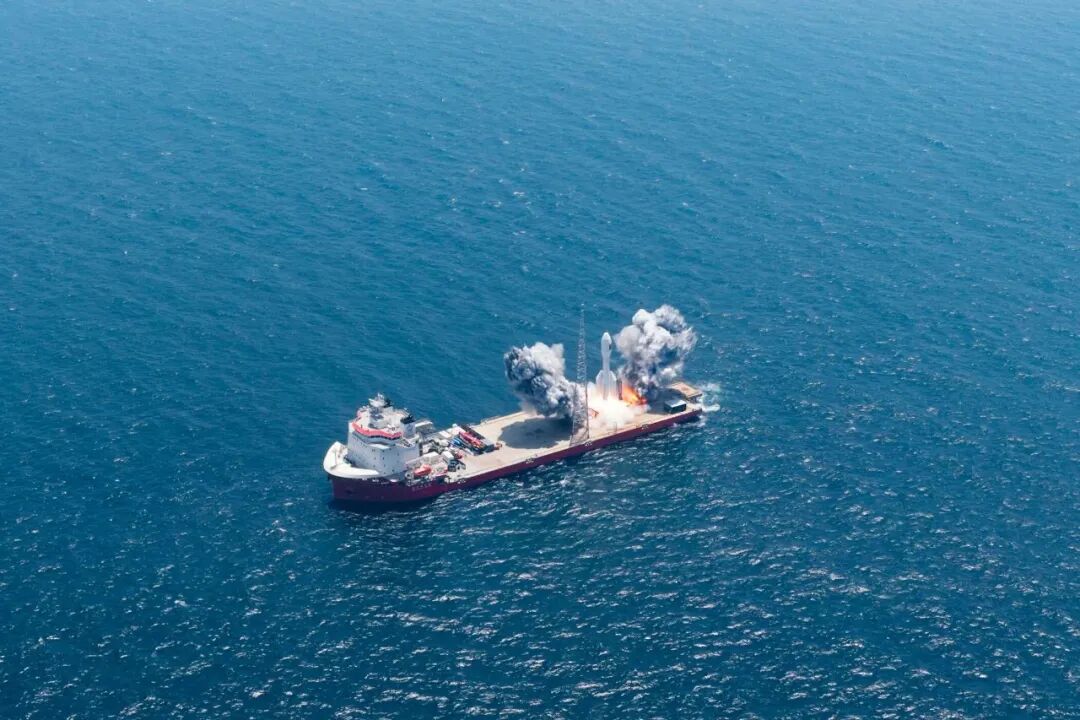
Of course, sea launches present unique challenges, such as salt spray corrosion, platform instability, and communication reliability. However, as the frequency of sea launches has increased in recent years, domestic teams have been enhancing the capabilities of sea launch platforms.
"With So Much Land, Why Focus on Sea Launches?"
From the first sea launch of the Long March 11 in 2019 to the maiden flight of a privately operated rocket at sea, and now to the routine commercial operations of Gravity-1, sea launches have gradually become a core supplement to commercial space transportation capacity over the past seven years.
Solid Rockets: Adequacy is Key
The Gravity-1 rocket, used in this mission, merits special attention.
As the world's largest solid-propellant carrier rocket, it boasts a near-Earth orbit payload capacity of 6.5 tons and a 500-kilometer sun-synchronous orbit payload capacity of 4.2 tons. Making its debut flight in 2024, it set the record for China's most powerful privately operated commercial rocket and has now entered routine commercial operations.
As a solid rocket, it may lack the allure of liquid rockets or reusable technology, but it excels in speed, stability, and cost-effectiveness.
Solid rockets do not require fueling before launch, resulting in shorter preparation times and faster response capabilities, perfectly aligning with the current pace of intensive low-Earth orbit satellite networking. Gravity-1's bundled solid configuration retains the reliability of solid propulsion while boosting payload capacity, precisely meeting the launch demands for satellites ranging from a few hundred kilograms to several tons.
More critically, there's the price factor. Peng Haomin, co-founder of Orient Space, once calculated for Huasheng that industry prices for rockets with similar payload capacities typically range from 50,000 to 60,000 yuan per kilogram, with some exceeding 100,000 yuan. In contrast, Gravity-1 costs just 30,000 yuan per kilogram.
This pricing directly addresses the industry's core challenge. The most pressing issue in commercial space today is the scarcity of rockets relative to the abundance of satellites. Customers demand reliable transportation that can deliver satellites into orbit on time, at the agreed price, and with guaranteed quality.
To meet this demand, Orient Space has adopted a highly pragmatic approach: leveraging mature solid rocket technology to achieve scale and reduce costs, satisfying immediate networking needs while generating cash flow. Simultaneously, they are developing liquid reusable rockets to lay the groundwork for long-term low-cost transportation. As they put it, "Stay grounded with solids, reach for the stars with liquids."
Progress in liquid rocket technology is steadily advancing. The Gravity-2 liquid carrier rocket, designed for large-scale constellation networking, will have a payload capacity of 15 tons in a 500-kilometer sun-synchronous orbit. Equipped with the self-developed Yuanli-110 liquid oxygen and kerosene engine, it features deep variable thrust capabilities and is designed for over 20 reuses.

According to the plan, the rocket will complete its maiden flight in 2026, with reusable technology expected to be validated by the end of the year. Once implemented, launch costs could further decrease to the 20,000 yuan per kilogram range.
By addressing immediate networking needs with solid rockets while paving the way for long-term cost and payload capacity expansion with liquid rockets, Orient Space is forging a sustainable technological iteration loop with dual pathways supporting each other.
"Gravity-1 Achieves Another Successful Launch, Commercial Space Enters a Grueling Marathon"
The surge in demand will inevitably drive technological advancements. As launch frequencies increase and cost pressures intensify, technologies such as reusable rockets and high-thrust liquid engines will accelerate their path to implementation. The commercialization path pioneered by solid rockets today provides the foundation for next-generation technologies.
Written by | Li Xiyin · Huasheng
-
![]()
Gemini Slips From Global Top 10: What Lies Ahead for Google's AI Dominion?
-
![]()
Exclusive | Interview with Wu Yongjian, Vice President of Tencent Cloud: The Intelligent Agent Market Has Yet to Enter a Bubble Phase, Though Some Sectors Are Becoming Saturated
-
![]()
Profits Plunge by 57%: China’s Auto Price War Takes a Toll on Tesla
-
![]()
Google: Is AI Going to Collapse? A Savior Has Arrived
-
![]()
The Proxy War Between Uber and Meituan
-
![]()
30 Acres! Another Aerospace Unicorn Secures Land in Yizhuang to Establish a 'Satellite Factory'
-
![]()
A Rocket Soars from the East China Sea: Orient Space Embarks on Dual Solid-Liquid Long-Haul Journey
-
![]()
Baidu Becomes "Younger"