Gemini Slips From Global Top 10: What Lies Ahead for Google's AI Dominion?
 07/23 2026
 470
470
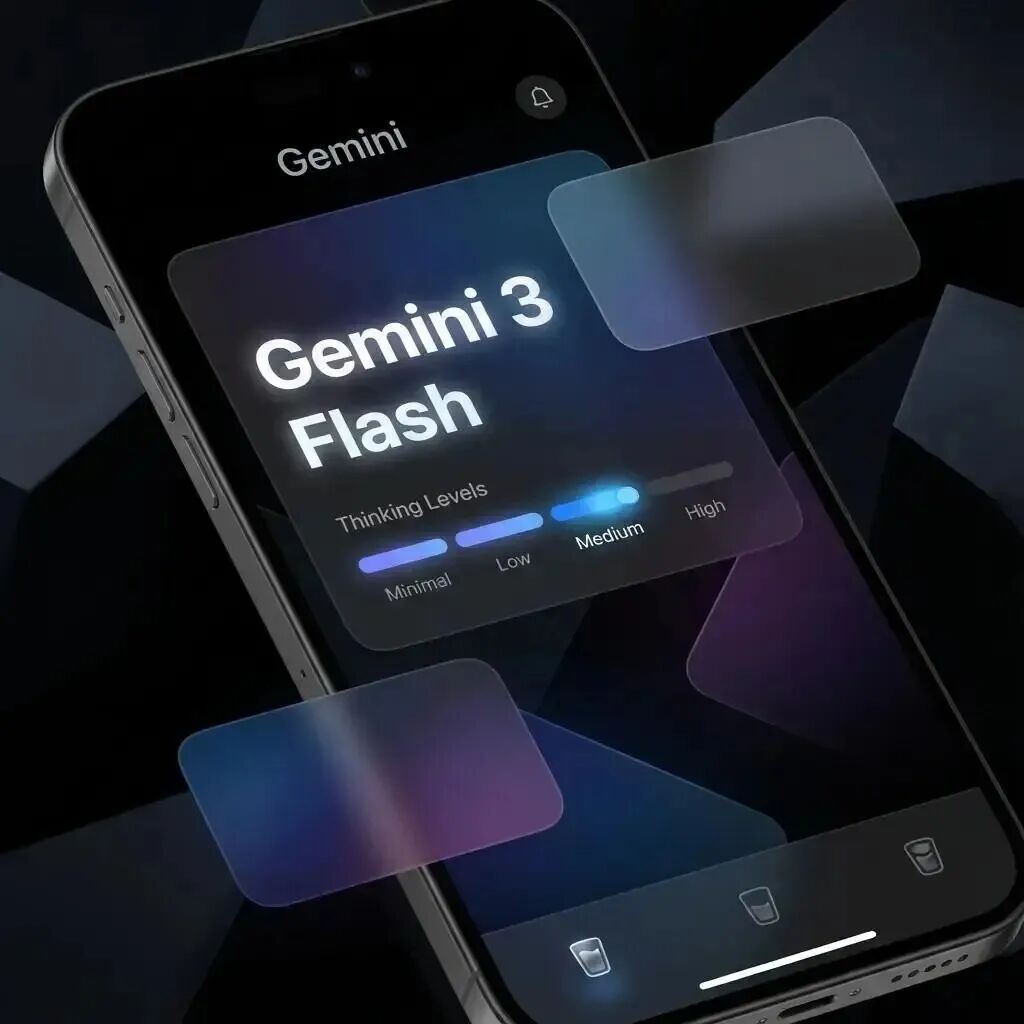
▲ All images featured in this article are sourced from the internet. Should any copyright infringement be identified, please reach out for prompt removal.
The AI Giant's Predicament Runs Deeper

This article was originally published in Shadow Memo by Mo Yingsheng.
If you had asked any tech industry observer in late 2022 who would dominate the generative AI landscape, Google would undoubtedly have been the frontrunner.
That year, Google boasted two premier AI labs—DeepMind and Google Brain—endowed with virtually limitless computational resources and access to the world's largest data repositories. The foundational paper behind the Transformer architecture originated from its researchers, with the eight authors of "Attention Is All You Need" achieving legendary status in AI circles.
It was widely assumed that Google would spearhead the generative AI revolution upon its arrival.
But the business world rarely adheres to expectations.
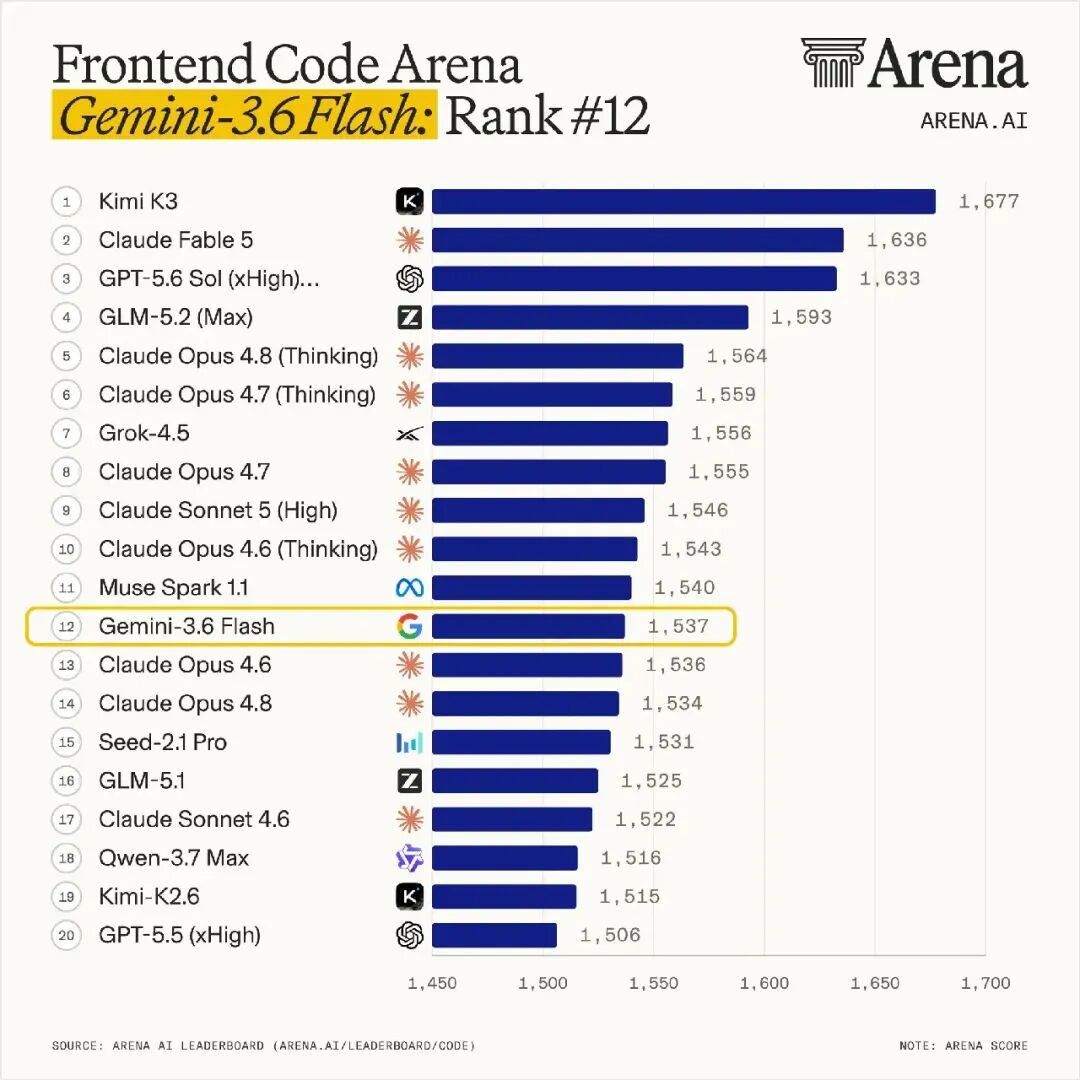
In July 2026, multiple authoritative evaluation agencies released updated global rankings of large AI models, revealing that Google's flagship AI product, Gemini, had tumbled out of the top 10.
Once heralded as Google's ultimate weapon against OpenAI, Gemini's trajectory shifted from being acclaimed as a "GPT-4 killer" at launch to barely clinging to second-tier status within just 18 months.
Upon closer inspection, this setback isn't Google's first in the AI race but rather the culmination of strategic missteps, internal conflicts, and innovation stagnation.
More intriguingly, the current top 10 features familiar names like OpenAI's GPT-5, Anthropic's Claude 4, and Meta's Llama 4, alongside newcomers such as xAI's Grok-3, Mistral's latest flagship model, and even offerings from Chinese companies and European startups.
Yet, Google is conspicuously absent—almost in silence.
This isn't merely a shift in rankings; it's a mirror reflecting Google's profound structural challenges in the AI era.

A Behemoth Hindered by Its Own Triumphs
To grasp Google's predicament, we must revisit a pivotal yet often underestimated historical moment.
In 2017, Google's research team published "Attention Is All You Need," introducing the Transformer architecture. This paper laid the technical groundwork for all large language models and cemented Google's pioneering role in AI research.
Without the Transformer, there would be no ChatGPT, Claude, Grok, or the current generative AI boom.
However, pioneers don't always reap the rewards. What did Google do after introducing the Transformer?
It launched BERT, which set records in natural language understanding benchmarks and was even deeply integrated into search. Yet, Google remained hesitant and conservative about generative AI, tinged with corporate arrogance.
By 2020, internal prototypes resembling ChatGPT already existed, but management delayed their market release due to fears of disrupting search ad revenue, concerns over content accuracy, and liability issues.
This is a classic example of the "Innovator's Dilemma." When your core business generates over $200 billion in annual ad revenue, any disruptive technology faces intense internal scrutiny, filtering, and self-censorship until it's effectively stifled.
Google wasn't lacking in technology or talent; it was held captive by its overly successful business model. As long as the search ad revenue stream remained robust, any risk that might slow it down was magnified infinitely.
By November 2022, when OpenAI launched ChatGPT—reaching 100 million users in just two months—the industry landscape shifted dramatically.
Google scrambled to release Bard, which flopped in its first public demo due to factual errors, wiping $100 billion off its market cap overnight.
It was a brutal brand disaster, but worse than the lost market value was the shattered confidence in Google's AI capabilities.
A company holding the most critical technology stumbled so badly in productization—no mere accident could explain this.
Bard was later rebranded as Gemini, as Google attempted to regroup under a unified large model brand.
Gemini 1.0, released in late 2023, showed promise in multimodal capabilities, particularly in video and image understanding. But the gap between announcement and reality proved catastrophic.
That viral demo video was later exposed as edited and prompt-optimized, not real-time interaction, further eroding Google's AI credibility.
A sentiment spread among users and developers: Take Google's AI announcements with a grain of salt.

Why Gemini Fell Out of the Top 10
Gemini's current decline isn't sudden but the result of three long-standing structural fractures.
The first fracture: Model iteration speed lags behind competitors.
Global large model rankings evaluate dozens of metrics, including reasoning, math/code proficiency, multilingual understanding, long-context processing, and multimodal interaction.
Over the past year, OpenAI advanced from GPT-4 to GPT-5, Anthropic refined Claude's deep reasoning and safety features, Meta's Llama open-source ecosystem flourished, spawning optimized derivatives that often outperformed the original in specific tasks.
Even xAI, founded less than three years ago, surpassed Gemini in multiple metrics through aggressive computational investment and efficient tech routes.
Competition is no longer linear but exponential.
While rivals iterate monthly, Gemini's updates felt sluggish and hesitant. Gemini 2.0 arrived months behind schedule and was soon criticized by developers for underperforming even open-source competitors' latest versions in key reasoning tasks.
This "launch-and-lag" embarrassment is fatal for a flagship model aiming for the top tier.
The second fracture: Eroding developer ecosystem and reputation.
Large model competition extends beyond models to ecosystems.
OpenAI has ChatGPT as a gateway, with a global developer and enterprise client base. Meta's Llama permeates every corner—from startups to enterprises—through open-sourcing. Anthropic built Claude's brand as reliable and responsible in high-end enterprise markets.
Google's Gemini, however, remains fragmented. It targets enterprises via Google Cloud, consumers through Android and Google Suite, and directly challenges ChatGPT Plus with Gemini Advanced subscriptions. This scattershot approach left no overwhelming advantage on any front.
Developer sentiment tells the story. GitHub, Hugging Face, and tech forums see far fewer Gemini integration posts than OpenAI or Llama topics.
When AI startups choose base models, Gemini is rarely their first—or even second—choice. This ecosystem weakness becomes self-reinforcing: Fewer users mean less feedback, slower improvements, and even fewer users.
Google's once-proud developer network unexpectedly faltered in AI.
The third fracture: Google's AI strategy oscillated and self-consumed.
Reviewing Google's AI organizational changes in the past five years reads like a corporate self-sabotage manual.
Initially, Google Brain and DeepMind operated on dual tracks—one focused on research-product integration, the other on frontier exploration. In 2023, Google merged them into Google DeepMind to concentrate on Gemini.
The logic was sound, but the cultural clash, personnel turmoil, and directional debates consumed energy meant for technical breakthroughs.
DeepMind was known for academic freedom and long-term research, while Google Brain teams preferred close product collaboration for rapid delivery.
This forced cultural fusion drove key researchers away. The past two years saw a string of AI scientists leave Google for startups or competitors, including Transformer paper co-authors.
These dissidents, armed with technical idealism and grievances against Google's strategy, became rival companies' sharpest weapons.
When a company's top talent spends more time aligning internally than solving technical problems, its external ranking decline becomes inevitable.

The Empire's Hidden Assets
Yet, declaring Google out of the AI race would be premature.
Google isn't defeated—just shifted from absolute leadership to catch-up mode, a critical distinction.
Step back, and Google's AI strategic depth still dwarfs most rivals.
At the compute infrastructure level, Google's fifth-gen TPU chips complement and partially replace NVIDIA GPUs, avoiding supply chain bottlenecks amid global AI compute shortages and soaring GPU prices.
Google Cloud's massive global TPU clusters provide the material foundation for Gemini's large-scale training and inference. By compute reserves alone, Google remains among the global top three.
In terms of data, Google Search indexes billions of web pages, YouTube is the world's largest video platform, and Gmail, Google Maps, and Android generate staggering daily data volumes.
When de-identified and filtered compliantly, this data fuels multimodal model training with nearly unlimited potential. Data quality sets model ceilings, and Google hasn't fully leveraged this edge yet.
In applications, Google has over 1.5 billion Gmail users, 2+ billion Android devices, and YouTube with over 2 billion monthly active users.
This means Gemini could instantly reach the world's largest user base once mature. Imagine an AI assistant seamlessly embedded in Gmail, Google Docs, Google Maps, and every Android interaction—an end-to-end integration no standalone AI app can match.
Google's challenge isn't "lacking cards" but "how to play them." The past two years saw too many scattered bets, none pursued decisively enough.
Recent moves suggest a newfound focus. Since late 2025, Google DeepMind's restructuring pains have eased, and Gemini's next-gen model development accelerated.
Google integrated AI deeper into search with products like AI Overviews, facing initial accuracy criticism but improving iteratively.
On the cloud side, Vertex AI narrows gaps with Azure OpenAI Service. In open-source, Google launched Gemma lightweight models to reclaim developer mindshare.
These actions show Google recognizes its issues and tries to solve them its way: Using engineering to turn technical problems into product ones, then leveraging scale to resolve them.

Opportunity Windows Remain—But Time Is Running Out
The global AI large model race is far from over. The current market resembles a marathon's first half—leaders have changed multiple times, and no one dares claim victory yet. Google still has structural opportunity windows.
The first opportunity is the comprehensive outbreak of multimodality. Competition in text-based large models has reached a fever pitch, but true multimodal understanding and generation capabilities—enabling AI to simultaneously process text, images, videos, audio, and even sensor data from the physical world—are still in their early stages.
Google has years of accumulation in areas such as visual recognition, video analysis, and robotic control. YouTube's data assets may unlock even greater value in the multimodal era than its search engine.
If Google can take the lead in this direction and create a generational difference that users clearly perceive, it has the potential to redefine the playing field, much like how the iPhone redefined smartphones.
The second opportunity lies in the large-scale implementation of AI Agents. Future AI competition will go beyond chat-based interactions; it will be about who can truly help users accomplish complex tasks: booking travel, managing schedules, operating across platforms, and even controlling smart homes and vehicles.
Google possesses a complete infrastructure for personal digital life, including Gmail, Calendar, Maps, and payment systems. Once these tools are seamlessly integrated by a powerful Agent, their value will far exceed that of an isolated conversational AI.
This vision has been discussed for a long time, but the key lies in execution. Google needs to prove that it is not just a company that draws blueprints.
The third opportunity arises from changes in the regulatory landscape. Major economies such as the EU and the U.S. are tightening regulations on AI, particularly in areas like privacy, security, and content liability.
As a seasoned giant that has weathered countless antitrust and privacy investigations, Google has more experience in compliance and government relations than emerging AI companies. When regulatory barriers rise, smaller competitors may be eliminated, while Google could leverage its compliance advantages to maintain its position.
Of course, this is a double-edged sword. Google itself is under significant antitrust pressure, and whether it can turn regulation into a moat remains uncertain.
However, for all these opportunities to materialize, there is one prerequisite: Google must make fundamental changes in organizational efficiency and strategic focus.
The external world will not wait for it. OpenAI is advancing toward more complex reasoning and Agent capabilities, Anthropic is methodically expanding in the enterprise market, Meta's open-source army is capturing the minds of small and medium-sized developers, and Apple, with its device ecosystem, is lurking, ready to redefine interaction entry points with on-device AI at any moment.
This is a six-way showdown, and there will be no second chance for those who sit out.
Gemini's fall from the global top ten is a signal, but not a verdict.
In the tech industry, the shelf life of technological first-mover advantages is much shorter than imagined, while the costs of organizational inertia and strategic wavering are far higher.
Google has transformed from a search startup into a digital advertising empire and successfully pivoted during the mobile internet crisis. It has the DNA for self-reinvention.
It's simply that, on this occasion, its adversaries are no longer the likes of Yahoo or Microsoft. Instead, they are a fresh wave of companies unburdened by historical legacies, with AI as their exclusive pursuit. Faced with such formidable competition, the slightest hint of hesitation or arrogance could spell an irrevocable blunder.
Google's odyssey in the realm of AI is undeniably arduous, yet it is premature to pen its obituary.
The crux of the matter does not lie in whether it can reclaim its position within the top ten, but rather in whether it is prepared to acknowledge that past triumphs hold no sway under the new rules of engagement—and subsequently, to battle with the tenacity of an underdog.
-
![]()
Gemini Falls Out of Global Top 10: Where Is Google's AI Empire Headed?
-
![]()
Jiefeng Power Secures IPO Registration: A Critical Turning Point for an Exhaust System Supplier’s Evolution
-
![]()
Gemini Slips From Global Top 10: What Lies Ahead for Google's AI Dominion?
-
![]()
Exclusive | Interview with Wu Yongjian, Vice President of Tencent Cloud: The Intelligent Agent Market Has Yet to Enter a Bubble Phase, Though Some Sectors Are Becoming Saturated
-
![]()
Profits Plunge by 57%: China’s Auto Price War Takes a Toll on Tesla
-
![]()
Google: Is AI Going to Collapse? A Savior Has Arrived
-
![]()
The Proxy War Between Uber and Meituan
-
![]()
30 Acres! Another Aerospace Unicorn Secures Land in Yizhuang to Establish a 'Satellite Factory'