"AI+" Majors Abound: Are They a Response to a 5-Million Talent Shortage?
 07/31 2026
 531
531
"AI+" May Be an Attractive yet Fragile Label
Written by / Li Jinlin
Edited by / Li Ji
Typeset by / Annalee
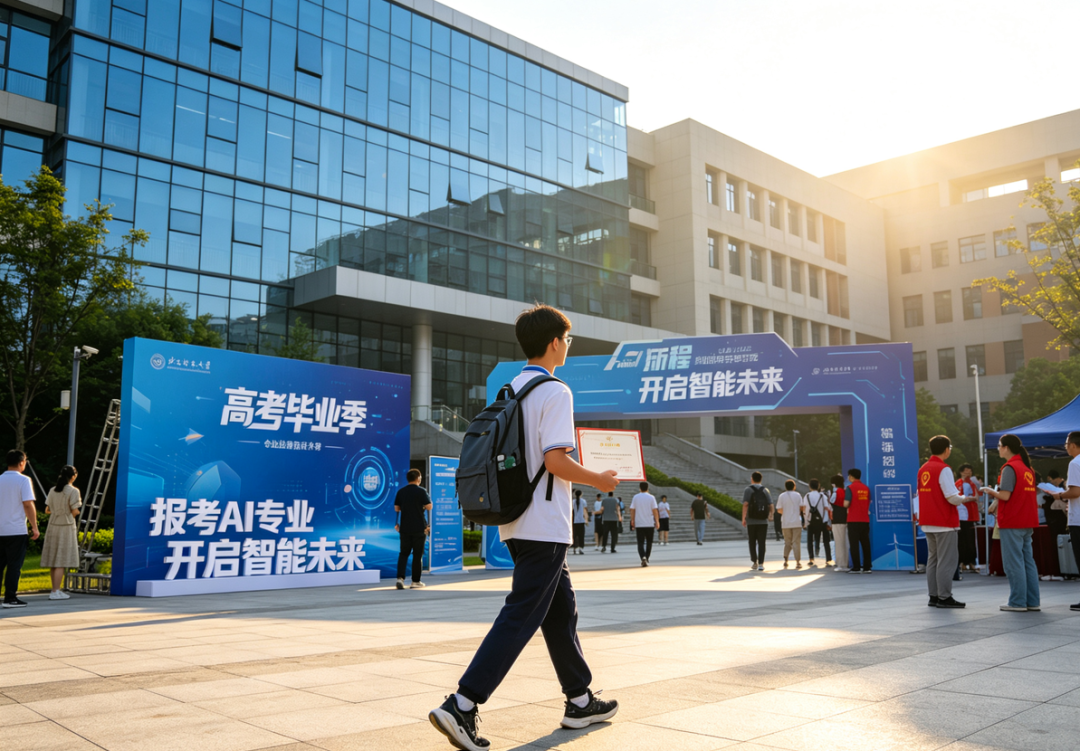
As national college entrance examination results are gradually unveiled, the craze for "AI+" majors is sweeping through the university admissions market at an astonishing rate.
Beihang University has introduced a micro-major in "Artificial Intelligence and Humanities & Social Sciences Applications" to the public. Xi'an Jiaotong University, Beijing University of Posts and Telecommunications, Harbin Institute of Technology, and other institutions have also received approval to launch majors in Embodied Intelligence. Tongji University has added two new undergraduate majors: Future Robotics and Engineering Internet.
Many universities have also initiated dual-degree programs to cultivate versatile talents, using "AI+" to reshape liberal arts majors. Some argue that this signifies a disciplinary transformation across the entire spectrum of humanities and social sciences.
However, upon reflection, when faced with a choice between an "AI+ Marketing" major from an average second-tier university and a pure Economics major from Fudan University, is the future of "AI+" necessarily brighter? Does "AI+" truly equip graduates with robust skills, or is it merely a "new label" created by universities amid enrollment anxieties?
"AI+": The End of the Liberal Arts Decline Narrative?
Rewinding to two years ago, the notions of "downsizing liberal arts" and "liberal arts being obsolete" were nearly ubiquitous among students and parents. Subsequently, institutions like the University of Science and Technology of China, Zhejiang University, and Sichuan University indeed canceled numerous liberal arts majors and reduced enrollment, making the employment challenges faced by liberal arts students common knowledge.
However, the situation appears to have shifted somewhat this year.
According to the "2026 AI Industry Talent Supply and Demand Trends Insight" released by Liepin Big Data Research Institute at the 2026 World Artificial Intelligence Conference, despite a total talent gap in the core AI industry reaching as high as 5 million, the fastest-growing positions are no longer solely algorithm engineers.
In the first half of 2026, the number of new job postings for architects increased by 76.74% year-on-year, mechanical structural engineers by 57.20%, and hardware engineers by 40.80%—these are quintessential hardcore engineering roles. What truly captured attention was the data on a group of "lightweight" positions: Prompt Engineering positions surged by 486.84% year-on-year, and the average annual salary for human-machine training positions reached 343,100 yuan.
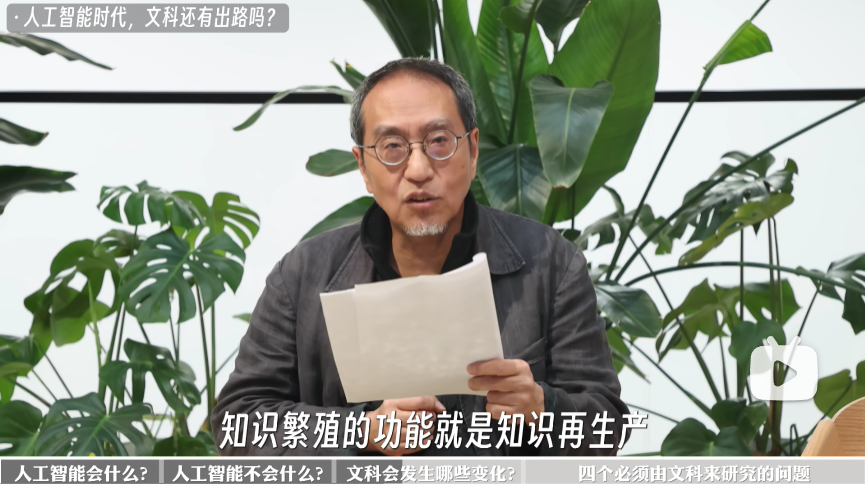
Philosopher Zhao Tingyang Discusses the Potential Future of Liberal Arts in the Age of Artificial Intelligence
Typically, a graduate from a traditional Chinese department starting as an editor at a publishing house might earn between 5,000 and 8,000 yuan. However, if they possess the skills to use precise prompt engineering to make large language models generate high-quality copy that meets commercial needs, or can refine AI output quality based on an understanding of humanity, emotions, and culture, their competitiveness soars.
Ding Liting, Director of the Employment and Entrepreneurship Guidance Center at Renmin University of China, also shared an observation at this year's campus recruitment summit: the number of AI-related positions targeting liberal arts backgrounds is on the rise. Many HR professionals explicitly state that they do not require applicants to write complex code but demand excellent language sensitivity, empathy, and rigorous logical thinking—core competencies honed in traditional liberal arts.
Consequently, offering "AI+" majors has become a trend among many universities this year.
For instance, to cultivate versatile talents in "AI+ Liberal Arts," Beihang University launched the "Artificial Intelligence and Humanities & Social Sciences Applications" micro-major. Shanghai Jiao Tong University added Psychology as a new major, with "Psychology + AI" as its core feature, integrating psychology, information science, and cutting-edge fields of brain science to build an innovative interdisciplinary curriculum. Harbin Institute of Technology introduced a new Language Intelligence major to cultivate versatile talents with a fusion of liberal arts and engineering, possessing global competence...
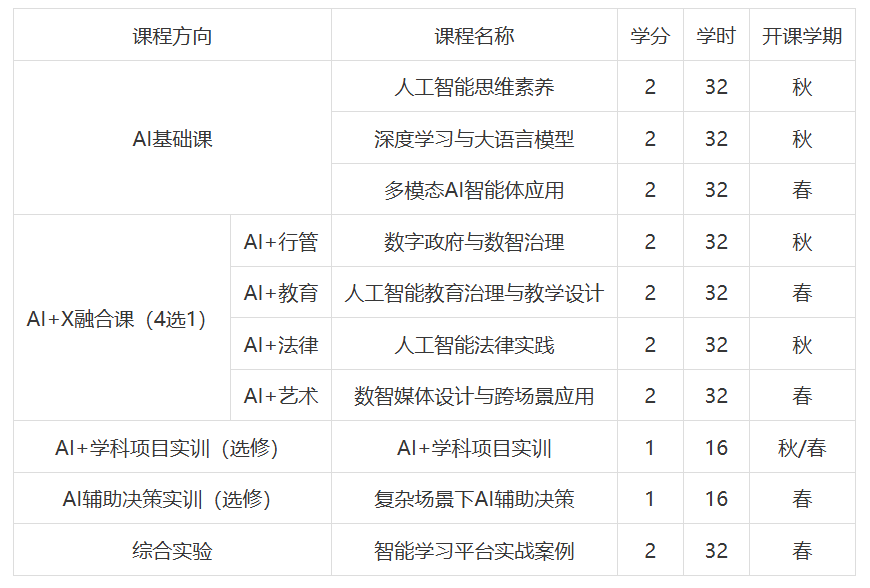
Course Directions for Beihang University's Artificial Intelligence and Humanities & Social Sciences Applications Micro-Major
It is evident that when launching "AI+" majors, more and more universities are not merely adding programming to the curriculum but attempting to cultivate students' humanistic critical thinking based on technological logic.
However, besides bringing more possibilities, the proliferation of "AI+" majors has also led to greater internal competition. For instance, the Artificial Intelligence major at the University of Chinese Academy of Sciences had an admission score of 696 in the Liaoning physics group in 2024, 328 points above the undergraduate line. In Zhejiang, the lowest admission score reached 704, exceeding the first-tier line by 212 points. This year, Zhejiang University's "Engineering Experimental Class (Zhu Kezhen College Turing Class)" had an admission score as high as 698, while the "Robotics Engineering" major had an admission score of 692.
"Top-tier institutions' top research-oriented AI majors naturally have very high score requirements, possibly even surpassing traditional flagship majors. Therefore, students with less outstanding scores should carefully choose pure AI majors and may prioritize 'AI+ Physical profession' (AI + entity industry majors) to avoid the situation of scoring high but settling for less," relevant personnel engaged in volunteer application assistance told Zinc Scale.
In fact, the talent gap in AI is for "high-end talent," not just "those who have studied AI." Therefore, blindly choosing AI majors is not advisable.
What "AI+" Is Truly Worth Pursuing
In reality, there is a significant disconnect between universities' "AI+" reforms and the actual needs of the industry. Many universities are cultivating students who understand AI concepts, while the industry needs AI practitioners who understand business pain points. Behind this mismatch lies a deeper issue with university major settings.
On one hand, the number of AI majors has exploded in recent years. In 2018, the Ministry of Education issued the "Artificial Intelligence Innovation Action Plan for Higher Education." In 2019, only 35 undergraduate universities nationwide offered AI-related majors. By 2025, this number had surged to over 600, a nearly 17-fold increase in just six years.
However, the problem is that many universities' AI majors are merely rebranded versions of existing programs, such as computer science, automation, or information management, with a few simple AI-related concept courses added. Some schools even lack PhD programs in AI. In reality, the number of universities that have truly established AI majors from scratch in terms of faculty, curriculum, and experimental conditions is far fewer than the numbers suggest.
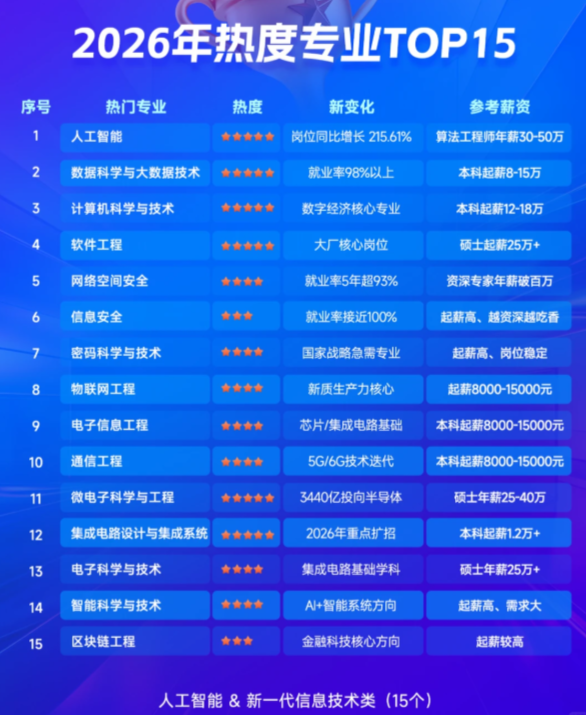
Source: User "Elysia"
On the other hand, for most ordinary universities, "AI+" represents a hasty initiative with insufficient faculty preparation. For students, if their university lacks strong computer science support or years of accumulated expertise in vertical industries, such as medicine, law, or finance, then "AI+" may simply be an attractive but fragile label.
So, what kind of "AI+" is truly worth pursuing?
For example, the "AI+ Medical Imaging Technology" micro-major at Shanghai Jiao Tong University School of Medicine. This major does not merely add a couple of conceptual courses to the clinical medicine program but involves joint laboratory construction with enterprises. Students participate in real medical imaging data annotation and model validation processes during their studies. After graduation, their career paths are clear, including radiology departments in top-tier hospitals, product managers at medical AI companies, and clinical engineers at medical device enterprises—all positions that apply theory to practice.
Another example is the Intelligent Imaging Arts major at the Communication University of China, which deeply integrates AI and imaging arts. Students must master both dramatic and film arts knowledge and hardcore AI technologies. The university also collaborates with leading technology companies to expose students to industry-leading technical cases and practical projects during their studies.
This is what an "AI+" major should embody. It should not be just an adjective but a verb, using AI to truly address specific industry pain points.
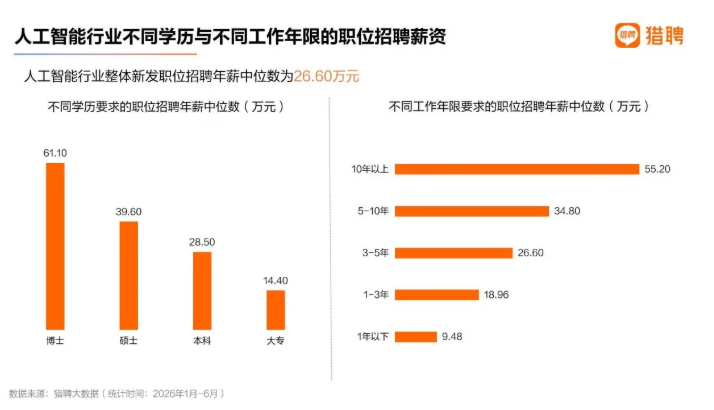
Source: Liepin Big Data Research Institute
The greatest danger of "AI+" major reforms is not insufficient technical learning but reducing oneself to an appendage of technical discourse. If a university's "AI+" major ultimately only aims to supply prompt engineers who can write copy for e-commerce to internet companies, it essentially reduces four years of higher education to a "vocational training program." This may alleviate immediate employment anxieties but sacrifices the kind of cross-cycle thinking ability that education should impart.
In 2026, AI is rapidly becoming a foundational infrastructure like English or computer science. In a few years, when every university graduate has some knowledge of AI tools, the "AI+" label itself will no longer confer any premium. At that point, what will distinguish you from others is whether you possess "proprietary data" that others cannot replicate even when using AI.
Some view AI as a "crutch," while others see it as a "telescope." The former makes one increasingly dependent, while the latter enables one to see further. Now, this choice lies in the hands of every young person about to enter university.
-
![]()
Computing Power Supplier Bags Orders Worth Over 600 Million Yuan, Yet Receives Only 4.5 Million Yuan in Actual Payments!
-
Alibaba Is Just Five Months Away from Securing Two Consecutive AI Coding Titles
-
![]()
Less Investment Isn't Apple's Get-Out-of-Jail-Free Card
-
![]()
The 'King of Africa' Tecno Mobile: What Is the Market Hesitating About After Its 'V-shaped' Rebound?
-
![]()
ByteDance Restructures Feishu, What Signals Does It Send?
-
![]()
ByteDance Overhauls Feishu: What Strategic Signals Are Being Sent?
-
![]()
Pay $39 a Month with Apple Upgrade: Apple's New Business, Your Old Wallet
-
![]()
The Open-Source Debate Dividing Silicon Valley