The 'King of Africa' Tecno Mobile: What Is the Market Hesitating About After Its 'V-shaped' Rebound?
 07/31 2026
 533
533
Author: Xiang Guang
Half a year ago, profits were halved; half a year later, profits surged—Tecno Mobile, once the 'King of Africa,' seems to be making a comeback.
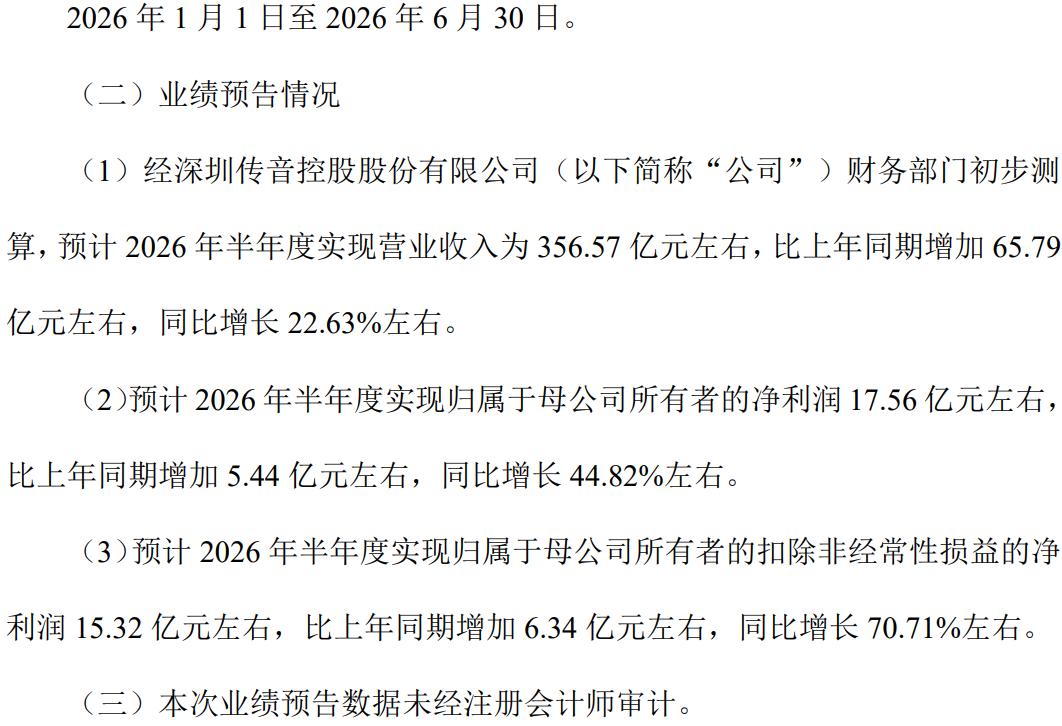
On July 19, 2026, Tecno Mobile (688036.SH) released its half-year performance forecast: It expects first-half operating revenue of approximately RMB 35.657 billion, up 22.63% year-on-year; net profit attributable to shareholders of approximately RMB 1.756 billion, up 44.82% year-on-year.
Just half a year earlier, the company had released an annual report that unsettled the market: Net profit attributable to shareholders in 2025 plummeted by 53.49% year-on-year, marking the largest profit decline since its listing.
From halved profits to nearly 45% growth, Tecno Mobile's performance has traced a steep 'V-shaped' curve.
The market's reaction to these results has been mixed. Optimists see it as a sign of a bottom reversal; cautious observers worry that the growth stems from temporary factors and question its sustainability.
Such dramatic performance fluctuations have been rare since Tecno Mobile's listing. The more pressing question is: Is this 'V-shaped' reversal a fundamental improvement in fundamentals, or merely a short-lived recovery under specific conditions?
At this juncture, with its core mobile phone business facing growth bottlenecks and competitors closing in, Tecno Mobile needs a new narrative to meet market expectations.
In 2025, Tecno Mobile's revenue declined by 4.55%, while net profit attributable to shareholders plummeted by 53.49% year-on-year, and gross margin fell from 21.28% to 19.15%. The speed of profit collapse far outpaced revenue decline, indicating that Tecno Mobile's core issue is not 'failure to sell' but 'selling unprofitably.'
In the first half of 2026, the situation suddenly reversed: Revenue grew by 22.63% year-on-year, and net profit attributable to shareholders surged by 44.82% year-on-year, earning 68% of the full-year profit for 2025 in just six months.
The company clearly explained the reasons for this reversal in its performance forecast: The average selling price of smartphones increased significantly, so revenue still grew despite a year-on-year decline in sales volume; on the cost side, historical inventory effects delayed cost increases, leading to a slight rise in gross margin.
Guo Tianxiang, Research Manager at IDC China, pointed out that the storage cost of low-end models as a share of the bill of materials (BOM) has risen from 10%-15% in normal years to 40%-50%. For Tecno Mobile, whose average product price is just RMB 566.3 (approximately $84), this means a substantial increase in core material costs.
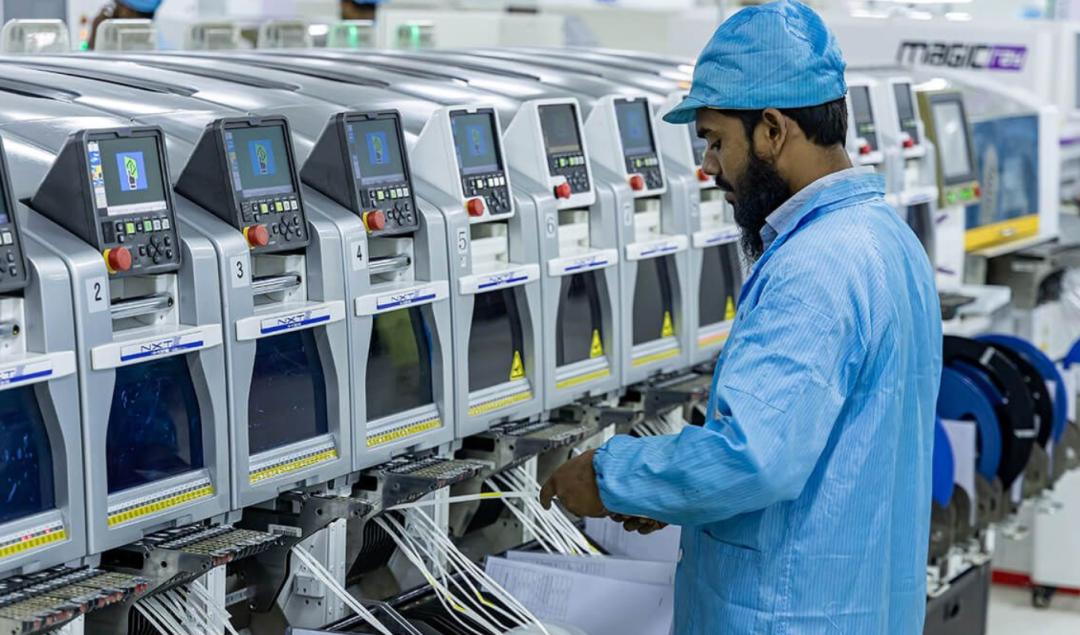
As early as the second half of 2025, Tecno Mobile had anticipated the trend of rising storage costs and initiated strategic inventory stockpiling. By the end of the first quarter of 2026, inventory had increased from RMB 8.903 billion at the end of 2025 to RMB 14.220 billion.
This low-cost inventory gave Tecno Mobile an advantage in the first half of 2026 due to the lag in cost increases.
However, the core contradiction (contradiction) remains unchanged: As mobile phones become more expensive, demand for upgrades is suppressed, with some consumers extending their replacement cycles or switching to cheaper alternatives.
When the stockpiled inventory is depleted, can price hikes be sustained? The market's real concern is whether Tecno Mobile can defend its core market.
Africa is Tecno Mobile's lifeblood. Over the past two decades, Tecno Mobile has built two moats in Africa.
One is localization capability. Tecno Mobile does not sell specifications but solves problems: dark-skin imaging, quad-SIM quad-standby, low-cost fast charging, signal enhancement—each feature directly addresses specific pain points of African users.
The other is its channel network. From cities to townships, Tecno Mobile has built a three-tier distributor system through partnerships with mom-and-pop stores and wholesalers, relying on trust built over two decades—a relationship that cannot be quickly replicated even with significant investment.
Not only that, but Tecno Mobile is continuously expanding beyond Africa, securing top market shares in Southeast Asia and the Middle East, while its layout (footprint) in Latin America has entered a deep cultivation phase...

But these two moats are being eroded. Dark-skin imaging is no longer an exclusive advantage, and features like multi-SIM, long battery life, and fast charging are no longer insurmountable barriers in the face of mature supply chains and R&D systems of major players.
In 2024, Tecno Mobile held a 61.5% market share in Africa's mobile phone market, ranking first for multiple consecutive years. However, by 2025, this figure had dropped to 48%. Samsung, Xiaomi, Honor, and OPPO saw growth rates of 10%, 27%, 144%, and 8%, respectively—far outpacing Tecno Mobile.
The fundamental issue is the ceiling on consumer purchasing power. With Africa's per capita GDP around $2,000, a significant portion of mobile phone budgets is concentrated below $200. Tecno Mobile's underlying logic of 'scale + low prices' hits the market's pain point, but when forced to raise prices due to storage cost pressures, this system becomes vulnerable.
Tecno Mobile's African base remains intact, but its 'exclusivity' is gone. In the past, 'others were unwilling to enter Africa,' but now 'others are starting to take Africa seriously,' marking a qualitative shift in Tecno Mobile's competitive environment.
The market urgently needs Tecno Mobile to tell a new story.
Tecno Mobile's answer is AI. However, its AI strategy is primarily focused on enhancing users' mobile phone experience rather than creating new business models.
Choosing AI is not just following trends; there is a logical rationale.
DataReportal data shows that Kenya ranks first globally with a 97.5% monthly usage rate of AI tools, followed by the UAE and Indonesia, with all top ten countries exceeding 89%.
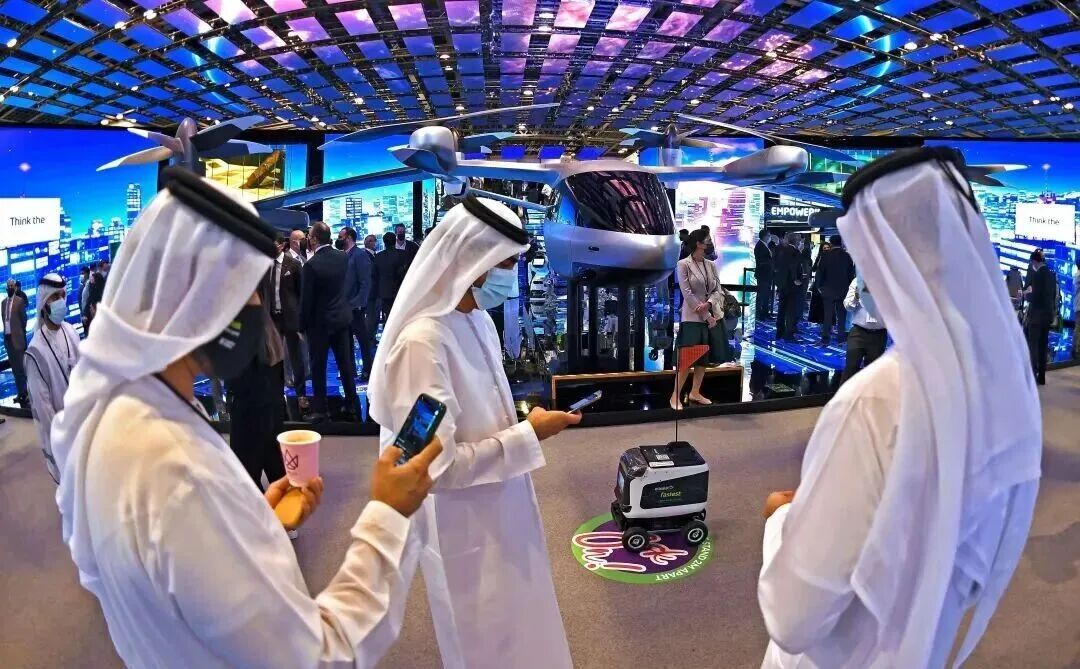
This means that emerging markets are precisely the regions with the highest global usage rates of AI tools, and Tecno Mobile's target users have a strong demand for AI—a narrative that holds water.
Starting in 2025, Tecno Mobile gradually pushed AI to the forefront in its external communications.
Chairman Zhu Zhaojiang clearly stated at the performance briefing that AI and emerging markets will become the core of the company's future strategy, with AI capabilities deeply integrated into high-frequency scenarios such as socializing, travel, health, and education.
In terms of specific products, Tecno Mobile has primarily done two things.
The most user-centric aspect is the toolification of AI. Tecno Mobile has independently developed technologies such as minority language speech recognition, AI auto-answer, AI voiceprint noise reduction, and AI call summarization, covering over 100 mainstream languages. It also launched Hi Translate, supporting 140 languages and 170 national accents, while its photo-based problem-solving feature can serve as a 'substitute teacher' in regions with scarce teacher resources...
The other aspect is the platformization of AI. If toolification solves point-based problems, platformization solves area-based problems—making AI a connector across multiple apps. Tecno Mobile's AI agent, TECNO EllaClaw, has been upgraded to a cross-app Agentic AI, deeply integrating the native assistant Ella with the OpenClaw framework, enabling multi-app task completion with a single command.

Additionally, Tecno Mobile announced its participation in investing in AI hardware company Future Intelligence, with the two sides reaching a strategic cooperation to drive the R&D and commercialization of next-generation AI agent hardware.
These are all examples of Tecno Mobile actively embracing AI, but the issue lies in the fact that Tecno Mobile's efforts are focused on localizing general-purpose capabilities.
Tecno Mobile itself has a clear understanding of this. The company repeatedly emphasized at the performance briefing that the goal of these AI capabilities is to 'make cutting-edge technology accessible to a broader global user base,' representing an experience upgrade integrated into terminals and a means to enhance mobile phone competitiveness.
These efforts certainly have value, but they also mean that Tecno Mobile's AI moat is shallow. Major players do not pursue minority languages in Africa not because they cannot technically achieve it, but because this market is not yet significant enough to justify the investment. Once the market grows large enough or major players decide to enter, how long can Tecno Mobile's 'localized adaptation' barrier hold?
Tecno Mobile has chosen an easier path: using others' models and adapting them locally. For a mobile phone manufacturer with an average price of just over RMB 500, this is the most rational choice. However, it also means that Tecno Mobile will never receive the valuation of an 'AI company.'
How much a company's AI story is worth depends on two variables: how much the market believes it and how much the company is willing to invest in it.
The market once believed in Tecno Mobile's AI story. Tecno Mobile listed AI R&D as the top priority for fundraising in its secondary listing prospectus on the Hong Kong Stock Exchange. Fangzheng Securities gave it a 'strong recommend' rating in its initial coverage, and Tecno Mobile's market value rebounded from its low at the end of 2025, seemingly signaling that Tecno Mobile was truly different.
But a closer look at the financials reveals another side to the story.
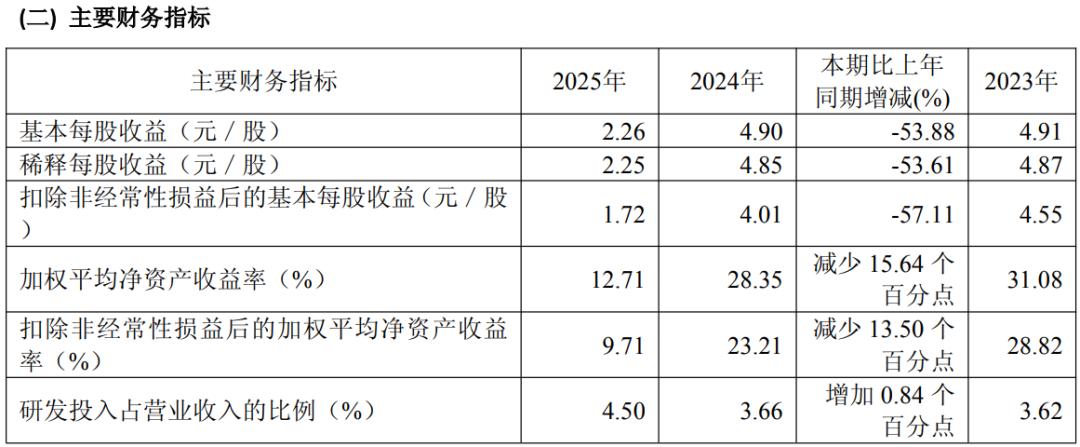
In 2025, Tecno Mobile's R&D expenditure was RMB 2.950 billion, with an R&D expense ratio of 4.50%. In the first quarter of 2026, the R&D expense ratio was 4.70%. While this figure is average for consumer electronics, it pales in comparison to companies truly competing in the AI Track (arena).
 Source: Tecno Mobile 2025 Annual Report
In 2025, Xiaomi's R&D expenditure was RMB 33.1 billion, with an R&D expense ratio of approximately 7.2%, and it explicitly stated that it would invest at least RMB 60 billion in AI over the next three years.
Tecno Mobile's total annual R&D investment is less than Xiaomi's quarterly AI-specific budget.
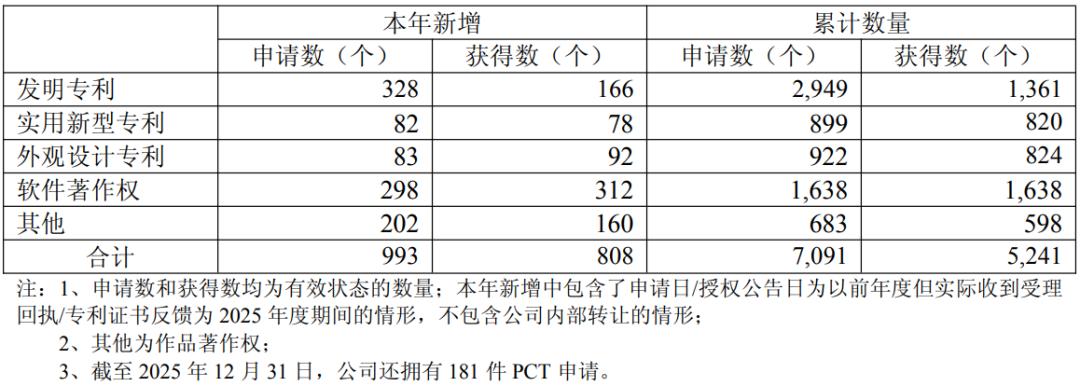
Tecno Mobile holds invention patents, but its accumulation in core AI algorithms and large model training is negligible.
 Source: Tecno Mobile 2025 Annual Report
In the first half of 2025, internet services accounted for just 1.4% of Tecno Mobile's revenue—a figure achieved after years of talking about 'hardware-software synergy' and 'mobile internet ecosystem.'
After all this time, Tecno Mobile's story remains just a story.
These data points reveal a harsh reality: Tecno Mobile's strategy essentially avoids the core battleground of AI competition.
What are true AI companies doing? They are investing billions in computing power, competing in large models, and vying for talent. Xiaomi is pre-committing RMB 60 billion, while Huawei and ByteDance are investing hundreds of billions. Computing power competition is the entry ticket to AI. Only by winning this arms race can companies talk about AI commercialization, business models, and valuation premiums.
Tecno Mobile's AI story ultimately circles back to an unavoidable fact—the market still judges it solely as the 'King of African Mobile Phones.'
Tecno Mobile's true valuation anchor remains firmly tied to its core market in Africa. While AI has made mobile phones easier to sell, transforming AI itself into a valuation premium requires far greater effort than Tecno Mobile is currently exerting.
-
![]()
Computing Power Supplier Bags Orders Worth Over 600 Million Yuan, Yet Receives Only 4.5 Million Yuan in Actual Payments!
-
Alibaba Is Just Five Months Away from Securing Two Consecutive AI Coding Titles
-
![]()
Less Investment Isn't Apple's Get-Out-of-Jail-Free Card
-
![]()
The 'King of Africa' Tecno Mobile: What Is the Market Hesitating About After Its 'V-shaped' Rebound?
-
![]()
ByteDance Restructures Feishu, What Signals Does It Send?
-
![]()
ByteDance Overhauls Feishu: What Strategic Signals Are Being Sent?
-
![]()
Pay $39 a Month with Apple Upgrade: Apple's New Business, Your Old Wallet
-
![]()
The Open-Source Debate Dividing Silicon Valley