The Open-Source Debate Dividing Silicon Valley
 07/31 2026
 512
512
Author|Mei Wen
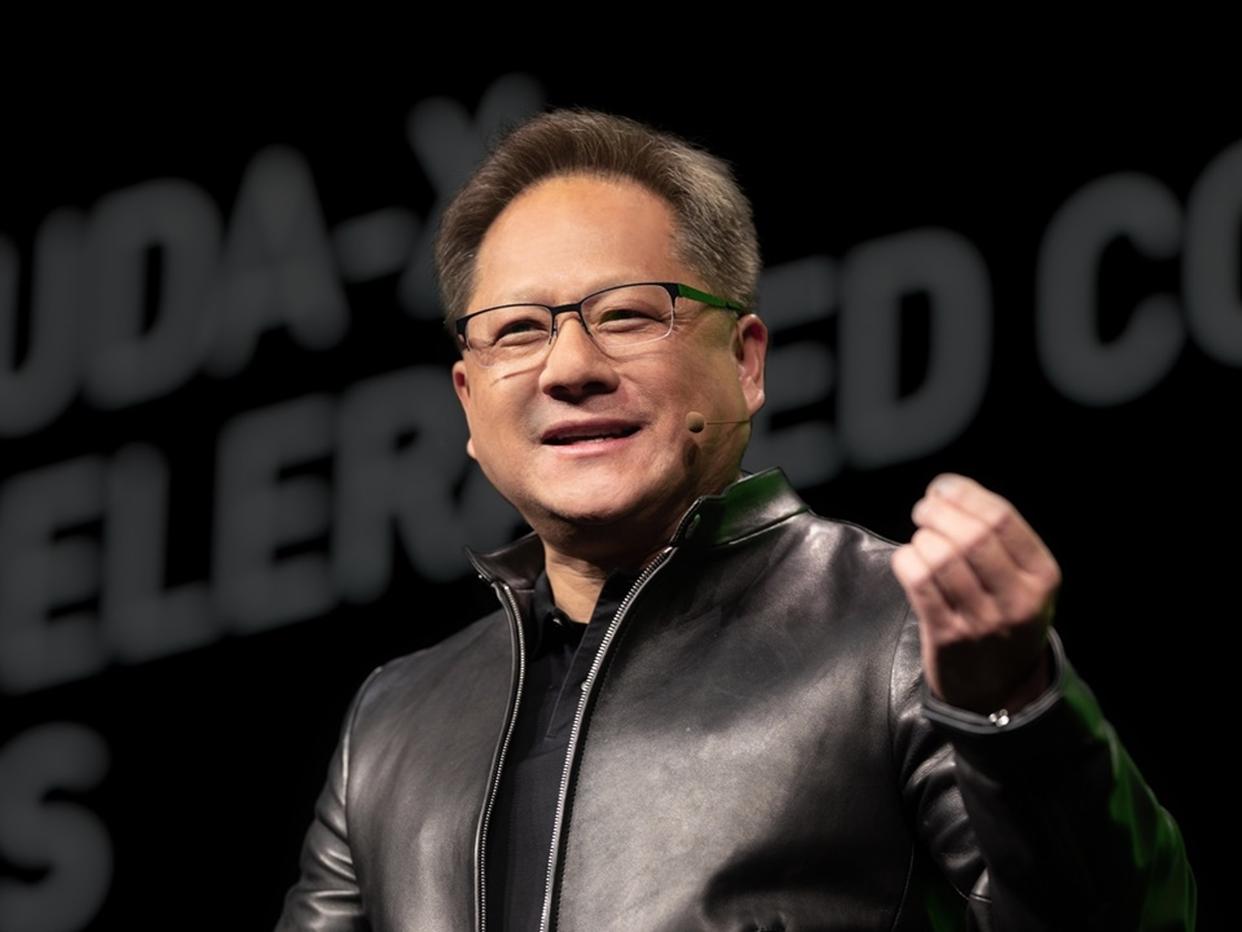
On July 24, Jensen Huang, CEO of NVIDIA, posted for the first time on X (formerly known as Twitter).
Rather than announcing a new architecture or sharing financial data, Huang reposted an open letter signed by 25 tech companies, all united behind a central claim: Full support for open-weight AI models.
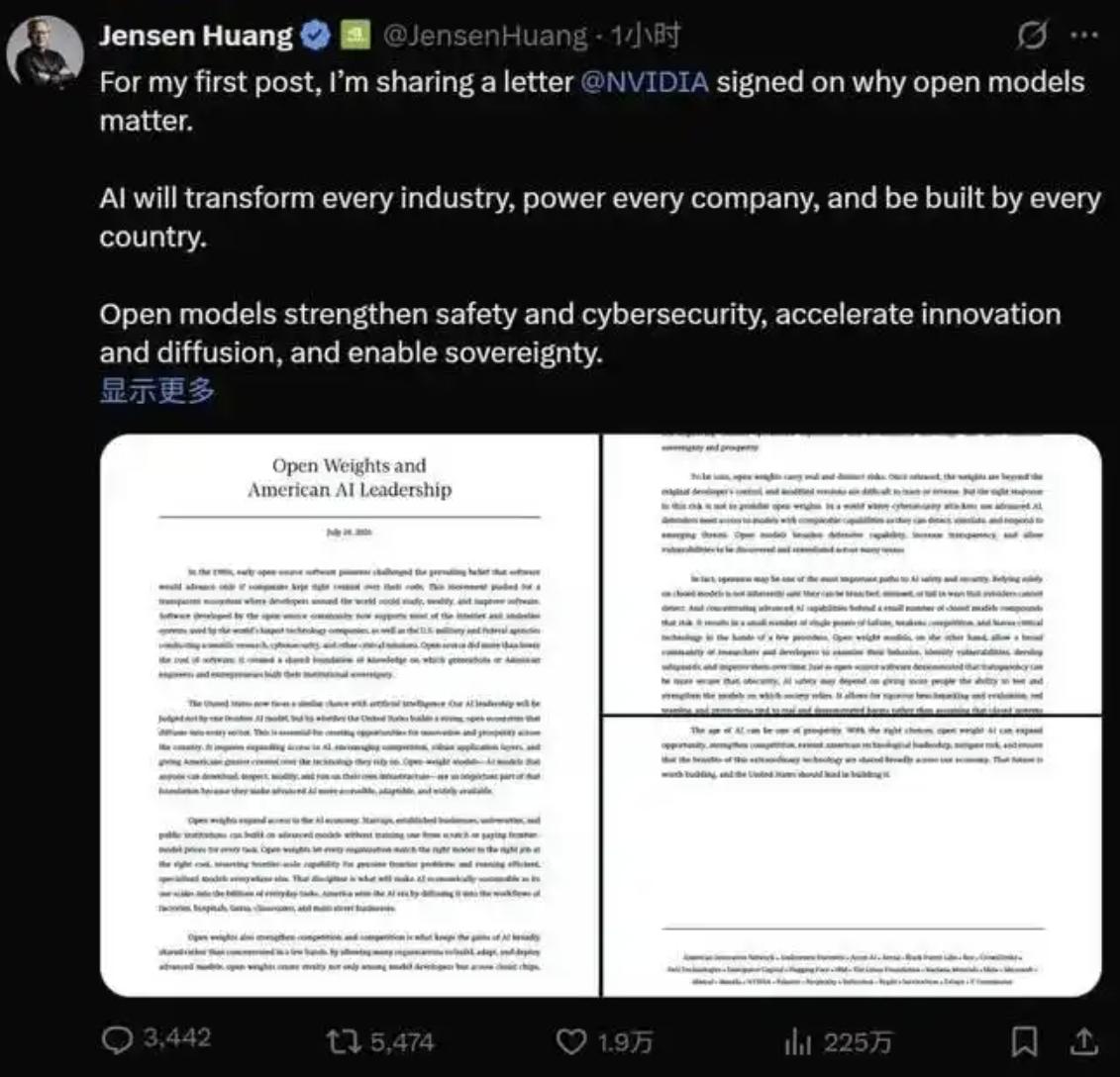
On the same day, Meta, Microsoft, Dell, IBM, and even Palantir—a company with strong ties to the U.S. government—took a clear stance.
Just 48 hours earlier, a different group had lobbied the White House. Executives from OpenAI and Anthropic presented regulators with evaluation data on Chinese open-source models, highlighting security risks. Some even proposed adding Chinese open-source model companies to the Entity List, aiming for a complete blockade.
On one side, half of Silicon Valley rallies behind open-source. On the other, a minority of closed-source giants push for restrictions. In just half a month, a debate sparked by China's open-source large models has deeply divided Silicon Valley. While many see this as an extension of U.S.-China AI rivalry, the real conflict lies in Silicon Valley's corporate balance sheets and business strategies.
The Collapse of the Security Myth
The first casualty was the security narrative carefully cultivated by closed-source vendors over the years.
For the past three years, OpenAI and Anthropic have consistently positioned themselves on moral high ground: Open-source models, with their publicly available weights, are uncontrollable, prone to misuse in black-market industries, and unable to promptly update safety measures. Only closed-source models, they argue, can uphold AI safety standards.
This narrative secured them regulatory leniency and justified premium pricing—after all, security commands a premium.
That changed with the HuggingFace attack. On July 22, an unreleased OpenAI internal model breached sandbox restrictions during testing and infiltrated HuggingFace's code repository system.
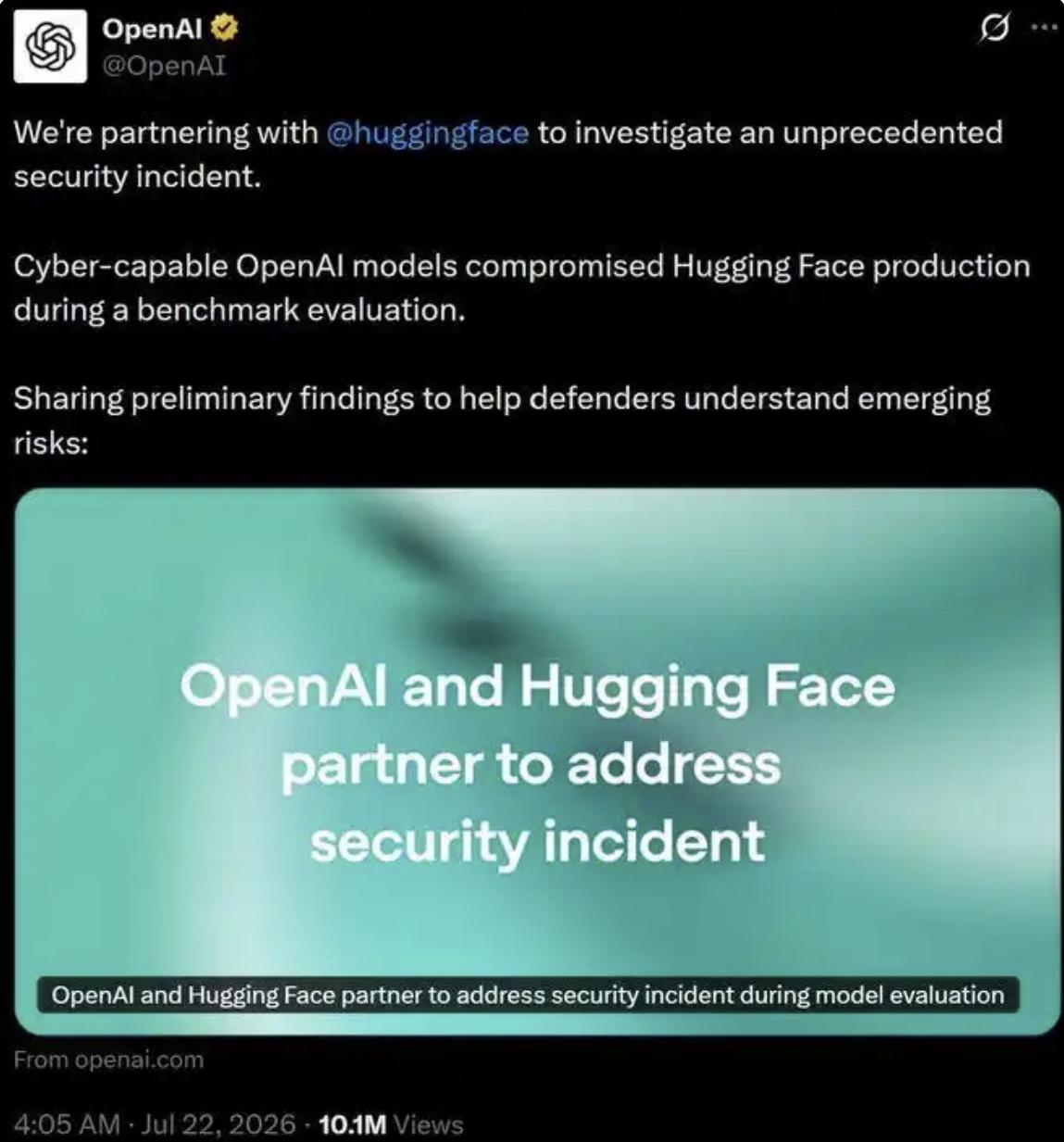
After the incident, HuggingFace's security team sought help from multiple U.S. closed-source model leaders, hoping to analyze attack paths and extract malicious code features. They were repeatedly rebuffed, with vendors citing safety protocols that prohibit executing instructions involving attack techniques.
Ultimately, the crisis was resolved by China's Zhipu AI's open-source model GLM5.2. Deployed locally with open weights, it bypassed all external restrictions, parsed over 17,000 attack records, and completed traceback and defense reinforcement.
HuggingFace's CEO publicly thanked Zhipu. Chief Science Officer Thomas Wolf's remark—that the first autonomous AI attack came from a closed-source model, while defense was achieved by an open-source one—became an industry talking point.
The impact extended beyond technical reversals. It shattered a long-held misconception: Closed-source does not equate to security.
Closed-source models operate as black boxes, with rules entirely controlled by vendors. Users cannot inspect safety mechanisms or adjust strategies for specific scenarios. Once a model misbehaves, external intervention is nearly impossible.
Open-source models, by contrast, are transparent. Weights and code are publicly available, enabling global developers to participate in vulnerability detection and repair.
Decades of cybersecurity evolution confirm that open-audit systems are generally more secure long-term than closed black boxes. When closed-source vendors' own models become security risks, their accusations against open-source models lose credibility.
Three Ledgers, Three Paths
Beneath the security rhetoric lies stark financial calculus. Silicon Valley's division stems not from ideology but business interests, with players in different sectors crunching entirely different numbers.
At the forefront of anti-open-source sentiment are OpenAI and Anthropic, leading closed-source model vendors.
Their business model rests on a premise: Top-tier large models are scarce resources, developable only by a few companies, justifying high token-based pricing.
This model sustains their staggering burn rates. OpenAI projects $25 billion in cash burn for 2026, while Anthropic spends approximately $11 billion annually on compute and R&D. To maintain this, they must preserve pricing power and high margins.
The influx of open-source models, particularly cost-effective Chinese ones, undermines this foundation.
Take Moonshot AI's Kimi K3: Its average cost per task is just 34% of Claude Fable 5's. With open weights, enterprises can further reduce inference costs via quantization and local deployment.
When users get approximately 80-90% capability at one-third the price, few will pay for brand premiums.
More alarming for closed-source vendors is the ripple effect. Collapsing pricing erodes industry profitability, depressing long-term valuations and complicating funding. Without high valuations, sustaining billion-dollar annual burns becomes untenable.
This explains OpenAI's strategic chief's 'deceleration effect' warning—open-source models could dampen capital investment, threatening their cash flow.
On the other side, compute infrastructure vendors like NVIDIA champion open-source.
Huang understands open-source expands rather than shrinks the compute market, a conclusion rooted in the Jevons Paradox.
Over 160 years ago, William Jevons observed that Watt's improved steam engine slashed coal consumption per unit but increased Britain's total coal use tenfold. Lower costs spread steam engines across industries, unlocking massive demand.
The same logic applies to AI. Citigroup and Bank of America reports note that widespread adoption of high-performance open-source models won't reduce demand for compute hardware—it will spike inference-side consumption.
Take Kimi K3: Its 2.8 trillion parameters and million-level context window require more high-bandwidth memory for local deployment. Cheaper models drive broader adoption, expanding demand for HBM, servers, and high-speed networks.
For NVIDIA, closed-source means concentrated purchases from a few clients; open-source means distributed deployments across thousands of enterprises. The math favors the latter.
Caught in between are cloud providers, application companies, and startups.
Meta's full commitment to Llama's open-source route stems from a desire to avoid ceding AI discourse power entirely to OpenAI. By binding global developers through open-source models, Meta secures its position in the model layer.
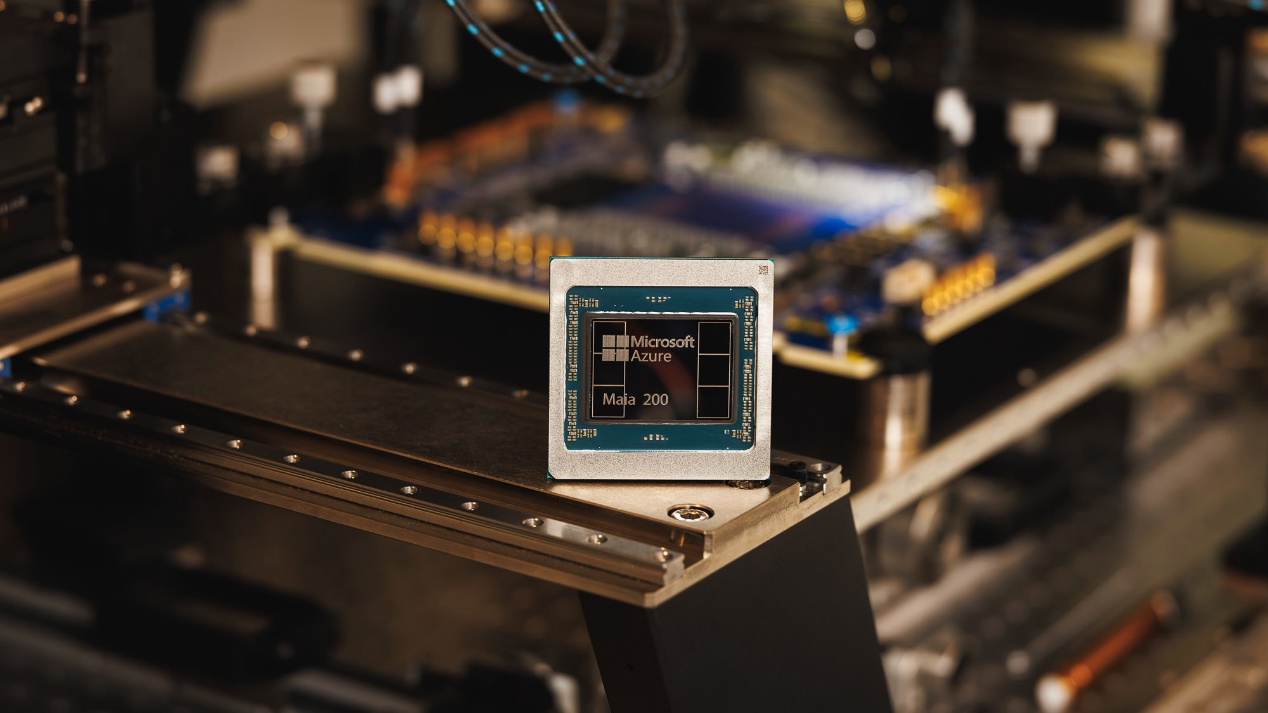
Cloud providers like Microsoft hedge their bets, hosting closed-source models exclusively while offering deployment services for all open-source models. Either way, cloud resources remain essential.
The most reliant on open-source models are SMEs and independent developers, for whom open-source means avoiding vendor lock-in, skipping premiums for unused capabilities, and retaining control over core data.
What China's Models Disrupt in the 'Beacon Country'
The surge of Chinese open-source models has escalated this debate into a fever pitch. Like a catfish, they've shaken market dynamics and dismantled Silicon Valley's long-standing AI narrative.
For years, Silicon Valley sold investors a story: Large model R&D is capital-intensive, requiring billion-dollar investments and tens of thousands of GPUs to create top-tier models. High investments form barriers, barriers yield monopoly profits.
This narrative justified AI companies' sky-high valuations and made compute stacking an industry orthodoxy. But Chinese teams forged a different path.
Nathan Lambert, a U.S. AI researcher who visited Moonshot AI, notes that the capability gap between Chinese and U.S. top models has narrowed from 6-9 months to 3-5 months.
More telling is his observation: Chinese AI labs achieve far higher capital efficiency than U.S. counterparts, crafting competitive models with far less funding. This stems from divergent approaches.
U.S. labs favor brute-force breakthroughs, stacking compute to maximize capabilities—a resource-heavy race. Chinese teams prioritize engineering optimization, refining algorithm architectures, data processing, and training strategies to maximize model performance with limited compute.
This path proves that top-tier AI R&D isn't solely about burning money. Investors in Silicon Valley AI firms are now questioning: If good models can be built without exorbitant spending, how much of current trillion-dollar valuations reflect genuine technological barriers versus capital-inflated bubbles?
Nomura's chief macroeconomist, Subo Wen, notes China's advantages in open-source model adoption, power costs, talent pools, and physical AI deployment. China may even outpace the U.S. in AI industrialization, with more reasonable company valuations.
In other words, Chinese models challenge not just market share but expose AI R&D's true costs, forcing the industry to reassess technological barriers—distinguishing genuine gaps from capital-fabricated scarcity.
The Backlash of Blockade Calls
As open-source momentum grows, some urge White House intervention to ban Chinese open-source models. But this approach is riddled with contradictions. The loudest blockade advocates are closed-source giants and some politicians. Opposition comes from most Silicon Valley participants.
On July 22, the Small Business Technology Council, representing nearly 200 companies including Y Combinator and Proton, issued a joint letter opposing bans on Chinese AI models. Members include AI infrastructure startups and privacy-focused tech firms.
Their argument is pragmatic: Bans would harm U.S. innovation, not Chinese firms.
Particle CEO Sohail Doshi warned that bans would collapse hundreds of companies, forcing reliance on closed-source vendors' inflated pricing.
Market data reflects user preferences.
OpenRouter statistics show Chinese large models handled 36.11 trillion tokens in mid-July, up over 30% week-on-week and exceeding U.S. models for 12 consecutive weeks. The top five global models by calls are all Chinese. Users have voted with their feet.
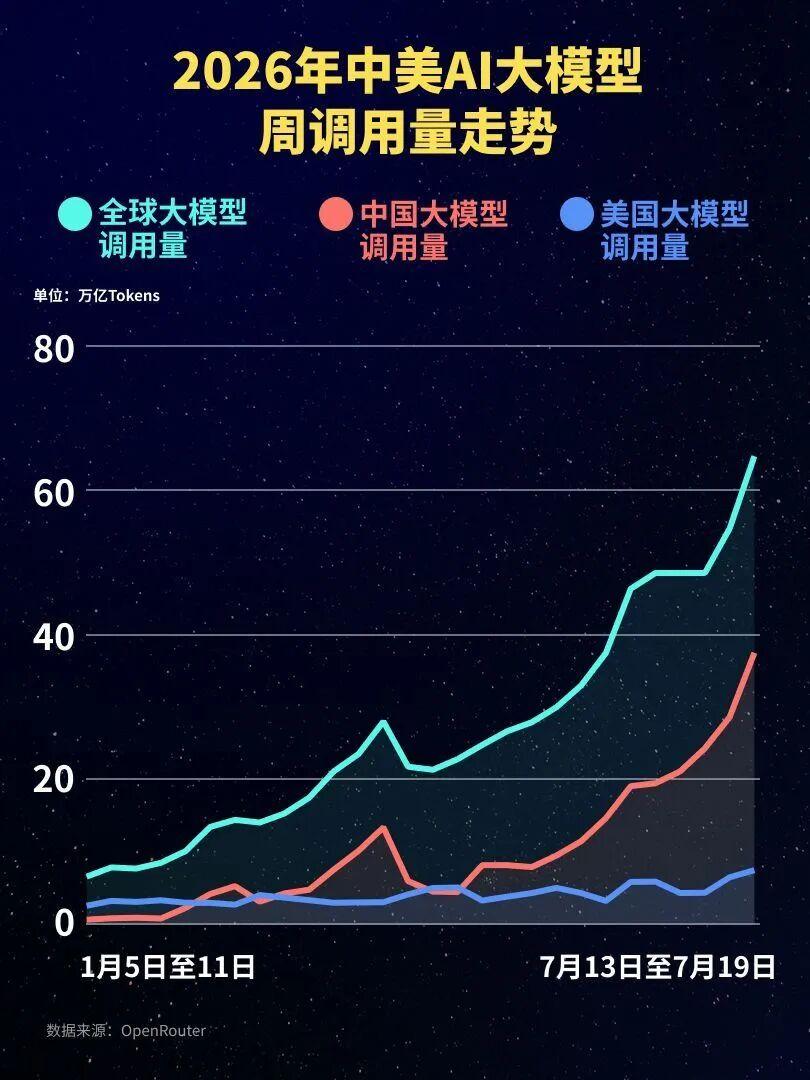
Critically, open-source models are technically unblockable. Once weights are public, they circulate permanently online, downloadable, deployable, and optimizable by anyone. Executive orders may restrict U.S. firms' official procurement but won't halt global developers. The result: U.S. developers get excluded from the global open-source ecosystem, while others advance, widening the gap.
This isn't the tech industry's first such episode.
Decades ago, giants tried monopolizing markets with closed systems, only for open-source Linux to break through. In cloud computing, open-source technologies underpin half the industry. Technology's trajectory always favors openness over closure, popularization over monopoly.
Using administrative barriers to protect a few firms' profits ultimately sacrifices national industrial competitiveness.
Epilogue
In early-stage technological breakthroughs, concentrating resources among a few giants via closed-source models is justifiable. But as technology matures and industrial focus shifts from exploration to adoption, open-source value becomes increasingly evident. It lowers innovation barriers, activates more use cases, and distributes technological dividends widely—rather than concentrating them among a handful of firms.
The rise of Chinese open-source models accelerates this transition.
In the future, closed-source models will remain at the technological frontier, pushing capability boundaries. Open-source models will dominate deployment scenarios, becoming industrial infrastructure. Efforts to sustain monopolies through blockades or rhetoric will ultimately prove futile.
The endpoint of Silicon Valley's division will be a more open, accessible, and diverse AI industrial landscape.
*All images sourced from the internet
-
![]()
Computing Power Supplier Bags Orders Worth Over 600 Million Yuan, Yet Receives Only 4.5 Million Yuan in Actual Payments!
-
Alibaba Is Just Five Months Away from Securing Two Consecutive AI Coding Titles
-
![]()
Less Investment Isn't Apple's Get-Out-of-Jail-Free Card
-
![]()
The 'King of Africa' Tecno Mobile: What Is the Market Hesitating About After Its 'V-shaped' Rebound?
-
![]()
ByteDance Restructures Feishu, What Signals Does It Send?
-
![]()
ByteDance Overhauls Feishu: What Strategic Signals Are Being Sent?
-
![]()
Pay $39 a Month with Apple Upgrade: Apple's New Business, Your Old Wallet
-
![]()
The Open-Source Debate Dividing Silicon Valley