Pay $39 a Month with Apple Upgrade: Apple's New Business, Your Old Wallet
 07/31 2026
 497
497
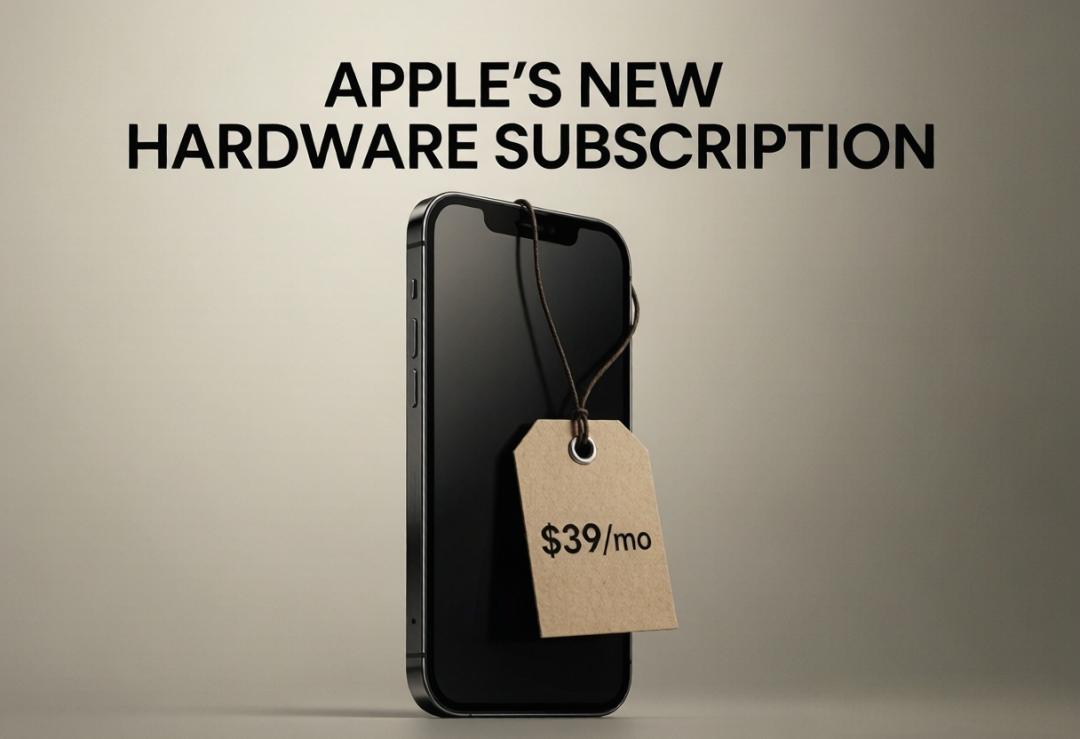
Apple isn't wrong—the barrier is indeed lower. It's just that the lowered barrier is the one for Apple to dip into your wallet, not for you to spend less.
Zhang Wei, a product manager at a startup, has been using a seven-year-old MacBook Pro that now sounds like a jet engine. As he opened a news app, he spotted the $1,599 price tag for the new 14-inch MacBook Pro.
Just as his finger hovered over the trackpad, he noticed a line of small print at the bottom of the page: Starting at $39 a month.
"$39?" he thought—lower than his monthly coffee budget. But then another thought surfaced: Who owns this laptop after three years?
Apple recently provided an official answer to that question.
Multiple media outlets report that Apple will launch a hardware upgrade plan called Apple Upgrade in the U.S. as early as July 28. Unlike the 2015 iPhone-only "Annual Upgrade Program," this version includes Macs, iPads, and Apple Watches, partnering with Swedish fintech firm Klarna.
Users face a simple choice: Pay monthly, then either return the device, upgrade to a new one, or buy the current one when the lease ends.
Apple markets this as "cheaper than installments." But is Apple Upgrade really a "bargain"?
01
THE TRUTH
Are Users Getting a Deal?
According to Apple: "Lower monthly payments, lower barriers—you get the latest devices for less upfront."
But the math tells a different story.
Take a $999 MacBook Air. At $39 monthly for 36 months, total spending hits ~$1,404—40% more than buying outright. Even if you upgrade at 24 months and return the old device, the premium paid for "always-new" tech outpaces the device's depreciation.
$999
One-time payment for MacBook Air
~$1,404
$39/month × 36 months (40% extra)
"Apple Upgrade doesn't sell affordability—it sells the relief of not paying all at once. It lowers psychological barriers, not total ownership costs."
The iPhone example is clearer.
The current iPhone Upgrade Program bundles device costs with AppleCare+, nearing $50 monthly. The new plan drops insurance, making monthly payments look better—until your screen cracks or logic board fails. For Apple, AppleCare+ is high-margin; for you, it's a hidden pitfall after being removed from the package.
Behavioral economics has long known: People spend more with credit cards than cash because the "pain" is delayed. Monthly payments push this to the extreme. You barely feel the spending, only the upgrades. By the time the three-year bill arrives, the extra cost is already paid.
The long-term view is clearer. A $999 MacBook Air costs $333 annually if bought outright. With monthly payments and rolling renewals, annual spending hits ~$468. Over 12 years, that's $4,000 for four outright purchases versus $5,600+ with monthly plans. Devices age, but monthly fees don't stop.
Usage matters too. If you keep a phone for four years, buyout costs become negligible over time—monthly plans drain money continuously. Apple Upgrade only benefits those who crave frequent upgrades and never miss payments.
A hidden layer is the credit risk. Klarna's model relies on installments and occasional late fees, with U.S. regulators scrutinizing such businesses. Turning "buying a computer" into "borrowing money for it" isn't ideal for cash-strapped users. Low-income consumers, lured by "low monthly payments," risk getting trapped by fees and interest.
The verdict is simple: If you plan to upgrade every 2-3 years without fail, the plan might ease your mind. But if you want to spend less, buying outright is almost always cheaper.
02
WHY NOW
Why Is Apple Doing This?
To understand Apple Upgrade, first grasp the pressures Apple faces.
In early 2026, the global memory chip market surged. DRAM contract prices tripled from January to June 2026, while NAND flash memory followed suit. No one escaped unscathed—not even Apple.
For years, Apple leveraged its massive purchasing power and brand strength to weather supply chain cost swings. But by 2026, Bloomberg reports, Apple had exhausted its stockpile of low-priced chips and now pays market rates for new orders.
The impact hit retail prices—this spring, Apple raised Mac and iPad prices significantly, with some models jumping over 20%. Media reports suggest the iPhone 18 Pro, launching in September, will likely see price hikes too.
Recently, Apple CEO Tim Cook admitted to The Wall Street Journal that Apple's "costs have become unsustainable." Raising prices became unavoidable.
The reality is stark: Without hikes, profit margins would collapse. Even Apple, with its vast wealth, had to act.
But price hikes aren't a long-term solution. Apple needed new growth drivers. Enter Apple Upgrade—using the perception of $39 monthly payments to offset the sting of $200 price increases.
Commercially, this isn't novel. The auto industry has leased vehicles for decades, and carrier-subsidized phones are old news. But Apple's timing—expanding leasing beyond iPhones to all devices while partnering with Klarna instead of handling financing itself—signals urgency.
Partnering with Klarna lets Apple offload bad debt, risk management, and device resale value calculations—all low-margin, high-risk tasks. "Klarna funds it, manages risk, and handles defaults. Apple provides products, channels, and branding. One handles heavy assets, the other stays light—Apple's calculus is flawless."
03
THE UPSIDE
What Apple Gains from Apple Upgrade
Traditionally, buying an Apple device was a one-time transaction. Once paid, your relationship with Apple ended. Now, with Apple Upgrade, that bond continues—monthly payments keep you tied to Apple.
Apple tells you: For a small monthly fee, your devices stay current, your services remain connected. You barely notice the spending, only the "new Apple experience."
"Your dozens -dollarmonthly spending quietly builds Apple's new business."
This design benefits Apple immensely—smoother revenue, loyal users, and control over used device recycling, refurbishment, and resale. Apple dominates the ecosystem.
The ecosystem's ultimate winner? Apple. Even in refurbishing, Apple sells official refurbs at near-new prices, pocketing the difference as new profit.
Capital markets love "subscription" stories, often valuing such companies higher. Apple can also wrap Apple Upgrade in an "eco-friendly" narrative, boosting its reputation.
Is It Truly Flawless?
Is Apple Upgrade's business model universally perfect? Not necessarily.
In many Western markets, regulators frown upon bundled services—Apple has faced fines before. In China, where credit-based installment plans are mature, Apple Upgrade loses its edge. Its absence in China—due to Klarna lacking a Chinese payment license—may stem from such regulatory concerns.
Apple isn't the first to try this. Samsung and carriers have offered hardware-service bundles, but most fizzled. If Samsung and carriers couldn't make it work, Apple's success isn't guaranteed.
Returning to the young man: He closed the page, not from calculating costs, but realizing the $39 monthly fee hid a design to keep him perpetually leasing, never owning.
"Apple wasn't wrong—the barrier is lower. It's just the barrier for Apple to access your wallet, not for you to spend less."
What about you? Do you prefer buying outright or relying on installments?
Note: Zhang Wei's name is real.
END
-
![]()
Computing Power Supplier Bags Orders Worth Over 600 Million Yuan, Yet Receives Only 4.5 Million Yuan in Actual Payments!
-
Alibaba Is Just Five Months Away from Securing Two Consecutive AI Coding Titles
-
![]()
Less Investment Isn't Apple's Get-Out-of-Jail-Free Card
-
![]()
The 'King of Africa' Tecno Mobile: What Is the Market Hesitating About After Its 'V-shaped' Rebound?
-
![]()
ByteDance Restructures Feishu, What Signals Does It Send?
-
![]()
ByteDance Overhauls Feishu: What Strategic Signals Are Being Sent?
-
![]()
Pay $39 a Month with Apple Upgrade: Apple's New Business, Your Old Wallet
-
![]()
The Open-Source Debate Dividing Silicon Valley