China's AI API Call Volume Overtakes U.S.: A Global Turning Point for Domestic Large Models
 07/31 2026
 420
420
"A 4x gap isn't a marketing gimmick—it's a signal of power shift in the global AI industry."
Author | Jiachang
Produced by | Jixin
In July 2026, tech circles were abuzz with new data from OpenRouter, the world's largest AI model API aggregation platform: China's large models hit a record 36.11 trillion weekly token calls, dwarfing U.S. models at 7.28 trillion—a 5x gap. This wasn't a one-week fluke—Chinese models have outpaced U.S. counterparts for 12 straight weeks, with Chinese products dominating 4 of the top 5 global large models.
A year earlier, no one could have imagined this scenario. In summer 2025, U.S. models still commanded 72% of call volume on OpenRouter, with GPT and Claude as unshakable benchmarks for developers. In just 12 months, the tide had turned.
1
The "4x" Controversy and the Overlooked Industry Turning Point
Doubts persisted after the data release.
"OpenRouter is just an aggregation platform—it doesn't represent the global market." "Free models inflate call volumes; high numbers don't mean profitability." "Chinese models rely on low-price dumping; their technology is still inferior." These arguments hold some merit, but they all avoid the core truth: global developers are voting with their feet, choosing Chinese large models.
Let's clarify the data scope. OpenRouter isn't a niche platform—it's the world's largest third-party AI model API marketplace, serving over 2 million developers and hundreds of thousands of enterprises, from independent coders to Fortune 500 companies. Its data excludes OpenAI and Anthropic's direct clients, making it the best window into global developers' "free choices"—no ecosystem lock-ins, no bundled sales, just pure selection based on cost-performance, capabilities, and stability.
More notable is the growth trajectory. In February 2026, Chinese models first surpassed U.S. counterparts with 5.16 trillion vs. 2.94 trillion weekly calls—a gap of less than 2x. Over the next five months, Chinese models maintained 20-30% month-over-month growth, while U.S. models never exceeded 15% and even declined multiple times. The gap widened from 2x to 5x—not a short-lived spike from a viral model, but a structural shift.
Stanford's 2026 AI Index Report confirms this: the performance gap between Chinese and U.S. AI models has narrowed to 2.7%. On core tasks like code generation and mathematical reasoning, domestic models like DeepSeek V4 and Kimi K3 now rival GPT-5 and Claude 4.8, even surpassing them in Chinese-language scenarios and long-text processing.
When performance gaps shrink to single-digit percentages, price becomes the decisive factor. And that's where Chinese models strike hard.
2
Not Dumping, But a Generational Gap in Engineering
Many attribute Chinese models' price advantage to "subsidies" or "predatory pricing," but this misunderstands the AI industry.
Consider the stark cost contrast: according to third-party benchmarking firm Artificial Analysis, completing a standardized AI task costs just 2 cents using DeepSeek V4 Flash, compared to $2.75 for Anthropic's Claude Fable 5—a 137x price difference. Even DeepSeek's flagship V4 Pro costs $0.87 per million tokens, versus $15 for GPT-5—a 17x gap.
These margins aren't sustained by subsidies. After DeepSeek V4 Pro slashed prices by 75% in May, it still maintained healthy gross margins, thanks to a holistic engineering overhaul:
- MoE architecture optimization: DeepSeek's pioneering MLA (Multi-Head Latent Attention) mechanism and DeepSeekMoE architecture reduced inference compute to 27% of comparable models. Training DeepSeek V3 cost just $5.576 million, versus over $100 million for GPT-4o—a nearly 20x difference.
- Inference engineering exploitation: From KV cache optimization to batch scheduling, quantization to peak-valley pricing, Chinese firms pushed inference efficiency to extremes. While U.S. firms sold APIs at flat rates, DeepSeek used dynamic pricing to cut idle compute costs to one-tenth.
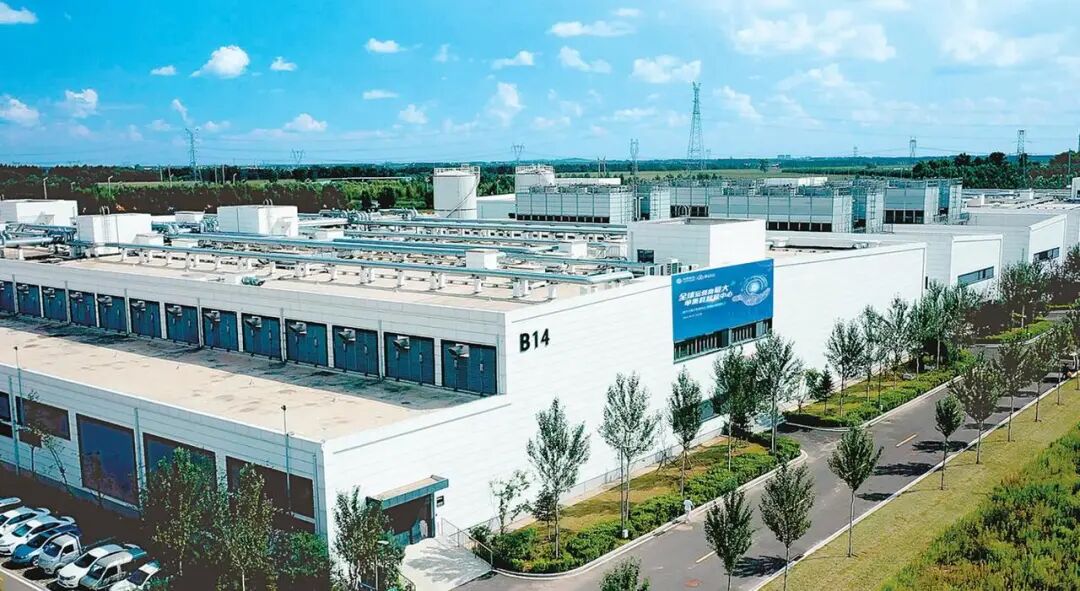
- Domestic chip cost advantages: With mature domestic chips like Huawei's Ascend and Hygon, Chinese AI firms' compute costs are 40-60% lower than U.S. firms using NVIDIA H100s. The first 100,000-card all-domestic compute cluster will further slash costs.
This is fundamentally a victory of "engineering capabilities" over "research prowess." U.S. AI firms inherit Silicon Valley's research tradition, excelling at 0-to-1 algorithmic breakthroughs. But Chinese firms dominate 1-to-100 engineering, commercialization, and cost control—much like China's manufacturing sector defeated Western rivals through supply chain mastery. AI is now repeating that story.
Jensen Huang admitted in a recent podcast: "Chinese firms' engineering capabilities are vastly underestimated. They're not copying us—they're doing the same things 10x cheaper in ways we never imagined."
3
Commercial Logic Trumps Ideology
The most compelling evidence isn't individual developer choices, but enterprise clients' mass migration.
San Francisco AI startup Lindy.ai fully switched from Anthropic to DeepSeek V4 last month. Founder Flo Crivell calculated: before migration, Anthropic's bills exceeded payroll for 20+ employees; after, costs dropped 92% for the same workload, saving millions annually with no performance loss. "As CEO, I can't justify spending millions more yearly for 'supporting U.S. firms,'" he told reporters.
This is no outlier. U.S. food delivery giant DoorDash shifted daily operations and most workflows to Kimi K2.6, reserving Claude for only the hardest tasks. Crypto exchange Coinbase made DeepSeek engineers' default coding assistant. German industrial giant Siemens confirmed its industrial AI systems now run on DeepSeek and Zhipu Z.ai.
Even OpenAI's top backer, Microsoft, is extensively testing and using DeepSeek models internally. CEO Satya Nadella stated in internal meetings: "We must acknowledge Chinese models' competitiveness. Ignoring them risks losing cost competitiveness."
Ideological barriers crumble before cost gaps. When performance differs by 3% but prices by 10x, rational businesses choose savings. CNBC's commentary hit the nail on the head: "U.S. politicians can shout 'national security,' but CFOs look at balance sheets. Saving millions annually is irresistible."
More alarming is the network effect taking hold. As more developers and firms adopt Chinese models, their toolchains, plugins, and app ecosystems flourish, further entrenching their dominance. Like Android's open-source, low-cost victory over Windows Phone, once ecosystems form, reversal becomes difficult.
4
Call Volume ≠ Revenue: Quality Gaps After Quantitative Surge
Still, we must avoid blind optimism. Call volume surpassing is a milestone, not the finish line.
The core gap lies in revenue. While Chinese models' call volume is 5x U.S. levels, OpenAI alone generates more annual API revenue than all Chinese large model firms combined. Two reasons explain this: Chinese models' ultra-low pricing relies on volume; high-value enterprise and sensitive-scenario clients still prefer U.S. models.
Specifically, gaps persist in three areas:
- High-end market gaps: For complex multi-step reasoning, scientific computing, and enterprise customization, GPT and Claude retain clear edges. Finance, healthcare, and legal sectors—where accuracy is paramount—remain cautious.
- Ecosystem gaps: U.S. models boast complete ecosystems from dev tools to app stores (OpenAI's GPTs store has 1M+ apps), while Chinese ecosystems are nascent.
- Compliance and trust gaps: Europe and North America demand stringent data security and privacy. Chinese models must overcome certification, localization, and brand trust hurdles.
Call volume surpassing is just the first step—a quantitative accumulation. The next 3-5 years will decide the outcome: Can Chinese models evolve from "cheap alternatives" to "enterprise-grade primary choices"? Can they penetrate high-end markets? Can they build global ecosystems? The answers will shape the AI industry's future.
But the turning point has arrived.
5
A New Era of AI Globalization: No More Monopolies
Reviewing AI's history, a clear pattern emerges: each technological wave's power shift follows "performance catch-up" to "cost dominance" to "ecosystem supremacy."
IBM dominated mainframes; Microsoft and Intel conquered PCs through standardization and cost advantages; Chinese brands seized half the smartphone market via supply chain and engineering innovation. AI now follows this path.
The true significance of China's AI call volume surpassing the U.S. isn't "China wins"—it's the dawn of a multipolar AI era. No single firm or nation will monopolize AI development. U.S. research strengths and China's engineering/commercialization edges will coexist, compete, and collectively advance technology.
For China's AI industry, this is the greatest opportunity. Having proven engineering and cost advantages in one year, the next challenge is deepening technology, closing high-end capability and ecosystem gaps, and truly evolving from an "AI powerhouse" to an "AI superpower."
For global developers and enterprises, this is also the best era. Intense competition drives lower prices, better services, and faster innovation. AI is no longer a luxury for tech giants—it's a universal productivity tool accessible to all firms.
History moves forward. The July 2026 data will mark a pivotal AI industry turning point—signaling AI's shift from Silicon Valley labs to every corner of the world. And China stands at this new era's forefront.
-
![]()
Computing Power Supplier Bags Orders Worth Over 600 Million Yuan, Yet Receives Only 4.5 Million Yuan in Actual Payments!
-
Alibaba Is Just Five Months Away from Securing Two Consecutive AI Coding Titles
-
![]()
Less Investment Isn't Apple's Get-Out-of-Jail-Free Card
-
![]()
The 'King of Africa' Tecno Mobile: What Is the Market Hesitating About After Its 'V-shaped' Rebound?
-
![]()
ByteDance Restructures Feishu, What Signals Does It Send?
-
![]()
ByteDance Overhauls Feishu: What Strategic Signals Are Being Sent?
-
![]()
Pay $39 a Month with Apple Upgrade: Apple's New Business, Your Old Wallet
-
![]()
The Open-Source Debate Dividing Silicon Valley