Is SpaceX's High-Stakes Bet on AI a Lucrative Move?
 08/10 2026
 384
384
Overall, this quarter marks SpaceX's first financial report, with solid performance—revenue continues to grow beyond expectations, and losses are narrowing at an accelerated pace, seemingly within reach of breaking even. However, concerns arise from the accelerated pace of capital expenditures. Overall:
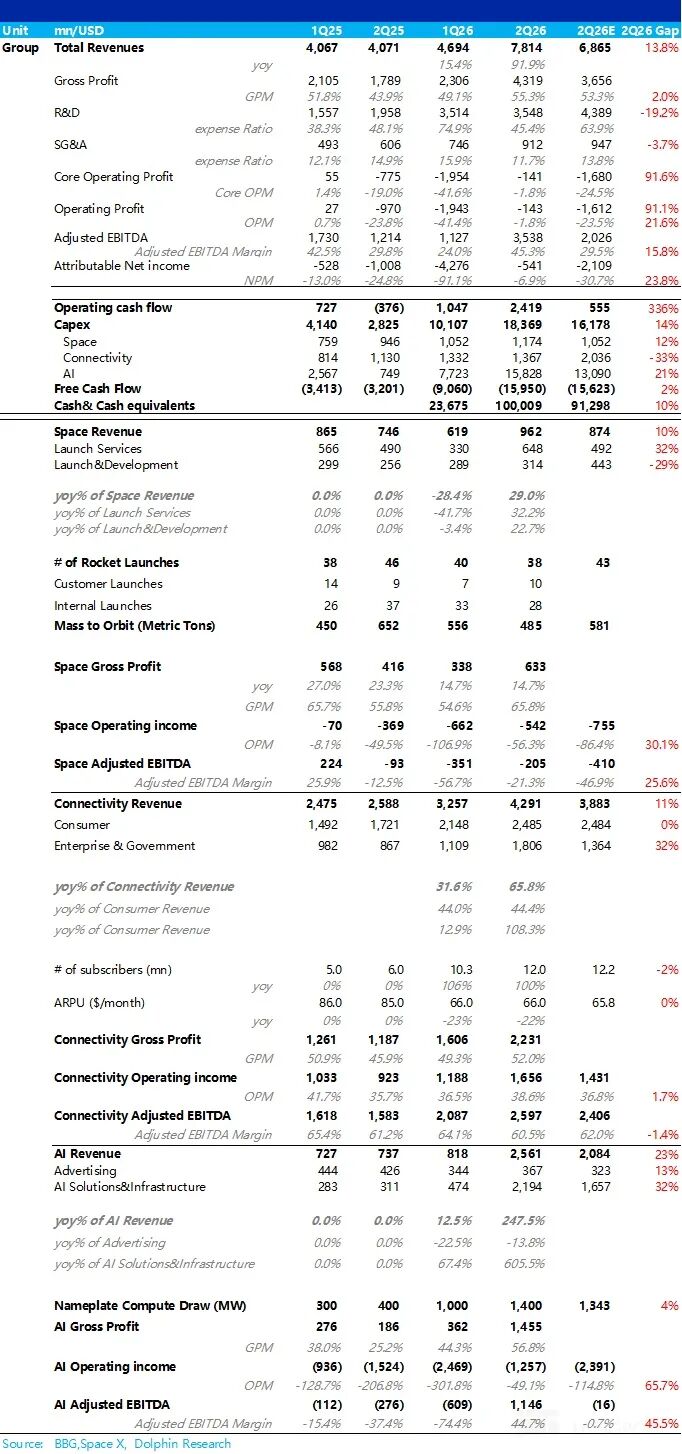
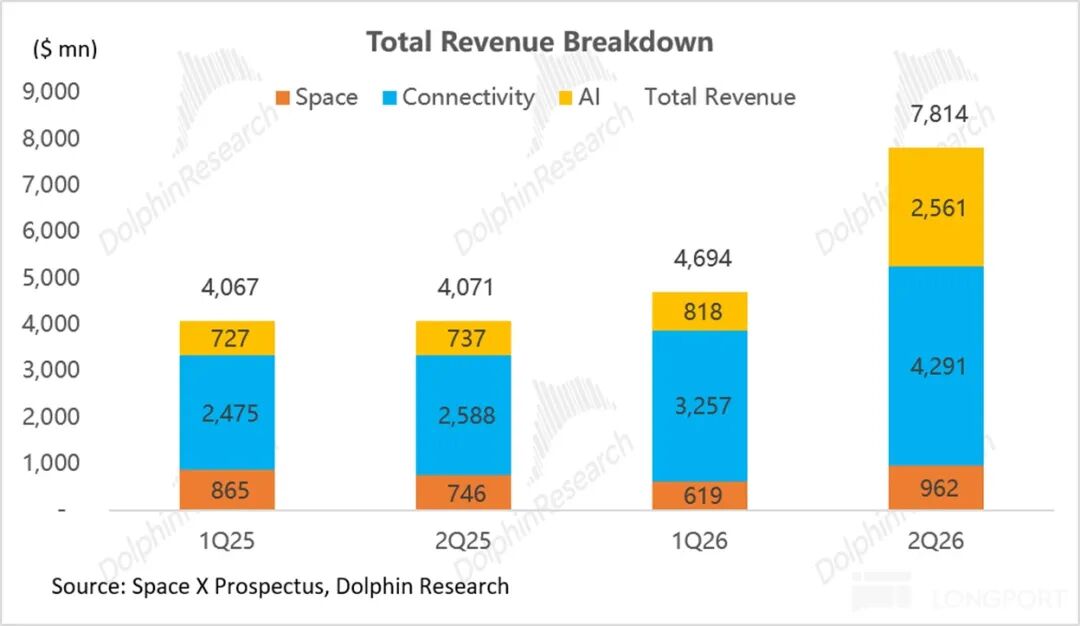
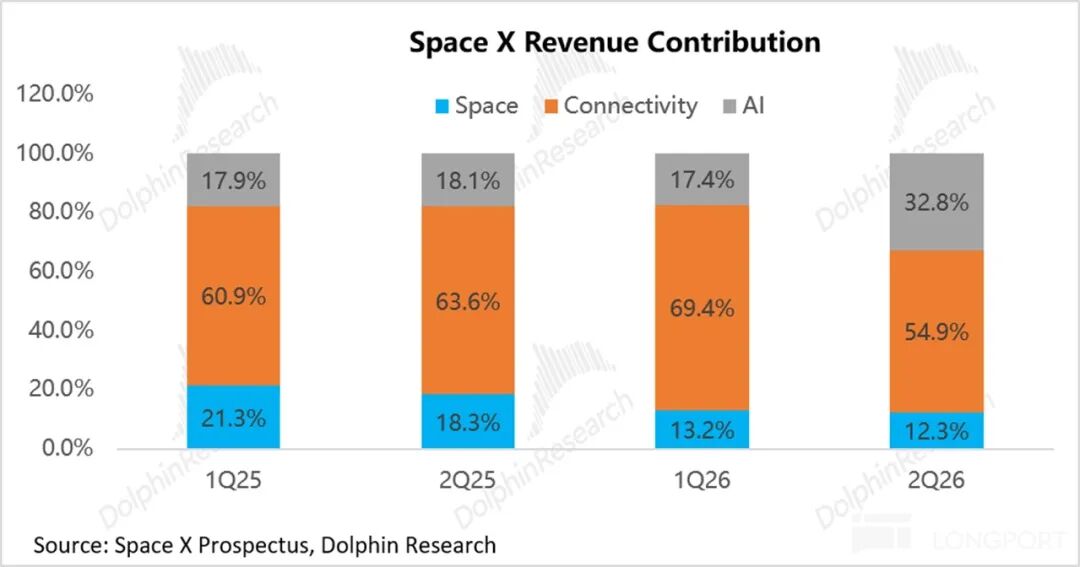
① Total revenue exceeded expectations, with AI business driving significant YoY growth: SpaceX's total revenue in Q2 was $7.8 billion, surpassing market expectations of approximately $6.9 billion, representing a 92% YoY increase and a significant acceleration from Q1 (approximately +15%).
The primary driver of accelerated revenue growth is the AI business (especially as computing power leasing contracts began contributing incremental AI business revenue, with AI segment revenue up +247% YoY), along with substantial growth in Starlink's B2B/G revenue.
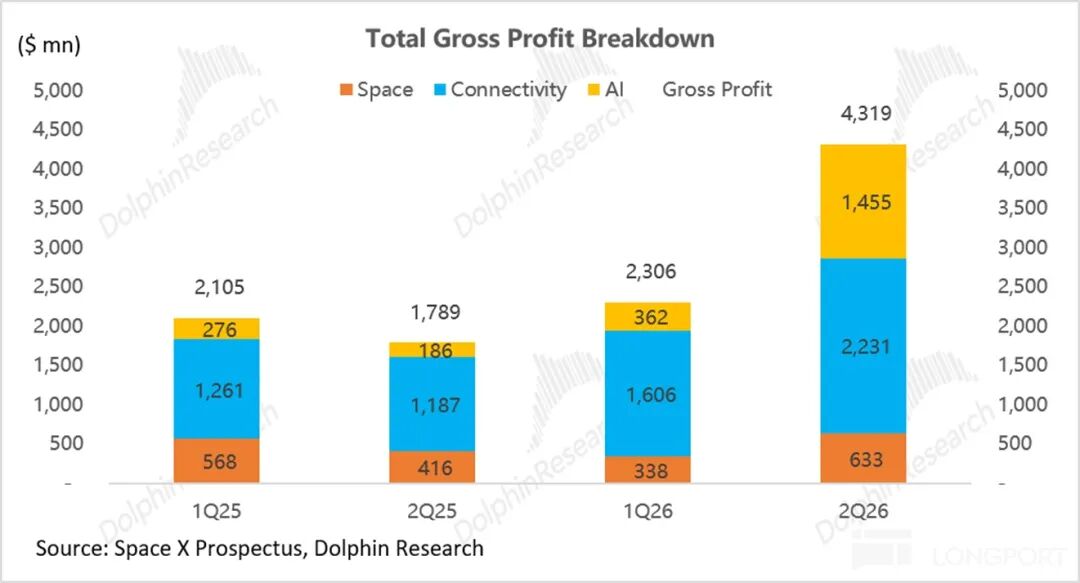
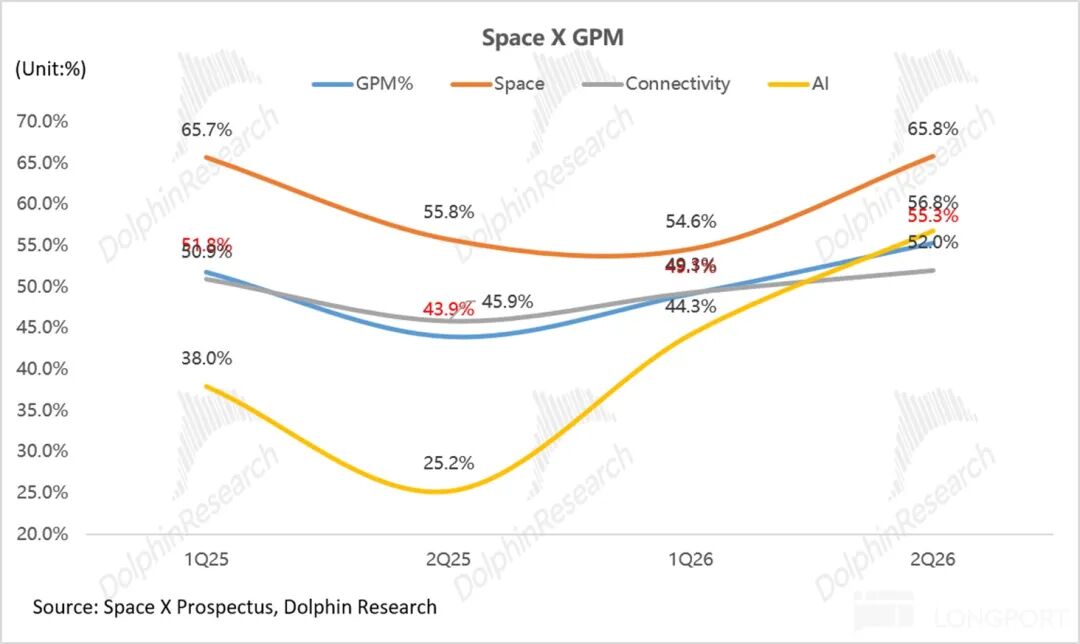
② Gross margin improved sequentially: SpaceX's gross profit in Q2 was $4.3 billion, exceeding market expectations by around $3.7 billion, with the gross margin increasing by approximately 6 percentage points sequentially to 55.3%. The significant improvement in gross margin is mainly attributed to the enhanced profitability of the AI business—as computing power leasing revenue was recognized this quarter, high-premium leasing led to a high gross margin, with AI business gross margin improving by 32 percentage points YoY to 56.8% (compared to 25.2% in Q2 last year).
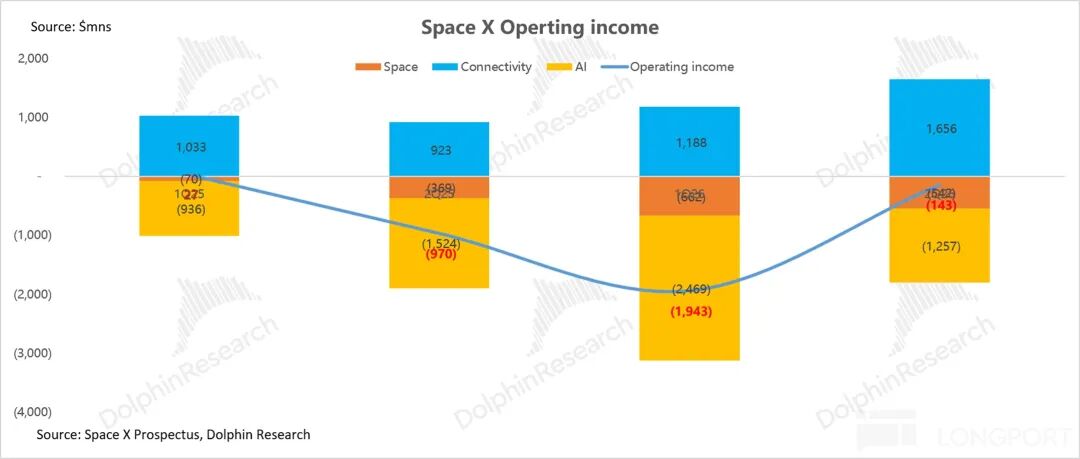
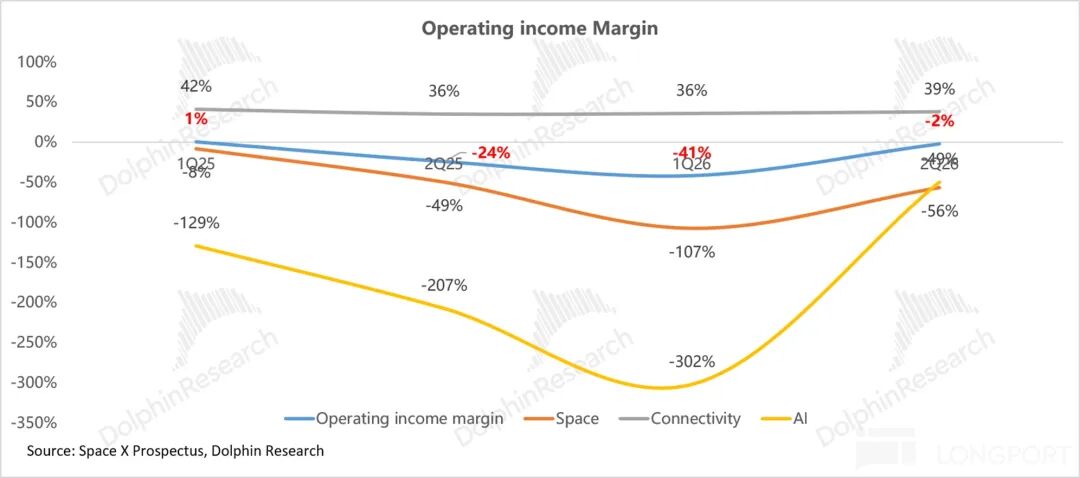
③ Operating leverage release drove substantial reduction in operating losses: SpaceX's operating profit in Q2 was -$140 million, significantly higher than market expectations of -$1.68 billion. The operating margin improved by 40 percentage points sequentially to -1.8% (Q1: -41.4%), primarily due to the substantial improvement in overall revenue and gross margin from the AI computing power leasing business, combined with the release of operating leverage, bringing operating profit to the brink of breaking even.
④ Business performance in detail:
a. Rocket launch business: Increased external launches, with unit prices and margins rising against the trend
Revenue: Rocket launch revenue in Q2 was $960 million, surpassing market expectations of $870 million, up 29% YoY, mainly due to a 32% YoY increase in launch service revenue to $650 million, while launch and R&D services confirmed only $310 million in revenue this quarter, up 23% YoY.
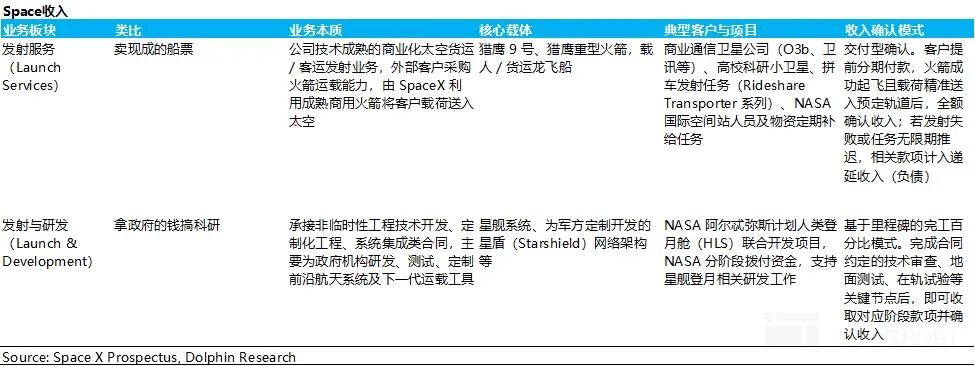
Launch services: SpaceX's launch services are based on mature commercial orders charged per launch/weight. In terms of launch volume, external Falcon 9 commercial launches reached 10 this quarter, up from 7 in Q1 and 9 in the same period last year, mainly due to an increase in launch missions for large clients.
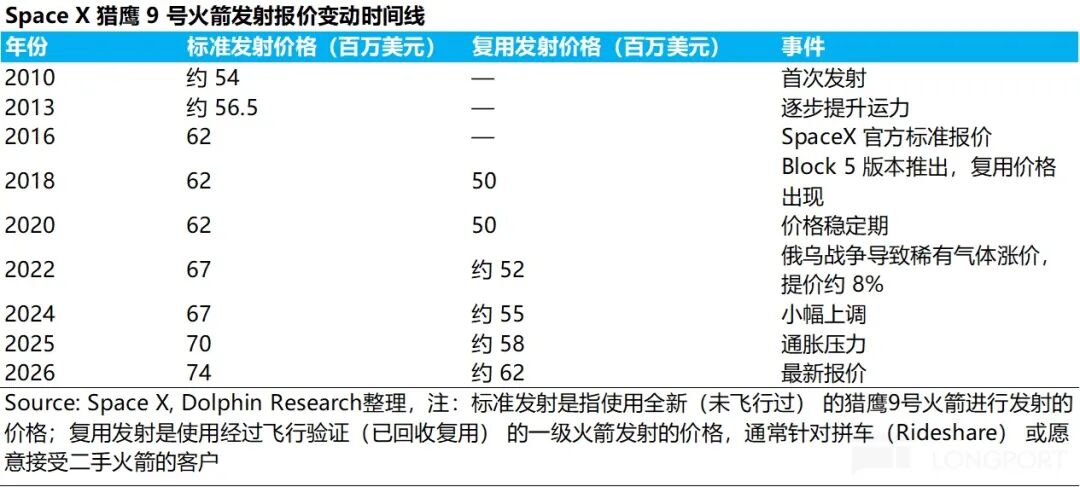
In terms of unit launch revenue, it is estimated to have increased from $54 million per launch in the same period last year to $65 million per launch (estimated value), with unit prices rising instead of falling, mainly due to an optimized customer mix (increased proportion of large clients).
This reflects SpaceX's ability to leverage its monopoly to generate high profits, with a lack of low-cost and mature alternative suppliers in the market (currently, Falcon delivers about 2,500 tons to orbit annually, while the rest of the world combined delivers about 300 tons, with SpaceX accounting for 80%–90% of the global annual mass to orbit).
Launch and R&D services: Revenue from launch and R&D services comes from government R&D projects with NASA (HLS Crewed Lunar Lander) and the U.S. military. These highly customized projects are recognized using the "milestone/completion progress method," with revenue dependent on government budget allocations and SpaceX's progress in achieving key technical milestones (such as passing preliminary design reviews, completing engine ground tests, and achieving specific orbital tests).
Crewed and lunar landing missions are expected to reach the required safety levels for crewed missions by late 2027, following highly reliable Starship satellite launches. Therefore, the Artemis III mission is scheduled for 2027, docking with the Orion spacecraft; this will be followed by an uncrewed direct lunar cargo mission, with the goal of achieving a lunar landing in 2028, when significant launch and R&D service revenue will be recognized.
Profitability: From the profit perspective of the rocket business, the gross margin also improved by approximately 11 percentage points sequentially to about 66% this quarter. Despite the direct inclusion of Starship test flight costs (including rocket hardware losses) in the current period's launch business costs, which would drag down gross margins, the rocket launch business's gross margin still improved against the trend, mainly due to increased unit launch prices and systemic cost reductions from rocket reuse (primarily Falcon 9), which lowered marginal costs as reuse frequency increased.
However, with accelerated Starship R&D, launch service R&D expenses increased by 55% YoY to $1.1 billion, resulting in a 7-percentage-point YoY decline in the operating margin to -56%, still higher than market expectations of -86.4%.
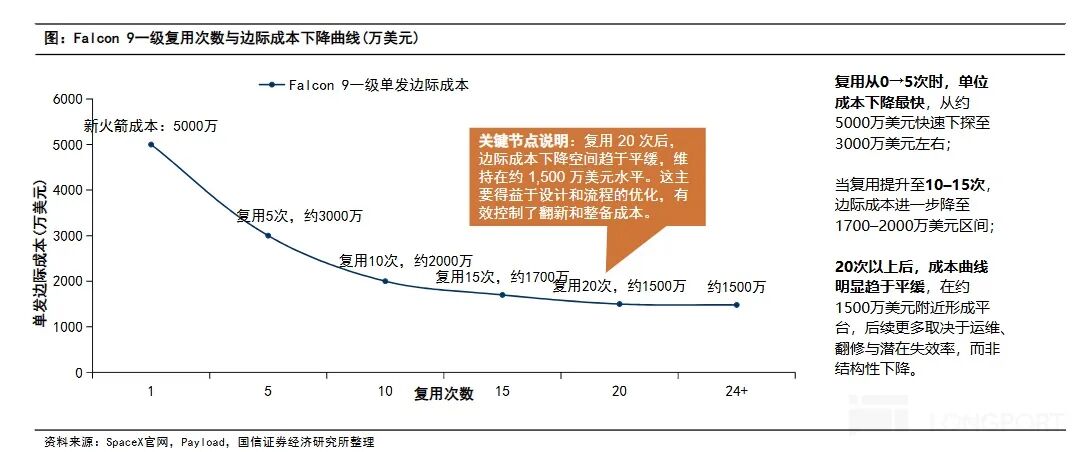
b. Starlink business: Revenue exceeded expectations mainly due to B2B/G growth, with user growth largely meeting expectations
Revenue: Starlink's Q2 revenue was $4.29 billion, up 66% YoY, slightly exceeding market expectations of $3.88 billion, mainly due to a doubling of B2B/G revenue to $1.8 billion, while Consumer business revenue continued to grow steadily, up 44% YoY to $2.5 billion.
B2B/G business: SpaceX has reached in-flight WiFi agreements with multiple airlines and put them into use, while the Starshield business has secured over $6 billion in multi-year contracts from the U.S. government.
B2C business: Starlink's user base has grown to 12 million, doubling YoY and adding approximately 1.7 million net new users sequentially, largely meeting expectations. The company maintained stable unit prices sequentially (ARPU $66/month) during user base expansion this quarter, although still down 22.4% YoY.
In mobile communications, SpaceX has secured the right to use 65 MHz of spectrum within the U.S. (originally EchoStar's 2GHz band) and several global mobile satellite service spectrum licenses. Although still in its early stages, SpaceX has directly challenged traditional telecom operators—planning to begin launching V2 mobile satellites using EchoStar's 65MHz spectrum next year and building a ground network to capture market share from AT&T, Verizon, and T-Mobile.
As of the end of Q2 2026, there were 10,200 in-orbit communication and direct-to-cell satellites (9,600 in Q1 2026), including 9,600 communication satellites providing 800TB/s downstream rates and 600 mobile satellites.
Profitability: Starlink's overall profitability remained stable, with a Q2 gross margin of 52%, up 2.7 percentage points sequentially, also driving a 2.1-percentage-point sequential increase in the operating margin, mainly because the business operates like a SaaS model, with high upfront fixed investments (rocket launch costs + satellite manufacturing costs) but extremely low marginal costs later, with user growth continuing to drive margin improvement.
c. AI business: Revenue exceeded expectations, with significant margin improvement
Revenue: AI business revenue in Q2 was $2.56 billion, higher than market expectations of $2.08 billion, mainly due to a 6x YoY increase in AI solutions and infrastructure revenue to $2.2 billion (including cloud service agreements with Anthropic and others contributing approximately $1.6 billion in incremental AI infrastructure revenue this quarter), with revenue from the Grok large model estimated at $600 million in Q2, up 26% sequentially from $470 million in Q1.
Revenue from X platform advertising was $367 million in Q2, up 7% sequentially from $343 million in Q1, mainly due to a comprehensive overhaul of the underlying AI advertising infrastructure in Q1 2026 to completely reverse technical disadvantages, focusing on deploying: fully automated ad placement systems, AI probabilistic attribution tracking, Grok-driven real-time brand safety controls, and deep integration of advertising and recommendation algorithms.
After the overhaul, ad revenue rebounded but remained down 14% YoY, so whether this overhaul can truly recapture lost advertiser budgets remains to be seen.
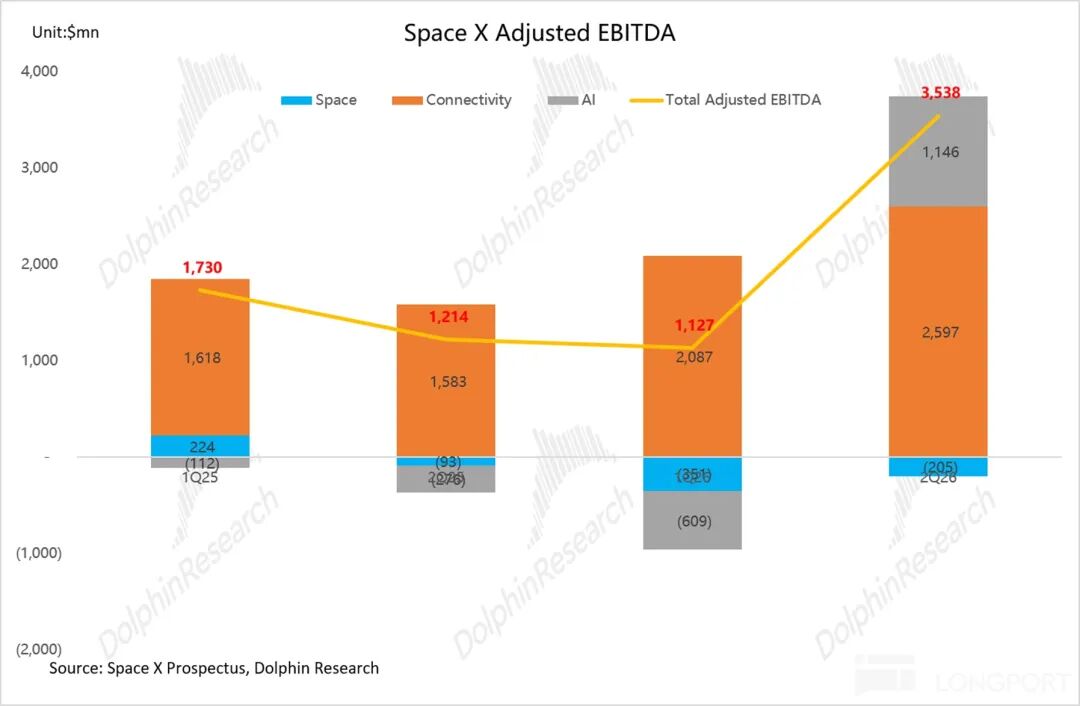
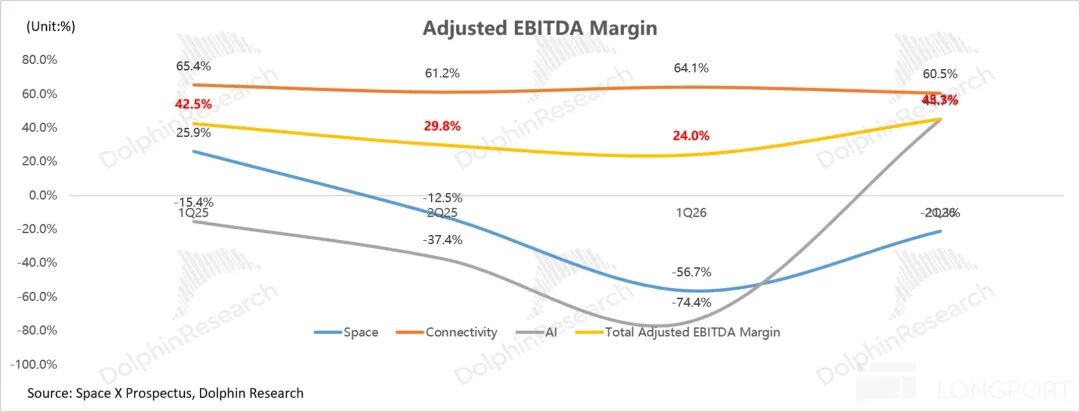
Profitability: AI business profitability improved significantly. The gross margin was approximately 57%, up 12.5 percentage points sequentially (Q1: 44.3%); the operating margin was approximately -49%, significantly higher than market expectations of -115%; the Adjusted EBITDA Margin was approximately 45%, representing a significant sequential turnaround from losses (Q2 marked the first positive AI Adjusted EBITDA of $1.146 billion).
Margin improvement was mainly driven by the highly undersupplied computing power market, with SpaceX benefiting from computing power leasing premiums (estimated at $30-50 billion per GW, far exceeding the $10-15 billion per GW for peers).
However, it should be noted that AI leasing agreements include clauses allowing termination by either party with 90 days' notice—meaning that despite strong current revenue, income visibility inherently carries uncertainty.

Dolphin Research's Overall View:
Overall, Dolphin Research believes that, based on the financial report alone, SpaceX performed well—revenue and profit both exceeded expectations, with operating losses narrowing substantially, already on the brink of breaking even. However, the stock price has fallen nearly 50% from its peak and about 20% below its IPO price, continuing to weaken after hours, mainly due to the following reasons:
a. Excessive capital expenditures, with new AI order volumes insufficient to fully match the explosive growth in Capex
During this earnings season, Dolphin Research observed a notable phenomenon—when cloud service providers announce higher-than-expected capital expenditures but cannot match revenue or order growth in their cloud businesses, the market begins to question the ROI of capital expenditures, especially when free cash flow is deeply negative (e.g., Meta).
Although SpaceX has triple attributes of aerospace + Starlink + AI, in the short term, AI has become the second-largest revenue source (Q2: ~$2.56 billion, second only to Starlink's $4.29 billion), with about 86% of capital expenditures directed toward the AI business (Q2: ~$15.8 billion in a single quarter), and AI revenue is expected to surpass Starlink for the first time in 2026 to become the largest revenue source.
Meanwhile, SpaceX continues to accelerate computing power expansion: nominal computing power reached 1.4 GW in Q2 2026, up from 1 GW in Q1 and 400 MW YoY, with expectations to exceed 2 GW by year-end; cumulative online computing power will multiply by year-end 2027—according to management, the scale is closer to 10 GW than 5 GW.
On the capital expenditures side, Q2 2026 single-quarter Capex reached $18.4 billion, with management expecting similar capital expenditures in the next two quarters, implying total capital expenditures of about $65.2 billion in 2026, significantly higher than previous market expectations of $45.5 billion.
For next year's capital expenditures, current market expectations are around $89.7 billion, but under full-scale deployment scenarios, the 10GW computing power target by the end of 2027 (assuming ~$30-35 billion per GW, referencing Q1 2026's $15.8 billion capital expenditures for 400MW, or ~$39.5 billion/GW) would imply total capital expenditures of $240-280 billion in 2027—far exceeding current market expectations.
Although SpaceX's computing power leasing business commands significant premiums due to the current computing power shortage and flexible agreements allowing 90 days' notice for cancellation (with per-MW prices around $31-50 million, 3-5x peers), and management expects an investment payback period of just about one year, the market still needs to see order volumes matching the high capital expenditures.
This earnings report announced only about $6.7 billion in new cloud service agreements, not that there were no new orders. The issue is that with such large-scale Capex investments, the volume of new orders is marginally incremental compared to previously announced large deals—Anthropic ($45 billion/3 years) and Google (~$30.36 billion/33 months). The market is concerned that Capex investments may be outpacing verifiable order returns, especially given that SpaceX's computing power leasing orders carry cancellable clauses.

b. Although operating cash flow has turned positive, free cash flow remains deeply negative amid soaring Capex
Operating cash flow turned positive this quarter, reaching approximately $2.4 billion. However, Capex remained as high as approximately $18.4 billion (primarily for AI infrastructure Capex), resulting in a free cash flow of -$16 billion, further deteriorating by nearly $7 billion sequentially.
The company recently raised approximately $75 billion through equity financing and subsequently issued $25 billion in bonds, bringing its current cash and equivalents to around $100 billion. However, given such massive capital expenditures and low order visibility, SpaceX may need to initiate another round of significant financing by the end of this year or next year.
The market is beginning to worry whether its financing needs are a "bottomless pit"—whether the AI order volumes and revenues obtained at enormous costs can justify such high-intensity capital investments.
c. Large-scale lock-up expirations pose direct technical selling pressure
In addition to concerns over Capex ROI, more immediate pressure comes from the expiration of the first batch of 930 million shares (worth approximately $100 billion) starting August 6, as a substantial amount of pre-IPO investor and employee holdings will become tradable in batches. This large-scale lock-up release will exert direct pressure on the stock price.
Subsequently, approximately 300 million additional shares will be unlocked every 15 to 20 days, with another approximately 1.3 billion shares set to be released simultaneously with the Q3 earnings report. By January 2027, nearly 4 billion shares will be unlocked in eight batches.
As a result, in the short term, the substantial Capex commitments announced post-earnings and the impending large-scale lock-up expirations have directly pressured SpaceX's stock price, with most investors currently maintaining a bearish short-term outlook.
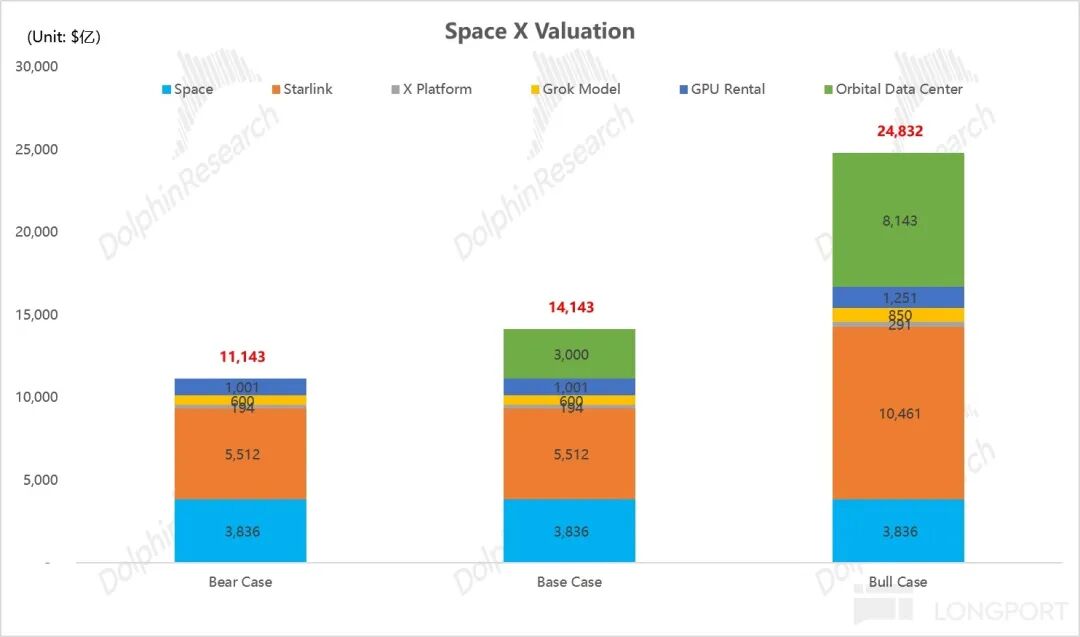
However, SpaceX's logic is highly similar to that of Tesla—it relies heavily on "event catalysts" rather than "performance delivery" in the short term. The fundamental reason is that long-term businesses (especially space data centers) account for the majority of its current market value, yet these businesses contribute virtually no profits at present.
The further into the future, the lower the confidence level in key assumptions (e.g., whether Starship can truly reduce launch costs to below $200/kg—highly probable but still uncertain; where the ceiling for Starlink's global user penetration lies, and whether space computing power truly necessitates large-scale deployment and commercial viability—more controversial), making it impossible to form a market consensus expectation.
Therefore, the market is effectively pricing based on "probability-weighted" scenarios: investors continuously adjust their subjective probabilities of whether the "long-term vision" can be achieved based on current event progress, with differing judgments among investors aggregating to form the market price.
Each event catalyst effectively shortens the option's time to expiration or increases the probability of exercise, thereby boosting option value (stock price). Conversely, when catalysts are absent and sentiment cools, the market reassesses the "option's" implied volatility, downgrading it and causing the stock price to retreat.
Thus, after the large-scale lock-up period, the market awaits the next round of key catalysts to reopen upward momentum, with the stock's direction highly dependent on whether several critical milestones are successfully achieved: full Starship reusability (planned for Flights 14/15 in September-October to achieve orbital flight and upper-stage capture), first mass deployment of V3 satellites, whether Grok 5.0's launch before year-end exceeds expectations (6 trillion parameter model), and whether AI computing power leasing orders continue to be signed (against a backdrop of computing power doubling to 2GW by year-end).
Specifically:
a. Launch business: First, it must be clarified that significant Starship cost reductions are the fundamental prerequisite for large-scale V3 satellite networking and space data center deployment.
From Starship's progress, it completed IFT-13 (the 13th integrated flight test) in July, deploying the first batch of V3 satellites, validating the Raptor engine's secondary ignition capability in space, and obtaining critical data on the thermal protection system's integrity. Although the booster hard-landed and was destroyed due to secondary ignition failures in some engines, as the second landing attempt for the V3 booster, this represents controllable technical iteration.
Starship's 14th flight test is expected to send V3 Starlink satellites into operational orbits, with the possibility of achieving the first "chopstick arm" capture of the spacecraft's second stage. Management also confirmed that even if the 14th flight fails to achieve this, completing simultaneous first- and second-stage captures by year-end remains a firm goal.
Additionally, management stated that the Starship heat shield issue has been resolved and believes that once validated, no other technical barriers to full rapid reusability will exist.
In terms of timeline, the 14th test flight is expected in late August to early September (end of Q3), with the 15th potentially as early as late September to October (Q4 2026).
If full reusability is achieved—with both booster and spacecraft recovered and ready for reflight—it will significantly boost the market's subjective probability of SpaceX's long-term success, proving that launch costs can be reduced to $200/kg.
b. Starlink business: High uncertainty in DTC business; short-term focus on large-scale V3 satellite deployment milestones
Mobile broadband business: SpaceX believes that translating V3 broadband improvements into Starlink service enhancements requires V3 satellites to reach a critical mass of at least 1,000 units, likely by Q2 2027.
V3 broadband satellite deployment plan: The 12th flight (V3 Starship's maiden voyage) successfully completed suborbital deployment verification of the first 20 simulated V3 satellites, validating the next-generation Starlink satellite deployment process. The first orbital-scale batch launch is expected in H2 2026, but large-scale, high-frequency deployments will only become economically viable after Starship demonstrates and achieves full reusability (expected after Flight 15).
Key V3 satellite parameters: Starship can launch approximately 60 V3 broadband satellites per mission. Each V3 satellite offers a downlink capacity of up to 1 Tbps, over 10 times that of the current mainstay V2 Mini satellites (96 Gbps).
Large-scale V3 satellite networking is the prerequisite for Starlink to achieve a fundamental supply-side leap, transforming from a broadband provider serving remote areas into a global platform connecting hundreds of millions of users (including new scenarios like direct-to-phone and enterprise dedicated lines).
DTC direct-to-phone business: Beyond user count and ARPU trends, management's latest statements on U.S. terrestrial mobile network roadmaps—whether to build independently, partner via MVNO, or acquire—are closely watched.
For the DTC business, the next-generation V2 Mobile satellites are planned for batch launches via Starship starting in 2027, with per-satellite capacity increasing approximately 10-16 times over V1 Mobile, beam count rising from 256 to over 1,024, supporting 5G-level performance, with services beginning by late 2027.
From a positioning perspective, SpaceX has expressed ambitions to become a potential fourth major competitor in the U.S. mobile market. Since satellites face strong competition from terrestrial networks in dense urban areas (due to satellite spectrum non-reuse, urban speeds are slower than suburban ones), it needs to establish ground stations to complete coverage.
Regarding market concerns over massive ground station Capex (potentially reaching hundreds of billions of dollars long-term, including spectrum investments), SpaceX proposes using small cells and femtocells to provide mobile band connectivity (i.e., adding mobile base station functionality to Starlink broadband antennas located on rooftops of houses and businesses), aiming to offer superior bandwidth to existing operators.
However, without a nationwide MVNO partnership—with all three major U.S. carriers currently explicitly unwilling to wholesale mobile services to SpaceX—and given uncertainty around ground station rollouts, large-scale DTC expansion remains challenging. Thus, the short-term focus remains on large-scale V3 satellite deployment milestones.
c. AI business: Aggressive ARR targets still require new orders in computing power leasing
"What is the essence of the AI business, and what valuation multiple should it command?" will likely be the core question influencing stock price trends over the next year. Compared to aerospace and connectivity businesses, the AI business has high capital expenditure demands, while the profitability and success probability of space-based AI computing centers remain highly uncertain.
Management stated that SpaceX aims to reach $100 billion in AI-related annual recurring revenue (ARR) by year-end and has brought forward its trillion-dollar revenue target to 2030. Dolphin Research believes AI will remain the primary contributor to this goal.
Regarding the breakdown of the $100 billion ARR target (monthly revenue of $8.3 billion, achieved one year ahead of schedule), management has not provided a clear split. Dolphin Research makes a relatively optimistic assumption here (absent new large computing power leasing orders) that AI will contribute approximately $50 billion in ARR, while Starlink + rocket launch businesses are estimated to contribute $26-30 billion in ARR by year-end. This implies that the computing power leasing business still needs new orders to meet this aggressive ARR target.
① Computing power leasing: To date, SpaceX has approximately $88.4 billion in computing power leasing backlog (including Q3 additions, per public contracts), corresponding to roughly $30 billion in ARR (monthly revenue of approximately $2.5 billion).
② Cursor—a supercharged catalyst for AI monetization:
In April 2026, SpaceX reached a partnership agreement with AI programming platform Cursor, obtaining an option to acquire Cursor for $60 billion (or pay a $10 billion collaboration fee if not exercising), and formally exercised the acquisition right in June (via share swap), with closing expected in Q3 2026.
Cursor's performance has far exceeded expectations: its SaaS ARR doubled from $2 billion in February 2026 to $4 billion in June (up from just $500 million in June 2025 and approximately $1 billion by year-end 2025), corresponding to a monthly CAGR of approximately 19%. Under optimistic assumptions, we project Cursor to reach approximately $11.4 billion in ARR by year-end (monthly revenue of $950 million) at a 19% monthly growth rate.
③ Grok models: Elon Musk recently stated that Grok 4.6 (approximately 2 trillion parameters, per market rumors) will launch on August 7, with Grok 4.7 following weeks later; Grok 5 is expected by Q3-end or Q4, a roughly 6 trillion parameter MoE model aiming to compete with frontier models from OpenAI, Anthropic, etc. All new versions will likely be trained using Cursor's proprietary code data, similar to Grok 4.5.
Currently, revenue from Grok large models is estimated at $600 million in Q2, up 26% sequentially from $470 million in Q1 (per Dolphin Research estimates), representing relatively slow growth. We assume the Grok model can grow at a 10% monthly rate to reach approximately $5-6.4 billion in ARR by year-end.
④ Advertising business: Expected to contribute approximately $2 billion in ARR.
Thus, Dolphin Research believes that in the short term, SpaceX's stock price will continue to face pressure from questions over capital expenditure ROI and technical selling pressure due to lock-up expirations, with a high probability of remaining under pressure.
Successful Starship test flights (achieving full reusability, most critical), batch launches and large-scale deployments of broadband V3 satellites, Exceeding expectations performance of Grok 5 or Cursor's ARR, and any new AI computing power leasing orders could serve as positive catalysts for SpaceX.
- END -
// Reposting with Permission
This article is an original work by Dolphin Research. Reposting requires authorization.
// Disclaimer and General Disclosure Notice
This report is intended solely for general comprehensive data purposes, designed for general reading and data reference by users of Dolphin Research and its affiliated institutions. It does not take into account the specific investment objectives, investment product preferences, risk tolerance, financial situation, or special needs of any individual receiving this report. Investors must consult with independent professional advisors before making investment decisions based on this report. Any person making investment decisions using or referring to the content or information mentioned in this report does so at their own risk. Dolphin Research shall not be liable for any direct or indirect responsibility or loss that may arise from the use of the data contained in this report. The information and data contained in this report are based on publicly available sources and are for reference purposes only. Dolphin Research strives to ensure, but does not guarantee, the reliability, accuracy, and completeness of the relevant information and data.
The information mentioned or the views expressed in this report shall not, under any jurisdiction, be considered or construed as an offer to sell securities or an invitation to buy or sell securities, nor shall it constitute advice, solicitation, or recommendation regarding relevant securities or related financial instruments. The information, tools, and materials contained in this report are not intended for distribution to, or use by, any person or resident in any jurisdiction where such distribution, publication, provision, or use would conflict with applicable laws or regulations or would subject Dolphin Research and/or its subsidiaries or affiliated companies to any registration or licensing requirements in that jurisdiction.
This report merely reflects the personal views, insights, and analytical methods of the relevant creators and does not represent the stance of Dolphin Research and/or its affiliated institutions.
This report is produced by Dolphin Research, and the copyright is solely owned by Dolphin Research. Without the prior written consent of Dolphin Research, no institution or individual may (i) make, copy, reproduce, duplicate, forward, or create any form of copies or reproductions in any manner, and/or (ii) directly or indirectly redistribute or transfer to any other unauthorized person. Dolphin Research reserves all relevant rights.
-
![]()
Tencent Secures a Crucial Victory in AI Office Arena, While Baidu Continues to Struggle
-
![]()
DeepSeek Raises Prices, Alibaba Takes a Cut: Will Major Clients Stay or Leave?
-
![]()
After Persistent Declines, Is This Joint Venture Automaker Considering an Exit? Here’s the Official Word
-
![]()
DeepSeek Raises Prices, Alibaba Takes a Cut: Will Big Clients Pay Up or Walk Away?
-
![]()
SAIC-GM Shows Confidence in Joint Venture Model: What Lies Ahead?
-
![]()
Early Riser, Late Arrival: Where Is Toyota Stumbling in Its Electrification Journey?
-
![]()
Deep Integration and Rooted Expansion: China’s Auto Industry Systematically Expands into Western Markets
-
![]()
Emitting an Unyielding Message: The Injured Chery Seeks the Truth