Deep Integration and Rooted Expansion: China’s Auto Industry Systematically Expands into Western Markets
 08/10 2026
 521
521
From establishing factories in Europe to leveraging mature production lines, and from capital-intensive deep integration (where "take root" signifies a commitment to long-term presence) to asset-light strategies, Chinese automakers are redefining their overseas expansion strategies. This shift is not merely about increasing sales volumes but about whether the industrial system can genuinely integrate into the global market.
Nissan’s Sunderland Plant, Line 1, once epitomized Britain’s automotive industry at its peak. Now, after consolidating its own model production, the line faces underutilized capacity. Chery Automobile aims to utilize this facility to launch its localized manufacturing operations in the UK, with mass production anticipated by FY2027. Meanwhile, in Galicia, Spain, SAIC’s MG brand has finalized plans for Europe’s first full vehicle factory, investing €200 million, with production set to commence in 2028.
These two developments represent divergent paths but converge on an accelerating trend: China’s automotive exports are transitioning from "market entry" to "market integration." When production, R&D, and supply chains are localized, exporting means more than just selling cars—it means establishing an industrial presence. This isn’t merely about shipping Chinese-made vehicles overseas; it’s about producing locally, designing for local needs, adapting to local cultures, and even redefining brand narratives using local industrial resources. The transformation from trade-focused exports to global capabilities in capital, technology, and product definition is deeper and faster than many anticipated.
Searching for China’s Auto Industry ‘Yaris Moment’
When Toyota launched the Yaris in Europe in 1999, it didn’t simply replicate a Japanese bestseller. Systematic adjustments were made for European consumers—from body dimensions and storage design to suspension tuning and steering feel. This comprehensive localization mindset helped Toyota truly penetrate the European mass market. Over two decades later, Chinese automakers are striving for their own "Yaris moment."
Reuters investigations reveal that after initially exporting Chinese-designed models with minor adjustments, brands like BYD, Chery, Changan, and FAW Hongqi are increasingly developing models specifically for overseas markets from the product definition stage. The drivers are clear: intensifying domestic competition squeezes profit margins, while overseas markets offer higher price bands and profits—but only if companies truly understand local consumers.
Demand variations across markets are far greater than imagined. European consumers favor compact, agile hatchbacks suited to urban roads and parking, with high expectations for passive safety, NVH performance, and interior quality. Australia’s vast geography and resource industries sustain long-term demand for pickups requiring stronger off-road capability and cargo capacity. In Mexico and Latin America, family structures, fuel prices, and financial credit environments create entirely different consumption logics.
This necessitates reconfiguring R&D resource allocation. The old approach centralized global R&D to export products overseas. Now, Chinese automakers are establishing design centers in Europe, hiring local engineers and product experts, and setting up regional product committees in Australia, Southeast Asia, and elsewhere to incorporate local market voices during product conceptualization. Toyota took decades to perfect this system; Chinese automakers aim to replicate it in a fraction of the time under intense competitive pressure, potentially accelerating transformation beyond traditional automotive industry timelines.
As Reuters noted: "If Chinese brands truly understand and meet local consumer needs, their growth potential will manifest not just in sales volumes but in pricing power."
More importantly, this reflects deeper brand logic. Currently, Chinese brands in many overseas markets rely on "high configuration + high cost-performance" strategies. But price advantages alone don’t build long-term barriers. True localization means consumers pay premiums for the brand itself. This is the Yaris’s key lesson: consumers pay more not because products are cheaper, but because they better understand their needs. Only when Chinese cars truly integrate with local road conditions, driving cultures, and family scenarios can brands shed pure price tags and foster genuine emotional connections.
Nest-Building vs. Ship-Borrowing: Two Localized Manufacturing Logics
Localizing thinking is strategic; localizing manufacturing is operational.
Facing complex geopolitics and trade barriers, Chinese automakers are pursuing two distinct yet representative paths: SAIC MG’s capital-intensive route of building Europe’s first full vehicle factory in Spain, and Chery’s asset-light approach leveraging Nissan’s Sunderland plant in the UK. Both models—one heavy, one light—reflect China’s auto exports entering a new phase.
MG chose the capital-intensive path. On June 1, Galicia’s economic bureau confirmed MG (a SAIC subsidiary) selected the region for Europe’s first full vehicle factory and logistics hub, designated a "Strategic Interest Project (PIE)" by local authorities. The €200 million initial investment targets 120,000 annual capacity for EVs and smart connected vehicles, with construction starting in 2027 and production in 2028, creating over 2,000 local jobs.
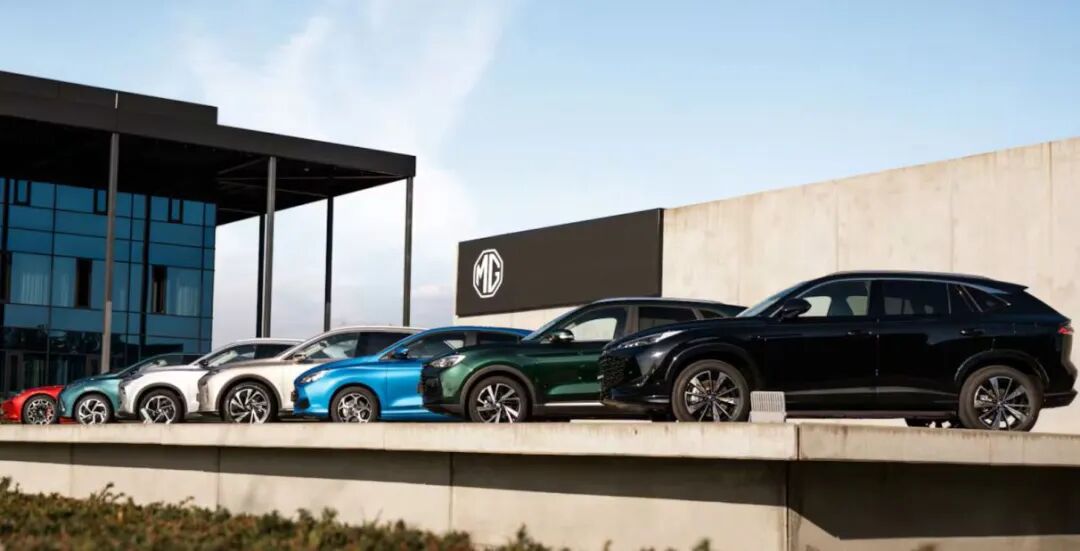
Superficially, this is a vehicle factory; industrially, it’s SAIC’s systemic play in Europe. Galicia outcompeted alternatives like Hungary not through subsidies alone but via mature automotive infrastructure, Atlantic port logistics, and transport networks linking major European markets. Future vehicles will enter Europe faster, with key components sourced locally, embedding MG’s supply chain, logistics, and manufacturing into Europe’s industrial fabric. The strategic goal is clear: "In Europe, For Europe." Compared to export dependency, this shortens supply chain response times and mitigates trade friction and tariff uncertainties. As part of local industrial ecosystems, companies gain longer-term value through industrial recognition and policy space beyond tariff benefits.
Chery took a more flexible path. On June 3, Nissan and Chery UK signed a non-binding MoU to explore contract manufacturing at Sunderland. If finalized, Chery could assemble passenger vehicles for UK/European markets using Line 1 by FY2027.
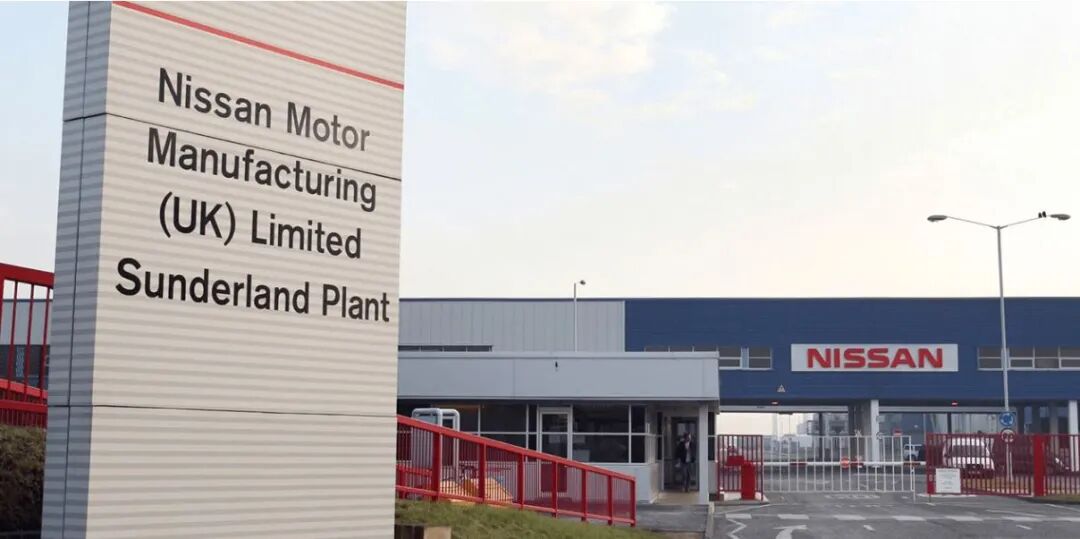
For Chery, this is a "ship-borrowing" localization strategy. Avoiding new factory construction, heavy fixed asset investments, and lengthy approval processes, it leverages one of Britain’s most mature automotive bases for local production. As one of the UK’s fastest-growing auto groups, Chery reduces delivery times, cuts cross-border transport costs, and mitigates future European trade policy risks through "Made in Britain" market perception.
Crucially, this deal addresses Nissan’s needs. Sunderland’s 600,000 annual capacity operated at just 45% (273,000 units) in 2025. After consolidating Qashqai and Leaf production to Line 2 in May, Line 1 idled, straining fixed cost allocation and threatening ~6,000 UK jobs. Chery’s contract manufacturing fills this capacity gap. Nissan retains 100% factory ownership and employs all assembly workers, but economically, Chery resolves Nissan’s critical capacity utilization problem.
As Birmingham Business School’s David Bailey observed: "Twenty years ago, Chinese cars struggled to enter Europe; now they’re entering Britain’s largest auto factory. This isn’t Nissan helping Chery—it’s Chery helping Nissan restart its plant."
Both paths share underlying logic. Tariff barriers may persist, but reliance on them diminishes. Geopolitical policies like Europe’s anti-subsidy tariffs on Chinese EVs compel companies like SAIC and Chery to accelerate "heavy- and light-asset localization." Compared to exports, localized production offers enduring advantages in logistics efficiency, industrial synergy, and political/social acceptance. MG roots deeply; Chery leverages existing systems—different paths, same direction.
Structural Reset in Emerging Markets
While Europe dominates China’s auto export narrative, South Africa serves as a revealing mirror for observing how Chinese brands reshape market competition.
The numbers speak clearly. By 2025, Chinese brands’ South African passenger car market share grew from 11.2% to 16.8%, with competing brands increasing from 8 to 15. Automakers like BYD, Chery, and Great Wall entered with technology-rich, competitively priced SUV lineups backed by unprecedented long-term warranty commitments.
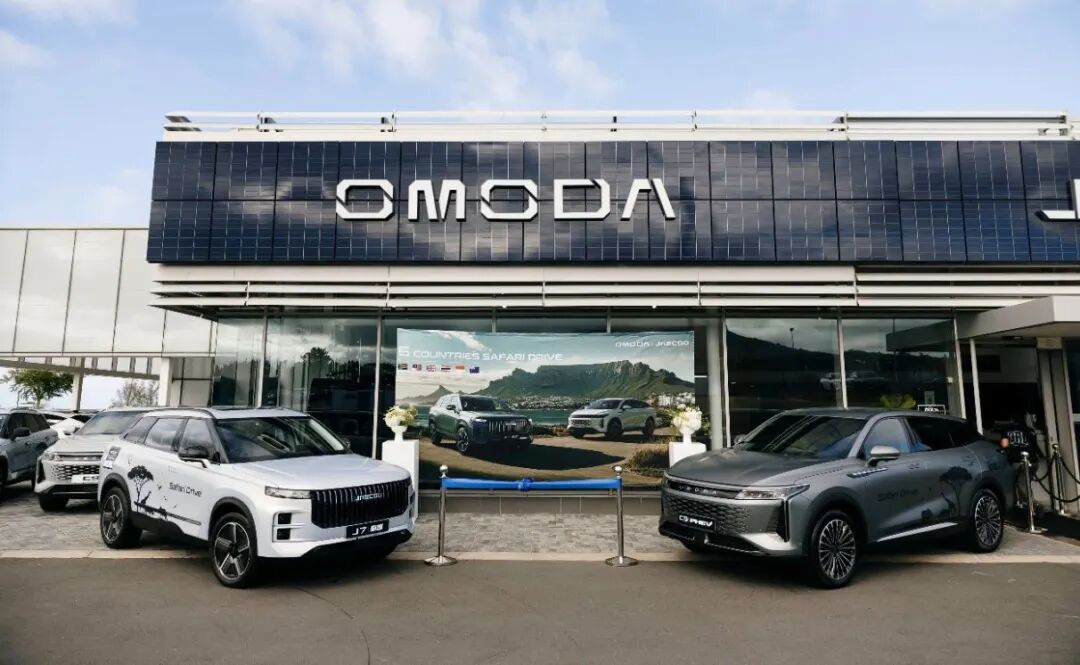
The National Association of Automobile Manufacturers of South Africa (naamsa) bluntly described this as Chinese brands’ "meteoric rise" in its 2025 annual report. More notably, it labeled the phenomenon a "structural reset" rather than a short-term surge.
Naamsa noted South African consumers are undergoing value reorientation. For decades, automotive consumption reflected brand prestige and emotional loyalty—buying a Toyota because one’s parents did, or a BMW for social status. But under mounting affordability pressures and tightening household budgets, brand loyalty yields to cost-benefit calculations: Chinese cars offering more technology and longer warranties at similar prices become harder to ignore.
For traditional auto giants, this shifts competitive logic. Toyota maintains market leadership but faces reevaluation of its brand advantages. When consumer decisions increasingly prioritize cost and value, traditional brand moats face repricing. Moreover, Chinese automakers are no longer mere price competitors. Smart driving assistance, OTA updates, large smart cockpits, and high-energy-density batteries now feature in entry-level Chinese models—functions still premium in many traditional brands.
Similar shifts are occurring in Southeast Asia, the Middle East, and Latin America. In Thailand, Chinese EV brands dominate new EV sales; in Israel, BYD’s penetration surprises European automakers; in Brazil, Chery’s brands have evolved from unknowns to local favorites. Unlike Europe’s tariff and regulatory barriers requiring long-term localization, emerging markets offer lower entry barriers, higher consumer brand openness, and weaker industrial nationalism. For Chinese automakers, these markets serve as training grounds to validate new model adaptability and hone overseas channel management while providing scale to fund product iteration and R&D.
Not Just Selling, But ‘Growing In’
Recalling 2006, when Chinese auto brands debuted en masse at the Frankfurt Motor Show, they sparked curiosity and skepticism over shoddy workmanship, derivative designs, and poor safety ratings. European pundits predicted it would take 20-30 years for Chinese cars to enter Europe.
Today, that timeline remains incomplete, but the landscape has transformed.
Chinese auto exports now transcend shipping vehicles from Chinese factories to overseas ports for dealer distribution. This is multidimensional global capital expansion: building full vehicle factories in Europe to turn industrial presence into political leverage; leveraging Nissan’s UK lines for asset-light local manufacturing identity; dismantling century-old brand prestige in South Africa through price-technology combinations; and internally driving product definition transformation by embedding overseas consumers’ real-life scenarios into R&D origins.
These dimensions converge on one outcome: China’s auto industry is shifting from "manufacturing export" to "system export." The old logic: China as the world’s factory, selling Chinese products globally. The new logic: Chinese capital, technology routes, and product definition philosophies take root globally, producing locally, tailoring to local needs, selling through locally accepted methods—but with Chinese-dominated technology genes, supply chain relations, and profit repatriation paths.
This evolution from "product export" to "global systemic integration" mirrors the arduous century-long journeys of Japanese automakers’ "nest-building" globalization in the West and Hyundai’s systemic rise. However, during this electric and intelligent technological paradigm shift, Chinese automakers can compress this learning curve at unprecedented speed: EVs lower entry barriers, software-defined vehicles eliminate historical burdens, and this generation of Chinese engineers received truly global engineering education.
Of course, risks and challenges have not dissipated. The ongoing geopolitical uncertainties mean that any heavy-asset investment faces policy risks; the emotional identification of European consumers with Chinese brands still requires time to accumulate; localized operations place extremely high demands on the cross-cultural capabilities of management, which happens to be a common weakness among current Chinese automakers. More importantly, competitive pressure will not only come from European and American rivals; Chinese brands are also competing with each other in the global market, and the intensity of internal friction may not be lower than external competition.
But one thing is certain: the narrative of Chinese automakers going global has quietly upgraded from "cost-effectiveness" to "industrial ecosystem." This transformation deserves serious attention from Chinese automakers, traditional powerhouses, and every observer contemplating the future of the global automotive industry.

Image: Sourced from the Internet
Article: Auto Review
Layout: Auto Review
-
![]()
Tencent Secures a Crucial Victory in AI Office Arena, While Baidu Continues to Struggle
-
![]()
DeepSeek Raises Prices, Alibaba Takes a Cut: Will Major Clients Stay or Leave?
-
![]()
After Persistent Declines, Is This Joint Venture Automaker Considering an Exit? Here’s the Official Word
-
![]()
DeepSeek Raises Prices, Alibaba Takes a Cut: Will Big Clients Pay Up or Walk Away?
-
![]()
SAIC-GM Shows Confidence in Joint Venture Model: What Lies Ahead?
-
![]()
Early Riser, Late Arrival: Where Is Toyota Stumbling in Its Electrification Journey?
-
![]()
Deep Integration and Rooted Expansion: China’s Auto Industry Systematically Expands into Western Markets
-
![]()
Emitting an Unyielding Message: The Injured Chery Seeks the Truth