AI Assistant Shatters the Mobile Ecosystem's Window Paper
 12/12 2025
 799
799
Editor's Note:
The AI assistant incident involving ByteDance and Nubia marks ByteDance's bold entry into the mobile AI sector through ecosystem collaboration. This move not only demonstrates cutting-edge exploration in AI-hardware integration but also highlights numerous technological implementation challenges. Its primary significance lies in prompting the industry to reconsider native AI entry points, though it's unlikely to disrupt the current landscape in the short term.
In December 2025, an engineering prototype priced at 3,499 yuan stirred up the tech world—the Nubia M153, featuring ByteDance's Doubao AI Assistant, saw its initial batch of 30,000 units sell out, with prices on second-hand platforms surging by up to 3,500 yuan. This seemingly routine hardware launch actually tore open a sensitive rift in the mobile industry's ecosystem: when AI assistants transcend app boundaries, directly seize system permissions, simulate human operations, and even bypass native APP interaction logic, are the traditional rules of the mobile internet crumbling?

WeChat Account Bans, Bank Pop-Ups, and Industry Alarms
On December 3, the first batch of users who received the Doubao smartphone encountered surreal situations: some attempted to use the AI assistant to auto-reply to WeChat messages, only to have their accounts forcibly logged out with a "login environment abnormal" warning; others operating the Agricultural Bank of China APP encountered mandatory pop-ups demanding the AI assistant be turned off; even more users found that when Doubao compared prices and placed orders on Taobao, the payment process was intercepted by the system. This "technology preview" quickly escalated into an industry-wide event, with super apps like WeChat, Agricultural Bank of China, and China Construction Bank collectively raising red flags.
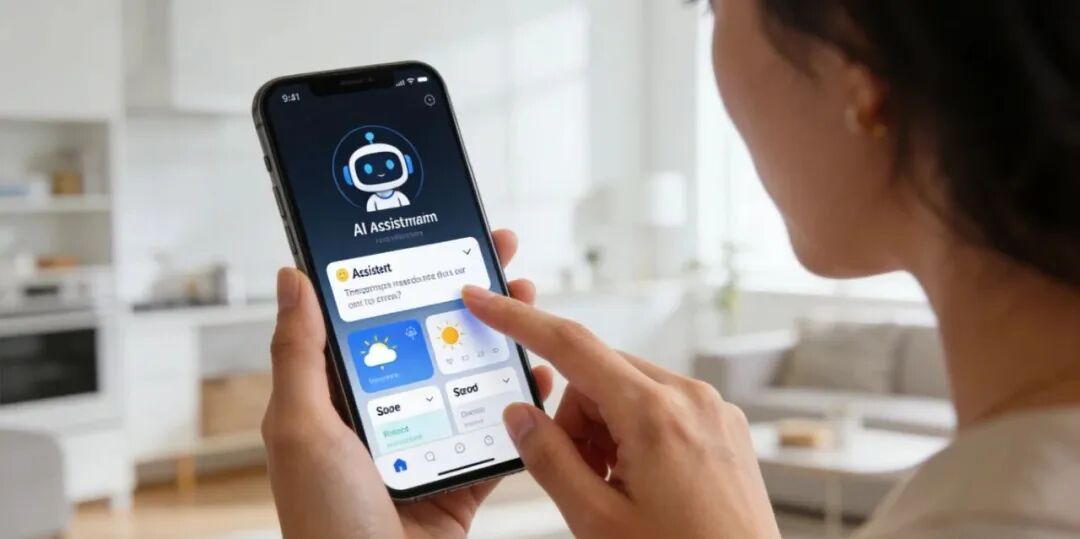
ByteDance's Urgent Response: The issue stemmed from Doubao Assistant triggering WeChat's risk control mechanism, with its simulated click operations being identified as an "automation script." However, the controversy was far from over—the INJECT_EVENTS permission became the focal point. This high-risk Android system permission allows apps to simulate user clicks, swipes, and other operations, previously used mainly for cheats and automated testing. Doubao became the first to apply it on a large scale in consumer-grade scenarios.
"This is like giving AI a backdoor," a security engineer pointed out. "When AI can operate all apps on behalf of humans, it means it can both snag concert tickets for you and engage in bulk fraud, coupon abuse, or even fabricate user behavior data." WeChat's account bans and bank pop-up warnings are essentially defenses of ecological control: if AI is allowed to bypass native interactions, the traffic entry status of super apps will be thoroughly undermined.

ByteDance Reconstructs the Mobile Operating System
Despite ByteDance repeatedly emphasizing "no plans for in-house smartphone development," its collaboration model with Nubia revealed a more aggressive strategic intent—embedding large model capabilities into the phone's underlying interaction chain through a system-level AI assistant.
Traditional AI assistants (like Siri or Xiaoai) are "application-layer tools": users must activate the assistant → issue commands → the assistant calls APP interfaces to complete tasks. The disruptive nature of the Doubao smartphone assistant lies in:
- Permission Leap: Upgrading from "application permissions" to "system permissions," enabling direct screen content reading, simulated clicks, and even cross-app data scheduling;
- Interaction Revolution: Users no longer need explicit commands; AI executes tasks through contextual understanding. For example, upon seeing a scenic spot photo, the assistant can proactively provide location and photography tips;
- Ecosystem Penetration: In scenarios like Taobao price comparisons, Meituan food orders, or Didi ride-hailing, AI directly completes the entire chain from search to payment without app switching.
This "APP-free" operation makes the Doubao Assistant more akin to a "digital butler." In demo videos, a user simply says, "Book me the cheapest restaurant tonight," and the AI automatically compares prices on Dianping, Meituan, and Douyin group buys, ultimately selecting the merchant with the best discount for ordering—the user only needs to confirm the payment password.
"This isn't just about efficiency gains; it's a redistribution of interaction entry points," noted Professor Yan Junchi from Shanghai Jiao Tong University. "When AI can directly operate systems, user dependence on apps will sharply decline, eroding the moats of super apps."

From "Traffic Gateways" to "Ecosystem Guardians"
Facing Doubao's challenge, WeChat, Alipay, banking apps, and others swiftly erected defenses:
- Technical Blockades: WeChat identifies simulated clicks via risk control systems, while Alipay and banking apps force pop-ups to block AI operations;
- Rule Reconfiguration: Doubao urgently released adjustment notes, restricting AI permissions in sensitive scenarios like finance, score-brushing, and gaming, and promising to communicate rules with APP developers;
- Ecosystem Gameplay: Tencent's Yuanbao Assistant remains confined within WeChat, while Huawei's Xiaoyi and OPPO's Xiaobu choose to proactively collaborate with APP developers rather than forcibly breaking permissions.
Behind this gameplay lies a decade-long survival battle for mobile internet ecology. QuestMobile data shows that by September 2025, China's AI assistant monthly active users reached 729 million, with plugin forms (like WeChat AI Search, Douyin AI Search) accounting for 31% and growing far faster than native apps. As users grow accustomed to "solving problems with AI" rather than "opening apps," super apps' advertising revenue, payment commissions, and traffic distribution models face fundamental disruption.
"WeChat won't sit idly by as AI becomes the new entry point," revealed a senior executive from a major internet firm. "We're testing an 'AI-native interaction protocol'—future apps must adapt to WeChat's AI calling standards or face demotion or delisting."

Become AI's "Worker" or "Rule Maker"?
Amid ByteDance's clash with super apps, smartphone manufacturers emerged as the most critical variable. The popularity of the Nubia M153 left OPPO, Vivo, Honor, and others at a crossroads:
- Collaboration Faction: Opening system permissions could boost product competitiveness via Doubao but reduce them to mere AI hardware carriers, losing ecological control;
- In-House Faction: Like Huawei's Xiaoyi and Xiaomi's Xiaoai, choosing in-house AI assistant development incurs high model training costs and struggles to breach APP developers' defenses;
- Neutral Faction: Brands like Samsung and Meizu declared "welcome to all AI assistants," attempting to balance both sides.
Meng Pu, Chairman of Qualcomm China, perhaps voiced the collective sentiment of hardware manufacturers at the 2025 Digital Intelligence Technology Ecosystem Conference: "AI integration into devices is inevitable, but terminal manufacturers must retain 'intelligent control.' We won't allow any AI assistant to operate phones without authorization, just as we won't let cheat programs control games."
The question remains: when AI becomes the "operating system," do we still need smartphones?
The controversy sparked by the Doubao smartphone fundamentally pits technological ethics against commercial interests. Its exposure of three core issues will shape the future of AI-hardware integration:
- Permission Boundaries: How much system permission should AI assistants have? Does simulated clicking equate to "digital intrusion"?
- Liability Attribution: If AI operations cause user financial losses, who bears responsibility—the assistant developer, phone manufacturer, or APP provider?
- Ecosystem Rules: Should we maintain the "application isolation" safety baseline or allow AI to completely reconstruct interaction logic?
DeepSeek's forecast offers a possible path: "short-term coexistence, mid-term transformation, long-term fusion." Future apps won't disappear but will degrade into "AI-callable service components"—users need only state demands, and AI automatically matches the best services, much like how we use the internet today without knowing "HTTP protocols."

Conclusion
The rapid sellout and controversy surrounding the Nubia M153 mark that AI-hardware integration has entered deep waters. When Doubao Assistant attempts to break app boundaries through system-level permissions, it collides not just with WeChat's risk control walls but with the entire mobile internet's decade-old ecological rules.
This revolution is far from over. By 2026, with more smartphone manufacturers entering the fray and AI assistant permission standards gradually clarifying, we may witness the birth of a new era: where smartphones are no longer isolated devices but "edge nodes" for AI; where apps are no longer manually clicked icons but service streams hidden behind demands; and where users, finally, evolve from "tool operators" to "demand issuers."
As Steve Jobs held up the iPhone in 2007 and declared, "Today, Apple will reinvent the phone," 18 years later, ByteDance and Nubia's experiment may be redefining the ultimate form of the "smartphone"—not as more powerful hardware, but as AI that better understands humanity.
-
![]()
Hardware is the skeleton, AI is the soul, and data integrates the two
-
![]()
China’s AI Industry: A Unified Pivot Towards Monetization?
-
![]()
New Progress! Infineon Completes Acquisition of ams OSRAM's Non-Optical Sensor Business
-
![]()
35 Million Bet on an Optical Future! Tengjing Technology Makes a Move in AR
-
![]()
Why World Models Get Stuck on Construction Roads in Autonomous Driving Applications
-
Alibaba Initiates Cultural Transformation: Is Jack Ma Making a Strategic Comeback?
-
Tianfeng Heads to Hong Kong for IPO with RMB 3.8 Billion in Funds: Xingyu's Cross-Border Foray into Embodied AI Faces Uncertain Future
-
![]()
Mengshi Auto’s High-End Aspirations Dashed: Huawei Partnership Fails to Revive Sales, New Model’s Entry Price Dips Below 300,000 Yuan