Can the "Five Little Dragons" Convene in the Capital Market? Will Enflame Technology Eclipse NVIDIA?
 01/27 2026
 703
703
Introduction: Will It Be the Next Stock to Reach a Market Cap of Hundreds of Billions?
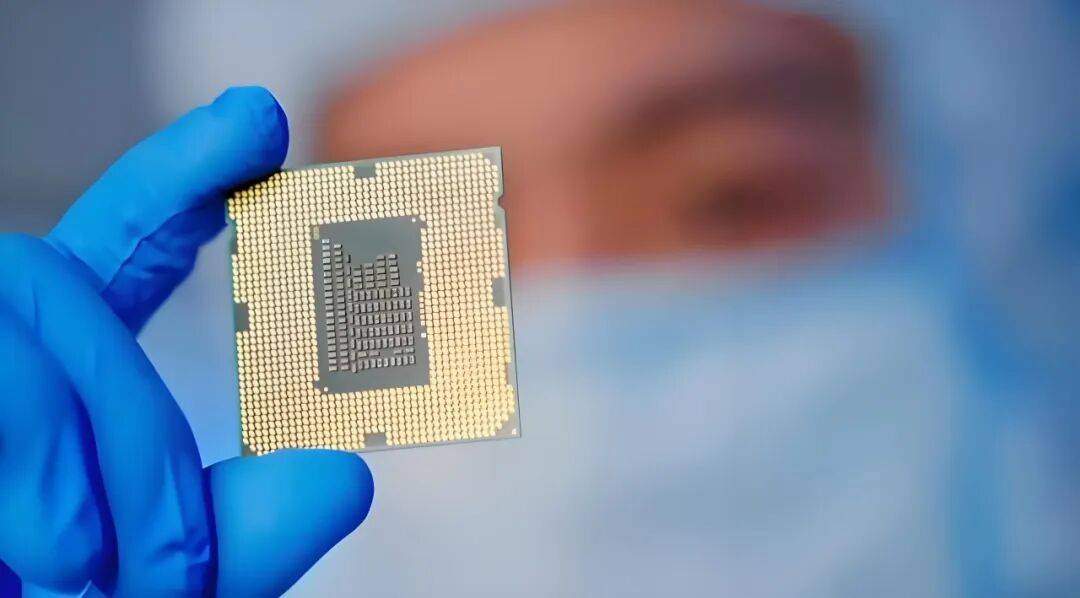
Enflame Technology, a domestic cloud AI chip manufacturer, has officially set its sights on the STAR Market.
Recently, Shanghai Enflame Technology Co., Ltd.'s IPO application for the STAR Market was accepted, with CITIC Securities serving as the sponsor. According to the prospectus, the company aims to raise 6 billion yuan, primarily to fund the R&D and industrialization of fifth- and sixth-generation AI chips, as well as advanced AI hardware-software collaborative innovation projects.
Established nearly eight years ago, Enflame Technology has developed four generations of architectures and five iterations of cloud AI chips, capturing roughly 1.4% of the domestic AI accelerator card market and penetrating the core computing power supply systems of major internet firms. However, the company remains in a phase of continuous investment, with R&D expenditures, customer concentration, and loss scale among the metrics that will face market scrutiny during the IPO process.
Among domestic chip manufacturers, the former "Four Little Dragons" have evolved into the "Five Little Dragons": Moore Threads, MetaX, Biren Technology, Illuvin Tech, and Enflame Technology. Enflame Technology is the last to enter the capital market and stands out as the sole manufacturer exclusively focused on cloud AI chips.
Looking at its peers: Moore Threads boasted a pre-IPO valuation of 30 billion yuan, peaked at a market cap exceeding 400 billion yuan post-listing, and currently holds a market value of over 290.7 billion yuan; MetaX's market capitalization surpassed 300 billion yuan post-listing and now stands at over 235 billion yuan (both figures as of the close on January 23).
Enflame Technology's post-final-round financing valuation stands at 18 billion yuan, and the peak market capitalization it could achieve post-listing has also piqued the interest of various capital sources.
Currently, the majority of domestic AI clients still rely on NVIDIA chips. Can Enflame Technology leverage STAR Market financing to achieve a new leap in technology and scale, emerging as a credible alternative to NVIDIA?
01 Tencent, the Top Shareholder, Accounts for Over 70% of Revenue
According to the disclosure, Enflame Technology plans to raise 6 billion yuan in this STAR Market IPO, with the funds earmarked for core product iteration and system capability enhancement. Specifically, this includes R&D and industrialization projects for fifth- and sixth-generation AI chip series, as well as advanced AI hardware-software collaborative innovation initiatives.
The company explicitly states in the prospectus that cloud AI chips are characterized by high R&D barriers, rapid technological evolution, and substantial hardware-software collaborative investment, necessitating long-term, large-scale, and sustained financial backing. This fundraising is seen as a crucial foundation for supporting the R&D and mass production of the next two generations of products.
Prior to going public, Enflame Technology has completed multiple rounds of equity financing. According to the prospectus, the company's most recent financing round, Series E, was concluded in December 2024, with a post-investment valuation of approximately 18 billion yuan.
The company's shareholder base comprises both industrial capital and national-level funds, along with market-oriented investment institutions. Tencent Technology directly owns 19.9493% of the shares and, through concert parties, holds a total of 20.2580% equity, making it the largest shareholder.
The prospectus reveals that during the reporting period, sales revenue from the company's top five clients accounted for 94.97%, 96.50%, 92.60%, and 96.41%, respectively. Among these, sales revenue from Tencent (including direct sales and AVAP model sales) represented 8.53%, 33.34%, 37.77%, and 71.84%, respectively.
Enflame Technology and Tencent have been collaborating since 2019, progressing from small-scale verification to multi-scenario large-scale validation and then to deep strategic cooperation. Through continuous product iterations and extensive software optimization and adaptation, a stable cooperative relationship has been forged.
However, Tencent does not hold control over Enflame Technology. From a control structure perspective, Enflame Technology is jointly controlled by co-founders ZHAO LIDONG and Zhang Yalin. The two directly own 17.9287% of the shares and indirectly control 10.2070% equity through an employee stock ownership platform, collectively controlling 28.1357% of the company's voting rights and signing a concert party agreement, thus making them the actual controllers of the company.
In addition to Tencent, the company's shareholders include the National Integrated Circuit Industry Investment Fund (Phase II), Wuyuefeng Capital, Shanghai State-owned Assets Investment, Meitu Technology, Guofang Jinpu, and other institutions, forming a shareholder structure dominated by industrial capital and long-term funds.
02 Cloud AI Chips: Still Awaiting Profitability
Currently, Enflame Technology has established a comprehensive product system through four generations of architectures and five chips.
Positioned in the cloud AI chip sector, Enflame Technology's product lineup encompasses AI chips, AI accelerator cards and modules, intelligent computing systems and clusters, as well as a supporting AI computing and programming software platform. Founded nearly eight years ago, the company has completed four generations of architectures and five cloud AI chip R&D iterations, covering both training and inference scenarios.
In terms of underlying hardware, the company has developed the GCU-CARE accelerated computing unit and GCU-LARE inter-chip high-speed interconnection technology based on its proprietary instruction set. At the software level, it has independently developed a complete AI computing and programming platform, "TopsRider," eschewing NVIDIA's CUDA ecosystem approach and instead achieving hardware-software collaboration through its proprietary software stack.
Despite rapid revenue growth, Enflame Technology has yet to achieve profitability.
Financial data indicates that from 2022 to 2025 (Q1-Q3), Enflame Technology recorded revenues of 90 million yuan, 301 million yuan, 722 million yuan, and 540 million yuan, respectively, with cumulative revenue of approximately 1.654 billion yuan.
During the same period, the company's net profits were -1.116 billion yuan, -1.665 billion yuan, -1.510 billion yuan, and -888 million yuan, respectively, with cumulative net losses of approximately 5.179 billion yuan. The company explains in the prospectus that sustained high-intensity R&D investment and lengthy product joint verification cycles are the primary reasons for its lack of profitability.
From an expense structure perspective, Enflame Technology's R&D investment accounts for an exceptionally high proportion of its revenue. During the reporting period, the company's cumulative R&D investment was approximately 4.42 billion yuan, with R&D personnel accounting for 76.51% of the total workforce. As of the end of September 2025, the company had secured 262 domestic invention patents and participated in the formulation of multiple national and industry standards.
This level of R&D intensity has created certain technological barriers but has also exerted pressure on short-term profitability.
03 A Credible Alternative to NVIDIA?
For Enflame Technology, the greatest potential for growth lies in a seemingly contradictory topic: the possibility of its self-developed chips serving as a "credible alternative" to NVIDIA, while also facing customer migration costs due to incompatibility with NVIDIA's CUDA ecosystem, necessitating a wait for market transition cycles.
Enflame Technology does not offer a direct "head-on confrontation" answer.
According to the information disclosed in the prospectus, Enflame Technology has not entered NVIDIA's dominant GPGPU and CUDA ecosystem but has instead chosen to develop its proprietary GCU architecture and full-stack software platform, "TopsRider," to gain performance and cost-effectiveness advantages in specific cloud AI training and inference scenarios.
This approach determines that Enflame Technology's products are not a "plug-and-play" replacement for NVIDIA GPUs but rather a structural complement: through long-term joint verification and deep software adaptation with major internet companies, they achieve scaled deployment in certain large-scale model training, high-parallelism inference, and intelligent computing cluster scenarios.
In 2024, Enflame Technology sold approximately 38,800 AI accelerator cards and modules, corresponding to a 1.4% share of the Chinese market, temporarily unable to shake NVIDIA's dominant position of approximately 70% in domestic shipments. Enflame Technology's current "credible alternative logic" is not to fully replace NVIDIA but to seize deployable spaces outside NVIDIA's ecosystem during the window period of released domestic computing power demand and increased acceptance of non-GPGPU architectures.
From a market perspective, the global cloud AI chip sector is still dominated by NVIDIA. According to China Insights Consultancy, NVIDIA held approximately 76% of the global AI accelerator card market revenue share in 2024. In the domestic market, NVIDIA similarly accounts for approximately 70% of shipments.
When compared to its domestic AI chip peers, Enflame Technology's competitiveness resembles a "high-investment-for-time" race.
In 2024, Enflame Technology achieved revenue of 722 million yuan, close to Moore Threads, but by the first three quarters of 2025, it had fallen behind Moore Threads' 785 million yuan and MetaX's 1.236 billion yuan, with a widening revenue gap. Meanwhile, the company remains in a continuous loss-making state, with cumulative net losses of approximately 5.179 billion yuan during the reporting period and has yet to reach a profitability inflection point.
More telling is the quality of profitability.
In 2024, Enflame Technology's comprehensive gross margin was only 30.59%, approximately half of the average level among domestic AI chip manufacturers. Even though it rebounded to 36.23% in the first three quarters of 2025, it still significantly lags behind its peers.
To support its technological roadmap and customer adaptation, Enflame Technology's R&D investment intensity remains high, with an R&D expense ratio of 181.66% in 2024 and still 164.77% in the first three quarters of 2025, second only to Moore Threads and Biren Technology among domestic manufacturers.
In other words, compared to the already listed Moore Threads and MetaX, Enflame Technology's current strength lies in its "ability to deliver" while its weakness lies in "profitability." The anchor point for its post-listing valuation will ultimately depend on whether it can quickly convert high-intensity R&D investment into higher gross margins and more stable revenue growth.
According to the disclosure, Enflame Technology's 6 billion yuan in fundraising will be primarily directed toward the R&D and industrialization of fifth- and sixth-generation AI chips, as well as hardware-software collaborative innovation projects. The company's plans indicate that the fifth-generation AI chip is expected to be launched in 2027, with the sixth-generation product anticipated in 2028.
At the application level, the company has participated in the construction of intelligent computing centers in Qingyang, Gansu; Wuxi, Jiangsu; and Yichang, Hubei, and continues to expand its cooperation with telecom operators and vertical industry clients.
Enflame Technology's core management team has long been deeply involved in the chip industry. Chairman and CEO Zhao Lidong has held positions at AMD and Tsinghua Unigroup, boasting over 30 years of industry experience. Co-founder Zhang Yalin also comes from the AMD system and has led the mass production of multiple chip products.
Enflame Technology aims to become a "leading enterprise in general artificial intelligence infrastructure" and will continue to invest in computing power chips, system-level products, and ecosystem construction, striving for greater scaled deployment in the domestic AI computing power market.
-
![]()
Li Shufu's Lesson in 'Abstract' Thinking: With Speed Dividends Peaking, What Will Drive China's Auto Industry Through the Next Two Decades?
-
![]()
World’s Pioneering! Automated Production Line for Million-Scale Volume Holographic Waveguides Launched in Tianjin
-
![]()
Cars Can't Be Made with the 'Quick Buck' Mentality: Li Shufu's Candid yet Impactful Remarks
-
![]()
Can You Snag a Complete Trio of Digital Gadgets for 10,000 Yuan? AI Recommendation Showdown: How Trustworthy Are Doubao, DS, Qianwen, Kimi, and Yuanbao?
-
![]()
DingTalk Undergoes Leadership Overhaul Amid Alibaba’s AI Strategy Unveiling
-
![]()
Revealing the Myth of the '10 Billion Subsidy': Pinduoduo Faces Heightened Scrutiny with Its '100 Billion Initiative'
-
![]()
Yousu's '70,000-Character Long Essay' Resonates with Alibaba Executives' 'Cultural Awareness'
-
Analysis | SpaceX is about to land on Nasdaq. Where is the breakthrough point for China's commercial aerospace?