Despite Delays, Executive Departures, and Competition from Midea/HarmonyOS, Why Hasn't Apple Conquered the 'Home' Market?
 03/19 2026
 672
672
Failing to Capture the 'Home' Market Means Missing Out on the Future
Apple's smart home business may once again come to a standstill.
According to media reports, Brian Lynch, who was in charge of Apple's home hardware engineering, has left the company to join smart ring maker Oura. While Lynch's departure isn't the first high-profile exit from Apple recently, it holds particular significance given Apple's struggles in the smart home sector in recent years.
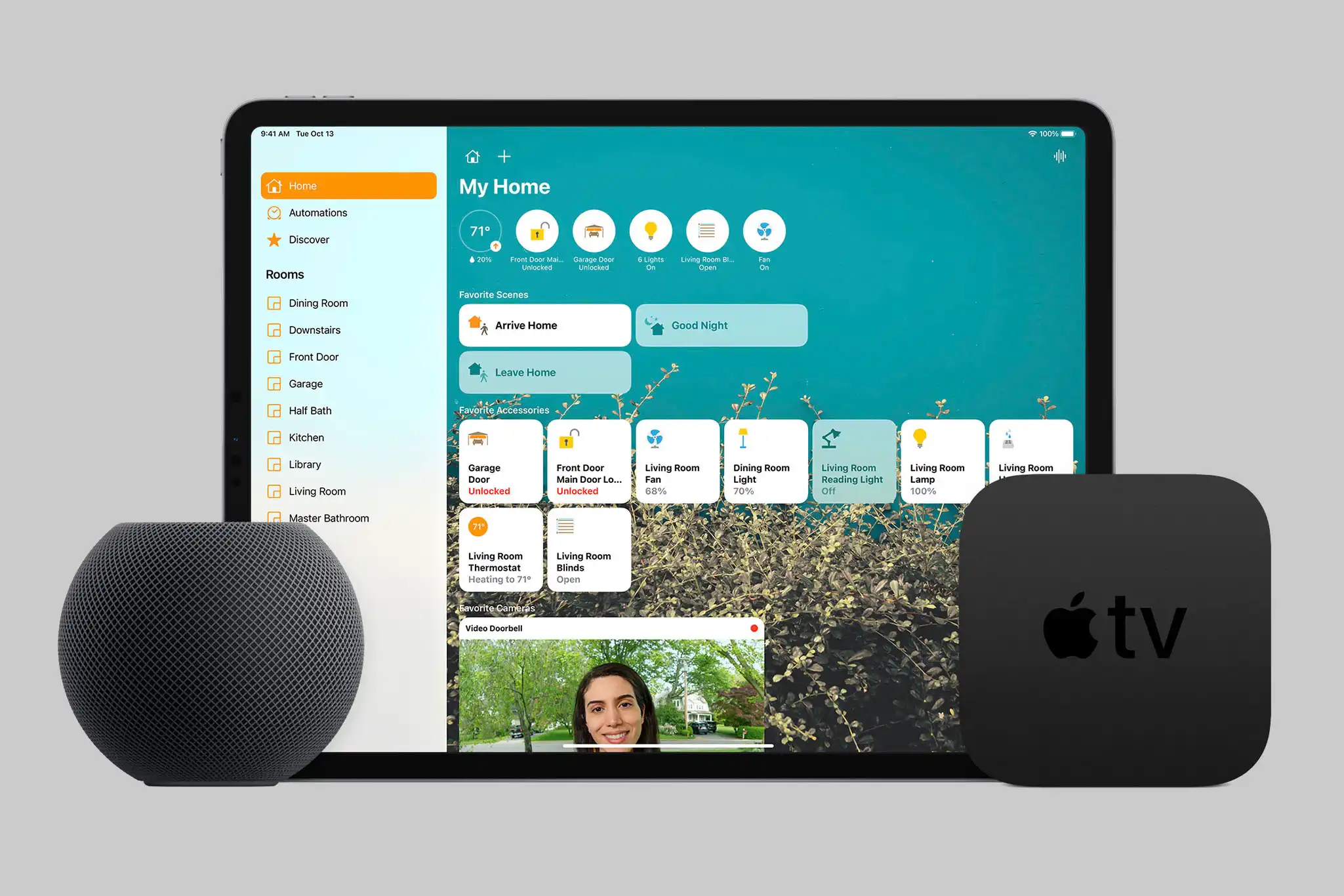
Apple was among the first tech giants to spot the potential of the smart home market. From HomePod to Apple TV and HomeKit, the company has been consistently testing the waters, yet it has not launched a truly compelling product. Bloomberg previously reported that Apple postponed the launch of its first smart hub, initially scheduled for spring 2026, to autumn.
(Image source: Apple)
More critically, Brian Lynch, who has overseen Apple's home device hardware engineering since 2022, has resigned at this crucial juncture. This raises the question: Why does Apple, a leader in smartphones, computers, and earphones, consistently hesitate in the smart home arena?
Apple Still Struggles to Crack the Smart Home Code
As early as 2014, Apple launched HomeKit, aiming to make the iPhone the central control hub for home devices. It later integrated HomePod and Apple TV into the Home ecosystem, positioning speakers and TV boxes as part of a smart home hub. To this day, Apple officially considers HomePod and Apple TV as Home's 'home hubs,' showing that the company has indeed considered establishing a central hub for the home. However, despite these efforts, Apple's presence in the smart home space has never been as dominant as its iPhone, Apple Watch, or AirPods lines.
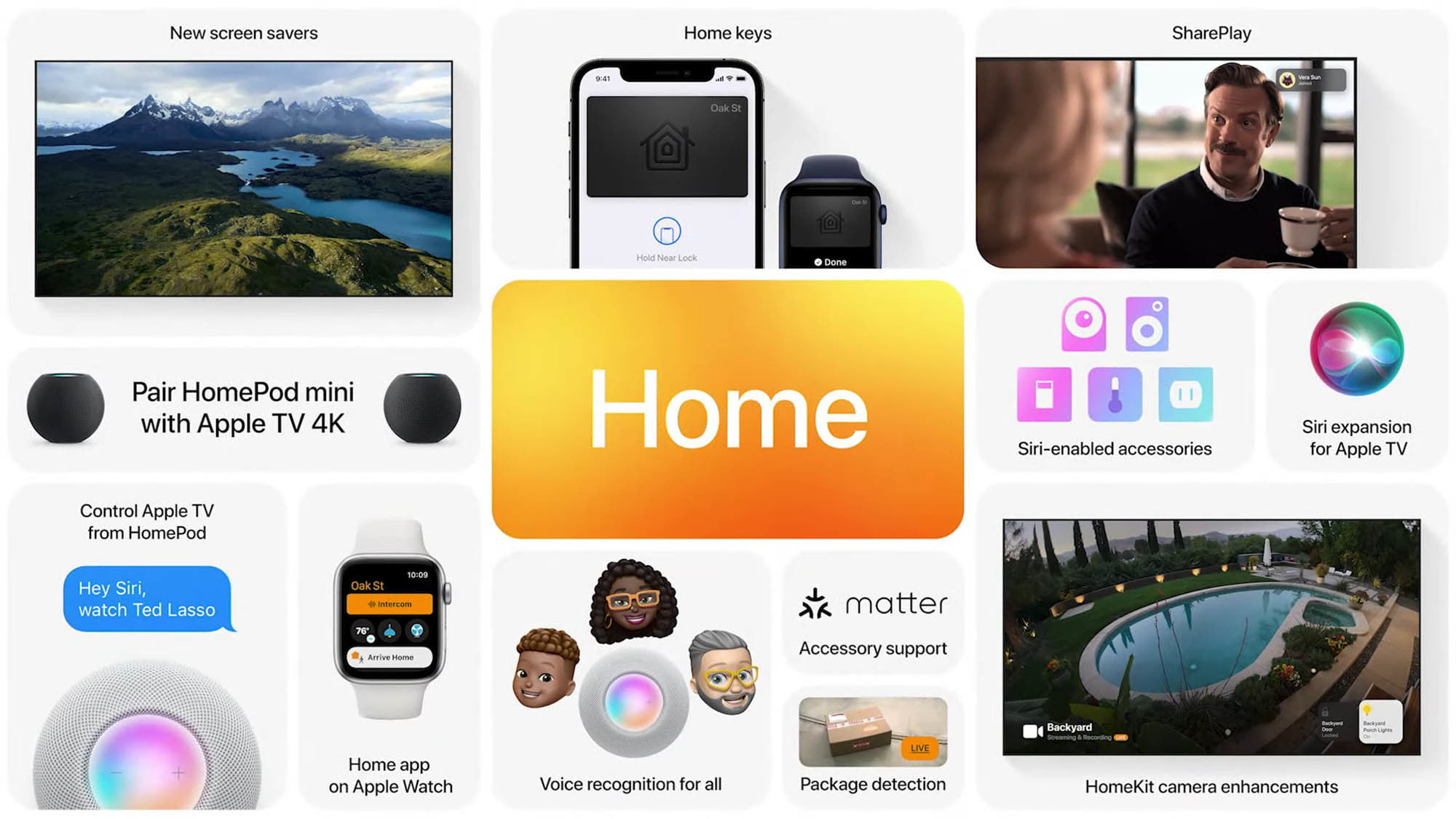
Fundamentally, HomeKit is merely a connectivity framework. Its core value lies in integrating smart devices from different brands into the Apple ecosystem. Any home appliance brand that supports HomeKit and is certified by Apple can join this ecosystem. Meanwhile, HomePod and Apple TV—a speaker and a TV box, respectively—are built around entertainment. While they are part of Apple's smart home ecosystem, few consider them true smart home hubs.
(Image source: Apple)
This explains why Apple, despite entering the market early, has never prioritized smart homes as a core business. Instead, it has focused on integrating existing products into the ecosystem. This approach is understandable: HomePod and Apple TV first succeed as audio-visual devices, with their ability to control HomeKit-compatible devices being a secondary feature. Consumers buy them for entertainment, even if they're not interested in smart homes.
Over the past few years, rumors have repeatedly surfaced about Apple developing new products like smart displays with screens and desktop robots to unify its fragmented Home ecosystem. However, as of 2026, none have come to fruition. Bloomberg's latest report states that Apple's planned new smart home display has been delayed again due to underwhelming progress with Siri and related AI capabilities.
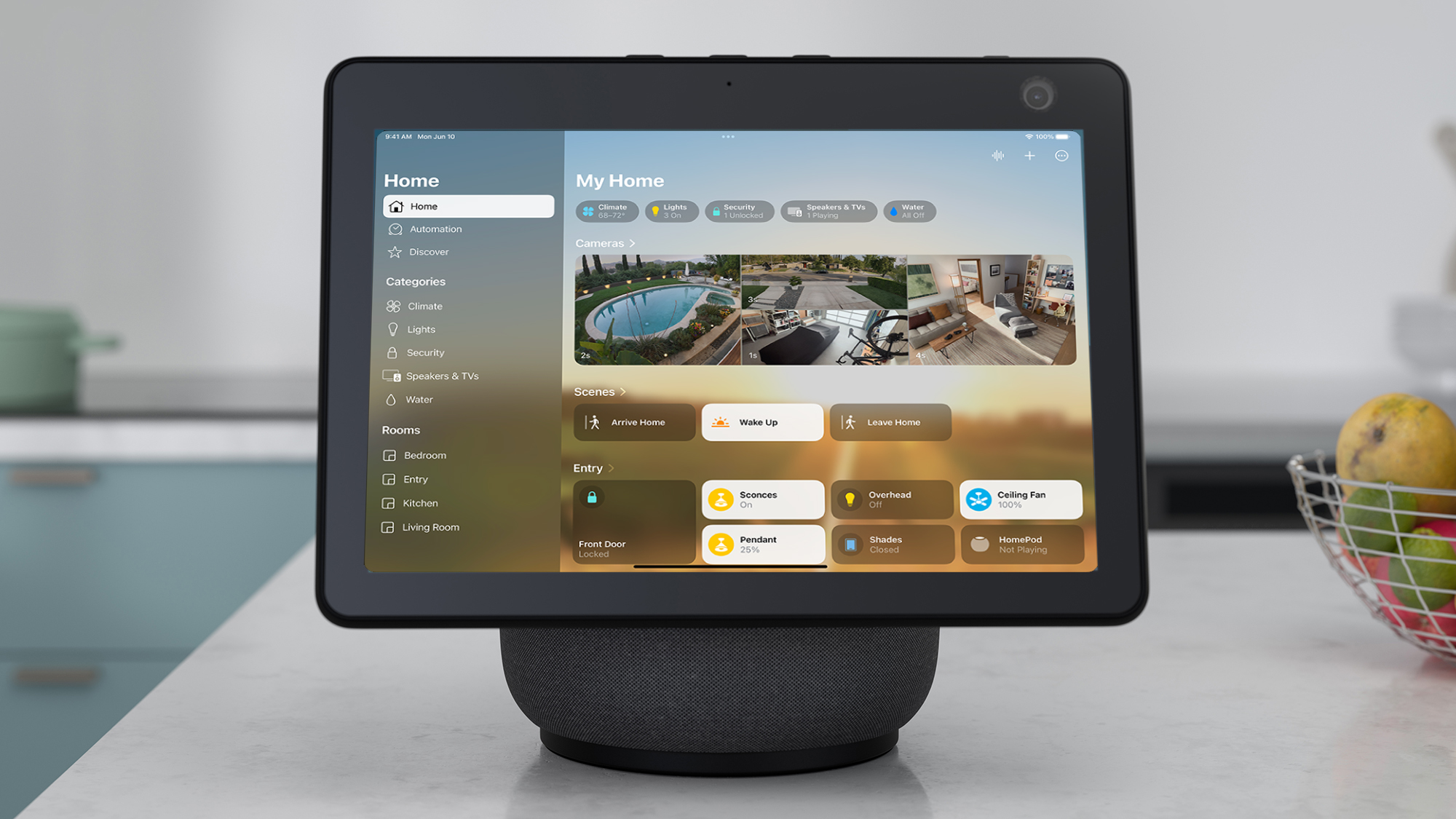
(Image source: TechRadar)
In other words, Apple has long planned a smart home product line but remains uncertain about its form. Coupled with sluggish development of underlying technologies, delays have persisted, leaving Apple far behind competitors. Now, even the project's leader has departed, signaling a challenging road ahead for Apple's smart home ambitions.
Huawei Offers Solutions, Xiaomi Builds Ecosystems—Apple Remains Focused on Speakers
Compared to Apple's cautious approach, Chinese brands have moved more aggressively in recent years. Whether it's Huawei and Xiaomi, which built their reputations on smartphones, or traditional home appliance giants like Midea, Haier, and Hisense, all are pursuing the same goal: transforming fragmented smart home products into cohesive systems.
Huawei upgraded its HarmonyOS Smart Home 1+3+N solution ahead of AWE 2026. The '1' represents a home brain (connectivity and computing hub), '3' refers to touch, voice, and ambient interaction methods, and 'N' encompasses multiple subsystems. Under this framework, homes evolve from passive responders to proactive service providers, enabling features like automatic lighting, airflow adjustment, health monitoring, and emergency alerts.
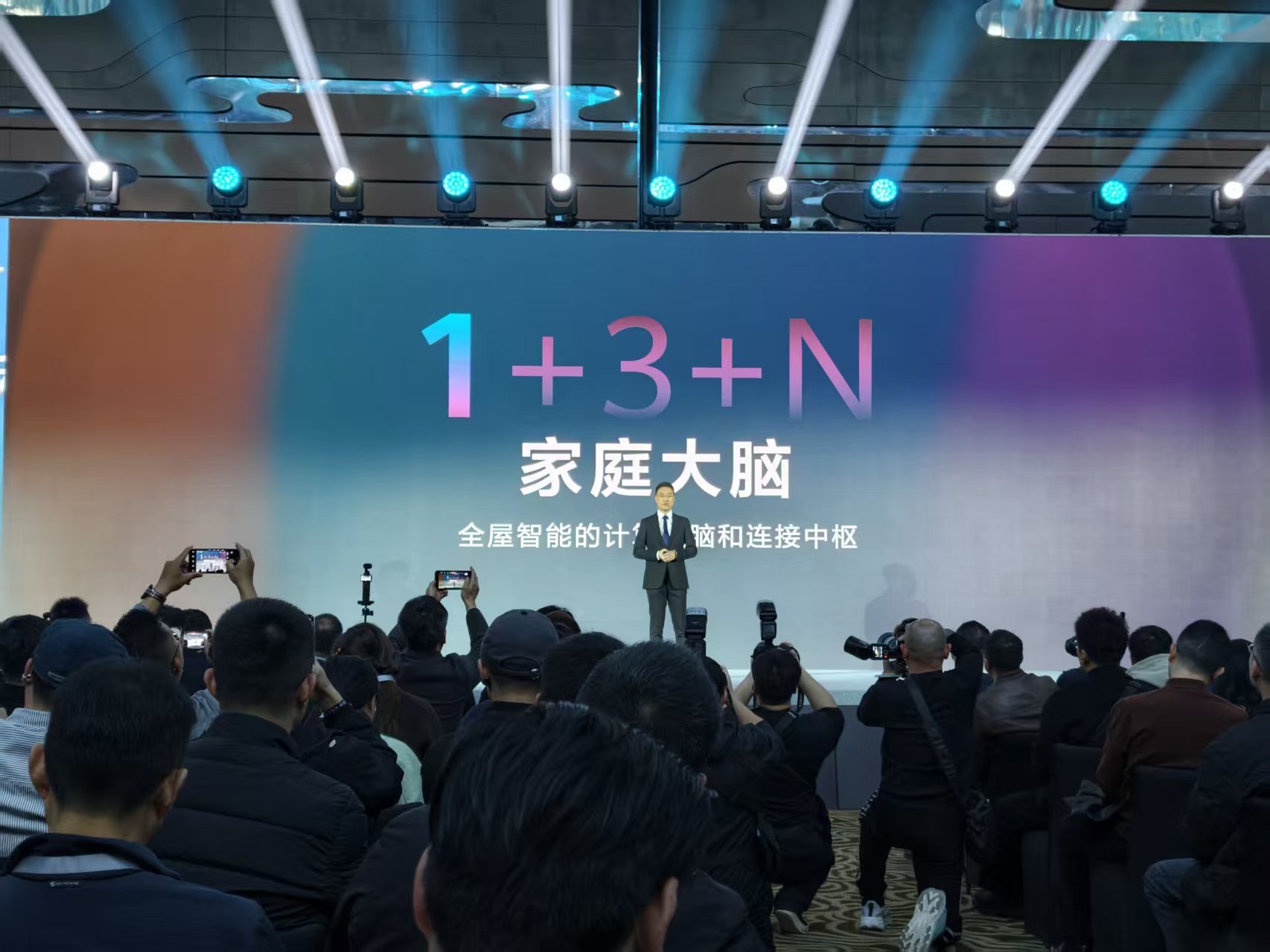
(Image source: Leitech)
Xiaomi, meanwhile, is betting on a 'human-vehicle-home' ecosystem. Its focus isn't on individual smart appliances but on integrating smartphones, cars, and home devices into a unified system. Smartphones serve as Xiaomi's most mature gateway, while cars represent a new, powerful scenario. Home appliances and IoT devices, in turn, anchor users within this ecosystem. For Xiaomi, smart homes are a means to close the loop across human, vehicle, and home domains.
Clearly, while Apple may hold slight advantages in product innovation and market coverage for individual devices, it lags behind in ecosystem development and securing the home entry point. Similarly, home appliance manufacturers are embracing this trend.
Midea unveiled its Whole-Home Smart 'Three Ones' strategy in 2026, leveraging a unified home network, an AI home brain, and an open platform to rebuild the home ecosystem. The company shared data on AI integration across 150+ product categories, over 140 million connected smart appliances worldwide, and more than 150 million users. Haier showcased its 'AI Eye 2.0,' upgraded smart home brain, and household robots at AWE 2026, enabling appliances to proactively serve users. Hisense integrated its proprietary Xinghai AI model with DeepSeek, launching vertical AI agents for appliances to create all-scenario AI home solutions.
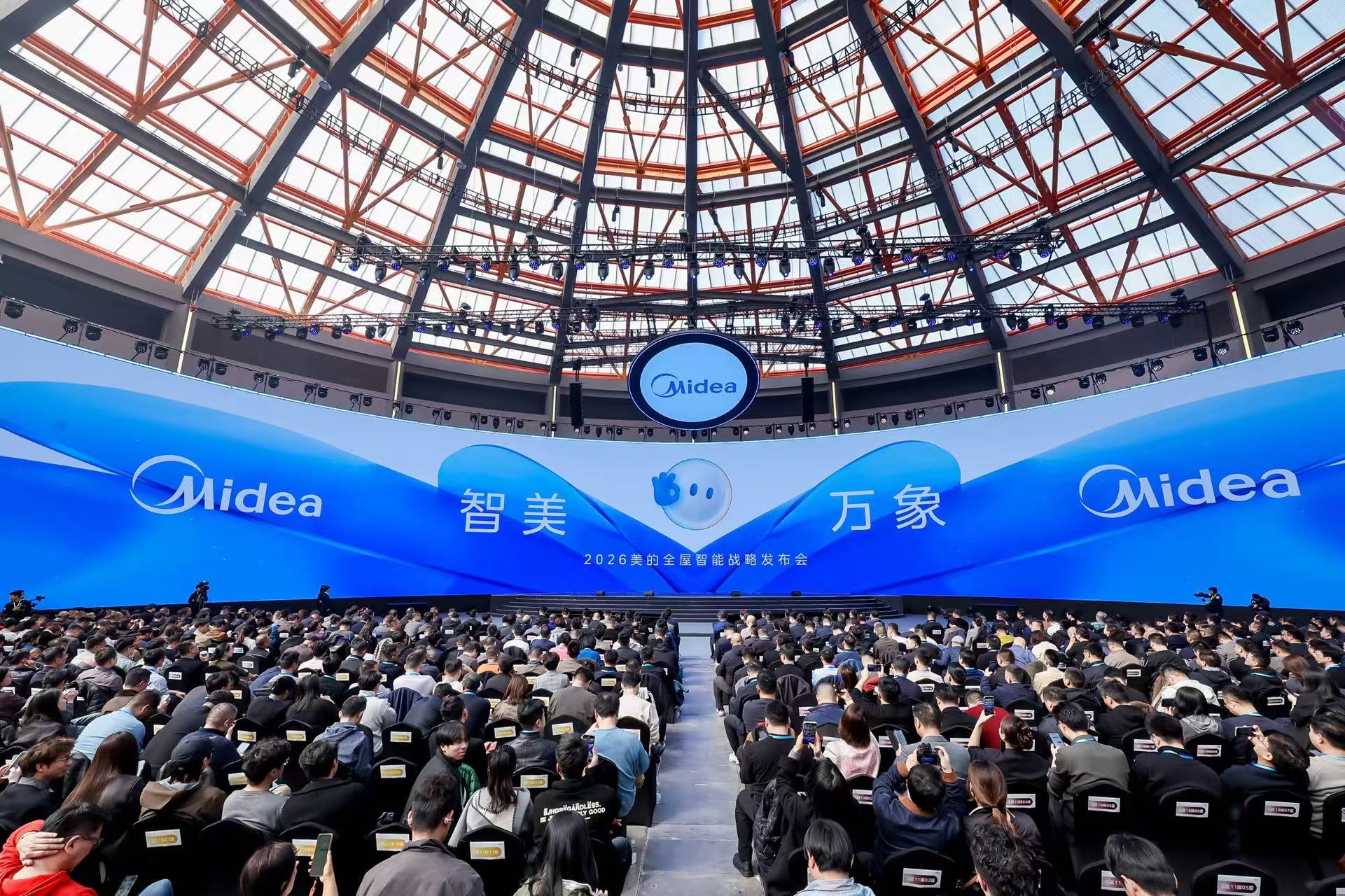
(Image source: Midea)
Ultimately, home appliance makers are seizing this trend because traditional price wars have become too fierce. To escape the race for affordability, they must find new growth avenues. Selling individual refrigerators or air conditioners will no longer sustain brand growth. Only by controlling the entire 'home' can they maintain market positions.
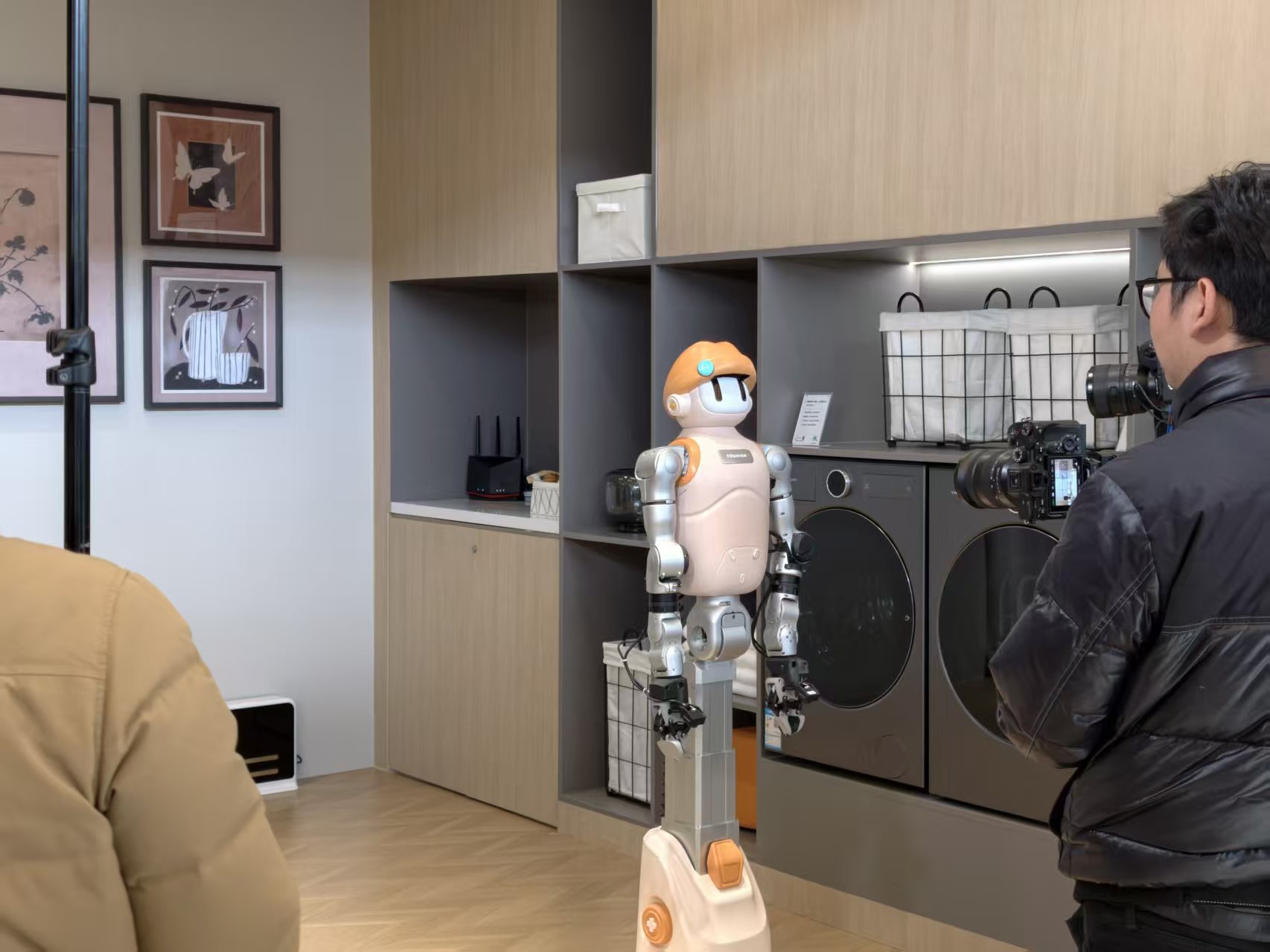
(Image source: Leitech/Hisense Savvy Robot Butler)
In contrast, Apple faces less pressure in its core markets. The iPhone 17 series remains a bestseller, MacBook sales rebounded in 2025, and AirPods dominate global wireless earphone sales. Without significant challenges or competitive threats in these areas, Apple remains conservative about smart homes. However, as we all know, smart home ecosystems cannot be built overnight. Having already fallen behind at the starting line, Apple will need to invest serious effort to catch up.
Apple Faces a Long Road to Catch Up
Apple's procrastination risks losing a massive, high-potential market.
IDC data shows that China's smart home market shipped approximately 279 million units in 2025. Grand View Research projects the market could reach $70.6 billion by 2030. Apple isn't just missing out on individual product opportunities—it's neglecting an entire, rapidly growing market that increasingly values ecosystem integration.
More importantly, the true value of smart homes lies not in selling individual speakers, screens, or sensors but in establishing a long-term operational system within users' daily lives. Once a user's lighting, locks, air conditioning, entertainment, cleaning, and kitchen devices all run smoothly within a single ecosystem, the cost of switching to a competitor becomes prohibitively high. Apple mastered this ecosystem binding with the iPhone but has struggled to replicate it in smart homes.
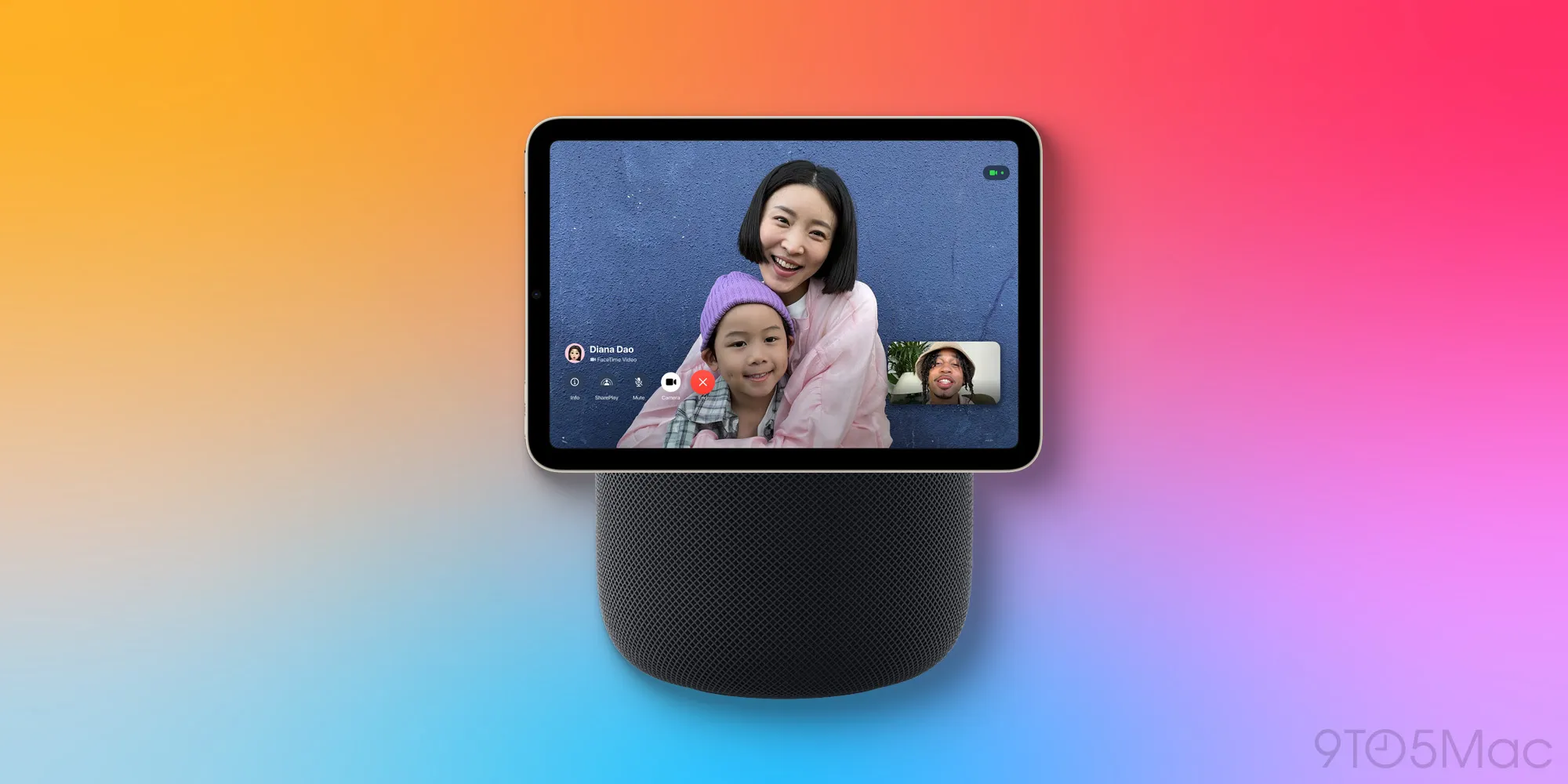
Even if Apple releases a screen-equipped HomePod as a smart home hub in autumn 2026, numerous challenges remain. Apple excels at refining hardware, systems, and services into polished packages before user release. However, a home is far more complex than a smartphone or iPad. It involves fragmented appliance categories, and ecosystem perfection requires far longer. Issues include protocol compatibility, collaboration across brands, network environments, and device roles.
(Image source: 9to5Mac)
Apple once pinned hopes on the Matter protocol to reduce ecosystem fragmentation. However, even mainstream brands like IKEA still encounter instability in connectivity, networking, and platform collaboration within this framework, let alone others.
Of course, the market won't wait for Apple to catch up. At AWE 2026, Leitech observed two clear trends: home appliances are evolving toward proactive services and spatial intelligence, while household robots and embodied AI are entering core home scenarios. Hisense even showcased a 'housework-free home' concept, linking butler robots, companion robots, and whole-home smart systems. Apple's dilemma is that while the industry adopts AI to manage entire homes and large models as smart home cores, enabling robots to perform household tasks, Apple is still refining its fundamentals.
This isn't a death sentence for Apple's smart home ambitions. Apple's strength lies in its market influence—products like the iPhone Air and Vision Pro, while not traditional 'successes,' garner global attention. If Apple finds its direction, its progress could be rapid. However, its current stance on smart homes remains unclear. From an industry perspective, everyone hopes Apple will soon deliver a more compelling offering.
Apple, HomePod, Hisense, Haier, Midea, Huawei
Source: Leitech
Images courtesy of 123RF
-
![]()
Hardware is the skeleton, AI is the soul, and data integrates the two
-
![]()
China’s AI Industry: A Unified Pivot Towards Monetization?
-
![]()
New Progress! Infineon Completes Acquisition of ams OSRAM's Non-Optical Sensor Business
-
![]()
35 Million Bet on an Optical Future! Tengjing Technology Makes a Move in AR
-
![]()
Why World Models Get Stuck on Construction Roads in Autonomous Driving Applications
-
Alibaba Initiates Cultural Transformation: Is Jack Ma Making a Strategic Comeback?
-
Tianfeng Heads to Hong Kong for IPO with RMB 3.8 Billion in Funds: Xingyu's Cross-Border Foray into Embodied AI Faces Uncertain Future
-
![]()
Mengshi Auto’s High-End Aspirations Dashed: Huawei Partnership Fails to Revive Sales, New Model’s Entry Price Dips Below 300,000 Yuan