The Electric Toothbrush Industry Cools Down: Xiaomi and Usmile Embrace AI Tech, Relying on the Children's Market to 'Sustain'?
 03/27 2026
 628
628
Innovation Reigns Supreme Amid Market Sluggishness.
Recently, the Mijia Children's Electric Toothbrush Pro was launched on Xiaomi Youpin, priced at 329 yuan.
As its standout feature, the new Mijia children's electric toothbrush is equipped with a color screen that displays animated reminders for brushing duration, areas, speed, and intensity, as well as "positive feedback" animations after brushing for a full 2 minutes. Every 30 seconds, the toothbrush provides voice reminders for children to switch brushing areas.
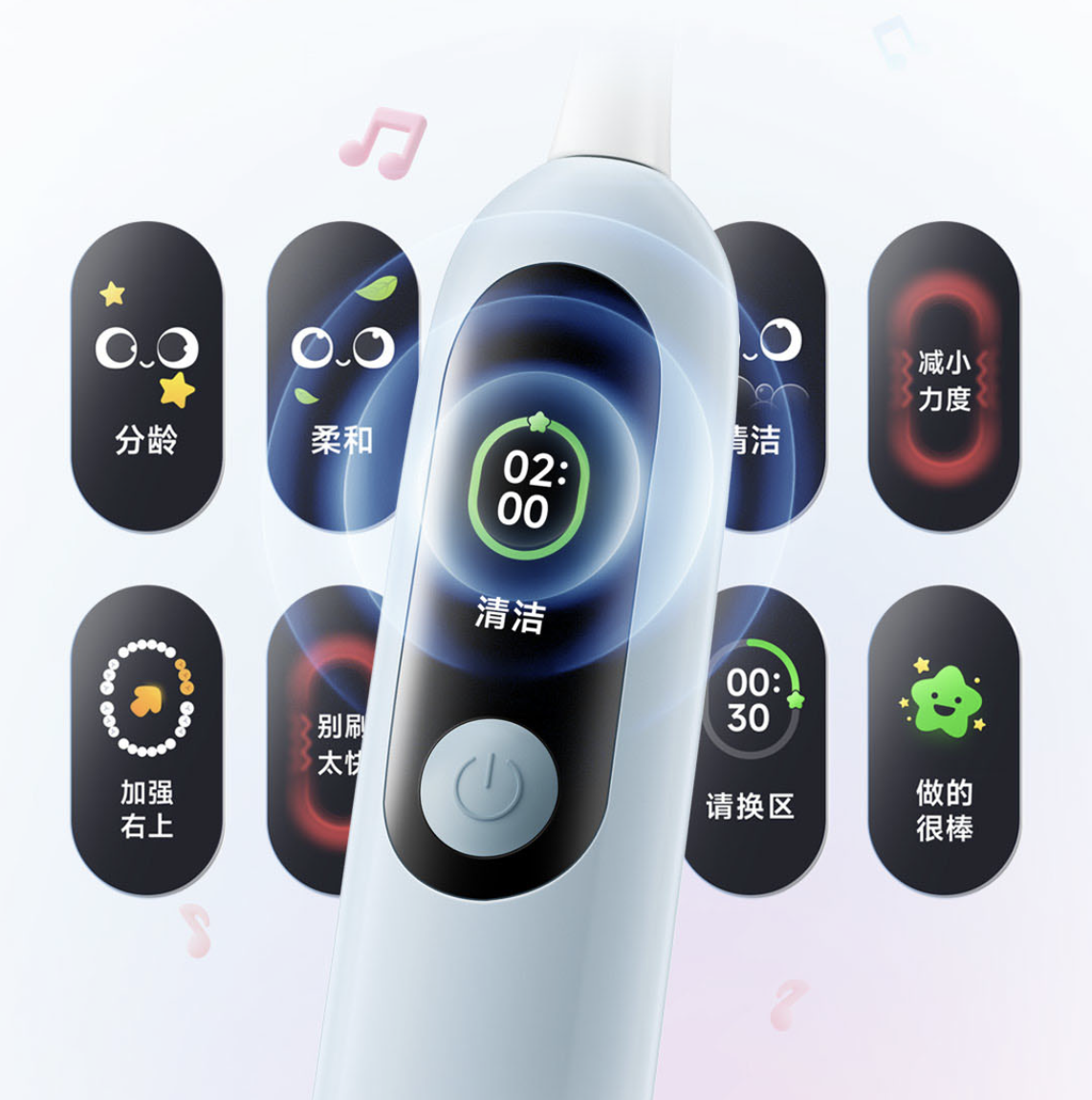
Image Source: Xiaomi Youpin
Thanks to its six-axis sensor, this Mijia toothbrush can monitor brushing paths in conjunction with AI algorithms. When a child misses a spot, the corresponding tooth area on the screen (divided into six zones: upper left/center/right, lower right/center/left) turns orange to prompt re-brushing. If brushing speed is too fast (horizontal brushing exceeds speed limits), the toothbrush screen lights up red, emits an alert sound, and the handle vibrates as a reminder. When brushing pressure is too light or too strong, the toothbrush intelligently senses and analyzes it, providing reminders through a light ring and voice messages.
The AI algorithm is also applied to the Mijia App that pairs with the toothbrush. Parents can use the Mijia App to create a dental profile for their child, marking missing or decayed teeth, and the AI algorithm will customize a brushing plan for the marked areas. The Mijia App can also track brushing duration, coverage, and other data in real-time, generating a personalized brushing report for the child, allowing parents to monitor missed or inadequately brushed areas at any time.
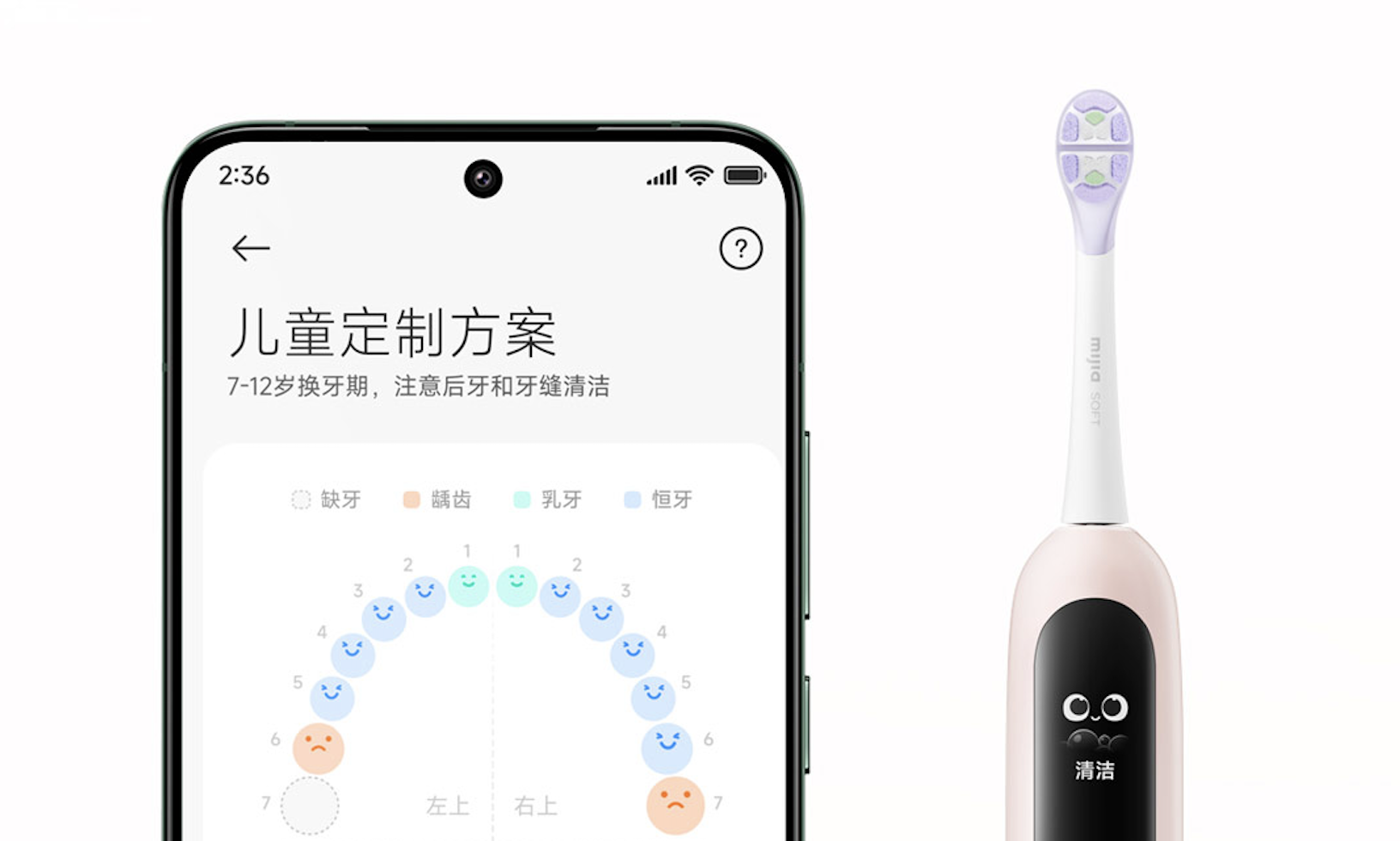
Image Source: Xiaomi Youpin
It is evident that Mijia has put considerable effort into the intelligent and AI-driven features of the Children's Electric Toothbrush Pro, as well as in data-supported refined and long-term oral care management. However, the biggest issue with this new product is its high price of 329 yuan.
Additionally, the Mijia Children's Electric Toothbrush Pro is only compatible with Mijia Children's Shock-Absorbing Series brush heads. According to the official recommendation of replacing them every three months, the annual cost for brush head replacements amounts to 92 yuan.
Children's Electric Toothbrushes Become a New Growth Driver, More Manufacturers Showcase Their Skills
Data from Aowei Cloud Network shows that since 2021, the Chinese electric toothbrush market has experienced accelerated declines (2021 and 2022) and sluggish growth (since 2023) in terms of sales value.
In 2025, the total online sales volume of electric toothbrushes in China was 22.77 million units, down 10.8% year-on-year; sales value reached 5.41 billion yuan, a slight decrease of 0.1% year-on-year.
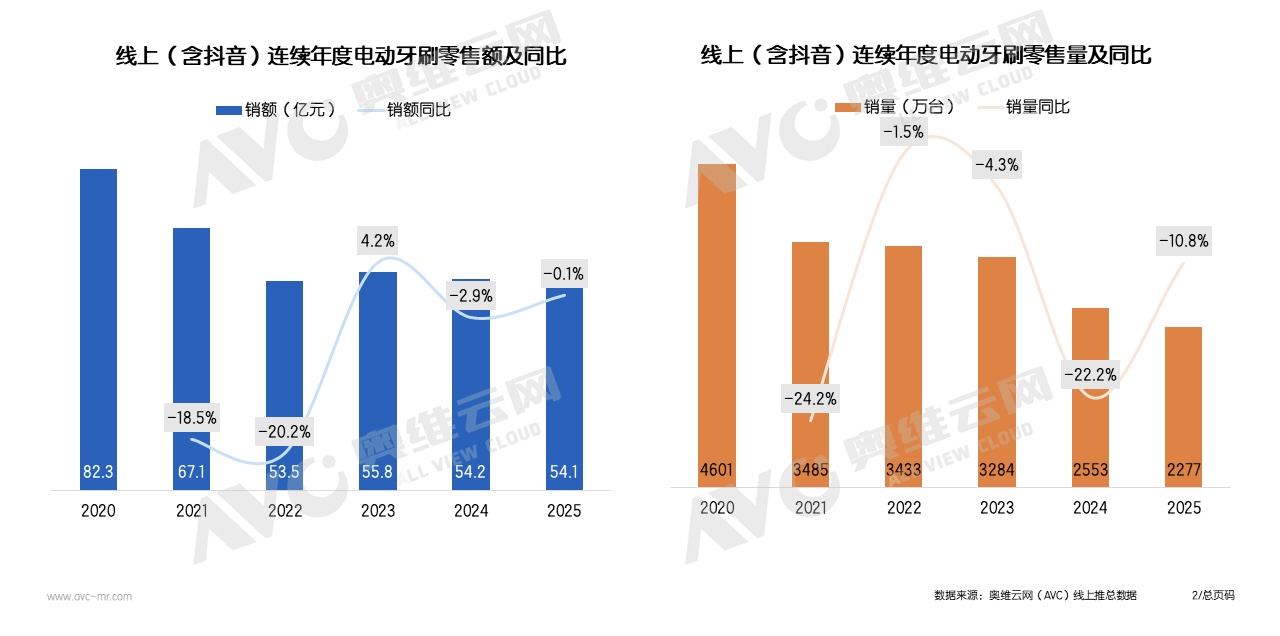
Image Source: Aowei Cloud Network
While the overall electric toothbrush category is experiencing sluggish growth, the subdivision (Note: retained as is for specificity, but typically translated as 'niche' or 'sub-segment') children's electric toothbrush segment has become a rare bright spot in the entire market.
Data from Head leopard Research Institute shows that in 2024, sales of children's electric toothbrushes in China surged by 45% year-on-year, with their market share rising to 11.5%.
Just like the 329-yuan Mijia electric toothbrush, which offers features such as color display, voice reminders, and App-generated brushing reports, consumers might hesitate if it were an adult model, but they are more receptive to a children's version.
Young Chinese parents today place greater importance on personal care, especially oral health, for themselves and their children compared to previous generations. This has provided electric toothbrush brands with their greatest development opportunity during the industry's transition. As children's electric toothbrushes become a new growth driver, more manufacturers are showcasing their skills.
Compared to Mijia's focus on screen displays, the Usmile (Xiaoshuangjia) brand currently offers children's electric toothbrushes that primarily feature voice interaction, even incorporating "bone conduction" technology for this purpose.
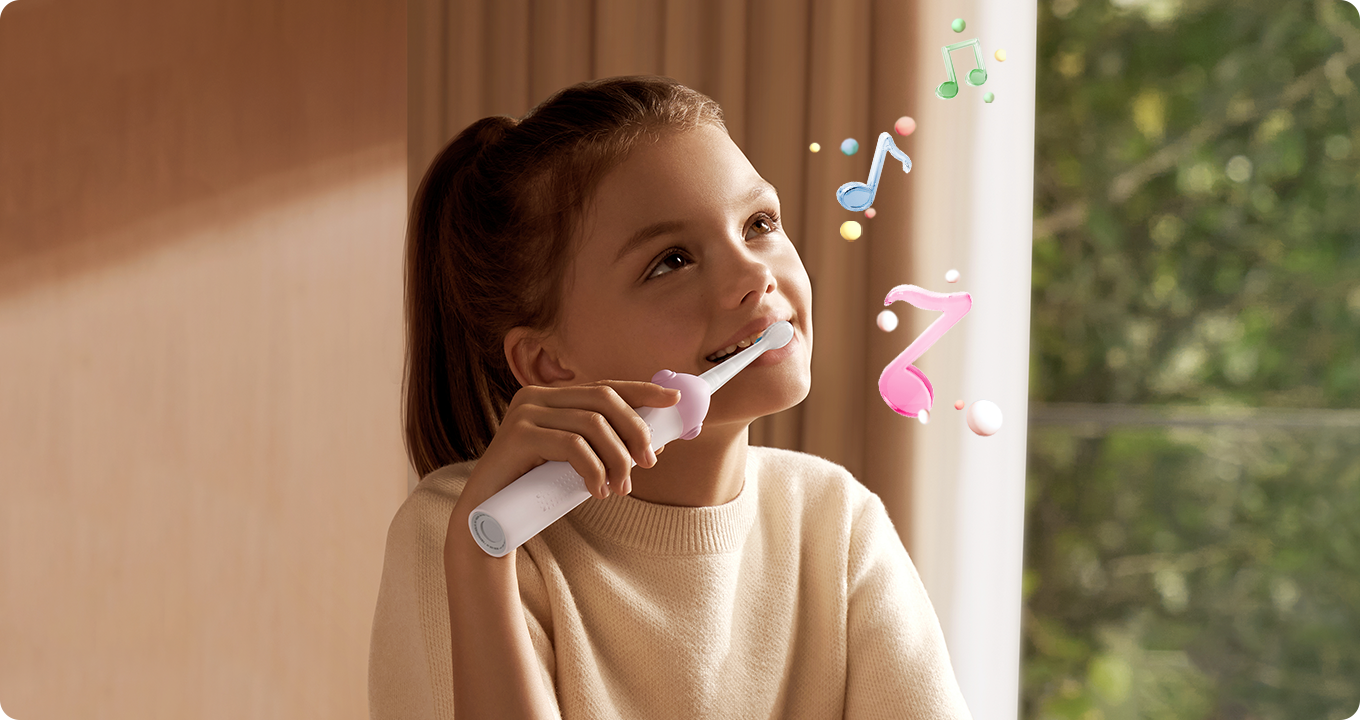
Image Source: Usmile
Aimed at children, Usmile's currently promoted Q20 series supports bone conduction voice guidance. Compared to traditional speaker-based technology, bone conduction ensures that the toothbrush only emits sound when in contact with the child's teeth, avoiding excessively loud sounds and disturbance to others.
Based on bone conduction technology, Usmile's children's electric toothbrushes also offer features like music playback and voice reminder packages, available in different types and styles. Music can only be heard when the toothbrush is in contact with the teeth (during brushing), a design that encourages children to brush more actively and independently.
While brushing, users may not always see the screen animations or "positive feedback" incentives on the toothbrush handle; voice reminders and bone conduction-based music playback can theoretically be more effective in enhancing children's brushing initiative.
Beyond bone conduction technology, Usmile's children's electric toothbrushes also feature a dynamic light ring design that displays brushing progress, missed area feedback, and encouraging light effects. The Pro model in Usmile's Q20 series incorporates an interactive screen, a monitoring camera, and an AI-personalized dental care system. Usmile's Q30 series even introduces an AR brushing game in its paired mobile App.
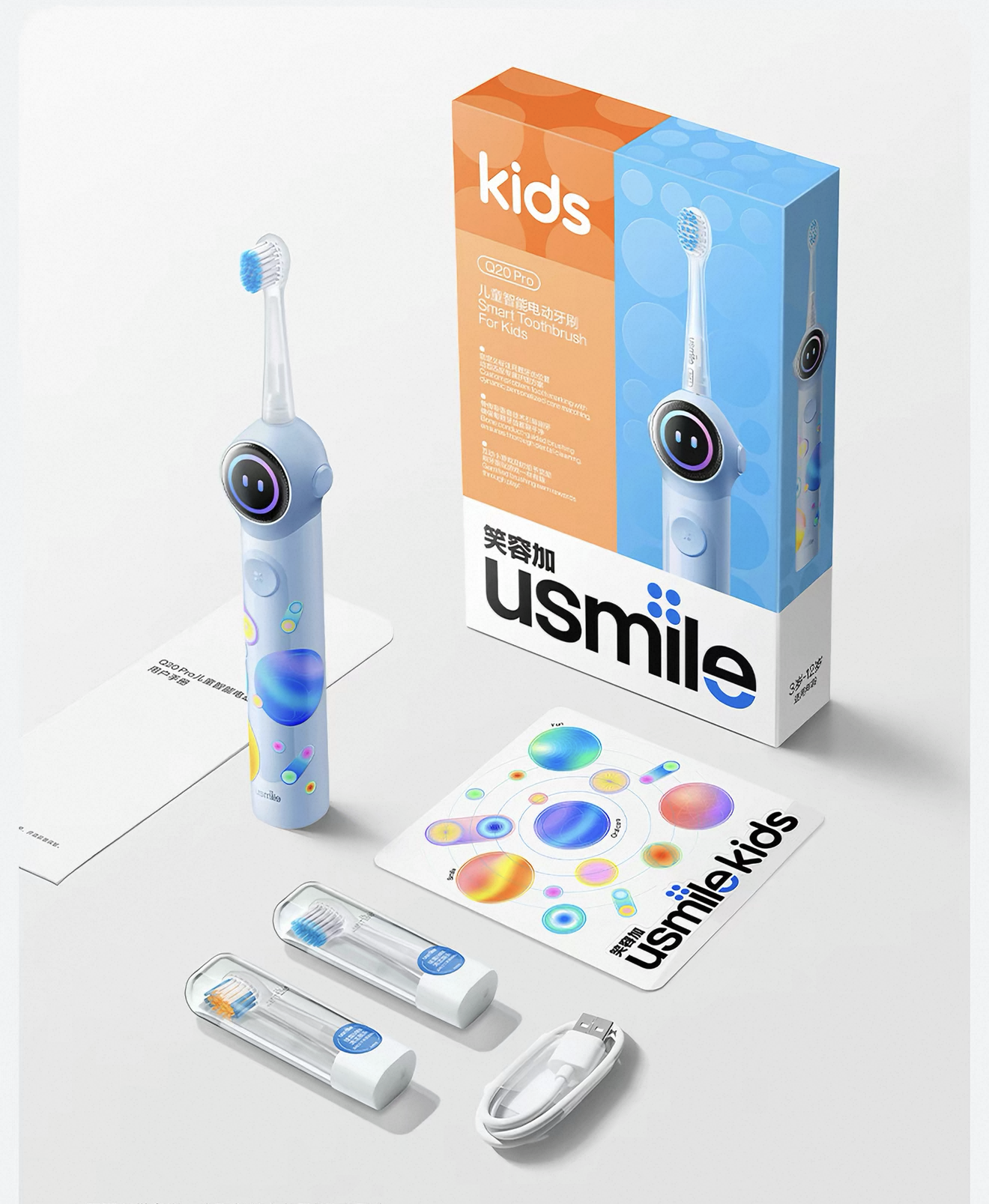
Image Source: Usmile
Whether it's Mijia or Usmile, the numerous innovative designs and creative ideas behind their children's electric toothbrushes serve one fundamental purpose: to do everything possible to encourage children to love their products, gain parental approval for their design philosophies, and ensure continued payment for higher product premiums.
Not Just Children's Toothbrushes: Electric Toothbrushes Undergo Major Technological Transformation in Recent Years
Innovations in children's electric toothbrushes in recent years have primarily focused on the following points:
1. Equipped with color displays to enhance the technological and brushing ambiance;
2. Support voice reminders and even incorporate bone conduction technology to make brushing more enjoyable for users;
3. Introduce six-axis sensors, monitoring cameras, and AI algorithms to provide real-time reminders and correct guidance for brushing movements;
4. Offer App-generated brushing reports and focus on data-supported refined oral care management.
Notably, these innovative features and technological applications are expanding from children's electric toothbrushes to adult models. Meanwhile, innovation in the adult electric toothbrush category is also accelerating.
Besides Usmile and Mijia, brands like Dreame and Laifen have also entered the electric toothbrush market in recent years, launching their flagship products.
At the recently concluded AWE2026, the Leikeji reporting team spotted Dreame's full range of electric toothbrushes at its booth, from the flagship X10F Smart Care Electric Toothbrush to the E10S/E10FAI Smart Electric Toothbrush, and the NB01 Smart Sensing Toothbrush.
Among them, the NB01 Smart Sensing Toothbrush caught Xiao Lei's attention. This Dreame electric toothbrush features a "keyless" design, eliminating the need for users to select modes. It incorporates built-in intelligent algorithms that automatically match the cleaning mode and adjust pressure accordingly.
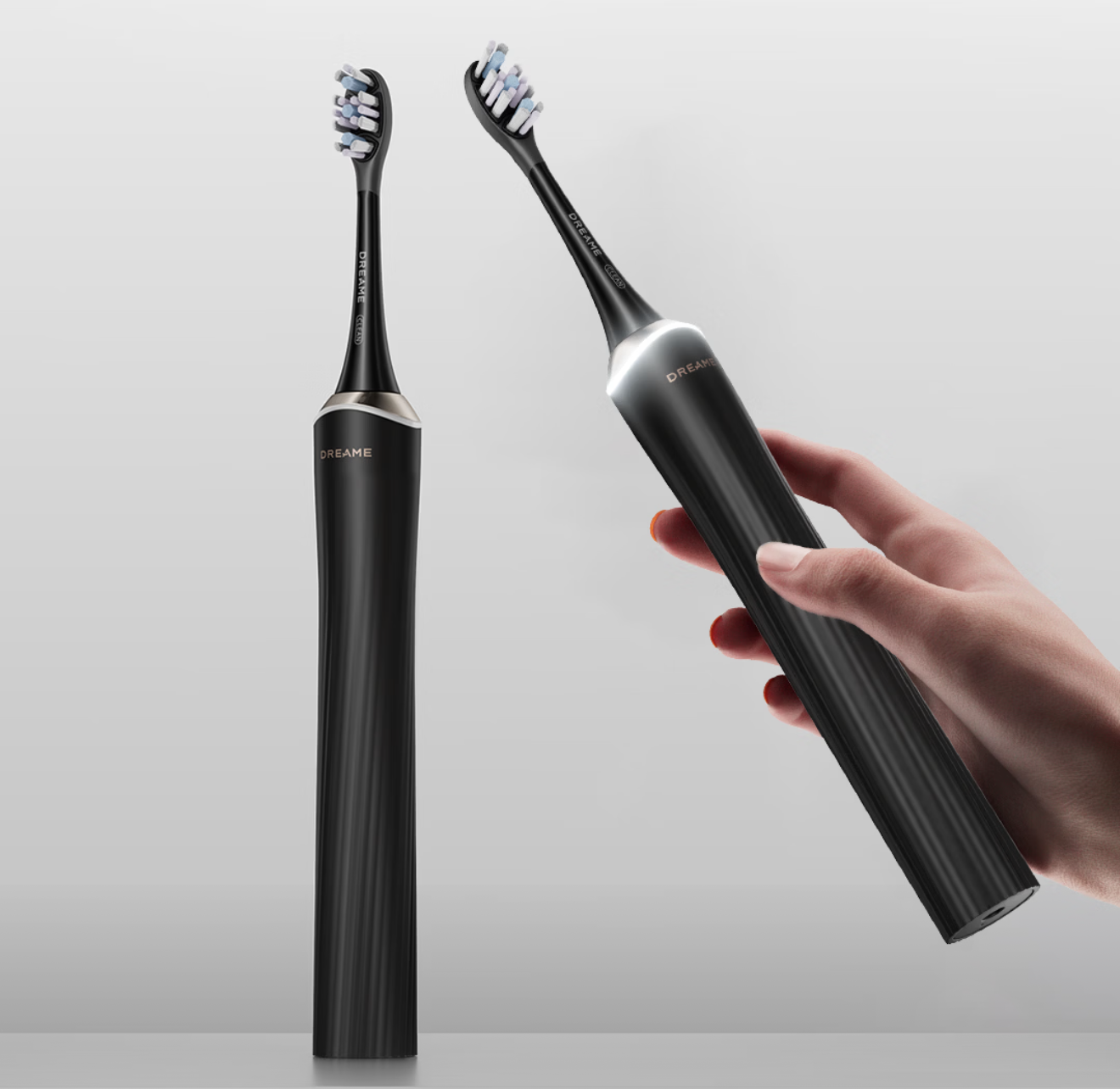
Image Source: Dreame
As a key selling point, the Dreame NB01 Smart Sensing Toothbrush offers a "pick up and brush, stop when removed from the mouth" user experience. By eliminating button design and power-on/off steps, it also addresses the common issue of "toothpaste splatter."
Laifen showcased its Oscillating-Rotating Electric Toothbrush i2 at AWE2026, adding titanium metal and transparent explorer editions to its first-generation lineup.
The i2 transparent explorer edition features a transparent shell design, allowing users to visually inspect the internal components of the toothbrush handle, presenting a cool and eye-catching appearance. Upon first glance, Xiao Lei immediately thought of DJI's flagship robotic vacuum cleaner, the ROMO P series, launched last year. The addition of magnetic positioning wireless charging functionality is a significant plus for the Laifen i2.
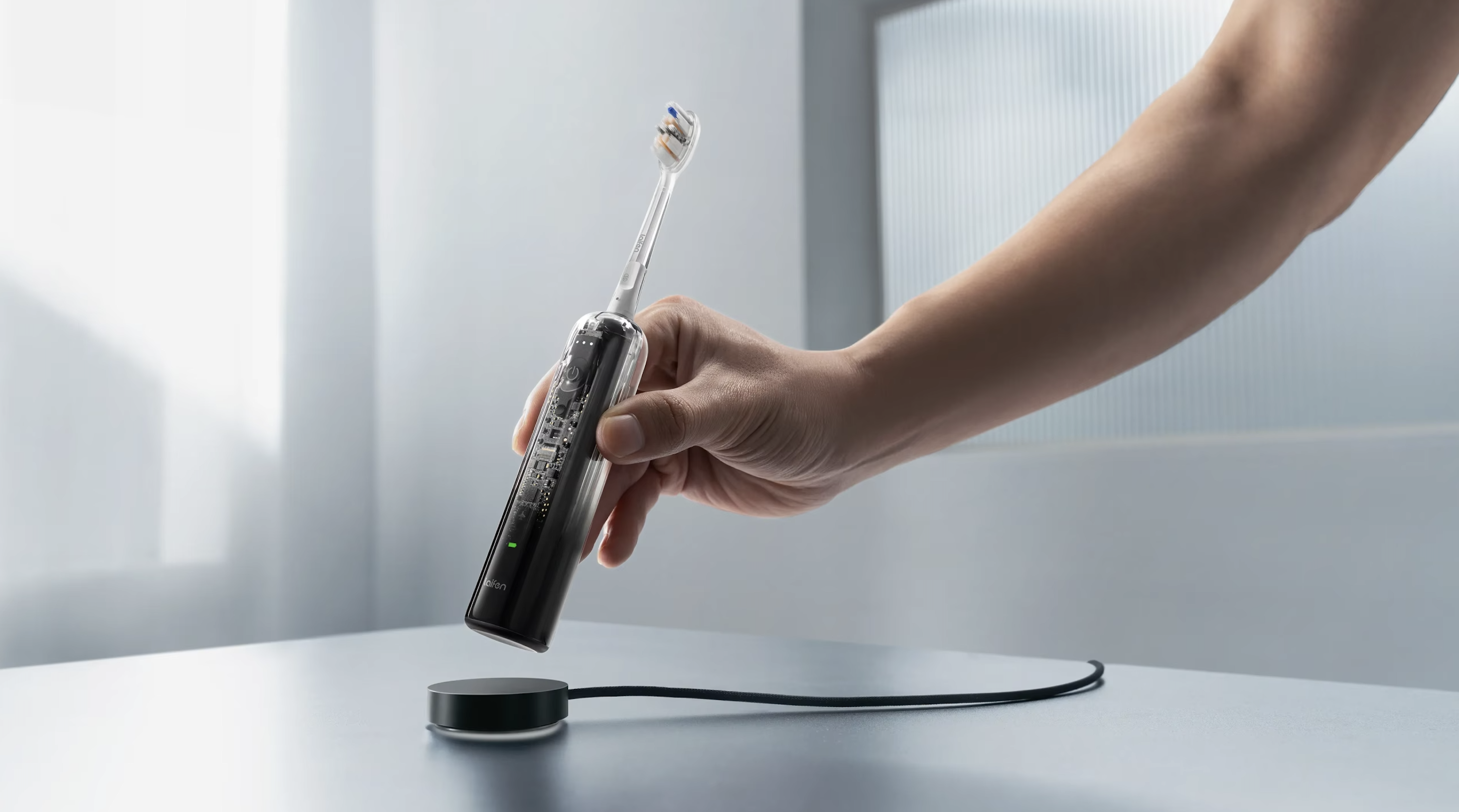
Image Source: Laifen
It is evident that after exploring screen displays, voice interaction, scientific brushing, and oral care management, with the entry of new players, the electric toothbrush market has begun to boldly innovate in areas such as body buttons and handle materials. Innovation reigns supreme amid market sluggishness.
How Far Are Innovative Electric Toothbrush Models from Becoming Blockbusters?
On platforms like Xiaohongshu, Xiao Lei has also come across numerous user complaints about electric toothbrushes and content sharing about reverting to traditional toothbrushes.
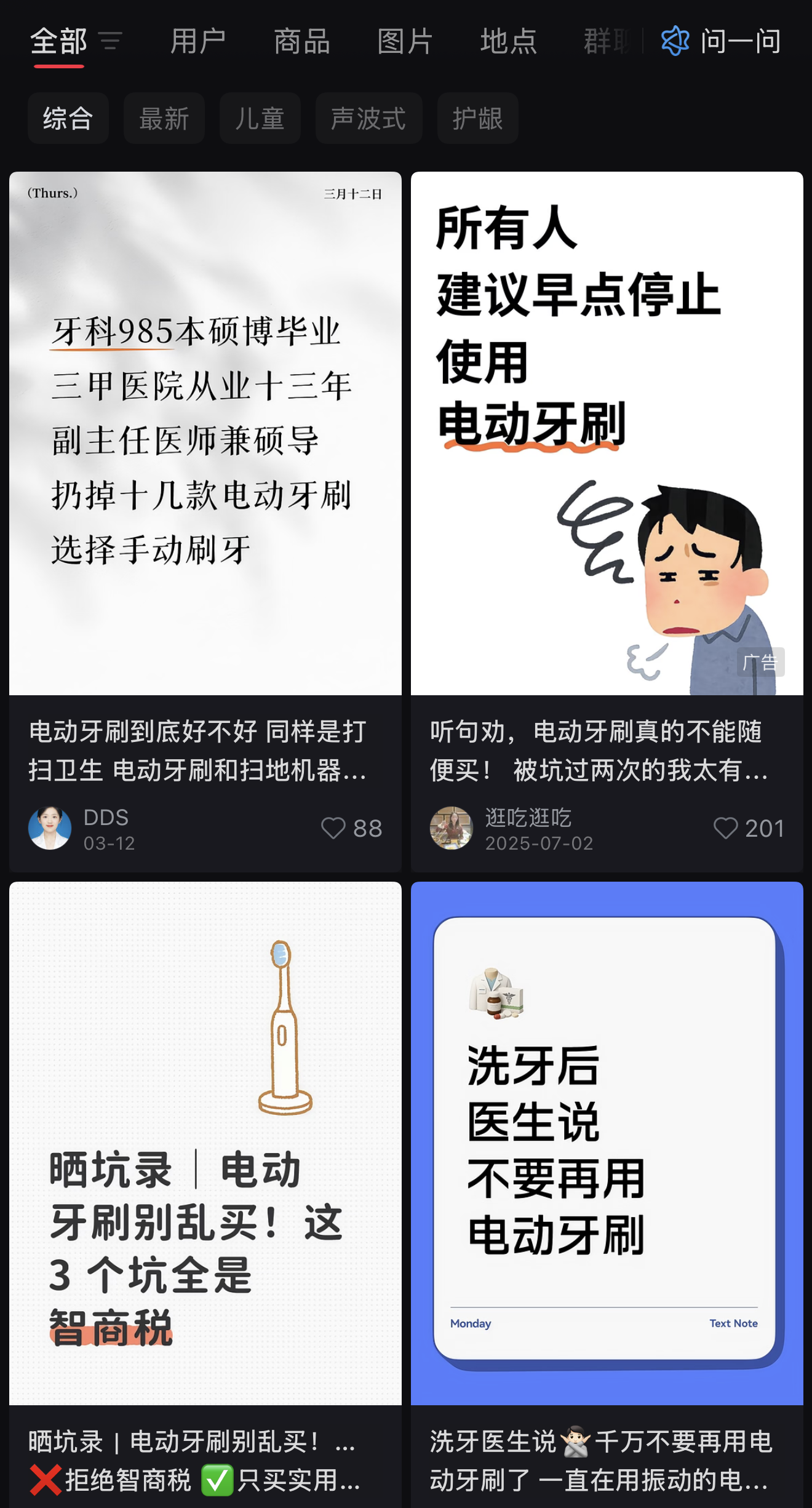
Image Source: Xiaohongshu
From a market trend perspective, this trend is indeed reflected. In 2020, the total online sales volume of electric toothbrushes in China was 46.01 million units; by 2025, it had plummeted to only 22.77 million units, a reduction of more than half. In contrast, the decline in sales value was not as significant, with a 34% drop in 2025 compared to 2020, indicating an overall increase in the average price of electric toothbrushes in China over the past few years.
After experiencing continuous declines in overall market sales over the years, the brands and manufacturers that remain in the game or are willing to enter are primarily targeting mid-to-high-end price segments and specific consumer groups, such as children and the middle class. This has resulted in a growing price gap between flagship and entry-level products from major domestic brands. The phenomenon of users who previously used basic (tens of yuan price range) electric toothbrush models abandoning them in favor of traditional toothbrushes continues to emerge.
Innovative electric toothbrush models need to find a better balance between price and experience to lower the entry barrier for more mid-to-low-end consumers. Whether it's electric, smart, or AI toothbrushes, they need to provide users with more compelling reasons to upgrade or remain loyal.
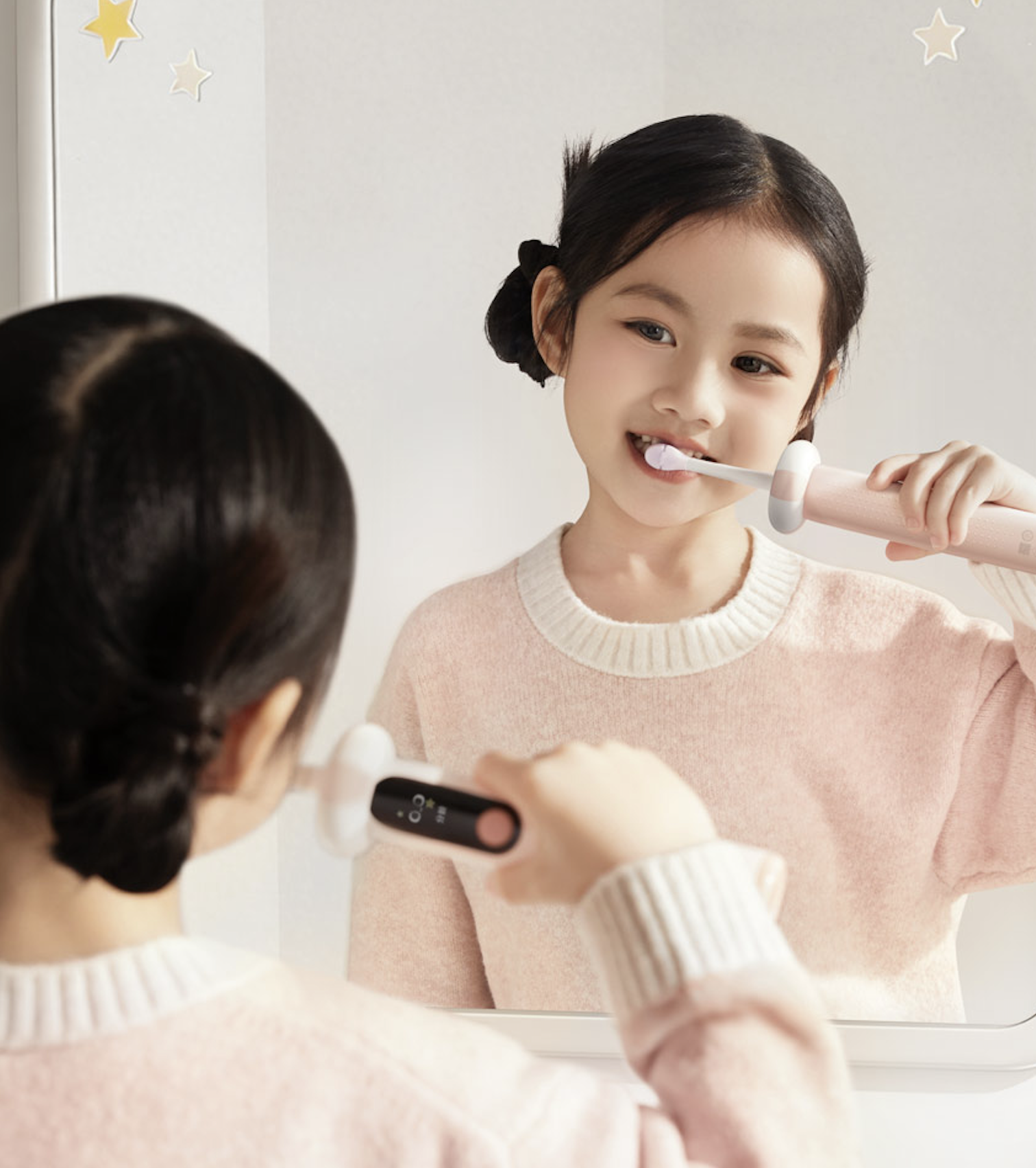
Image Source: Mijia
Currently, many brands promote concepts such as "the average Chinese brushes for only 59 seconds, but our product can achieve 2-3 minutes of brushing time" and "achieve long-term, scientific oral care management." While these ideas are commendable, they are unlikely to strongly stimulate user market "return" in the short term.
Brands like Usmile and Mijia are fully committing to the children's electric toothbrush category, not only targeting this rapidly growing niche market but also laying the groundwork for the future. After all, today's children will eventually grow into adults. The longer usage age settings for children's electric toothbrushes, such as supporting up to 15 years old and age-specific modes (different intensity levels), provide a more natural transition from children's to adult models.
During the sluggish demand period in the overall electric toothbrush market, major brands and manufacturers are exploring niche growth areas like the children's category and continuously launching mid-to-high-end innovative products. While this may not significantly boost overall sales in the short term, it is a reasonable, wise, and practical move for vertical brands to weather the downturn and for new entrants to break through.
Electric Toothbrush, Xiaomi, Mijia, Usmile, Dreame, Laifen
Source: Leikeji
Images in this article are from the 123RF Authentic Library (123RF Royalty-Free Image Library)
-
![]()
Smartphone Prices Surge Amid Manufacturer Anxiety
-
![]()
Orbbec Soars to Record Heights, Eyes Further Capital Influx of 980 Million!
-
![]()
Tongding Interconnect Sets Up Shop in Shaoguan with 800 Million Yuan in Registered Capital
-
![]()
Before Kimi’s A-Share Debut, Zhipu Aims to Secure More 'Strategic Funding'
-
![]()
Innovative Leap | Fiber-Pluggable 1470nm Laser Source: Revolutionizing Precision Laser Weeding
-
![]()
73-Day Rapid Listing: Where Does Unitree's Wang Xingxing's 'Sense of Urgency' Come From?
-
![]()
AI Project Mindverse, Backed by Meituan, Faces Data Inflation Allegations Over Its Macaron Product
-
![]()
3000-word In-Depth Analysis | What Makes Physical AI So Magnetic? It Has Captivated Masayoshi Son, Jensen Huang, and Justin Sun All at Once