DJI Pocket 4 Arrives! Tracing DJI Pocket's Journey to Legendary Status: Can 'A Tiny Device Capture Countless Moments' Spark Another Sensation?
 04/13 2026
 454
454
Are You Prepared?
If you pose the question, "What's DJI's most sought-after product?" to a friend who isn't tech-savvy,
The response is probably not a high-end drone or an action camera, but rather the DJI Osmo Pocket 3. Even two and a half years post-launch, it continues to sell out rapidly across major platforms. This device not only shed DJI's image as a brand exclusively for tech enthusiasts but also emerged as the most remarkable sales phenomenon in the current imaging market.
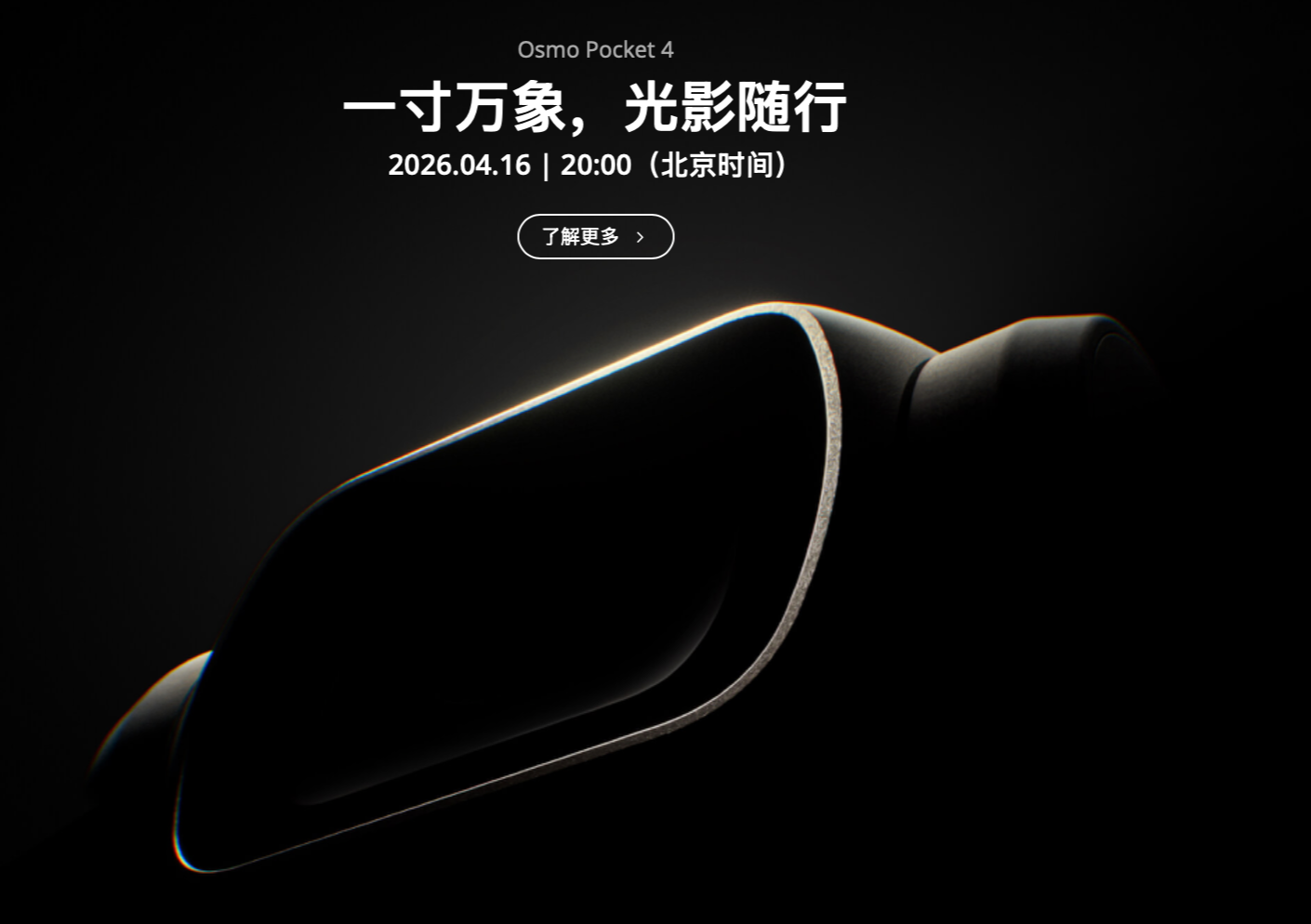
(Image source: DJI Official)
DJI has officially announced that the Osmo Pocket 4 will hit the shelves on the 16th of this month. Seizing this occasion, Leitech will briefly explore how, in an era where smartphone imaging capabilities are striving to 'surpass mirrorless cameras,' DJI managed to enchant the market with a pocket camera that can't even install WeChat, capturing a substantial market share from both camera and smartphone manufacturers?
Why Has DJI Remained a Favorite for Three Years?
In 2018, when DJI unveiled the first-generation Osmo Pocket in New York, the astonishment it induced was no less than that of the subsequent Pocket 3. It squeezed an incredibly intricate three-axis mechanical gimbal and a substantial sensor into a lipstick-sized casing, a true industrial marvel at the time.
The ensuing Pocket 2 rectified the shortcomings of its forerunner by significantly enhancing image quality, audio reception, and wide-angle capabilities. It not only carved out a niche among professional creators but also, with its nearly 'unnoticeable' portability, became the 'secondary camera' for countless travel bloggers in those years.
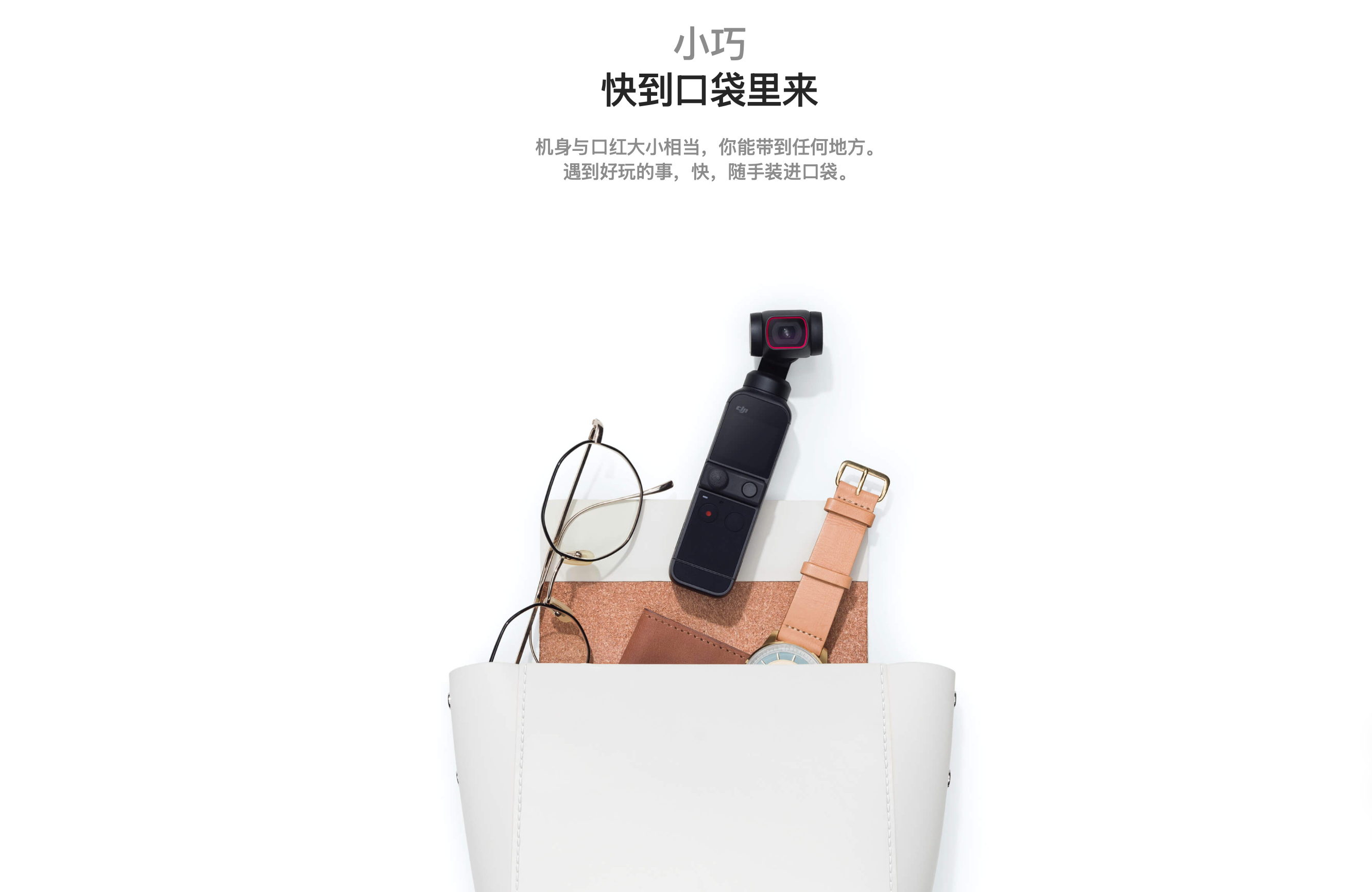
(Image source: DJI Official)
The advent of these two products successfully pioneered the new category of 'pocket gimbal cameras' and firmly penetrated the core community of video creators. However, to be candid, the first two generations did encounter some significant bottlenecks on their path to mainstream acceptance.
The initial challenge was image quality. The 1/2.3-inch sensor in the first generation and the 1/1.7-inch sensor in the second generation represented the pinnacle of DJI's capabilities at the time. While the image quality was indeed commendable in bright daylight, it's crucial to note that the years 2018-2020 witnessed substantial advancements in smartphone imaging. Manufacturers employed various computational photography techniques, such as multi-frame synthesis and aggressive noise reduction, to elevate smartphone image quality to unprecedented levels. This implied that the first and second generations of Pocket did not significantly outperform smartphones in terms of image quality and even fell slightly short in low-light scenarios, such as at night.
'If the image quality is on par with a smartphone, why should I invest in this device?' This sentiment undoubtedly echoed among most users at the time.
The second challenge was interaction. To maintain the Pocket series' compactness, DJI equipped the first two generations with extremely small screens (0.96 inches for the first generation and 1.08 inches for the second). For users accustomed to large smartphone screens, framing, focusing, navigating menus, and adjusting parameters on a screen smaller than a smartwatch dial proved to be a nightmare.
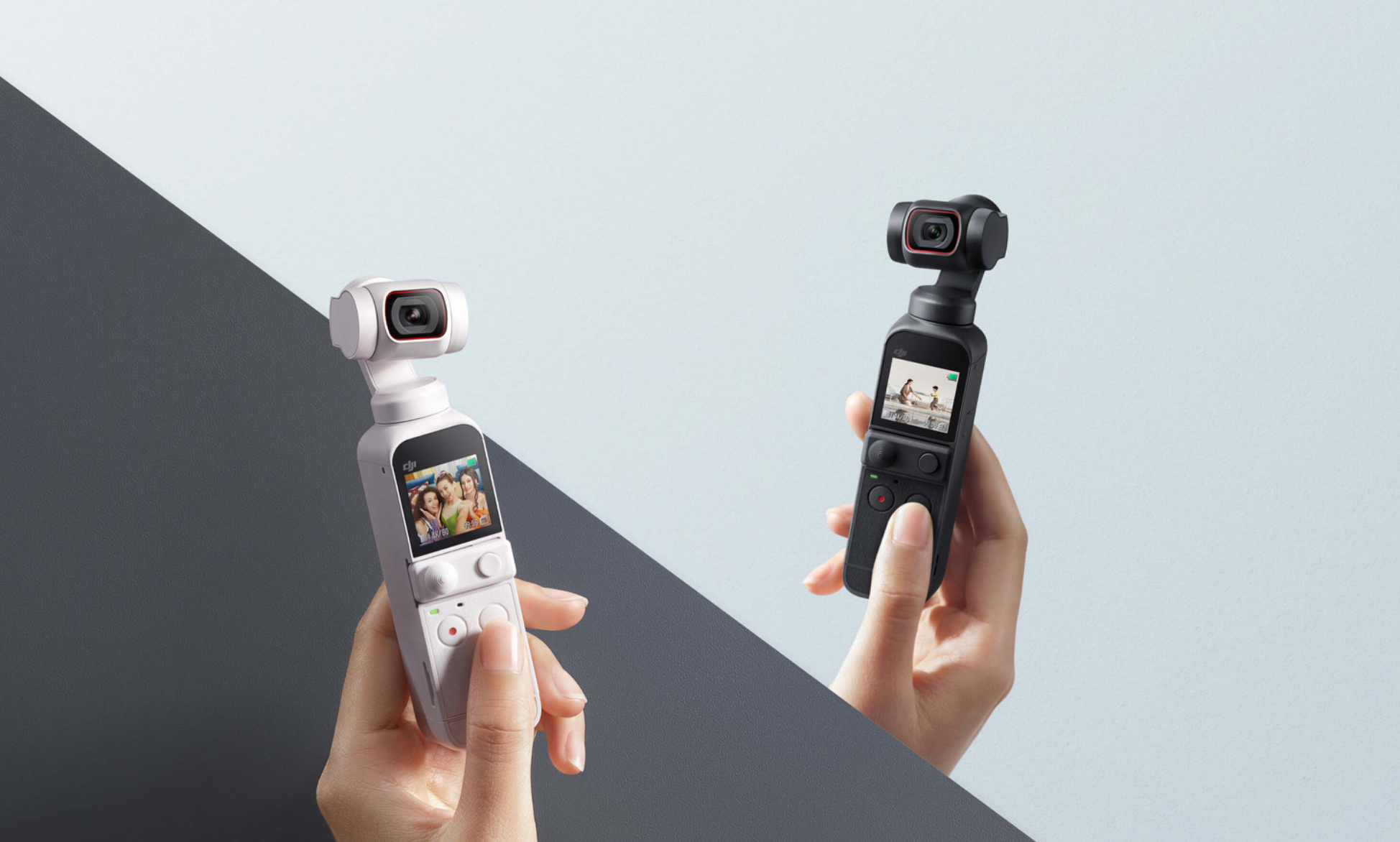
(Image source: DJI Official)
Of course, DJI offered a solution: incorporating an expansion port on the device and utilizing a plug-and-play smartphone connector to 'merge' the phone with the device, effectively using the phone as a large screen.
For casual users who simply wanted to 'pick it up and shoot,' having to 'assemble' the device for each shot was not only cumbersome but also defeated the original purpose of single-handed, discreet shooting.
It can be argued that from a product standpoint, the first and second generations of Pocket were exceptionally outstanding 'hardcore products.' They defined a new camera category but never crossed the threshold into the mainstream market. DJI recognized better than anyone that minor adjustments, such as 'increasing battery size or altering interfaces,' would not suffice. To persuade the general public, who were accustomed to taking photos with their smartphones, to willingly spend money, the fundamental logic of the entire Pocket product line had to be completely revamped.
Revamping the Product Logic, Pocket 3 Sheds Its 'Hardcore Only' Image
To realign this logic, DJI embarked on a three-year preparation journey.
From the Pocket 2 in 2020 to the Pocket 3 at the end of 2023, there was a three-year hiatus. In the fast-paced realm of tech hardware iterations, a three-year gap for a core product line was almost tantamount to 'obsolescence.' At the time, I even speculated whether the Pocket series had been discreetly discontinued by DJI.
But DJI persevered. These three years provided DJI with ample time to accumulate technology and await the perfect moment to strike.
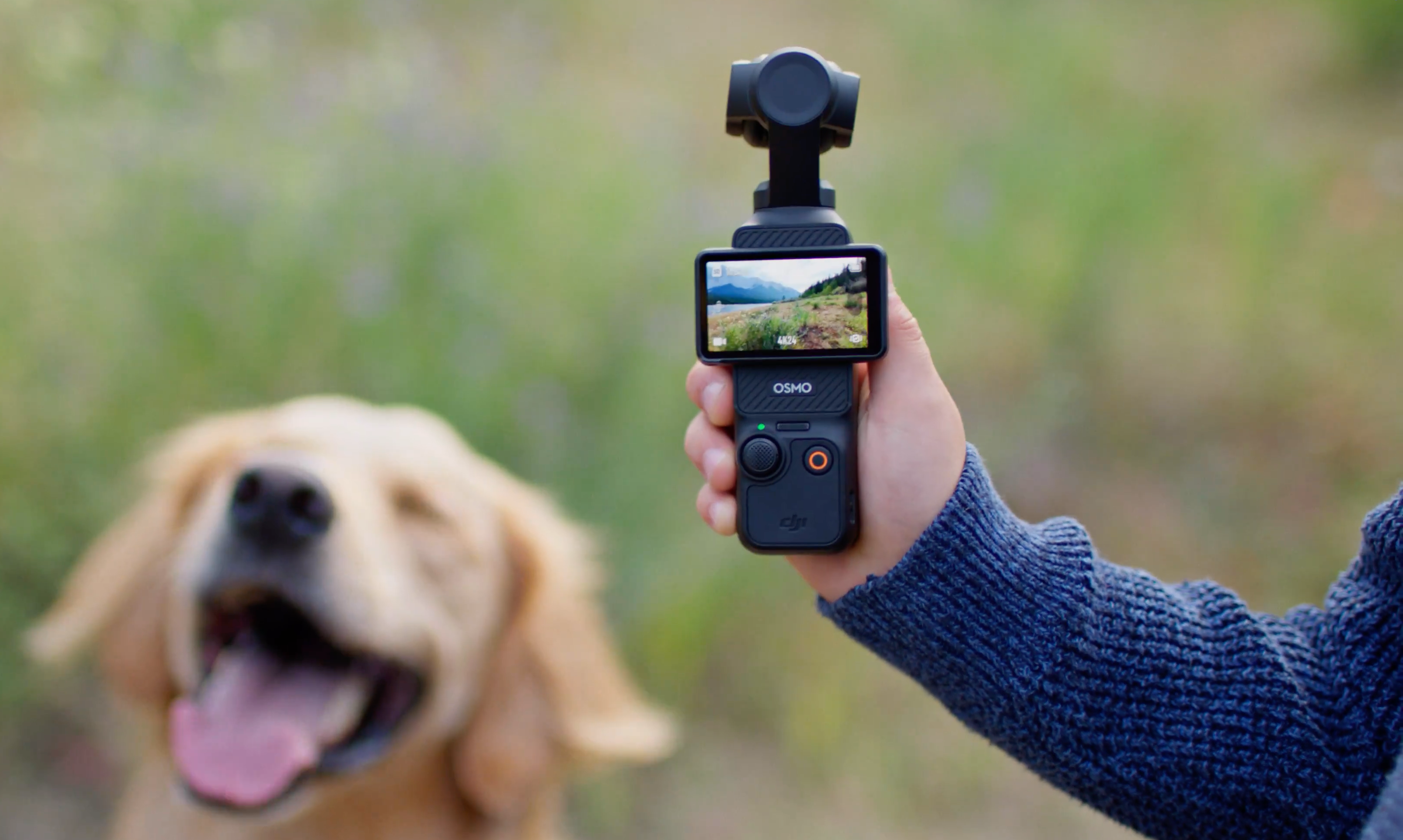
(Image source: DJI Official)
Because during these three years, the short video market underwent a seismic shift, and the Vlog era dawned for the general public. Documenting life was no longer the exclusive domain of bloggers with millions of followers; ordinary individuals also began to aspire to shoot high-quality videos.
However, the dilemma was that professional cameras were not only costly but also had a steep learning curve. Users couldn't possibly invest tens of thousands of dollars and a significant amount of time learning from scratch just to document their daily lives. While smartphone video recording sufficed, as a communication tool, it was susceptible to interruptions from message notifications or phone calls. Additionally, the battery drain and overheating issues caused by prolonged 4K video recording made it challenging for users to maintain a focused creative mindset.
So, what type of device did the market crave? The answer was straightforward yet intricate: it had to offer significantly superior image quality than a smartphone; it had to be infinitely more portable than a mirrorless camera; it had to be ready to shoot videos at a moment's notice; and most crucially, it absolutely couldn't have a steep learning curve.
Confronted with this seemingly insurmountable challenge, DJI provided a solution that could be deemed exemplary. It directly addressed the shortcomings of smartphone photography and offered a solution that ordinary users couldn't resist.
Firstly, image quality. DJI Pocket 3 incorporated a one-inch CMOS sensor into its compact frame. As the adage goes in the tech world, 'a larger sensor reigns supreme.' While many current Android flagship smartphones also boast one-inch sensors, their optical performance is severely constrained by the phone's slim profile, often resulting in excessive computational sharpening and smudging artifacts.
The Pocket 3, in contrast, features an independent high-quality optical system that can deliver genuine physical background blur. When shooting portraits, it avoids the common smartphone pitfall of incorrectly calculating hair strands in the background removal algorithm, providing a naturally soft background blur that instantly imparts a high-end cinematic feel to the image. Its low-light performance has also improved by several notches, enabling ordinary individuals to shoot exceptionally clean, high-quality night scenes on dimly lit streets without the need for massive fill lights.
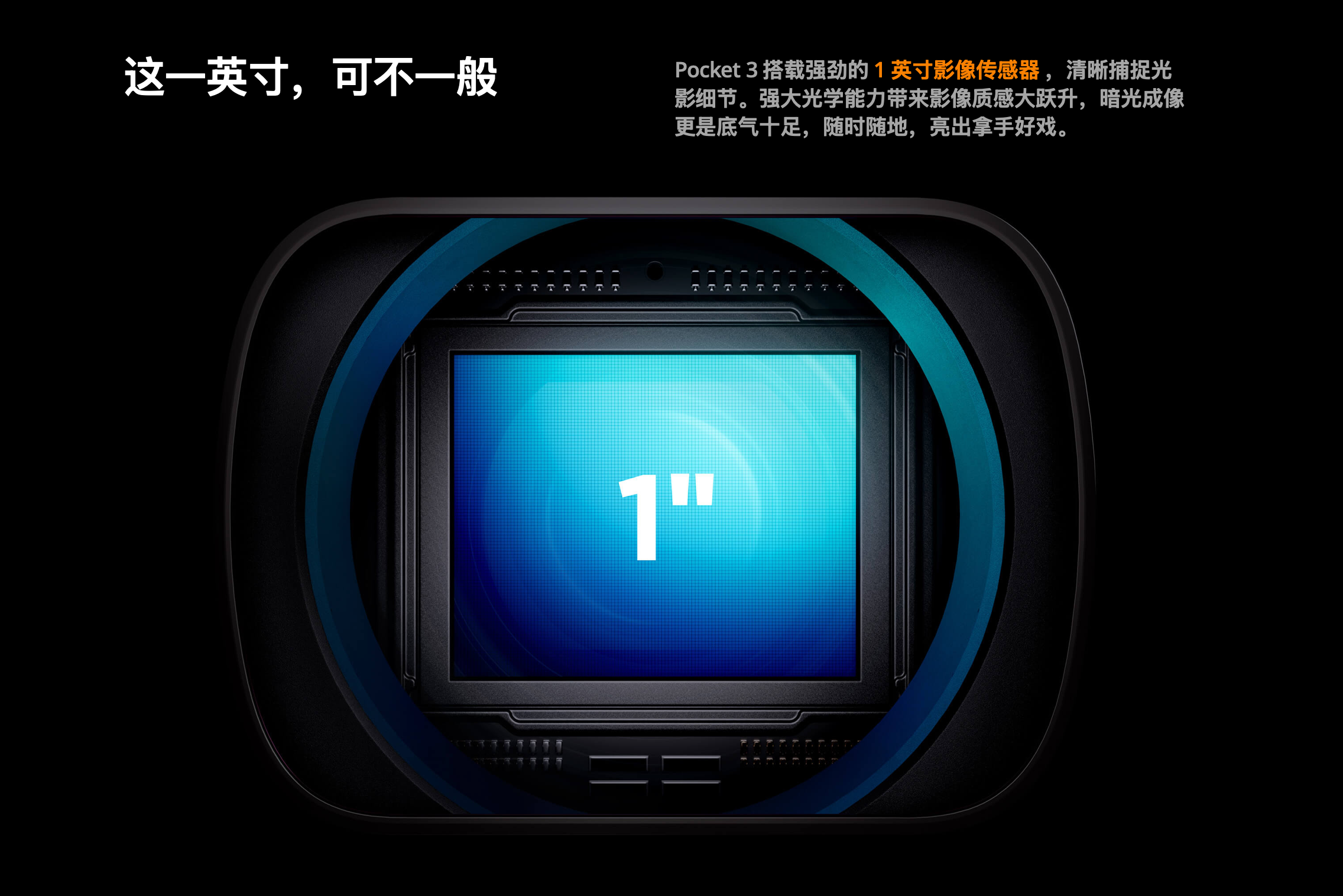
(Image source: DJI Official)
Secondly, interaction. DJI resolved the long-standing issue of 'how to shoot' with a rotatable screen. The screen size increased from 1.08 inches to 2 inches, providing a larger and more vibrant display that allowed users to confirm composition more effortlessly. Of course, the most surprising feature for the market was its power-on method: with a simple thumb push on the screen, the device was ready to shoot in an instant. This ritualistic physical interaction was not only immensely satisfying but also perfectly suited the 'candid shot' needs of Vlog recording.
This screen was tailor-made for the short video era. Rotating the horizontal screen vertically, the Pocket 3 automatically entered vertical shooting mode, enabling users to post directly to major social media platforms after shooting, completely freeing creators from the agony of post-production cropping.
Thirdly, and something that other manufacturers would find challenging to match in the short term, ecosystem integration. DJI seamlessly integrated the Pocket 3 with its audio ecosystem. The DJI Mic transmitter included in the carrying case allowed for direct connection upon power-on. The 32-bit floating-point internal recording function ensured that even novice users were unlikely to over-record sound on noisy streets or amid sudden gusts of wind.
All these robust hardware features were built on the premise of 'pampering' the user. The Pocket 3 abandoned perplexing parameter adjustments like aperture and shutter speed, transforming it into a tireless personal photographer. Users only needed to power it on and shoot, leaving the intricate work to the device.
Fourthly, emotional value. If we solely discuss hardware specifications, it's challenging to fully elucidate why the Pocket 3 became such a resounding success.
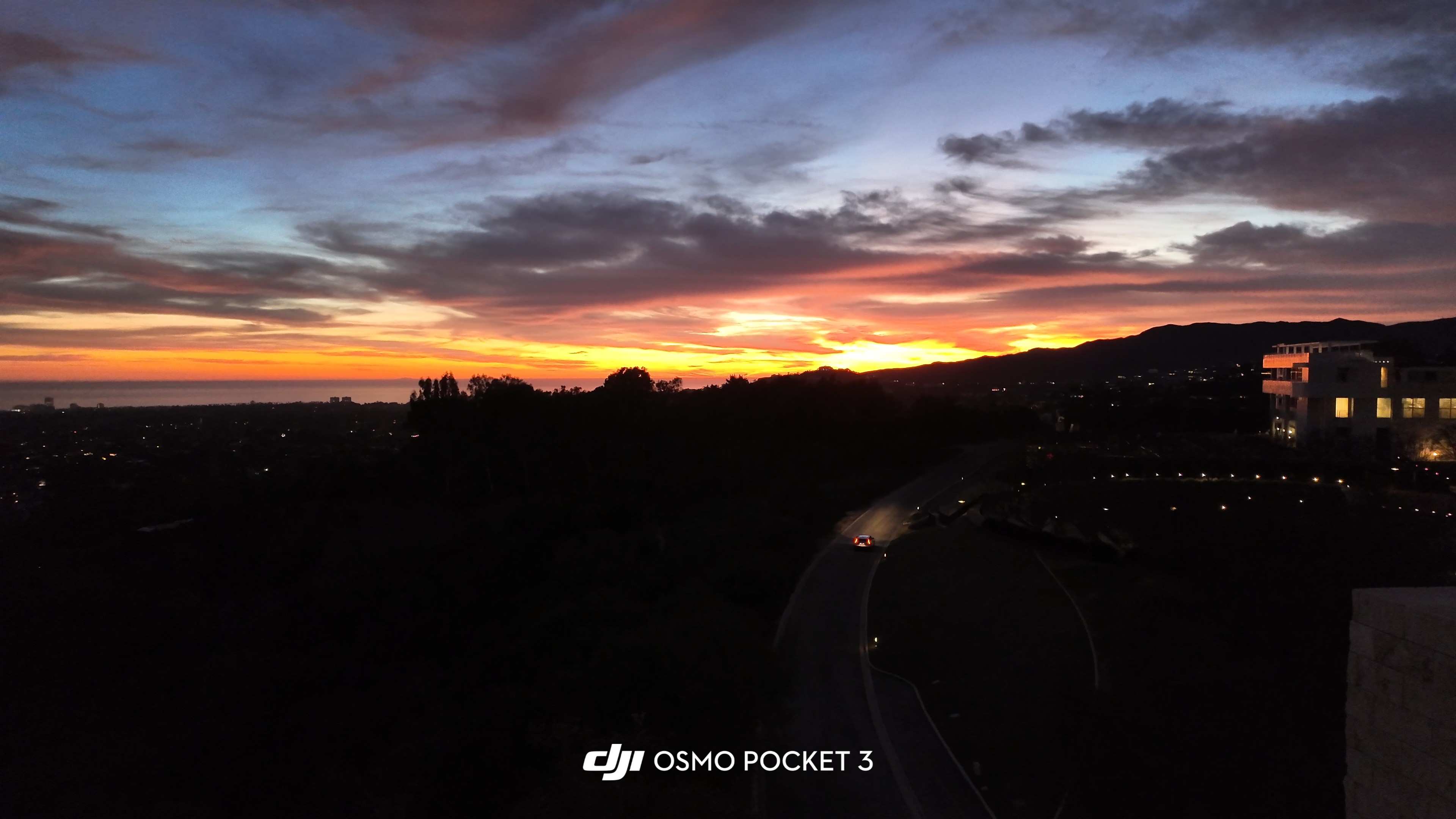
(Image source: Leitech)
Nowadays, smartphones are indeed becoming increasingly versatile, but they're also making us feel progressively overwhelmed. The greatest allure of the Pocket 3 lies in its 'standalone' nature. This pure, dedicated recording device serves as a physical soundproof umbrella in this complex era of internet information. When users stroll down the street with it, they're no longer the office worker who needs to respond to messages instantaneously but an ordinary individual focused solely on the present.
Additionally, its extremely discreet and compact design can even be considered a daily fashion accessory. Taking selfies on the street with it completely eliminates the 'social awkwardness' of holding a large camera.
It enables recording life to revert to its most original purity and relaxation.
Pocket 3 Has Already 'Achieved Legendary Status,' What Can the Next Generation Do to Surpass It?
Reflecting on the past, the Pocket 3 has pushed the capabilities of a portable pocket camera to their zenith, and it truly deserves the sales legend status it has attained over the past two years. So, with such a lofty starting point, what surprises can the upcoming Pocket 4 bring us?
Leitech believes DJI still has some significant tricks up its sleeve:
Protection: Current mechanical gimbals are still somewhat delicate. If the next generation can achieve true dust and water resistance, enabling users to shoot without a case even while strolling in the rain or surfing at the beach, its product appeal would double.
Optical Zoom Range: While we're accustomed to its wide-angle view, we also yearn for closer telephoto shots. If it can achieve this through higher-pixel cropping or by incorporating an independent telephoto camera, providing more 'solutions' for shooting food and portraits, then smartphones would relinquish their last remaining advantage.
AI: Post-production remains a pain point for users. If the Pocket 4 can leverage more sophisticated on-device AI to automatically select highlights, add transitions and music from a vast library of footage as soon as you finish shooting, and even generate a finished video with a single voice command, that would be a true game-changer.
The success of the DJI Osmo Pocket 3 was no fluke. It was the culmination of DJI's years of technological accumulation in imaging, an extremely precise understanding of user pain points, and a flawless response to the trends of the short video era. It proved with its prowess that in any hardware sector deemed 'obsolete' or 'niche,' as long as you can genuinely eliminate user experience barriers with technology, the market will still reward you enthusiastically with tangible sales.
The DJI Osmo Pocket 3 has established itself as the industry benchmark for portable gimbal cameras, and the baton has now been passed to the future Pocket 4. What kind of surprises can it still unveil? Leitech will be eagerly anticipating to discover alongside everyone.
DJI Pocket 3 Portable Imaging Gimbal Camera
Source: Leitech
All images in this article are sourced from the 123RF royalty-free image library
-
The Backside Knife Skills of vivo S60 and OPPO Reno16
-
![]()
Breaking News | Core Chip Team Member Unexpectedly Changes Jobs! OpenAI Transforms into Anthropic's Talent Hub, with Over 15 Ex-OpenAI Core Members Now Holding Key Roles at Anthropic
-
![]()
When European Factories Face Idle Capacity, Chinese Brands Offer a ‘Traditional Chinese Remedy’
-
![]()
SEER Robotics Passes IPO Hearing: How Valuable Is the 'First Robot Brain Stock?'
-
![]()
5 Years, 170 Billion Yuan Wealth Vanishes: Where Did Wei Jianjun Go Wrong?
-
![]()
What Exactly Has Changed with the AI That Automatically Opens a Browser to Search Xiaohongshu?
-
![]()
Over 3,000 Heat-Related Deaths Daily, Yet India Imposes Ban on Chinese Air Conditioner Imports: Unraveling the Underlying Motives
-
![]()
Second-Hand Car Prices Plummet: Are Gasoline Vehicles on the Verge of Collapse?