Rocket Lab: The Most Dangerous Competitor to SpaceX?
 04/13 2026
 627
627
In the field of rocket launch, Rocket Lab is currently one of the few companies that can directly challenge SpaceX, and its capabilities extend beyond rocket launch. Rocket Lab has also developed industry-leading expertise in satellite manufacturing and constellation deployment.
So, how has Rocket Lab built the capability to challenge industry giants? Looking ahead, where does Rocket Lab's potential lie, and what are the key changes on the horizon? In this report, we will dissect these questions.
The following is a detailed analysis:
I. What Businesses Does Rocket Lab Engage In?
Simply put, Rocket Lab primarily engages in two businesses: rocket launch and satellite manufacturing and services. However, these two businesses are not separate but closely interconnected. In other words, Rocket Lab provides a full-service chain from satellite manufacturing to launch and even operation.
Now, let's examine Rocket Lab's specific products:
(I) Electron Lays the Foundation in the Rocket Sector, Neutron Challenges SpaceX
1. First, there is the small rocket Electron, which competes differently with SpaceX's Falcon 9.
Chronologically, Rocket Lab began developing the Rutherford engine for the Electron rocket in 2013 and successfully achieved orbit on its second launch in 2018, a process spanning five years.
Figure: Key Parameters of Electron
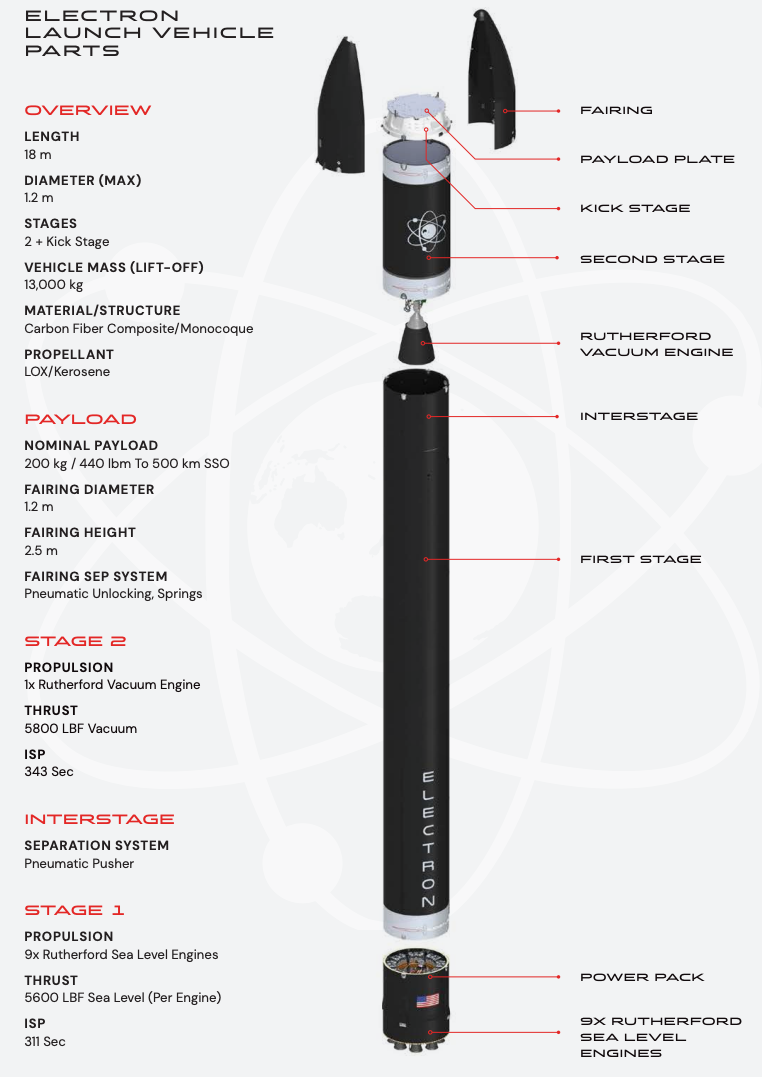
Source: Electron Payload User's Guide, Dolphin Research
Here, we compare Electron with SpaceX's current mainstream rocket, Falcon 9. Intuitively, the difference between the two can be likened to that between a bus and a taxi.
Falcon 9's typical advantage lies in its ultimate cost-effectiveness: for example, it can achieve first-stage reusability and launch multiple satellites at once (with a payload capacity of 17.5 tons to low-Earth orbit in a recoverable scenario), thereby diluting costs. However, it also has drawbacks, as launching multiple satellites at once requires each satellite to accommodate the overall launch mission, limiting flexibility.
Rocket Lab's Electron rocket has a very small payload, with a single-launch capacity of only 300 kg to low-Earth orbit, capable of launching only one satellite at a time. However, its advantage lies in flexibility, as it can arrange exclusive launch missions for small satellites.
Thus, Electron and Falcon 9 can form differentiated competition, filling a market gap. Of course, Electron has also attempted recovery, primarily through helicopter capture of the first stage, but after a failure, no further attempts were made.
2. The uniqueness of Rocket Lab's technical approach in rocket design is evident from Electron.
(1) Unlike Falcon 9, the Rutherford engine employs an Electric Pump-Fed Cycle, using lithium batteries to drive motors that power the turbopump, better suited for small rockets (requiring simplified structures for miniaturization and less drive energy);
(2) The main components of the Rutherford engine are all produced using 3D printing, with Rocket Lab applying 3D printing more thoroughly than SpaceX; simultaneously, carbon fiber is extensively used in materials. Given that small rockets have a higher proportion of structural weight and lower strength requirements, the use of carbon fiber can fully leverage its advantages while avoiding its disadvantages.
3. Neutron, Directly Competing with Falcon 9
Building on Electron's success, Rocket Lab unveiled its new rocket, Neutron, to the public in 2021, positioning it directly against Falcon 9.
This raises a question: previously, Rocket Lab effectively captured a differentiated market with Electron, so why is it now choosing to compete head-on with SpaceX? We believe there are three reasons:
(1) The market for small rockets is still too small, especially for commercial clients, where there is no cost advantage;
(2) Through Electron and the capabilities and resources accumulated in satellite manufacturing, Rocket Lab has a solid foundation for developing medium-sized rockets;
(3) Neutron does not necessarily need to directly compete with SpaceX, as the U.S. military and government will not tolerate a monopoly in the rocket launch market by SpaceX. Currently, Falcon 9 has no competitors, so as long as Neutron can be developed, clients will naturally open their doors.
Figure: Overall Structure of Neutron
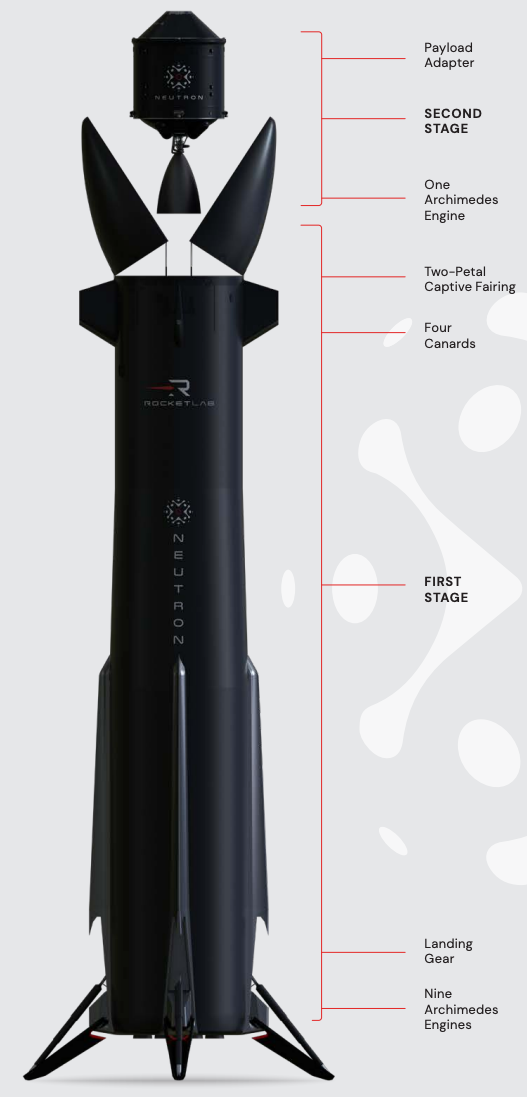
Source: Neutron Payload User's Guide, Dolphin Research
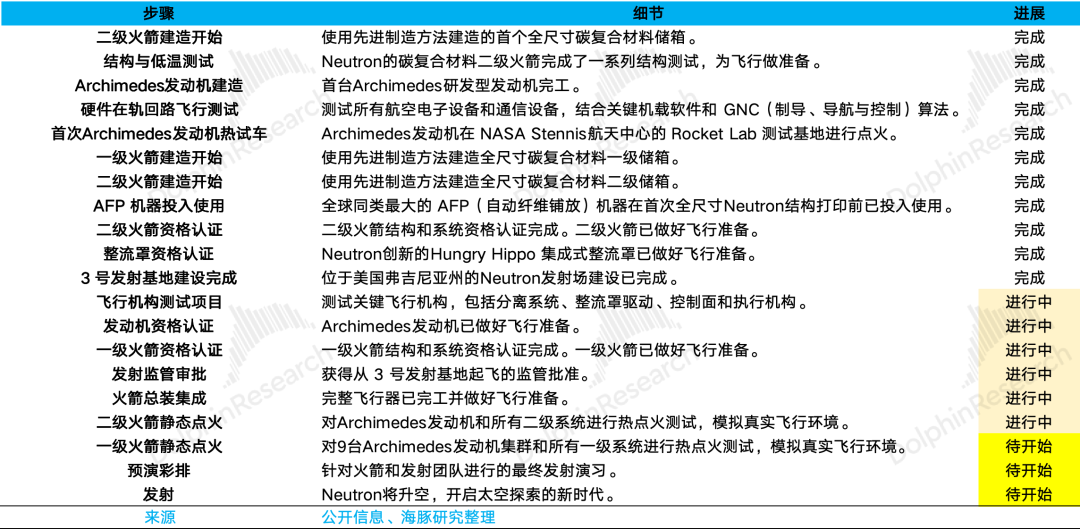
Before launch, a rocket undergoes a series of tests, starting with subsystem tests, mainly engine testing, structural static/dynamic testing, and integrated testing of the electrical system; then environmental simulation tests to assess performance under vibration, acoustics, and thermal vacuum conditions; followed by testing after final assembly; launch rehearsals are then conducted; once everything is ready, the formal launch takes place.
The most critical among these are engine testing (static firing of the engine), structural testing, and full-rocket matching and status testing after final assembly. For these, Neutron's Archimedes engine has undergone multiple tests, with structural testing largely completed at the material and component levels. Currently, the launch pad is also nearly complete.
Previously, Rocket Lab planned the first launch for the second quarter of 2026, but a rupture occurred during a clean water pressure test of the first-stage tank in January 2026, causing a delay. This was primarily due to manufacturing defects in the supplier's manual layup process. Currently, the company has decided to fully switch to AFP layup.
The AFP process is already widely used by Rocket Lab and is well-mastered. The latest progress indicates that the first launch is expected in the fourth quarter of 2026.
The following is the progress of various tasks disclosed by Rocket Lab for Neutron:
Neutron is positioned to compete with Falcon 9 but still shows significant differences in technical approach:
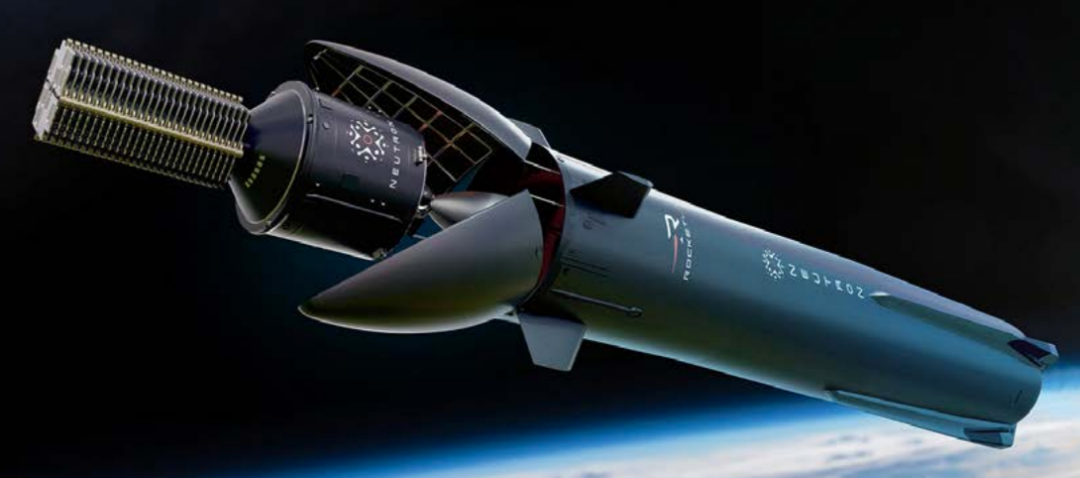
(1) Neutron's fairing, Hungry Hippo, is integrated with the first stage and releases the second stage like a hippo's mouth after launch, then returns to the ground with the first stage, improving fairing recovery efficiency and reducing costs.
(2) Neutron's second stage is placed inside the fairing, eliminating the need for a robust rocket body structure like other rockets, thus reducing size and allocating more weight and cost to the first stage, enhancing the cost-dilution effect of first-stage recovery.
Figure: Schematic of Neutron's Fairing Hippo Mouth Design
Source: Neutron Payload User's Guide, Dolphin Research
4. Rocket Lab Achieves Extreme Vertical Integration
In the field of rocket manufacturing:
(1) In-house engine design, manufacturing, and testing: the aforementioned Rutherford and Archimedes engines are all designed, manufactured, and tested independently by Rocket Lab;
(2) In-house production of the main rocket body structure: Rocket Lab owns its carbon fiber material processing factory and possesses industry-leading AFP automated layup technology;
(3) In-house development of core components of the GNC system (guidance, navigation, and control), as well as self-developed flight control algorithms and software.
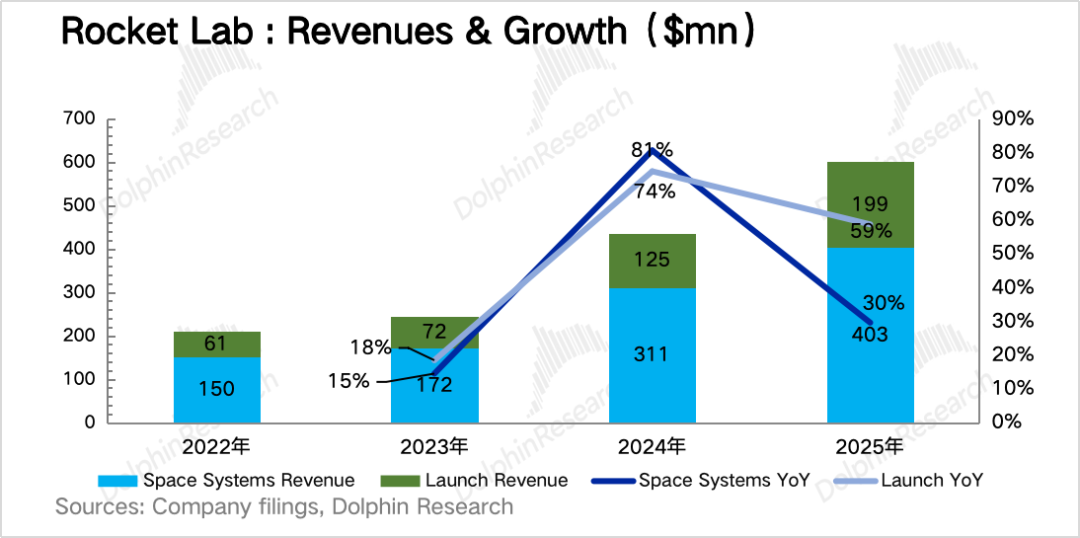
5. Meanwhile, although Rocket Lab started in rocket manufacturing, satellite-related revenue has become a significant portion.
(1) Providing standardized satellite platforms
Rocket Lab not only manufactures rockets but also, through industrial chain integration, has developed mature satellite manufacturing capabilities. Based on this, it has built the Photon satellite platform, enabling it to directly provide turnkey satellite solutions to clients.
Rocket Lab's Photon platform offers mature satellite power, propulsion, attitude control, and even thermal management modules, providing almost everything except the mission payload.
In other words, Photon is essentially a satellite with "empty seats" that clients can directly use. It is like a container where clients only need to place their mission payloads, such as cameras or scientific instruments, like "boarding" a vehicle.
Photon can support various missions, including remote sensing, observation, IoT, and even deep space exploration.
Here, we can see that one advantage of the Photon platform is the standardization of satellite manufacturing, enabling rapid delivery and low-cost mass production.
(2) In-house development and production of components for external sales
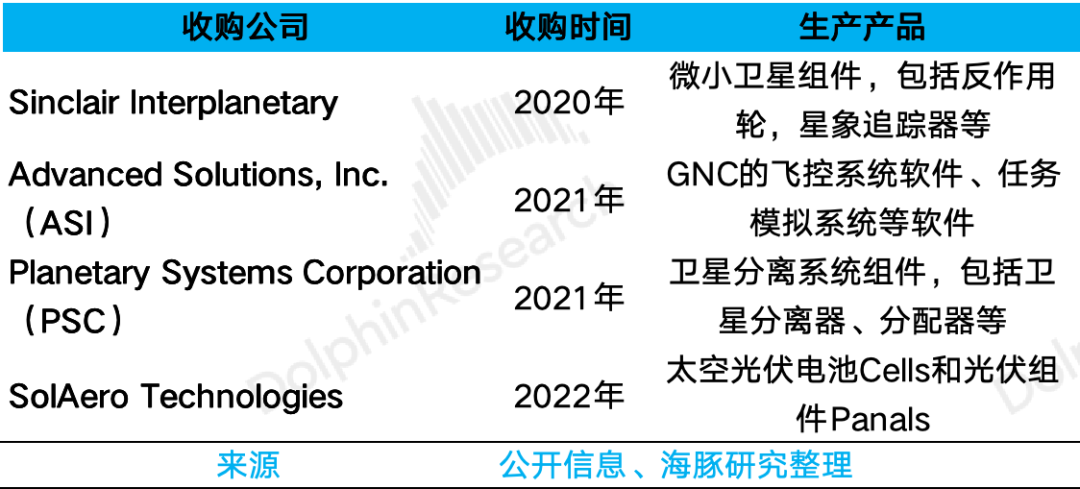
Rocket Lab independently develops and produces core subsystems and components of satellites and sells them directly to clients, including but not limited to GNC system core components such as star trackers and reaction wheels, as well as communication systems, separation systems, space photovoltaic systems, and even space software.
Rocket Lab primarily achieves these integrated capabilities through acquisitions, with major acquired companies as follows:
(3) In the constellation sector, Rocket Lab has the potential to compete with SpaceX in the future. Rocket Lab released the Flatellite satellite platform in February 2025.
The characteristics of this satellite platform are:
a. Extreme standardization. Adopting a modular design and unified standard interfaces, various mission payloads can be quickly integrated into the platform, further simplifying the manufacturing and integration process.
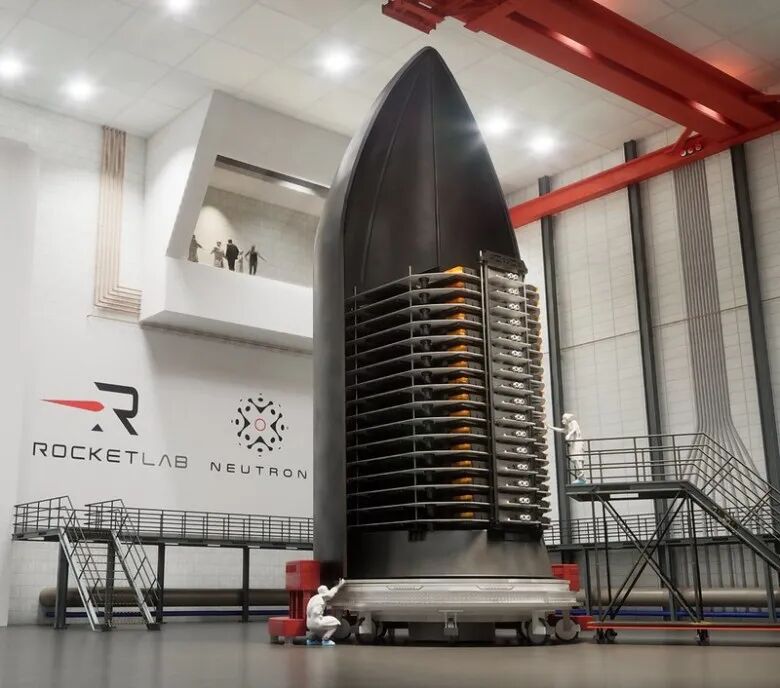
b. Extreme flattening. Allowing multiple satellites to be tightly stacked like playing cards inside the fairing, significantly increasing the number of satellites that can be carried per rocket launch and further diluting satellite launch costs.
Currently, only SpaceX has relatively mature applications of such stacked satellite platforms. Blue Origin's Project Kuiper, China's LandSpace and Qianfan constellation, among others, also have layout but are still in relatively early stages.
Figure: Conceptual Diagram of Neutron's Flatellite Satellite Stacking
Source: Rocket Lab, Dolphin Research
Combined with its satellite manufacturing platform, Rocket Lab can achieve rapid iteration and extreme cost reduction in satellite manufacturing and launch. Based on this, it will have significant advantages if it transitions to a "satellite service provider" in the future, with the clear potential to build its own satellite constellation and compete with SpaceX's Starlink.
II. Why Is Rocket Lab So Capable?
1. The Unique Qualities of Founder Peter Beck
(1) Hands-on experience bringing sufficient technical intuition
Peter Beck has been fascinated by rockets since childhood, personally developing rocket bicycles and rocket scooters in his youth. He spent years obsessively studying rockets, dropping out of university after high school to apprentice as a tool and die maker at a home appliance store. Later, he worked on yacht projects but continued rocket research and experiments in his spare time. Eventually, Peter Beck joined a New Zealand research institution specializing in composite materials.
Figure: Peter Beck competing on a self-made "rocket bicycle"

Source: X, Dolphin Research
After founding Rocket Lab, Peter Beck frequently went directly to the workshop, personally participating in programming, testing, and even welding and other manufacturing tasks in the company's early days.
(2) A typical pragmatic style
Previously, Peter Beck denied the viability of large rockets and recovery models but quickly pivoted and publicly admitted his mistakes after seeing changes in market demand and technological advancements.
Moreover, Peter Beck deeply respects commercial logic, viewing space as an industrial service that can be scaled and standardized. Everything he has done since founding Rocket Lab has been aimed at this path, such as identifying and resolutely entering market gaps: i.e., the demand for micro, dedicated, and high-frequency launches.
Pragmatism is a crucial trait in the manufacturing industry. For the aerospace sector to truly become a 'commercial' space industry, it must shed its money-burning image and prioritize cost, efficiency, and other key factors. Rocket Lab's model is closer to the traditional industrial route, and Peter Beck sees this very clearly.
(3) This leads to decision-making informed by practical experience.
On the surface, Rocket Lab's rockets may seem unconventional in their technological approach, but we believe this is more about innovation driven by practical experience. Manufacturing does not necessarily mean following a set path.
2. Embedding in Corporate Culture: Pragmatism and Efficiency
(1) Every product at Rocket Lab has a clear market positioning. As mentioned earlier, the Electron rocket targets the miniaturized niche market, pursuing ultimate flexibility in its technological approach; the Neutron rocket is designed for reusability, with its design fully centered around this feature.
(2) Effective vertical integration. As mentioned earlier, Rocket Lab has achieved full vertical integration in the rocket and satellite sectors, even to the extent of being able to sell components externally and effectively integrate acquired assets. It is also capable of establishing factories and launch sites in New Zealand and the United States respectively.
(3) Highly efficient with rapid iteration. Rocket Lab spent only $2 million in R&D to create its first rocket, the Tea-1, and subsequently developed the Electron for less than $100 million.
With the boss deeply involved, combined with owning factories, test benches, and launch sites, along with full vertical integration, Rocket Lab can autonomously control the process from design to testing to actual flight verification, minimizing development cycles and enabling rapid iteration.
The ability to rapidly iterate is crucial in emerging industries like rocket launch, where technology is continuously evolving and the path is far from settled.
III. Comparison with Competitors
Rocket Lab's achievements so far have garnered significant market attention. So, how does it compare to its competitors? Let's take a look.
1. Rocket Lab Leads in Launch Experience and High Success Rate in Rocket Launch Segment
Let's set aside SpaceX for now and compare Rocket Lab with other competitors.
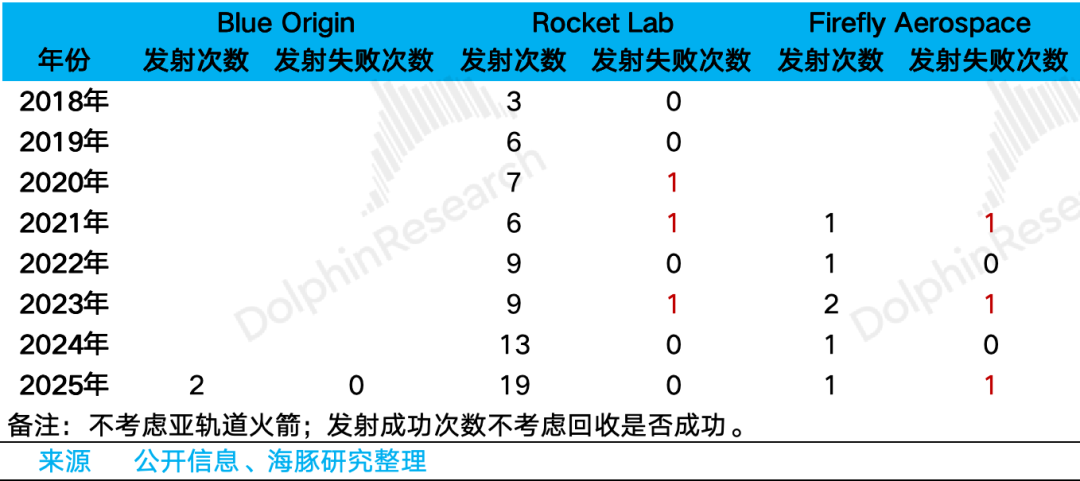
In terms of launch experience, Rocket Lab has more experience than Blue Origin, especially with a high success rate since 2024; Blue Origin's model is more traditional and follows a more step-by-step pace, with its commercialization just beginning. Of course, there are significant differences in market positioning between the two, with Blue Origin focusing more on the heavy-lift market; Firefly Aerospace also has multiple launch experiences and a product positioning similar to Rocket Lab, but its failure rate reaches 50%.
Now, let's compare the rocket products of various companies:
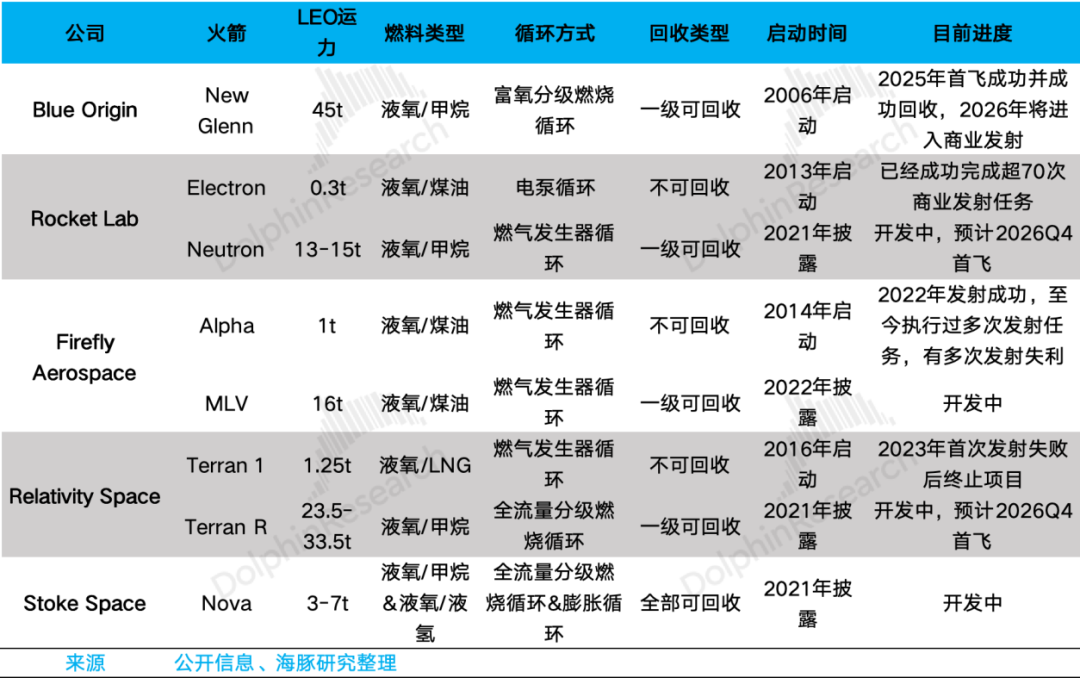
It can be seen that, in terms of progress, except for Blue Origin, the main industry players such as Firefly Aerospace, Relativity Space, and Stoke Space are all progressing more slowly, with Relativity Space and Stoke Space having almost no successful launch experience.
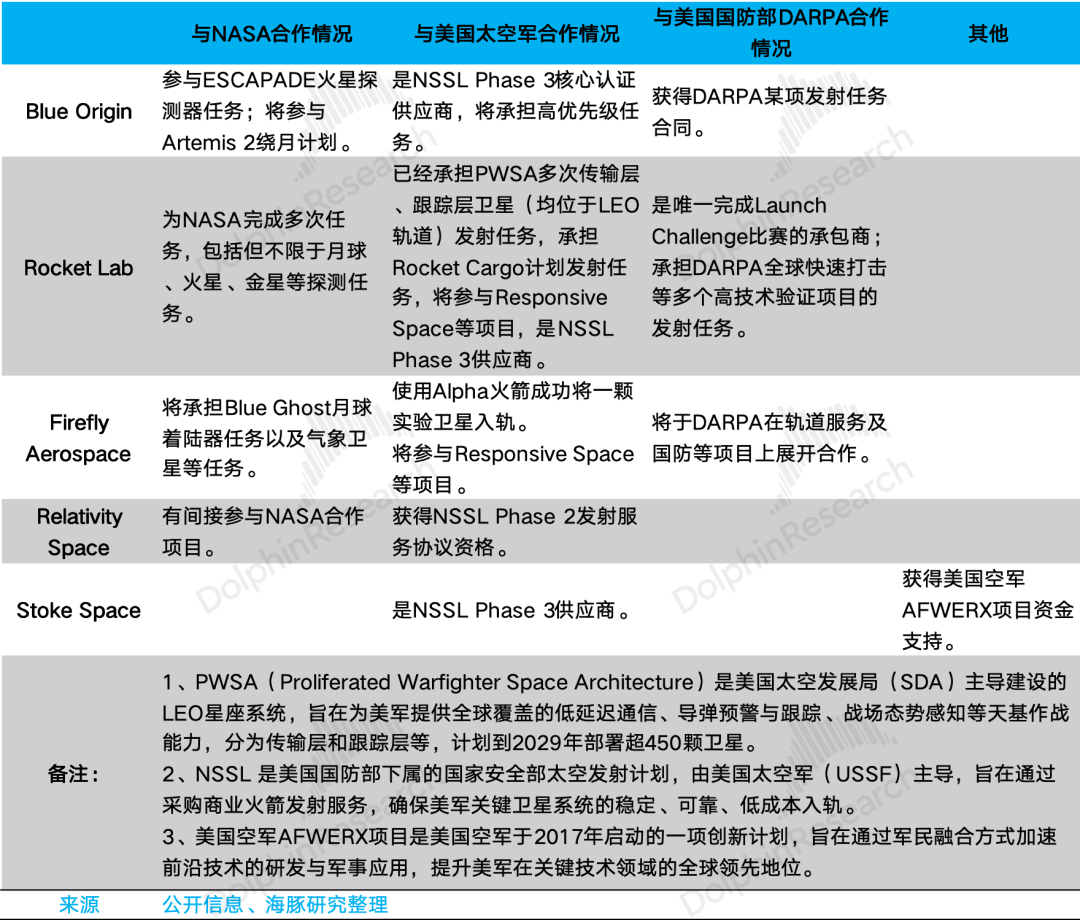
On the other hand, it must be acknowledged that, from the perspectives of the U.S. Space Force and Department of Defense, as well as NASA, diversifying suppliers as much as possible has always been an important goal.
Companies like Relativity Space and Stoke Space, despite their lack of successful launch experience, can still obtain supply qualifications for NSSL Phase 2 and NSSL Phase 3. Firefly Aerospace, despite multiple launch failures, can still continue to cooperate with the U.S. Space Force and share TacRS (Tactically Responsive Space) launch missions with Rocket Lab.
2. The Advantage in Satellite Manufacturing Lies in Extreme Vertical Integration
The main competitors in the satellite manufacturing sector are shown in the following figure:
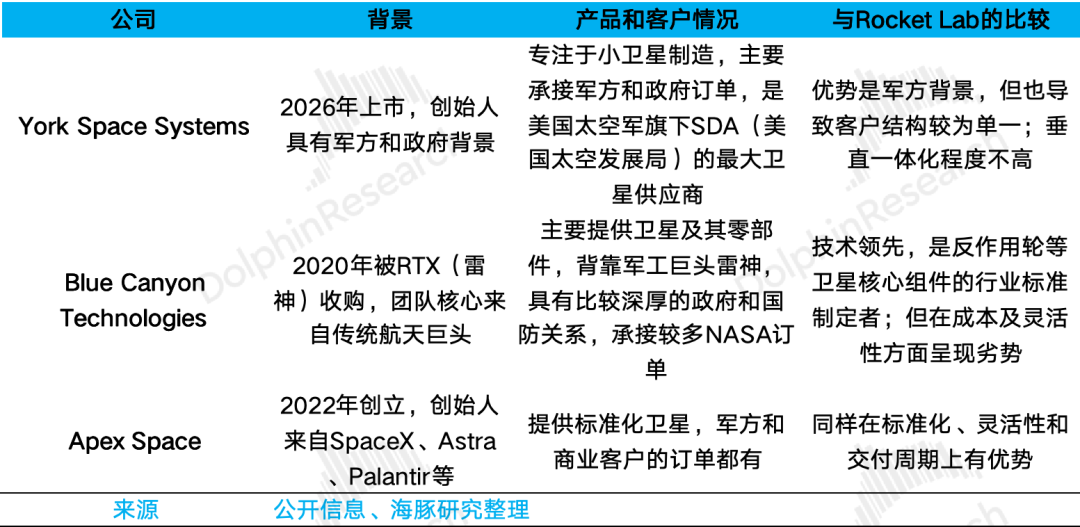
From the perspective of satellite manufacturing, compared to its rocket launch business, Rocket Lab finds it difficult to achieve a clear lead. However, it still has several advantages over its competitors:
(1) The leading advantage in delivery efficiency and cost brought about by vertical integration combined with management capabilities. Both York Space Systems and Blue Canyon Technologies are at a disadvantage in this regard, and Apex Space also lags behind Rocket Lab in terms of vertical integration;
(2) Simultaneously possessing rocket launch capabilities, which none of the other companies have. This helps to further strengthen efficiency and cost advantages through full-link services from satellite manufacturing to launch and operation; moreover, since Rocket Lab has both successful launch records and satellite flight records, it also has an advantage in 'project experience' through cross-validation in both aspects. Credit endorsement is a particularly important factor for some customers, which can further enhance its ability to secure orders.
IV. How to Calculate Market Space
But here comes the question: from a valuation perspective, with a market capitalization approaching $40 billion, if we simply look at it from a PS (Price-to-Sales) ratio, it is no lower than the rumored valuation of SpaceX; from the absolute values of PB (Price-to-Book) and PS, Rocket Lab's valuation is also extremely high. This shows that, based on Rocket Lab's current business progress, the market has already given the listed company a relatively optimistic market expectation.
If we want to estimate the future market capitalization space of the listed company, we first need to look at the potential market space:
1. First, look at the rocket launch business
(1) First, the U.S. government and military business
Currently, Rocket Lab's revenue is mainly derived from the United States, with military and government clients being the primary customers.
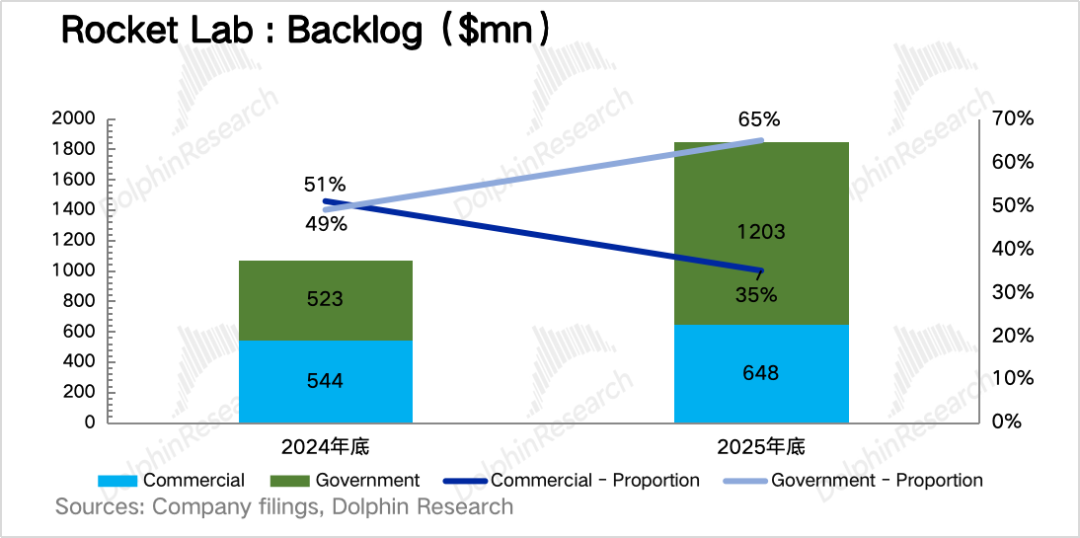
NASA's budget for FY 2026 is $24.438 billion. According to NASA's previously disclosed budget, excluding NASA's own space transportation system SLS, the main projects involving space transportation are Space Transportation under Space Operations and Commercial Moon and Mars Infrastructure and Transportation under Exploration, which together account for approximately 11.4% of the total budget. Here, it is assumed that the budget for space transportation, excluding SLS, accounts for approximately 10% of the total budget, corresponding to an amount of $2.4 billion.
The U.S. Space Force's budget for FY 2026 is $26 billion, with the main rocket launch-related tasks being the rocket launches in SDA's PWSA and NSSL's rocket launch missions. This part is expected to account for approximately 10% of the total budget, corresponding to an amount of $2.6 billion.
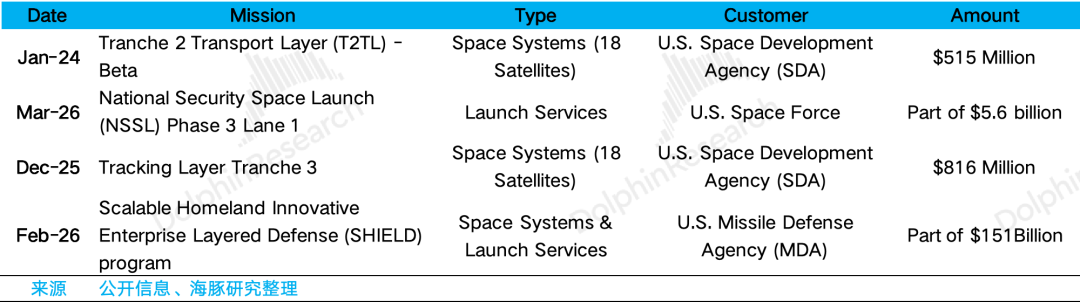
Of course, there will be variables in the future, including incremental demand from the Space Force due to space arms races such as rapid network replenishment and rapid response launches, such as the continuous expansion of military low-orbit satellite numbers in the PWSA (Proliferation Warfare Space Architecture) project; at the same time, the pace of NASA's lunar and Mars programs may also change.
However, overall, the U.S. official market size is expected to be around $5 billion per year. Assuming Rocket Lab, as a third/fourth supplier, can account for 20%/10%, this would correspond to revenue volumes of $1 billion/$500 million respectively.
(2) Now, look at the commercial space market
Currently, Rocket Lab's orders are mainly from the military and government, which is partly due to the miniaturized characteristics of its mainstream rocket, the Electron, which is more suitable for the needs of some government and military clients, as they require rapid launch capabilities and can enhance confidentiality through exclusive launches, being less sensitive to costs; however, commercial projects are more cost-sensitive, and the Electron's high cost per launch makes it relatively less competitive.
However, if the Neutron is successful in the future, especially if it can achieve reusability, it will not only enable Rocket Lab to undertake large-scale payloads and deep-space missions for the government and military but also help Rocket Lab become more competitive in the commercial market.
Referring to SpaceX, which undertook 20 commercial missions in 2025 with a launch fee of $62 million per mission, the corresponding revenue is approximately $1.24 billion. If Rocket Lab's Neutron rocket is successful, it should also aim for this business volume.
2. Satellite and Component Sales Business
NASA Budget: In NASA's reported budget for 2026, projects related to space vehicles, including satellites, account for more than 30% of the budget. Of course, a large portion of these costs are for payload costs (such as various scientific instruments) and launch-related expenses. Assuming that the cost of the satellite itself/satellite platform accounts for 20%, this corresponds to 6% of the total budget, or approximately $400 million.
This includes projects such as the Orion crewed spacecraft, the Gateway lunar orbit space station, and the Human Landing System lunar landing system. For these projects, even if Rocket Lab does not directly provide complete spacecraft, it can supply components.
U.S. Space Force Budget: Mainly includes the tracking and transport layer satellites of SDA's PWSA project. It is expected that the U.S. Space Force will launch approximately 120 satellites in 2026, mainly transport layer satellites, with a cost of $15-40 million per satellite. Assuming $30 million per satellite, the corresponding total amount is $3.6 billion. Considering other projects, this accounts for approximately 15% of the total budget, or nearly $4 billion.
The combined total of the above two is approximately $4.4 billion. Assuming Rocket Lab accounts for 20%, this corresponds to an amount of nearly $900 million per year.
Of course, this only includes military and government revenue. In the satellite manufacturing sector, Rocket Lab can also obtain revenue from commercial orders.
3. Apart from the United States, Rocket Lab's clients come from all over the world
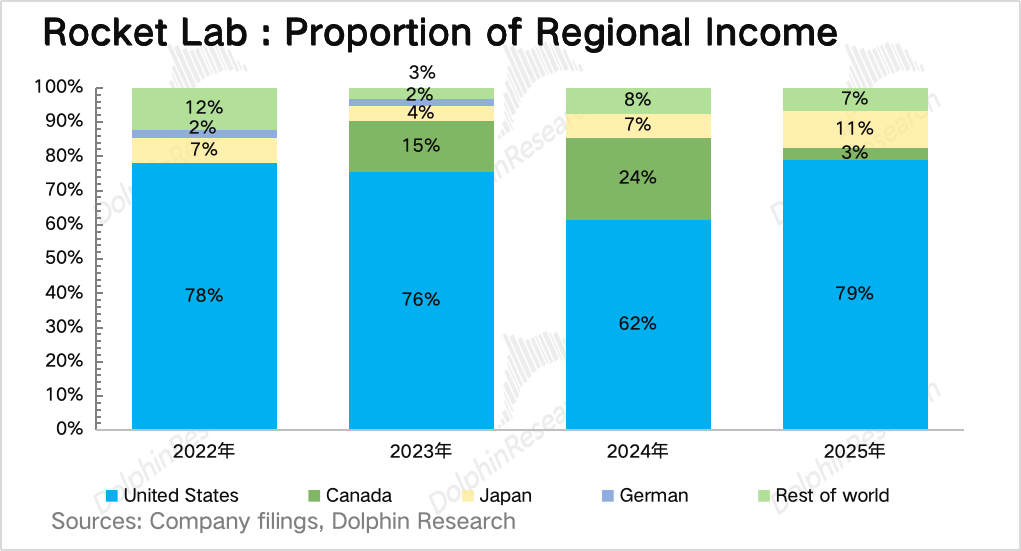
From a regional perspective, the United States always accounts for the highest proportion, but Canada and Japan also occupy (occupy) significant proportions.
Canadian revenue mainly comes from the sales of components such as reaction wheels and star trackers by Sinclair Interplanetary, a Canadian company acquired by Rocket Lab, with clients including Canadian aerospace giant MDA Space.
Japanese revenue mainly comes from orders from several Japanese constellation operators, including Synspective and iQPS.
Considering the shortcomings in rocket launch capabilities in these countries and regions, it is expected that Rocket Lab will be able to continue to undertake orders from countries other than China and the United States.
4. Satellite Constellation and Operation Business
Currently, Rocket Lab has not yet entered this field, but based on the company's current accumulated capabilities, there is no major obstacle for Rocket Lab to enter this field in the future. Referring to SpaceX, Starlink's revenue currently accounts for approximately 60-70% of SpaceX's total revenue, so the satellite operation business is expected to become Rocket Lab's largest business category in the future.
V. Judgment on Market Capitalization and What to Watch for in the Future
Through the above market space calculations, we can see that, considering only the rocket launch and satellite businesses, given Rocket Lab's current annual revenue of just over $600 million, the revenue volume is still very small compared to the potential market space, indicating significant growth potential.
However, at the same time, as mentioned earlier, whether looking at absolute values or comparing relatively with SpaceX, Rocket Lab's current valuation seems relatively high.
So, where are the potential expectations gaps in the future?
(1) First and foremost is the progress of the Neutron. The success of the Neutron will determine whether Rocket Lab can compete with SpaceX on an equal footing. Currently, we believe the certainty of this is high; it's just a matter of time.
At the same time, compared to its peers, excluding SpaceX and Blue Origin, Rocket Lab is ahead of other competitors in terms of progress, and the gap is widening. Of course, we are not considering Chinese competitors here, but given geopolitical factors, Chinese competitors are unlikely to directly affect Rocket Lab.
(2) On this basis, it depends on Rocket Lab's ability to secure orders from the U.S. military and government, commercial clients, and overseas markets. This, of course, also depends on the progress of the Neutron. While there is certainty, the main question is how many orders it can secure.
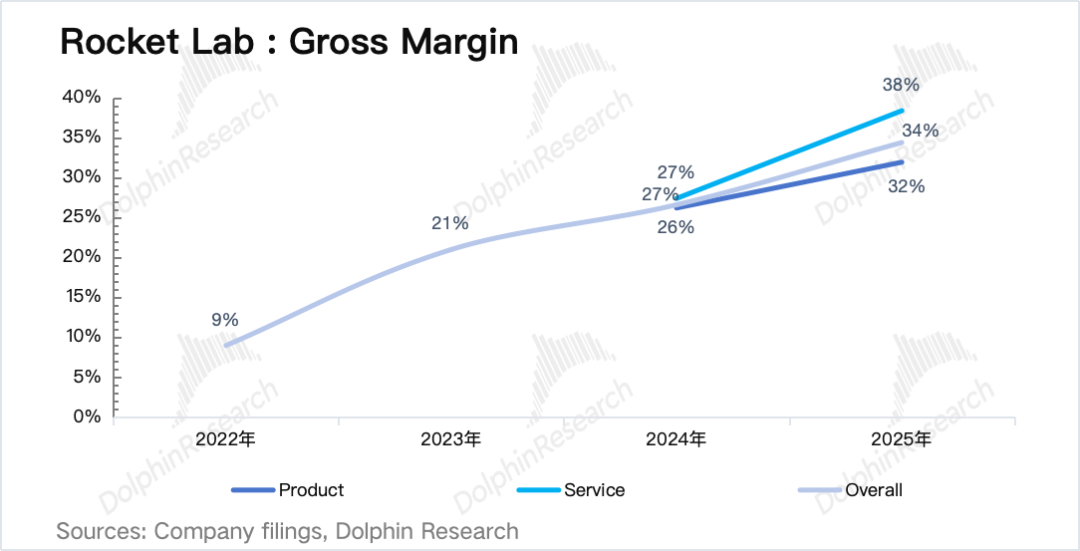
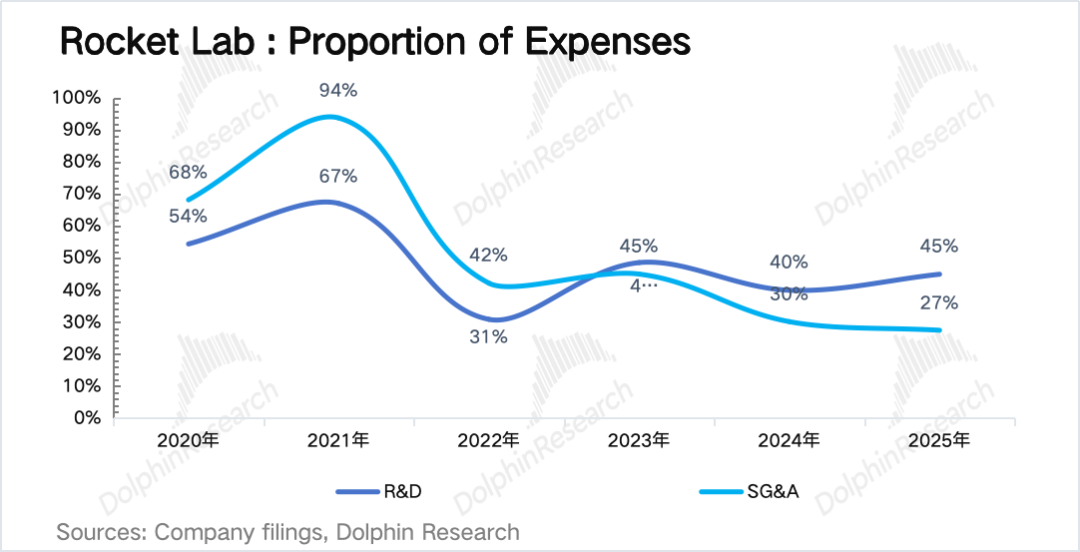
In addition, there is no need to worry from a profitability perspective. As the revenue scale expands, a significant increase in gross profit margin and dilution of various expenses can be observed.
Let's conduct a timeline analysis here. SpaceX was founded in 2002, with its first commercial rocket, Falcon 1, successfully launched in 2008. Falcon 9 was successfully launched in 2010 and subsequently recovered in 2015.
Rocket Lab was established in 2006, and its first commercial rocket, Electron, was successfully launched in 2018. The time elapsed was relatively long, but this was also because the resources Rocket Lab could rely on in its early stages were far inferior to those of SpaceX. However, Rocket Lab now has relatively good resources and foundations.
So, let's assume that the generational gap between Rocket Lab and SpaceX is around 10 years.
-
![]()
Proposed to Raise 955 Million Yuan through Private Placement! Huicheng Vacuum Boosts Localization of Ultra-Precision Optical Coating Equipment
-
![]()
Cash Flow Soars 13-Fold! What Major Strategic Move is Wuhan Five Square Optoelectronics Planning?
-
![]()
Leaked Design of vivo X500: Reverts to Circular Camera Module in Top-Left Corner, Pays Homage to Classic X90 Aesthetic
-
![]()
DeepSeek Shows Signs of Foraying into Code Agents, Launches WeChat Official Account Focused on Harness
-
![]()
Auto Companies Deny Claims That ‘Cooperation with Huawei Is Non-Essential’, as Huawei Transforms into a ‘Public Platform’
-
![]()
Starship to Independently 'Return to the Launch Tower': SpaceX's Ambitions Extend Beyond Rocket Building to Dominating Space Transportation
-
![]()
Starship Set to Independently 'Return to the Launch Tower': SpaceX is Revolutionizing Space Transportation, Not Just Building Rockets
-
![]()
Anthropic and OpenAI Face Off Against Deepseek