After 15 Years at the Helm of Apple, Cook is a Successful CEO but Not a Great Innovator
 04/21 2026
 477
477
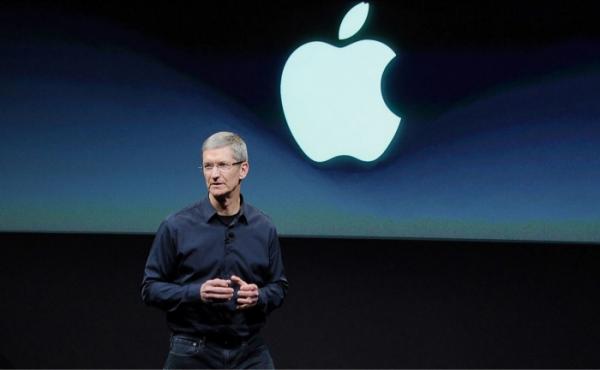
Upon waking up, we find that Apple, the U.S. tech giant on the other side of the ocean, has undergone a seismic shift as it suddenly announces a leadership change.
Apple released an announcement stating that John Ternus, the company's senior vice president of hardware engineering, will succeed Tim Cook as CEO starting September 1, with Cook transitioning to the role of executive chairman of the board. From taking over as CEO from Steve Jobs in August 2011 to stepping down this September, Cook has led Apple for 15 years.
How should we evaluate Cook's 15-year tenure at Apple? This is undoubtedly a difficult question to answer. Some believe he successfully transformed Apple from a great product company into a stable and unparalleled commercial empire in terms of profitability, which is remarkable. This is true; Cook's immense contributions cannot be overlooked, but the controversies he brought are equally vivid (Note: ' vivid ' is kept as pinyin here due to its contextual nuance; a closer English equivalent might be 'pronounced' or 'stark,' but for literal translation, we retain it as 'xianming' with the understanding that it implies 'clear/distinct controversy'). However, the controversies he brought are equally clear and distinct.
Put simply, under Cook's leadership, Apple has written a contradictory epic that pushes commercial achievements to the extreme while steering product innovation toward conservatism. Some appreciate this approach, while others find it mediocre. In short, it's hard to please everyone.
01 Business Achievements: The Ultimate Empire Architect
Cook is an exceptional operational master and business strategist who has propelled Apple's commercial value to unprecedented heights, primarily reflected in the following three aspects:
① Soaring Market Cap and Revenue: During his tenure, Apple's market cap surged from around $350 billion to over $4 trillion, increasing more than tenfold, making it the first company globally to consecutively break through the $1 trillion, $2 trillion, $3 trillion, and even $4 trillion market cap milestones. Annual revenue also grew from $108 billion to over $400 billion, nearly quadrupling.
② Pioneering New Growth Avenues:
Wearables: Successfully launched and defined two major categories—Apple Watch and AirPods—creating a wearables empire with annual sales exceeding $50 billion.
Services: Transformed services like App Store, iCloud, and Apple Music from mere accessories into a "behemoth" generating over $100 billion in annual revenue with profit margins exceeding 70%, becoming Apple's second-largest growth engine.
③ Mastery of Supply Chain: As an operational genius, Cook has elevated Apple's supply chain management, cost control, and inventory turnover to global top-tier levels. For instance, he reduced inventory turnover days from 30 to just 2-5, constructing the world's most precise and efficient production and delivery system, a crucial foundation for the company's high profitability and stable operations.
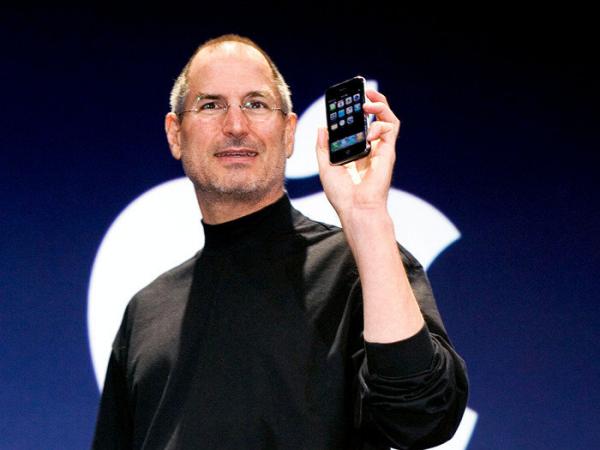
02 Product Innovation: Incremental Perfection vs. Disruptive Absence
While Cook has achieved extraordinary commercial success during his tenure at Apple, many users occasionally reminisce about Steve Jobs. The reason is simple: in recent years, Apple has delivered fewer and fewer surprising innovations in product development, even bordering on mediocrity. Compared to the "disruptive creation" of the Jobs era, innovation under Cook leans more toward "incremental perfection," consolidating existing strengths while also showing signs of conservatism and lag.
For example, the new iPhone models released each September have long bid farewell to the revolutionary spirit of the original, degenerating into "incremental" upgrades—minor improvements in cameras, screens, and chips—which have been criticized as a lack of product innovation and industry-disrupting potential.
Besides successfully extending the product lineup to wearables, the Cook era also accomplished the transition of Mac computers to in-house M-series chips, breaking down computational barriers across Apple's ecosystem—a remarkable optimization from 1 to 100. Nevertheless, the absence of disruptive products over the past 15 years is undeniable. Apple has failed to create another disruptive category that defines a new era like the iPhone. The Apple Car project ultimately stalled, while Vision Pro has seen slow adoption due to its high price point.
Meanwhile, in many technological areas, Apple seems to always be a step behind, drawing criticism for its conservatism or even lag. For instance, while the Android camp had already popularized high-refresh-rate screens and 100W+ fast charging, the standard iPhone models still clung to 60Hz screens and slower charging speeds. Apple was also slow to respond to the initial waves of foldable phones and generative AI (AIGC). Particularly in the AI era, Apple has noticeably fallen behind, with Siri stagnating for a long time, lagging behind Google, OpenAI, and others, and missing the opportunity to build the next-generation AI operating system.
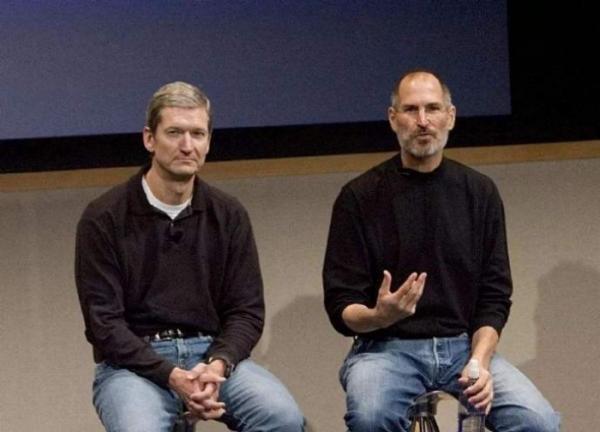
It's worth mentioning that Cook's leadership style contrasts sharply with Jobs'. With his calm, steady, and collaboration-focused approach, Cook has brought order and stability to this passionate company.
On one hand, Cook adopts a more democratic and consensus-driven leadership style, excelling at delegating authority and inspiring team capabilities, rather than Jobs' autocratic and hands-on approach. On the other hand, he places great emphasis on shaping values, successfully transforming Apple into a company that prioritizes corporate social responsibility, user privacy, environmental protection, and diversity, extending its influence beyond just tech products.
In summary, Cook is one of Apple's greatest business CEOs but not its greatest product CEO. He has safeguarded Jobs' legacy and maximized its value, transforming Apple from a tech star into an inexhaustible "money-printing machine" and solidifying its global tech dominance. However, while he has made Apple extremely successful and stable, he has also made it extremely boring, as the spirit of disruption has been suppressed by commercial rationality. In terms of exploring cutting-edge technologies and disruptive innovation, Apple has indeed toned down its edge, showing a lack of momentum in creating killer products.
In other words, Cook is one of Apple's most successful CEOs, perhaps even the most successful commercial operator, but certainly not the greatest innovator. During his tenure at Apple, he was a clearly positioned business master whose overall contributions outweigh his shortcomings. If Steve Jobs created Apple, then Cook, over 15 years, has transformed Apple into an unbeatable commercial empire. His tenure marks Apple's transition from greatness to invincibility.
Now, with Cook announcing his departure and John Ternus, a hardware engineering veteran, taking the helm, this itself suggests that Apple may be shifting from a "Cook-led commercial empire" toward a new era focused more on "technology-driven" innovation. Where Apple will go in the post-Cook era remains to be seen—let's wait and see!
-
![]()
"3D Vision Pioneer" Grapples with Internal Strife: $120 Million in Share Reductions Offset by $147 Million Private Placement
-
![]()
The domestic auto sales have declined so much that dealers who can't hold on have started closing stores en masse
-
![]()
Five Brands Team Up with Huawei: Will Dongfeng Still Pursue Independent R&D?
-
![]()
The Large Six-Seater SUV Market: Overhyped and Overrated
-
![]()
The Smart Driving Blue Light: Urgent Need for Rectification
-
![]()
Would OpenAI Be Fascinated by Anthropic’s Concepts?
-
![]()
Tencent: Few Great Queries, Yet Possessing the Ultimate One
-
Does DingTalk Need Revolutionaries or Reformers?