Breaking News! Cook Steps Down, Successor is the One Who Understands Glasses Best
 04/21 2026
 435
435
This is no coincidence but a collective shift of an era.
On April 20, two significant events happened simultaneously.
First, Apple announced that Tim Cook would step down as CEO in September 2026, with John Ternus, Senior Vice President of Hardware Engineering, officially taking over, while Cook transitions to Executive Chairman.
Second, Huawei officially launched its first AI glasses at its event on the same day.
Taken separately, these are two unrelated news stories. But together, they point to the same issue: The race for the next computing platform has shifted from PowerPoint presentations in boardrooms to real-world products. And the main battleground is on your face.
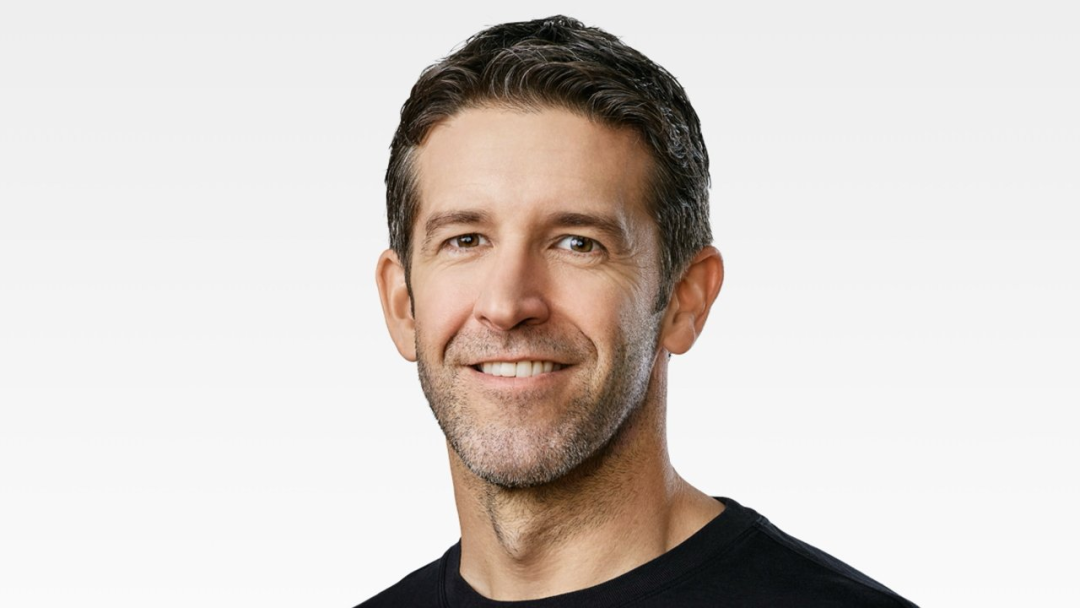
John Ternus. Image source: appleinsider
01
What Has Cook Handed Over?
Over the past 15 years, Cook has grown Apple's market cap from $350 billion to $4 trillion, increased annual revenue from $108 billion to $416 billion, and surpassed 2.5 billion active devices. These numbers represent textbook-level achievements in any business school case study.
But there's one thing Cook didn't accomplish—he didn't personally lead Apple into the next era of hardware.
Vision Pro was his biggest gamble. Priced at $3,499, the product became an elite toy. It was a commercial failure, with dismal sales and nearly fading into obscurity after the first generation.
But Vision Pro wasn't meaningless. Internally, Apple believes spatial computing is the "unstoppable future," and Vision Pro serves as a technical memo for the future—it proved how much technology Apple could cram into a headset and how far this form factor is from ordinary consumers.
What Cook left behind is a proposition, not an answer. And the person answering it is John Ternus.
Image source: Apple
02
This Man Matters More Than You Think
For most people, Ternus is an unfamiliar name. But within Apple, he has been the most critical hardware driver of the past decade.
Ternus joined Apple in 2001 as a product design engineer, starting with components and structures. He became Vice President of Hardware Engineering in 2013 and joined the executive team in 2021. Over 25 years at Apple, he has been involved in the birth of nearly every significant hardware product the company has released.
But he truly entered the public eye due to a few specific achievements.
First: Apple's in-house chips. From the A-series to the M-series, this chip strategy, which allowed Apple to break free from Intel and establish a generational advantage in performance and energy efficiency, was one of Ternus's key contributions. This wasn't a decision made by a manager sitting in an office but a systems engineering effort requiring deep involvement in technical roadmaps and coordinating deep integration between hardware and software.
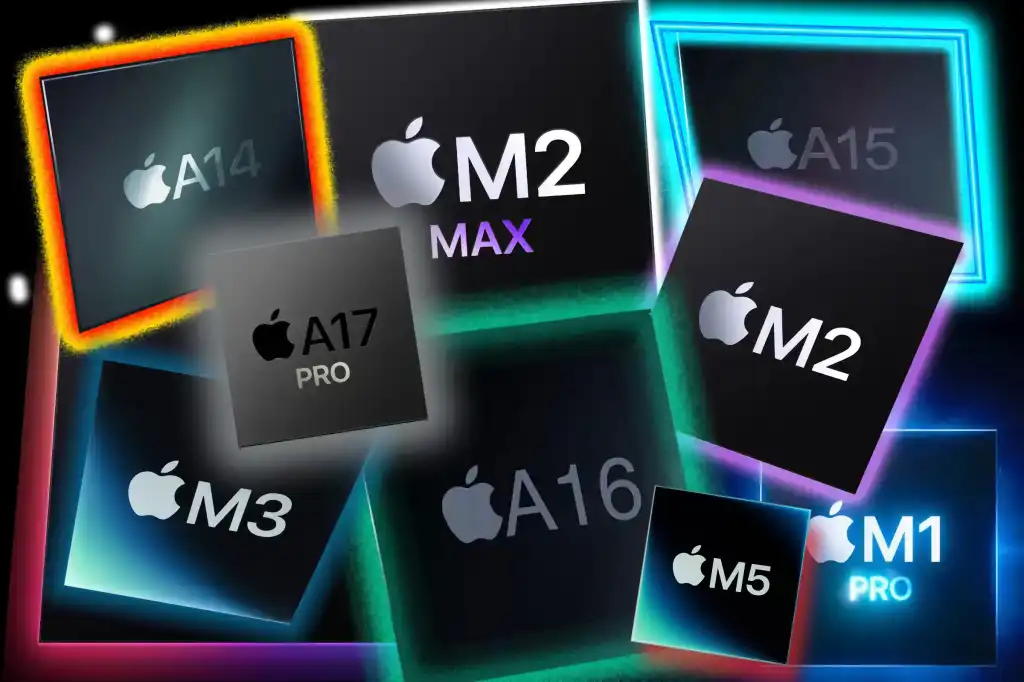
Image source: Macworld
Second: iPhone Air. Among the iPhone 17 lineup released last fall, the most attention-grabbing model wasn't the Pro Max but the ultra-thin iPhone Air—redefining how "light" a flagship phone could be. This was a creation of Ternus's team.
Third: MacBook Neo. Priced at $599 and powered by the A18 Pro chip, it brought Macs back to a broader user base. In an interview, Ternus said that competing cheap Windows machines "can bend" and "cut corners everywhere," while Apple's philosophy is that low price doesn't mean low quality. Behind these words lies a product philosophy and his concrete understanding of what makes a good product.
Cook is an exceptionally skilled operator and business leader, but his DNA lies in supply chain and scale, not product intuition. Ternus is different—he grew up from components and structures, with firsthand insight into why something "works well."
This difference will be crucial in the direction of glasses.
03
The Successor Happens to Be the One Who Understands Glasses Best
If you follow the VR/AR space, you'll notice that Ternus has long been the true mastermind behind Apple's glasses strategy.
He leads Apple's Vision Products Group, personally driving the advancement of XR glasses and explicitly stating his intention not to repeat Vision Pro's mistakes but to take a more cautious approach.
According to Bloomberg's Gurman, Ternus is overseeing the development of multiple AI hardware products, including smart glasses, AirPods with cameras, and wearable pendants.
Just days before Cook's resignation was officially announced, Ternus and Apple's marketing chief Joswiak gave a rare interview to Tom's Guide. The two openly discussed smart glasses, defining Vision Pro as Apple's "pathfinding" effort toward a glasses form factor.

Image source: YouTube
In Apple's vocabulary, it's highly unusual for executives to discuss a specific product direction before its release. Especially so close to his ascension as CEO.
This is no coincidence—it's a statement: Glasses are my top priority.
Under Cook, glasses were a "strategic reserve." Under Ternus, they're a "flagship project." A CEO who rose from hardware engineering leading the charge versus an operational CEO delegating it to a team—the pace of progress and resource priority will differ entirely.
04
Huawei and Apple Are Pursuing the Same Goal
According to the latest Bloomberg report, Apple is testing four aesthetic styles of smart glasses, "instantly recognizable as Apple," with color options like black, ocean blue, and light brown, crafted from premium materials. Code-named N50, they're expected to launch in 2027 without displays.
Launching a screenless version first, equipped with cameras, microphones, and speakers, prioritizing AI interaction while deferring display capabilities to future iterations—this is Apple's rhythm.
And what Huawei announced yesterday is precisely the Chinese version of this approach. Huawei's AI glasses feature an ultra-light-sensitive camera, enabling real-time AI visual interaction through Xiaoyi, its intelligent assistant, with the core differentiation being deep integration with the HarmonyOS ecosystem. Also screenless, also prioritizing lightweight design first, with AR versions featuring displays reserved for later.
Both giants are converging on the same path. The logic behind it is simple: Display technology and battery life aren't yet ready for everyday glasses. Instead of forcing a screen and creating a heavy, expensive flop, it's better to secure the entry point first and upgrade when the technological window opens.
05
Xiaomi's Cautionary Tale
Xiaomi was among the first major players to release AI glasses domestically, seizing the initiative. But according to XR Institute, the story didn't unfold as optimistically as imagined.
This year, Xiaomi faces pressure on both its automotive and smartphone main businesses, with internal resources tilting toward core operations. First-generation glasses underperformed in sales, and whether the second generation will introduce an advanced version with displays remains highly uncertain.
This highlights a harsh reality: Glasses aren't a product you can "dabble in." They require long-term optical expertise, sustained supply chain investment, and—most importantly—strategic resolve at the CEO level. Once the main business faces pressure, the glasses line easily suffers collateral damage.
Being first doesn't guarantee victory. Internal resource prioritization often determines a product's fate more than external competition.
06
The Crowd Keeps Growing
The players in this track (translation: track = track /field) are now numerous enough to cause dizziness.
Let's start with the most underestimated: Google.
Many still associate Google Glass with its 2013 failure—a premature attempt that flopped. But this time, Google's preparation is entirely different.
Google has planned a clear product matrix for Android XR: screenless AI glasses, AI glasses with displays, and wired XR glasses. The first batch of screenless AI glasses, developed in partnership with Samsung, will launch in the second half of this year.
Google's ace card is the Android ecosystem. Unlike Meta's closed ecosystem requiring separate app development, Google's glasses can directly pull notifications from Android phones and project them onto lenses, achieving zero-barrier access to existing Android apps. With billions of Android devices worldwide, Google has a natural distribution network.
In design, Google invited Warby Parker and Gentle Monster to participate in product definition, explicitly pursuing a fashion-forward approach. One of the biggest criticisms of the original Google Glass was that it "looked too robotic"—a lesson Google clearly learned.
On the AI giant side: OpenAI, in partnership with former Apple Chief Design Officer Jony Ive, is developing a range of AI hardware including smart glasses, having signed manufacturing contracts with suppliers for a launch expected between late 2026 and 2027. Alibaba and ByteDance continue to double down domestically, backed by their proprietary large models, with AI capabilities second to none—but hardware is a different beast, and strong software genes don't guarantee glasses success.
Among native glasses players: Rokid, Viture, Thunderbird, and INMO have deep expertise in optics and structural design, with genuine accumulation in display solutions and mass production experience. Big companies have ecosystems and brands, but these companies possess hard-earned hardware know-how from years of experience. The entry of big players is pressure but also motivation for them.
Meta is a unique player here—it's no longer a challenger. With the Ray-Ban series shipping in the tens of millions, market education is largely complete. Now it's the defender, the one everyone aims to challenge.
07
Can Huawei Win? Can Apple Win?
Huawei's core advantage isn't the glasses themselves but HarmonyOS. An ecosystem already connecting phones, tablets, car infotainment, and watches naturally provides usage scenarios for glasses, eliminating the need to re-educate users. For users deeply tied to Huawei's ecosystem, the reason to buy these glasses is ready-made.
But Huawei faces an unavoidable structural issue: Limited access to overseas markets. This isn't a product problem—it's a geopolitical one.
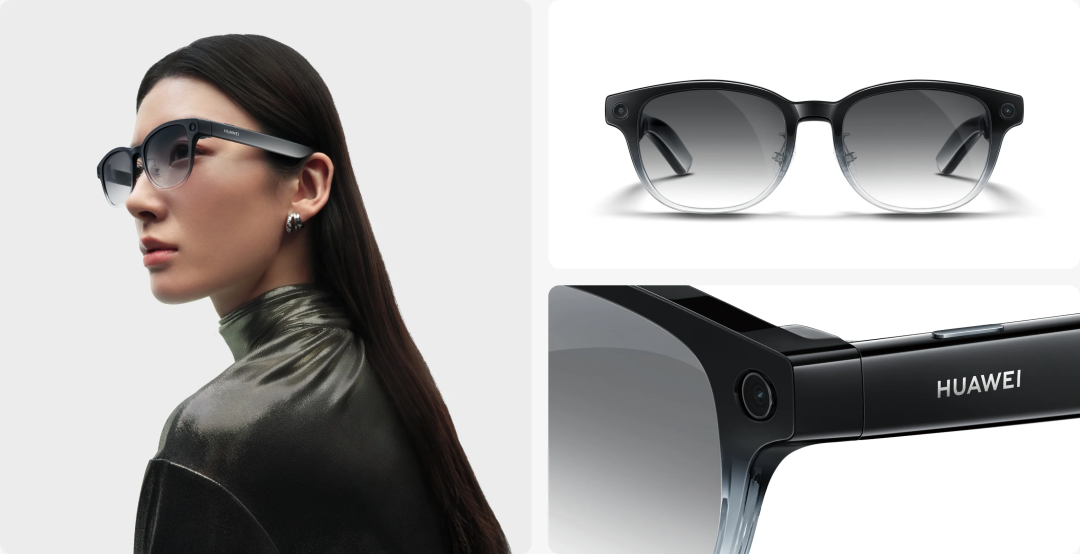
Huawei AI glasses. Image source: Huawei
Apple's challenge is more complex. Ternus has explicitly stated the need for caution, avoiding another overpriced flop like Vision Pro. Caution is warranted, but the market won't wait. Meta Ray-Ban has already planted the idea in ordinary consumers' minds that "AI glasses are like this." When Apple enters in 2027, it won't face a blank slate but a market with established expectations.
Apple's greatest weapon is the iPhone—over a billion active devices worldwide, a distribution channel no rival matches. If Apple's glasses bind strongly with the iPhone, promotion costs approach zero. But that The premise (translation: premise = premise /prerequisite) is that the glasses must be good enough.
08
One More Critical Thing to Consider
All these discussions presuppose that the AI glasses category itself is viable.
Current AI glasses mostly remain at the "usable" stage, far from "indispensable." Cameras take photos, AI translates, recognizes objects—these functions are helpful but not compelling enough to make people willingly wear an extra device daily.
The killer app hasn't emerged yet.
But history tells us such moments often represent the best entry points. When the iPhone launched in 2007, no one knew the App Store would change the world. First-gen products aren't meant to dominate markets—they're meant to secure a position.
On the day Ternus takes over, Huawei has already released its AI glasses. His first exam is already on the table.
Apple, Huawei, Google, Samsung, OpenAI, Claude, Meta, Xiaomi, Alibaba, ByteDance, along with Rokid, Viture, INMO, and Thunderbird—who will have the last laugh in this war?
Actually, the endpoint of this war isn't one company winning.
It's the day when removing your smart glasses leaves you feeling like something's missing.
END
-
![]()
"3D Vision Pioneer" Grapples with Internal Strife: $120 Million in Share Reductions Offset by $147 Million Private Placement
-
![]()
The domestic auto sales have declined so much that dealers who can't hold on have started closing stores en masse
-
![]()
Five Brands Team Up with Huawei: Will Dongfeng Still Pursue Independent R&D?
-
![]()
The Large Six-Seater SUV Market: Overhyped and Overrated
-
![]()
The Smart Driving Blue Light: Urgent Need for Rectification
-
![]()
Would OpenAI Be Fascinated by Anthropic’s Concepts?
-
![]()
Tencent: Few Great Queries, Yet Possessing the Ultimate One
-
Does DingTalk Need Revolutionaries or Reformers?