Insta360 Takes on DJI in Intense Head-to-Head Duel
 06/24 2026
 549
549

From 'Uneven Rivalry' to 'Full-Blown Clash': The Escalating Feud Between Insta360 and DJI
In a span of just five days, Insta360 unveiled the Luna Ultra, swiftly followed by DJI's Pocket 4P. The handheld gimbal camera market has never been more vibrant. Despite DJI's near-monopoly in this sector, many believe that without Insta360's Luna breaking new ground, users might still be relying on the Pocket 3. This time around, DJI has retaliated with dual-camera periscope lenses and a more competitive price point.
Since last year, both brands have been engaged in mutual 'market incursions', with their product ranges increasingly overlapping and even their retail stores opening in close proximity. Beyond the products themselves, public opinion battles, patent disputes, and the even more covert supply chain warfare are rampant.
The underdog-versus-giant narrative is playing out in Shenzhen's tech scene.

Luna Ultra vs. Pocket 4: Who Will Prevail?
In the handheld gimbal camera market, whether it's Insta360 or later entrants like Vivo, all they can realistically hope for is to capture a portion of DJI's market share. Few anticipate DJI being dethroned.
DJI has been a dominant player in the handheld gimbal business for eight years. This segment has become another major revenue stream after drones, with the Osmo Pocket's form factor essentially defining the category.
DJI doesn't just have a first-mover advantage in handheld gimbals—it holds the authority to define the category.
Without DJI, there likely wouldn't be so many hardware manufacturers vying for a piece of the handheld gimbal camera market. Since the Pocket 3's release in October 2023 through the Pocket 4's launch in April 2026, the product has sold over 10 million units, potentially generating 50 billion yuan in revenue for a single product line. According to Lei Feng Network, handheld products contribute over half of DJI's 85-90 billion yuan total revenue.
The Pocket 3's explosive popularity created an entirely new market segment. According to IDC, global shipments of handheld smart cameras (including action, 360, and gimbal cameras) reached 16.65 million units in 2025, up 83% year-on-year; sales exceeded 46.1 billion yuan, up 86% YoY. One blockbuster product fueled an entire category's growth.
DJI's dominance has made other manufacturers envious. Shenzhen-based smartphone giants OPPO, Vivo, and Honor are all advancing Pocket-like projects, but the first product to truly challenge DJI came, unsurprisingly, from Insta360.
Yet DJI's Pocket position remains unshakable.
The Pocket 4 triggered a buying frenzy upon release. In Japan, it captured 21.5% of the local video camera market within nine days of launch; domestic markets saw instant sellouts and month-long backorders—a common occurrence since the Pocket 3 era. Unless willing to pay a premium or get lucky, few could obtain the product immediately.
A DJI spokesperson stated: "We'll ship existing inventory through all channels as soon as possible. Pocket 3 production expanded continuously throughout its first year, with monthly capacity doubling repeatedly. Pocket 4 orders exploded, forcing emergency factory capacity increases. The shortage stems from market demand far exceeding initial sales forecasts."
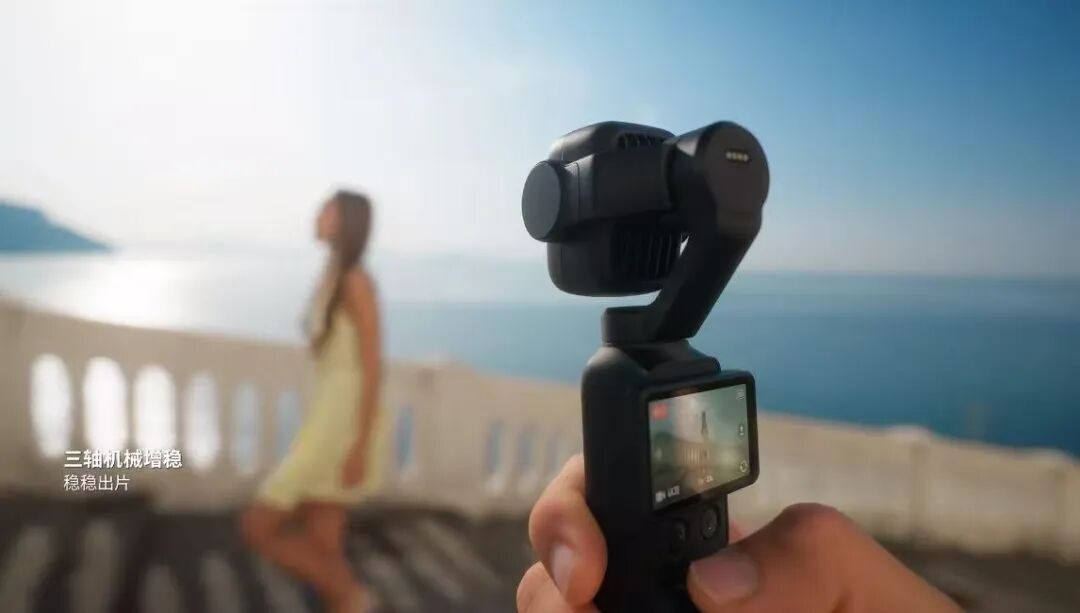
DJI Pocket 4P
Thus, DJI has ample confidence to face Insta360's assault.
First, the Pocket 4 standard and complete sets are priced 500 and 700 yuan lower than Pocket 3, respectively. By maintaining quality while cutting prices, DJI compresses profit margins to pressure competitors—a tactic it's employed in 360 drones and action cameras, undercutting Insta360's pricing.
Second, DJI dictates product release timing. Launching the dual-camera Pocket 4P just five days after Insta360's announcement shows the product was ready long ago, waiting for the competitor to make the first move before countering with targeted measures. DJI's strategy suffocates rivals.
Amid this challenging market, the Luna Ultra sold out within five minutes on domestic e-commerce platforms. According to Insta360's investor platform response, Luna Ultra topped global multi-platform sales charts on its debut day, including Douyin's gimbal camera sales ranking, JD's action camera sales ranking, Tmall's livestream sales ranking, and Amazon US's camera Best Seller list.
While data remains unclear, consumers clearly want alternatives beyond DJI. Especially with DJI's persistent shortages, other brands' offerings become crucial.
Nearly all influencers compare the two products across scenarios, leaving little mystery about their differences. Yet Insta360 has carved out its own differentiation.
Dual Leica-summicron optical lenses, 8K Dolby Vision, AI imaging chip, and 4K60fps high-spec video recording, along with a detachable remote display screen... From software to algorithms, Insta360 strives to differ from DJI—a smart strategy. Entering DJI's territory, the goal isn't to outdo DJI but to offer distinct value, much like its approach with 360 drones.
The detachable screen stands out. Insta360 consistently finds new selling points in seemingly mature products. The removable remote display addresses solo creators' framing challenges and aids couples' travel photography. This focus on user needs and niche scenarios has always been the company's strength—the methodology that helped it defeat GoPro and now defines its product approach.
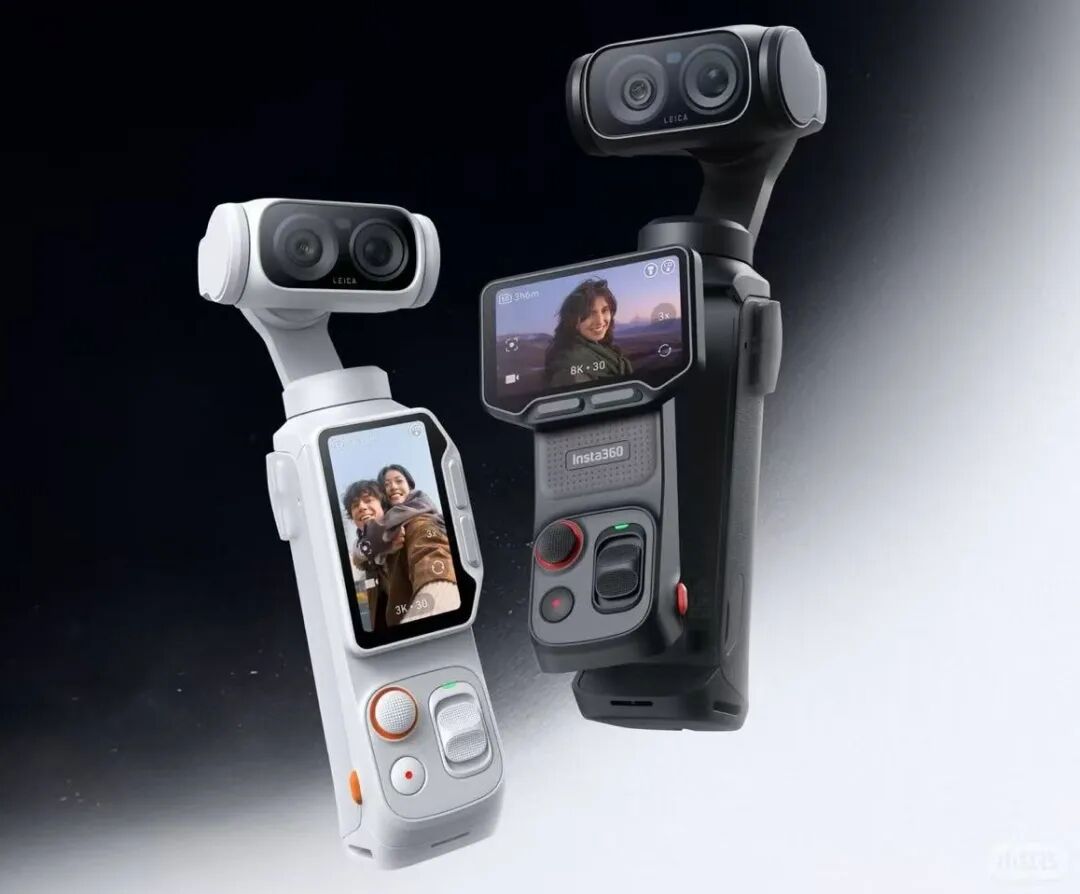
Insta360 Luna Ultra
Reports indicate Insta360 maintains a dedicated user insights team upstream of marketing to identify new scenarios and demands.
Insta360 doesn't just want DJI's leftover market share—it aims to bring new value to the industry, the only viable path for latecomers in red ocean markets.
While DJI is a behemoth, Insta360 isn't throwing stones at a titan.

Uneven Competition, Close-Quarters Combat
The straight-line distance between DJI and Insta360's Shenzhen headquarters is just about 10 kilometers. This is combat in the truest sense.
On June 9, Insta360 debuted its Luna series handheld gimbal cameras in the US. The next day, DJI filed a patent infringement lawsuit in local US courts against Insta360 and its affiliates. Insta360 countersued DJI for patent infringement on June 12. Such 'patent wars' are common in tech but rarely topple opponents directly, though they can disrupt rhythms and build public opinion advantages.
Behind these 'extracurricular moves' lies all-out product warfare.
Last year, Insta360's first drone, the Shadow A1, entered DJI's uncontested airspace but emphasized 360 capture, creating a 'new' category without colliding with DJI's existing drone lineup. DJI soon responded with the lower-priced Avata 360 360-degree drone, firmly demonstrating its power.
According to Caijing, DJI's consumer drone market share slipped from its peak of ~85% but remains above 70%. Media attribute the decline to brands like XAG targeting entry-level markets. However, Insta360 isn't pursuing entry-level products—it's taking the harder path.
The Shadow A1 claimed 30,000 units shipped in its debut month, but Avata 360 exceeded 125,000 global shipments and 500 million yuan in sales within a month, capturing over 98% of the 360-degree drone market. Insta360's attempt to carve a niche was firmly corrected by DJI. Reports suggest Insta360 plans to release more drone models under its own brand, continuing head-to-head competition.

While DJI gradually encroaches on Insta360's turf, Insta360 hasn't found effective countermeasures in DJI's home turf (whether Luna can break through remains to be seen). Amid intense media portrayal of the 'DJI-Insta360 war,' the companies actually compete on different planes.
An investor interviewed noted: "Pitting a vertical category champion against a giant controlling core flight control, visual algorithms, and a complete supply chain lacks strategic comparability."
DJI's revenue is roughly eight times Insta360's.
To combat DJI, Insta360 has paid a heavy price. Its 2025 revenue surged 75.76% YoY, but net profit dropped 6.62%. In Q1 2026, net profit plummeted 52.02%. Soaring R&D and marketing expenses dragged down profits. In 2025, R&D spending reached 1.53 billion yuan, equaling the previous three years' total. Marketing expenses hit 1.679 billion yuan, up over 100% YoY.
Liu Jingkang told shareholders: "Last year, beyond existing product lines, Insta360 strategically invested in R&D for two drones including the Shadow A1, gimbal cameras, wireless lavalier microphones, and three other categories, while custom-developing three chipsets."
For Insta360, the urgent task is finding its rhythm amid direct competition with DJI. Competing as an underdog requires heavy R&D and marketing investment, but when returns materialize tests Liu's strategic vision and execution. Without quick returns, the smaller party will collapse first—after all, pricing power lies with the giant. A smaller player waging price wars is a dead end.
Clearly, Luna carries Insta360's 'monetization' and 'profit' ambitions. This product must succeed, not fail.
In 2026, this underdog battle will intensify further.

-
![]()
Total Investment Hits Nearly 3.28 Billion! Goertek Launches Mass Production of 12-Inch Transparent Substrate Wafer for AR Glasses’ Micro-Nano Optical Components
-
![]()
Why Is This Precision Optical Film Leader Worth Reevaluating with a Tens of Millions Procurement?
-
![]()
AI Costs Plummet by 90% Over Nine Years: Key Insights from Davos You Shouldn’t Miss
-
Doubao, Your Late-Night AI Companion, Now Eyes Profitability
-
![]()
SRC Empowers SEER Intelligence to Reach a Market Cap of Tens of Billions, Yet Fails to Sustain Profitability
-
![]()
China’s Embodied AI Industry Faces Fierce Domestic Competition, Making Overseas Expansion Essential for Survival
-
![]()
32.8 Billion Yuan Investment! Goertek’s 12-Inch AR Glasses Optical Wafer Base in Lingang Begins Operations
-
![]()
How Far is the All-New Li Auto L8 from Being the Best Five-Seat SUV with In-House Full-Stack Development?