Apple Hikes Prices: Mac and iPad First, iPhone Holds Off for Now
 06/26 2026
 524
524
NEW PERSPECTIVES
This marks the 77th original article from the Thinking AI Society.
Approximately 1210 words, with an estimated reading time of 4 minutes.
Yesterday, Apple made an official announcement regarding a price increase!
Both the Mac series computers and iPad tablets have experienced price hikes, ranging from approximately 15% to 25%.
Specifically, the MacBook Air has risen from $1,099 to $1,299, marking a $200 increase; the entry-level MacBook Pro has gone up from $1,699 to $1,999, a $300 jump; the iPad Air has seen a $150 price rise, while the iPad Pro has increased by $200. 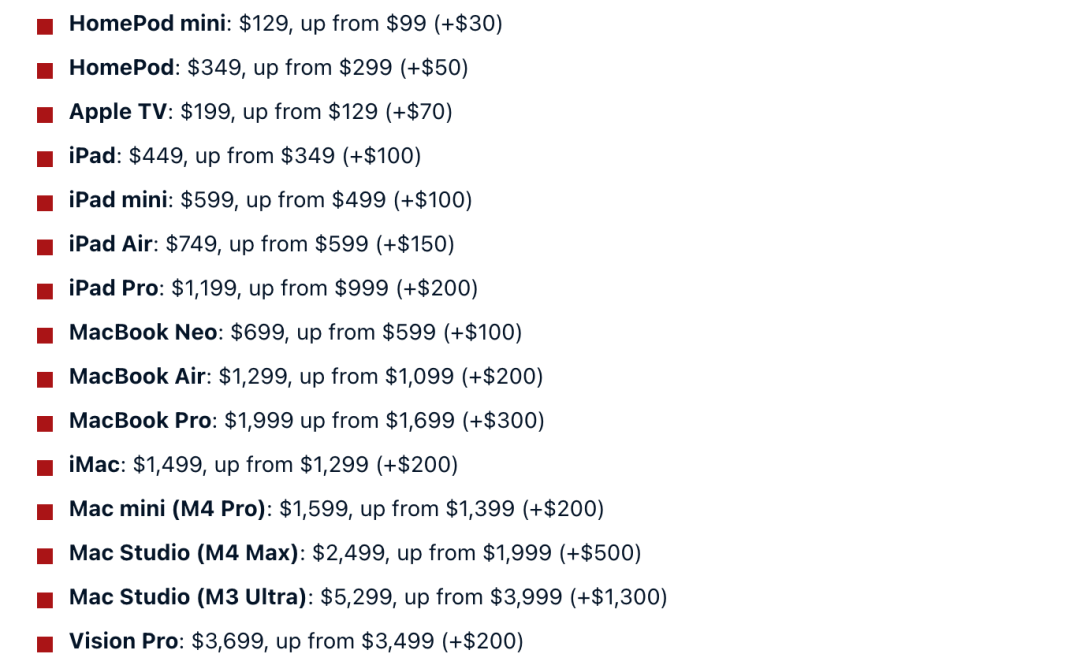
Interestingly, the iPhone has been spared from this round of price adjustments. An Apple spokesperson stated, "No adjustments have been made yet," but hinted at potential changes in the future.
Why the Price Increase?
You might find it hard to believe, but Apple's rationale for the price hike is the escalating cost of chips.
Not just a single type of chip, but all chips are witnessing price surges.
DRAM memory chip prices have soared fourfold over the past 12 months.
NAND flash memory is following a similar upward trajectory.
According to TechInsights, prices for both memory and storage chips have skyrocketed to four times their original levels.
What's Driving This?
There's been a significant shift in demand. AI data centers have been expanding rapidly in recent years, leading to an exponential surge in demand for high-bandwidth memory.
Major storage manufacturers like Samsung, SK Hynix, and Micron are allocating more and more of their production capacity to AI server customers. This leaves less capacity for consumer electronics, thereby driving up prices.
Apple made a notable remark in its announcement: "We have never witnessed such a substantial price increase for components in such a short span of time."
Cook was even more candid. In an interview, he remarked that after over 40 years in the supply chain, from IBM to Compaq and now Apple, "I have never seen such price fluctuations in commodities as in the past six months."
When a seasoned supply chain expert makes such a statement, it underscores that this round of price hikes is no ordinary occurrence.
If Apple is struggling to maintain prices, what about other companies?
Apple has long been renowned for its supply chain management prowess. Securing low prices, stockpiling in large quantities, and wielding strong bargaining power are its core strengths.
However, this time is different.
Counterpoint data reveals that LPDDR4/5 memory prices in the second quarter of 2026 have roughly tripled compared to the fourth quarter of 2025. Simultaneously, LPDDR4 supply has dwindled by more than 40%. With supply falling short of demand, prices remain steadfast.
Apple has held out for an extended period. It has repeatedly mentioned cost pressures during earnings calls, stating in January that "pricing will increase significantly," in April that "the impact will further intensify," and by June, Cook directly told The Wall Street Journal that "price hikes are inevitable."
This timeline suggests that Apple has been absorbing costs internally until it could no longer sustain them, leading to the price hike on the 25th.
Interestingly, Apple is not the only one facing challenges.
Counterpoint predicts that global smartphone shipments will decline by 13.9% year-on-year in 2026, dropping to about 1.08 billion units, the lowest since 2013. The entire industry is under pressure.
On the flip side, storage manufacturers are reaping substantial profits. Micron's recently released earnings report showed an 86% gross margin for its mobile business, up from just 15% a year earlier.
While Apple raises prices and suppliers count their profits, the cost burden ultimately falls on consumers.
When Will the iPhone Follow Suit? Will Buying Now Make Me a Fool?
This time, the Mac and iPad have seen price increases, while the iPhone has not.
However, Apple's statement, "No adjustments have been made yet," leaves room for future changes.
Supply chain sources indicate that the iPhone 18 series is likely to see a price hike in September, with the Pro version potentially jumping from 8,999 yuan to over 9,999 yuan.
Cook's timing in releasing this information is a strategic move to set market expectations and avoid a backlash when prices suddenly rise.
For consumers, there are a few key time points to monitor: With 618 just concluded, if you're planning to buy a Mac or iPad, late June might be the window before prices go up; there's still some time before the iPhone 17 series, and waiting for inventory clearance before the iPhone 18 release is a common practice.
Those who have already purchased Apple devices need not fret—this price hike does not affect repair costs or accessory prices for products already in use.
To be honest, this price hike is not driven by Apple's desire to increase profits; it's because they can no longer absorb the rising costs.
For Chinese consumers, we've become accustomed to technology becoming more affordable over the past 20 years.
However, the AI-driven restructuring of chip demand represents a structural change that won't be resolved in just a quarter or two. IDC analysts believe that this round of price hikes "will not conclude in a year or two."
In other words, the era of buying Apple products at bargain prices may truly be coming to an end.
Thinking AI's 'iPhone 13' is still running smoothly—how many more years can your Apple device last? 
All content in the article is sourced from publicly available information.
Written casually in my spare time for sharing, represents only personal views.
-
![]()
Profits Skyrocket! From Leasing to Construction: A Storage Enterprise with Hundred-Billion-Yuan Revenue Plans 1.175 Billion Yuan Investment in New Headquarters
-
![]()
Discounts Now on Offer: Is Xiaomi No Longer Grappling with Vehicle Shortages?
-
![]()
Samsung Doesn't Make Money the Hard Way
-
![]()
Japanese Media Acknowledges: China's Engine Technology Outstrips That of Japanese Firms
-
![]()
Japanese Media Concedes: China’s Engine Technology Outpaces Japanese Firms
-
![]()
Doubao Professional Version Unveiled! China Now Boasts Its Own National-Level Professional AI Agent
-
![]()
ByteDance and Alibaba Both Step Back from the Gaming Arena
-
Xiangeo International Clears BSE Review: Setting a Global Standard for the ‘Chinese Sound’ | A-Share Financing Brief