When Apple Starts to Pay the AI Tax
 06/26 2026
 449
449

We All Have to Foot the Bill for AI.
Author I He Jian
Editor I Jiang Jiao
Cover I The Big Short
After months of warnings about memory pressure and the inevitability of price hikes, Apple finally announced price increases yesterday, covering many product lines such as Mac and iPad, with some products seeing increases of up to 3,000 yuan. This marks Apple's largest-ever price hike.
The most important iPhone was not included in this price increase. The starting price of the iPhone 17 Pro series released last year was already raised by 1,000 yuan compared to the previous generation. It is predicted that the new iPhone models to be released this fall will see significant price increases, with the starting price of the foldable iPhone potentially reaching over 2,000 US dollars.
Apple has just achieved its fastest quarterly growth in the past three years. In the first quarter of this year, Apple's revenue increased by 17% year-on-year to 111.2 billion US dollars, and profits soared by 19% to 29.6 billion US dollars, both significantly exceeding Wall Street expectations. Growth in the Chinese market was even more robust, with sales increasing by 28% year-on-year.
But all of this is in the past. Due to the soaring global storage prices, even a powerhouse like Apple cannot absorb the pressure. Not long ago, Cook said in an interview with The Wall Street Journal that he had never seen such enormous price fluctuations in his forty years in the industry, "This is a flood that happens once in a century."
During the previous earnings call, Apple stated that its existing inventory had helped the company maintain its gross profit margin, but memory pressure would become apparent thereafter, and the company's profitability was expected to decline slightly. IDC predicts that global smartphone market shipments will fall by 13% this year, the largest drop on record, while the PC market will decline by 11.3%.
This morning, at the close of US stocks, Apple's stock price plummeted by 6.1%, marking the largest single-day drop in the past year.
No Escape for the Consumer Electronics Industry
Apple's unprecedented price hike signifies that the last bastion of the consumer electronics industry has been breached. With global storage prices soaring and AI investments continuing to expand, the consumer electronics industry has become the first casualty.
Prior to this, Android smartphone manufacturers had already taken the lead in raising prices. Multiple brands in the Chinese market, including OPPO, Vivo, Xiaomi, and Honor, have successively increased prices for their mid-range and low-end models—because low-end models have thinner profit margins and a larger proportion of chip costs.
Huawei's Yu Chengdong said at a press conference in April this year that due to rising costs, there was significant pressure on pricing new models, and Huawei would have to raise prices if it couldn't hold out. In June this year, Huawei's newly released Nova series models also saw price increases.
The PC market has seen even greater increases, with Lenovo, ASUS, HP, Dell, and others raising prices multiple times, with some brand products seeing increases as high as 30%. However, because PC manufacturers often have the support of a vast B-end market and the AI PC trend, some brands, like Lenovo, have seen soaring performance and revaluation of their market value.
Game console manufacturers such as Microsoft, Sony, and even Nintendo have also raised prices multiple times. In March this year, Sony increased prices for the PS5 series in China, with the highest increase reaching 700 yuan. In May, Nintendo announced that the global price of the Switch 2 would increase by 50 US dollars. After two price hikes, Microsoft's Xbox announced another increase of 100-150 US dollars yesterday, following Apple, and discontinued the 2T version with larger storage.
Over the past decade or so, the main theme of the consumer electronics industry has been price reductions. The maturity of production processes and supply chains has continuously reduced manufacturing costs, while the continuous expansion of the market has also accelerated competition and price wars.
When the first-generation Xiaomi phone was released at 1,999 yuan, mainstream flagship models on the market were priced at over 5,000 yuan. A decade ago, a 55-inch 4K TV cost as much as 10,000 yuan, but now it has almost been eliminated from the market. If we take the digitally numbered iPhones as a benchmark, Apple's pricing has hardly changed over the past decade or so.
Even before this round of price hikes driven by storage costs, Apple was beginning to be regarded by consumers as offering good value for money—Mr. Jobs might have laughed out loud. The MacBook Neo, released early this year, is Apple's cheapest Mac model ever, and it was once sold out. During the early-year crayfish craze, the Mac Mini was one of the lowest-cost solutions for raising crayfish.
But after this round of price hikes, these cost-effectiveness advantages no longer exist. The starting price of the MacBook Neo has risen to 5,499 yuan, a 19.5% increase from the previous retail price of 4,599 yuan. The starting price of the Mac Mini has increased from 4,499 yuan to 5,999 yuan, a staggering 33% increase.
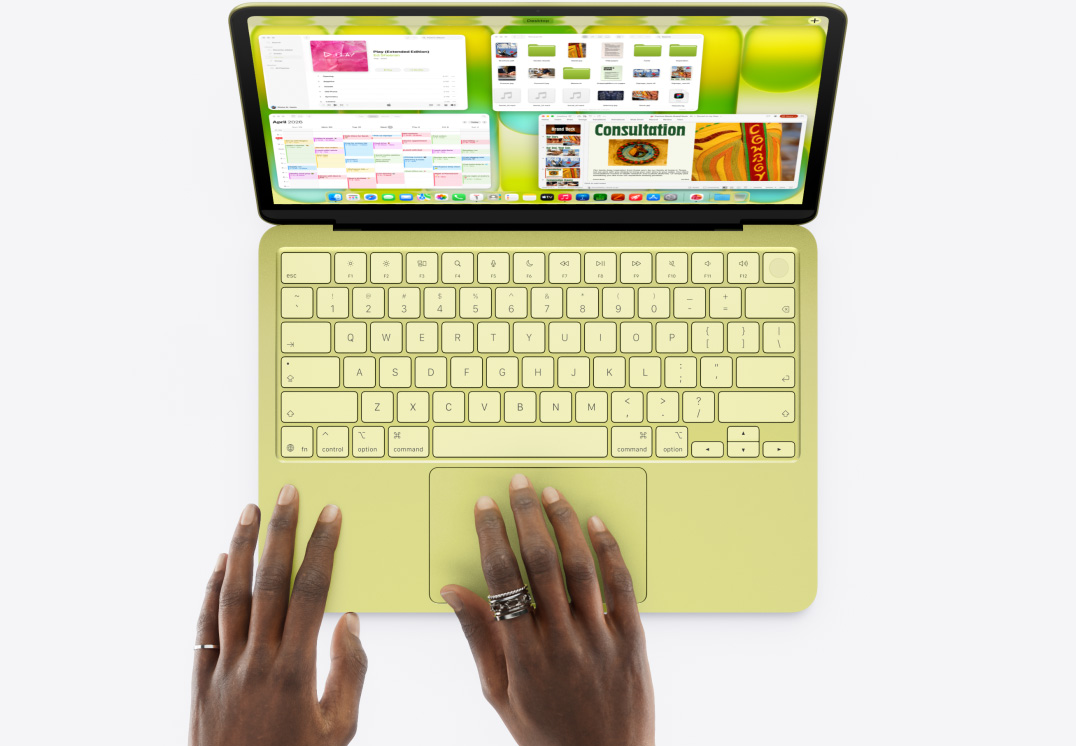
MacBook Neo
Apple stated externally that the consumer electronics industry is facing unprecedented challenges, with the rapid expansion of AI data centers leading to a surge in demand for memory and storage. They have never seen such a significant and rapid increase in component prices. They said they had been absorbing the pressure of rising component costs internally but now had to start raising prices for some products.
For those intending to purchase Apple or Microsoft products, this price hike may somewhat dampen their purchasing desire. But more pessimistically, this is far from the end of the price hikes in the consumer electronics industry; it is only the beginning.
While announcing the price hike for Xbox models, Microsoft stated that the prices of storage and memory for game consoles have increased by more than 2.5 times and are expected to double again by next fall. In other words, the price hikes for Xbox are not over yet.
Considering that Apple has started to integrate AI into all its products, and the newly upgraded Siri has also made its official debut, Apple products will require even larger memory and storage to support their AI capabilities. These costs will further drive up the prices of Apple products.
AI Investments Begin to Affect Ordinary People
The direct cause of the widespread price increases in the consumer electronics industry is the chip shortage, as more production capacity is being allocated to AI.
Bloomberg stated that over the past year, the prices of DRAM chips used in data centers, personal computers, smartphones, and even automobiles have increased by nearly 700%. According to TrendForce data, DRAM chip prices alone surged by 98% in the first quarter of this year and are expected to rise by another 58%-63% this quarter. The industry expects the chip price hike to continue until 2027.
The memory market is a highly oligopolistic market dominated by only three companies globally: Samsung and SK Hynix in South Korea, and Micron Technology in the United States. Over the past decades, the memory market has been subject to market fluctuations similar to the pig cycle, with unstable production capacity and profits.
However, with the advent of the AI era, global tech companies have begun unprecedented capital expenditures, pouring trillions of dollars into computing infrastructure. AI computing has led to an explosion in demand for memory. The existing production capacity of the memory industry is far from sufficient to meet this demand. To maximize profits, chip manufacturers can only continuously reduce production capacity for the consumer electronics industry and allocate more production lines to AI chips.
Bloomberg compiled a list of the top ten clients of SK Hynix and Micron over the past few years. In 2022, the largest revenue contributors for both companies were still consumer electronics manufacturers such as Apple, Dell, Lenovo, and HP. However, by 2026, the largest client group had become AI industry giants such as NVIDIA, Microsoft, Google, Amazon, and Meta.
Over the past year, memory manufacturers have seen their profits and stock prices rise together, creating a prosperous scene. Samsung's stock price has increased by over 458% in a year, while SK Hynix and Micron's stock prices have both risen by over 800%. Micron Technology's gross profit margin reached 84.9% in the last fiscal quarter, more than doubling from a year ago and hitting a record high, surpassing the "Magnificent Seven" stocks in the US, including NVIDIA, Microsoft, Meta, and Google.
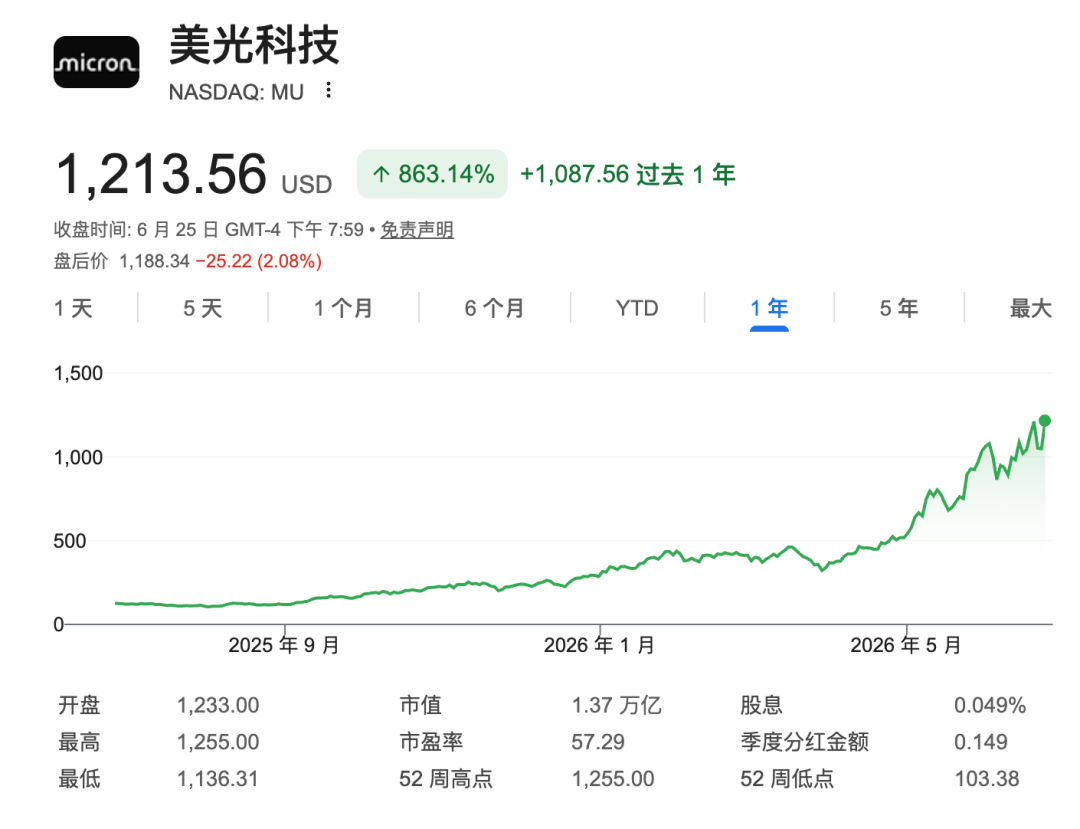
Micron's Stock Price Increase Over the Past Year
This week, South Korean media reported that Samsung plans to invest 1,000 trillion won (approximately 64.6 billion US dollars) over the next decade to build AI data centers, battery, and display industries. This is the largest investment plan in South Korean history. SK Hynix is also reportedly set to increase production capacity, planning to double it within the next five years.
However, these investment plans will not alleviate the chip shortage in the short term, let alone the continuously increasing demand for computing power. Bloomberg statistics show that by 2025, the demand for DRAM chips from AI data centers will surge to about 50% of global total consumption, compared to just 25% five years ago. Bloomberg predicts that this proportion will exceed 60% by 2030.
Morgan Stanley predicts that by 2027, DRAM chip production capacity will increase by 30%. However, because suppliers prioritize the production of dedicated AI memory, Morgan Stanley predicts that chips for consumer technology will face a demand gap of up to 15%.
Apple's price hike is just the beginning. For more ordinary people outside the AI industry, we may not have yet enjoyed the productivity improvements brought by AI, but we are already having to endure the price hikes it brings in advance.

© All rights reserved by Shanshang. Unauthorized reproduction is prohibited.
-
![]()
ByteDance, DJI, and Xiaohongshu Secure Top Three Positions Among China’s Fastest-Growing Unicorns
-
Tesla's in-car voice system in China is finally learning to 'understand human language'
-
![]()
Foreigners Are Amazed: Chinese Electric Vehicle Drive Systems Unveil Innovative 'Poses'
-
![]()
700,000 Brothers and the Future of Robots: Behind JD.com's 'Nirvana Plan'
-
![]()
Zhipu's Trillion-Dollar Valuation: A New Chapter for China's AI
-
![]()
Is Laifen, a 'Dyson Alternative' on the Rise, Now Ensnared by the 'Alternative Curse'?
-
![]()
Beyond Patents: Insta360 and DJI Compete in Retail
-
![]()
Piercing Through Industry Chaos: The Curtain Rises on Compliance for Autonomous Driving