Honor, Stepfun, and Nubia Vie for 'Pioneering' Status: The Fierce Contest Among AI-Powered Smartphones
 07/16 2026
 434
434
What Exactly Are AI-Powered Smartphones Competing For?
"We genuinely considered the advice, but ultimately, we decided to forge ahead!"
In response to external inquiries about 'why a large-scale model company would venture into smartphones,' Yin Qi, Chairman of Stepfun, responded in this manner. Over the past period, he sought counsel from numerous experts in the terminal industry, and the consensus was nearly unanimous: steer clear of hardware. However, Stepfun ultimately chose the most challenging and demanding path.
On July 13, Stepfun unveiled its native large model AI terminal brand, STEPX, simultaneously launching the AI agent-centric operating system Step AOS, the personal AI agent Step Amoo, and the inaugural large model-native AI agent smartphone, STEPX Neo.
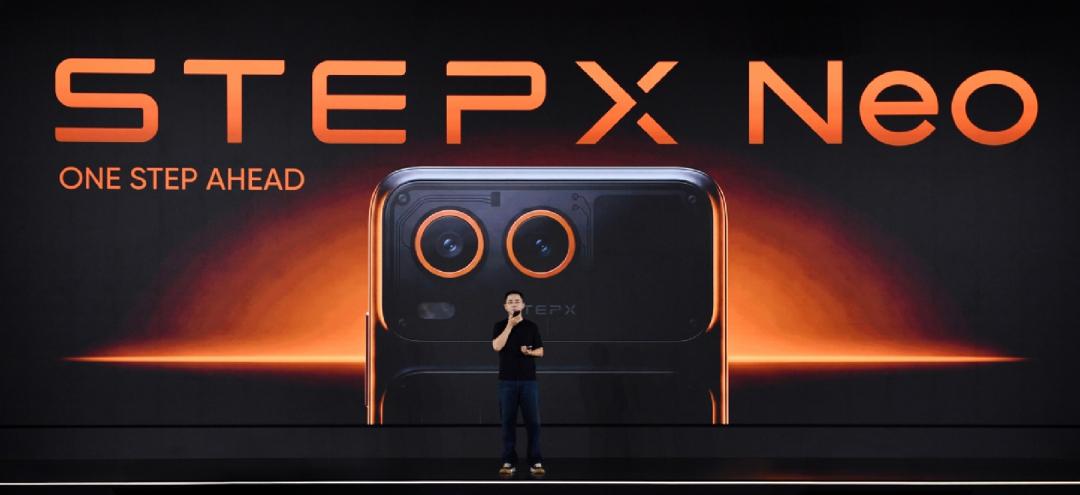
Image Source: Stepfun
Hot on its heels, Honor announced its collaboration with Alibaba to advance the next-generation terminal operating system, Agentic OS, with its global debut of the robot smartphone, Robot Phone, set for WAIC. Nubia also officially declared that it would unveil the nation's first mass-produced flagship AI agent smartphone at WAIC. Furthermore, the cyberspace administration released a list of AI service filings for mobile devices, including products like Apple Intelligence, Huawei, Xiaoyi AI, Xiaomi, OPPO, vivo, and Nubia's Doubao smartphone large model, all of which have completed filings.
In just a few days, a clear signal has emerged: the competition among AI smartphones is evolving from 'who integrates large models first' to 'who can define AI agents and the next-generation operating system.'
This signifies that AI agent smartphones are entering a new phase of development. However, this also poses a fresh challenge for all participants.
For smartphone manufacturers, AI agents represent the next evolution in operating systems; for internet companies, they signify a new avenue for services; for foundational large model companies like Stepfun, they even imply a reconfiguration of future business models.
Nevertheless, the question persists: does a large model company without a smartphone legacy truly need to venture into terminal manufacturing? Can redeveloping an AI agent operating system genuinely bridge the gaps between App ecosystems, operating systems, and business models?
Reflecting on the past year's development of AI smartphones, one can observe a significant shift in the industry's competitive focus.
Initially, smartphone manufacturers vied to be the first to integrate large models. Whether it was AI erasure, AI summarization, or AI search, these features essentially represented intelligent enhancements to traditional smartphone functions. Subsequently, with Doubao smartphone pioneering the GUI Agent (Graphical User Interface Agent), AI gained the ability to recognize screens, simulate clicks, and accomplish complex tasks such as booking tickets, shopping, and price comparisons across multiple Apps. For the first time, AI agents truly possessed the capability to 'act on behalf of users' on smartphones.
However, as we entered the latter half of this year, industry competition underwent another transformation.
On one hand, Honor announced its collaboration with Alibaba to advance the next-generation terminal operating system, Agentic OS, aiming to transform smartphones from 'application containers' into 'AI agent carriers.' Stepfun introduced Step AOS and directly proposed the concept of an 'AI agent-native operating system.'
On the other hand, the cyberspace administration recently released a new batch of filings for generative AI services, including products like Apple Intelligence, Huawei, Xiaomi, OPPO, vivo, and Nubia's Doubao smartphone large model, all of which have completed filings. This indicates that AI smartphones are gradually transitioning from conceptual verification to large-scale implementation.
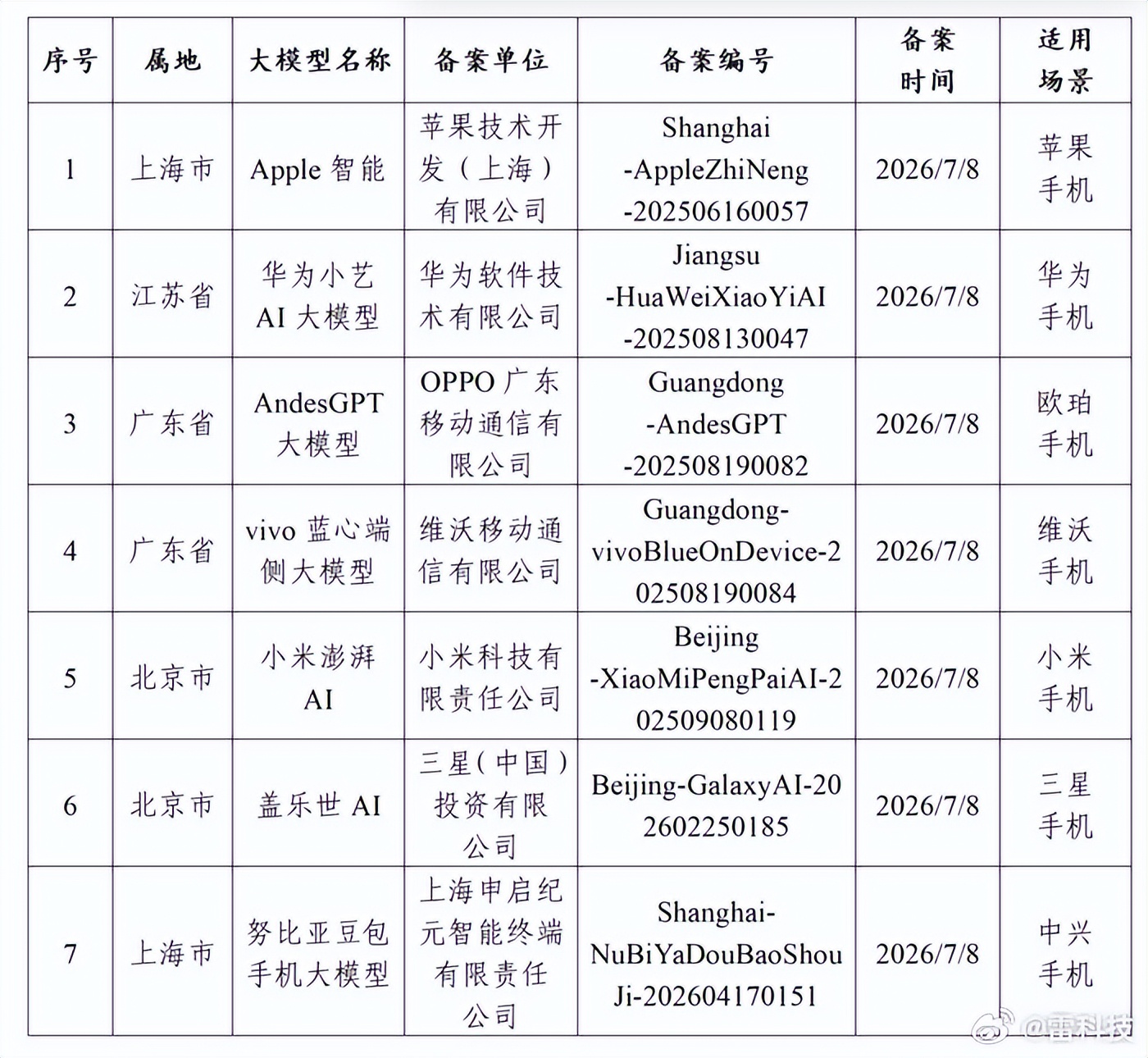
Image Source: Weibo
A clear trend is emerging: the competition among AI smartphones is shifting from 'who possesses a larger model' to 'who can define the next-generation AI agent operating system.' However, as competition intensifies, a more pragmatic issue is beginning to surface.
Over the past year, Doubao smartphone has demonstrated one thing: AI can indeed act on behalf of users on smartphones. But it has also shown that the ability to operate Apps does not necessarily equate to the true viability of AI agent smartphones.
For internet platforms, users opening Apps, browsing content, clicking on ads, and completing transactions are vital components of their business models. When AI agents bypass the homepage, recommendation pages, and search entries to complete orders and payments on behalf of users, platforms lose their original traffic entry points and commercialization opportunities.
Therefore, the subsequent restrictions imposed on Doubao smartphone by some internet applications are not merely a technical compatibility issue but also reflect the fact that AI agents are beginning to encroach upon the existing benefit distribution mechanisms of the mobile internet. The more efficient AI agents become, the more likely they are to alter the original traffic distribution logic of Apps, which happens to be the most sensitive aspect for various platforms.
Consequently, today's industry discussions no longer focus solely on whether AI can complete operations but rather on how AI agents should complete these operations.
Should we continue along the GUI Agent route, simulating screen clicks like humans? Should we enable AI agents to directly invoke services through open interfaces? Or should we, like Stepfun, redesign an operating system for AI agents from the ground up?
Currently, the entire industry lacks a consensus. For Stepfun, Step AOS represents the third path. However, whether this path can truly resolve the long-standing ecological challenges faced by AI agents or is merely another technical experiment remains to be seen, and the market will ultimately provide the answer.
If the first part of our discussion focuses on the development direction of AI agent smartphones, then the question raised by Stepfun is even more pointed: must a large model company possess its own terminals?
In Yin Qi's view, the answer is affirmative. During a media briefing after the launch event, he admitted that the team had sought advice from numerous experts in the terminal industry, and the consensus was nearly unanimous—"stay away from hardware."
Because compared to developing models, making smartphones involves entirely different capabilities, including supply chain management, manufacturing, quality control, and after-sales service. It requires heavier investment, longer cycles, and higher risks. However, Stepfun ultimately decided to "ignore the advice." The reason is simple: without its own terminals, Step AOS would struggle to form a value closed loop, and consumers would find it difficult to truly experience the full capabilities of AI agents.
This judgment was not made impulsively. Yin Qi mentioned that while many people see Anthropic's leading position in AI programming today, few know that it determined its Coding strategy as early as 2021.
In his view, large model startups "cannot afford to play catch-up; they must make choices, sacrifices, and beliefs from the very beginning." From Day 1, Stepfun believed in the integration of software and hardware and in the idea that large models would ultimately reach consumers through terminal products rather than remaining in a B2B mode indefinitely. The launch of STEPX now represents the first complete external presentation of this strategy rather than a sudden cross-industry attempt.
From this perspective, STEPX Neo serves more as a "test field" for validating Step AOS. Public information indicates that the entire device manufacturing is entrusted to ODM manufacturer Huaqin Technology, while Stepfun focuses primarily on models, operating systems, AI agents, and product definition. By entrusting the heaviest manufacturing stage to a mature supply chain, Stepfun can concentrate its core resources on software and AI capabilities.
This approach indeed lowers the barrier to entering the hardware market for the first time and aligns with the common practices of internet companies entering the terminal market in recent years. However, Stepfun's logic is not without controversy.
Image Source: Can Stock Photo Library
Across the entire industry, few large model companies truly choose to manufacture their own terminals. More companies still prefer to continue collaborating with smartphone manufacturers, providing models, agents, or operating system capabilities to OEMs. Honor's choice to collaborate with Alibaba to advance Agentic OS represents more of an upgrade within the existing terminal ecosystem; Apple, Huawei, Xiaomi, and other manufacturers possess mature hardware foundations and gradually superimpose AI agent capabilities.
In contrast, Stepfun needs to simultaneously advance on four fronts: models, operating systems, terminals, and ecosystems. This means it must not only prove that Step AOS is sufficiently advanced but also demonstrate that a large model company without a smartphone brand heritage can truly excel in terminal manufacturing.
Therefore, the truly worthy discussion may not be why Stepfun is making smartphones but whether the path it believes in is viable.
If AI agents truly become the next-generation terminal entry points in the future, then possessing its own terminals may indeed grant Stepfun more initiative. However, if operating systems ultimately remain in the hands of Apple, Android, and mainstream smartphone manufacturers, whether large model companies must personally enter the market or continue as capability providers remains without a standard answer.
At least for now, this is still an ongoing exploration rather than a proven commercial path.
If the first half of the large model competition focused on model capabilities, then with the advent of the AI agent era, a new question arises for all players: what exactly will be the next-generation entry point?
Over the past two decades, the internet has experienced two significant shifts in entry points. During the PC era, browsers served as the entry point; in the mobile internet era, entry points became individual Apps. Users needed to actively open different applications to complete searches, shopping, payments, travel, and other operations. It was during this process that today's mobile internet traffic distribution system and business models were formed.
Now, whether it's Stepfun introducing Step AOS or Honor proposing Agentic OS, both are essentially attempting to answer the same question: if AI agents can understand user intentions and proactively complete tasks, do users still need to open individual Apps themselves?
This is also why Yin Qi repeatedly emphasizes the importance of operating systems. In his view, while many agents today can write code and articles, their ability to execute complex tasks on real devices like smartphones and PCs remains limited. The root cause is not insufficient model capabilities but the lack of a platform truly suitable for AI agent operation. Without an operating system, ecosystem, or real user data feedback, AI agents will struggle to continuously improve.
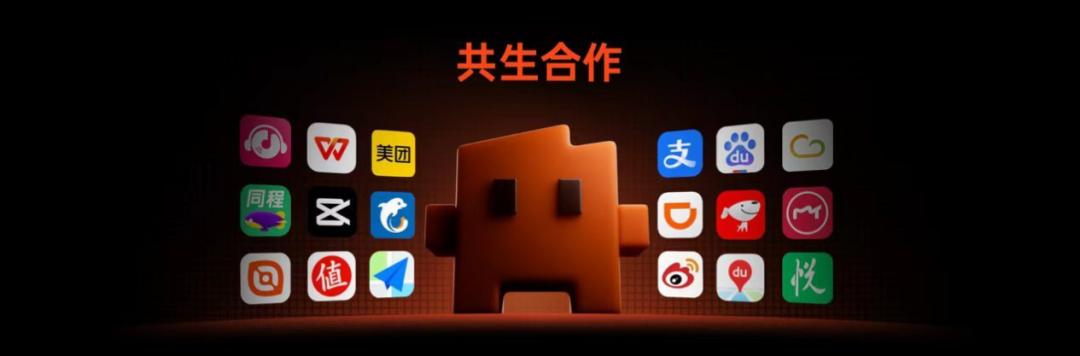
Image Source: Stepfun
Following this logic, users may no longer need to open Ctrip, Meituan, or Didi first in the future. Instead, they could simply tell their AI agent, "Book me a flight to Shanghai tomorrow morning," "Find a restaurant suitable for a group of four," or "Order me an iced latte."
What truly changes may not be the disappearance of Apps but the addition of a layer of AI agents between users and Apps. However, this is also where the industry's greatest controversy lies.
On one hand, Yin Qi clearly states that Apps will not disappear but will continue to exist in new forms, transitioning from direct user entry points to services invoked by AI agents in the background. On the other hand, both internet platforms and smartphone manufacturers find it difficult to easily abandon the traffic entry points and user relationships they have established over the years.
More importantly, when AI agents begin making decisions on behalf of users, a new question arises.
If a user wants to book a hotel, should the AI agent prioritize Ctrip or Meituan? If they want to order coffee, does it recommend Luckin, Cotti, or Starbucks? Do these results stem from user historical preferences, real-time price comparisons, or potential future commercial collaborations between platforms?
In the past, these choices were largely made by search rankings, recommendation algorithms, and users themselves. In the future, if more decisions are entrusted to AI agents, how will new traffic distribution rules be established?
Therefore, rather than saying that the industry has already entered the AI agent era, it would be more accurate to say that the entire industry is vying for the discourse power of the AI agent era.
Whether it's Stepfun, Honor, Apple, Huawei, or Xiaomi, everyone is competing not just for a new operating system but for who can become the most important entry point between future users and the digital world.
However, whether this entry point will ultimately belong to AI agents and how it will take shape remain without standard answers today.
From a capital market perspective, the significance of STEPX Neo may exceed that of an AI agent smartphone itself.
Just two months prior to the launch event, Stepfun successfully secured a fresh round of financing, amassing nearly $2.5 billion. Concurrently, it dismantled its red-chip structure and expedited its preparations for an initial public offering (IPO) in Hong Kong. At the same time, consumer electronics supply chain companies, including Huaqin, Longcheer, OmniVision, and ZTE, along with institutions such as the Hong Kong Investment Corporation (HKIC), sequentially joined the roster of shareholders. This move encompasses various segments, spanning from complete device manufacturing and core components to terminal ecosystems.
It is noteworthy that Tencent, an existing shareholder, also took part in Stepfun's latest round of financing. According to reports, Tencent became a shareholder of Stepfun as early as its Series B funding round and has continued to invest. Not long ago, their partnership deepened even further. Tencent Cloud inked a strategic cooperation agreement with Stepfun, integrating Stepfun's foundational large models with Tencent's content and application ecosystem to jointly develop AI cockpit agents. This collaboration links Tencent's music, video, maps, payments, travel services, and other sectors to create a closed-loop of in-car services.
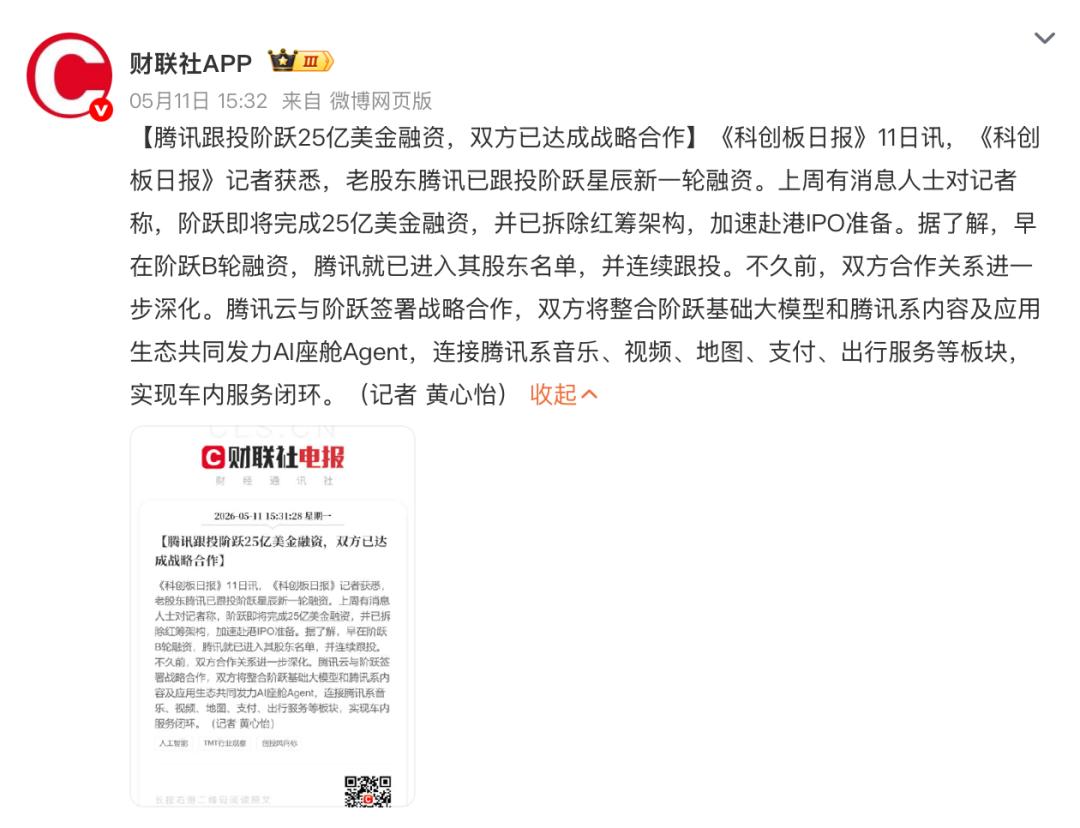
Image Source: Weibo Screenshot
In contrast to previous financing rounds, which mainly involved financial investors, the most notable change in this round is the growing confidence in Stepfun from industrial capital. This background lends an additional layer of significance to the launch of STEPX Neo.
Over the past few years, capital markets assessing large model companies have primarily concentrated on model capabilities, parameter sizes, and leaderboard performances. However, as foundational models gradually rise to prominence, more investors are posing the same question: beyond models, where lies the path to commercialization?
For OpenAI, there's ChatGPT; for Anthropic, there's Claude and the enterprise market. Yet, for domestic large model companies, the quest to establish their own user entry points, data flywheels, and commercial closed loops remains an ongoing exploration for the entire industry.
To a certain extent, STEPX Neo is precisely addressing this question. At the launch event, Yin Qi repeatedly stressed that STEPX would not follow the path of a traditional mobile phone company, nor would it rely on selling hardware or pre-installed advertisements for profit. Instead, he aspires to connect models, operating systems, intelligent agents, and real users through AI-native terminals, enabling these terminals to serve as a continuous data source for model iteration rather than merely facilitating one-time hardware sales.
This is undoubtedly a compelling narrative that resonates strongly with the capital markets. However, articulating the story is merely the first step; the real challenges are just beginning.
On the one hand, STEPX Neo is still in its nascent stages, with the product yet to be officially launched. Questions persist regarding the extent of its ecosystem collaboration, whether users will engage with it over the long term, and whether intelligent agents can truly establish a continuous data flywheel—all of which await market validation. On the other hand, terminal manufacturers such as Apple, Huawei, Xiaomi, and Honor are also advancing their AI and intelligent agent strategies. Whether large model companies can forge new competitive advantages through self-built terminals remains uncertain.
In other words, StepOn is wagering on a future where intelligent agents emerge as new user entry points, and owning the terminal means having greater initiative.
This may also be the true objective that STEPX Neo aims to demonstrate.
If this logic ultimately holds water, StepOn will present itself to the capital markets not merely as a foundational large model company, but as an AI platform company encompassing models, operating systems, terminals, and a user ecosystem. However, if intelligent agents remain confined to the application layer or if mainstream mobile phone manufacturers take the lead in evolving intelligent agent operating systems, today's business logic may require reevaluation.
Therefore, whether STEPX Neo signifies a paradigm shift in the era of intelligent agents or merely represents one of many technological approaches remains an open question.
-
![]()
The Dead End of GoPro: Unveiling the Decisive Factors in DJI and Insta360's Competition
-
![]()
The Dead End for GoPro: Unveiling the Key to Victory in DJI and Insta360's Competition
-
DeepSeek Targets A-share IPO Amid RMB 480 Billion Valuation Debate
-
![]()
WPS Meitu XiuXiu: The Threat to Its Market Position from AI Large Models
-
![]()
After Seres Reports Losses, What Is the Capital Market Really Worried About?
-
![]()
Honor, Stepfun, and Nubia Vie for 'Pioneering' Status: The Fierce Contest Among AI-Powered Smartphones
-
![]()
Glory, Stepfun, and Nubia Vie for the Pioneering Position: AI-Powered Smartphones Engage in Intense Competition
-
![]()
Apple AI Gains Approval but Faces Outdated Challenges