The Dead End for GoPro: Unveiling the Key to Victory in DJI and Insta360's Competition
 07/16 2026
 423
423
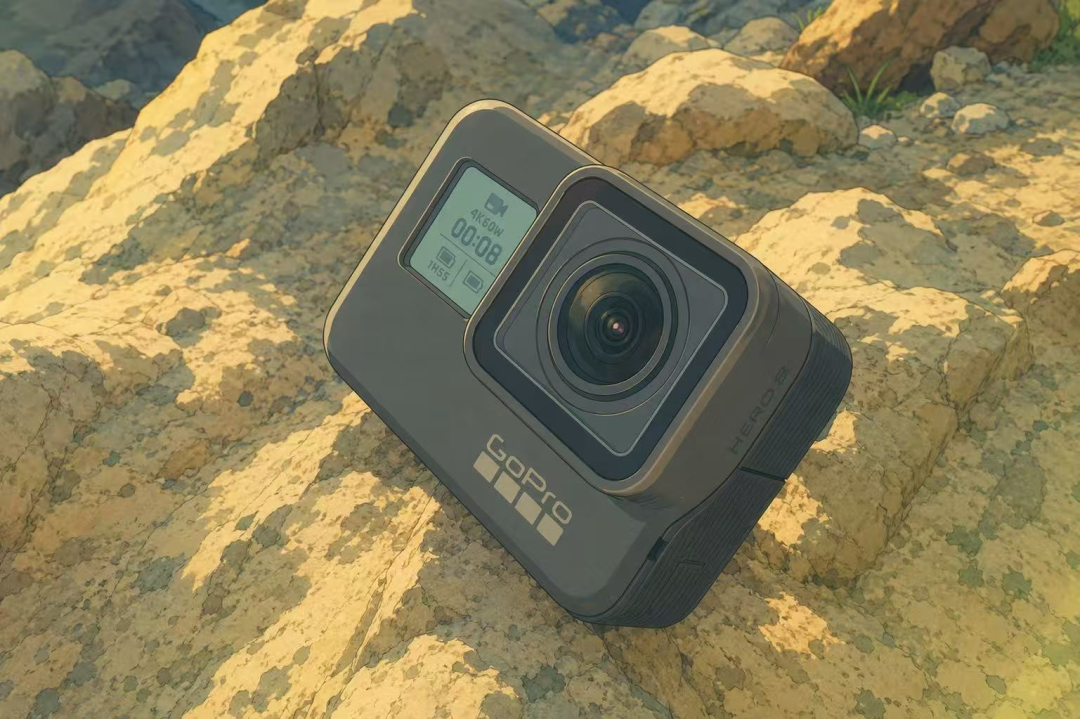
The lengthy and unpredictable legal battles, along with product and pricing wars, have failed to defeat opponents. Control over the supply chain and market segmentation may be the true keys to victory behind the heated competition between Insta360 and DJI.
The competition between DJI and Insta360 has reached a 'hot war' stage.
In June, Insta360's Luna Ultra and DJI's Osmo Pocket 4 series were released in succession. That same month, both companies were accused of 'defrauding national subsidies' and 'artificial scarcity marketing,' respectively.
Accompanying the competition for new products are legal disputes. From the United States to China, DJI has initiated patent infringement lawsuits against Insta360, which has responded with countersuits.
The two giants in their respective niche industries are engaged in intense battles.
The more heated the competition, the more it highlights the awkward (awkward) position of GoPro, the former industry leader and once-rising star.
On July 9, GoPro announced that founder and CEO Nicholas Woodman would provide a total of $20 million in financing to the company, giving the struggling company a temporary reprieve.
But this is only temporary. Currently, GoPro's stock price has been below $1 for 26 consecutive trading days, putting it on the brink of delisting.
Part.
01
A Flash in the Pan
In 2002, after a failed business venture, Woodman embarked on a road trip in his old car, surfing and traveling along the way.
Like many entrepreneurial stories, this journey led him to discover a business opportunity. He wanted to capture his best surfing moments but found that cameras on the market were either too expensive or too difficult to operate.
With a screwdriver and a sewing machine, Woodman built his own action camera, marking the beginning of GoPro.
Hand-built prototypes and garage startups—these classic elements of American tech companies are all present in GoPro's story.
Woodman's message was simple and direct: 'Strap the camera to yourself and forget it's there.'
In 2006, the flagship Hero series was launched, and GoPro's story gradually gained traction in the extreme sports community.
At that time, Woodman's approach was very internet-savvy. He gave away cameras for free to surfers, skiers, skydivers, and motorcyclists. These individuals showcased first-person footage of extreme sports, acting as KOLs and accelerating GoPro's rise to prominence.
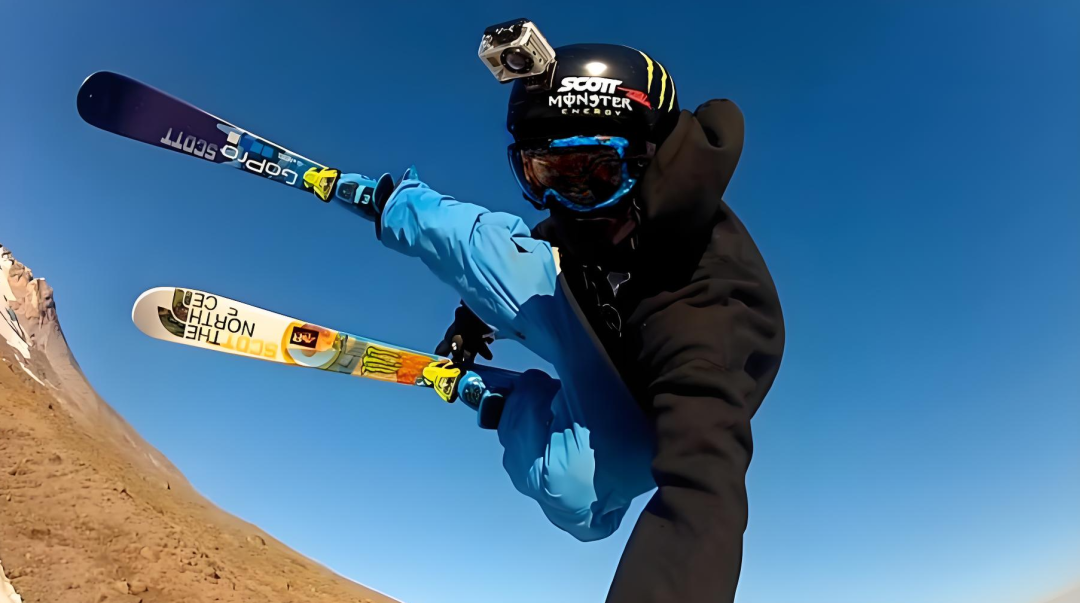
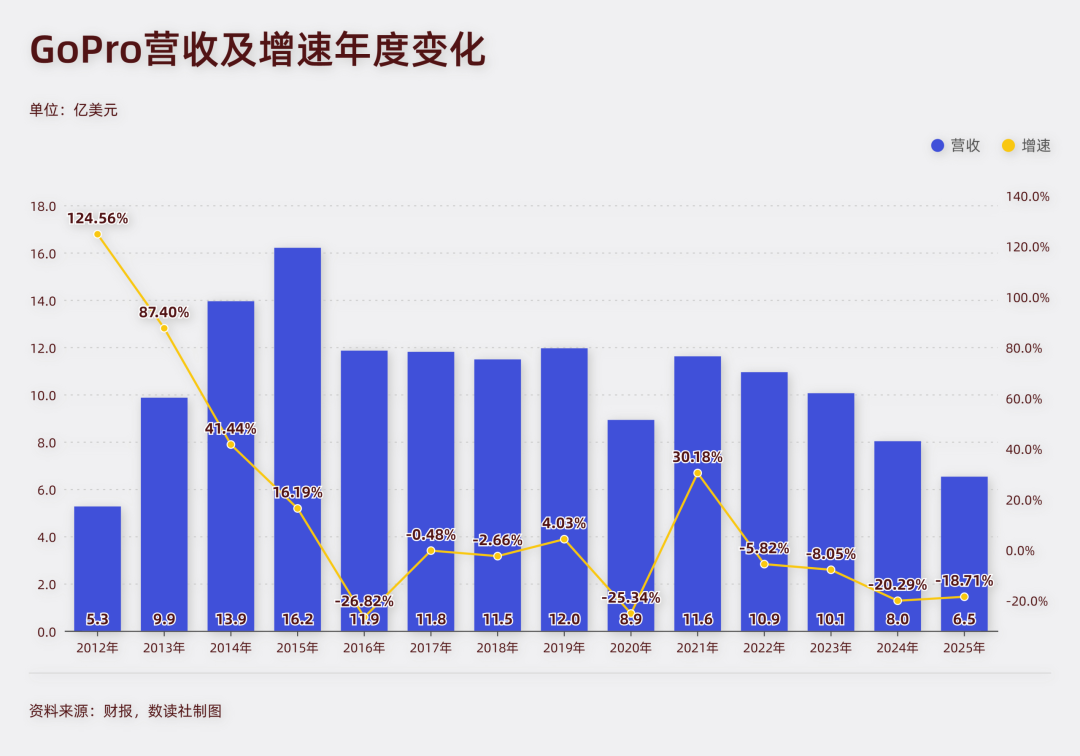
With the Hero 5 featuring a wide-angle lens and the Hero 9 introducing high-definition recording, GoPro began to soar. The company's revenue grew rapidly from $64 million in 2010 to $1.394 billion in 2014, with a compound annual growth rate of an astonishing 116.03%.
In 2014, GoPro went public with much fanfare, its stock price surging to $93 at its peak, giving the company a market capitalization of $13 billion and making Woodman a billionaire overnight.
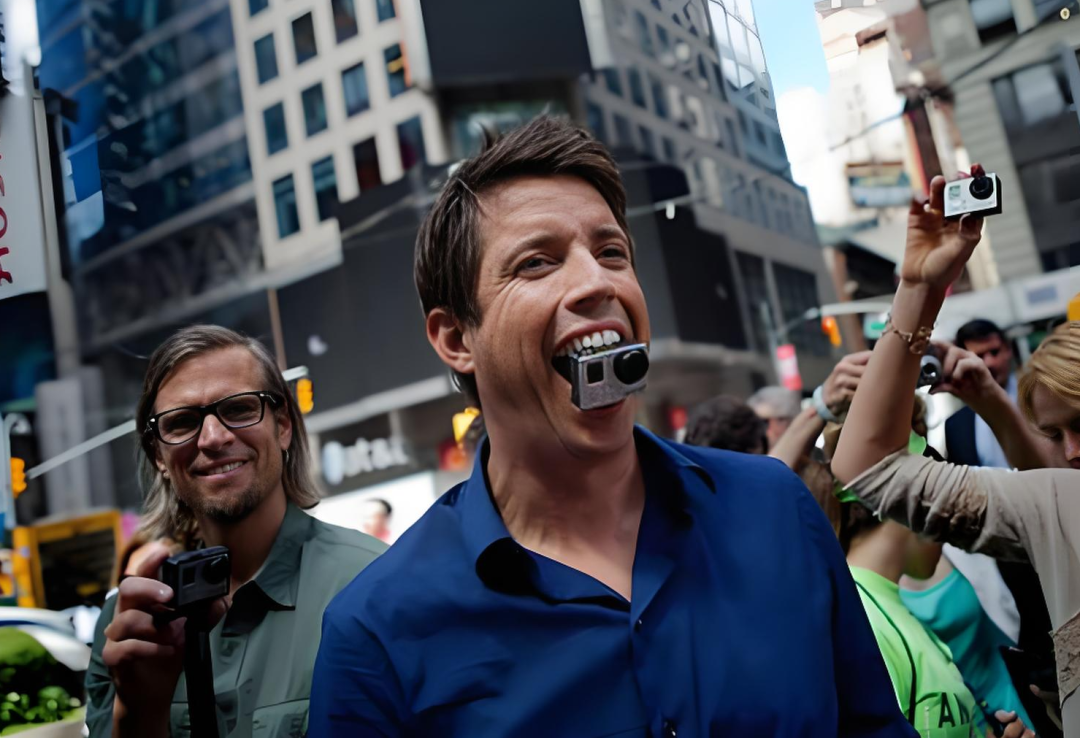
This was GoPro's peak, as it virtually single-handedly opened up a previously blank market, tightly binding GoPro with extreme sports and becoming the absolute synonym. GoPro enjoyed ample benefits as a pioneer.
However, going public marked GoPro's peak and the starting point of its decline.
After reaching the summit, GoPro made a series of blunders.
Amid soaring stock prices, GoPro chose to aggressively stockpile inventory, reflecting Blind optimism (blind optimism) about the market. The action camera market was far from mainstream or essential, with many consumers using the products only once or twice before letting them gather dust.
GoPro's products were complex and cumbersome, leading many consumers to make one-time purchases. Growth quickly peaked.
In 2015, revenue reached $1.62 billion, but growth slowed to 16.19%, continuing to decline.
At this point, Woodman urgently needed a new narrative, but his strategy further pushed the company toward disaster.
Part.
02
A Series of Blunders
In 2015, GoPro heavily promoted the thumb-sized Hero4 Session camera, which was block-shaped and highly portable.
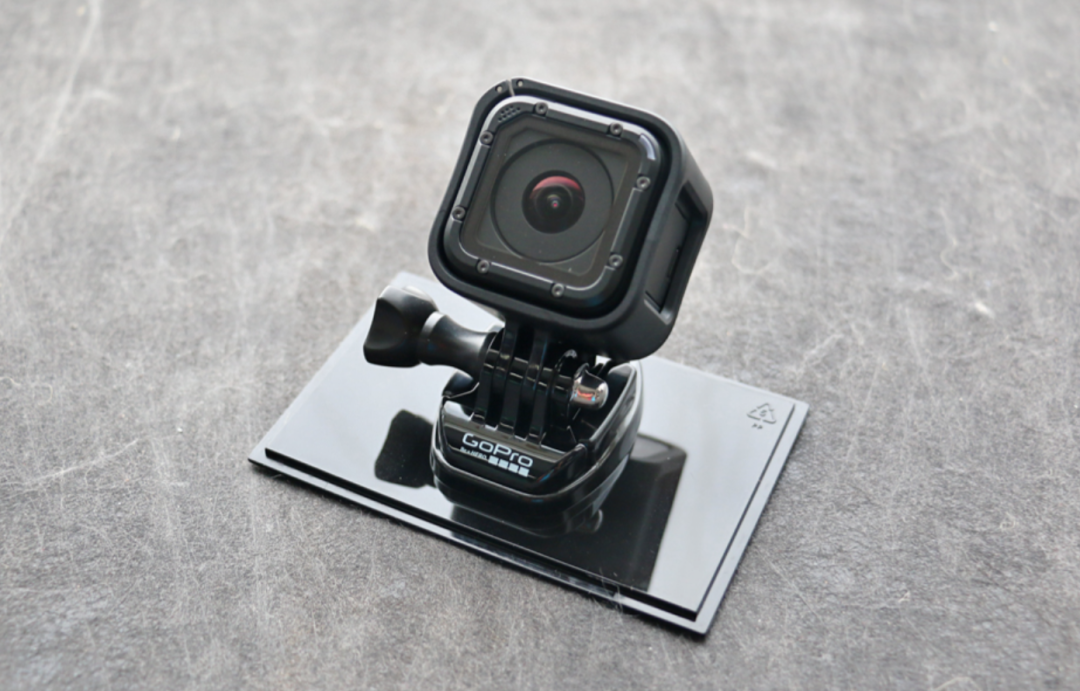
The problem lay in its price. Priced at $399, with a battery life of only 1.5-2 hours, no support for 4K high-definition video, and complex settings dependent on a smartphone, users generally found the pricing excessive.
Indeed, in September of that year, GoPro reduced the product's price by $100.
The price cut not only admitted to pricing errors but also exposed GoPro's inventory issues. Previous aggressive stockpiling and overloading distributors began to backfire.
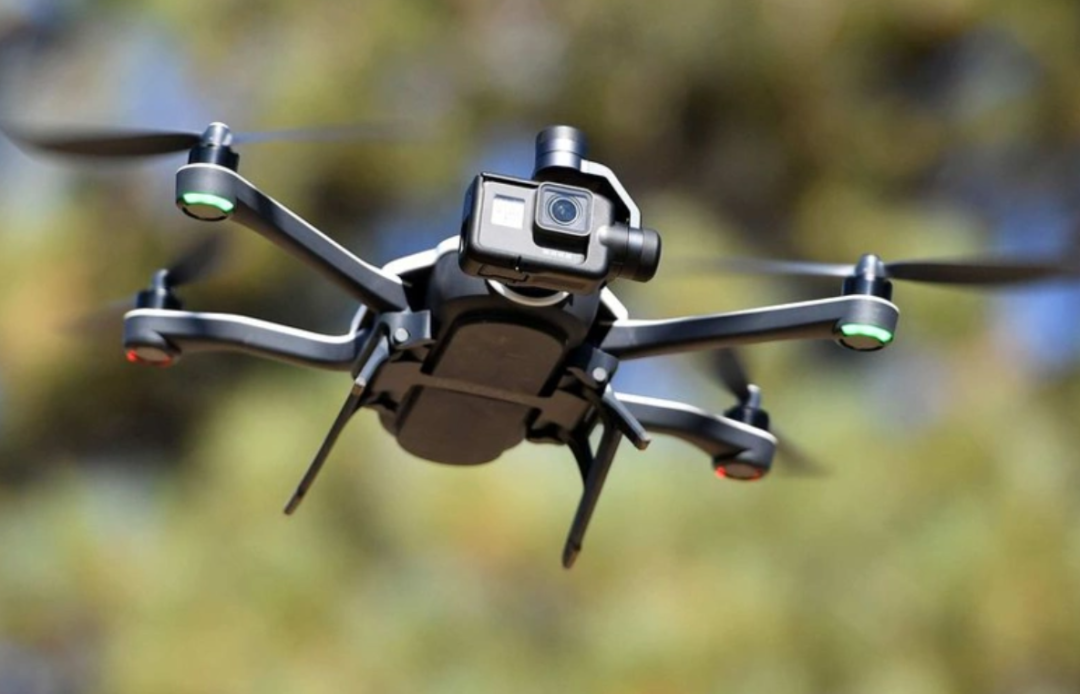
In October 2016, GoPro suffered a further blow with the release of the Karma drone. This was an ambitious move, aiming to upgrade action cameras from 'wearable' to 'flying' and capture the aerial market.
At the time, DJI had already become the absolute leader in the drone industry through technological accumulation, and GoPro, like today's Insta360, was coming on strong.
However, GoPro's technology fell far short of requirements.
Just one month after its release, GoPro was forced to recall all approximately 2,500 units sold due to mechanical faults in the battery connection, causing drones to suddenly lose power and crash during flight.
Karma survived in the market for less than 15 months before being discontinued in January 2018, with the entire drone division being disbanded. The hundreds of millions of dollars GoPro invested went down the drain.
While scene expansion proved ineffective, GoPro simultaneously pursued software Layout (strategic Layout ).
In 2015, GoPro acquired VR software company Kolor, which mainly operated Autopano stitching software and Panotour virtual tour software.
In 2016, GoPro acquired two mobile video editing apps, Replay and Splice, for a total of $105 million in cash and stock. These deals accounted for about 22% of GoPro's cash reserves.
Behind these acquisitions, GoPro attempted to build a content ecosystem and develop a subscription model to generate sustainable revenue, but the result was merely a waste of precious cash flow. Kolor announced its closure in 2018.
Undeterred, GoPro acquired ReelSteady software in 2020, but with little success.
Part.
03
Caught Between Two Fronts
Starting with drones, Chinese companies entered GoPro's narrative, marking the beginning of its nightmare.
DJI was the first opponent. As early as around 2014, DJI had established a monopolistic position in the drone market through its technology. When GoPro recklessly entered the drone market, DJI became an insurmountable wall.
In fact, GoPro never even pushed DJI to the point of patent litigation. Against a backdrop of DJI facing bans, tariff pressures, and other issues, data from The New York Times in June 2024 showed that 58% of U.S. drone operators used DJI equipment, far surpassing second-place Skydio's 12%.
After DJI, the emergence of Insta360 pushed GoPro over the edge.
Backed by China's supply chain, Insta360 and DJI could launch new products with significantly improved performance almost annually, while GoPro, lacking these advantages, struggled to iterate effectively.
In 2017, GoPro launched its panoramic camera, well ahead of Insta360. However, Insta360 quickly iterated its panoramic cameras, expanded its product range, and gradually surpassed GoPro.
In the stage of scaling from 1 to 10, Chinese manufacturers clearly demonstrated more innovation. Insta360's 'invisible selfie stick' optimized shooting effects, while its AI auto-editing feature lowered the barrier to editing, becoming a productivity tool for many travel bloggers, vloggers, and lifestyle content creators.
GoPro had uncovered the market but could only watch helplessly as Chinese companies took over.
In 2024, a desperate GoPro filed a Section 337 investigation with the U.S. International Trade Commission (ITC), accusing Insta360 of infringing on multiple patents related to image stabilization and core technologies, and aggressively demanding a complete ban on the import and sale of Insta360 products in the United States.
This was clearly a desperate struggle. In February of this year, a U.S. court ruled that all five core invention patents central to GoPro's lawsuit were invalid. GoPro's ban plan fell through completely.
Soaring memory prices became the final straw that broke the camel's back. GoPro's action cameras do not have built-in storage, requiring users to purchase microSD cards separately, further dampening consumer purchasing Will .
In the first quarter of this year, IDC reported that in the global handheld smart camera market, DJI maintained its lead with a 65% market share in shipments, up 38% year-on-year. Insta360 ranked second with a 22% market share, up 66% year-on-year, the highest growth rate. GoPro's shipments shrank by 33% year-on-year, with a market share of only 6%.
Since 2016, GoPro has been on a downward trajectory, with revenue sliding to $650 million, a 60% decline from its peak. Its stock price has also plummeted by 99% from its peak.
In April of this year, GoPro announced global layoffs of about 145 employees, a 23% reduction, which has become a routine move.
In May, the company announced a 'strategic review,' meaning it was preparing to sell itself or seek a merger.
In June, regulatory filings revealed that the company faced 'significant doubts about its ability to continue as a going concern.'
With both its performance and stock price taking a hit, GoPro's fate seems sealed.
GoPro's meteoric rise and fall, aside from its own strategic missteps, were influenced by unavoidable factors. These are also key elements in the current competition between DJI and Insta360.
Part.
04
The Supply Chain Battle
Over the past year, the competition between DJI and Insta360 has escalated from products and pricing to supply chains and sales channels, culminating in current legal and PR battles, with neither side giving ground.
In terms of products, DJI released the Osmo 360, directly competing with Insta360 and entering its core market. Insta360 responded with the panoramic drone 'Antigravity,' going head-to-head with DJI. This year, Insta360's Luna Ultra gimbal camera, released in the United States, directly competes with DJI's flagship Osmo Pocket series.
In the pricing war, during this year's 618 shopping festival, DJI reduced prices on more than ten products; Insta360 quickly followed by announcing a spokesperson and matching price cuts.
The legal battle has now erupted in the two main markets of the United States and China.
The PR war, meanwhile, quietly unfolds in the shadows.
After DJI released the Osmo Pocket 4 series, reports of immediate sellouts and ' Second Empty ' (instant stockouts) across multiple channels emerged, leading to accusations of 'artificial scarcity marketing.' Similarly, Insta360 became embroiled in controversy over the Luna Ultra and 'defrauding national subsidies.'
In reality, none of these competitive tactics have truly defeated the opponents. The supply chain, however, has emerged as a critical factor.
Reviewing GoPro's downfall, slow product iteration was a key reason.
But this slow iteration was not just due to slow R&D; supply chain issues also played a role. When R&D capabilities could not find a sufficient supply chain to support implementation, GoPro was constantly hindered.
A similar situation once occurred with Insta360. Liu Jingkang initially set up his office in Nanjing, where he attended university, but early-stage development was not smooth. It wasn't until 2015, when Liu and his team moved the company to Shenzhen, that Insta360 turned a corner.
Shenzhen's unique supply chain advantages deeply benefited Insta360. 'In Shenzhen, even PCB prototypes can be ordered in the morning and picked up in the afternoon.' 'Thousands of raw materials that would require nationwide sourcing elsewhere can generally be found within a two-hour drive in Shenzhen.'
If such a significant difference exists between two cities, the gap between two countries' supply chain foundations is even greater.
Supply chain support has helped DJI and Insta360 enhance their product capabilities, playing a key role in their defeat of GoPro.
This will also be one of the potential factors determining the outcome of their future competition.
In the face of price cuts, Liu Jingkang stated that price wars alone cannot achieve long-term monopoly or profitability.
Regarding lawsuits, his attitude was, 'We fully understand the mindset of giants losing market share and are not afraid of any patent litigation.'
But when faced with supply chain exclusion, Liu revealed in an internal letter late last year that 33 core suppliers for the Antigravity A1 drone faced exclusivity pressures. He straightforward (bluntly stated) that the technical premiums on these core components made it difficult for Insta360 to compete on price in the short term, trapping the company in a vicious cycle of 'high costs, high pricing, and sluggish sales.'
He also admitted that 'DJI is much, much more powerful than it appears.'
According to the disclosed information, suppliers are not allowed to provide components to DJI's competitors during the project cooperation cycle, nor can they be used in all product lines of competitors, including action cameras, panoramic cameras, drones, and handheld gimbals. In other words, the influence DJI exerts on the supply chain could largely disrupt Insta360's entire product line rhythm.
From the results, it is evident that the supply chain strategy has indeed caused delays for the Evo A1. In the global drone market, DJI accounts for over 70% of the consumer drone segment, while Insta360 has not yet made it onto the list.
In the panoramic camera sector, current reports show significant variations in specific data, but they generally confirm that DJI has already entered the fray.
A previous report by Mergermarket indicated that DJI would capture a 43% market share in the panoramic camera segment by Q3 2025. Frost & Sullivan mentioned that DJI secured approximately 37.1% of the domestic market share in the same quarter.
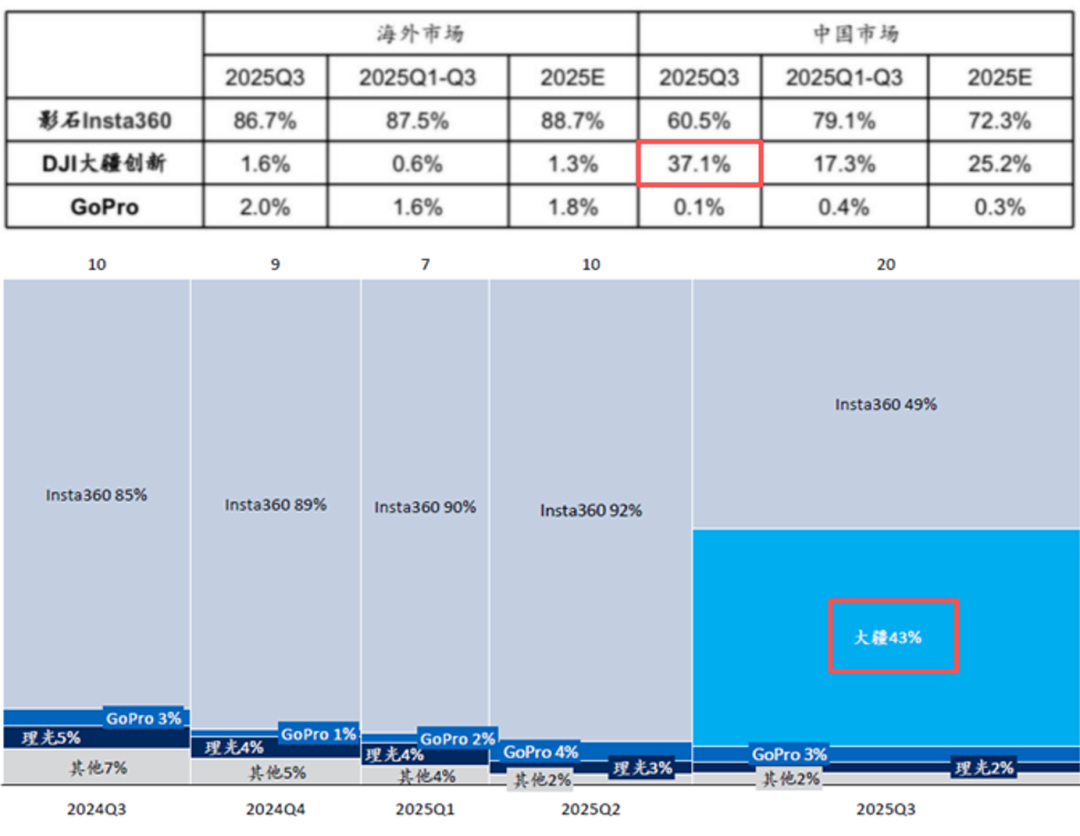
The competition between the two sides continues, but from the current outcomes, the litigation is protracted and uncertain, while product and price wars have failed to crush the opponent. Control over the supply chain and territorial division may be the true decisive factors behind the heated battle between Insta360 and DJI.
-
![]()
Forty Years On: From Volkswagen’s State-Backed Entry into China to BYD’s Hiring of a Former European Foreign Minister
-
![]()
The Dead End of GoPro: Unveiling the Decisive Factors in DJI and Insta360's Competition
-
![]()
The Dead End for GoPro: Unveiling the Key to Victory in DJI and Insta360's Competition
-
DeepSeek Targets A-share IPO Amid RMB 480 Billion Valuation Debate
-
![]()
WPS Meitu XiuXiu: The Threat to Its Market Position from AI Large Models
-
![]()
After Seres Reports Losses, What Is the Capital Market Really Worried About?
-
![]()
Honor, Stepfun, and Nubia Vie for 'Pioneering' Status: The Fierce Contest Among AI-Powered Smartphones
-
![]()
Glory, Stepfun, and Nubia Vie for the Pioneering Position: AI-Powered Smartphones Engage in Intense Competition