After Seres Reports Losses, What Is the Capital Market Really Worried About?
 07/16 2026
 513
513
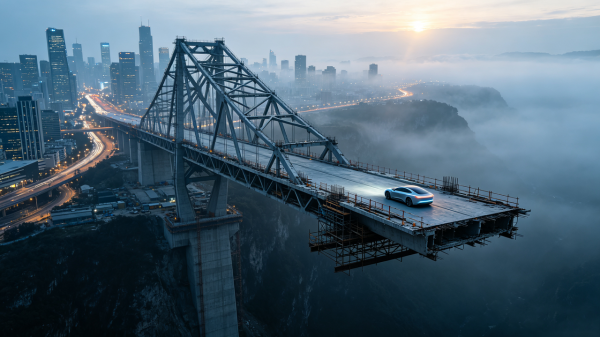
On July 12, Seres released its financial forecast for the first half of 2026. The announcement revealed that the company anticipates a net loss attributable to shareholders for the period, ranging from 1.5 billion to 1.8 billion yuan. Furthermore, the non-recurring profit and loss net profit is expected to show a deficit between 2.2 billion and 2.5 billion yuan.
Previously, Seres stood out as one of the few profitable companies in the fiercely competitive new energy vehicle (NEV) sector.
In 2025, Seres reported a net profit attributable to shareholders of 5.96 billion yuan. Although profits saw a significant decline in the first quarter of 2026, the net profit attributable to shareholders remained at 754 million yuan, with non-recurring profit and loss net profit at 103 million yuan. However, by the second quarter, the net loss for the quarter ballooned to over 2 billion yuan.
The capital market reacted swiftly and severely. The day after the financial forecast was released, Seres' A-shares plummeted to a limit down of 53.91 yuan, while its Hong Kong-listed shares dropped by 13.56%.
Looking at a broader timeframe, Seres' A-shares reached an all-time high of 173.55 yuan in September 2025, with its market capitalization surpassing 280 billion yuan. Subsequently, the stock price experienced a continuous decline, with a maximum drop exceeding 70%. As of the morning close on July 16, the market capitalization stood at 99.4 billion yuan.
Following the financial forecast, the controlling shareholder announced plans to increase its stake by 150 million to 300 million yuan over the next six months, in an attempt to stabilize market expectations. This move was not the first sign of support during Seres' downturn. On March 31 of the same year, Seres disclosed a share repurchase plan, intending to buy back 1 billion to 2 billion yuan worth of A-shares over the next 12 months.
From share repurchases to stake increases, Seres is stepping up its efforts to stabilize stock prices and restore investor confidence. However, for the capital market to rebuild trust, there are ultimately only two paths: delivering solid performance now and convincing the market of the ability to deliver solid performance in the future.
Seres cited two reasons for the second quarter's shift from profit to loss in its financial forecast.
The first is the increase in production costs due to rising prices of key raw materials such as memory chips, industrial metals, and lithium carbonate. The second is the adjustment of the book value of inventory assets (existing assets) with limited adaptability due to technological iterations and model updates, based on the principle of prudence.
The former represents cost pressures at the operational level, while the latter involves impairment adjustments at the financial level. Together, they directly contributed to the significant fluctuations in Seres' performance this quarter. Notably, its core subsidiary, AITO, is expected to report a net loss attributable to shareholders of the listed company ranging from 1.9 billion to 2.15 billion yuan for the second quarter.
Let's first examine the rise in raw material prices.
Zhang Xinghai, Chairman of Seres Group, calculated at the Chongqing Forum in June that the unit price of memory chips surged from 20 yuan to nearly 100 yuan, a roughly fivefold increase. Lithium carbonate prices rose from 80,000 yuan per ton to 180,000 yuan per ton. As a result, the manufacturing cost of each AITO vehicle increased by an average of 15,000 to 20,000 yuan.
On one hand, the prices of upstream raw materials are influenced by global commodities and supply-demand dynamics, leaving little room for automakers to intervene proactively. Rising raw material prices have become an industry-wide issue. On the other hand, the NEV market remains fiercely competitive, and without sufficient sales volume support, there is little confidence to raise terminal prices accordingly.
Specifically, in the first quarter of 2026, Seres sold 88,000 vehicles across all models, a year-on-year increase of nearly 30%, with Seres Automobile selling approximately 70,000 units, a 55.6% increase. By the second quarter, Seres' sales reached 109,000 units, with Seres Automobile contributing about 90,000 units, representing year-on-year declines of approximately 15% and 16%, respectively, compared to the second quarter of 2025.
Automakers are facing pressure from both upstream and downstream, which is reflected in their gross profit margins. The consequences of rising costs were already evident in the first quarter financial report, with Seres' gross profit margin declining by 2.4 percentage points quarter-on-quarter and 1.4 percentage points year-on-year.
Now, let's turn our attention to asset impairments.
The NEV industry has entered a phase of "simultaneous hardware and software iterations." Every product upgrade, from power batteries and electronic electrical architectures to intelligent driving hardware and smart cockpits, may necessitate adjustments to component specifications and updates to manufacturing processes.
When technological routes change, some inventory materials, production equipment, and even R&D results may no longer be suitable for new models, requiring impairment provisions in accordance with accounting standards.
Asset impairments do not consume cash nor indicate ongoing operational losses. In most cases, high asset impairments have a one-time impact. However, as the industry's update cycle continues to shorten, asset impairments due to product upgrades may become a common operational phenomenon that NEV companies need to face in the future.
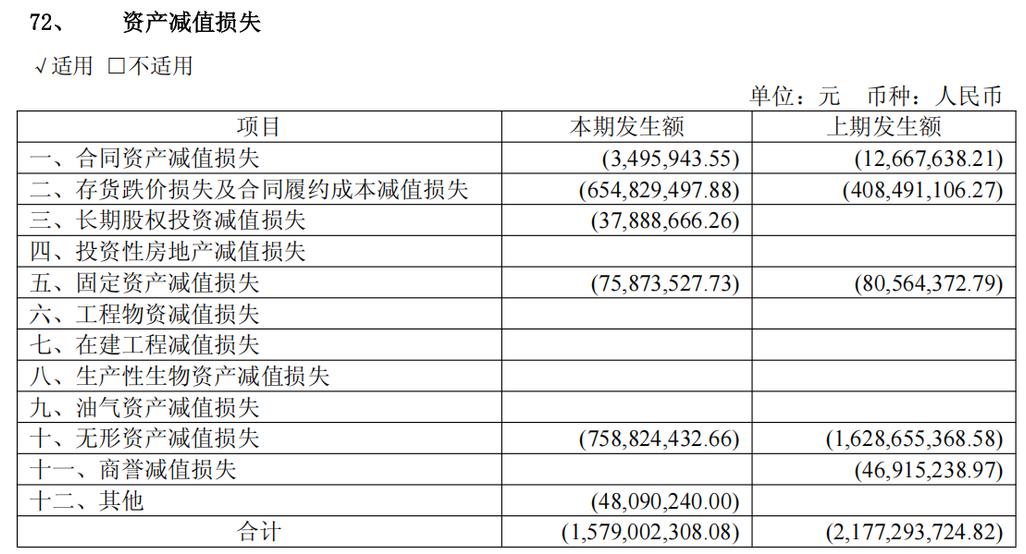
Specifically for Seres, in 2024 and 2025, its asset impairment losses were 2.177 billion yuan and 1.579 billion yuan, respectively. The majority consisted of two items: inventory write-downs and contract fulfillment cost impairments, and intangible asset impairment losses, more specifically, losses from the non-patented technology of "vehicle and component technology development."
This means that as products continue to upgrade, some of the R&D results accumulated by the company in the past may also face value reassessments. For NEV companies with sustained increases in R&D investment, such impairments may become increasingly common in the future.
Beyond the announcement, increased R&D investment may also be a significant reason for the second quarter's losses.
In 2025, Seres' R&D expenses were 7.954 billion yuan, a 42% year-on-year increase. R&D investment grew even faster, surging by 77.4% year-on-year to 12.51 billion yuan, with its proportion of revenue rising from 4.9% in 2024 to 7.6%.
Li Auto, XPeng, and NIO generally treat their R&D investments as expenses. Based on 2025 data, Seres' R&D investment scale has surpassed that of NIO, XPeng, and Li Auto.
In the first quarter of 2026, Seres' R&D expenses increased by over 70% year-on-year, the largest increase among period expenses, with the R&D expense ratio further rising compared to the same period in 2025.
In other words, this loss stems from both industry-wide cost factors and the financial impact of technological iterations, as well as the costs incurred by the company's proactive investments in future competitiveness.
While rising raw material prices and asset impairments are more short-term profit-influencing factors, R&D investment corresponds to Seres' future competitiveness.
In recent years, Seres' rapid rise can largely be attributed to its deep cooperation with Huawei. Huawei provides intelligent driving, smart cockpit, channel, and brand empowerment, while Seres is responsible for vehicle R&D, manufacturing, and supply chain management. Together, they have created the popular AITO brand.
However, as the Hongmeng Intelligent Driving Ecosystem continues to expand, Huawei's partners have increased from just Seres to include Chery, BAIC, JAC, and SAIC, gradually transforming Huawei's ecosystem into a platform.
For Seres, AITO remains the most important source of sales and profits, but the focus of capital market attention has shifted. In the past, the market placed more emphasis on "Huawei choosing Seres." In the future, it will pay more attention to which capabilities Seres has accumulated on its own after losing its exclusivity.
If the capabilities accumulated can not only serve AITO but also support more brands and products, its valuation logic may gradually extend from "Huawei empowerment" to "self-reliance capabilities."
Conversely, if the market continues to believe that Seres' core competitiveness mainly comes from Huawei, its value will remain more built on the cooperative relationship, with Seres primarily undertaking heavy-asset links such as vehicle manufacturing and capacity investment, limiting its bargaining power and risk resistance in the industrial chain.
This is also the intention behind Seres' continuous increase in R&D investment in recent years.
From an R&D perspective, Seres has continuously invested in core areas such as the Cube Platform, extended-range technology, three-electric systems, and intelligent manufacturing in recent years. These investments are not for a specific model but focus on underlying capabilities such as the vehicle platform, powertrain system, and engineering system.
Compared to specific products, such capabilities are more replicable and are important sources of long-term competitiveness for vehicle companies.
The emergence of Saido Technology and the AIVA brand provides an opportunity to verify the aforementioned logic.
Saido Technology was formerly Seres' long-unprofitable proprietary brand, "Seres Blue." In 2026, Seres divested Blue and introduced external investors to complete a capital increase and share expansion of approximately 6.671 billion yuan.
After the restructuring, Shaci Zhiyuan, under the Chongqing Shapingba District SASAC, became the largest shareholder with a 34.5% stake, while Seres' subsidiary held 32.96%, stepping down to the second position. CATL joined the investment, with its subsidiary holding approximately 9.89% of the shares. The company was renamed "Saido Technology" and launched the new brand "AIVA."
From a cooperation model perspective, AIVA did not follow the same path as AITO.
Multiple media outlets reported that intelligent driving adopts the Yuanrong Qixing solution, the smart cockpit integrates Volcano Engine and Doubao large models, CATL is responsible for the energy system, while Seres undertakes vehicle manufacturing, supply chain, quality system, and engineering experience.
This means that within the AIVA system, Seres hopes to output not just manufacturing capabilities but also the vehicle engineering capabilities accumulated over the past few years.
The market reacted indifferently to the cooperation with Doubao.
Shortly after the Saido name was revealed, Seres' stock price rose by 2.4% in a single day before turning negative. On June 6, ByteDance officially stated that it has no plans to manufacture vehicles and has no equity cooperation with Saido Technology, providing only technical services. Seres' stock price continued to decline. On June 9, when the AIVA brand was officially launched, Seres also closed lower.
The market's reaction is understandable. For the capital market, AIVA is currently just a concept, lacking product launches, sales, and user reputation as verification.
Compared to the brand itself, the market is truly concerned about whether Seres, after shedding Huawei's brand and technological halo, can rely on its accumulated platform capabilities, vehicle engineering capabilities, and manufacturing system to create another competitively viable product.
Whether R&D investment will transform into a capability foundation that can be replicated across brands and technology stacks or be consumed by increasing amortization and impairments remains to be answered by the market and time.
-
![]()
Forty Years On: From Volkswagen’s State-Backed Entry into China to BYD’s Hiring of a Former European Foreign Minister
-
![]()
The Dead End of GoPro: Unveiling the Decisive Factors in DJI and Insta360's Competition
-
![]()
The Dead End for GoPro: Unveiling the Key to Victory in DJI and Insta360's Competition
-
DeepSeek Targets A-share IPO Amid RMB 480 Billion Valuation Debate
-
![]()
WPS Meitu XiuXiu: The Threat to Its Market Position from AI Large Models
-
![]()
After Seres Reports Losses, What Is the Capital Market Really Worried About?
-
![]()
Honor, Stepfun, and Nubia Vie for 'Pioneering' Status: The Fierce Contest Among AI-Powered Smartphones
-
![]()
Glory, Stepfun, and Nubia Vie for the Pioneering Position: AI-Powered Smartphones Engage in Intense Competition