StepOn Star Forays into Smartphone Manufacturing: A Rationally Sound Yet High-Risk Endeavor
 07/16 2026
 537
537
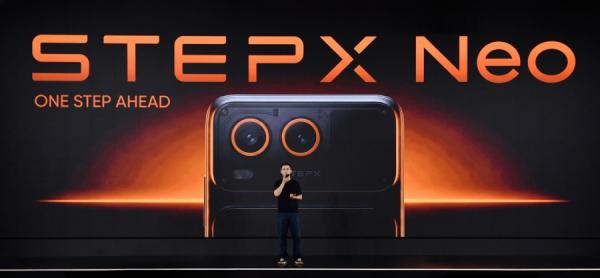
Following in the footsteps of Doubao Mobile, StepOn Star has also set its sights on the burgeoning market of AI agent-powered smartphones.
On July 13th, StepOn Star unveiled STEPX Neo, the world's inaugural large model-native AI agent smartphone, along with introducing its terminal brand STEPX, the agent-native operating system Step AOS, and the personal AI agent Amoo. This move marks the first instance of a domestic large model company venturing into smartphone manufacturing, igniting widespread curiosity and interest.
01 The Rationale Behind Smartphone Manufacturing
StepOn Star's core assessment reveals that existing smartphone operating systems are primarily designed for human interaction, rendering AI agents as perpetual guests rather than native residents. To empower AI agents to seamlessly perform tasks across various apps for users—such as booking flights, ordering food, and screening resumes—system-level permissions are indispensable. However, achieving this within the confines of the current Android/iOS frameworks is nearly insurmountable.
StepOn Star Chairman Yin Qi candidly stated, "After exhaustive searches, we still couldn't find the most suitable terminal," and "everyone advised us against venturing into hardware." Nevertheless, driven by the urgent need for commercialization—given that large models are notorious "money-burning machines" and the low unit price of API calls makes it challenging for B2B operations to cover R&D costs—StepOn Star ultimately decided to manufacture smartphones. The company desperately needs a B2C commercial closed-loop path to sustain its operations.
02 Advantages and Opportunities in Smartphone Manufacturing
Despite being a newcomer and late entrant to the smartphone industry, StepOn Star is not devoid of strengths. In fact, it boasts certain advantages, primarily in the following four domains:
1. Robust Industry Chain Resources
StepOn Star's financing lineup is impressive. The B+ round saw the introduction of ODM giant Huaqin Technology (also a contract manufacturer), while the Pre-IPO round attracted Longcheer Technology, OmniVision Group, and ZTE, covering the entire spectrum from device manufacturing to core components. Yin Qi himself possesses over a decade of experience in hardware supply chains, and the terminal president, Ni Jiayue, is a seasoned veteran from Huawei and Honor.
2. Formidable Model Capabilities
StepOn Star is renowned as the "multimodal champion," having released over 40 models in just three years. Its Step Edge on-device foundational model ranks first in 29 authoritative benchmark evaluations among its peers. Its models are installed on approximately 60% of China's top smartphone brands, with over 42 million installations, and it collaborates with industry leaders such as OPPO, Honor, and ZTE.
3. A More Stable Ecosystem Cooperation Strategy
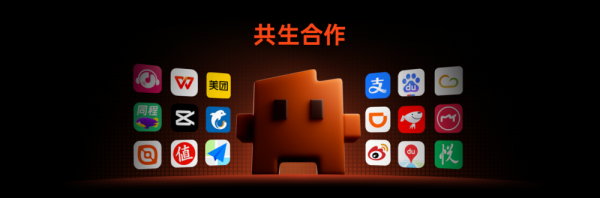
Unlike Doubao Mobile's earlier approach of using GUI simulation clicks, which led to bans by WeChat, Taobao, and Alipay, StepOn Star has opted for a gentler route of API interface integration. App developers independently decide which capabilities to open up, with mutually agreed-upon data usage and responsibility boundaries. StepOn Star has already forged deep cooperation with ecosystem partners such as Alipay, Meituan, Didi, Ctrip, WPS, CapCut, and AutoNavi.
4. First-Mover Advantage
OpenAI is also accelerating the development of its inaugural AI smartphone, aiming for mass production in the first half of 2027. However, StepOn Star has preempted OpenAI by a year in launching its AI agent smartphone. This demonstrates that Chinese large model companies are at the forefront of defining AI terminals.
03 Challenges and Risks
For StepOn Star, entering the smartphone market is not overly arduous, but sustaining a presence will undoubtedly pose significant challenges. I summarize its main challenges as follows:
1. Highly Competitive Smartphone Market, Difficult to Scale
In Q2 of this year, global smartphone shipments declined by 6.7% year-on-year, with the Chinese market shrinking for five consecutive quarters. Huawei, Apple, Xiaomi, Vivo, OPPO, and Honor account for 96% of the domestic market, leaving only 4% for other brands. With the overall market contracting, saturation, and significantly prolonged replacement cycles becoming the new norm, competition is intensifying—unfavorable conditions for smaller players.
These companies not only grapple with a lack of supply chain leverage due to their limited scale but also endure fiercely competitive market conditions. For a new brand like StepOn Star, which lacks recognition and has yet to establish a channel network, the situation is particularly dire. More awkwardly, the industry is highly homogenized, and AI smartphones are still in their nascent stages, with on-device agents yet to create widespread demand for device upgrades. This means StepOn Star's ambition to establish AI agent smartphones as a new category will require a prolonged and sustained effort.
2. Super Apps Not Fully Onboard
You may have noticed that ultra-high-frequency apps like WeChat, Taobao, Douyin, and Xiaohongshu are not among the initial partners. Yin Qi admitted to having in-depth discussions with Tencent, but the extent to which these popular super apps are willing to open their interfaces will determine the actual capabilities of AI smartphones. StepOn Star still needs to invest more effort in building its ecosystem.
3. On-Device Chip Computational Bottlenecks
Yin Qi stated straightforwardly that the current end-side chips are completely unable to support the future demand of a large number of users for intelligent agents. Existing chip connections cannot even run a 10B model. Before AI agent smartphone shipments are validated, chip manufacturers lack the incentive to customize architectures, leaving StepOn Star to lead the way in driving industrial ecosystem development. As for when the on-device chip computational bottleneck will truly be resolved, even Yin Qi seems uncertain.
4. Becoming Competitors with Former Clients
StepOn Star previously provided AI capabilities to smartphone manufacturers but is now entering the terminal market itself, potentially transforming partnerships into rivalries. Although Yin Qi expressed willingness to open its OS and agents to other OEMs in the future, whether smartphone manufacturers will accept this remains to be seen.
5. Unclear Commercialization Path
Yin Qi predicts that the future business model "will definitely not rely on hardware sales or pre-installed advertising fees," but the specifics remain unclear.
Frankly, StepOn Star's venture into smartphone manufacturing is a rationally sound yet extremely risky gamble. In the short term, STEPX Neo appears more as a technological benchmark and a tool for capital storytelling than a consumer product aimed at sales volume. Yin Qi himself stated, "The first stage is not solely focused on shipment volume," and while prototypes are ready, whether they will be launched depends on various factors.
In the medium term, success hinges on three key variables: ① convincing super apps like WeChat and Taobao to deeply open their interfaces; ② achieving scale in the millions within 2-3 product generations to activate the model flywheel; and ③ whether on-device chips can meet the computational demands of agents.
In the long term, if AI agent smartphones truly become the next interaction paradigm, StepOn Star's "model + OS + terminal" full-stack layout could indeed become its deepest moat. However, as Yin Qi metaphorically put it—"the first-generation iPhone wasn't that impressive either; it wasn't until around the iPhone 4 that mass adoption truly occurred"—this will require immense patience and sustained investment.
In my view, StepOn Star's smartphone venture is not a blind pursuit of trend-following but a strategic necessity for AI companies to break through. It holds a first-mover technological advantage in the new track of agent-based interaction. However, the smartphone industry's asset-heavy, long-chain, and highly ecosystem-dependent nature makes it difficult to penetrate the mainstream mass market.
StepOn Star's greatest value lies in defining the interaction standards for the next generation of AI terminals. It is better suited to position itself as a vertical, niche AI hardware brand rather than compete with full-category giants like Xiaomi and Huawei. Its long-term survival hinges on two key variables: the degree of openness from mainstream internet app ecosystems and whether its hardware business can control losses while establishing a sustainable subscription-based profit model.
In short, while StepOn Star's direction in smartphone manufacturing deserves respect, the path ahead is arduous and highly uncertain. Success will depend on the iterative results of at least 2-3 product generations. Manufacturing smartphones is no easy feat—Yin Qi should proceed with caution and treasure every step!
-
![]()
Is Tencent AI Heading in the Right Direction?
-
Latest Update! Jinding Optics’ GEM IPO Review Now “Under Inquiry”
-
![]()
VOYAH’s CBO Sets Ambitious Target: Secure Top 3 Spot in Luxury BEV Market Within Two Years, Launch 4 New Models to Cover All BEV Segments
-
![]()
Sehwa Technology Invests 740 Million Yuan, Eyeing the Lucrative Optical Film Market!
-
![]()
150 Million Users, $40 Million ARR: AIShige Technology Enters the Final Round of AI Video Competition
-
![]()
StepOn Star Forays into Smartphone Manufacturing: A Rationally Sound Yet High-Risk Endeavor
-
![]()
TCL Zhonghuan: Embracing a New Story Despite Anticipated Losses
-
![]()
Forty Years On: From Volkswagen’s State-Backed Entry into China to BYD’s Hiring of a Former European Foreign Minister