VOYAH’s CBO Sets Ambitious Target: Secure Top 3 Spot in Luxury BEV Market Within Two Years, Launch 4 New Models to Cover All BEV Segments
 07/16 2026
 334
334
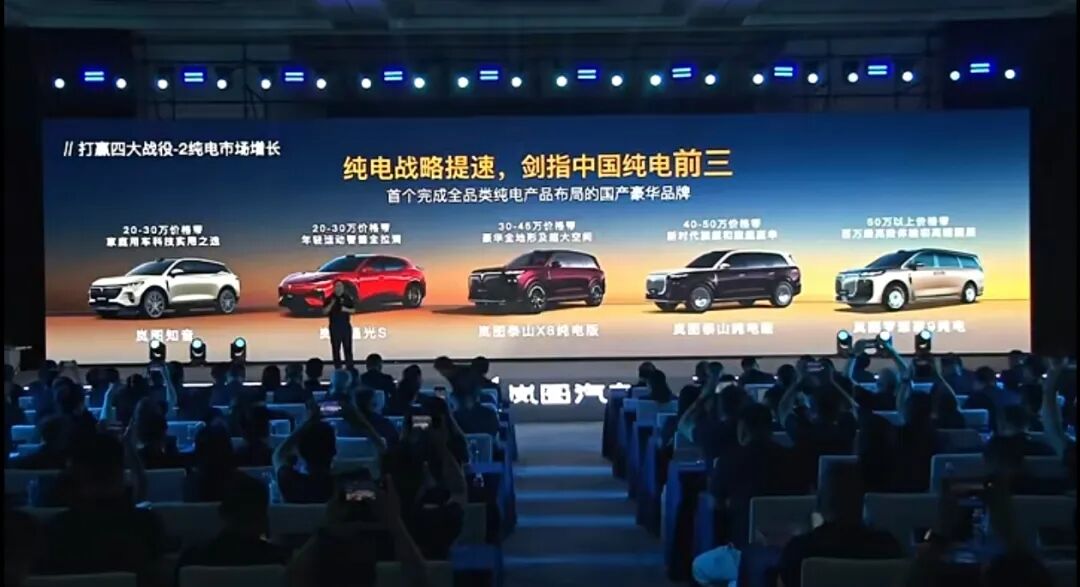
“We aim to be among the top three luxury BEV brands within the next two years,” declared Shao Mingfeng, Chief Brand Officer (CBO) of VOYAH Automotive Technology Co., Ltd. and General Manager of the Sales Company, at the recent 2026 VOYAH Ecological Partners Mid-Year Conference. This announcement signals a comprehensive acceleration of VOYAH’s BEV strategy.
To achieve this target of ranking among the top three luxury BEV brands, VOYAH conservatively estimates that its BEV model sales must reach at least 150,000 units. This requires VOYAH to boost its BEV sales by over five times from the 30,000 units recorded in 2025 within the next two years, presenting a substantial challenge. In 2025, the BEV market for vehicles priced above RMB 200,000 saw Tesla leading with 625,700 units sold, followed by Xiaomi with 411,800 units, and NIO with 177,700 units.
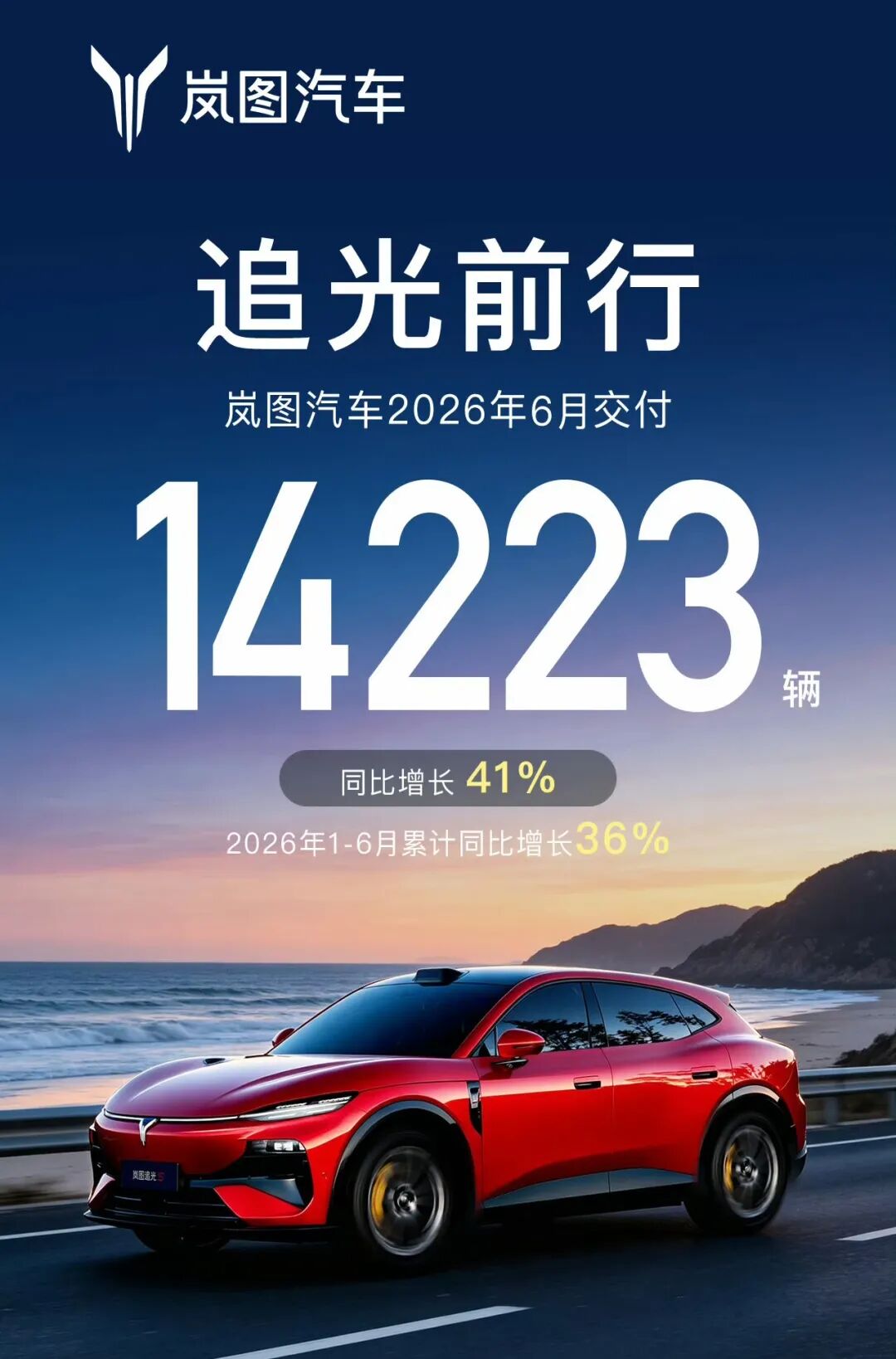
In the first half of this year, VOYAH’s cumulative deliveries reached 76,264 units, marking a 36% year-on-year increase. June deliveries stood at 14,223 units, up 41% year-on-year, indicating consecutive months of year-on-year growth. Amid intensifying competition in the high-end new energy vehicle market, VOYAH’s sustained positive growth over multiple months instills confidence in launching a BEV product offensive. On the other hand, BEVs currently constitute a relatively small portion of VOYAH’s sales mix. Taking VOYAH’s sales mainstay, the Dreamer, as an example, its PHEV variant sold 5,957 units in June, while the EV version sold only 969 units.
Therefore, for VOYAH, a full-scale assault on the EV market is not only a proactive strategy considering BEVs as a new consumption trend but also a step to address shortcomings and establish future growth points.
In the first half of this year, VOYAH maintained strong growth, primarily driven by the introduction of the new product, Taishan X8. The Dreamer series, as a mainstay, continued to rank among the top sellers in the high-end MPV market, with an NPS (Net Promoter Score) of 74.8 in the first half, placing it third among MPV models. It has established a solid user reputation in two high-end scenarios: business receptions and multi-child family use, serving as a core pillar of VOYAH’s sales for a long time.
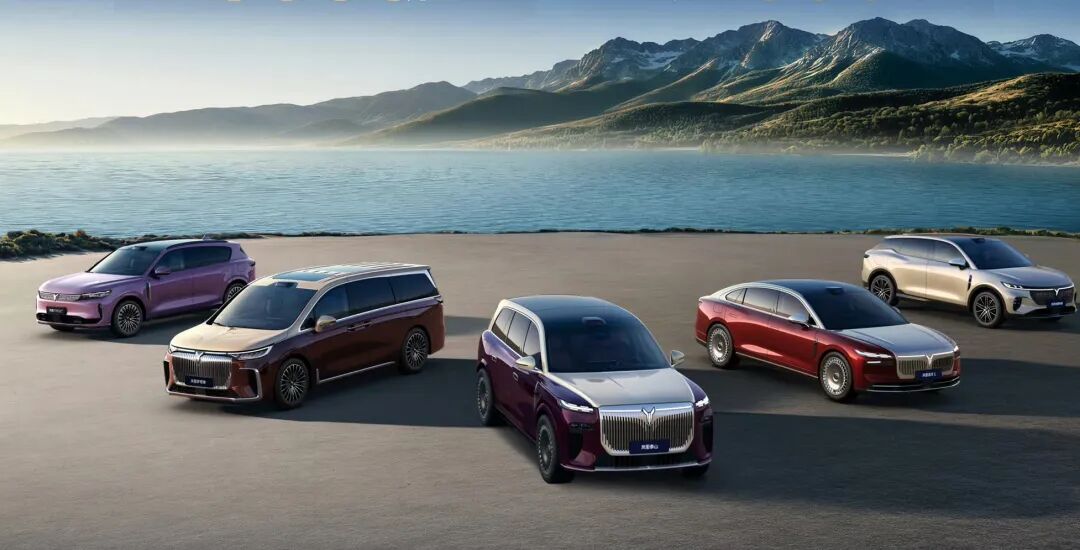
The Zhiyin, FREE, Taishan X8, and Taishan SUV models cover the entry-level 5-seater, full-size 5-seater, and full-size flagship 6-seater SUV markets. The Taishan X8 series, launched in May, has seen a sustained rise in market response, with over 93% of users opting for the Ultra and higher trim levels. Additionally, in the sedan segment, VOYAH offers the Tracker series, although its sales contribution is currently low. In terms of product strategy, VOYAH currently adopts a multi-powertrain approach of BEV + PHEV/EREV to cater to diverse user preferences.
VOYAH’s major bet on BEVs at this juncture is primarily driven by the diminishing growth dividends in the PHEV and EREV markets. Data from the Passenger Car Association reveals that PHEV sales dropped by 27.3% in June, while EREV sales fell by 31.9%. In contrast, BEVs continued to grow despite an overall market decline, with a 3.6% year-on-year increase in June, accounting for 68% of total new energy vehicle sales, becoming the absolute driving force in the market. This shift is attributed to the rapid improvement in BEV user experience due to advancements in battery technology and the expansion of charging infrastructure, while the appeal of PHEVs and EREVs, once considered transitional solutions, continues to wane.
Under these circumstances, for VOYAH to sustain long-term sales growth, it must shift its focus toward BEVs to capture market share in this rapidly growing segment. From a sales mix perspective, VOYAH’s BEV product sales have been steadily increasing, rising from less than 10% in 2024 to 20% in 2025, and further to 23% in the first half of this year.
Based on its assessment of market trends, VOYAH is accelerating its BEV strategy across both technological and product dimensions. At the technological level, Shao Mingfeng previewed that, in response to core concerns of BEV users such as safety and charging, VOYAH is set to introduce the Amber Battery 2.0 and a self-developed 800V+5C high-voltage fast-charging vehicle platform, which will be featured in VOYAH’s next-generation products. Simultaneously, VOYAH will expedite the deployment of a network of megawatt-level fast-charging stations.
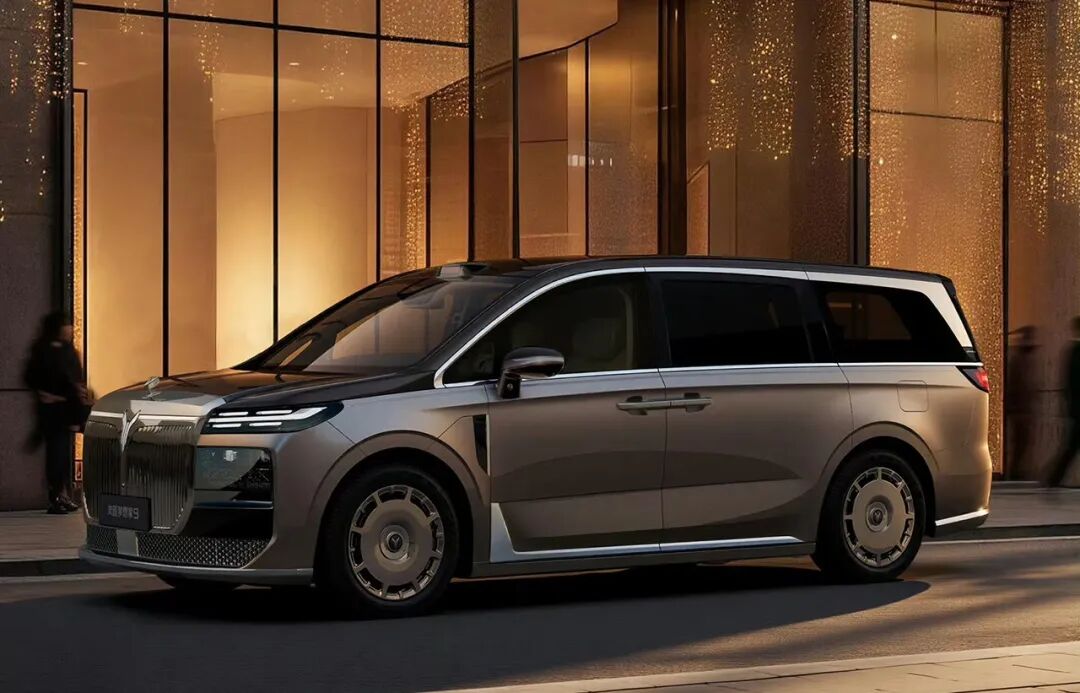
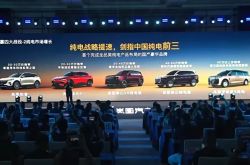
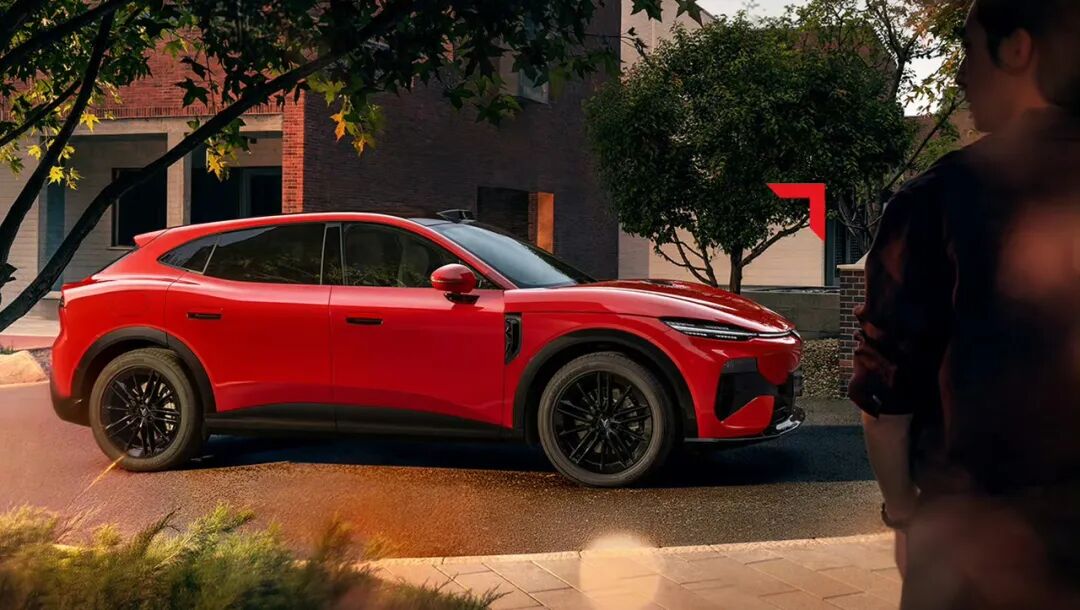
At the product level, VOYAH will launch a series of BEV products in the second half of the year. The Taishan X8 BEV version has already commenced deliveries this month, priced between RMB 339,900 and RMB 379,900, targeting the luxury all-terrain and ultra-spacious market. The Tracker S, positioned as a trendy BEV coupe SUV, will start pre-sales this month. Shao Mingfeng described the Tracker S as VOYAH’s “beauty bomb,” hinting that it will feature 4-laser intelligent driving, delivering a driving experience comparable to million-dollar vehicles.
Subsequently, VOYAH will introduce the flagship large SUV, the Taishan BEV version, targeting the RMB 400,000 market, and the Dreamer 9 BEV version, a RMB 500,000 luxury MPV offering a premium experience on par with million-dollar vehicles. These four products will cover four major luxury market segments: family SUVs, sporty coupe SUVs, flagship SUVs, and luxury MPVs.
In addition to these, VOYAH currently offers the Zhiyin and Dreamer BEV versions. Shao Mingfeng stated that with the launch of these models, “VOYAH will become the first Chinese automaker to complete a full-scale BEV layout across all segments,” implying that VOYAH will achieve full coverage of BEV products in the sedan, SUV, and MPV categories.
However, it should be noted that in the BEV sedan segment, the first-generation Tracker was a BEV model but has since been discontinued. Subsequent annual facelifts of the Tracker and the Tracker L are PHEV models. Therefore, strictly speaking, VOYAH currently has a gap in its BEV sedan lineup, and it remains uncertain whether there are plans for related products in the future.
Channel ecosystem is a crucial support for the implementation of the BEV strategy. As the first central state-owned automotive brand to adopt a direct-sales model in China, VOYAH adheres to a channel model that combines self-operation with ecological partners. To date, VOYAH has opened a total of 509 stores in China, including VOYAH Spaces, full-function user centers, and delivery service centers. VOYAH revealed that its ecological partner system has maintained healthy growth in the first half of the year, with store profitability reaching industry-leading levels and demonstrating sustainable growth potential.
Of course, VOYAH’s full-scale acceleration of its BEV strategy and its ambition to become one of the top three luxury BEV brands does not mean a complete shift away from EREVs or PHEVs. At this stage, VOYAH’s EREV/PHEV models remain the absolute mainstay of its sales. Therefore, VOYAH will continue to pursue a multi-powertrain approach of EREV/PHEV + BEV, leveraging existing models to solidify its foundation while seeking new growth through all-new BEV models.
Since its listing this year, VOYAH’s stock price has been under significant pressure, necessitating clear strategic planning and market performance to boost market confidence. VOYAH’s current direction is focused on BEVs and high-end market positioning, targeting growth and profitability, respectively. The next step is to observe the market performance of its subsequent product launches.
-
![]()
Is Tencent AI Heading in the Right Direction?
-
Latest Update! Jinding Optics’ GEM IPO Review Now “Under Inquiry”
-
![]()
VOYAH’s CBO Sets Ambitious Target: Secure Top 3 Spot in Luxury BEV Market Within Two Years, Launch 4 New Models to Cover All BEV Segments
-
![]()
Sehwa Technology Invests 740 Million Yuan, Eyeing the Lucrative Optical Film Market!
-
![]()
150 Million Users, $40 Million ARR: AIShige Technology Enters the Final Round of AI Video Competition
-
![]()
StepOn Star Forays into Smartphone Manufacturing: A Rationally Sound Yet High-Risk Endeavor
-
![]()
TCL Zhonghuan: Embracing a New Story Despite Anticipated Losses
-
![]()
Forty Years On: From Volkswagen’s State-Backed Entry into China to BYD’s Hiring of a Former European Foreign Minister